





Brand
 Bhansali Engineering Polymers LimitedBhansali Engineering Polymers Limited 3
 Borouge Pte LtdBorouge Pte Ltd 1
 Dongsung ChemicalDongsung Chemical 2
 Dow-MitsuiDow-Mitsui 4
 FPC Formosa Plastics CorporationFPC Formosa Plastics Corporation 1
 Gail India LimitedGail India Limited 32
 Haldia Petrochemicals LtdHaldia Petrochemicals Ltd 25
 Hanwha Solutions ChemicalHanwha Solutions Chemical 4
 Hanwha Total Energies PetrochemicalHanwha Total Energies Petrochemical 7
 HMEL - HPCL-Mittal Energy LimitedHMEL - HPCL-Mittal Energy Limited 55
 IOCL - Indian Oil Corporation LimitedIOCL - Indian Oil Corporation Limited 71
 Jiangsu Daoming Chemical Co LtdJiangsu Daoming Chemical Co Ltd 2
 LG ChemLG Chem 8
 Lotte ChemicalLotte Chemical 4
 LyondellBasell Industries NVLyondellBasell Industries NV 1
 Mangalore Refinery & Petrochemicals LimitedMangalore Refinery & Petrochemicals Limited 7
 Marcopolo International LLCMarcopolo International LLC 2
 Nouryon Functional ChemicalsNouryon Functional Chemicals 8
 ONGC Petro Additions LtdONGC Petro Additions Ltd 44
 Reliance Industries LimitedReliance Industries Limited 48
 SabicSabic 1
 Sipchem - Saudi International PetrochemicalSipchem - Saudi International Petrochemical 8
 SK Functional PolymerSK Functional Polymer 6
 The Dow Chemical CompanyThe Dow Chemical Company 3
 TPI Polene Public Company LimitedTPI Polene Public Company Limited 3
 VersalisVersalis 4
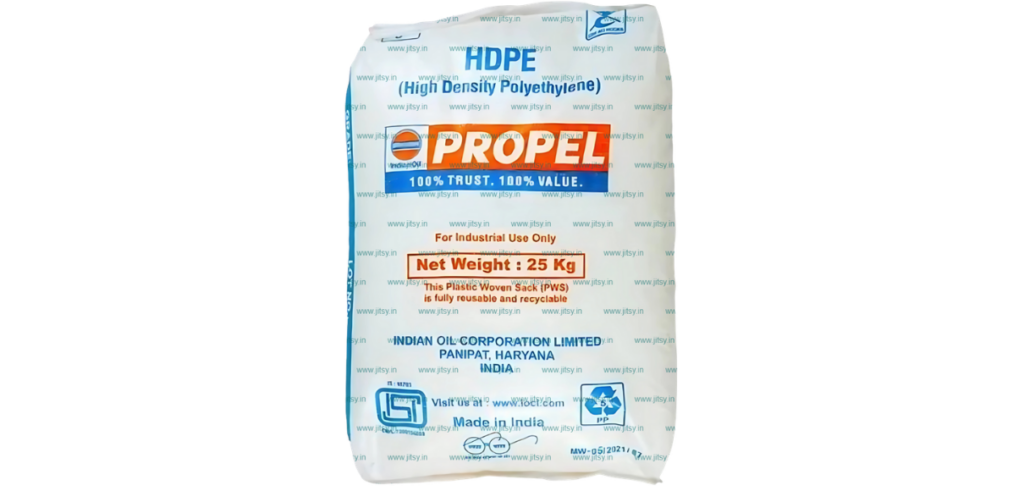
IOCL HDPE Propel 180M50
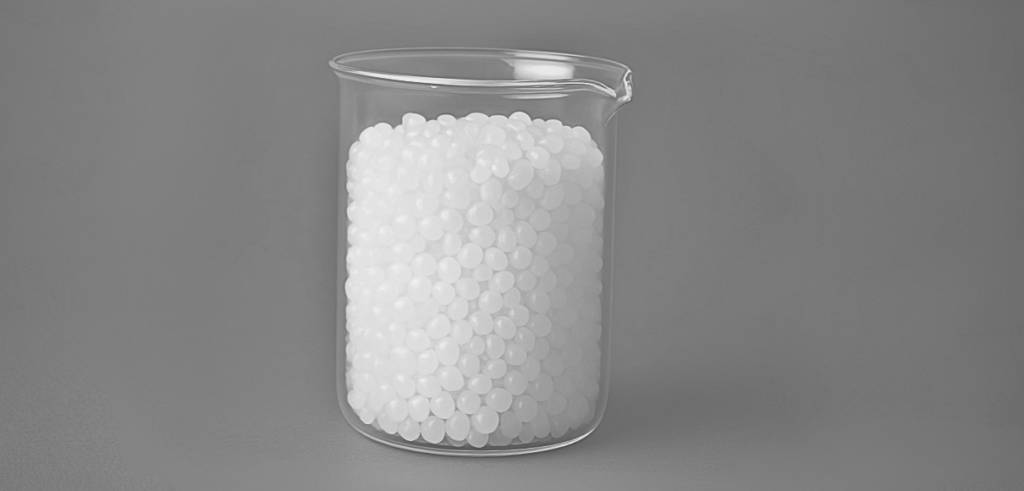
HDPE Propel 180M50 is a high-density polyethylene resin manufactured by Indian Oil Corporation Ltd. (IOCL) under its established Propel brand. Like the broader Propel injection family, it is produced using Nova Chemical’s Sclairtech solution polymerisation technology — a process that delivers tight molecular weight distribution, predictable melt behaviour, and batch-to-batch consistency. The grade is supplied as natural-coloured granules and is engineered exclusively for injection moulding.
What distinguishes HDPE 180M50 within the Propel range is its very high melt flow index of 18 g/10 min. This positions it at the fast-flow end of the HDPE injection spectrum, making it the grade of choice when converters are running thin-wall housewares, multi-cavity closure moulds, small containers, or any application where rapid cavity fill, short cycle times, and a high-gloss surface finish are the primary production requirements. IOCL explicitly characterises 180M50 as having excellent flow properties, very good processability, and excellent gloss — attributes that are directly traceable to its high MFI and the Sclairtech polymerisation process.
At a density of 0.950 g/cc, the grade retains the fundamental characteristics of high-density polyethylene — chemical resistance, rigidity, and a defined thermal profile — while the slightly lower density relative to higher-density crate and pallet grades reflects a molecular architecture that prioritises flow and surface quality alongside structural integrity. The 900 MPa flexural modulus and 70 Shore D hardness confirm that finished parts will be firm, dimensionally stable, and resistant to surface marking, which matters both for consumer-facing housewares and for industrial containers that must maintain shape under stacking loads.
IOCL certifies HDPE Propel 180M50 as compliant with IS 10146:1982, IS 10141:1982, and FDA CFR Title 21 Section 177.1520 for olefin polymers. These regulatory designations make the grade suitable for housewares and containers where food-contact compliance is a procurement or end-use requirement, including food storage containers, kitchen utensils, bottle caps, and reusable household items.
Technical Insights
Each property in the HDPE Propel 180M50 datasheet answers a specific question that a moulding engineer or procurement manager would ask before qualifying or approving a new grade. Understanding what the numbers mean in practice is more useful than referencing them in isolation.- Melt Flow Index — 18 g/10 min (ASTM D1238, 190 °C / 2.16 kg): This is the defining characteristic of the grade. An MFI of 18 g/10 min indicates a very fluid melt that fills thin, complex cavities quickly under moderate injection pressure. For thin-wall housewares and high-cavitation closure moulds, this translates directly to shorter fill times, reduced clamp tonnage requirements, and faster production cycles — all of which improve converter economics without compromising part quality.
- Density — 0.950 g/cc (ASTM D1505, 23 °C): At 0.950 g/cc, this grade sits within the standard HDPE range (0.941–0.965 g/cc). The density governs crystallinity, which in turn drives stiffness, chemical resistance, and barrier performance. The slightly lower density compared with crate-grade HDPEs is consistent with the molecular weight distribution needed to achieve MFI 18 without sacrificing part integrity in thin-wall applications.
- Tensile Strength at Yield — 24 MPa (ASTM D638): This indicates the stress level at which the part begins to deform permanently under tensile load. For thin-wall housewares — storage boxes, containers, and lids — 24 MPa provides adequate structural strength in normal use while remaining compatible with the wall thicknesses and part geometries that the high MFI enables.
- Elongation at Yield — 12% (ASTM D638): The elongation at yield describes how much the material stretches before permanent deformation begins. At 12%, HDPE 180M50 has enough ductility to absorb minor flexing loads — such as those experienced by container lids, snap-fit closures, and thin-wall walls during handling — without immediate failure at the yield point.
- Flexural Modulus — 900 MPa (ASTM D790): Flexural modulus is the primary indicator of part stiffness. At 900 MPa, moulded houseware components and container walls will hold their shape under normal loads and resist warping during demoulding. This value is higher than many standard injection HDPE grades in the 750–850 MPa range, meaning 180M50 delivers stiffness alongside its high flow — a combination that narrows the typical trade-off between processability and rigidity.
- Hardness — 70 Shore D (ASTM D2240): A Shore D value of 70 is notably firm for an injection HDPE and indicates a hard, scratch-resistant surface. This is relevant for consumer housewares where visible surface marking, scuffing during retail handling, or loss of gloss over product life would be a quality concern. It also supports the grade’s positioning as a gloss-oriented resin.
- Vicat Softening Point — 124 °C (ASTM D1525): The Vicat softening point defines the temperature at which the moulded part begins to lose dimensional integrity under a defined load. At 124 °C, HDPE 180M50 is suitable for housewares exposed to hot water, dishwasher environments, and warm storage conditions, though it is not designed for autoclave sterilisation or continuous high-temperature service.
- Recommended Processing Temperature — 180–215 °C: This window gives processors flexibility across different machine configurations, cavity layouts, and wall thicknesses. Operating within this range maintains melt quality, gloss, and the mechanical properties stated in the technical datasheet. Processing above 215 °C risks thermal degradation and loss of the characteristic surface finish.
Applications
Injection-Moulded Housewares and Storage Products
The primary market for HDPE Propel 180M50 is injection-moulded houseware products — storage containers, food boxes, waste bins, baskets, organisers, and similar domestic items. For houseware converters, the critical combination is fast mould fill, dimensional stability, and a surface gloss that meets consumer expectations. HDPE 180M50 delivers all three: the MFI of 18 g/10 min reduces cycle time and pressure requirements even in multi-cavity tools, the 900 MPa flexural modulus keeps container walls and lids flat after demoulding, and the grade’s excellent gloss characteristic produces surfaces that hold colour and sheen in finished consumer goods.Thin-Wall Injection Moulded Parts
Thin-wall moulding — typically defined as wall sections below 1.5 mm — demands resins that can travel long flow paths quickly before the melt freezes. At MFI 18 g/10 min, HDPE 180M50 is well-matched to thin-wall geometries where lower-flow grades would either require excessively high injection pressures or produce short shots and knit-line failures. Converters producing thin-wall boxes, trays, lids, and industrial trays will find that the grade’s flow-to-stiffness balance — 18 g/10 min MFI alongside 900 MPa flexural modulus — reduces the usual compromise between productivity and part performance in this segment of injection moulding.Caps, Closures, and Fitments
High-cavitation closure moulds for bottles, containers, and industrial packaging require a resin that fills quickly, replicates thread geometry precisely, and produces parts with consistent dimensions across every cavity. HDPE 180M50’s high MFI and high hardness (70 Shore D) support the close-tolerance moulding that closures demand. The 124 °C Vicat softening point ensures closures remain dimensionally stable in warm distribution environments, while the food-contact compliance certifications (IS 10141:1982, FDA CFR 21 177.1520) make the grade directly applicable to closures on food, beverage, and pharmaceutical-adjacent packaging.Small Containers and Industrial Packaging Components
Beyond retail housewares, HDPE Propel 180M50 is well-suited to injection-moulded small containers, pails, and industrial packaging components where the end-user requires a balance of chemical resistance, stiffness, and a presentable surface. The grade’s HDPE chemistry provides inherent resistance to a wide range of industrial chemicals, detergents, and moisture — relevant for containers used in cleaning product, agrochemical, and lubricant packaging. The flexural modulus of 900 MPa supports stacking loads in warehouse and transit environments without requiring heavy wall sections.Crates, Pallets, and Material-Handling Products
While IOCL’s primary positioning for 180M50 is thin-wall housewares, the broader Propel injection-moulding grade family — of which this is a member — is also used for crates, pallets, caps, and closures. For converters targeting lighter-duty crate or small pallet applications where faster cycles and higher gloss are valued alongside structural performance, 180M50 offers a viable option. For heavy-duty, large-format crate and pallet applications requiring maximum impact resistance and structural rigidity at thicker wall sections, lower-MFI injection grades in the Propel family are typically better suited.Comparable Alternatives
Within the IOCL Propel injection-moulding family, the most relevant comparison is between HDPE 180M50 and lower-MFI grades such as HDPE Propel 080M60. The core distinction is flow versus structural performance. HDPE 080M60 runs at MFI 8.0 g/10 min against 180M50’s 18 g/10 min — a more than twofold difference in flow. This means 080M60 is better suited to thick-section, heavy-duty applications like large crates and pallets that require maximum impact and flexural performance, while 180M50 is the appropriate choice when the priority is fast fill in thin-wall or multi-cavity tools, surface gloss, and production throughput. The two grades should not be treated as interchangeable: the difference in MFI affects not only injection pressure and cycle time but also the molecular weight profile and resulting part toughness. Converters running the same mould with both grades would need to re-optimise process parameters and re-qualify parts. UV-stabilised variants within the Propel injection family exist for applications involving extended outdoor exposure. If the intended application — such as outdoor storage containers, garden equipment, or open-yard material-handling products — requires resistance to UV-induced degradation, the corresponding UV-stabilised grade should be specified instead of 180M50. The base polymer properties may be similar, but the additive system is meaningfully different and the two grades are not equivalent for outdoor service. Other Indian injection-moulding HDPE grades in the thin-wall and houseware segment exist from producers including HMEL, GAIL, OPAL, and Haldia Petrochemicals. In the same MFI and density range, these grades may appear nominally comparable on a datasheet, but direct equivalence cannot be confirmed without manufacturer-to-manufacturer TDS comparison and process trials. Differences in polymerisation technology, catalyst system, and additive formulation can produce meaningful variation in gloss, cycle behaviour, and dimensional stability even at similar MFI values. Any substitution should be validated through trials on the specific mould and machine configuration in use. Imported grades from Borouge, LyondellBasell, Lotte, and similar international producers serve the high-flow injection segment in the Indian market. These may offer very consistent molecular weight distributions optimised specifically for high-gloss, thin-wall applications, and some converters qualify them for premium houseware lines. However, landed cost, import lead times, and lot traceability requirements under GST-compliant procurement typically favour domestically sourced IOCL supply for the majority of Indian converters, particularly in the SME manufacturing segment.Common Search Variants
Buyers and engineers commonly search for this grade using terms such as HDPE dana for housewares, high-flow injection HDPE granules, thin-wall HDPE resin India, Propel granules 180M50, and IOCL HDPE high-gloss injection grade. Frequent misspellings and alternate notations include HDPE 18M50, 180M5O (with the letter O instead of zero), Propel 180M50 HDPE, IOCL 180M50 granules, and HDPE Propel 180M50 — all refer to the same product.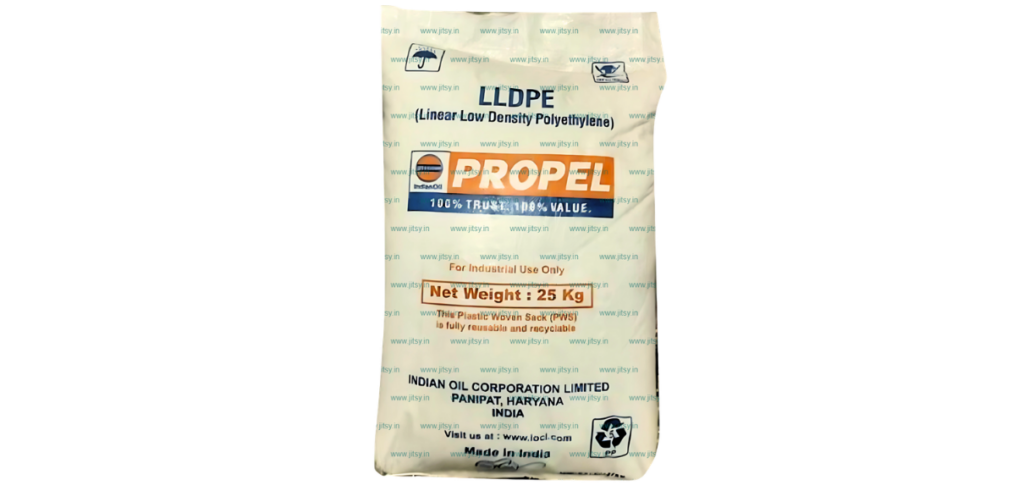
IOCL LLDPE Propel 010L22S
IOCL LLDPE Propel 010L22S is a butene-comonomer linear low-density polyethylene (LLDPE) grade manufactured by Indian Oil Corporation Ltd. (IOCL) under its Propel polymer brand. Produced using Nova Chemicals’ Sclairtech Solution Polymerization Technology at IOCL’s Panipat Naphtha Cracker Complex in Haryana, the grade is designed specifically for the extrusion of drip lateral pipes for agricultural drip irrigation systems, with particular emphasis on high-speed pipe extrusion lines. It is supplied as natural-coloured granules in 25 kg BIS-compliant raffia bags.
IOCL positions 010L22S with four manufacturing and performance attributes: excellent processability, good strength, controlled morphology, and low gel content. Each of these addresses a specific requirement for drip lateral pipe production. Excellent processability refers to the melt behaviour on high-speed single-screw extrusion lines — the grade must maintain stable melt pressure, consistent output rate, and uniform parison formation at the pipe die across extended production runs. Good strength means the pipe wall has sufficient tensile yield and elongation to survive installation stresses, hydraulic pressure cycling in service, and mechanical contact with soil, stones, and installation tools. Controlled morphology refers to the uniformity of the crystalline-amorphous microstructure across the pipe wall cross-section — a critical quality factor for thin-wall pipe where local variations in morphology create stress concentration sites that can initiate slow crack growth. Low gel content means the absence of unmelted or cross-linked polymer particles that would form surface protrusions or subsurface voids in the extruded pipe wall — the primary source of premature burst and pinhole failures in thin-wall irrigation tubing in service.
Technical Insights
Understanding the Key Properties of LLDPE 010L22S
The properties of LLDPE Propel 010L22S are reported on compression-moulded Type IV specimens tested per ASTM D638 — the same isotropic test geometry used for HDPE raffia and injection grades in the Propel series, not a pipe-specific pressure test. Compression-moulded values characterise the bulk polymer in an unoriented state and serve as grade selection and inter-grade comparison references; they do not directly predict the burst pressure, hoop stress, or installed service life of extruded pipe, which depend on the pipe’s wall thickness, outside diameter, extrusion conditions, and the pressure-rating standard it is manufactured to meet. IOCL’s technical datasheet states explicitly that all values are typical and should not be construed as specification limits.- Melt Flow Index — 1.1 g/10 min (ASTM D1238, 190 °C / 2.16 kg): The MFI is measured at the 2.16 kg load convention, consistent with Sclairtech-process grades across IOCL’s LLDPE and lower-viscosity HDPE grade families. At 1.1 g/10 min, 010L22S has a melt flow level appropriate for high-speed single-screw pipe extrusion — the processing method used to produce drip lateral pipe at commercial production rates. The MFI is in the range where the melt has adequate flow to fill the die annulus uniformly without excessive back-pressure at high screw speeds, while retaining the melt strength needed to prevent parison sag and dimensional variation as the pipe exits the die and enters the sizing and cooling section. For a drip lateral pipe with outside diameters typically in the 12–20 mm range and wall thicknesses of 0.8–1.5 mm, the 1.1 g/10 min MFI is consistent with a stable extrusion process on a modern high-speed line.
- Density — 0.922 g/cm³ at 23 °C (ASTM D792): The density is measured by ASTM D792 (liquid displacement) rather than ASTM D1505 (density-gradient column) as used for HDPE grades in this series — a minor but technically accurate difference between the two methods at these density levels. At 0.922 g/cm³, 010L22S is in the standard LLDPE density range, well below the HDPE range of 0.940–0.970 g/cm³. This lower density reflects the butene comonomer’s disruption of crystalline packing and is the structural basis for the grade’s toughness, elongation, and ESCR performance. For drip lateral pipe, the lower density also means the pipe wall has more inherent flexibility than an HDPE pipe of equivalent wall thickness, which is beneficial for field installation — drip laterals are typically coiled on reels and unspooled during installation, requiring the pipe to flex repeatedly without kinking or cracking.
- Tensile Strength at Yield — 13 MPa (ASTM D638, Type IV, compression-moulded): The 13 MPa tensile yield strength is the lowest in the Propel series reviewed here, directly reflecting the lower crystallinity and greater molecular mobility of LLDPE at 0.922 g/cm³ compared with HDPE grades at 0.950–0.960 g/cm³. For drip lateral pipe applications, tensile yield of the base resin is not the governing design property — the pipe’s pressure rating and structural performance are determined by the pipe’s geometric dimensions (outer diameter, wall thickness, and the SDR ratio) and the material’s long-term hydrostatic strength, not the short-term tensile yield of the compression-moulded specimen. The 13 MPa value provides the grade-comparison reference but should not be used to calculate the service pressure rating of finished pipe.
- Tensile Strength at Break — 20 MPa (ASTM D638, Type IV, compression-moulded): The 20 MPa tensile strength at break is measured after the material has yielded and undergone substantial plastic deformation. For LLDPE, the ratio of yield strength to break strength is low because the material elongates extensively before fracture — a characteristic of the comonomer-modified chain architecture. In practice, for thin-wall drip pipe in service, this ductile failure behaviour means the pipe deforms visibly and progressively before it fractures, as opposed to the sudden brittle splitting that can occur in materials with low elongation capacity.
- Elongation at Break — >600% (ASTM D638, Type IV, compression-moulded): The >600% elongation at break confirms 010L22S as a highly ductile material in the unoriented state. For drip lateral pipe applications, this high elongation capacity means the pipe wall can absorb the deformation imposed by soil settlement, root intrusion pressure, installation bending, and hydraulic surge without initiating a crack. In thin-wall irrigation pipe that is typically buried at shallow depths and subject to cyclic thermal expansion and contraction over seasons of field service, the ability to accommodate dimensional change without brittle fracture is a key long-term reliability attribute.
- Notched Izod Impact Strength — 500 J/m at 23 °C (ASTM D256, compression-moulded): At 500 J/m, this is the highest Notched Izod impact value in the Propel series reviewed here — higher than the bimodal HDPE pipe grade 010DP45U (300 J/m) and higher than all blow moulding and injection moulding grades in the series. The very high impact value reflects the fundamental toughness of LLDPE at 0.922 g/cm³: the short butene branches on the polymer chains create an amorphous phase that absorbs impact energy very effectively, making the material highly resistant to crack initiation under sudden loading. For drip lateral pipe, high impact resistance is practically relevant during installation, when the pipe may be stepped on, driven over by machinery in field conditions, or struck by installation tools.
- Environmental Stress Crack Resistance (ESCR) — >1000 h (ASTM D1693, Condition B, F50, 10% Igepal): The ESCR of greater than 1000 hours is the highest in the Propel series reviewed here — exceeding the pipe grade 010DP45U (>600 h) and the high-ESCR blow moulding grade 010DB50 (>500 h). ESCR is the single most critical long-term performance property for drip lateral pipe because it governs the pipe’s resistance to slow crack growth under the combination of surface-active stress concentrations (soil chemicals, agrochemical residues, surfactants in fertiliser solutions) and the sustained hoop stress from operating pressure.
- Processing Temperature — 180–230 °C: IOCL’s recommended processing window of 180–230 °C is narrower at the upper end than the 180–250 °C window specified for the HDPE raffia grades in the same Sclairtech process family. Converters should optimise barrel zone temperatures, die temperature, and cooling water flow within this window for their specific machine configuration, pipe diameter, and target production rate.
Applications
Drip Lateral Pipes for Agricultural Drip Irrigation Systems
LLDPE Propel 010L22S is positioned by IOCL exclusively and specifically for drip lateral pipe extrusion — the thin-wall, small-bore polyethylene tubes that form the distribution network in a drip irrigation system, carrying water from the sub-main supply line to individual drip emitters or inline emitter tapes placed at the plant root zone. IOCL’s technical datasheet states the grade is “recommended mainly for agricultural drip irrigation applications: drip lateral pipes for high-speed extruders.” Drip laterals are among the highest-volume agricultural plastic products manufactured in India, where drip irrigation is a central technology for improving water-use efficiency in horticulture, vegetable cultivation, and sugarcane, cotton, and other row crops across water-scarce regions in Rajasthan, Maharashtra, Andhra Pradesh, Karnataka, Gujarat, and Haryana. The pipe must meet IS 12786:1989 — “Irrigation equipment — Polyethylene Pipes for irrigation laterals — specification” — the Indian Standards specification IOCL explicitly lists in the 010L22S compliance references. For pipe manufacturers supplying to government-subsidy-linked drip irrigation programmes and to private irrigation system installers, IS 12786:1989 compliance of the resin and finished pipe is a procurement prerequisite, and IOCL’s positioning of 010L22S against this standard directly addresses that requirement. The technical properties of 010L22S are selected to meet the specific extrusion and service demands of drip lateral pipe production. Low gel content is the most critical extrusion quality requirement because drip lateral pipe is produced at wall thicknesses of 0.8–1.5 mm, where even a small unmelted gel particle creates a thin spot or protrusion in the pipe wall that becomes a premature burst or pinhole failure site in the field. Controlled morphology ensures the crystalline microstructure of the pipe wall is uniform across the cross-section, avoiding the local stress concentrations that initiate slow crack growth under long-term hoop stress and soil-chemical exposure. The ESCR of greater than 1000 hours provides the evidence base for the multi-year service life that drip irrigation infrastructure requires from its pipe network. High-speed extrusion processability at 1.1 g/10 min MFI supports commercial production rates on modern extruder lines, reducing the pipe manufacturer’s per-unit cost while maintaining dimensional consistency at the tight tolerance bands required by IS 12786:1989.High-Speed Pipe Extrusion for Drip Irrigation Infrastructure Programmes
India’s ongoing expansion of drip irrigation under the Pradhan Mantri Krishi Sinchayee Yojana (PMKSY) and the Per Drop More Crop programme has driven substantial growth in drip lateral pipe manufacturing capacity across major agricultural states. Pipe manufacturers serving these programmes require LLDPE drip lateral resins that can run on high-speed extruder lines — often operating at production speeds of 80–150 metres per minute or higher for small-diameter laterals — without process interruptions from gel-induced pipe defects, MFI variability, or melt instability at the die. IOCL explicitly describes 010L22S as designed for “high-speed extruders,” distinguishing it from general-purpose LLDPE film grades that are not formulated for the combination of gel control, morphology consistency, and processability that high-output pipe extrusion requires. For pipe manufacturers competing for cost and quality in a market where resin consistency directly determines yield rates and scrap losses, sourcing a dedicated drip lateral grade like 010L22S from a verified domestic producer provides supply-chain reliability alongside the technical performance the application demands.Comparable Alternatives
LLDPE Propel 010F18S is the closest adjacent LLDPE grade in IOCL’s Sclairtech-process product family, but it is a film grade rather than a drip lateral pipe grade and the two serve different applications. 010F18S has MFI 0.90 g/10 min and density 0.918 g/cm³, and is positioned for liquid packaging film, heavy-duty film, and lamination applications where blown film processing is used. The lower MFI of 010F18S (0.90 vs 1.1 g/10 min) and marginally lower density (0.918 vs 0.922 g/cm³) reflect a different molecular weight and comonomer distribution optimised for blown film bubble stability and film mechanical properties rather than for the single-screw pipe extrusion stability and pipe-wall morphology control that 010L22S is formulated to deliver. IOCL does not confirm 010F18S as an equivalent to 010L22S for drip lateral pipe extrusion, and using a film-grade LLDPE in a pipe application — or vice versa — carries the risk of gel content, morphology, or processability mismatch that could affect pipe quality and compliance with IS 12786:1989. Other LLDPE drip lateral grades from Indian producers including Reliance Industries, HMEL (under the PROPYLENE brand), and imported resin sources occupy the same drip pipe application segment. No manufacturer has published confirmed grade equivalence to IOCL 010L22S in the documentation reviewed. For pipe manufacturers considering a resin switch, the relevant qualification parameters are gel content testing on extruded pipe samples, IS 12786:1989 compliance verification on the finished pipe using the alternative resin, and ESCR testing of pipe specimens — a more application-relevant test than the resin-level ESCR reported in the TDS. The resin-level ESCR of greater than 1000 hours for 010L22S provides a strong starting-point indicator but does not substitute for pipe-level qualification on the converter’s line.Common Search Variants
Buyers and engineers commonly search for this grade using terms such as IOCL LLDPE drip lateral grade, LLDPE Propel 010L22S, 010L22S drip pipe resin, IOCL 010L22S granules, LLDPE for drip irrigation pipe India, and 010L22S technical datasheet. Frequent misspellings and alternate notations include 010L220S, 010L2ZS, 010 L22S, LLDPE 010L22S IOCL, and Propel 010L22S drip grade — all refer to the same product.
IOCL LLDPE Propel 040R40A
IOCL LLDPE Propel 040R40A is a higher-density linear low-density polyethylene manufactured by Indian Oil Corporation Ltd (IOCL) under its PROPEL polymer brand. It is produced at IOCL’s LLDPE/HDPE swing plant in Panipat using Nova Chemicals’ Sclairtech solution polymerization technology — a process that delivers precise control over molecular weight distribution and comonomer incorporation, resulting in consistent batch-to-batch resin properties and reliable rotomoulding performance.
With a density of 0.940 g/cm³ and a flexural modulus of 900 MPa, 040R40A sits at the stiffer, denser end of IOCL’s LLDPE roto grade family. IOCL describes this grade as offering very good processability alongside enhanced rigidity — a combination that distinguishes it from lighter LLDPE roto grades and makes it the preferred choice for moulded parts where dimensional stability under sustained mechanical load is the primary requirement.
IOCL LLDPE Propel 040R40A is designed for rotational moulding applications that demand greater wall stiffness and load-bearing rigidity than standard-density LLDPE grades can reliably deliver. According to IOCL’s product technical datasheet, recommended applications include medium and large water storage tanks, underground water tanks, rainwater harvesting tanks, septic tanks, manholes and inspection chambers, oil and grease traps, and automobile components — products where the moulded article must resist sustained external loads, hydrostatic pressure, soil pressure or mechanical stress across its service life.
Technical Insights
Resin Properties
- MFI: 3.6 g/10 min (ASTM D1238, 190 °C / 2.16 kg) — A melt flow index in the 3–4 g/10 min range is well-matched to rotomoulding thick-walled parts. The slightly lower flow compared to IOCL’s 042R35A (4.8 g/10 min) reflects the higher molecular weight underlying the greater stiffness of 040R40A, and it remains within the range considered practical for even sintering across large mould cavities.
- Density: 0.940 g/cm³ (ASTM D1505, 23 °C) — This is the key differentiator for 040R40A within IOCL’s LLDPE roto range. At 0.940 g/cm³, the resin sits at the upper boundary of the LLDPE density range and approaches medium-density polyethylene (MDPE) territory. Higher density means tighter polymer chain packing, which directly translates to the grade’s elevated stiffness and improved resistance to long-term deformation under load.
- Hardness: 58 Shore D (ASTM D2240) — Slightly firmer than the 55 Shore D of 042R35A, consistent with the higher density and stiffness. A 58 Shore D surface finish provides good resistance to scratching, indentation and mechanical handling damage for large tanks during transport and installation.
Mechanical Properties
- Tensile Yield Strength: 21 MPa (ASTM D638) — Higher yield strength than standard LLDPE roto grades (typically 15–17 MPa), indicating improved resistance to permanent deformation under load. For underground tanks subject to soil overburden and water column pressure simultaneously, higher yield strength is directly relevant to long-term structural integrity.
- Elongation at Break: >600% (ASTM D638) — Despite the elevated stiffness, 040R40A retains the high elongation characteristic of linear polyethylene grades. This means the material stretches significantly before rupture rather than cracking under impact or point load — a safety attribute important for buried tanks subject to ground movement.
- Notched Izod Impact Strength: 220 J/m (ASTM D256, 23 °C) — A clear trade-off relative to softer LLDPE roto grades: the 040R40A impact strength is lower than that of 042R35A (>500 J/m), which is the predictable mechanical consequence of increased density and stiffness. At 220 J/m, the grade still provides substantial impact toughness adequate for normal tank handling and installation, but applications requiring exceptional drop-impact performance at low temperature should be evaluated carefully with this figure in view.
- Flexural Yield Strength: Not separately reported in IOCL datasheet — The flexural modulus figure provides the primary stiffness reference.
- Flexural Modulus: 900 MPa (ASTM D790) — This is the most significant mechanical differentiator for 040R40A: at 900 MPa, it is exactly double the flexural modulus of IOCL’s 042R35A (450 MPa). For large underground or below-grade tanks, a higher flexural modulus directly reduces wall deflection under soil pressure and hydrostatic load, allowing thinner or more consistent walls to maintain their shape over time compared to what a lower-modulus grade would require.
Thermal Properties
- Vicat Softening Point: 118 °C (ASTM D1525, 10 N) — Virtually identical to 042R35A (117 °C). At 118 °C, 040R40A provides reliable dimensional stability well above ambient and solar-surface temperatures encountered in Indian operating conditions, including midsummer ground temperatures in shallow buried applications.
Processing Temperature Window
IOCL recommends a rotomoulding oven temperature of 170–215 °C for LLDPE 040R40A. This is the same processing window as 042R35A. Operating within this range ensures full and homogeneous sintering. Processing below 170 °C risks incomplete fusion and pinholes in the wall; processing above 215 °C risks thermal degradation, discolouration and mechanical property loss. IOCL notes that all mechanical properties reported in the datasheet were determined on injection-moulded test specimens — actual properties of roto-moulded parts will vary with wall thickness and processing conditions.Applications of IOCL LLDPE 040R40A
Underground Water Tanks and Rainwater Harvesting Systems
The most technically demanding application for IOCL LLDPE 040R40A is the rotomoulding of underground water storage tanks and rainwater harvesting chambers. Unlike above-ground tanks where gravity load is the primary structural concern, underground tanks must withstand soil overburden pressure from all sides simultaneously while also carrying the hydrostatic load of stored water internally. The 900 MPa flexural modulus of 040R40A — double that of standard LLDPE roto grades — means tank walls resist deformation and ovalization under these combined loads more effectively. Its compliance with IS 10146:1982 and IS 10141:1982 for food and drinking water contact, as stated in the IOCL datasheet, confirms suitability for potable water storage in underground cisterns and harvesting systems.Septic Tanks and Wastewater Chambers
040R40A’s combination of chemical resistance, structural stiffness and elongation makes it a practical roto moulding resin for below-ground septic tanks, grease interceptors and wastewater chambers. In buried septic tank applications, the high flexural modulus supports the tank against surrounding soil pressure during and after installation, while the elongation at break (>600%) and tensile yield strength (21 MPa) provide tolerance for ground movement, frost heave and uneven bedding. The grade’s inherent LLDPE resistance to dilute aqueous solutions, weak acids and alkalis is consistent with the chemical environment within standard domestic and light-commercial septic systems.Manholes, Inspection Chambers and Civil Infrastructure Components
IOCL lists manholes and chambers among the recommended applications for 040R40A, reflecting the grade’s elevated stiffness and load-bearing capability. Rotomoulded manholes and inspection chambers must withstand both soil load and, in trafficked locations, live load from above. At 900 MPa flexural modulus, 040R40A provides a more rigid moulded article than standard 0.935 g/cm³ LLDPE grades, reducing deformation under compression. For civil drainage and utility access components, this stiffness advantage directly influences the structural performance classification and long-term dimensional stability of the installed product.Automobile Components and Oil-Grease Traps
The higher tensile yield strength and stiffness of 040R40A make it suitable for rotomoulded automotive components — fuel tanks, reservoirs, under-body housings and similar hollow structural parts — where the material must retain shape under mechanical load, thermal cycling and fluid pressure. IOCL’s datasheet also lists oil and grease traps among recommended applications, where the combination of chemical resistance to hydrocarbons, good stiffness and reliable processability allows consistent production of these functional industrial components.Comparable Alternative Grades for High-Stiffness Roto Moulding
IOCL 040R40A occupies a specific segment within the domestic roto LLDPE range — higher density and stiffness than standard 0.935 g/cm³ grades, positioned for underground and structurally demanding applications. Understanding how it sits relative to available alternatives helps procurement and technical teams make informed sourcing decisions. IOCL 042R35A is IOCL’s standard roto moulding LLDPE grade from the same Sclairtech plant. Its density (0.935 g/cm³), MFI (4.8 g/10 min) and flexural modulus (450 MPa) position it firmly in the overhead water tank segment, where toughness and processability matter more than rigid structural performance. The notched Izod impact of >500 J/m versus 040R40A’s 220 J/m illustrates the classic stiffness-toughness trade-off: 042R35A absorbs impacts better; 040R40A resists deformation better. The two grades are not interchangeable — application selection should be driven by whether the design priority is impact resistance (042R35A) or structural rigidity (040R40A). OPaL T4003U or equivalent high-density roto grades from ONGC Petro Additions Ltd are produced via gas-phase polymerization and targeted at demanding roto moulding applications. OPaL’s product range includes UV-stabilised roto grades across different density bands; a grade with density approaching 0.940 g/cm³ and MFI in the 3–4 g/10 min range would be functionally comparable to 040R40A in terms of processing and structural performance. OPaL has not published documentation confirming that any specific grade is a direct equivalent of IOCL 040R40A; equivalence must be confirmed through processing trials and full datasheet comparison. GAIL G-Lene higher-density roto grades — GAIL produces a range of roto LLDPE grades under the G-Lene brand at density points above 0.935 g/cm³. A G-Lene grade with matching MFI and density would sit in a comparable application window to 040R40A for underground tanks and chambers. GAIL has not published documentation confirming interchangeability with IOCL 040R40A; qualification trials are required before substitution in a production run. Reliance Relene higher-density roto grades — Reliance Industries produces polyethylene under the Relene brand, including roto moulding grades. Reliance’s portfolio includes grades targeting the medium and large tank segment where stiffness is valued over maximum toughness. No Reliance documentation has been found confirming any Relene grade as a direct equivalent of IOCL 040R40A.Regulatory Compliance, Food Contact and Drinking Water Approvals
The grade meets IS 10146:1982 (Specification for Polyethylene for Safe Use in Contact with Foodstuff, Pharmaceuticals and Drinking Water) and conforms to the positive list of constituents as per IS 10141:1982 — the core BIS standards governing food and drinking water contact for plastic materials in India. The datasheet also states that the grade and its incorporated additives comply with FDA CFR Title 21, Section 177.1520 (Olefin Polymers), the US FDA regulation for olefin-based polymers used in food-contact articles. These approvals confirm that LLDPE 040R40A granules and parts moulded from them are qualified for use in contact with potable water — a mandatory requirement for underground drinking water storage tanks and rainwater harvesting systems supplied to residential, commercial and institutional end users in India.Alternative Names, Common Search Variants and Grade Misspellings
IOCL LLDPE Propel 040R40A is also commonly searched and referenced as: LLDPE 040R40A, IOCL 040R40A granules, IOCL roto moulding LLDPE 3.6 MFI, IOCL 040R40A underground tank grade, IOCL LLDPE high rigidity roto grade, polyethylene granules 040R40A LLDPE RM, IOCL LLDPE Propel 040-R40-A, and IOCL LLDPE medium density roto 040R40A. Frequent misspellings and alternate spellings include: 040 R40A, 040r40a lldpe, roto molding LLDPE 040R40A, rotomoulding LLDPE 040R40A, IOCL MDPE roto grade 040R40A, and IOCL LLDPE Propel 040r40.
IOCL LLDPE Propel 042R35A
LLDPE Propel 042R35A is a medium-density linear low-density polyethylene rotational moulding grade manufactured by Indian Oil Corporation Ltd. (IOCL) under its Propel polymer brand. Produced using Nova Chemicals’ Sclairtech Solution Polymerization Technology at IOCL’s Panipat Naphtha Cracker Complex in Haryana, the grade is designed for rotational moulding — a processing method used to produce large hollow parts including overhead and loft water tanks, underground septic tanks, chemical storage tanks, playground toys, and outdoor furniture. IOCL’s official grade documentation describes 042R35A as “a medium density polyethylene manufactured using Nova Chemicals’ Sclairtech Solution Polymerization Technology,” and positions it in the LLDPE rotational moulding sector. The grade is supplied as natural-coloured granules in 25 kg BIS-compliant raffia bags.
Rotational moulding is fundamentally different from the extrusion, blow moulding, and injection moulding methods that have been the processing context for all other Propel grades in this series. In rotomoulding, a pre-weighed charge of polymer granules or powder is loaded into a hollow closed mould, which is then heated in a large oven while rotating simultaneously on two perpendicular axes. The polymer melts and coats the inside surface of the mould by centrifugal force and gravity, forming a uniform hollow wall. The mould is then cooled while still rotating, after which the solidified part is demoulded. There is no applied pressure in this process — unlike extrusion or injection moulding, the melt flows and consolidates entirely through gravitational and thermal forces. This has a direct and critical consequence for material selection: the MFI of a rotomoulding resin must be high enough for the melt to flow uniformly across the mould surface and fuse into a dense, void-free wall without the assistance of a screw, die, or injection piston. For 042R35A, the MFI of 4.8 g/10 min at 2.16 kg load is by far the highest of any grade in the LLDPE Propel series reviewed here — the direct expression of this fundamental rotomoulding requirement.
Technical Insights
Understanding the Key Properties of LLDPE 042R35A
An important testing convention note for this grade: the mechanical properties of 042R35A are reported on injection-moulded specimens rather than compression-moulded specimens, as the datasheet explicitly states. This is the test basis for the tensile, flexural, impact, and hardness values listed below. Properties of actual rotomoulded parts will differ from these injection-moulded specimen values because the rotomoulding process involves slower cooling rates, potential for minor residual porosity, and a different crystalline microstructure than injection moulding produces. The datasheet values serve as grade characterisation and selection references; final part qualification should be based on tests of rotomoulded specimens using the specific mould, cycle, and oven conditions of the converter’s process.- Melt Flow Index — 4.8 g/10 min (ASTM D1238, 190 °C / 2.16 kg): At 4.8 g/10 min, this is the highest MFI value among the LLDPE Propel grades reviewed in this series — more than four times the MFI of the drip lateral grade 010L22S (1.1 g/10 min) and substantially higher than any other Propel grade that uses the 2.16 kg load convention. The reason is specific to rotomoulding: because there is no applied pressure in the process, the polymer melt must flow and consolidate under gravity and centrifugal force alone. A higher MFI means lower melt viscosity and faster, more complete flow across the mould surface during the heating phase, reducing the risk of incomplete fusion, surface pinholes, and internal voids that would structurally compromise a water tank or septic tank wall. For large-part rotomoulding — tanks of 500 litres to several thousand litres — the 4.8 g/10 min MFI is within the standard range for rotomoulding-grade polyethylene and is appropriate for the mould surface areas and heating cycles used in commercial tank production.
- Density — 0.935 g/cm³ at 23 °C (ASTM D1505): The 0.935 g/cm³ density sits in the MDPE range, above typical LLDPE film grades (0.918–0.924 g/cm³) and below HDPE (above 0.940 g/cm³). For a rotomoulded water or chemical storage tank, density is the primary dial for balancing stiffness against toughness: too high a density produces a stiffer but more brittle wall that can crack when the tank is dropped during delivery or struck in service; too low a density produces a tough wall that sags or deforms under the hydrostatic load of a full tank. At 0.935 g/cm³, 042R35A delivers the flexural modulus needed for structural tank wall rigidity, combined with the impact resistance associated with the lower-crystallinity end of the MDPE range.
- Tensile Strength at Yield — 15 MPa (ASTM D638, injection-moulded specimen): The 15 MPa tensile yield strength is consistent with LLDPE at 0.935 g/cm³. For rotomoulded tanks, the tensile yield of the wall material governs the onset of permanent deformation under hydrostatic pressure — the sustained stress from a full water column above the tank wall. At 15 MPa, the tank wall has adequate yield resistance for the operating pressures of gravity-fed overhead water tanks and underground tanks at standard fill levels.
- Ultimate Tensile Strength — 20 MPa (ASTM D638, injection-moulded specimen): The 20 MPa UTS marks the stress at which the material fractures after yielding. For a rotomoulded tank exposed to sudden overfill, hydraulic surge, or mechanical impact, the large post-yield deformation region between 15 MPa yield and 20 MPa fracture means the tank wall absorbs substantial energy before failure — behaving in a ductile rather than brittle manner, which gives warning before final failure rather than sudden catastrophic cracking.
- Elongation at Break — >600% (ASTM D638, injection-moulded specimen): Elongation at break exceeding 600% confirms the highly ductile character of 042R35A. For a water or chemical storage tank, high elongation in the wall material is important because tanks undergo differential thermal expansion and contraction with daily temperature cycles and seasonal temperature changes. A material with high elongation accommodates these dimensional changes without initiating cracks at stress concentrators — weld lines, mould corners, fittings, and insert interfaces in the moulded part.
- Flexural Yield Strength — 13 MPa (ASTM D790, injection-moulded specimen): Flexural yield strength is the stress at which the test specimen yields under a three-point bending load. It is a direct measure of the resistance of the tank wall to bending deformation under sustained load — the load condition experienced by a large water tank wall under the hydrostatic pressure of the water column it contains, or by a buried septic tank under backfill soil load. The 13 MPa flexural yield strength for 042R35A is the property that governs the minimum wall thickness needed to prevent visible bowing or deformation in service.
- Flexural Modulus — 450 MPa (ASTM D790, injection-moulded specimen): The 450 MPa flexural modulus is the lowest in the Propel series reviewed here, reflecting the lower crystallinity and greater chain flexibility of the LLDPE/MDPE molecular architecture at 0.935 g/cm³. For context, the high-density HDPE blow moulding grade 012DB60 has a flexural modulus of 1300 MPa — nearly three times higher. The lower modulus of 042R35A means a rotomoulded tank wall of equivalent thickness will deflect more under load than an HDPE wall, which is why rotomoulded LLDPE water tanks are designed with greater wall thicknesses than HDPE pipes or blow-moulded containers at equivalent volume. The 450 MPa modulus is appropriate and widely used for rotomoulded water tank applications; the design compensates for the lower modulus through wall thickness and geometry rather than requiring a stiffer material.
- Notched Izod Impact Strength — >500 J/m at 23 °C (ASTM D256, injection-moulded specimen): At greater than 500 J/m — equal to the highest Notched Izod in the series, matching the drip lateral grade 010L22S — 042R35A is an extremely tough material in the isotropic injection-moulded state. High impact resistance is one of the primary reasons LLDPE is the preferred resin for rotomoulded water tanks over HDPE: a water tank must survive being dropped from a truck during delivery, being struck by tools or vehicles on a construction site, and the thermal shock of cold water filling a hot tank under direct summer sun in Indian conditions. The >500 J/m Notched Izod confirms the material’s energy absorption capacity before crack initiation.
- Hardness — 55 Shore D (ASTM D2240): The 55 Shore D hardness reflects the surface resistance to indentation at the 0.935 g/cm³ density level. For rotomoulded water tanks and furniture, surface hardness affects scratch resistance during transport and installation. At 55 Shore D, 042R35A is softer than HDPE blow moulding grades in the series (65 Shore D for 012DB60) but provides adequate surface durability for the applications intended.
- Vicat Softening Point — 117 °C at 10 N (ASTM D1525): The 117 °C Vicat point is the lowest in the Propel series reviewed here, directly reflecting the lower crystallinity of the MDPE/LLDPE structure at 0.935 g/cm³. For overhead water tanks installed on rooftops in India — where the tank surface temperature under direct summer sun can reach 50–70 °C — the 117 °C Vicat provides a comfortable safety margin well above the maximum ambient service temperature. The Vicat also confirms that the moulded tank retains its dimensional geometry through the thermal cycling of normal outdoor storage service without softening or creeping under the weight of the water it contains.
- Processing Temperature — 170–215 °C: The 170–215 °C processing window for 042R35A is the oven temperature range recommended for rotational moulding. This is a narrower and lower window than the 180–250 °C range used for HDPE raffia grades or the 180–230 °C range for the drip lateral grade, consistent with the lower melting point and lower crystallinity of MDPE/LLDPE at 0.935 g/cm³. Rotomoulding converters must balance oven temperature against cycle time: sufficient temperature to fully melt and fuse the granules into a uniform void-free wall, without overheating the material and causing thermal degradation of the melt or the moulded part surface. The 170–215 °C range is the starting envelope for process optimisation; specific oven temperature profiles depend on mould size, wall thickness target, rotation speed, and oven type.
Applications
Overhead and Loft Water Storage Tanks
The primary application for LLDPE Propel 042R35A — and the largest-volume rotomoulding application in India — is the manufacture of overhead polyethylene water storage tanks used in residential buildings, commercial properties, and agricultural installations. India’s overhead water tank market, served by manufacturers across Rajasthan, Gujarat, Haryana, Maharashtra, and Uttar Pradesh, predominantly uses LLDPE/MDPE rotomoulding resin in the 300-litre to 10,000-litre range. The tank must hold its cylindrical or cylindro-conical shape under the full hydrostatic load of water, resist distortion from roof mounting hardware and strapping under thermal expansion, survive the impact of a fall during installation, and deliver multi-decade service life in outdoor rooftop environments exposed to UV radiation, monsoon rain cycles, and summer heat. IOCL explicitly positions 042R35A for overhead water tanks, and the grade’s combination of >500 J/m impact resistance, flexural modulus appropriate for typical rotomoulded wall thicknesses, and Vicat softening point of 117 °C supports this application profile. IOCL’s food-contact regulatory references (IS 10146:1982, IS 10141:1982, and FDA 21 CFR 177.1520) confirm the base polymer and additive system’s compliance with polyethylene standards for use in contact with drinking water, which is commercially relevant for tanks serving potable water storage.Septic Tanks and Underground Liquid Containment Systems
IOCL lists septic tanks as a primary application for 042R35A. Rotomoulded polyethylene septic tanks have grown as a product category in India’s sanitation infrastructure — used for on-site sewage treatment in individual homes, housing societies, commercial establishments, and rural communities where centralized sewerage is unavailable. The requirements for a septic tank are more mechanically demanding than for an overhead water tank: the tank is buried, subject to soil pressure and groundwater loading from outside and liquid contents from inside, must accept inlet and outlet fittings without leakage at the fitting-wall interface, and must maintain structural integrity across seasons of soil freeze-thaw or drought-expansion cycles depending on geography. The 042R35A’s elongation at break exceeding 600% and >500 J/m Notched Izod contribute to the tank wall’s ability to accommodate soil loading and installation stresses without brittle cracking, while the medium density supports the minimum flexural stiffness needed to prevent wall collapse under external pressure. For a septic tank resin, the absence of claimed UV stabilisation for 042R35A is not a disqualifier — buried tanks have no UV exposure in service — making this grade appropriate for standard buried septic tank applications where UV stabilisation is not required.Chemical Storage Tanks and Industrial Liquid Containment
IOCL identifies chemical storage tanks as a further application for 042R35A, placing it in the industrial liquid containment segment where polyethylene tanks store acids, alkalis, fertiliser solutions, and other industrial chemicals at ambient temperature. LLDPE’s inherent chemical resistance to most non-oxidising acids, alkalis, salts, and aqueous solutions is the primary selection driver for chemical storage tanks, alongside the impact and toughness properties that protect the tank from mechanical damage in industrial handling environments. At 0.935 g/cm³, the grade’s molecular structure provides ESCR-relevant toughness (consistent with the high Notched Izod value) that helps the tank wall resist slow crack initiation at fitting penetrations and moulded-in inserts — common stress concentration sites in chemical storage vessels. Buyers specifying 042R35A for chemical storage should evaluate the chemical resistance of polyethylene to the specific stored chemical at the expected concentration and temperature, and should assess whether the grade’s standard additive package is appropriate for the chemical environment.Toys, Playground Equipment and Outdoor Furniture
IOCL’s application list for 042R35A includes toys and furniture — rotomoulded consumer and commercial products where the combination of impact resistance, design freedom in large hollow shapes, surface quality, and colourability from masterbatch makes LLDPE rotomoulding the preferred manufacturing route. Rotomoulded playground equipment — climbing frames, sandpit enclosures, seesaws, and slide channels — requires a resin with very high impact resistance to survive the dynamic loading of children’s activity and the outdoor UV and temperature exposure of permanent playground installation. Rotomoulded garden furniture — chairs, tables, planters, and storage boxes — requires dimensional stability, scratch resistance, and the ability to hold moulded-in texture and colour uniformity across large flat and curved surfaces. For both categories, 042R35A’s >500 J/m Notched Izod and >600% elongation at break provide the toughness base that rotomoulded consumer products require; moulders specifying this grade for outdoor toy or furniture applications where UV exposure is a multi-year service condition should evaluate whether the natural grade without UV stabilisation is appropriate for their specific product life expectation, or whether the UV-stabilised variant 042R35U is required.Comparable Alternatives
LLDPE Propel 042R35U is the most directly related grade within IOCL’s rotomoulding portfolio. Based on available documentation, 042R35U is a UV-stabilised variant in the same rotomoulding grade family as 042R35A, positioned specifically for outdoor applications and products with long-term exposure to sunlight. The core polymer architecture and MFI range appear to be closely related between the two grades; the key differentiation is the UV stabilisation package incorporated in 042R35U, which protects the moulded part from photo-oxidative degradation during the multi-year outdoor service life of overhead tanks, playground equipment, and furniture installed in direct sunlight. For applications where the moulded product is primarily indoors or buried (septic tanks, underground chemical storage), 042R35A without UV stabilisation is appropriate. For applications with extended outdoor sun exposure — rooftop tanks in direct sunlight, open-air playground equipment, outdoor furniture, and exterior water storage vessels in uncovered installations — 042R35U should be evaluated as the preferred option. IOCL does not confirm the two grades as interchangeable; buyers should assess the UV exposure conditions of their specific application before selecting between them. LLDPE Propel 040R40A is another IOCL LLDPE rotomoulding grade listed in the same grade slate, with MFI approximately 4.0 g/10 min and density 0.940 g/cm³. Compared with 042R35A, the slightly lower MFI of 040R40A (4.0 vs 4.8 g/10 min) would produce a somewhat higher melt viscosity in the oven — potentially advantageous for mould geometries where slower flow gives better wall thickness uniformity, but potentially requiring a higher oven temperature or longer cycle time to achieve equivalent fusion quality. The higher density of 040R40A (0.940 vs 0.935 g/cm³) places it at the boundary between MDPE and HDPE and would produce a stiffer, higher-modulus moulded wall at equivalent thickness — relevant for large tanks where structural rigidity is the governing design parameter. IOCL does not confirm 040R40A as equivalent to 042R35A; converters should conduct comparative moulding trials to determine which grade’s MFI and density profile produces better cycle efficiency and finished-part properties on their specific rotomoulding equipment. Other Indian LLDPE rotomoulding grades from producers including Reliance Industries, GAIL India, and imported sources serve the same overhead water tank and chemical storage tank market as 042R35A. No manufacturer has published confirmed grade equivalence to IOCL 042R35A. Rotomoulding converters considering a resin change should conduct full processing trials — measuring oven temperature profiles, peak internal air temperature, part wall thickness uniformity, impact resistance, and hydrostatic pressure performance — before qualifying an alternative grade for production. Resin-level datasheet comparison is the starting point, not the qualification endpoint.Common Search Variants
Buyers and engineers commonly search for this grade using terms such as IOCL LLDPE rotomoulding grade, Propel 042R35A granules, 042R35A water tank resin, IOCL 042R35A roto grade, LLDPE for polyethylene water tanks India, and 042R35A technical datasheet. Frequent misspellings and alternate notations include 042R35, 042R 35A, 042R35A IOCL LLDPE, IOCL HDPE Propel 042R35, and 042R35A roto moulding grade — all refer to the same product.
IOCL LLDPE Propel 042R35U
IOCL LLDPE Propel 042R35U is a medium-density linear low-density polyethylene (LLDPE) manufactured by Indian Oil Corporation Ltd (IOCL) under its PROPEL polymer brand. It is produced at IOCL’s LLDPE/HDPE swing plant in Panipat using Nova Chemicals’ Sclairtech solution polymerization technology — the same precision polymerization process that underpins the entire IOCL PROPEL roto grade range and delivers consistent batch-to-batch MFI, density and mechanical performance.
The defining feature of 042R35U is its UV stabilizer package. IOCL’s product technical datasheet describes 042R35U as “a natural-coloured polymer, adequately stabilised with UV stabilizer to give long service with continuous outdoor exposure with or without blending of any carbon black.” This explicit UV stabilization sets 042R35U apart from IOCL’s other roto grades and makes it the preferred resin for overhead water tanks and outdoor moulded articles that will face sustained direct sunlight over their service life. The grade is classified in IOCL’s LLDPE rotational grade slate with an MFI of 4.8 g/10 min and a density of 0.935 g/cm³.
IOCL LLDPE Propel 042R35U is designed specifically for rotational moulding of containers intended for outdoor exposure. IOCL’s product technical datasheet states that the grade is designed to produce “rotomolded containers for outdoor exposure like: Overhead water tanks; Toys and Furniture.” These applications share a common requirement — parts that must maintain structural integrity, surface appearance and mechanical performance over years of direct UV exposure, temperature cycling and physical use, without the need to rely solely on carbon black pigmentation for UV protection.
Technical Insights
Resin Properties
- MFI: 4.8 g/10 min (ASTM D1238, 190 °C / 2.16 kg) — A well-established melt flow index for rotational moulding. At 4.8 g/10 min, 042R35U flows readily through the rotomoulding oven cycle, sintering uniformly to produce fully fused, void-free tank walls across standard oven temperature settings. This is the same MFI as IOCL’s 042R35A grade, meaning the UV-stabilised 042R35U delivers identical processability to its non-UV counterpart with no change to mould setup, cycle time or equipment settings.
- Density: 0.935 g/cm³ (ASTM D1505, 23 °C) — Medium-density LLDPE, in the range optimised for roto moulding of self-supporting hollow containers. This density provides a practical balance between stiffness and toughness: stiff enough for overhead tanks to hold shape under water load, tough enough to resist cracking under impact during handling, filling or accidental knocks.
- Hardness: 55 Shore D (ASTM D2240) — Consistent with other IOCL LLDPE roto grades at the same density. A 55 Shore D surface finish resists indentation and abrasion from handling, stacking and installation while remaining flexible enough not to crack under point loads.
Mechanical Properties
- Tensile Yield Strength: 15 MPa (ASTM D638) — Adequate yield resistance for the hydrostatic loads generated by full overhead water tanks. The tank wall resists permanent deformation under the weight of stored water before any plastic yielding begins.
- Ultimate Tensile Strength: 20 MPa (ASTM D638) — The resin can carry significantly more stress beyond yielding before rupture — a safety reserve that protects tank integrity under overload or unexpected mechanical stress.
- Elongation at Break: >600% (ASTM D638) — Very high elongation, characteristic of Sclairtech-produced LLDPE grades. This means tank walls stretch substantially before any crack propagates, preventing brittle failure and providing the toughness needed for impact events during transport, installation and service.
- Flexural Yield Strength: 13 MPa (ASTM D790) — Reflects the force required to begin bending a moulded panel. At 13 MPa, 042R35U provides sufficient resistance to bending deformation under the combined hoop stress and gravity load of a full overhead water tank.
- Flexural Modulus: 450 MPa (ASTM D790) — The primary measure of tank wall stiffness. At 450 MPa, 042R35U provides the structural rigidity typical of standard overhead tank LLDPE grades, allowing tanks to maintain their cylindrical or rectangular shape under normal water fill levels without unacceptable bulging or creep.
- Notched Izod Impact Strength: >500 J/m (ASTM D256, 23 °C) — Exceptionally high impact toughness. A notched Izod of >500 J/m means the moulded tank wall can absorb substantial impact energy without fracture — critical for overhead tanks that may be hit during roof installation, maintenance or delivery, and for outdoor toys and furniture subject to accidental impacts.
Thermal Properties
- Vicat Softening Point: 117 °C (ASTM D1525, 10 N) — The material begins to soften at 117 °C, well above the maximum surface temperatures of overhead tanks exposed to direct Indian summer sun (typically 60–80 °C surface temperatures). This thermal stability ensures tank walls do not deform or lose shape under normal outdoor operating conditions.
UV Stabilizer and Processing Window
The UV stabilizer incorporated by IOCL in 042R35U protects the polymer chains from photo-oxidative degradation caused by prolonged UV exposure. Without UV stabilization, LLDPE experiences surface chalking, colour fade, embrittlement and loss of impact resistance over time — failures that would compromise tank structural integrity and service life. IOCL’s TDS notes that 042R35U provides long outdoor service “with or without blending of any carbon black,” meaning natural-colour tanks (white, blue, green) can be produced without depending entirely on carbon black as the UV barrier. IOCL recommends a rotomoulding oven temperature of 170–215 °C for 042R35U — identical to the processing window for 042R35A and 040R40A. Maintaining this range ensures complete sintering without thermal degradation of the UV stabilizer package. Processing above 215 °C risks stabilizer depletion and discolouration; processing below 170 °C risks under-sintering, pinholes and reduced impact performance.Applications of IOCL LLDPE 042R35U
Overhead Water Storage Tanks
IOCL LLDPE Propel 042R35U is the natural choice for rotomoulding overhead water storage tanks in colours other than black. Black tanks can use carbon black alone as UV protection. But for white, blue, green or other coloured tanks — which represent a large share of the domestic, commercial and agricultural overhead tank market in India — UV stabilisation in the base resin is essential. The UV stabilizer in 042R35U shields the polymer matrix from photo-oxidative chain scission across the tank’s service life, maintaining impact toughness, surface appearance and structural integrity without relying solely on pigment for UV protection. The notched Izod impact of >500 J/m and elongation of >600% ensure the tank wall resists cracking under the physical stresses of transport, rooftop installation, thermal cycling and incidental impacts during service. IS 10146:1982 and IS 10141:1982 compliance confirms suitability for direct drinking water contact.Outdoor Toys and Furniture
IOCL specifically recommends 042R35U for rotomoulded toys and furniture intended for outdoor use — playground equipment, ride-on toys, large moulded chairs, benches and garden containers that spend their service life exposed to sunlight, rain and temperature variation. In these applications, UV degradation shows up as surface chalking, colour fade and eventual embrittlement, which compromises both the appearance and safety of the product. The UV stabilizer package in 042R35U extends the colour retention and surface integrity of moulded toys and furniture without requiring the high carbon black loadings that would restrict colour choices. The combination of 55 Shore D hardness, >500 J/m impact toughness and >600% elongation provides the durability needed for products subject to daily physical use by children and adults in outdoor settings.General Outdoor Rotomoulded Containers and Equipment
Beyond water tanks and toys, 042R35U is a practical material choice for any outdoor rotomoulded product where colour options are commercially important and UV exposure is sustained — storage containers, garden planters, water butts, chemical tanks used outdoors, and similar hollow moulded articles. The medium-density LLDPE formulation provides the impact toughness and stiffness balance appropriate for self-supporting containers, and the UV stabilizer ensures these properties are maintained across the operational life of the product rather than degrading rapidly under direct sun exposure.Comparable Alternative Grades for UV-Stabilised Roto Moulding
042R35U occupies a specific and well-defined position: UV-stabilised LLDPE roto grade for overhead water tanks and coloured outdoor products, with the same mechanical property set as IOCL’s standard 042R35A grade. Understanding how it compares to closely related grades helps procurement and technical teams make the right selection. IOCL LLDPE 042R35A is the direct non-UV counterpart to 042R35U within IOCL’s own grade range. Both are produced on the same Sclairtech plant at Panipat and share identical reported properties: MFI 4.8 g/10 min, density 0.935 g/cm³, tensile yield 15 MPa, UTS 20 MPa, elongation >600%, flexural yield 13 MPa, flexural modulus 450 MPa, notched Izod >500 J/m, hardness 55 Shore D and Vicat 117 °C. The IOCL TDS for 042R35A recommends it for overhead water tanks, loft tanks, septic tanks, chemical storage tanks, toys and furniture — a broader application list than 042R35U. The critical difference is that 042R35A’s TDS does not carry the explicit UV stabilizer statement that appears in 042R35U’s datasheet. For outdoor overhead tanks in lighter colours produced without significant carbon black loading, 042R35U is the appropriate grade. For tanks produced in black or with high carbon black content, or for indoor/below-grade applications where UV exposure is not a design consideration, 042R35A is equally suited at the same processing conditions. GAIL G-Lene R35U042 is GAIL India’s UV-stabilised roto LLDPE grade and the closest third-party analogue to IOCL 042R35U in terms of application positioning. GAIL describes R35U042 as an LLDPE grade “duly stabilized with HALS (Hindered Amine Light Stabilizer) for long service life under outdoor exposure for colored products,” recommended for water storage tanks, bins, road dividers, playground equipment, toys and boats. It is classified for rotational moulding and positioned for the same outdoor coloured-product segment as IOCL 042R35U. GAIL’s use of HALS (Hindered Amine Light Stabilizer) is a specific UV stabilizer technology that works by interrupting the free radical chain reactions of UV degradation — a well-established approach in outdoor polyolefin applications. GAIL’s published data for R35U042 does not include a full TDS-level property table in accessible public sources, so a direct numerical comparison of MFI, density and mechanical properties cannot be made with confidence. Equivalence is not confirmed by either manufacturer and must be treated as unverified until processors conduct side-by-side TDS review and processing trials. IOCL LLDPE 040R40A is IOCL’s higher-density roto grade (0.940 g/cm³, flexural modulus 900 MPa) and is not a UV-stabilised grade in the same sense as 042R35U. It targets underground and structurally demanding applications where stiffness is the priority over toughness. It is not a substitute for 042R35U in overhead water tank or outdoor toy applications.Regulatory Compliance, Food Contact and Drinking Water Approvals
IOCL’s product technical datasheet for LLDPE 042R35U carries the standard IOCL LLDPE regulatory declarations applicable across the range. The grade meets IS 10146:1982 (Specification for Polyethylene for Safe Use in Contact with Foodstuff, Pharmaceuticals and Drinking Water) and conforms to the positive list of constituents as per IS 10141:1982 — the core BIS standards for food and drinking water contact polyethylene in India. The datasheet also states that the grade and its incorporated additives, including the UV stabilizer, comply with FDA CFR Title 21, Section 177.1520 (Olefin Polymers), the US FDA regulation for olefin-based polymers in food-contact articles. For overhead drinking water tanks — one of the primary applications for 042R35U — these approvals are directly relevant. Tanks produced from 042R35U can be used for potable water storage, and the additive system, including the UV stabilizer, has been confirmed by IOCL to meet the requirements of these food and drinking water contact standards.Alternative Names, Common Search Variants and Grade Misspellings
IOCL LLDPE Propel 042R35U is also commonly searched and referenced as: LLDPE 042R35U, IOCL 042R35U granules, LLDPE PROPEL 042R35U, IOCL 042R35U UV stabilised roto grade, medium density polyethylene 042R35U water tank grade, LLDPE roto 4.8 MFI UV grade 042R35U, IOCL LLDPE overhead water tank grade 042R35U, and LLDPE PROPEL 042R35U 25KG bags. Frequent misspellings and alternate spellings include: 042 R35U, 042r35u lldpe, IOCL LLDPE Propel 042-R35-U, roto moulding lldpe 042R35U iocl, 042r35u uv stabilised polyethylene, and IOCL MDPE roto grade 042R35U.
IOCL LLDPE Propel 065E24A
IOCL LLDPE Propel 065E24A is a linear low-density polyethylene (LLDPE) manufactured by Indian Oil Corporation Ltd (IOCL) under its PROPEL polymer brand. It is produced at IOCL’s LLDPE/HDPE swing plant in Panipat using Nova Chemicals’ Sclairtech solution polymerization technology — a process known for precise control of molecular weight distribution and comonomer incorporation, delivering consistent resin properties suitable for demanding extrusion coating applications.
With a melt flow index of 6.5 g/10 min, 065E24A has a substantially higher flow rate than IOCL’s blown film and roto moulding grades. IOCL’s grade slate describes 065E24A as having “Good processability, Low neck-in, Good adhesion on substrates” — the three characteristics that define a well-designed extrusion coating resin. Its low gel content additionally makes it suited to surface-critical applications where coating defects must be minimised. The grade is listed in IOCL’s official LLDPE extrusion coating category alongside its density of 0.924 g/cm³, confirming its classification as a prime, virgin LLDPE resin in primary granule form.
IOCL LLDPE Propel 065E24A is designed for three distinct end uses. The primary application is extrusion coating on HDPE raffia fabric and paper — depositing a thin, uniform LLDPE layer on woven or paper substrates to impart barrier properties, sealability and surface integrity. The second application is as a base resin in XLPE (cross-linked polyethylene) cable compounds, where its MFI and density profile provide a consistent starting point for cross-linking reactions. The third application is heat and press lamination, where the grade’s adhesion properties and melt behaviour allow controlled bonding of films and foils to substrates under heat and pressure.
Technical Insights
Resin Properties
- MFI: 6.5 g/10 min (ASTM D1238, 190 °C / 2.16 kg) — The defining characteristic of 065E24A. A melt flow index of 6.5 is significantly higher than film-grade LLDPE (typically 0.9–2.0 g/10 min) and roto moulding grades (3.6–4.8 g/10 min). This high flow allows the resin to spread rapidly and evenly across substrates at extrusion coating line speeds, achieving thin, uniform coat weights without inconsistent coverage. In XLPE compounding, the higher MFI also aids mixing and dispersion of cross-linking agents into the base resin.
- Density: 0.924 g/cm³ (ASTM D1505, 23 °C) — A standard LLDPE density that provides a practical balance of flexibility and adhesion strength. At 0.924 g/cm³, the coated layer remains flexible and tough enough to conform to the surface texture of HDPE raffia or paper without cracking or delaminating under handling stresses.
Mechanical Properties
- Tensile Yield Strength: 14.5 MPa (ASTM D638, 50 mm/min) — Adequate tensile performance at the yield point for coated substrates and XLPE cable compounds, where the base resin’s strength contributes to the overall mechanical integrity of the finished article before and after cross-linking.
- Ultimate Tensile Strength: 21.0 MPa (ASTM D638, 50 mm/min) — The material can absorb considerably more stress beyond yielding before rupture, reflecting the toughness characteristic of Sclairtech-produced LLDPE grades. This reserve of strength is relevant to coated woven sacks and XLPE cables subjected to mechanical loads in service.
- Elongation at Break: >950% (ASTM D638, 50 mm/min) — Exceptionally high elongation. For extrusion-coated raffia or paper, this means the LLDPE coating layer stretches extensively before failing, reducing the risk of coating splitting or delamination under flex, impact or tensile stress during filling, transport and handling of finished packages.
Thermal and Surface Properties
- Vicat Softening Point: 112 °C (ASTM D1525) — The temperature at which the resin begins to soften under load. At 112 °C, 065E24A provides sufficient thermal stability for coated packaging and XLPE cable applications in normal operating environments, while remaining well below the extrusion coating processing window, which means the coating solidifies quickly and cleanly after leaving the die.
- Coefficient of Friction (COF): 0.77 static / 0.68 dynamic (ASTM D1894) — The COF values for 065E24A are notably higher than those of slip-additive film grades (which target 0.1–0.3 range). This is expected and appropriate for an extrusion coating grade: higher friction on the coated surface helps stacked coated woven sacks and bags resist sliding during storage and transport. The grade does not contain slip or antiblock additives, which could otherwise interfere with adhesion on substrates.
Processing Temperature Window
IOCL recommends a processing temperature of 180–250 °C for LLDPE 065E24A on extrusion coating lines. This range provides sufficient melt temperature to achieve thorough wetting and adhesion to HDPE raffia or paper substrates without causing thermal degradation or excessive oxidation of the polymer. Processing below 180 °C risks incomplete melt homogeneity and poor adhesion; excessive temperatures above this range increase the risk of gel formation and oxidative degradation, both of which can compromise coating surface quality. Specific die and line conditions should be optimised by the processor based on substrate type, coat weight and line speed.Applications of IOCL LLDPE 065E24A
Extrusion Coating on HDPE Raffia Fabric and Woven Sacks
The most widely stated application for IOCL LLDPE 065E24A is extrusion coating on HDPE woven raffia fabric — the substrate used to produce woven polypropylene and HDPE sacks, tarpaulins, FIBC liners and bulk packaging. In this process, a thin LLDPE coating is deposited on one or both sides of the woven fabric to laminate it, improve printability, add a moisture barrier and enable heat-sealing of the sack mouth and body seams. The 6.5 MFI of 065E24A allows it to flow rapidly through the coating die and spread uniformly across the high-speed moving fabric, while its low neck-in characteristic minimises edge thinning and wastage — a critical operating efficiency parameter on wide-format coating lines. The grade’s good adhesion ensures the LLDPE layer bonds reliably to the HDPE warp and weft without delamination under the mechanical stresses of filling, stacking and transport. Low gel content prevents pinholes and surface defects in the coated surface that would compromise barrier integrity.Extrusion Coating on Paper and Paperboard
IOCL’s grade slate and datasheet also specify paper as a substrate for 065E24A extrusion coating. In this application, the LLDPE coating converts uncoated kraft or board into heat-sealable, moisture-resistant packaging material used for paper cups, food service containers, cartons, wrappers and multi-layer packaging laminates. The same high-flow and low neck-in properties that benefit raffia coating are equally valuable on paper coating lines, which typically operate at high speeds with tight coat weight tolerances. The food and drinking water contact approvals (IS 10146:1982, FDA CFR 21, 177.1520) carried by 065E24A mean coated paper articles produced from this grade can be used in direct-contact food packaging applications, subject to processing conditions and applicable regulations.Base Resin for XLPE Cable Compounds
IOCL 065E24A serves as a base LLDPE resin in the production of cross-linked polyethylene (XLPE) cable compounds — the insulation material used in power cables, wiring and instrumentation cable systems. In XLPE compounding, the base LLDPE is blended with cross-linking agents (typically peroxides), stabilisers and fillers before being extruded and cross-linked to produce a thermoset insulation layer with improved thermal stability, electrical properties and long-term mechanical performance. Government of India procurement specifications for XLPE compound materials explicitly define the required base resin as “LLDPE resin with MFI 6–7 and density 0.921–0.927, equivalent to IOCL 065E24A grade,” confirming that 065E24A’s MFI and density profile is an established reference standard for XLPE cable compound formulation in India. The high elongation at break (>950%) of 065E24A contributes to the flexibility of the finished XLPE insulation under cable installation and service conditions.Heat and Press Lamination
In heat and press lamination, 065E24A is used to bond plastic films, aluminium foils or other sheet materials to paper, fabric or plastic substrates under a combination of heat and pressure — without the need for a separate adhesive layer. The grade’s good adhesion on substrates and balanced melt behaviour at lamination temperatures allow reliable bonding at line speeds consistent with industrial lamination equipment. This makes it practical for producing laminated packaging films, flexible composite structures and specialty coated materials used in food packaging, industrial bags and technical laminates.Comparable Alternative Grades for Extrusion Coating LLDPE
IOCL 065E24A occupies a defined position in the Indian LLDPE market as a high-flow, low-neck-in extrusion coating resin with documented XLPE base resin utility. Identifying direct equivalents requires care, as no Indian producer has published documentation formally confirming a grade-for-grade equivalent. Industry equivalence per Government of India procurement specifications — The most authoritative public benchmark for 065E24A equivalence comes from GeM (Government e-Marketplace) procurement specifications for XLPE cable compound material, which define the required base resin as “LLDPE resin with MFI 6–7 and density 0.921–0.927, equivalent to IOCL 065E24A grade.” This indicates that any LLDPE in primary form meeting these MFI and density parameters is considered functionally equivalent for XLPE compounding applications by procurement teams and compound manufacturers. However, these specifications name IOCL 065E24A as the reference grade without identifying specific alternative grade codes by name. Processors and compound manufacturers seeking alternative base resins should verify MFI, density, gel content, adhesion and regulatory compliance against their specific requirements and the alternative supplier’s TDS before making a substitution. Other domestic LLDPE producers — OPaL (ONGC Petro Additions Ltd), GAIL (India) Limited and Reliance Industries produce LLDPE grades across various MFI ranges under their respective brands. A 6–7 MFI extrusion coating LLDPE from any of these producers with density near 0.924 g/cm³ would occupy the same application space as 065E24A in raffia coating, paper coating and XLPE compounding. However, no specific OPaL, GAIL or Reliance grade code has been confirmed by its manufacturer as a direct equivalent to IOCL 065E24A in either technical datasheets or official grade comparison documentation. Equivalence at the grade-code level must be established through direct TDS comparison and processing trials before substitution in a qualified production run. Positioning within IOCL’s own grade slate — IOCL 065E24A is the dedicated extrusion coating grade in IOCL’s LLDPE portfolio and does not have a closely positioned internal IOCL variant in the way that 042R35A and 042R35U are paired within the roto moulding family. Its 6.5 MFI and extrusion coating-specific additive and gel profile make it clearly distinct from IOCL’s film grades (MFI 0.9–2.0) and roto grades (MFI 3.6–4.8) and unsuitable as a substitute for those grades in their respective applications.Regulatory Compliance, Food Contact and Safety Approvals
The grade meets IS 10146:1982 (Specification for Polyethylene for Safe Use in Contact with Foodstuff, Pharmaceuticals and Drinking Water) and conforms to the positive list of constituents as per IS 10141:1982 — the core BIS standards governing food and drinking water contact plastics in India. The datasheet also states that the grade and its incorporated additives comply with FDA CFR Title 21, Section 177.1520 (Olefin Polymers), the US FDA regulation for olefin-based polymers used in food-contact articles. For extrusion coating applications, these approvals are directly relevant to paper cup liners, food packaging laminates and coated packaging that will contact food or beverages. For XLPE cable compound applications, the food contact compliance is not the primary qualification parameter, but the approvals confirm that the additive system in 065E24A meets a high standard of material purity consistent with critical industrial applications.Alternative Names, Common Search Variants and Grade Misspellings
IOCL LLDPE Propel 065E24A is also commonly searched and referenced as: LLDPE 065E24A, IOCL 065E24A granules, Natural IOCL LLDPE Extrusion Coating 6.5 MFI 065E24A Granules, LLDPE PROPEL 065E24A, 065E24A IOCL Linear Low Density Polyethylene Granules, LL extrusion coating IOCL 065E24A, IOCL LLDPE extrusion coating 6.5 MFI, and IOCL LLDPE XLPE base resin 065E24A. Frequent misspellings and alternate spellings include: 065 E24A, 065e24a lldpe, IOCL LLDPE Propel 065e24, extrusion coating lldpe 6.5 MFI iocl, and IOCL LLDPE roto extrusion 065E24A.
IOCL PP Propel 1030FG
IOCL PP Propel 1030FG is a polypropylene homopolymer film grade developed by Indian Oil Corporation Limited under the PROPEL brand for high-speed BOPP film, co-extruded BOPP film, metallisable film, and related packaging film applications. It is positioned as a natural-colored PP film resin designed for converters that need excellent processability, stable film formation, strong optical properties, and reliable performance on commercial BOPP lines. For buyers searching for IOCL PP Propel 1030FG, P1030FG film grade, polypropylene homopolymer for BOPP film, or PP film grade for metallisable packaging in India, this is a highly relevant and technically established option.
Indian Oil Corporation Limited is one of India’s largest energy and petrochemical companies, and its PROPEL polypropylene portfolio serves a wide range of film, moulding, and packaging applications across the domestic converting industry. Within that portfolio, 1030FG is specifically aligned to film processing rather than injection moulding or thermoforming. Its positioning is centered on BOPP line compatibility, packaging film clarity, gloss, puncture resistance, and stable processing at industrial scale. That makes it especially suitable for packaging converters, lamination film manufacturers, overwrap film producers, and metallised film processors looking for a dependable Indian PP homopolymer film grade.
Technical Insights and Material Performance
IOCL PP Propel 1030FG has a melt flow index of 3.0 g/10 min at 230°C/2.16 kg, which places it in a suitable flow range for BOPP film processing where a balance of melt strength, orientation behavior, and film-line stability is required. This MFI profile supports film formation and stretching without pushing the grade into overly high-flow behavior that may compromise film performance in oriented applications. Typical mechanical values include tensile strength at yield of 36 MPa, elongation at yield of 11 percent, flexural modulus of 1400 MPa, notched Izod impact strength of 32 J/m at 23°C, heat deflection temperature of 93°C, and Vicat softening point of 155°C. These values indicate a solid balance of stiffness, strength, and thermal behavior for film applications where the resin must support orientation, handling, converting, and end-use packaging performance. The most commercially important technical strengths of 1030FG are its film-processing characteristics. Verified descriptions consistently highlight excellent processability on high-speed BOPP lines, low water carry-over, excellent clarity and gloss, good mechanical strength, puncture resistance, gel-free film quality, and good stretchability with bubble stability. For film converters, these are not minor benefits. They directly affect line speed, downtime, film appearance, gauge consistency, and downstream converting quality. Clarity and gloss are especially important in consumer packaging, where shelf appeal matters. Puncture resistance supports film durability during handling, packing, and transport. Gel-free performance is critical for appearance-sensitive packaging because gels can create visible defects and reduce film quality. Good stretchability and bubble stability help converters maintain smoother operation during film orientation and processing, especially in demanding packaging formats.Processing Window and Film-Line Fit
Propel 1030FG is recommended for film processing with a typical processing temperature range of 220°C to 280°C. This window supports its use on BOPP and related film lines where stable melt behavior and orientation performance are essential. In practical terms, the grade is designed to run well on high-speed film lines while maintaining optical quality and mechanical consistency. For converters, this means 1030FG is not simply chosen for its datasheet values alone. It is selected because it offers a practical combination of line processability, film appearance, and stable output. In high-volume packaging environments, that balance can be more important than any single isolated property.Applications and Industry Use Cases
General-Purpose BOPP Film
IOCL PP Propel 1030FG is primarily suited for general-purpose BOPP film production. Its balance of processability, stretchability, and optical performance makes it a strong choice for packaging converters producing standard oriented polypropylene films for consumer goods, food products, and industrial packaging. In these applications, stable line behavior and film quality are essential for maintaining output and consistent roll performance.Co-Extruded BOPP Film
The grade is also highly relevant for co-extruded BOPP film structures where converters need a homopolymer film resin that performs reliably during multilayer processing. Good clarity, gloss, and mechanical strength help support film structures used in flexible packaging where appearance and handling performance both matter. Its stable processing behavior makes it useful in commercial co-extrusion environments.Metallisable BOPP Film
One of the strongest application areas for 1030FG is metallisable BOPP film. In this segment, surface quality, optical consistency, and film integrity are especially important because the final packaging often targets premium consumer goods. The grade’s clarity, gloss, gel-free output, and process stability support the production of films suitable for metallisation and value-added packaging formats.Packaging Films for Food and Consumer Products
1030FG is well suited for packaging films used in snacks, bakery products, biscuits, overwraps, and general consumer packaging. These applications benefit from strong optics, puncture resistance, and smooth converting behavior. For packaging manufacturers, the grade offers a practical combination of shelf-appeal performance and line efficiency.Lamination, Overwrap and Tape Film Applications
The grade also fits lamination films, overwrap films, and certain tape-related film applications where stable film formation and reliable processing are important. In these end uses, low water carry-over, good stretchability, and consistent film quality help improve downstream conversion and finished product performance.Performance Advantages of IOCL PP Propel 1030FG
The biggest strength of 1030FG is its suitability for high-speed BOPP processing. Many PP homopolymer film grades can technically run on film lines, but fewer are positioned as clearly for stable, high-speed BOPP and metallisable film production. This gives 1030FG a strong commercial edge for converters focused on throughput and packaging quality. Its optical profile is another major advantage. Excellent clarity and gloss improve the appearance of finished packaging, which matters in competitive retail categories. When combined with gel-free film quality, the grade becomes especially attractive for appearance-sensitive packaging formats. The grade also offers a practical balance of strength and puncture resistance. This helps films perform better during converting, packing, and transport. Combined with good stretchability and bubble stability, it gives converters a more reliable operating window for oriented film production.Comparable Alternatives
Within the IOCL PROPEL portfolio, 1030FG is best understood as a BOPP-focused homopolymer film grade positioned for general-purpose and metallisable film applications. Related grades such as P1045RG, P1200YG, and P1350YG may serve adjacent film applications, but they are positioned differently in terms of processing behavior and end-use balance. 1100FS is more closely aligned with thermoforming rather than BOPP film, so it is not the direct substitute when the application is oriented packaging film. The rationale behind 1030FG is clear: it is assigned where converters need a PP homopolymer film grade that balances processability, optical quality, puncture resistance, and stable operation on BOPP lines. If the requirement shifts toward thermoforming or a different film-processing profile, another grade in the PROPEL family may be more appropriate. Compared with film-oriented PP homopolymer grades from Reliance, HMEL, and OPaL, 1030FG competes strongly on its India-focused packaging relevance, BOPP line compatibility, metallisable film positioning, and established domestic availability. For converters choosing among Indian PP film grades, 1030FG is especially attractive when the target application is BOPP packaging film rather than moulding or sheet-based processing.
IOCL PP Propel 1030MG
IOCL PP Propel 1030MG is a natural-coloured polypropylene homopolymer produced by Indian Oil Corporation Ltd (IOCL) using Spheripol II Technology at its Paradip manufacturing plant. It belongs to IOCL’s PROPEL range — a well-established line of PP grades trusted across Indian manufacturing.
1030MG is a general-purpose injection moulding and extrusion grade. It is designed to deliver high strength alongside easy processability, making it one of the more reliable choices for manufacturers who need consistent part quality without complex process adjustments. The grade is supplied as prime, virgin granules in natural colour — not compounded, not recycled.
Technical Insights
Chemistry and Polymer Family
1030MG is a polypropylene homopolymer — the purest form of PP, built entirely from propylene monomers with no co-monomer modification. Compared to copolymer grades, homopolymers like 1030MG typically offer better stiffness, higher heat resistance, and superior surface hardness. These properties make them the preferred choice for rigid, structural, or heat-exposed applications rather than impact-heavy or flexible end uses. The grade is manufactured via the Spheripol II process, which delivers consistent molecular weight distribution and particle morphology — a key reason it processes predictably across injection moulding and extrusion lines.Property Breakdown
Melt Flow Index (MFI): 3.0 g/10 min (ASTM D1238, 230°C / 2.16 kg) An MFI of 3.0 indicates a medium-flow material. It flows well enough for standard injection moulding cavities and sheet extrusion lines without sacrificing structural integrity. Grades below 2.0 tend to be sluggish and more suited to profiles or thick-wall parts; grades above 10 trade strength for flow. At 3.0, 1030MG sits in the balanced zone — suitable for general moulding without requiring elevated back pressure or temperature. Density: 0.90 g/cm³ (ASTM D1505, 23°C) Standard for polypropylene homopolymers. This low density translates to lightweight finished parts — an important factor in packaging, household goods, and any application where weight-to-strength ratio matters. Tensile Strength at Yield: 35 MPa (ASTM D638, 50 mm/min) Solid tensile performance for a general-purpose PP grade. A 35 MPa yield value supports parts that need to hold shape under moderate load — containers, closures, sheet, household articles — without over-engineering the material selection. Elongation at Yield: 12% (ASTM D638, 50 mm/min) Reflects the material’s behaviour just before it begins to permanently deform. At 12%, 1030MG is stiff rather than flexible — it resists stretching under load, which is expected and desirable for rigid packaging and household articles. Flexural Modulus: 1350 MPa (ASTM D790, 1.3 mm/min) This is the primary indicator of stiffness. At 1350 MPa, 1030MG produces parts that resist bending under load. This value makes it well suited to rigid containers, trays, and sheet applications where structural rigidity matters. Notched Izod Impact Strength: 35 J/m (ASTM D256, 23°C) Moderate impact performance, typical for a PP homopolymer. It handles standard handling and light impact conditions adequately. For applications demanding high-impact resistance — such as automotive interior parts or heavy-duty crates — an impact copolymer would be more appropriate. Heat Deflection Temperature (HDT): 94°C (ASTM D648, 0.46 N/mm²) Parts moulded from 1030MG can be exposed to temperatures up to approximately 94°C before they begin to deform under load. This is adequate for household articles, packaging, and sheet applications that may encounter warm environments. Vicat Softening Point: 156°C (ASTM D1525, 10 N) Reflects the temperature at which the material softens under a defined load — an important value for understanding sterilisation and hot-fill compatibility. Processing Temperature Range: 170–230°CA wide and manageable processing window. Standard injection moulding and extrusion equipment running conventional PP settings handles this grade without process modifications. Packaging: 25 kg raffia bags only. Shelf Life and Storage: Store below 50°C, away from direct sunlight and heat, in a dry and dust-free location. Process within 6 months of delivery. Exposure to heat or UV before processing degrades the resin and affects finished-part performance.Applications and Use Cases
Household Articles and Consumer Goods
1030MG is purpose-designed for household article manufacturing. Stiffness, surface quality, and consistent flow at MFI 3.0 make it a natural fit for items such as storage containers, bins, tubs, trays, and everyday utility products. Processors running multi-cavity moulds for consumer goods benefit from the grade’s predictable fill behaviour and part release without extensive mould adjustments.Rigid Packaging
For manufacturers producing rigid PP packaging — caps, closures, containers, and industrial bins — 1030MG delivers the combination of stiffness (flexural modulus 1350 MPa) and tensile yield strength (35 MPa) that rigid-walled packaging demands. The grade’s low density also contributes to cost-efficient material usage per unit of packaging produced.Sheet Extrusion
In sheet extrusion, 1030MG’s medium MFI and high flexural modulus produce flat, dimensionally consistent sheets that resist warping. PP homopolymer sheet made from grades like 1030MG is widely used in thermoforming, industrial trays, protective packaging inserts, and in secondary processing to produce cut-to-size rigid panels for industries ranging from food service to logistics.Tape and Strapping
The grade is listed by IOCL for tape applications. PP homopolymer tapes and strapping — used in packaging, bundling, and textile reinforcement — require a material that draws well in extrusion, retains strength after orientation, and maintains dimensional stability. The homopolymer chemistry and controlled MFI of 1030MG support these requirements in standard tape extrusion setups.Comparable Grades in India
IOCL 1030FG (Not Equivalent)
1030FG is also a PP homopolymer from IOCL’s PROPEL line, but it is specifically designed for BOPP film and metallisable film applications. The grade is optimised for film-forming characteristics — thin gauge, high clarity, and orientation performance — which differ significantly from the moulding and sheet requirements of 1030MG. The two grades share the homopolymer family but are not interchangeable for injection moulding or rigid packaging.IOCL 1110MG (Not Equivalent — Higher Flow)
1110MG is another moulding-grade PP homopolymer from IOCL, but with a higher MFI than 1030MG. Higher MFI improves cavity fill in thin-wall or complex mould geometries but trades some stiffness and strength. Manufacturers selecting between 1030MG and 1110MG should evaluate whether their mould geometry and part specification call for the balanced stiffness-flow of 1030MG or the enhanced flow of 1110MG. Manufacturer equivalence between these grades is not confirmed — they serve different positions within the moulding range.IOCL 3030MG (Not Equivalent — Copolymer)
3030MG is a PP impact copolymer, not a homopolymer. It delivers significantly better impact resistance at the cost of lower stiffness and heat resistance. 1030MG and 3030MG are not interchangeable — switching between them requires revalidation of part design, mould settings, and finished-part performance. Choose 1030MG when stiffness and heat resistance are the priority; consider 3030MG when impact toughness is required.Other PP Homopolymer Moulding Grades from Indian Suppliers
Several other Indian polymer producers offer PP homopolymer moulding grades with similar MFI and mechanical property ranges. These are functionally comparable for rigid packaging and household article applications but are not confirmed as direct technical equivalents to 1030MG. Manufacturer test certificates and property data should be compared directly before substitution.Common Search Variants
This product is also searched as: PP H 1030MG, PP moulding 1030MG, P1030MG, 1030MG PP granules, PP 1030MG IOCL, PROPEL 1030MG, Indian Oil PP 1030, and common misspellings including 1030mg, 1030-mg, pp1030mg, 1030 MG, and p 1030 mg.
IOCL PP Propel 1030RG
IOCL PP Propel 1030RG is a natural-colored polypropylene homopolymer raffia grade developed by Indian Oil Corporation Limited under the PROPEL brand for stretched tapes, woven sacks, and raffia-based packaging applications. This grade is produced using Spheripol II technology and is designed for converters who need strong processability on raffia lines, low water carry-over, and a reliable balance of tenacity and elongation for woven fabric performance. For buyers searching for IOCL PP Propel 1030RG, P1030RG raffia grade, polypropylene homopolymer for woven sacks, or PP raffia grade for cement bags and food grain packaging in India, this grade is one of the most relevant domestic options.
IndianOil is one of India’s largest petrochemical and energy companies, and its PROPEL polypropylene range is well recognized across film, raffia, and moulding applications. Within this portfolio, 1030RG is specifically positioned for raffia and tape extrusion rather than film or injection moulding. That distinction matters because woven sack manufacturers, flexible intermediate bulk container (FIBC) producers, and tape-line processors need a grade that supports drawability, tape uniformity, fabric strength, and stable processing at commercial speeds. Propel 1030RG is assigned to exactly that use case.
Technical Insights and Material Performance
IOCL PP Propel 1030RG has a melt flow index of 3.3 g/10 min at 230°C/2.16 kg, which places it in a suitable flow range for raffia and stretched tape extrusion. This MFI profile helps processors achieve good draw-down behavior while maintaining the melt strength needed for tape formation and orientation. In practical raffia processing, this balance is critical because overly high flow can reduce tape strength, while overly low flow can limit processability and line efficiency. The grade has a density of 0.90 g/cm³, tensile strength at yield of 35 MPa, elongation at yield of 12 percent, flexural modulus of 1550 MPa, and notched Izod impact strength of 32 J/m at 23°C. These values indicate a useful balance of stiffness, strength, and toughness for woven sack applications. The relatively high flexural modulus supports fabric rigidity and dimensional stability, while the tensile and elongation profile supports tape performance during stretching and weaving. One of the most important technical strengths of 1030RG is its balance of tenacity and elongation. In raffia applications, this is a major selection factor because woven sacks and stretched tapes must deliver strength without becoming too brittle during conversion or end use. The grade is also described as having exceptional processability and low water carry-over, both of which are highly relevant for tape-line operators. Low water carry-over helps reduce process inconsistency and supports more uniform tape quality, while strong processability helps maintain smoother operation at higher line speeds. Because the grade is designed for stretched tape and woven sack production, its technical value lies not only in isolated lab properties but in how those properties translate into stable extrusion, predictable orientation, and durable woven packaging. That is exactly why 1030RG is widely positioned for raffia applications rather than broader commodity PP use.Processing details
1030RG is intended for raffia and tape extrusion lines used in woven sack manufacturing. While exact machine settings depend on line design, die configuration, stretching ratios, and downstream weaving conditions, the grade is clearly optimized for stretched tape processing. Its processability profile helps support stable extrusion, efficient orientation, and consistent tape properties. For converters, this means the grade is especially relevant where production depends on maintaining tape uniformity, minimizing breaks, and achieving durable woven fabric output. Storage in dry, closed conditions below elevated temperatures is also recommended to preserve material handling quality before processing.Applications and Industry Use Cases
Stretched Tapes for Raffia Conversion
IOCL PP Propel 1030RG is primarily designed for stretched tape extrusion used in raffia conversion. Its melt flow profile, processability, and balance of strength and elongation make it suitable for processors producing oriented tapes that need stable drawing behavior and consistent output. This makes it a practical raw material choice for commercial raffia lines focused on productivity and tape quality.Woven Sacks for Cement and Construction Packaging
One of the strongest application areas for 1030RG is woven sacks used in cement and construction-related packaging. These applications require durable tapes and woven structures that can withstand handling, stacking, transport, and storage. The grade’s stiffness, tensile performance, and woven sack positioning make it highly relevant for this demanding packaging segment.Food Grain and Agricultural Packaging
1030RG is also well suited for food grain bags and agricultural packaging where woven sack strength, process consistency, and food-contact alignment are important. In these applications, manufacturers need a raffia grade that supports reliable woven fabric production while also fitting packaging requirements for grains, seeds, and related bulk materials.Polymer, Chemical and Industrial Bulk Bags
The grade is widely applicable in woven sacks used for polymers, chemicals, and other industrial bulk materials. These applications benefit from the grade’s good tape performance, woven fabric durability, and suitability for heavy-duty packaging formats. For industrial packaging manufacturers, 1030RG offers a combination of processability and end-use strength that supports operational efficiency.FIBC and Bulk Handling Applications
Propel 1030RG is also relevant for FIBC and large-format woven packaging where tape consistency and fabric integrity are critical. In these applications, the balance of tenacity and elongation becomes especially important because the woven structure must perform reliably under bulk load conditions. This makes the grade a strong candidate for bulk handling and logistics packaging.Carpet and Specialty Woven Packaging
The grade can also be used in carpet packaging and other woven packaging formats where durable raffia fabric is required. Its processing stability and woven sack orientation make it suitable for converters serving multiple industrial packaging sectors beyond standard commodity sacks.Performance Advantages
The biggest advantage of 1030RG is that it is purpose-built for raffia and woven sack processing. Many PP homopolymer grades may be available in the market, but not all are optimized for stretched tape lines where drawability, tape consistency, and woven fabric performance matter. 1030RG is selected because it addresses those exact needs. Its low water carry-over is another important processing advantage. In raffia conversion, moisture-related inconsistency can affect tape quality and line stability. A grade positioned for low water carry-over supports smoother production and more predictable output, which is valuable for high-volume sack manufacturers. The grade also stands out for its balance of tenacity and elongation. This is essential in woven sack applications because processors need tapes that are strong enough for load-bearing performance while still maintaining workable flexibility during conversion and use. Combined with Spheripol II-based consistency, this makes 1030RG a dependable raffia-grade choice.Comparable Alternatives Analysis
Within the IOCL PROPEL portfolio, 1030RG is best understood as a dedicated raffia grade for stretched tapes and woven sacks. P1045RG is a nearby alternative with slightly higher flow, which may be considered when a processor wants a different balance between processability and tape behavior. However, 1030RG remains the stronger fit where the target is classic woven sack and raffia tape production with a proven balance of strength and elongation. P1030FG, despite having a similar number in the grade name, belongs to a different application family. It is a film grade intended for BOPP and packaging film applications, not raffia tape extrusion. This distinction is important because buyers sometimes compare grades by number alone, but the suffix and application family determine the real fit. In this case, RG clearly indicates raffia-grade positioning, while FG indicates film-grade use. Compared with raffia-oriented PP homopolymer grades from Reliance, HMEL, and OPaL, IOCL PP Propel 1030RG competes on domestic availability, woven sack relevance, food-contact positioning, and process stability for tape lines. For Indian converters focused on cement bags, food grain sacks, polymer packaging, and FIBC applications, 1030RG is particularly attractive when the requirement is a proven woven sack grade rather than a broader commodity PP resin.
IOCL PP Propel 1030TC
IOCL PP Propel 1030TC is a virgin polypropylene homopolymer resin from Indian Oil Corporation Ltd's high-tier PROPEL petrochemical spectrum. Synthesized via advanced Spheripol II technology, this natural-colored polymer possesses a clean, highly isotactic molecular design. The resulting crystalline architecture gives extruded plastic sheets uniform cooling attributes, low internal stress, and excellent dimensional predictability during secondary heating phases.
Industrial packaging converters and extrusion engineers select this thermoforming grade due to its remarkable mechanical rigidity and exceptional processing stability. It is specifically formulated to counter the common structural challenges of thermal sag when sheets are suspended inside thermoforming heating ovens. This balanced material performance ensures uniform wall distribution, minimizing thin spots and web tear failures across complex, deep-draw mold cavities.
Technical Specifications of 1030TC
Resin and Rheological Properties
- Melt Flow Index (MFI): Unverified for this specific grade in current provisional documentation; specialized thermoforming variations typically utilize controlled flow parameters to safeguard required melt strength during sheet draw cycles.
- Density: Unverified for this specific grade in current documentation; standard homopolymer architectures generally align at 0.90 g/cm³ when measured under standard ASTM D1505 parameters.
Mechanical and Impact Properties
- Flexural Modulus: 1600 MPa (Tested via ASTM D790 at a speed of 1.3 mm/min). This high stiffness baseline proves essential for ensuring that thin-walled thermoformed packaging parts resist collapse under load, preserving structural integrity when multi-layer trays are stacked in regional logistics centers.
- Notched Izod Impact Strength: 45 J/m (Tested via ASTM D256 at 23°C). This impact resilience ensures the final rigid packaging maintains a dependable balance of toughness, which prevents brittle edge fracturing during high-speed automated die cutting and final trimming stages.
- Tensile Parameters and Yield Elongation: Unverified for this specific grade in current provisional documentation.
Thermal and Processing Properties
- Thermal Deflection Values: Unverified for this specific grade in current provisional documentation.
- Recommended Processing Profiles: Unverified for this specific grade; standard homopolymer thermoforming materials typically run within a heat window between 190°C and 240°C depending on specific sheet extrusion die dynamics.
Applications and Use Cases
Continuous Sheet Extrusion Systems
This homopolymer resin is primarily targeted at high-output industrial sheet extrusion lines that feed directly into downstream thermal forming machinery. Its optimized rheology supports a highly uniform plastic sheet matrix with minimal gauge variation from edge to edge. These extruded sheets deliver a consistent structural foundation for deep-draw forming operations.Rigid Packaging Trays and Container Lids
Converters utilize this grade extensively to fabricate rigid food takeaway trays, blister packaging panels, and high-stiffness container lids. The material's mechanical stiffness allows production plants to reduce sheet thickness without compromising top-load stack capabilities. It accurately replicates mold contours, facilitating the creation of crisp snapping channels and secure locking rims.Processing and Handling Guidelines
Sheet Extrusion and Thermal Formatting Parameters
While specific melt temperatures remain unverified until the publication of the final technical datasheet, standard operations call for precise zone heating controls. Proper barrel profile regulation prevents localized thermal breakdown, ensuring the sheet maintains strong melt cohesion before entering the negative-pressure forming tool.Storage and Handling
The packaging configuration for this grade is currently unverified in provisional data sheets, though standard primary resins ship in industrial bags. To protect the base properties of the raw polymer, store the lots indoors within a dry, dust-free warehouse sheltered from moisture and direct UV radiation. Keep warehouse storage temperatures strictly under 50°C to avoid premature pellet degradation.Compliance, Safety, and Regulatory Information
The structural chemical formulation of this homopolymer grade is engineered to meet strict non-toxic safety parameters for food-contact articles. It complies with Indian Standards IS 10910 and IS 10909, along with international guidelines set under US FDA CFR Title 21 177.1520, validating its safety for single-use food trays and consumer produce packaging.Comparable Grades in India
- IOCL 1030MG: A general-purpose injection molding grade. It is not equivalent because it lacks the high melt strength and low-sag attributes required for large-scale thermoforming sheet suspension.
- IOCL 1030FG: A specialized BOPP film-grade resin. It is engineered for biaxial film stretching and is entirely unsuitable for thick sheet extrusion or rigid tray forming.
- IOCL 1110MG / 1110MAS: High-flow molding grades. These are non-equivalent due to their high flow rates, which cause sheets to sag and tear if used on standard thermoforming equipment.
- Alternative Domestic Suppliers: Other domestic polyolefin manufacturers offer alternative thermoforming-grade homopolymers. While these alternatives target similar specifications, conversion parameters and trimming behaviors must be validated on-site before changing bulk resin feeds.
Common Search and Frequent Misspellings
Industrial procurement networks source this specific resin using variants like PP H 1030TC, PP thermoforming 1030TC, 1030TC PP granules, and 1030 TC PP resin. Typical typographical errors in storage logs include 1030tc, 1030-tc, p1030tc, and pp 1030t c.
IOCL PP Propel 1060MG
IOCL PP Propel 1060MG is a natural-coloured polypropylene homopolymer manufactured by Indian Oil Corporation Ltd (IOCL) using Spheripol II Technology at its Panipat plant. It is part of IOCL’s PROPEL range — a widely used line of PP grades across Indian manufacturing — and is designed specifically for general-purpose injection moulding and extrusion applications.
The grade is positioned by IOCL primarily on the basis of high stiffness. It is a versatile, medium-flow material suited to manufacturers who need a stiff, dimensionally stable finished part across a range of moulded and extruded product formats. Common applications include household articles, rigid packaging containers, and thermoformed sheets.
1060MG is supplied as prime, virgin granules in natural colour. It is not a compounded or recycled material.
Technical Insights
Chemistry and Polymer Family
1060MG belongs to the polypropylene homopolymer family — the purest PP structure, built entirely from propylene monomers with no ethylene or other co-monomer modification. Homopolymers consistently deliver higher stiffness and better heat resistance than copolymer grades of equivalent flow, making them the standard choice for rigid, structurally demanding applications. The Spheripol II manufacturing process gives 1060MG a consistent molecular weight distribution and controlled particle morphology. This translates into predictable processing behaviour across moulding and extrusion equipment, with minimal variation batch to batch.Property Breakdown
Melt Flow Index (MFI): 6.0 g/10 min (ASTM D1238, 230°C / 2.16 kg) An MFI of 6.0 positions 1060MG in the medium-to-high flow range for PP homopolymers. It fills cavities more readily than lower-flow grades like 1030MG, making it particularly useful for multi-cavity moulds, parts with moderate wall thickness, and extrusion lines requiring consistent output. The higher flow also allows for lower processing temperatures and reduced cycle times, contributing to processing efficiency. Density: 0.90 g/cm³ (ASTM D1505, 23°C) Standard for PP homopolymers. This low density gives finished parts a lightweight profile — relevant for packaging, household goods, and any application where material-to-weight efficiency matters. Tensile Strength at Yield: 35 MPa (ASTM D638, 50 mm/min) Consistent with IOCL’s other homopolymer moulding grades, the 35 MPa tensile yield supports parts that must hold their shape under moderate static loads. It is well suited for rigid containers, trays, household articles, and structural packaging components. Elongation at Yield: 12% (ASTM D638, 50 mm/min) A 12% elongation value confirms this is a stiff, rigid material rather than a flexible one. The part will resist deformation under load before yielding — desirable in rigid packaging and moulded household goods. Flexural Modulus: 1500 MPa (ASTM D790, 1.3 mm/min) This is the primary stiffness indicator and a key differentiator for 1060MG. At 1500 MPa, it offers higher rigidity than lower-MFI homopolymer grades like 1030MG (1350 MPa). Parts produced from 1060MG resist bending and flexing under load, making it the more appropriate choice for applications where shape retention and structural performance are critical. Notched Izod Impact Strength: 40 J/m (ASTM D256, 23°C) Slightly above what is typical for a standard PP homopolymer at this flow rate. The 40 J/m value indicates the material can handle routine handling impacts in normal use — product drops, minor knocks — without cracking. It is not suited for high-impact applications, but for household and packaging end uses, this level is adequate. Heat Deflection Temperature (HDT): 94°C (ASTM D648, 0.46 N/mm²) Parts made from 1060MG can withstand temperatures up to approximately 94°C under load before deforming. This is appropriate for household articles and packaging that encounter warm environments, including moderate heat exposure during transport and storage. Vicat Softening Point: 154°C (ASTM D1525, 10 N) Indicates the temperature at which the material softens under a specified needle load — relevant for applications involving sterilisation, hot-fill, or elevated service temperatures. Processing Temperature Range: 170–230°C A wide and manageable processing window compatible with standard injection moulding and extrusion equipment set up for PP. No special tooling or unusual process conditions are required. Packaging: 25 kg raffia bags only. Shelf Life and Storage: Store below 50°C, away from direct sunlight and heat, in a dry, dust-free environment. Process within 6 months of delivery. Exposure to heat or UV before processing causes colour change, odour development, and performance degradation in the resin.Applications and Use Cases
Household Articles and Consumer Goods
1060MG’s high stiffness and good flow make it well suited for household article manufacturing. Products such as storage bins, organiser boxes, containers, utility trays, and everyday rigid goods benefit from the combination of a flexural modulus of 1500 MPa and processable MFI of 6.0. Manufacturers using multi-cavity moulds for consumer goods find the grade’s cavity-fill behaviour consistent and its cycle times efficient. The natural colour base also makes downstream pigmentation straightforward.Rigid Packaging
For rigid PP packaging applications — containers, caps, closures, industrial bins, and transport packaging — the grade delivers the structural rigidity that rigid-walled formats require. At 1500 MPa flexural modulus and 35 MPa tensile strength, finished packaging parts hold shape under load during stacking, transit, and warehousing. The low density of 0.90 g/cm³ keeps unit material weight down, which matters at scale in packaging production.Thermoforming
1060MG is explicitly listed by IOCL for thermoforming applications. PP homopolymer sheet extruded from this grade produces a stiff, consistently dimensioned feedstock for thermoforming lines. Thermoformed trays, food service packaging, industrial inserts, and protective packaging components are typical downstream applications. The high flexural modulus ensures that thermoformed parts resist sagging and deformation in service.General Extrusion
Beyond thermoforming sheet, 1060MG is suitable for other extrusion formats where a stiff, dimensionally stable PP homopolymer is required. The 170–230°C processing window covers standard extrusion conditions, and the MFI of 6.0 supports consistent melt throughput on standard PP extrusion lines.Comparable Grades in India
IOCL 1030MG (Not Equivalent — Lower Flow, Lower Stiffness)
1030MG is a PP homopolymer from the same PROPEL range with an MFI of 3.0 and a flexural modulus of 1350 MPa. It is the lower-flow, slightly less stiff sibling of 1060MG. For applications where cavity fill is not a constraint and maximum part rigidity is not critical, 1030MG may be suitable. However, for processors requiring faster fill, shorter cycle times, and higher part stiffness, 1060MG is the more appropriate choice. The two grades are not interchangeable without process revalidation.IOCL 1110MG (Not Equivalent — Higher Flow)
1110MG sits above 1060MG in MFI, making it better suited to thin-wall moulding, complex cavity geometries, or applications where the highest flow is prioritised. The trade-off at higher MFI is typically some reduction in mechanical properties. Manufacturers selecting between 1060MG and 1110MG should evaluate whether the application needs the balanced stiffness-flow of 1060MG or the enhanced flow of 1110MG. These are not direct equivalents.IOCL 1030FG (Not Equivalent — Film Grade)
1030FG is a PP homopolymer optimised for BOPP film and metallisable film. Its property profile is tuned for thin film orientation, not for moulded or thermoformed rigid parts. 1030FG and 1060MG serve completely different end-use formats and are not substitutable.IOCL 3030MG (Not Equivalent — Impact Copolymer)
3030MG is a PP impact copolymer, not a homopolymer. It offers significantly better impact toughness than 1060MG but at the cost of lower stiffness and heat resistance. Switching between homopolymer 1060MG and copolymer 3030MG requires full revalidation of part design, processing parameters, and finished-part performance specifications. Choose 1060MG when high rigidity and heat resistance are the priority; consider 3030MG when impact toughness is required.Other PP Homopolymer Moulding Grades from Indian Suppliers
Several other domestic polymer producers offer PP homopolymer moulding grades with MFI values and mechanical property ranges comparable to 1060MG. These are functionally similar for rigid packaging and household article applications, but manufacturer-confirmed technical equivalence with 1060MG has not been established. Direct property comparison using datasheets and, where necessary, trial runs should precede any substitution.Common Search Variants
This product is also searched as: PP H 1060MG, PP moulding 1060MG, P1060MG, 1060MG PP granules, PP 1060MG IOCL, PROPEL 1060MG, Indian Oil PP 1060, and common misspellings including 1060mg, 1060-mg, p1060mg, 1060 MG, and p 1060 mg.
IOCL PP Propel 1100FS
IOCL PP Propel 1100FS is a prime, virgin polypropylene homopolymer resin from Indian Oil Corporation Ltd's recognized PROPEL product portfolio. Manufactured using state-of-the-art Spheripol II technology, this natural-colored thermoplastic granule exhibits a highly uniform molecular arrangement. This precise engineering delivers excellent rheological consistency, ensuring stable melt processing during rapid vertical downward extrusion.
Film converters and industrial packaging engineers select this specific grade because it is custom-formulated for tubular water-quench polypropylene (TQPP) production. It features a built-in package of slip and antiblock additives that lower the film's surface friction coefficient. This chemical addition prevents newly extruded film bubbles from sticking together, facilitating rapid winding, smooth slitting, and jam-free tracking on high-speed downstream bagging lines.
Technical Specifications of 1100FS
Resin and Rheological Properties
- Melt Flow Index (MFI): 11 g/10 min (Tested via ASTM D1238 at 230°C with a 2.16 kg load). An elevated MFI of 11 provides a highly fluid, low-viscosity polymer melt. This high flow character reduces backpressure inside the extruder barrel, allowing processing plants to maintain high throughput rates while optimizing overall energy consumption.
- Density: Unverified for this specific grade in common technical datasheets; standard homopolymer baselines typically fall near 0.90 g/cm³ when tested under ASTM D1505.
- Tensile Strength at Yield: 35 MPa (Tested via ASTM D638 at 50 mm/min). This rating indicates high mechanical strength, allowing thin blown films to endure heavy tension on automated filling machines without stretching out of shape.
- Flexural Modulus: 1500 MPa (Tested via ASTM D790 at 1.3 mm/min). This level of stiffness gives vertical display bags a premium structural body, which prevents the retail packaging from drooping or buckling when placed on store shelves.
- Elongation at Yield: 10% (Tested via ASTM D638 at 50 mm/min). This optimized elongation limit gives thin films reliable structural flexibility, ensuring they can absorb rapid handling shocks without tearing along the seams.
- Notched Izod Impact Strength: 21 J/m (Tested via ASTM D256 at 23°C). This toughness rating provides dependable puncture resistance, protecting the thin film enclosure against sharp contents or rough handling during multi-stage shipping.
- Heat Deflection Temperature (HDT): 100°C (Tested via ASTM D648 at 0.46 N/mm²). This high thermal deflection performance ensures the finished film maintains its flat shape and structural stability in hot warehouses or equatorial transit zones.
- Vicat Softening Point: 151°C (Tested via ASTM D1525 under a 10 N load). This broad thermal boundary allows for secure heat-sealing window parameters, allowing for fast thermal jaw fusion without burning through the surrounding film layers.
Applications and Use Cases
Tubular Water Quench (TQPP) Film Production
This resin is explicitly designed for downward blown film extrusion lines equipped with direct water-quench cooling rings. Rapid water chilling suppresses polymer crystallization, turning the molten homopolymer into a highly amorphous structure. This process maximizes the inherent optical properties of the plastic, yielding packaging film with excellent surface gloss and optical clarity.Textile and High-End Garment Packaging
The garment and textile manufacturing industries use this polymer grade to produce premium retail overwrap bags for shirts, hosiery, and fabrics. The integrated slip and antiblock formulation lets workers slide textile items into the bags quickly without static binding. Meanwhile, the excellent clarity ensures that fabric textures and colors remain vibrant and highly visible to retail shoppers.Snack and Bakery Food Packaging
Converters choose this food-contact safe grade to extrude protective clear packaging for bread, cookies, snacks, and bakery treats. The high flexural stiffness creates crisp side gussets and clean, professional heat seals that preserve food freshness. The high surface gloss gives consumer snack packs a clean, premium shelf appearance that drives point-of-sale appeal.Processing and Handling Guidelines
Stated Processing Temperature Windows
The recommended processing temperature window for this TQPP grade is set between 170°C and 220°C. Maintaining barrel temperatures within this precise zone ensures uniform melt flow while protecting the integrated slip and antiblock additives from thermal degradation or premature off-gassing.Storage and Handling
The material is supplied exclusively in heavy-duty 25.0 kg bags. To protect the raw granules from premature aging, store the pallets indoors within a clean, dry, dust-free warehouse where temperatures remain below 50°C. Protect the polymer from direct UV sunlight and heat, and process the stock within 6 months of delivery to guarantee peak film clarity.Compliance, Safety, and Regulatory Information
The material's chemical design complies fully with the non-toxic plastics criteria set forth in Indian Standards IS 10910 and IS 10909. It also meets international safety benchmarks governed by US FDA CFR Title 21 177.1520. This formal certification guarantees that films produced from this resin are completely safe for direct-contact food preservation and retail consumer packaging.Comparable Grades in India
- IOCL 1030FG: A specialized BOPP film grade with a low MFI of 3.0. It is designed for tenter-frame biaxial stretching and lacks the high melt flow rate required for smooth vertical bubble stability on downward water-quench lines.
- IOCL 1350EG: A dedicated extrusion coating and lamination grade. It possesses a significantly higher flow profile tailored for thin web coating applications, making it unsuitable for freestanding blown film systems.
- IOCL 1030RG: A dedicated homopolymer raffia grade. It is engineered with a lower melt flow index and balanced tenacity to allow mechanical tape drawing for woven sacks, meaning it lacks the optical attributes and slip performance required for clear films.
- Alternative Regional Suppliers: Other major Indian petrochemical producers offer alternative 11 MFI film resins. While these substitute materials provide functionally comparable TQPP properties, line operators should re-validate machine drawability and friction performance before executing a total inventory change.
Common Search Variants
Industrial buyers frequently query this polymer using terms such as PP H 1100FS, PP film 1100FS, 1100FS PP, and 1100 FS PP. Common typographical variations found in industrial supply databases include 1100fs, 1100-fs, p1100fs, and pp 1100f s.
IOCL PP Propel 1110MAS
IOCL PP Propel 1110MAS is a natural-coloured polypropylene homopolymer manufactured by Indian Oil Corporation Ltd (IOCL) using Spheripol II Technology at its Panipat plant. It belongs to the PROPEL range and is one of the more technically distinct grades in IOCL’s moulding portfolio — combining high melt flow, very high stiffness, excellent gloss, and a built-in antistatic agent.
The “MAS” designation signals a specific functional additive profile. The antistatic agent in 1110MAS reduces static charge build-up in finished parts — a meaningful advantage in consumer-facing products, automotive interior components, and household articles where dust attraction and electrostatic discharge are quality or safety concerns.
1110MAS is designed for injection moulding of parts where rapid cavity fill, dimensional rigidity, surface appearance, and antistatic performance all matter simultaneously. IOCL lists furniture, household articles, and auto components as the primary application areas. The grade is supplied as prime, virgin granules in natural colour — not compounded or recycled.
Technical Insights
Chemistry and Polymer Family
1110MAS is a polypropylene homopolymer — built entirely from propylene monomers without ethylene co-monomer modification. Homopolymers deliver higher stiffness, better heat resistance, and superior surface gloss compared to copolymer grades at similar flow rates. The grade also incorporates a proprietary antistatic additive, which distinguishes it from standard IOCL homopolymer moulding grades. The Spheripol II manufacturing process gives 1110MAS a consistent molecular weight distribution and controlled morphology, resulting in predictable processing behaviour and part-to-part consistency across injection moulding runs.Property Breakdown
Melt Flow Index (MFI): 11 g/10 min (ASTM D1238, 230°C / 2.16 kg) At MFI 11, this is a high-flow PP homopolymer. It fills cavities quickly and completely, even in complex geometries or multi-cavity moulds. The high flow directly supports shorter cycle times, lower injection pressure requirements, and reduced mould wear — all relevant to high-volume production of furniture and household article components. Sources indicate potential cycle time reductions, though the exact percentage is source-dependent and should be validated under specific moulding conditions. Density: 0.90 g/cm³ (ASTM D1505, 23°C) Standard for PP homopolymers. The low density keeps finished parts lightweight relative to their volume — important for large moulded parts like furniture components where weight matters for handling and freight. Tensile Strength at Yield: 42 MPa (ASTM D638, 50 mm/min) 42 MPa is notably higher than the 35 MPa tensile strength seen in lower-flow PROPEL homopolymer grades like 1030MG and 1060MG. This higher tensile value makes 1110MAS suitable for structurally demanding moulded parts — chair shells, auto interior panels, and household goods that must resist applied load without deforming. Elongation at Yield: 8% (ASTM D638, 50 mm/min) At 8% elongation, 1110MAS is stiffer and less ductile than lower-stiffness homopolymers. Parts will resist deformation under load but have less tolerance for bending before yield. This is expected and appropriate for rigid, dimensionally critical applications like furniture and auto components. Flexural Modulus: 1800 MPa (ASTM D790, 1.3 mm/min) The highest flexural modulus in the commonly compared IOCL homopolymer moulding range. At 1800 MPa, finished parts are exceptionally stiff — they resist bending and flex under service loads. This is a key reason 1110MAS is specified for furniture and auto interior applications where dimensional stability and part rigidity are non-negotiable. Notched Izod Impact Strength: 30 J/m (ASTM D256, 23°C) Lower than some grades in the moulding range, which is typical as stiffness increases and impact toughness decreases in PP homopolymers. The 30 J/m value is adequate for indoor furniture, household goods, and auto interior parts under normal service conditions, but this grade is not suited for applications requiring high-impact resistance. Heat Deflection Temperature (HDT): 114–115°C (ASTM D648, 0.46 N/mm²) Significantly higher than lower-stiffness homopolymer grades in the PROPEL range (which typically show 94°C). The 114–115°C HDT makes 1110MAS more suitable for applications exposed to elevated temperatures — auto interior parts near heat sources, appliance components, or products that experience elevated ambient temperatures during storage and transport. Vicat Softening Point: 154°C (ASTM D1525, 10 N) Indicates the temperature at which the material softens under a defined needle load, relevant for understanding resistance to localised heat in service or assembly. Antistatic Performance: The built-in antistatic agent reduces static charge build-up in finished parts. This has direct functional value in household goods and consumer products where static causes dust accumulation and surface contamination, and in auto components where electrostatic discharge can be a concern near electronic systems. Gloss: IOCL positions 1110MAS on excellent gloss — a surface quality advantage relevant to consumer-facing products where appearance affects perceived quality. The high flow (MFI 11) contributes to smooth, well-filled surfaces. Processing Temperature Range: 170–230°C Standard for PROPEL PP homopolymer grades and compatible with conventional injection moulding equipment set up for PP. Packaging: 25 kg raffia bags only. Shelf Life and Storage: Store below 50°C, away from direct sunlight and heat, in a dry, dust-free environment. Process within 6 months of delivery. Heat and UV exposure before processing can degrade the resin and affect performance, colour, and odour.Applications and Use Cases
Furniture Components
1110MAS is purpose-designed for plastic furniture manufacturing. Chair shells, seat frames, stool bodies, and storage furniture components benefit from the grade’s combination of MFI 11 flow (fast cycle times, clean cavity fill) and flexural modulus 1800 MPa (rigid, dimensionally stable finished parts). The excellent gloss supports the surface appearance expected in consumer furniture, and the antistatic agent reduces the dust build-up that affects the perceived quality of furniture in retail and residential environments.Household Articles and Consumer Goods
For household injection-moulded goods — storage boxes, bins, organisers, hangers, and utility items — 1110MAS delivers both the fast production throughput of high-flow PP and the structural rigidity of a very high stiffness grade. The antistatic additive is particularly relevant here, as static on household plastic surfaces causes persistent dust adhesion that affects product appearance and consumer perception. The grade’s gloss finish also supports a premium look in consumer-facing products without additional surface treatment.Automotive Interior Components
1110MAS is listed by IOCL for auto components. In automotive interior applications — instrument panel inserts, door trim components, pillar covers, and interior brackets — the grade’s high HDT of 114–115°C is a critical advantage. Auto interior parts are regularly exposed to elevated temperatures from sun exposure and proximity to heat sources. The high tensile strength (42 MPa) and very high flexural modulus (1800 MPa) ensure dimensional stability and part integrity under these conditions, while the antistatic property reduces dust attraction on visible interior surfaces.Comparable Grades in India
IOCL 1110MG (Closest Family — Not Equivalent)
1110MG is the standard homopolymer moulding grade from IOCL at a similar MFI level, without the antistatic additive or the specific MAS positioning on gloss and cycle time. If antistatic performance is not required and surface appearance standards are lower, 1110MG may be appropriate. However, for applications where the antistatic and gloss attributes of 1110MAS are functional requirements — not cosmetic preferences — the two grades are not interchangeable. Manufacturer confirmation of exact MFI and property differences should be sought before substitution.IOCL 1060MG (Not Equivalent — Lower Flow, Lower Stiffness)
1060MG has an MFI of 6.0 and a flexural modulus of 1500 MPa — significantly lower flow and stiffness than 1110MAS (MFI 11, 1800 MPa). It does not contain an antistatic additive. 1060MG is appropriate for general rigid packaging and household articles where speed and maximum stiffness are not critical. For furniture, auto components, or any application where the faster cycle, higher rigidity, gloss, and antistatic performance of 1110MAS are specified, 1060MG is not a suitable substitute.IOCL 1030MG (Not Equivalent — Much Lower Flow)
1030MG has an MFI of 3.0 and is a balanced stiffness-flow grade for general injection moulding. It offers none of the specialised attributes of 1110MAS — no antistatic additive, no high-gloss positioning, lower stiffness (1350 MPa), and a processing profile suited to different part geometries and cycle requirements. These grades serve distinct market positions.IOCL 1200MG (Not Equivalent — Different Flow Profile)
1200MG is a higher-flow homopolymer with good stiffness and gloss positioning, but its MFI and property balance differ from 1110MAS. Without confirmed manufacturer equivalence data, 1200MG should not be substituted for 1110MAS without full revalidation.Other PP Homopolymer Injection Grades from Indian Suppliers
Other domestic PP producers supply homopolymer moulding grades in the MFI 10–12 range with high stiffness positioning. These may be functionally comparable for furniture and household article injection moulding but do not replicate the specific antistatic additive system of 1110MAS. Buyers requiring the antistatic functionality should confirm additive content and antistatic performance with the alternative supplier before substitution.Common Search Variants
This product is also searched as: PP H 1110MAS, antistatic PP granules IOCL, P1110MAS, 1110MAS PP granules, PROPEL 1110MAS, Indian Oil PP 1110MAS, high stiffness PP homopolymer antistatic, and common misspellings including 1110mas, 1110-mas, p1110mas, 1110 MAS, pp 1110 mas, and p1110 m a s.
IOCL PP Propel 1110MG
IOCL PP Propel 1110MG is a natural-colored polypropylene homopolymer injection moulding grade developed by Indian Oil Corporation Limited under the PROPEL brand for rigid packaging, household articles, furniture components, and related moulded applications. Produced using Spheripol II technology, this grade is designed for processors who need high flow, high rigidity, excellent gloss, and the potential for faster moulding cycles in commercial production. For buyers searching for IOCL PP Propel 1110MG, P1110MG injection moulding grade, polypropylene homopolymer for rigid packaging, or PP injection grade for household products in India, this is a highly relevant and application-focused resin.
IndianOil is one of India’s leading petrochemical producers, and its PROPEL polypropylene portfolio covers injection moulding, film, raffia, fiber, and extrusion coating applications. Within that portfolio, 1110MG is positioned specifically for injection moulding rather than film extrusion, raffia conversion, or fiber spinning. That distinction matters because moulders selecting a PP homopolymer grade for rigid packaging and household products need a different balance of melt flow, rigidity, gloss, and cycle efficiency than processors in other conversion routes. Propel 1110MG is assigned to those exact requirements.
Technical Insights and Material Performance
IOCL PP Propel 1110MG has a melt flow index of 11 g/10 min at 230°C/2.16 kg, which places it in a practical flow range for injection moulding applications requiring good cavity filling without moving into ultra-high-flow territory. This MFI profile supports efficient mould filling for rigid packaging and household parts while maintaining the stiffness expected from a homopolymer injection grade. Typical physical and mechanical values include density of 0.90 g/cm³, tensile strength at yield of 40 MPa, elongation at yield of 8 percent, flexural modulus of 1550 MPa, notched Izod impact strength of 21 J/m at 23°C, heat deflection temperature of 100°C, and Vicat softening point of 154°C. These values indicate a strong balance of rigidity, strength, and thermal performance for moulded articles that need structural integrity and dimensional reliability. One of the most commercially important strengths of 1110MG is its combination of high flow and high rigidity. In injection moulding, this balance is valuable because processors often want faster filling and shorter cycles without sacrificing part stiffness. The grade is also described as offering excellent gloss, which is especially useful in visible consumer and household products where appearance matters. Another notable advantage is the potential for cycle time reduction of up to 18 percent depending on equipment and processing conditions. For moulders, this is a meaningful productivity benefit because cycle efficiency directly impacts output, machine utilization, and manufacturing economics. In high-volume rigid packaging and household moulding applications, a grade that supports faster cycles while maintaining part quality can offer a clear commercial advantage.Processing Relevance and Injection Moulding Fit
Propel 1110MG is recommended for injection moulding in a processing range of 170°C to 230°C. This supports its use in moulding operations where stable flow, good part finish, and efficient cycle performance are required. In practical terms, the grade is designed for processors producing rigid packaging, household articles, and furniture-related moulded components at commercial scale. For moulders, the value of 1110MG lies in how its flow and rigidity profile translate into real production benefits. A moulding-grade polypropylene must fill efficiently, cool effectively, and produce parts with good stiffness and appearance. That is exactly where 1110MG is positioned.Applications and Industry Use Cases
Rigid Packaging Containers and Trays
IOCL PP Propel 1110MG is highly suitable for rigid packaging applications such as containers, trays, tubs, and similar moulded packaging formats. In these applications, processors need a polypropylene homopolymer that can fill moulds efficiently, maintain stiffness, and deliver a clean surface finish. The grade’s high flow and rigidity profile make it a strong fit for this segment.Household Articles and Kitchenware
One of the most important application areas for 1110MG is household moulded products such as buckets, storage items, kitchenware, and utility articles. These products require a balance of structural strength, good appearance, and efficient moulding performance. The grade’s gloss and rigidity make it especially relevant for visible consumer-use products.Furniture Components and Utility Parts
1110MG is also relevant for furniture-related moulded components and utility parts where stiffness and dimensional stability are important. In these applications, the grade supports the production of parts that need to hold shape well while still being processed efficiently in injection moulding operations.Food and Pharma Contact Packaging
Because of its compliance positioning, 1110MG is commercially attractive for moulded packaging used in food, pharmaceutical, and drinking water-contact aligned applications. In these segments, processors often need a material that combines moulding efficiency with documentation confidence, and this grade supports both.General Injection Moulded Consumer Products
The grade can also be used in a broad range of general injection moulded consumer and industrial products where high flow, gloss, and rigidity are valued. This makes it a versatile option for moulders looking for a PP homopolymer grade suited to medium-to-high volume production.Performance Advantages
The biggest advantage of 1110MG is its balance of high flow and high rigidity. Many PP homopolymer injection grades offer one of these strengths, but fewer are positioned as clearly for both efficient mould filling and strong structural performance in rigid packaging and household applications. Its excellent gloss is another major commercial benefit. In visible moulded products, surface appearance can influence product perception and marketability. A grade that supports good gloss while also maintaining stiffness gives moulders a practical edge in consumer-facing applications. The potential for cycle time reduction adds further value. In high-volume injection moulding, even modest cycle improvements can significantly affect productivity. A grade positioned to reduce cycle time while maintaining part quality can improve both manufacturing output and cost efficiency.Comparable Alternatives
Within the IOCL PROPEL portfolio, 1110MG is best understood as a high-flow rigid packaging and household injection moulding grade. Compared with 1060MG, which is a lower-flow injection grade, 1110MG is better suited where processors want easier mould filling and potentially faster cycles. Compared with 1110MAS, which is a nucleated variant, 1110MG is the more straightforward choice when the requirement is high-flow homopolymer moulding performance without specifically targeting nucleation-based cycle or dimensional enhancements. Compared with film, raffia, or fiber grades in the same portfolio, 1110MG belongs to a completely different application family. It is not intended for BOPP film, TQ film, woven sacks, or yarn spinning. Its value lies in injection moulding, where cavity filling, rigidity, gloss, and cycle efficiency are the main selection criteria. Against comparable injection homopolymer grades from Reliance, HMEL, and other Indian suppliers, IOCL PP Propel 1110MG competes on domestic availability, rigid packaging relevance, high rigidity, gloss, and productivity-oriented moulding performance. For Indian processors manufacturing containers, trays, household products, and moulded utility parts, 1110MG is a strong and technically differentiated option.
IOCL PP Propel 1200MC
IOCL PP Propel 1200MC is a transparent polypropylene homopolymer injection moulding grade developed by Indian Oil Corporation Limited under the PROPEL brand for medical syringe barrels, multi-cavity moulding, and precision transparent moulded applications. Produced using Spheripol-II technology, this grade is designed for processors who need high transparency, high flowability, excellent mechanical properties, and strong dimensional stability in demanding injection moulding environments. For buyers searching for IOCL PP Propel 1200MC, transparent PP homopolymer for syringe barrels, high-flow polypropylene for multi-cavity moulding, or medical injection moulding PP grade in India, this is a highly specialized and commercially relevant option.
IndianOil is one of India’s major petrochemical producers, and its PROPEL polypropylene portfolio includes grades for injection moulding, film, raffia, fiber, and specialty applications. Within that portfolio, 1200MC is positioned as a transparent, precision-oriented injection moulding grade rather than a standard opaque moulding resin, film grade, or raffia material. That distinction matters because medical and precision moulders need a very different balance of clarity, flow, dimensional control, and cavity-filling performance than processors making general household or industrial parts. Propel 1200MC is assigned to those exact requirements.
Technical Insights and Material Performance
IOCL PP Propel 1200MC is designed as a transparent high-flow polypropylene homopolymer for injection moulding applications that require long flow paths, multi-cavity filling, and dimensional stability. The grade is specifically recommended for medical syringe barrels, which immediately signals its relevance for precision moulding where clarity and consistency are essential. The verified property set provided includes tensile strength at yield of 40 MPa and elongation at yield of 8 percent. These values indicate a strong mechanical base for a transparent moulding grade, especially in applications where the part must retain shape, dimensional accuracy, and functional integrity after moulding. The grade is also described as having excellent mechanical properties and dimensional stability, which are key decision factors for moulders producing precision components. Its most commercially important technical strength is high flowability. In multi-cavity moulding and syringe barrel production, the resin must fill thin sections and long flow paths efficiently and consistently. A high-flow transparent PP homopolymer helps reduce filling difficulty, supports more uniform cavity performance, and improves repeatability across large production runs. For moulders, this is often more important than looking at a single isolated datasheet number. Another major differentiator is transparency. Transparent PP homopolymer grades are selected when visual clarity matters, especially in medical and packaging-related applications where product visibility, fluid visibility, or clean appearance are important. Combined with dimensional stability, this makes 1200MC particularly attractive for applications where both function and optics matter.Processing Relevance and Precision Moulding Fit
Propel 1200MC is designed for injection moulding applications where high flow, precision cavity filling, and dimensional control are essential. This includes multi-cavity moulds, thin-wall sections, and long-flow-path parts where standard moulding grades may not deliver the same consistency or clarity. For processors, the value of 1200MC lies in how its transparency and flow profile translate into real production benefits. A transparent moulding-grade polypropylene must fill efficiently, maintain part clarity, and produce dimensionally stable parts across repeated cycles. That is exactly where 1200MC is positioned.Applications and Industry Use Cases
Medical Syringe Barrels
IOCL PP Propel 1200MC is especially suited for medical syringe barrel production where transparency, dimensional stability, and high-flow cavity filling are essential. In these applications, the resin must support precision moulding and consistent part quality across high-output manufacturing environments. The grade’s positioning makes it highly relevant for syringe and medical disposable manufacturers.Multi-Cavity Injection Moulding
One of the most important application areas for 1200MC is multi-cavity moulding, where the resin must fill multiple cavities evenly and efficiently. High flowability is especially valuable here because it helps support consistent part formation across the mould, improving repeatability and production efficiency.Precision Transparent Moulded Parts
The grade is also relevant for transparent moulded components where optical clarity and dimensional control are both required. These applications may include medical, laboratory, packaging, and specialty industrial parts where visibility and structural consistency matter.Long Flow Path Injection Applications
1200MC is commercially attractive for moulded parts with long flow paths or thin sections where standard-flow grades may struggle to fill efficiently. In these cases, its high-flow transparent design helps processors achieve better mould filling and more reliable part quality.Pharma and Contact-Sensitive Components
Because of its compliance positioning, the grade can also be considered for pharmaceutical and other contact-sensitive moulded applications where transparency, mechanical stability, and regulatory confidence are important during material selection.Performance Advantages
The biggest advantage of 1200MC is its combination of transparency and high flowability. Many PP homopolymer grades can offer good moulding performance, but fewer are positioned specifically for transparent precision applications such as syringe barrels and multi-cavity moulding. This gives 1200MC a clear technical identity in the market. Its suitability for long flow paths and multi-cavity moulds is another major benefit. In practical moulding operations, this helps improve cavity filling consistency and supports more efficient production of precision parts. For medical and technical moulders, that can be a major commercial advantage. The grade’s dimensional stability adds further value. In precision applications, even small variations can affect fit and function. A transparent PP homopolymer that supports stable moulding and repeatable dimensions is therefore especially attractive for high-accuracy production environments.Comparable Alternatives
Within the IOCL PROPEL portfolio, 1200MC is best understood as a transparent precision injection moulding grade rather than a general rigid packaging or household moulding resin such as 1110MG or 1110MAS. Those grades focus more on stiffness, gloss, and structural moulded parts, while 1200MC is chosen where transparency, high flow, and dimensional precision are the main priorities. Compared with standard opaque injection homopolymer grades, 1200MC offers a more specialized value proposition for medical and transparent moulding. It is not intended for woven sacks, films, or fiber spinning, and it should not be selected simply by comparing broad PP homopolymer categories. Its real fit depends on the need for optical clarity and precision moulding performance. Against comparable transparent PP moulding grades from other Indian and global suppliers, IOCL PP Propel 1200MC competes on domestic availability, transparent homopolymer positioning, syringe-barrel relevance, and suitability for multi-cavity moulding. For Indian processors manufacturing medical disposables and transparent precision parts, 1200MC is a strong and technically differentiated option.
IOCL PP Propel 1200YG
IOCL PP Propel 1200YG is a natural-colored polypropylene homopolymer fiber grade developed by Indian Oil Corporation Limited under the PROPEL brand for multifilament yarn, staple fiber, nonwoven, and related filament applications. Produced using Spheripol II technology, this grade is designed for processors who need stable extrusion at high spinning speeds, strong processability, and gas-fading resistance in fiber production environments. For buyers searching for IOCL PP Propel 1200YG, P1200YG fiber grade, polypropylene homopolymer for multifilament yarn, or PP fiber grade for nonwovens in India, this grade is a highly relevant and application-specific choice.
IndianOil is one of India’s largest petrochemical producers, and its PROPEL polypropylene portfolio covers film, raffia, injection, and fiber-grade applications. Within that portfolio, 1200YG is specifically positioned for yarn and filament processing rather than woven sack, BOPP film, or injection moulding use. That distinction is important because fiber spinning requires a different balance of melt flow, stabilization, extrusion consistency, and end-use performance than other polypropylene conversion routes. Propel 1200YG is assigned to those exact requirements.
Technical Insights and Material Performance
IOCL PP Propel 1200YG has a melt flow index of 20 g/10 min at 230°C/2.16 kg, which places it in a suitable flow range for fiber spinning and multifilament extrusion. This MFI profile supports smooth melt flow and stable filament formation, especially in applications requiring high spinning speeds and consistent yarn output. For processors, this is one of the most important selection criteria because spinning stability directly affects yarn quality, break frequency, and production efficiency. Typical physical and mechanical values include density of 0.90 g/cm³, tensile strength at yield of 35 MPa, elongation at yield of 12 percent, and flexural modulus of 1500 MPa. These values indicate a good balance of strength and stiffness for fiber-oriented applications. While datasheet numbers are important, the real technical value of 1200YG lies in how its flow and stabilization package support reliable spinning and filament consistency in actual production conditions. A major differentiator of 1200YG is its optimum process stabilizer package for stable extrusion of multifilament yarn at high spinning speeds. This is highly relevant for processors because fiber-grade polypropylene must maintain melt stability during continuous production, especially when line speeds increase. The grade is also described as offering excellent processability and gas-fading resistance, which are important advantages in textile and nonwoven applications where appearance consistency and long-term performance matter. Gas-fading resistance is particularly useful in applications where the finished fiber or nonwoven product may be exposed to conditions that can affect color appearance over time. Combined with stable extrusion behavior, this makes 1200YG a practical choice for manufacturers seeking both processing reliability and end-use consistency.Processing Relevance and Fiber-Line Fit
Propel 1200YG is designed for fiber spinning and multifilament extrusion processes where melt consistency and stable filament formation are essential. In these applications, the grade’s flow profile and stabilizer system help support continuous spinning, smoother processing, and consistent filament output. For manufacturers of multifilament yarn, staple fibers, and nonwoven materials, the importance of 1200YG lies in its ability to deliver stable high-speed processing without compromising fiber quality. That makes it commercially attractive for textile processors, hygiene product manufacturers, and industrial nonwoven producers looking for a dependable PP homopolymer fiber grade.Applications and Industry Use Cases
Multifilament Yarn Production
IOCL PP Propel 1200YG is primarily designed for multifilament yarn production where stable extrusion and consistent filament formation are essential. Its flow profile and process stabilizer package make it suitable for high-speed spinning operations that demand reliable yarn quality, lower break risk, and smooth production efficiency.Staple Fiber Manufacturing
The grade is also well suited for staple fiber applications where processors need a polypropylene homopolymer that can support uniform fiber formation and consistent downstream performance. In these applications, stable melt flow and controlled processing behavior are important for maintaining product quality across large production runs.Nonwoven Fabric Production
1200YG is highly relevant for nonwoven applications where polypropylene fiber-grade resin is used to produce lightweight, processable, and performance-oriented materials. Its strong processability and fiber-focused design make it suitable for nonwoven converters serving hygiene, industrial, and consumer markets.Hygiene Product Applications
The grade is commercially attractive for hygiene-related nonwoven and fiber applications where consistency, process stability, and compliance confidence matter. Manufacturers in this segment often prioritize stable spinning and reliable material behavior, both of which align well with the positioning of 1200YG.Industrial and Textile Filament Applications
Beyond standard yarn and nonwovens, 1200YG can also be used in industrial and textile filament applications where processors need a PP homopolymer with dependable spinning behavior and balanced mechanical performance. This makes it useful across a broad range of fiber-based conversion environments.Performance Advantages
The biggest advantage of 1200YG is that it is purpose-built for fiber and filament production rather than being treated as a general PP homopolymer. This gives processors greater confidence when selecting a grade for multifilament yarn and nonwoven applications where spinning stability and filament consistency are critical. It’s 20 MFI profile supports efficient fiber extrusion while maintaining the melt behavior needed for stable high-speed spinning. For processors, that translates into smoother production and more reliable output in demanding yarn and filament operations. The grade’s process stabilizer package and gas-fading resistance add further commercial value. These features help support both manufacturing efficiency and end-use consistency, which is especially important in textile, hygiene, and nonwoven applications where appearance and performance must remain dependable.Comparable Alternatives
Within the IOCL PROPEL portfolio, 1200YG is best understood as a fiber-grade polypropylene positioned for multifilament yarn and nonwoven applications. A related alternative is 1350YG, which is a higher-flow fiber grade and may be considered when the processor needs a different spinning behavior or a different balance between flow and end-use requirements. In comparison, 1200YG is the more balanced option for standard multifilament and nonwoven applications where stable extrusion and broad usability are priorities. Compared with raffia grades such as 1030RG or P1045RG, 1200YG belongs to a completely different application family. Raffia grades are intended for stretched tapes and woven sacks, while 1200YG is designed for fiber spinning and filament production. This distinction matters because buyers sometimes compare polypropylene grades by manufacturer or brand alone, but the intended process route is what determines the correct fit. Against comparable fiber grades from Reliance, HMEL, and other Indian suppliers, IOCL PP Propel 1200YG competes on domestic availability, high-speed spinning suitability, gas-fading resistance, and strong nonwoven relevance. For Indian processors producing multifilament yarn, staple fibers, and hygiene nonwovens, 1200YG is especially attractive when the requirement is a dedicated PP homopolymer fiber grade with stable extrusion performance.
IOCL PP Propel 1200YG
IOCL PP Propel 1200YG is a prime, virgin polypropylene homopolymer resin from Indian Oil Corporation Ltd's advanced PROPEL polymer line. Produced using the industry-standard Spheripol II technology, this natural-colored thermoplastic material is characterized by its precise molecular weight distribution and excellent chemical purity. The underlying homopolymer matrix provides high crystallinity, which serves as the essential baseline for developing high-tenacity industrial fiber structures.
Textile engineers and fiber extruders select this specific grade because it contains a custom-engineered, optimum process stabilizer package. This chemical additive package prevents thermal degradation and molecular scissoring when the polymer is subjected to severe shear stress inside the die. Consequently, processing plants can maintain unbroken melt integrity during high-speed drawing, resulting in excellent processability and fewer broken filaments on the spinning line.
Technical Specifications of 1200YG
Resin and Rheological Properties
- Melt Flow Index (MFI): 20.0 g/10 min (Tested via ASTM D1238 at 230°C with a 2.16 kg load). A high melt flow rate of 20 ensures a highly fluid melt that moves rapidly through fine spinneret orifices. This low melt viscosity reduces motor load on the extruder while preventing erratic pressure spikes during high-output production runs.
- Density: Unverified for this specific grade in current documentation; standard homopolymer grades typically mirror 0.90 g/cm³ when evaluated under standard ASTM D1505 methods.
Mechanical and Impact Properties
- Tensile Strength at Yield: 34 MPa (Tested via ASTM D638 at 50 mm/min). This performance indicator highlights the material's strong structural resistance to stretching. It enables extruded strands to withstand aggressive mechanical pull without premature thinning or snapping during downstream drawing phases.
- Flexural Modulus: 1600 MPa (Tested via ASTM D790 at 1.3 mm/min). This stiffness rating gives finished synthetic fibers excellent structural body and recovery characteristics. It helps nonwoven fabrics maintain their shape and resist collapsing under mechanical load.
- Elongation at Yield: 11% (Tested via ASTM D638 at 50 mm/min). This optimized ductility gives the cooling filaments just enough flexible stretch to absorb rapid tension changes on the winding reels, preventing micro-tears.
- Notched Izod Impact Strength: 25 J/m (Tested via ASTM D256 at 23°C). This toughness metric ensures that the solidified filaments can survive high-impact downstream processes, such as staple fiber crimping, cutting, and baling.
Thermal Properties
- Heat Deflection Temperature (HDT): 95°C (Tested via ASTM D648 at 0.46 N/mm²). This thermal property confirms that the resulting fiber networks remain physically stable and resist heat distortion when exposed to hot industrial environments or secondary thermal bonding processes.
- Vicat Softening Point: 155°C (Tested via ASTM D1525 under a 10 N load). This broad thermal boundary provides an expansive processing and texturizing window, allowing for efficient hot-air or calender bonding without compromising the core fiber filaments.
Applications and Use Cases
Multifilament Yarn Extrusion
This resin is primarily selected for high-speed multifilament yarn spinning lines. The combination of an MFI of 20 and a specialized heat stabilizer allows the polymer to be drawn into ultra-fine individual strands at very high spinning speeds. The resulting commercial yarns provide the high tensile strength and uniform cross-section required for technical textiles, industrial sewing threads, and heavy-duty strapping.Nonwoven Fabric Production
Nonwoven manufacturers utilize this homopolymer grade to feed high-output spunbond and meltblown production lines. The clean, uniform flow of the polymer melt ensures consistent distribution across the die beam, creating highly uniform web networks. These nonwoven fabrics are widely converted into components for medical disposables, protective face masks, agricultural cover sheets, and filtration media.Staple Fiber Manufacturing
Industrial converters specify this material to produce high-volume synthetic staple fibers. The stable melt extrusion behavior allows for the continuous production of large fiber bundles that are subsequently crimped, chopped, and blended. These finished polypropylene fibers are heavily utilized as reinforcement elements in concrete, automotive interior components, and durable geotextiles.Processing and Handling Guidelines
Stated Processing Temperature Windows
The manufacturer-recommended processing temperature window for this fiber-grade material is established between 170°C and 220°C. Operating within this thermal zone ensures complete melting and uniform viscosity, while fully preserving the integrated process stabilizer package to guarantee clean extrusion.Storage and Handling
The product is distributed exclusively in standard 25.0 kg raffia bags. To prevent material degradation, store these bags inside a dry, dust-free warehouse where ambient temperatures are maintained below 50°C. Pallets must be protected from direct sunlight and moisture, and the material should be processed within 6 months of delivery to ensure optimal spinning performance.Compliance, Safety, and Regulatory Information
The chemical formulation of this grade matches the safety criteria outlined in Indian Standards IS 10910 and IS 10909. It also aligns with the global standards regulated by US FDA CFR Title 21 177.1520. This documentation certifies that fibers and nonwovens manufactured from this grade are fully safe for direct food packaging wrappers and hygienic consumer products.Comparable Grades in India
- IOCL 1200MG: A dedicated injection moulding grade. Although it shares a comparable flow profile, it is formulated for rapid mold-cavity release rather than long-strand melt tenacity, making it unsuitable for continuous fiber spinning.
- IOCL 1110MG / 1110MAS: Standard injection moulding and clarified grades. These materials feature different additive designs tailored for rigid plastic parts and lack the specialized process stabilizers required to prevent strand breakage at high spinning speeds.
- IOCL 1030RG: A specialized homopolymer raffia grade. It is engineered with a lower MFI of 3.0 to maximize tape strength, which means it cannot flow freely enough to pass through fine multifilament spinnerets.
- Alternative Regional Suppliers: Other domestic petrochemical manufacturers offer alternative 20 MFI polypropylene fiber resins. While these grades serve as functional equivalents, plant engineers must verify pressure stability and draw-down ratios before switching raw materials.
Common Search Variants
Industrial purchasing teams frequently search for this material under names such as PP H 1200YG, PP fiber 1200YG, 1200YG PP, and 1200 YG PP. Common typographical misspellings recorded in supply chain databases include 1200yg, 1200-yg, p1200yg, and pp 1200y g.
IOCL PP Propel 1350EG
IOCL PP Propel 1350EG is a natural-colored polypropylene homopolymer extrusion coating grade developed by Indian Oil Corporation Limited under the PROPEL brand for lamination, extrusion coating, and coating on PP raffia fabrics and related substrates. Produced using Spheripol II technology, this grade is designed for processors who need excellent flow characteristics, low neck-in, good processability, superior surface finish, and strong adhesion performance on commercial coating lines. For buyers searching for IOCL PP Propel 1350EG, P1350EG extrusion coating grade, polypropylene homopolymer for lamination, or PP coating grade for raffia fabric and paper in India, this is a highly relevant and application-specific resin.
IndianOil is one of India’s leading petrochemical producers, and its PROPEL polypropylene portfolio covers film, raffia, injection moulding, fiber, and extrusion coating applications. Within that portfolio, 1350EG is positioned specifically for extrusion coating and lamination rather than for fiber spinning, BOPP film, or woven sack tape extrusion. That distinction matters because coating applications require a different balance of melt flow, adhesion behavior, neck-in control, and surface finish than other polypropylene processing routes. Propel 1350EG is assigned to those exact needs.
Technical Insights and Material Performance
IOCL PP Propel 1350EG has a melt flow index of 35 g/10 min at 230°C/2.16 kg, which places it in a high-flow category suitable for extrusion coating and lamination processes. This flow profile is especially important in coating applications because it supports smooth melt spread, better coating uniformity, and efficient operation on high-speed coating lines. For processors, this high MFI is one of the key reasons the grade is selected for coating rather than for applications such as raffia tape extrusion or standard film production. Typical mechanical and thermal values include tensile strength at yield of 35 MPa, elongation at yield of 9 percent, flexural modulus of 1500 MPa, notched Izod impact strength of 22 J/m at 23°C, heat deflection temperature of 95°C, and Vicat softening point of 150°C. These values indicate a balanced stiffness and thermal profile that supports the grade’s coating-focused application role. In commercial selection, however, the most important value of 1350EG lies in its coating behavior rather than standalone molded-part properties. The grade is specifically described as offering excellent flow characteristics, low neck-in, good processability, superior surface finish, and excellent adhesion to substrates. These are highly valuable traits in extrusion coating. Low neck-in helps maintain better width control and reduces edge waste. Good adhesion improves laminate integrity and coating bond quality. Superior surface finish supports printability, appearance, and final packaging performance. Strong processability helps converters maintain line efficiency and reduce instability during production. For coating and lamination processors, these benefits directly affect output quality, material utilization, and downstream converting performance. That is why 1350EG is commercially attractive for woven sack lamination, paper coating, and industrial packaging structures where coating precision and bond performance matter.Processing Relevance and Coating-Line Fit
Propel 1350EG is designed for extrusion coating and lamination lines where stable melt flow, substrate bonding, and controlled neck-in are essential. In practical terms, this makes it suitable for coating onto PP raffia fabrics, paper, HDPE, and other compatible substrates used in packaging and industrial laminate structures. For processors, the value of 1350EG lies in how its flow and adhesion profile translate into real production benefits. A coating-grade polypropylene must not only run smoothly through the extruder, but also deliver uniform coating, maintain width control, and support strong laminate performance. That is exactly where 1350EG is positioned.Compliance and Packaging Confidence
Propel 1350EG is associated with IS 10910, IS 10909, and FDA CFR 21 177.1520 references in technical and market documentation. This strengthens its relevance for coated packaging applications where food-contact aligned material selection and regulatory confidence matter. For buyers in food packaging, pharmaceutical packaging, drinking water-related packaging, and industrial laminate applications, this compliance positioning adds another layer of trust. It supports the grade’s use not only as a technically capable coating resin, but also as a commercially acceptable material for more sensitive packaging environments.Applications and Industry Use Cases
Extrusion Coating on PP Raffia Fabrics
IOCL PP Propel 1350EG is highly suitable for extrusion coating on PP raffia fabrics used in laminated woven sacks and industrial packaging. In these applications, processors need a coating-grade polypropylene that can spread uniformly, bond well to the substrate, and maintain low neck-in for efficient width utilization. The grade’s flow and adhesion profile make it a strong fit for this segment.Woven Sack Lamination
One of the most important application areas for 1350EG is woven sack lamination for cement, chemicals, fertilizers, food grains, and polymer packaging. These applications require coated woven structures with strong laminate bonding, good surface finish, and reliable production efficiency. The grade is positioned to support exactly these needs in commercial sack-lamination lines.Paper Coating and Lamination
1350EG is also relevant for paper coating and paper-based lamination structures where moisture resistance, surface quality, and coating consistency are important. In these applications, the grade’s high flow and adhesion behavior help support uniform coating and dependable laminate performance for packaging and industrial end uses.Flexible Packaging and Industrial Laminates
The grade can be used in flexible packaging and industrial laminate applications where converters need a PP homopolymer coating resin with strong processability and good substrate compatibility. This includes multilayer packaging structures and coated materials used in industrial handling and transport applications.Food and Pharma Packaging Structures
Because of its compliance positioning, 1350EG is commercially attractive for coated packaging structures used in food, pharmaceutical, and related regulated applications. In these segments, processors often need a material that combines coating performance with documentation confidence, and this grade supports both requirements.Performance Advantages of IOCL PP Propel 1350EG
The biggest advantage of 1350EG is its high-flow coating behavior, which supports smooth extrusion coating and lamination performance on commercial lines. Many PP homopolymer grades may be available in the market, but not all are optimized for low neck-in, substrate adhesion, and surface finish in coating applications. 1350EG is selected because it addresses those exact needs. Its low neck-in is a major commercial benefit. In coating operations, better width control can reduce waste and improve material efficiency. This is especially valuable on high-speed lines where even small improvements in edge control can affect overall economics. The grade’s strong adhesion and superior surface finish add further value. Good bonding helps improve laminate integrity, while clean surface quality supports appearance and downstream printing or conversion. Combined with solid processability, these features make 1350EG a practical and technically relevant choice for extrusion coating and lamination processors.Comparable Alternatives and Grade Selection Analysis
Within the IOCL PROPEL portfolio, 1350EG is best understood as a dedicated extrusion coating and lamination grade rather than a film, raffia, or fiber-grade polypropylene. Even though it shares a high-flow profile with grades such as 1350YG, the application family is completely different. 1350YG is designed for fiber spinning and fine-denier yarn production, while 1350EG is designed for coating and substrate lamination. This distinction is critical because buyers sometimes compare grades by MFI alone, but the intended process route determines the correct selection. Compared with raffia grades such as 1030RG or P1045RG, 1350EG is not intended for stretched tapes or woven fabric production. Instead, it is used after the raffia fabric stage, where coating and lamination performance become the priority. That makes it especially relevant for processors producing coated woven sacks and laminated industrial packaging. Against comparable extrusion coating grades from Reliance, HMEL, and other Indian suppliers, IOCL PP Propel 1350EG competes on domestic availability, high-flow coating suitability, low neck-in behavior, adhesion performance, and application relevance for raffia and paper lamination. For Indian converters looking for a PP homopolymer coating grade for packaging and industrial laminate structures, 1350EG is a strong and technically differentiated option.
IOCL PP Propel 1350YG
IOCL PP Propel 1350YG is a natural-colored polypropylene homopolymer fiber grade developed by Indian Oil Corporation Limited under the PROPEL brand for fine-denier multifilament yarn, bulked continuous filament (BCF) carpet yarn, staple fibers, and high-speed nonwoven applications. Produced using Spheripol II technology, this grade is engineered for processors who need high melt flow, stable spinning behavior, excellent processability, and gas-fading resistance in demanding fiber production environments. For buyers searching for IOCL PP Propel 1350YG, P1350YG fiber grade, polypropylene homopolymer for BCF yarn, or PP fiber grade for fine-denier multifilament applications in India, this is a highly targeted and performance-oriented option.
IndianOil is one of India’s largest petrochemical producers, and its PROPEL polypropylene range includes dedicated grades for film, raffia, injection moulding, and fiber spinning. Within that portfolio, 1350YG is positioned as a higher-flow yarn grade rather than a general-purpose fiber resin. That distinction matters because fine-denier spinning, BCF yarn production, and high-speed nonwoven processing require a different balance of flow behavior, melt stability, and filament formation than standard multifilament or staple fiber applications. Propel 1350YG is assigned to those higher-speed, finer-output requirements.
Technical Insights and Material Performance
IOCL PP Propel 1350YG has a melt flow index of 35 g/10 min at 230°C/2.16 kg, placing it in a distinctly higher-flow category than standard fiber grades such as 1200YG. This higher MFI is especially useful in fine-denier multifilament spinning and BCF yarn production, where processors need smoother melt flow, easier filament formation, and stable performance at high spinning speeds. For manufacturers targeting finer yarn structures or more demanding spinning conditions, this flow profile is one of the grade’s most important technical advantages. Typical mechanical values include tensile strength at yield of 33 MPa, elongation at yield of 10 percent, flexural modulus of 1400 MPa, and Izod impact strength of 25 J/m. These values indicate a balanced mechanical profile that supports fiber processing while remaining aligned with the grade’s high-flow spinning focus. In practical selection, the most important consideration is not just the standalone property values, but how they support fine filament formation and stable yarn production under commercial spinning conditions. A major differentiator of 1350YG is its suitability for high-speed spinning of fine-denier multifilament yarn and BCF carpet yarn. The grade is also described as offering excellent processability and gas-fading resistance. For fiber and carpet yarn manufacturers, these are meaningful benefits. Excellent processability helps maintain smoother spinning and lower disruption risk, while gas-fading resistance supports better appearance stability in finished yarn and fiber products. Compared with more moderate-flow fiber grades, 1350YG is better aligned with processors seeking a resin that can support finer denier output and more demanding spinning speeds. This makes it particularly relevant in applications where yarn quality, line efficiency, and filament consistency are top priorities.Processing Relevance and Fiber-Line Fit
Propel 1350YG is designed for high-speed fiber spinning processes where fine filament formation and stable extrusion are essential. This includes fine-denier multifilament production, BCF yarn manufacturing, staple fiber conversion, and certain high-speed nonwoven applications where a higher-flow PP homopolymer is preferred. For processors, the value of 1350YG lies in its ability to support efficient spinning without moving away from the practical requirements of yarn and fiber production. In commercial operations, this means better suitability for advanced spinning environments where standard-flow grades may not deliver the same level of ease or output consistency.Applications and Industry Use Cases
Fine-Denier Multifilament Yarn
IOCL PP Propel 1350YG is especially suited for fine-denier multifilament yarn production where processors need a higher-flow polypropylene homopolymer for smooth filament formation and stable high-speed spinning. Its flow profile makes it attractive for applications where finer yarn structures and efficient spinning performance are critical.BCF Carpet Yarn
One of the most important application areas for 1350YG is bulked continuous filament carpet yarn. In this segment, processors need a resin that can support continuous spinning, good filament consistency, and reliable downstream yarn performance. The grade’s high-flow design and processability make it well aligned with BCF carpet yarn manufacturing.Staple Fiber Production
1350YG is also relevant for staple fiber applications where processors may prefer a higher-flow fiber grade for specific spinning conditions or product requirements. Its balanced mechanical profile and spinning suitability make it a useful option in fiber production environments that demand smooth extrusion and consistent output.High-Speed Nonwoven Applications
The grade can be used in high-speed nonwoven production where a fiber-grade polypropylene with strong flow characteristics is beneficial. In these applications, stable extrusion and process consistency are essential for maintaining production efficiency and finished material quality.Textile and Hygiene Fiber Applications
Beyond standard yarn uses, 1350YG is commercially attractive for textile and hygiene-related fiber applications where gas-fading resistance, stable spinning, and reliable filament behavior matter. This broadens its relevance across multiple fiber-processing industries in India.Performance Advantages
The biggest advantage of 1350YG is its high-flow profile, which makes it especially suitable for fine-denier and high-speed spinning applications. Many PP homopolymer fiber grades can serve standard yarn production, but fewer are positioned as clearly for finer filament structures and BCF yarn requirements. Its strong processability is another major benefit. In spinning operations, smoother melt behavior and stable extrusion help reduce disruption risk and support more consistent output. For processors running demanding fiber lines, this can translate into better operational efficiency. Gas-fading resistance adds further value, particularly in applications where appearance stability matters over time. Combined with its spinning-focused design, this helps position 1350YG as a practical and technically relevant choice for advanced fiber and yarn manufacturing.Comparable Alternatives
Within the IOCL PROPEL portfolio, 1350YG is best understood as the higher-flow alternative to 1200YG. While both are fiber-grade polypropylene homopolymers, 1200YG is the more balanced option for standard multifilament yarn and nonwoven applications, whereas 1350YG is better suited for processors targeting fine-denier multifilament, BCF carpet yarn, and higher-speed spinning conditions. In simple terms, 1350YG is selected when the process demands easier flow and finer filament capability. Compared with raffia grades or film grades in the same portfolio, 1350YG belongs to a completely different application family. It is not intended for woven sacks, BOPP film, or TQPP film. Its value lies in spinning and filament production, where the process route and end-use requirements are fundamentally different. Against comparable fiber grades from Reliance, HMEL, and other Indian suppliers, IOCL PP Propel 1350YG competes on high-flow spinning suitability, domestic availability, gas-fading resistance, and relevance for fine-denier and BCF yarn applications. For Indian processors seeking a PP homopolymer fiber grade specifically for advanced spinning environments, 1350YG is a strong and technically differentiated option.
IOCL PP Propel 1350YG
IOCL PP Propel 1350YG is a prime, virgin polypropylene homopolymer resin from Indian Oil Corporation Ltd's high-performance PROPEL petrochemical portfolio. Synthesized utilizing advanced Spheripol II technology, this natural-colored material features high isotacticity and an extremely uniform structural makeup. This exact molecular arrangement provides high polymer crystallinity, yielding fibers with predictable mechanical limits and dependable structural integrity during fast drawing.
Technical directors and nonwoven plant managers specify this grade due to its high flow kinetics and excellent thermal stability. The chemical formulation contains an optimized melt processability package that limits thermal fracturing and prevents polymer pooling at the die. This design allows operators to maximize spinning throughput speeds while minimizing line blockages, leading to uniform web distribution across large production runs.
Technical Specifications of 1350YG
Resin and Rheological Properties
- Melt Flow Index (MFI): 35.0 g/10 min (Tested via ASTM D1238 at 230°C with a 2.16 kg load). An elevated flow index of 35 indicates low melt viscosity under dynamic pressure. This high fluid mobility allows the polymer to pass easily through dense spinneret micro-holes, making it ideal for thin web formation.
- Density: Unverified for this specific grade in current documentation; standard homopolymer variations generally mirror 0.90 g/cm³ when measured using official ASTM D1505 protocols.
Mechanical and Impact Properties
- Tensile Strength at Yield: 36.0 MPa (Tested via ASTM D638 at 50 mm/min). This rating indicates the material has high resistance to stretching. It enables fine filaments to endure significant drawing tensions without experiencing structural thinning or line failures.
- Flexural Modulus: 1200 MPa (Tested via ASTM D790 at 1.3 mm/min). This moderate stiffness level provides a soft texture while maintaining sufficient structural strength, helping lightweight nonwoven products resist collapsing under load.
- Elongation at Yield: 11.0% (Tested via ASTM D638 at 50 mm/min). This performance parameter ensures that the cooling strands maintain enough elastic flex to adapt to sudden changes on high-speed pull rollers, preventing web tears.
- Notched Izod Impact Strength: 20 J/m (Tested via ASTM D256 at 23°C). This toughness value ensures that finished nonwoven webs can withstand dynamic handling pressures during slitting, winding, and automated packing.
Thermal Properties
- Heat Deflection Temperature (HDT): 85°C (Tested via ASTM D648 at 0.46 N/mm²). This structural metric confirms that the fiber network maintains its shape in hot storage setups or under thermal processing conditions up to 85°C.
- Vicat Softening Point: 150°C (Tested via ASTM D1525 under a 10 N load). This broad thermal parameter provides a reliable calendar bonding window, allowing for clean thermofusion without melting the core fiber filaments.
Applications and Use Cases
Spunbond Nonwoven Fabric Production
This material is explicitly designed for high-capacity spunbond nonwoven manufacturing lines. Its low melt viscosity ensures a steady, pulse-free feed through the extrusion head, allowing the extruded filaments to be drawn thin by high-velocity air streams. The resulting fabric webs provide uniform density and excellent coverage, making them ideal for hygiene products, protective apparel, and filtration media.Fine Denier Multifilament Yarns
Industrial spinners specify this polymer to extrude fine denier multifilament yarns used in performance textiles. The high melt flow index of 35 allows for clean extrusion through fine-gauge spinnerets without creating high backpressure. This uniform strand formation yields soft, high-tenacity yarns suitable for technical webbings, sewing threads, and lightweight upholstery fabrics.Processing and Handling Guidelines
Stated Processing Temperature Windows
The manufacturer-stated processing temperature window for this high-flow grade is set between 170°C and 230°C. Maintaining the extrusion barrel within this thermal range ensures complete melting and uniform viscosity, while fully protecting the polymer from premature thermal oxidation.Storage and Handling
The material is distributed in heavy-duty 25.0 kg bags. To preserve the resin's properties, store the bags indoors within a dry, dust-free warehouse where ambient temperatures do not exceed 50°C. Protect the pallets from direct sunlight and heat, and process the inventory within 6 months of delivery to ensure optimal spinning performance.Compliance, Safety, and Regulatory Information
Food-Contact Compliance and Standards
The chemical composition of this homopolymer grade meets the non-toxic plastics criteria defined in Indian Standards IS 10910 and IS 10909. It also complies with the international parameters regulated by US FDA CFR Title 21 177.1520. This formal compliance ensures that fabrics produced from this resin are safe for direct contact food wrapping and personal care products.Comparable Grades in India
- IOCL 1200YG: A dedicated fiber grade with an MFI of 20. It is designed for heavier multifilament yarns and staple fibers, meaning it lacks the high flow performance required for lightweight spunbond nonwovens.
- IOCL 1100FS: A specialized TQPP film grade with an MFI of 11. It contains slip and antiblock additives designed for packaging films, making it unsuitable for fiber spinning.
- IOCL 1350EG: A dedicated extrusion coating and lamination grade. Although it shares a high melt flow profile, it is formulated for thin coating adhesion on substrates rather than freestanding fiber spinning.
- Alternative Domestic Suppliers: Other Indian polymer producers manufacture alternative 35 MFI homopolymers for nonwovens. While these substitutes offer similar performance, processing teams should verify melt drawability and calendar response before changing feeds.
