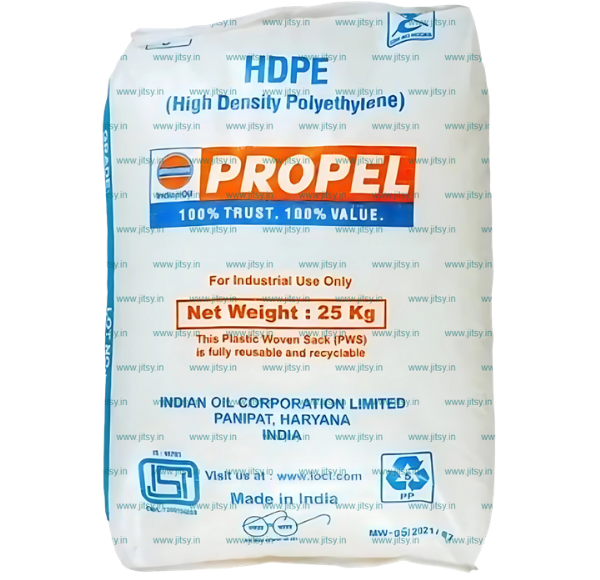
HDPE Propel 080M60 is a high-density polyethylene resin manufactured by Indian Oil Corporation Ltd. (IOCL) under its Propel brand. It is produced using Nova Chemical’s Sclairtech solution polymerization technology, which delivers a narrow molecular weight distribution and a consistent melt behavior — characteristics that directly translate to stable, high-throughput injection moulding.
The grade is supplied as natural-coloured granules and is engineered specifically for injection moulding applications. It is not a general-purpose HDPE; its formulation is optimised for rigid, high-volume moulded parts where fast mould filling, dimensional stability under load, and impact resistance during repeated use all matter simultaneously. IOCL launched 080M60 to improve productivity and part performance in material-handling applications, and the grade’s property profile reflects that intent clearly.
With a melt flow index of 8.0 g/10 min and a density of 0.960 g/cm³, HDPE 080M60 occupies the high-flow end of the injection-moulding HDPE spectrum. This makes it well-suited to large, geometrically complex cavities — such as crate bodies and pallet decks — where lower-flow grades would require higher injection pressures, longer cycles, and more frequent rejects. At the same time, the balance of tensile yield strength, flexural modulus, and notched impact resistance ensures that moulded parts remain serviceable under demanding logistics and warehouse conditions.
IOCL certifies HDPE 080M60 as compliant with IS 10146:1982, IS 10141:1982, and FDA CFR Title 21 Section 177.1520 for olefin polymers. These designations confirm the material’s suitability for applications where food contact or regulatory traceability is required, including closures, caps, and reusable crates used in food distribution.
Technical Insights
The technical profile of HDPE Propel 080M60 is best understood not as a list of numbers but as an integrated set of performance signals. Each property answers a specific question that a moulding engineer or procurement team would ask before qualifying a grade.
- Melt Flow Index — 8.0 g/10 min (ASTM D1238, 190 °C / 2.16 kg): A high MFI means the resin flows readily under injection pressure. For large moulded parts like crate bodies and pallets, this reduces cycle time, lowers clamp pressure requirements, and minimises sink marks or short shots. It is the primary reason this grade is positioned for productivity-focused injection operations.
- Density — 0.960 g/cm³ (ASTM D1505, 23 °C): At 0.960 g/cm³, this is a fully high-density polyethylene. Higher density in HDPE correlates with greater crystallinity, which in turn delivers better rigidity, chemical resistance, and barrier properties compared with lower-density variants. For material-handling crates and pallet components, this density level is the standard expectation.
- Tensile Yield Strength — 25 MPa (ASTM D638): This is the stress level at which the part begins to deform plastically under tension. A 25 MPa yield strength is appropriate for structural moulded parts that must resist warping under load without requiring wall thickness overdesign.
- Elongation at Yield — 11% / Elongation at Break — >800% (ASTM D638): The combination of a defined yield point with very high elongation at break indicates a tough rather than brittle failure mode. Parts will deform before they fracture, which is critical for crates and pallets that experience drop impacts, corner stresses, and forklift tine loads.
- Flexural Yield Strength — 20 MPa / Flexural Modulus — 850 MPa (ASTM D790): Flexural modulus is the most direct indicator of part stiffness. At 850 MPa, moulded panels and crate walls will hold shape under stacking loads without excessive deflection. This value also guides rib and wall thickness decisions at the design stage.
- Notched Izod Impact Strength — 90 J/m (ASTM D256, 23 °C): An impact strength of 90 J/m at room temperature is strong for a high-flow injection grade. It reflects the grade’s ability to absorb sudden energy — drops, collisions, forklift impacts — without cracking along notch or weld-line geometries.
- Hardness — 55 Shore D (ASTM D2240): Shore D hardness governs surface scratch resistance and the perception of part quality. At 55 Shore D, the moulded surface is firm and scuff-resistant, which matters for crates and closures that move through high-contact logistics environments.
- Vicat Softening Point — 127 °C (ASTM D1525, 10 N): This indicates the temperature at which the material begins to soften under a defined load. At 127 °C, the grade retains dimensional integrity well above the temperatures encountered in warehouse storage, automotive interiors, or hot-fill applications for caps and closures.
- Recommended Processing Temperature — 180–215 °C: This window allows flexibility across different machine configurations and part geometries without degrading the material. Staying within this band is important for colour consistency and mechanical property retention in moulded parts.
All values above are typical figures from the IOCL grade sheet and are not specification limits. Values may change without prior notice; buyers should verify against the current IOCL technical datasheet prior to final grade qualification.
Applications
Industrial Crates and Material-Handling Equipment
The primary application for HDPE Propel 080M60 is injection-moulded crates used in logistics, warehousing, food distribution, and industrial material handling. The combination of high melt flow and strong flexural modulus allows processors to fill large, ribbed crate cavities quickly while producing parts that stack under load without creeping or warping. The high elongation at break ensures that crates survive corner drops and forklift impacts through deformation rather than brittle fracture. This grade is well-matched to crate moulds ranging from small 15-litre fish crates to large 600×400 footprint logistics containers.
Pallets and Load-Bearing Platforms
For injection-moulded pallets, the balance of rigidity and impact toughness in HDPE 080M60 is particularly relevant. Pallets experience compressive loads in racking systems, dynamic impact during forklift entry, and bending stress when loaded across unsupported spans. The 850 MPa flexural modulus and 90 J/m impact strength together support part geometries designed to handle these conditions without wall thickness overdesign, which in turn reduces raw material consumption per pallet and improves cycle economics.
Caps, Closures, and Fitments
HDPE 080M60’s high MFI makes it an efficient choice for the thin-wall, high-cavitation moulds used in caps and closures for industrial containers, lubricant packaging, and household chemical bottles. The 55 Shore D hardness gives closures the firmness needed for consistent thread engagement and torque retention. The regulatory compliance with FDA CFR 21 177.1520 and IS 10141:1982 also positions this grade for closures on food and beverage containers where material traceability to an approved standard is a procurement prerequisite.
Luggage Shells and Hard-Shell Consumer Goods
The grade’s dimensional stability and impact resistance profile extends its applicability to injection-moulded luggage shells, equipment cases, and similar rigid enclosures. While IOCL positioned crates and pallets as the primary use case at launch, the underlying property set — particularly the notched impact performance and high Vicat softening point — is consistent with what luggage and equipment-case manufacturers require to pass impact and thermal specifications.
Caps and Closures for Agrochemical and Chemical Packaging
In the Indian agrochemical and chemical packaging market, HDPE caps and containers are the dominant format. HDPE 080M60’s chemical resistance (a function of its high density and crystallinity) and regulatory basis (IS 10146:1982) make it a credible choice for closures on containers holding fertilisers, crop protection products, and industrial chemicals, provided that the specific chemical compatibility of HDPE is verified against the end product.
Comparable Alternatives
IOCL HDPE Propel 080M60 is the most directly related variant. The “U” designation indicates UV stabilisation, making 080M60U the preferred option for outdoor crates, pails, and material-handling equipment exposed to direct sunlight over extended periods. In terms of base polymer properties — MFI, density, mechanical profile, and processing temperature — the two grades are closely aligned. The distinction is purely in additive package: 080M60 is the standard injection grade for indoor or covered-environment applications, while 080M60U adds stabilisation for outdoor durability. Processors running outdoor crate or open-yard pallet applications should specify 080M60U; those running indoor logistics or food-chain applications typically use 080M60.
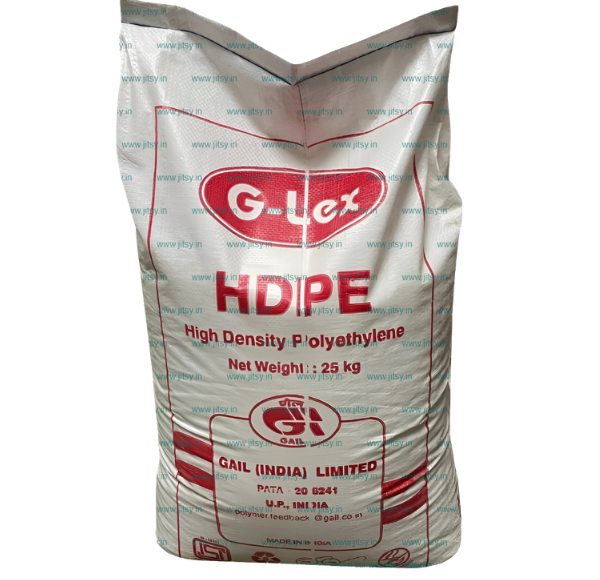
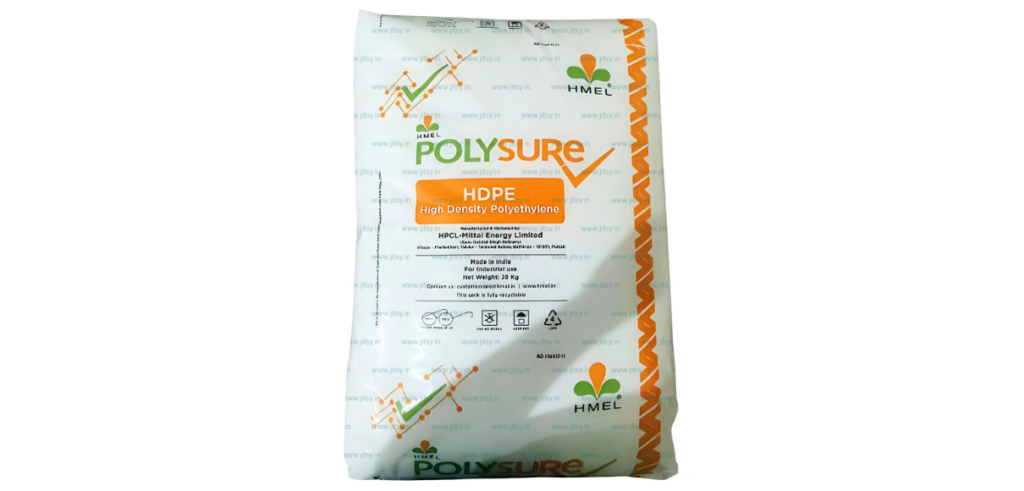
Other Indian injection-moulding HDPE grades exist from manufacturers such as HMEL, GAIL, OPAL, and Haldia Petrochemicals in broadly similar MFI and density ranges targeting crates, pallets, and closures. However, direct property-by-property equivalence between those grades and HDPE Propel 080M60 cannot be confirmed without manufacturer-to-manufacturer TDS comparison. Differences in polymerization technology, additive selection, and property measurement protocols can produce meaningful performance variation even at nominally similar MFI and density values. Any substitution decision should be preceded by mould and process trials on the specific equipment and geometry in use.
International grades in the comparable range — such as Borouge, LyondellBasell, and similar producers’ injection-moulding HDPE lines — are available in the Indian market through import. These may offer different additive systems or narrower molecular weight distributions relevant to specific applications, but landed cost, lead time, import documentation, and lot traceability are factors that typically favour domestic IOCL supply for buyers operating in India’s SME manufacturing segment.
The competitive position of HDPE Propel 080M60 in the Indian market rests on domestic availability through IOCL’s distribution network, established compliance documentation (BIS, FDA), and the consistency of supply backed by India’s largest refiner-petrochemical producer. For buyers whose primary concern is supply reliability, regulatory documentation, and domestic GST-compliant procurement, 080M60 is a well-supported choice within the injection-moulding crate and pallet segment.
Common Search Variants
Buyers and engineers commonly search for this grade using terms such as HDPE dana for crates, injection grade HDPE granules, crate-grade HDPE resin India, Propel granules 080M60, and IOCL HDPE injection moulding grade. Frequent misspellings and alternate notations include HDPE 80M60, 080M6O (with the letter O instead of zero), Propel 080M60 HDPE, and IOCL 080M60 granules — all refer to the same product.

















Reviews
Clear filtersThere are no reviews yet.