What Is Vinyl Acetate Content in EVA and Why It Matters
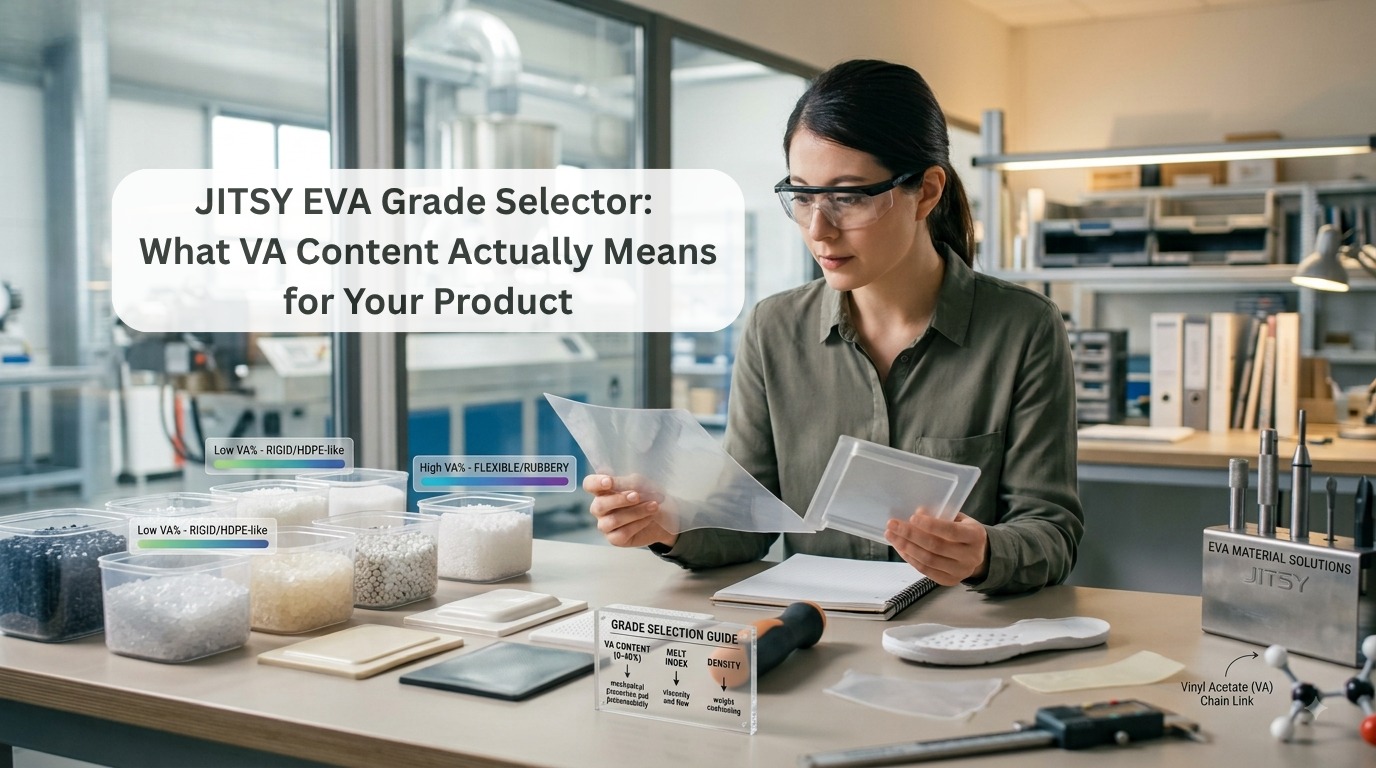
Vinyl acetate content determines how ethylene vinyl acetate gets handled during processing; it also affects flexibility, softness, elasticity, bonding, and rigidity. Lower VA content tends to create firmer materials, while higher levels help improve softness and flexibility; picking the right option is crucial for product performance.
EVA Grades Available on JITSY at a Glance
JITSY offers different EVA granules for varied processing needs and end-use applications. These ethylene vinyl acetate granules help with footwear, foam, cables, films, adhesives, and even polymer compounding. Buyers can compare grades based on VA content, melt flow rate, flexibility, hardness, and each specific need for the application.
What Each VA Content Level Means for Your Process
Lower VA content results in more rigid materials and generally shows more of a firm, plastic-like character. Medium VA content provides a more suitable balance of flexibility, processability, and mechanical performance. Materials with higher VA content are softer, more flexible, and have higher elasticity, as well as improved adhesion and compatibility. The appropriate level is determined by the desired product characteristics, processing behavior, flexibility, and performance of the final application.
How to Choose the Right EVA Grade for Your Application
When selecting an EVA grade, consider the product and processing method as well as performance requirements.
- Foam and footwear: Higher contents of VA allow for improved softness, flexibility, and cushioning; therefore, comfort is improved. The EVA foam that is selected must be appropriate for the foaming process and the chemistry.
- Films and flexible offerings: Flexibility, clarity, and sealing, as well as ease of processing, are to be emphasized.
- Cables and insulation: Consider flexibility, electrical features, flame performance, and processing.
- Adhesives and compounds: VA content, melt flow, compatibility, and adhesion are to be considered, as well as needs of the formulation.
- Rigid: More rigid Applications are likely to require lower grades of VA.
Evaluate technical data of EVA foam raw materials, perform production trials, and utilize POE vs EVA Comparison to select most appropriate polymers.
Why Source EVA from JITSY
JITSY helps businesses source EVA raw material through a structured B2B procurement process. Buyers can find suitable grades, get technical information, check product documentation, and even receive sourcing support from one single platform. This makes JITSY useful for EVA manufacturers, an EVA granules manufacturer, and also for companies that need a dependable EVA raw material supplier.
On JITSY, the platform covers a wide range of applications like footwear and foam, but also cables, films, adhesives, and polymer processing. Buyers can compare grades by VA content, melt flow rate, and application needs, plus processing conditions. This method supports more informed purchasing decisions and lowers the risk of choosing the wrong EVA plastic granules.
Common Mistakes to Avoid When Selecting EVA Grades
Avoid choosing EVA just because the price looks good, or because the VA content seems appealing. Buyers should also weigh things like melt flow rate, hardness, flexibility, compatibility, the processing temperature, and what the final use actually demands.
Avoid unsuitable EVA foam material selections by checking equipment and formulation compatibility; compare technical data, conduct trials, and evaluate alternatives before selecting higher VA grades.
Final Thoughts + CTA
The right EVA grade depends on the VA content, processing needs, formulation, and the real end-use performance. Explore suitable EVA granules from JITSY and select the material that matches your product requirements.