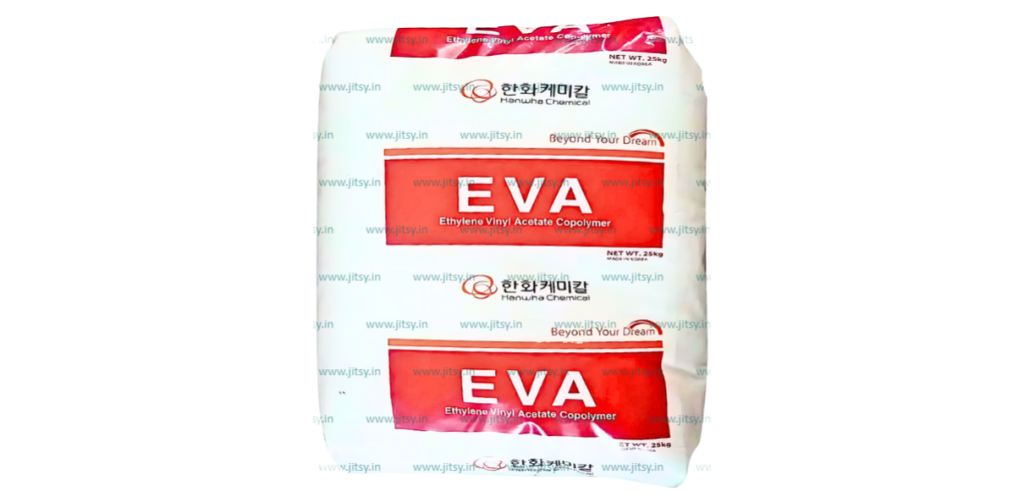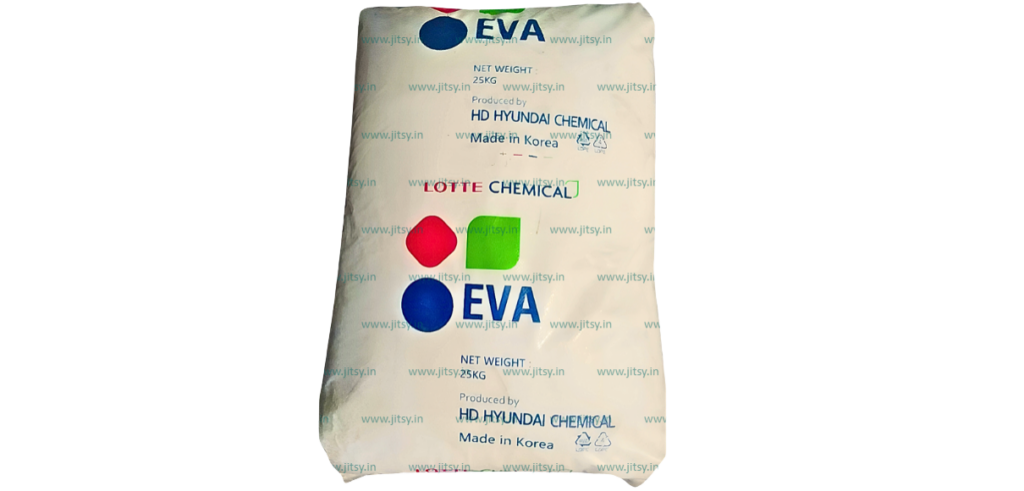
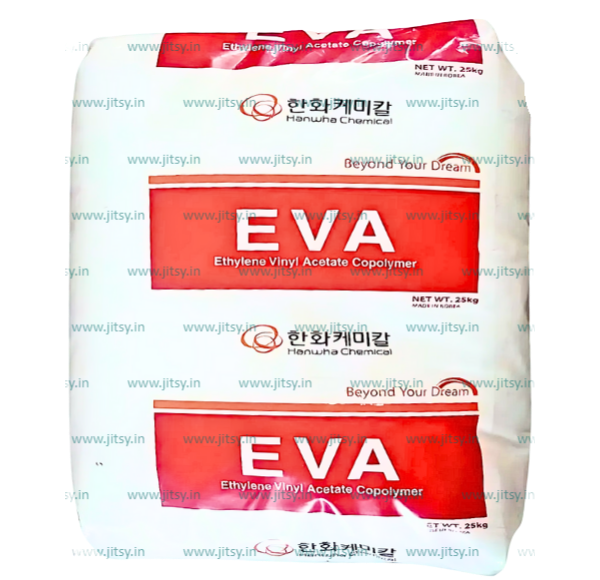
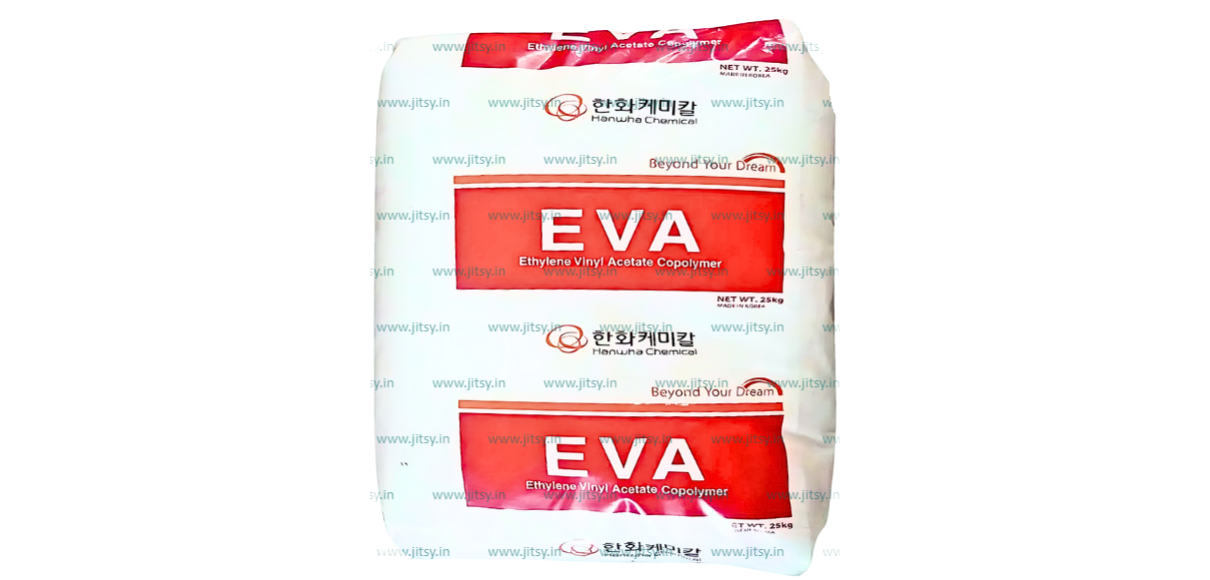
Hanwha TotalEnergies EVA E181F
Hanwha TotalEnergies EVA E181F (often marketed as Hanwha 181F / 18% EVA 181F) is a premium ethylene‑vinyl acetate (EVA) copolymer resin engineered for crosslinked foam applications, especially athletic shoe midsoles, insoles, and performance footwear foam. With 18 wt% vinyl acetate, melt flow rate 2.5 g/10 min (190°C/2.16 kg), and density 0.940 g/cm³, E181F is designed for conventional kneading and rolling equipment to mix crosslinking and foaming agents for high-rebound, cushioned, and robust footwear foams.
Widely used in: Sports shoe manufacturing, foam converters, and footwear supply chains across Delhi-NCR, Gujarat, Maharashtra, Tamil Nadu, and all major Indian footwear clusters.
Functional Features & Specs – Why E181F Leads in Foam Footwear
- 18%-VA-Foam: 18 wt% vinyl acetate – industry standard for athletic and performance foam footwear.
- 2.5-MFR-Foaming: Melt flow rate 2.5 g/10 min (190°C/2.16 kg, ASTM D1238) – perfect for crosslinked foam processing, balancing flow and body.
- Athletic-Focused: Engineered and documented for midsoles/insoles of sports and performance footwear.
- High-Elongation: 750% elongation at break – delivers resilient, cushioned, long-lasting foam.
- Kneader-Friendly: Tailored for use in conventional kneading and rolling equipment for mixing crosslinker and foaming agents.
- Mechanical Authority: Tensile strength ≈ 23.5 MPa, density 0.940 g/cm³ – robust, high-rebound, and lightweight.
- Process Consistency: Detailed Hanwha documentation and global recognition ensure batch-to-batch reliability for converters and shoe brands.
- Global Certification: Supported by Hanwha TotalEnergies leaflets, MSDS, and global distributor data, making E181F a reference foam EVA for technical buyers.
Applications – Where E181F Excels
Crosslinked Foam Midsoles & Insoles
- Regions: Delhi-NCR, Gujarat, Tamil Nadu, Maharashtra
- Uses: Athletic shoe midsoles, insoles, footbeds, high-performance foam layers
- Why: 18% VA, 2.5 MFR, 750% elongation – ideal for rebound, cushioning, and durability in sports and performance footwear
General Footwear Foam
- Uses: Cushion pads, sandals, casual footwear, comfort layers, footbeds
- Why: Soft, lightweight, shock-absorbing foam – engineered for footwear comfort and performance
EVA Foam Sheets & Blocks
- Uses: Sports equipment, protective padding, ergonomic mats, industrial cushioning
- Why: High elongation and tensile strength, excellent for soft, resilient foam sheets and blocks
Other Crosslinked Foam Applications
- Uses: Sports mats, yoga mats, helmet padding, vibration-damping components
- Why: Proven crosslinking, mechanical stability, and foamability for diverse cushioning needs
Hanwha TotalEnergies EVA E181F
Hanwha TotalEnergies EVA E181F (often marketed as Hanwha 181F / 18% EVA 181F) is a premium ethylene‑vinyl acetate (EVA) copolymer resin engineered for crosslinked foam applications, especially athletic shoe midsoles, insoles, and performance footwear foam. With 18 wt% vinyl acetate, melt flow rate 2.5 g/10 min (190°C/2.16 kg), and density 0.940 g/cm³, E181F is designed for conventional kneading and rolling equipment to mix crosslinking and foaming agents for high-rebound, cushioned, and robust footwear foams.
Widely used in: Sports shoe manufacturing, foam converters, and footwear supply chains across Delhi-NCR, Gujarat, Maharashtra, Tamil Nadu, and all major Indian footwear clusters.
Functional Features & Specs – Why E181F Leads in Foam Footwear
- 18%-VA-Foam: 18 wt% vinyl acetate – industry standard for athletic and performance foam footwear.
- 2.5-MFR-Foaming: Melt flow rate 2.5 g/10 min (190°C/2.16 kg, ASTM D1238) – perfect for crosslinked foam processing, balancing flow and body.
- Athletic-Focused: Engineered and documented for midsoles/insoles of sports and performance footwear.
- High-Elongation: 750% elongation at break – delivers resilient, cushioned, long-lasting foam.
- Kneader-Friendly: Tailored for use in conventional kneading and rolling equipment for mixing crosslinker and foaming agents.
- Mechanical Authority: Tensile strength ≈ 23.5 MPa, density 0.940 g/cm³ – robust, high-rebound, and lightweight.
- Process Consistency: Detailed Hanwha documentation and global recognition ensure batch-to-batch reliability for converters and shoe brands.
- Global Certification: Supported by Hanwha TotalEnergies leaflets, MSDS, and global distributor data, making E181F a reference foam EVA for technical buyers.
Applications – Where E181F Excels
Crosslinked Foam Midsoles & Insoles
- Regions: Delhi-NCR, Gujarat, Tamil Nadu, Maharashtra
- Uses: Athletic shoe midsoles, insoles, footbeds, high-performance foam layers
- Why: 18% VA, 2.5 MFR, 750% elongation – ideal for rebound, cushioning, and durability in sports and performance footwear
General Footwear Foam
- Uses: Cushion pads, sandals, casual footwear, comfort layers, footbeds
- Why: Soft, lightweight, shock-absorbing foam – engineered for footwear comfort and performance
EVA Foam Sheets & Blocks
- Uses: Sports equipment, protective padding, ergonomic mats, industrial cushioning
- Why: High elongation and tensile strength, excellent for soft, resilient foam sheets and blocks
Other Crosslinked Foam Applications
- Uses: Sports mats, yoga mats, helmet padding, vibration-damping components
- Why: Proven crosslinking, mechanical stability, and foamability for diverse cushioning needs
CAS Number
HSN Code
Need Technical guidance?
Why buy Hanwha TotalEnergies EVA E181F from JITSY?
- Direct import & verified sourcing
- Authorised channel–led supply
- Pan-India B2B delivery
- Transparent pricing & documentation
- Mobile app–enabled procurement
- Full compliance (RoHS, BIS/ISI, EPR, GST)
- Batch traceability
FAQs
Frequently Asked Questions
What is Hanwha TotalEnergies EVA E181F?
Where is E181F used in footwear?
How does E181F compare to other 18% / 2.5 EVA foam grades?
What processing equipment and methods are recommended?
Is E181F only for athletic shoes?
How is Hanwha 181F recognized in India?
Why does transparent sourcing matter for E181F?
Other Relevant Products Available in India
Related Articles
How Digital Procurement Platforms Reduce Raw Material Fraud
this is how businesses have functioned. Fast, informal, and based on mutual trust. And in 99.9% of the cases, it works. Goods are delivered, payments are made, and relationships grow stronger.
How Crude Oil Prices Impact Plastic Raw Material Costs in India
Walk into any manufacturing facility across India—from PVC pipe makers in Gujarat to automotive component manufacturers in Chennai—and you’ll hear this logic echoed in boardrooms and production floors alike.
The Great Procurement Divide: Why Your Best Engineers Make Your Worst Buyers
Walk into any manufacturing facility across India—from PVC pipe makers in Gujarat to automotive component manufacturers in Chennai—and you’ll hear this logic echoed in boardrooms and production floors alike.
Copy-Paste vs. Innovation
Is playing it safe actually the riskiest strategy? The uncomfortable truth about innovation avoidance in Indian manufacturing
The Credit Cycle Shift: Why 30-Day Payments Are Winning Hearts (and Wallets)
If you’ve ever done business in India, you know this vibe. Long credit terms weren’t just about money—they were about trust, connection, and that warm cup of chai shared over a handshake deal. You’d walk into your supplier’s office, chat about life, and walk out with goods worth lakhs, no questions asked.
The Great Inventory Debate
When COVID hit, I think all of us felt something shift in how we think about supply chains. It wasn’t just disruption. It was exposure. What we thought was working… suddenly wasn’t. Containers stuck. Prices all over the place. Buyers unsure. And for many manufacturers—raw material just wasn’t there when it was needed.
The 0.1% That Destroys the 99.9%: Why Documentation in B2B Trade Isn’t Optional Anymore
this is how businesses have functioned. Fast, informal, and based on mutual trust. And in 99.9% of the cases, it works. Goods are delivered, payments are made, and relationships grow stronger.
The Growing Crisis of Non-Compliance in India’s Polymer Supply Chain: Protecting Your Business
Complete Documentation Isn’t Optional – It’s Critical
Their prices are surprisingly competitive – sometimes 3-5% below market rates. Your production costs look great on paper. But six months later, you receive a notice from the GST department that sends a chill down your spine: your input tax credits are being reversed, with interest and penalties.
5 Ways to Optimise Your Polymer Supply Chain
With raw material costs fluctuating, logistics challenges mounting, and quality expectations rising, manufacturers need concrete strategies to optimise their polymer procurement process.
The Identity Crisis in Indian Manufacturing: Are We Building Products or Programming Them?
When a textile manufacturer in Surat recently won a major international contract, they didn’t credit their superior fabric quality. Their winning edge? “We’re not a textile company,” the CEO declared. “We’re a technology company that happens to make textiles.”
The Great Manufacturing Paradox: Why ‘Made in India’ Could Mean ‘Made By No One’
The Hidden Cost of Perfect Efficiency
From Crisis to Opportunity: How Indian Manufacturers Are Building Unshakeable Supply Chains
It’s not about massive machinery or sprawling factory floors – it’s about something far more fundamental: the way manufacturers are reimagining their supply chains.
Decoding Polymer Raw Material Pricing: Understanding the Complex World of Polymer Economics in 2025
Welcome to the intricate, often bewildering world of polymer raw material pricing – a landscape so complex that even seasoned professionals find it challenging to navigate.
Advanced Polymer Processing Technologies for 2025: A Guide for Indian Manufacturers
This comprehensive guide explores the latest advancements that Indian manufacturers should consider implementing to maintain competitive advantage and meet evolving market demands.
My Journey to Make Procurement Fair and Transparent
I decided to start JITSY to change the game. I wanted to make procurement transparent and fair for SMEs.