


Blog





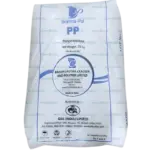
BCPL PP Brahma-pol FH110N
BCPL PP Brahma-pol FH110N is a polypropylene homopolymer TQ film grade manufactured by Brahmaputra Cracker and Polymer Limited using Novolen Gas Phase technology. Developed for tubular water quenched film applications, this grade is known for its excellent stiffness, high clarity, and balanced processing performance. It is widely used in transparent food packaging, textile overwraps, garment bags, and snack food packaging where converters need clean appearance, stable film behavior, and dependable output consistency.
Brahmaputra Cracker and Polymer Limited is a recognized Indian polypropylene producer, and its Brahma-pol PP range is positioned for industrial conversion segments such as film and raffia. FH110N sits in the TQ film category and is designed for buyers who need a homopolymer resin that supports transparent film production with a useful balance of stiffness and optical appeal. In practical terms, this makes the grade relevant for packaging manufacturers looking for better shelf presentation, neat film structure, and reliable machinability in water quenched film lines.
Technical Specifications and Deep Technical Insights
FH110N has a melt flow index of 10.5 g/10 min at 230°C, which places it in a processing window suitable for tubular water quenched film production. This flow profile supports smoother melt behavior and helps converters maintain output consistency across packaging film applications. The grade offers tensile strength at yield of 340 kg/cm², elongation at yield of 9%, and flexural modulus of 15000 kg/cm². For film manufacturers, this combination translates into a material that delivers good stiffness without losing essential handling performance. The stiffness profile is especially important in transparent packaging because it helps films hold shape better during conversion, packing, and presentation. FH110N also has a Vicat softening point of 154°C, which reflects the thermal resistance expected from a polypropylene homopolymer film grade in this category. This supports stable downstream handling in applications where film appearance, sealing behavior, and dimensional consistency matter. Recommended processing guidance includes barrel temperatures of 180–240°C and a die temperature around 200°C. In production terms, this gives converters a practical operating range for maintaining film clarity, melt stability, and efficient line performance. Buyers evaluating film grades often compare MFI, stiffness, tensile behavior, and thermal response together, and FH110N stands out as a grade built specifically for transparent TQ film applications rather than general-purpose raffia or molding use.Applications
Transparent Food Packaging
FH110N is well suited for transparent food packaging where film clarity and stiffness directly affect product visibility and pack appearance. Converters producing clear packaging films can use this grade where neat presentation, stable film formation, and consistent processing are important for commercial packaging lines.Textile Overwraps
In textile overwrap applications, FH110N supports films that need a clean look and enough stiffness for proper wrapping performance. This makes it relevant for packaging fabrics, garments, and textile products where optical quality and handling characteristics both influence buyer acceptance.Garment Bags
For garment bag manufacturing, FH110N offers the clarity needed for product display along with the structural feel expected in transparent protective packaging. It is a suitable choice for converters supplying apparel packaging where appearance, fold behavior, and line processability matter.Snack Food Packaging
Snack food packaging often requires transparent or presentation-focused film structures, and FH110N fits this need with its stiffness and clarity profile. It can be positioned for packaging formats where visual appeal, film uniformity, and dependable conversion performance are key selection factors.Performance Advantages
FH110N is valued for the way it balances optical and mechanical performance in TQ film production. Its clarity helps improve packaging presentation, while its stiffness supports better film feel and handling. The grade is also attractive for converters seeking a homopolymer resin that runs efficiently in tubular water quenched film lines without being positioned as a broad, undefined packaging resin. That application focus is one of its strongest commercial advantages.Comparable Alternatives
Within the BCPL portfolio, WH034N is positioned more toward raffia, monofilament, and woven sack applications, so it serves a different conversion need from FH110N. Buyers focused on transparent films should not treat both grades as interchangeable because FH110N is specifically aligned to TQ film processing and packaging clarity. Compared with MRPL HF010, FH110N sits in a very similar application space for TQ film, garment bags, and general transparent packaging. Both grades target film converters, but FH110N should be positioned strongly where BCPL sourcing preference, documentation access, and TQ film clarity-stiffness balance are key buying factors. Against broader market alternatives from OPaL, IOCL, and Reliance, FH110N competes as a specialized Indian PP homopolymer film grade for transparent packaging applications. The rationale behind the grade is clear: it is assigned to converters who need a film-focused resin with suitable flow, good stiffness, and optical performance rather than a raffia-first or injection-first grade.
BCPL PP Brahma-pol IH120N
BCPL PP Brahma-pol IH120N is a polypropylene homopolymer injection moulding grade manufactured by Brahmaputra Cracker and Polymer Limited using Novolen Gas Phase technology. Designed for general purpose injection moulding, this grade is widely used in rigid packaging, furniture, houseware, planters, pots, and closures where processors need dependable flow, good stiffness, and balanced mechanical strength.
Brahmaputra Cracker and Polymer Limited is an established Indian producer of polypropylene resins, and its Brahma-pol PP portfolio serves multiple conversion segments including injection moulding, film, and raffia. IH120N is positioned as a general purpose injection moulding grade for manufacturers looking for a practical balance of processability and part rigidity. In commercial terms, it is a relevant choice for moulders producing everyday rigid plastic components that require stable filling, consistent cycle performance, and reliable finished-part strength.
Technical Specifications and Deep Technical Insights
IH120N has a melt flow index of 12 g/10 min at 230°C, placing it in a versatile processing range for general injection moulding applications. This flow level supports easier cavity filling and makes the grade suitable for a broad mix of moulded products, especially where processors want a balance between flow and structural performance rather than an ultra-high-flow or highly specialized resin. The grade delivers tensile strength at yield of 350 kg/cm², elongation at yield of 8%, and flexural modulus of 15500 kg/cm². Together, these values indicate a material designed for rigid moulded articles that need shape retention, handling strength, and dependable in-use performance. For manufacturers, the flexural modulus is especially relevant in products such as houseware, closures, and furniture parts where stiffness influences feel, durability, and dimensional stability. IH120N also shows a Vicat softening point of 154°C, which supports thermal resistance expected from a polypropylene homopolymer in rigid consumer and industrial moulded applications. This helps processors and buyers assess the grade for products that may face moderate thermal exposure during use, storage, or downstream handling. Recommended processing guidance includes barrel temperatures of 200–280°C and a mould temperature around 40°C. In practical moulding operations, this gives processors a workable window for maintaining melt flow, part finish, and cycle consistency. Buyers comparing injection grades usually evaluate MFI, stiffness, tensile properties, and thermal response together, and IH120N stands out as a straightforward general purpose PP homopolymer for rigid injection moulding rather than film or raffia conversion.Applications
General Purpose Injection Moulding
IH120N is designed for general purpose injection moulding where processors need a dependable polypropylene homopolymer for routine production. Its balanced flow and stiffness profile make it suitable for manufacturers producing standard rigid parts with repeatable mould filling and consistent finished-part quality.Rigid Packaging
In rigid packaging applications, IH120N supports moulded products that require structural integrity, neat appearance, and practical processing performance. This makes it relevant for packaging manufacturers producing containers, caps, and other rigid items where stiffness and mechanical strength are important selection factors.Furniture and Houseware
For furniture and houseware segments, IH120N offers the rigidity and strength needed for moulded consumer products that must hold shape during regular use. It is a suitable grade for manufacturers making practical household items where durability, mouldability, and production efficiency all matter.Planters, Pots, and Closures
Planters, pots, and closures require a resin that can process smoothly while maintaining enough stiffness for end-use handling and product form. IH120N fits these applications well because it supports stable moulding and produces rigid parts suited to everyday industrial and consumer use.Performance Benefits
IH120N is valued for its combination of good flow properties, stiffness, and mechanical strength in general injection moulding. It helps processors achieve efficient mould filling while still delivering rigid finished parts. This makes it commercially attractive for manufacturers who want a dependable PP injection moulding grade for a broad range of rigid applications without moving into highly specialized or narrow-use materials.Comparable Alternatives
Within the BCPL portfolio, FH110N is positioned for TQ film applications and WH034N is aligned with raffia and woven conversion, so neither should be treated as a direct substitute for IH120N in injection moulding. IH120N is the correct BCPL grade when the requirement is rigid moulded products rather than film or woven structures. Compared with MRPL HM012T, IH120N sits in a closely comparable category because both grades are built for general purpose injection moulding and have similar melt flow positioning. Buyers evaluating the two would typically compare supply preference, stiffness profile, processing familiarity, and documentation support. Against OPaL MH13 and Reliance Repol H110MA, IH120N competes as a practical Indian PP homopolymer for rigid packaging and houseware moulding. The rationale behind the grade is clear: it is assigned to applications that need balanced flow, good rigidity, and reliable mechanical performance rather than thin-wall ultra-high-flow moulding or film-grade conversion.
BCPL PP Brahma-pol WH034N
BCPL PP Brahma-pol WH034N is a polypropylene homopolymer raffia grade manufactured by Brahmaputra Cracker and Polymer Limited using Novolen Gas Phase technology. Designed for stretched tape and yarn applications, this grade combines low water carry-over, good processability, and strong mechanical performance for woven sack and monofilament converters.
Brahma-pol WH034N is positioned in BCPL’s raffia and monofilament portfolio as a dependable low-MFI polypropylene homopolymer for tape extrusion and related downstream conversion. It is especially relevant for manufacturers that need stable tape formation, good tenacity, and efficient processing on raffia lines. BCPL, a GAIL group company, produces this grade through Novolen Gas Phase technology, supporting consistent polymer quality for industrial packaging and monofilament applications.
Technical Insights
BCPL WH034N typically offers a melt flow index of 3.4 g/10 min and density of 0.91 g/cm³, making it suitable for raffia tape extrusion where controlled flow and mechanical strength are important. Typical performance values include tensile strength at yield around 340 kg/cm², elongation at yield around 9%, flexural modulus near 15000 kg/cm², and Vicat softening point around 154°C. This profile supports a useful balance of stiffness, drawability, and thermal resistance for woven sack and yarn applications. A major processing advantage of WH034N is its low water carry-over, which helps improve line stability and reduce processing interruptions. Combined with good processability, this makes the grade attractive for high-speed raffia operations where output consistency and tape quality are critical. The mechanical profile also supports durable finished structures in sacks, ropes, monofilament products, and selected thermoforming applications.Applications
Woven Sacks
Brahma-pol WH034N is highly suitable for woven sacks used in cement, fertilizer, food grain, and sugar packaging. Its raffia-grade flow and mechanical strength help converters produce stretched tapes with the durability and consistency needed for heavy-duty industrial packaging applications.Leno Bags
This grade is also relevant for leno bag production, especially in vegetable and agricultural packaging. Its processability supports stable tape extrusion and weaving performance, helping manufacturers create lightweight yet durable packaging structures for produce handling and transport.Ropes and Monofilament
WH034N performs well in ropes and monofilament applications where strength, stiffness, and processing consistency matter. The grade’s homopolymer structure and raffia-oriented characteristics make it useful for converters producing industrial filament-based products that require dependable mechanical behavior.Thermoforming Applications
In thermoforming, WH034N can be used where processors need a polypropylene homopolymer with good stiffness and thermal resistance. While it is primarily known for raffia and tape applications, its broader utility makes it relevant for selected thermoformed products depending on design and processing conditions.Comparable Alternatives
Within the BCPL portfolio, WH034N is the key raffia and monofilament grade, while grades such as FH110N are positioned more toward film packaging applications. This makes WH034N the more suitable choice for stretched tape, woven sack, and yarn-oriented processing rather than tubular film conversion. In the broader Indian market, WH034N can be compared with MRPL HR003, OPaL RH03, and Reliance Repol B210R type raffia grades. All are relevant for woven sacks and raffia tapes, but WH034N stands out for buyers specifically seeking BCPL-origin polypropylene with low water carry-over, good processability, and application alignment across woven sacks, leno bags, ropes, and monofilament.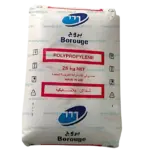
Borouge PP HC116FB
Borouge PP HC116FB is a polypropylene homopolymer made for raffia tapes used in woven fabrics. It is produced by Abu Dhabi Polymers Company Limited (Borouge) in Ruwais, UAE, using Borouge’s proprietary Borstar® process. Buyers also search for it as Borouge PP HC116FB, HC116FB raffia grade and HC116FB PP granules.
The grade is supplied as natural-colour, odourless pellets for slit-tape and raffia extrusion. Its typical melt flow rate of 3.2 g/10 min suits stretched-tape lines that convert resin into woven sacks, fabrics, ropes, twines, nets, monofilament and strapping.
Woven sack and fabric manufacturers choose HC116FB for three reasons Borouge highlights: easy processability, low water carry-over and good mechanical properties. The grade contains no slip additive, no antiblock and no calcium stearate. This gives converters more control over their own masterbatch and additive choices.
Borouge also issues a current food-contact declaration for HC116FB as a plastic intermediate material. The grade is not intended for medical, pharmaceutical or healthcare applications.
Borouge HC116FB Technical Insights
The values below are typical values from Borouge’s official April 2025 Product Data Sheet. Borouge states they are not for specification work.- Melt Flow Rate (MFR/MFI): 3.2 g/10 min (230°C/2.16 kg, ASTM D1238) A low MFR means a high-viscosity, high-molecular-weight melt. This flow range is the standard for raffia lines. It gives the melt strength needed to cast a stable film, slit it into tapes and stretch them into strong, oriented yarn.
- Density: 900–910 kg/m³ (0.900–0.910 g/cm³, ASTM D792) Polypropylene’s low density gives more tape length and fabric area per kilogram of resin. That helps woven sack producers control material cost per bag.
- Melting Temperature: 162°C (DSC, ISO 3146) This is typical of a polypropylene homopolymer. It guides the extrusion temperature profile and the stretching-oven setting during tape orientation.
- Vicat Softening Temperature: 154°C (ISO 306, Method A) This is the temperature at which the material starts to soften under load. A high Vicat value indicates good heat resistance during hot stretching, storage and transport.
- Low Water Carry-Over In water-quenched tape lines, less water carried out of the quench bath helps keep downstream drying, stretching and winding stable. Borouge states this as a feature but does not publish a numerical value.
- Additive Profile: No Slip, No Antiblock, No Calcium Stearate Without these additives, there is less risk of surface migration, which can affect printing, coating, lamination and friction. Converters can tune performance with their own masterbatch. The grade is not additive-free. Only these three are confirmed absent.
- Mechanical Properties Borouge describes the grade’s mechanical properties as good. Tensile strength, flexural modulus, impact strength, hardness and tape tenacity are not published in the public datasheet. Confirm these through tape and fabric trials.
- Processing Settings Borouge does not publish a fixed temperature profile, draw ratio or line speed for HC116FB. Conditions depend on the equipment and application, so set them through line trials with Borouge technical support.
Borouge HC116FB Applications
Raffia and Slit Tape Extrusion
Raffia tape extrusion is the core application for HC116FB. The 3.2 MFR, easy processing and low water carry-over support stable film casting, slitting and stretching into oriented PP tapes. This makes it a strong raw material for tape lines producing yarn for woven fabrics.Woven Bags and Sacks
HC116FB is listed by Borouge for woven bags and woven sacks. PP woven sacks of this type are widely used to pack grain, sugar, fertiliser, cement, polymers and other bulk commodities. Bag converters should validate fabric strength, load capacity and packaging rules for each end use.Ropes, Twines and Nets
Ropes, twines and nets are official HC116FB applications. The grade’s tape-forming properties suit oriented strands for agricultural twine, packaging rope and netting. HC116FB is not documented as UV-stabilised, so outdoor ropes and nets need a suitable UV masterbatch and ageing tests.Monofilament and Strapping
HC116FB is used for PP monofilament and polypropylene strapping. Its high-viscosity melt suits drawing into oriented filaments and straps. Diameter, draw ratio, break load and elongation should be set and verified through converter trials.Straws
Borouge lists straws among the grade’s applications. Where straws contact food, the converter must confirm final-article compliance and check local single-use plastic rules before production.Food-Contact Woven Packaging
Borouge’s March 2026 food-contact declaration covers HC116FB as a plastic intermediate material. It covers IS 16738:2018, clauses 3.1 and 3.2 of IS 10910:1984, US FDA 21 CFR 177.1520 and EU Regulation 10/2011. This supports its use in food-grade woven packaging such as grain and sugar sacks. Final packaging compliance, including migration testing after adding masterbatch or print, remains the converter’s or food packer’s responsibility.Borouge HC116FB Alternatives and Comparable Grades in India
No manufacturer has declared an Indian grade officially equivalent to Borouge HC116FB. The grades below are comparable raffia candidates based on MFR and application, but equivalence is not confirmed. Any switch needs controlled line trials and a review of compliance documents.Reliance Repol H030SG
H030SG is a domestic PP homopolymer for raffia tapes, woven sacks, monofilaments, carpet backing and geotextiles. Its MFR is 3.4 g/10 min, slightly higher than HC116FB’s 3.2. Like HC116FB, it is designed for good processability and low water carry-over. Reliance declares IS 10910 and IS 16738 compliance for H030SG. HC116FB differs by its broader listed uses (ropes, nets, strapping, straws) and its confirmed absence of slip, antiblock and calcium stearate.HMEL Polysure R03RR
R03RR is a Novolen-process raffia homopolymer for tape yarn, monofilament, ropes, leno bags and strapping. Its key published values are:- MFR of 3.4 g/10 min
- Tensile strength at yield of 36 MPa
- Flexural modulus of 1,550 MPa
- HDT of 100°C
Haldia Halene-P R103
R103 is a Spheripol-process homopolymer for stretched-tape raffia, woven sacks, FIBC bags, ropes and yarn. Its key published values are:- MFI of 3 g/10 min, slightly lower than HC116FB
- Tensile strength at yield of 34 MPa
- Flexural modulus of 1,500 MPa
MRPL MANGPOL HR003
HR003 is a Novolen gas-phase raffia grade for woven sacks, fabrics, leno bags, FIBC, ropes and yarn. It has the highest flow in this group, with an MFI of 3.5 g/10 min. MRPL publishes a broad compliance declaration covering IS, FDA and EU food-contact requirements.IndianOil PROPEL 1030RG
1030RG is the closest by flow, with an MFI of 3.3 g/10 min. It is a raffia grade for stretched tapes and woven sacks, positioned for low water carry-over and balanced tenacity and elongation. Confirm the current TDS directly with IndianOil before relying on detailed data. Why HC116FB is positioned differently: it combines a 3.2 MFR, Borstar® technology, low water carry-over and a clean additive profile with no slip, antiblock or calcium stearate. It is backed by a current food-contact declaration from Borouge. It is a dedicated raffia grade and should not be confused with Borouge HC402BF, which shares the 3.2 MFR but is designed for BOPP film.Common Search Variants
Borouge PP HC116FB, HC116FB raffia grade, HC116FB PP granules, HC116FB datasheet, PP raffia dana, 3.2 MFI PP dana, PP granules for woven sacks, PP tape grade India, Borstar HC116FB, PP lamination, PP fibre Misspellings: Borouge HC 116 FB, Borouge HC-116FB, Borogue HC116FB, Boruoge HC116FB, Borouge HC116BF, HC116FB granuals, HC116FB polypropelene, PP raffiya grade, PP rafia granules
Borouge PP HC205TF
Borouge PP HC205TF is a nucleated polypropylene homopolymer for sheet extrusion and thermoforming of rigid packaging. It is made by Abu Dhabi Polymers Co. Ltd (Borouge) in Ruwais, UAE, using the proprietary Borstar® process and Borstar Nucleation Technology (BNT). Buyers also search for it as Borouge HC205TF, HC205TF polypropylene and HC205TF thermoforming grade.
The grade is supplied as natural-colour pellets with a typical melt flow rate of 4 g/10 min. It suits both in-line and offline thermoforming of cups, trays, dairy containers, margarine tubs and other rigid food packaging.
Packaging converters choose HC205TF for a combination of benefits that Borouge highlights:
• Faster crystallisation, which shortens cycle times and raises output
• Excellent transparency
• Good organoleptic properties (low taste and odour transfer)
• A good balance of stiffness and impact at room temperature
• Consistent post-forming shrinkage and a broad processing window
Borouge provides a current food-contact declaration for HC205TF as a plastic intermediate material. The grade is not intended for medical, pharmaceutical or healthcare applications.
Borouge HC205TF Technical Insights
The values below are typical values from Borouge's official April 2025 Product Data Sheet. Borouge states they are not for specification work.- Melt Flow Rate (MFR/MFI): 4 g/10 min (230°C/2.16 kg, ISO 1133) This is a core flow range for thermoforming PP. It gives enough melt strength for stable sheet extrusion with low sag during heating, while still forming well into detailed mould shapes.
- Density: 900–910 kg/m³ (ISO 1183) Low density gives more sheet area and more containers per kilogram. That helps lower the material cost per pack.
- Tensile Modulus: 1,750 MPa (ISO 527-2) High stiffness lets converters make thinner, lighter cups and trays that still hold their shape when stacked, filled and handled.
- Tensile Stress at Yield: 35.5 MPa, and Tensile Strain at Yield: 8% (ISO 527-2) These show good strength before permanent deformation. They support rigid containers that resist bending and crushing.
- Flexural Modulus: 1,750 MPa (ISO 178) and 1,700 MPa (ASTM D790A, 1% secant) Flexural modulus measures resistance to bending. These values confirm strong rigidity for container walls, rims and lids.
- Notched Charpy Impact at 23°C: 5 kJ/m² (ISO 179/1eA), and Notched Izod Impact at 23°C: 40 J/m (ASTM D256) These show impact resistance at room temperature, typical of a stiff homopolymer. The two values use different tests and are not directly comparable. For cold storage or severe drop needs, test the finished part.
- Heat Deflection Temperature: 107°C at 0.45 MPa (ISO 75-2) This indicates good shape stability under heat and load during filling, transport and warm-climate storage.
- Vicat Softening Temperature: 145°C (ISO 306, Method A) This shows the temperature at which the material begins to soften. It is a useful guide for setting thermoforming and heat-exposure limits.
- Rockwell Hardness: R106 (ISO 2039-2) High surface hardness helps resist scratches and scuffs, keeping clear packs looking good on the shelf.
- Borstar Nucleation Technology (BNT) Nucleation raises the crystallisation temperature, so formed parts set faster in the mould. This leads to shorter cycles, higher output and more consistent shrinkage and clarity.
- Processing Settings The current datasheet does not give fixed setpoints because conditions depend on the equipment and application. Legacy Borealis guidance from 2004 suggests the following starting points: • Extrusion melt temperature: 210–240°C • Solid-phase forming: 140–155°C • Mould temperature: 20–40°C • Post-forming shrinkage: about 1.5–2.5%
Borouge HC205TF Applications
Dairy and Food Packaging
HC205TF is widely used for thermoformed dairy containers, yoghurt cups and margarine tubs. Its good organoleptic properties help protect the taste and smell of sensitive foods, and its stiffness supports thin-wall, lightweight designs. Borouge's food-contact declaration covers the resin under Indian, US FDA and EU rules. Finished packs must still pass migration testing for their actual food type, temperature and contact time.Clear Trays and Cups
The grade's excellent transparency makes it a strong choice for high-clarity trays, cups and rigid food containers where product visibility drives sales. High stiffness and surface hardness help packs hold their shape and keep a clean, glossy look on retail shelves.Rigid Food Containers
HC205TF suits rigid PP containers for ready meals, deli products, fresh produce and takeaway packaging. Its stiffness-impact balance at room temperature and consistent shrinkage help keep container dimensions accurate for lid fit and stacking. Microwave, freezer, hot-fill or retort use is not covered by the datasheet and needs separate testing.Lids and Copolymer Blends
Borouge lists blending HC205TF with copolymers for lids. This lets converters adjust stiffness, toughness and snap-fit behaviour. Blend ratio, sealing performance and impact strength should be validated on the intended copolymer and line.In-Line and Offline Thermoforming
HC205TF is designed for both in-line (extrude-and-form) and offline (roll-fed) thermoforming. Its broad processing window, faster crystallisation and good consistency help converters raise output and reduce scrap on high-speed PP thermoforming lines.Borouge HC205TF Alternatives and Comparable Grades in India
No manufacturer has confirmed any grade as a direct drop-in equivalent to Borouge HC205TF. The grades below are comparable thermoforming candidates. Any switch needs sheet extrusion, forming, clarity, odour and migration trials.Reliance Repol H050MN
H050MN is the closest Indian-made functional alternative. Like HC205TF, it is a nucleated PP homopolymer for sheet extrusion, thermoforming and injection moulding. Its key published values are: • MFR of 3.4 g/10 min, slightly lower flow than HC205TF's 4 g/10 min • Flexural modulus of 1,750 MPa • HDT of 110°C • Izod impact of 35 J/m, versus 40 J/m for HC205TF H050MN also contains an antistatic agent. Reliance does not make the same transparency and organoleptic claims that Borouge makes for HC205TF, so check optical and taste performance in trials.LyondellBasell Moplen HP640J
HP640J is a nucleated PP homopolymer for extrusion and thermoforming, with an MFR of around 4 g/10 min. It is a close international technical match by flow and process, but regular availability in India is unverified. Its clarity, shrinkage and food-contact documentation should be confirmed separately.IndianOil Propel P1060MG
P1060MG is a domestic PP homopolymer with high stiffness and good processability. Its MFR of about 6 g/10 min is notably higher than HC205TF's, which can change sheet sag, thickness distribution and forming behaviour. It is a conditional candidate only.Reliance Repol H030SG
H030SG has a similar MFR of 3.4 g/10 min but is designed for raffia tapes and woven sacks, not clear thermoformed packaging. Close MFR alone does not make it a suitable substitute.HC205TF vs Random and Impact Copolymers
As a homopolymer, HC205TF generally offers higher stiffness and heat resistance than random copolymers. Random copolymers may give better impact strength or clarity depending on the grade. Impact copolymers are usually preferred for low-temperature toughness and heavy drop loads, while HC205TF suits packs where stiffness, clarity and appearance matter most. Why HC205TF is positioned differently: it combines a 4 MFR thermoforming flow, BNT nucleation for faster cycles, excellent transparency, good organoleptics, consistent shrinkage and a current Borouge food-contact declaration in one grade.Common Search Variants
Borouge HC205TF, HC205TF polypropylene, HC205TF datasheet, thermoforming PP granules, clear PP thermoforming grade, nucleated PP homopolymer, 4 MFI PP dana, PP for dairy containers, HC205TF equivalent India Misspellings: HC 205 TF, HC205 TF, HC-205TF, Borogue HC205TF, Borouqe HC205TF, polypropelene HC205TF, thermo forming polypropylene, thermoforming granuals, PP homopolimer
Borouge PPCP BJ368MO
Borouge BJ368MO is a state-of-the-art heterophasic polypropylene block copolymer (PPCP) engineered with Borstar Nucleation Technology (BNT) for advanced injection moulding. With a very high melt flow rate of 70 g/10 min, BJ368MO delivers outstanding processability, high stiffness-impact balance, and reduced cycle times—making it ideal for thin-wall packaging, food containers, and industrial parts. Its nucleated formulation ensures rapid crystallisation and dimensional stability, while built-in antistatic and mould release properties support fast, hygienic, and efficient production. Supplied as natural granules in 25 kg bags, BJ368MO is designed for converters demanding global food-contact compliance and reliable, high-output manufacturing.
Functional Features (Industry Authority)
Borouge BJ368MO stands out for its process efficiency and technical performance. The high MFI supports rapid mould filling in thin-wall and complex geometries, reducing energy consumption and cycle times. BNT nucleation technology ensures consistent part quality, minimized warpage, and superior surface gloss. The grade’s balanced stiffness and impact properties make it suitable for both rigid and semi-flexible applications. Antistatic and easy mould release features improve hygiene and throughput, particularly in food and medical packaging. BJ368MO meets stringent global food-contact standards, including EU 10/2011, Swiss Ordinance 817.023.21, GB31604.8-2021, Mercosur 32/2010, and IS 9845:1988.Applications & Industry Insights
Thin-Wall Packaging & Containers
BJ368MO is engineered for high-speed production of thin-wall packaging, food tubs, and ice cream cups. Its high flow and nucleation allow for lightweight, rigid containers with excellent surface gloss and dimensional accuracy. The antistatic property ensures clean demoulding and hygiene, crucial for food and medical packaging.Appliances & Houseware
Appliance and houseware manufacturers use BJ368MO for components requiring a balance of gloss, impact strength, and rigidity—such as trays, covers, and internal fittings. The grade’s processability supports complex part designs and high-cavitation tooling.Compounding & Industrial
BJ368MO serves as a robust base resin for mineral-filled and reinforced PPCP compounds, supporting the production of custom grades for automotive, electronics, and specialty industrial parts. Its high stiffness and impact balance enable reliable performance in functional and load-bearing applications.Performance Advantages
Compared to non-nucleated PPCP and lower-MFI grades, BJ368MO delivers faster crystallisation, shorter cycle times, and output gains. Its BNT technology ensures superior part quality, reduced warpage, and consistent mechanical performance. The built-in antistatic and mould release features further differentiate BJ368MO from competitors like Reliance B650MN and IOCL 3650MN, especially for hygiene-critical and export applications.Compliance & Documentation
BJ368MO is certified for food-contact under EU 10/2011, Swiss 817.023.21, GB31604.8-2021, Mercosur 32/2010, and IS 9845:1988. Each batch is supplied with a Product Data Sheet (PDS), Safety Data Sheet (SDS), Certificate of Analysis (COA), and regulatory compliance letters upon request. Converters are responsible for final article testing under their specific conditions of use.Packaging & Storage
Supplied in robust 25 kg bags, BJ368MO should be stored in dry, covered spaces below 50°C and away from direct sunlight. JITSY ensures pan-India logistics, reliable stock availability, and export-ready documentation for global buyers.
Daoming DCP 40C
Daoming DCP 40C is a 40% dicumyl peroxide (DCP) masterbatch on calcium carbonate, engineered by Jiangsu Daoming Chemical for safe, efficient crosslinking of rubber, polyolefins, foams, XLPE cables, and technical plastics. Its pre-dispersed, free-flowing form ensures easy dosing, uniform dispersion, and safety in high-volume Indian manufacturing.
Functional Features & Technical Detail
- 40% DCP on CaCO₃: Stable, high-purity masterbatch with active oxygen ≤2.3%.
- Predictable Cure: Decomposition at ~120 °C, half-life: 10h@116 °C, 1h@135 °C, 1min@180 °C.
- Safe Handling: Powder/granule form reduces dust, improves weighing and feeding.
- Versatile Use: For rubber (EPDM, NR, NBR, HNBR, silicone), polyolefins, XLPE, EVA foams.
- Non-Blooming: Carrier system ensures uniform crosslinking and avoids blooming.
Applications
Daoming DCP 40C is used by manufacturers for:- Rubber Compounding: Crosslinking in EPDM, silicone, NR, NBR, HNBR for hoses, seals, gaskets, and technical goods.
- XLPE & Cables: Enhances heat, chemical, and stress-crack resistance in cross-linked PE insulated power cables.
- Foam Plastics & EVA: Enables resilient, stable foams for footwear, sports, and construction.
- Shoes & EPS: Used in EVA/rubber shoe soles, EPS, and flame-retardant coatings for robust, durable output.
Daoming DCP 99
Daoming Dicumyl Peroxide 99 is a high-purity (≈99%) organic peroxide, supplied as a white crystalline powder or diamond-like crystals. It is based on bis(α,α-dimethylbenzyl) peroxide (CAS 80‑43‑3), and is used as a crosslinking agent for polyethylene (PE), EVA, CPE, EPDM, EPR, silicone rubber, and as a polymerization initiator for styrene and related monomers. Manufactured by Jiangsu Daoming Chemical—a specialist in dicumyl peroxide—this grade is engineered for consistent curing, reliable supply, and robust technical documentation.
Functional Features & Technical Detail
- High Purity Consistency: ~99% purity ensures repeatable crosslinking in PE, EVA, and elastomer compounds.
- Optimized Physical Form: Free-flowing white crystals or powder for easy dosing and dispersion in compounding lines.
- Versatile Crosslinker: Suitable for crosslinking a wide variety of polymers and elastomers, as well as for initiating styrene polymerization.
- Enhanced End-Product Performance: DCP crosslinking boosts thermal, chemical, and stress-crack resistance, and mechanical strength.
- Professional Manufacturing: Produced under ISO-based quality systems by Jiangsu Daoming Chemical, with strong technical and documentation support.
Applications
Daoming DCP 99 is trusted by Indian and global manufacturers for:- Polyethylene & EVA Crosslinking: Used in foam sheets, footwear midsoles, insulation, and specialty construction foams—enabling 3D network formation for heat, chemical, and stress-crack resistance.
- Rubber Vulcanization: Crosslinking agent for EPDM, EPR, silicone rubber—improving heat aging, compression set, and mechanical properties for automotive, cable, and industrial parts.
- Styrene Polymerization & EPS: Initiator in styrene polymerization and expandable polystyrene (EPS) production, supporting cell structure and flame-retardant EPS.
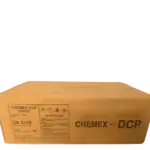
Dongsung Chemex DCP 40
CHEMEX DCP 40 is a pre-dispersed dicumyl peroxide formulation containing approximately 40% active DCP on an inert mineral carrier (typically CaCO₃), supplied as a free-flowing powder or granules. This format delivers all the crosslinking efficiency of DCP with safer handling, easier dosing, and better dispersion compared to 99% DCP crystals—making it ideal for Indian manufacturers of rubber, EVA/PE foam, XLPE cable compounds, TPVs, and technical rubber goods.
Functional Features & Technical Detail
- 40% Active DCP on Carrier: Consistent peroxide content, with 60% CaCO₃ for safe, accurate dosing.
- Easy Handling: Powder/granule form reduces dust, improves flow, and minimizes risk of hotspots or dosing errors.
- Versatile Crosslinking Agent: Suitable for natural and synthetic rubbers, EVA, PE, XLPE, TPVs, and more.
- Uniform Dispersion: Formulated for even distribution and non-blooming behavior in rubber and polymer compounds.
- Safer Processing: Lower active content and inert carrier improve workplace safety and handling compliance.
Applications
CHEMEX DCP 40 is trusted by Indian and global processors for:- Rubber Crosslinking: EPDM, EPR, HNBR, NBR, silicone rubber, and NR for automotive hoses, seals, gaskets, and profiles.
- EVA & PE Foam Crosslinking: Footwear, sports, construction foams with excellent compression set and rebound.
- XLPE & Cable Compounds: Crosslinks PE/EVA for wire and cable insulation/jacketing, improving heat and stress-crack resistance.
- TPVs, Shoe Soles, Seals: Used in thermoplastic vulcanizates, EVA/rubber shoe soles, and technical rubber goods.
- EPS, Foams, Flame-Retardant Systems: For foam structure, cell formation, and as a co-curing agent in composite and coating systems.
Dongsung Chemex DCP 99
Dongsung CHEMEX DCP is a high-purity dicumyl peroxide (DCP, CAS 80‑43‑3) engineered for use as a crosslinking agent and polymerization initiator in polyethylene (PE), EVA, ABS, EPS, and rubber. Available in solid (99%), liquid, and 40% carrier-based grades, CHEMEX DCP is a recognized global brand, now available in India through JITSY for cable, foam, footwear, and polymer processors seeking consistent DCP performance and robust technical documentation.
Functional Features & Technical Detail
- High-Purity DCP (≈99%): Ensures reliable, repeatable crosslinking and polymerization in PE, EVA, EPS, and elastomers with consistent active oxygen content.
- Multiple Handling Formats: Solid crystals, liquid, and 40% powder on CaCO3 carrier for compounding flexibility and safe dosing in various equipment.
- Efficient Crosslinking Agent: Supports robust foam formation, cable insulation, rubber vulcanization, and EPS expansion with superior thermal, chemical, and mechanical properties.
- Proven Decomposition Profile: Well-documented half-life and SADT data enable predictable cure design and safe processing windows.
- Trusted Global Brand: Produced in Dongsung's dedicated DCP plant in Yeosu, Korea, with ISO-based quality systems and full regulatory compliance for Indian industry.
Applications
Dongsung CHEMEX DCP 99% is trusted by leading Indian and global manufacturers for:- EVA & PE Foam Crosslinking: Enables resilient, durable foam for footwear, sports goods, and construction applications with excellent compression set and recovery.
- XLPE & Cable Insulation: Delivers superior heat, chemical, and environmental stress-crack resistance in crosslinked PE/EVA cable jacketing and insulation.
- Rubber Vulcanization: Used in EPDM, natural rubber, NBR, and technical rubber goods for automotive hoses, seals, gaskets, and industrial components.
- EPS & Styrenic Polymerization: Acts as a foaming aid and free-radical initiator for EPS, improving cell structure and flame-retardant performance.
- Composite & Coating Curing: Initiates crosslinking in unsaturated polyester resins, specialty coatings, and recycled polyolefin blends.
Technical Support & Application Guidance
JITSY works closely with processors to:- Select appropriate CHEMEX DCP grades (solid 99%, liquid, or 40% powder) for specific PE/EVA, rubber, or EPS formulations.
- Interpret general half-life and decomposition concepts from Dongsung and independent DCP literature for local processing conditions.
- Provide reformulation support for transitioning between DCP sources or optimizing cure profiles.
- Coordinate direct technical contact with Dongsung when specialized assistance is needed.
Quality Assurance, Traceability & Regulatory Support
CHEMEX DCP supplied by JITSY is sourced from authenticated Dongsung channels, delivered in sealed, labeled packaging with batch identification for traceability. Internal QA and documentation procedures support customer audits, regulatory filings, and product stewardship requirements in automotive, cable, building materials, and export-oriented industries across India.Related Products & Technical Alternatives
Other DCP Grades & Formulations
Beyond CHEMEX DCP 99%, we also offer:- CHEMEX DCP 40: 40% active DCP on CaCO3 carrier for safer handling and easier dosing.
- CHEMEX DCP L (Liquid): Liquid formulation for specific compounding equipment and applications.
- Other Global DCP 99% Grades: Alternative suppliers offer comparable DCP 99% products for performance and cost comparison.
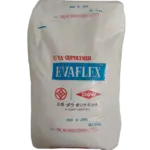
Dow-Mitsui EVA Evaflex 460
Dow-Mitsui EVA Evaflex 460 is an ethylene‑vinyl acetate (EVA) copolymer resin from Dow-Mitsui’s Evaflex family, engineered for demanding industrial applications including flexible packaging films, extrusion, molding, compounding, adhesives, sealants, and wax blends. With 18% vinyl acetate, a melt index of 2.5 g/10 min (190 °C/2.16 kg), and density of 0.941 g/cm³, Dow-Mitsui EVA Evaflex 460 balances flexibility, toughness, and processability for use in multilayer films, hot-melt adhesives, cable compounds, and molded parts. Supplied as natural granules with BHT antioxidant stabilization, it is trusted by Indian converters for reliability and consistent global quality.
Polymer Structure & Key Properties
- Polymer Type: Ethylene‑vinyl acetate copolymer (EVA)
- Vinyl Acetate (VA): 18% by weight
- Melt Index: 2.5 g/10 min (190 °C/2.16 kg)
- Density: 0.941 g/cm³
- Melting Point: ~88 °C
- Vicat Softening Point: ~64 °C
- Hardness: ~90 Shore A / 39 Shore D
- Brittleness Temperature: ≤ -100 °C
- Stabilizer: BHT antioxidant
Functional Performance
- Toughness: High tensile and impact strength
- Flexibility: Maintains softness at subzero temperatures
- Sealability: Low seal initiation temperature, strong hot-tack for films
- Adhesion: Works as a tie-layer in coextruded films
- Compounding: Enables hot-melt adhesives, wax blends, cable compounds
Applications & Hierarchy
Industrial & Packaging Films
- Blown/cast films for flexible packaging
- Coextruded barrier films (tie-layer in PE/PA/EVOH)
- Heat-sealable inner layers, shrink/stretch films
- Major clusters: Gujarat, Maharashtra, West Bengal, Tamil Nadu, Delhi NCR
Molding & Profiles
- Injection molded parts, grips, soft components
- Extruded profiles, strips, footwear blends
- Major clusters: Tamil Nadu, Maharashtra, Haryana
Adhesives, Sealants & Wax Blends
- Hot-melt adhesives (packaging, bookbinding)
- Heat-sealable coatings for paper, foil, films
- Wax blends for improved toughness, flexibility
- Clusters: Gujarat, Maharashtra, UP, West Bengal
Compounding & Modification
- Wire & cable compounds (impact/flex modification)
- EVA/PE blends for plastics
- Automotive, toys, athletic goods
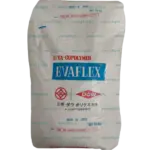
Dow-Mitsui EVA Evaflex EV40LW
Dow-Mitsui EVA Evaflex EV40LW is a premium ethylene-vinyl acetate (EVA) copolymer resin engineered as a high-VA, lower-melt-index adhesive and compounding grade. Developed by Dow-Mitsui Polychemicals Co., Ltd., Evaflex EV40LW combines high vinyl acetate content with controlled melt flow, delivering superior cohesive strength, excellent flexibility, and reliable processing for hot-melt adhesives, flexible foams, pressure-sensitive applications, and specialty compounds. Positioned as a lower-MI alternative to EVAFLEX EV40W, EV40LW offers enhanced body, thicker adhesive films, and improved stress-crack resistance—making it the preferred choice for Indian manufacturers requiring balanced flexibility with processing control and mechanical durability.
Functional & Technical Features
- High-VA Formulation: Delivers exceptional flexibility and outstanding adhesion to diverse substrates including paper, board, plastics, and films.
- Lower-Melt-Index Design: Provides superior cohesive strength and film-building capability compared to higher-MI grades, enabling thicker, more durable adhesive layers.
- Controlled Rheology: Optimized melt flow ensures precise control in hot-melt extrusion, coating, and compounding operations without excessive fluidity.
- Stress-Crack Resistant: Excellent low-temperature flexibility and resistance to mechanical stress, ideal for flexible compounds and cable jacketing.
- Versatile Processability: Suitable for hot-melt adhesives, pressure-sensitive applications, flexible foams, and specialty cable/tubing compounds.
- Global & India-Ready Compliance: Supports food-contact and regulatory frameworks for Indian and export markets.
- Batch-to-Batch Consistency: Dow-Mitsui's strict quality controls ensure uniform VA content, melt index, and predictable performance across all applications.
Core Applications and Industry Use Cases
Hot-Melt Adhesives for Packaging and Bookbinding
Evaflex EV40LW's high VA (40%) and lower melt index (25–35 g/10 min) make it exceptionally suited for hot-melt adhesive formulations requiring strong, flexible bonds. In packaging applications—carton sealing, case bonding, edge banding—its controlled flow enables precise application with minimal stringing, while its superior tensile strength (5.5–7.0 MPa) ensures durable joints that resist peel and stress. For bookbinding and spine gluing, EV40LW delivers the cohesive strength needed for long-term flexibility without brittleness, supporting both rapid production cycles and demanding durability requirements. Processing temperatures of 160–190°C provide optimal balance between fluidity and viscosity control.- Precise film thickness control without excessive flow.
- Superior adhesive strength for demanding packaging applications.
- Excellent flexibility for stress-resistant bonds.
Pressure-Sensitive and Specialty Adhesives
Evaflex EV40LW's balanced rheology and high elongation (900–1100%) make it ideal for pressure-sensitive adhesive (PSA) systems, tapes, and labels. Its lower melt index ensures consistent tack development and excellent substrate wetting, while its flexibility prevents cracking under mechanical stress or temperature cycling. The grade's Shore A hardness (45–50) provides the soft character necessary for rapid adhesion without sacrificing peel strength or aging resistance.- Consistent tack and adhesion properties across production runs.
- Excellent aging resistance and long-term bond durability.
- Superior flexibility for tape and label applications.
Foam, Cushioning, and Soft Compound Applications
With 900–1100% elongation and Shore A hardness of 45–50, Evaflex EV40LW is excellent for flexible foam, cushioning pads, insoles, and protective packaging. Its high VA content ensures strong bonding between foam cells and substrates, while its lower melt index provides precise control during foam expansion and molding. The grade’s stress-crack resistance at low temperatures (glass transition ~-30°C) ensures performance in cold-storage and outdoor applications.- Superior softness and comfort properties for footwear and cushioning.
- Excellent cell bonding and structural integrity in foam compounds.
- Outstanding cold-flex performance for demanding environments.
Wire, Cable, and Flexible Tubing Compounds
Evaflex EV40LW's combination of high flexibility (900–1100% elongation), strong tensile strength (5.5–7.0 MPa), and stress-crack resistance makes it ideal for cable jacketing, insulation, and flexible tubing. Its lower melt index ensures uniform extrusion and consistent wall thickness, critical for electrical safety and performance. The grade's Vicat softening point (100–105°C) provides reliable thermal stability for industrial and automotive cable applications.- Uniform extrusion for consistent cable dimensions and performance.
- Excellent stress-crack resistance at low temperatures and under mechanical stress.
- Superior thermal stability for demanding industrial environments.