Home ยป Products ยป Polymers ยป Polypropylene Homopolymer ยป Borouge PP HC116FB
Borouge PP HC116FB
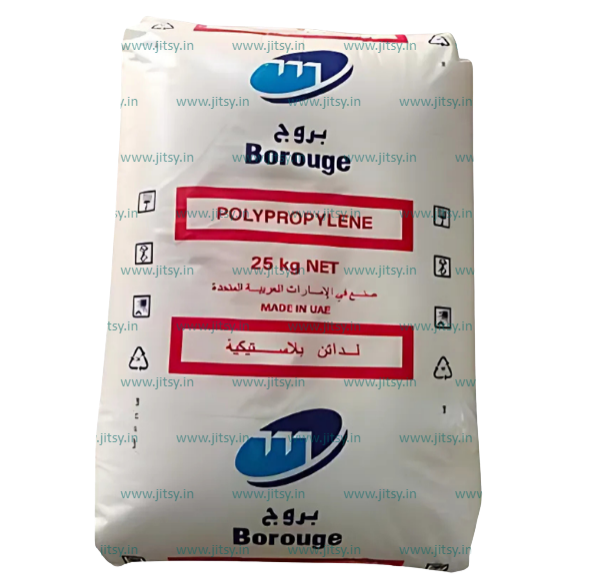
Borouge PP HC116FB is a polypropylene homopolymer made for raffia tapes used in woven fabrics. It is produced by Abu Dhabi Polymers Company Limited (Borouge) in Ruwais, UAE, using Borougeโs proprietary Borstarยฎ process. Buyers also search for it as Borouge PP HC116FB, HC116FB raffia grade and HC116FB PP granules.
The grade is supplied as natural-colour, odourless pellets for slit-tape and raffia extrusion. Its typical melt flow rate of 3.2 g/10 min suits stretched-tape lines that convert resin into woven sacks, fabrics, ropes, twines, nets, monofilament and strapping.
Woven sack and fabric manufacturers choose HC116FB for three reasons Borouge highlights: easy processability, low water carry-over and good mechanical properties. The grade contains no slip additive, no antiblock and no calcium stearate. This gives converters more control over their own masterbatch and additive choices.
Borouge also issues a current food-contact declaration for HC116FB as a plastic intermediate material. The grade is not intended for medical, pharmaceutical or healthcare applications.
Borouge HC116FB Technical Insights
The values below are typical values from Borougeโs official April 2025 Product Data Sheet. Borouge states they are not for specification work.
- Melt Flow Rate (MFR/MFI): 3.2 g/10 min (230ยฐC/2.16 kg, ASTM D1238)
A low MFR means a high-viscosity, high-molecular-weight melt. This flow range is the standard for raffia lines. It gives the melt strength needed to cast a stable film, slit it into tapes and stretch them into strong, oriented yarn. - Density: 900โ910 kg/mยณ (0.900โ0.910 g/cmยณ, ASTM D792)
Polypropyleneโs low density gives more tape length and fabric area per kilogram of resin. That helps woven sack producers control material cost per bag. - Melting Temperature: 162ยฐC (DSC, ISO 3146)
This is typical of a polypropylene homopolymer. It guides the extrusion temperature profile and the stretching-oven setting during tape orientation. - Vicat Softening Temperature: 154ยฐC (ISO 306, Method A)
This is the temperature at which the material starts to soften under load. A high Vicat value indicates good heat resistance during hot stretching, storage and transport. - Low Water Carry-Over
In water-quenched tape lines, less water carried out of the quench bath helps keep downstream drying, stretching and winding stable. Borouge states this as a feature but does not publish a numerical value. - Additive Profile: No Slip, No Antiblock, No Calcium Stearate
Without these additives, there is less risk of surface migration, which can affect printing, coating, lamination and friction. Converters can tune performance with their own masterbatch. The grade is not additive-free. Only these three are confirmed absent. - Mechanical Properties
Borouge describes the gradeโs mechanical properties as good. Tensile strength, flexural modulus, impact strength, hardness and tape tenacity are not published in the public datasheet. Confirm these through tape and fabric trials. - Processing Settings
Borouge does not publish a fixed temperature profile, draw ratio or line speed for HC116FB. Conditions depend on the equipment and application, so set them through line trials with Borouge technical support.
Borouge HC116FB Applications
Raffia and Slit Tape Extrusion
Raffia tape extrusion is the core application for HC116FB. The 3.2 MFR, easy processing and low water carry-over support stable film casting, slitting and stretching into oriented PP tapes. This makes it a strong raw material for tape lines producing yarn for woven fabrics.
Woven Bags and Sacks
HC116FB is listed by Borouge for woven bags and woven sacks. PP woven sacks of this type are widely used to pack grain, sugar, fertiliser, cement, polymers and other bulk commodities. Bag converters should validate fabric strength, load capacity and packaging rules for each end use.
Ropes, Twines and Nets
Ropes, twines and nets are official HC116FB applications. The gradeโs tape-forming properties suit oriented strands for agricultural twine, packaging rope and netting. HC116FB is not documented as UV-stabilised, so outdoor ropes and nets need a suitable UV masterbatch and ageing tests.
Monofilament and Strapping
HC116FB is used for PP monofilament and polypropylene strapping. Its high-viscosity melt suits drawing into oriented filaments and straps. Diameter, draw ratio, break load and elongation should be set and verified through converter trials.
Straws
Borouge lists straws among the gradeโs applications. Where straws contact food, the converter must confirm final-article compliance and check local single-use plastic rules before production.
Food-Contact Woven Packaging
Borougeโs March 2026 food-contact declaration covers HC116FB as a plastic intermediate material. It covers IS 16738:2018, clauses 3.1 and 3.2 of IS 10910:1984, US FDA 21 CFR 177.1520 and EU Regulation 10/2011. This supports its use in food-grade woven packaging such as grain and sugar sacks. Final packaging compliance, including migration testing after adding masterbatch or print, remains the converterโs or food packerโs responsibility.
Borouge HC116FB Alternatives and Comparable Grades in India
No manufacturer has declared an Indian grade officially equivalent to Borouge HC116FB. The grades below are comparable raffia candidates based on MFR and application, but equivalence is not confirmed. Any switch needs controlled line trials and a review of compliance documents.
Reliance Repol H030SG
H030SG is a domestic PP homopolymer for raffia tapes, woven sacks, monofilaments, carpet backing and geotextiles. Its MFR is 3.4 g/10 min, slightly higher than HC116FBโs 3.2. Like HC116FB, it is designed for good processability and low water carry-over. Reliance declares IS 10910 and IS 16738 compliance for H030SG. HC116FB differs by its broader listed uses (ropes, nets, strapping, straws) and its confirmed absence of slip, antiblock and calcium stearate.
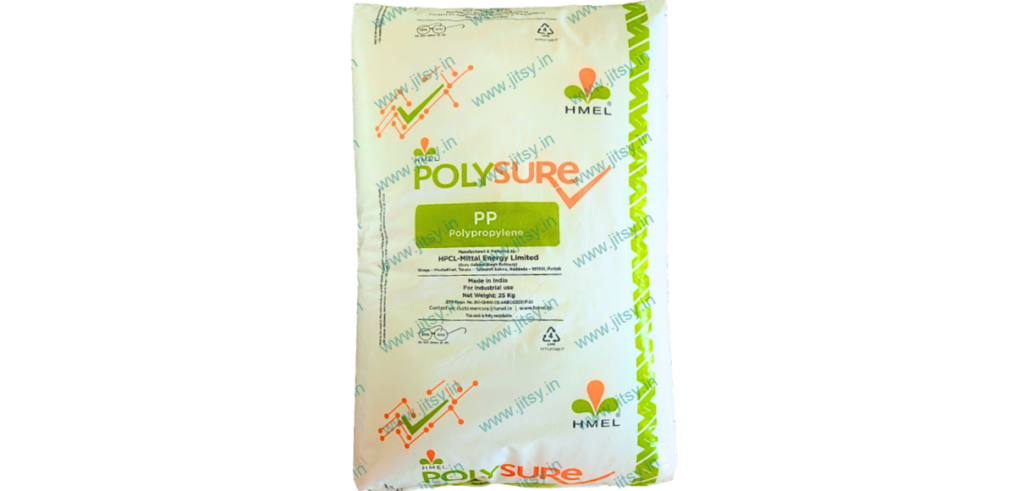
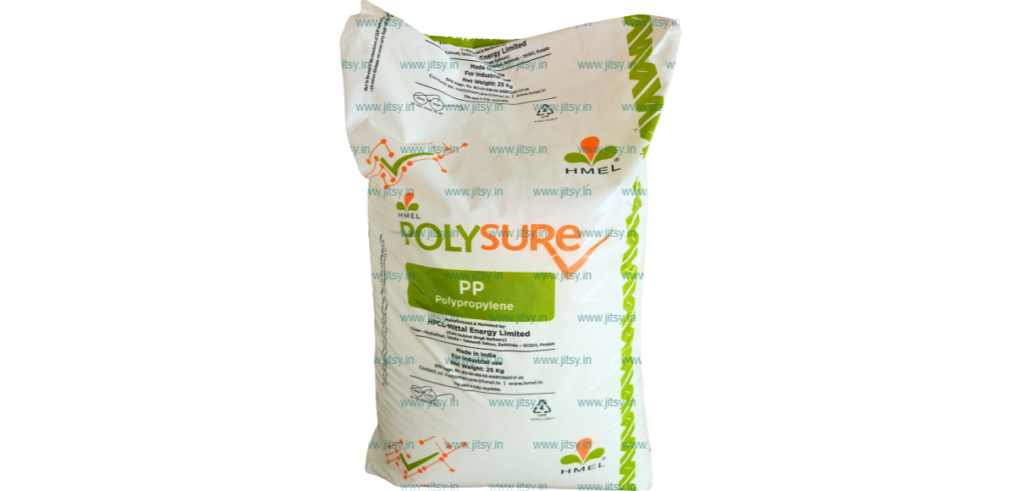
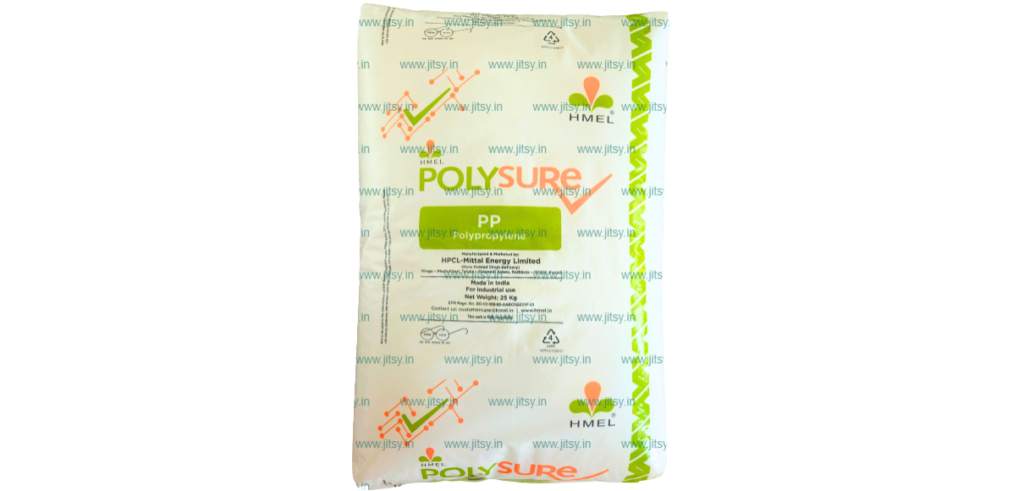
HMEL Polysure R03RR
R03RR is a Novolen-process raffia homopolymer for tape yarn, monofilament, ropes, leno bags and strapping. Its key published values are:
- MFR of 3.4 g/10 min
- Tensile strength at yield of 36 MPa
- Flexural modulus of 1,550 MPa
- HDT of 100ยฐC
HMEL also publishes a processing window, including a die temperature of 250โ270ยฐC and an oven temperature of 155โ160ยฐC. These values belong to R03RR only and do not apply to HC116FB.
Haldia Halene-P R103
R103 is a Spheripol-process homopolymer for stretched-tape raffia, woven sacks, FIBC bags, ropes and yarn. Its key published values are:
- MFI of 3 g/10 min, slightly lower than HC116FB
- Tensile strength at yield of 34 MPa
- Flexural modulus of 1,500 MPa
No matching statement on slip, antiblock or calcium stearate was found in its datasheet.
MRPL MANGPOL HR003
HR003 is a Novolen gas-phase raffia grade for woven sacks, fabrics, leno bags, FIBC, ropes and yarn. It has the highest flow in this group, with an MFI of 3.5 g/10 min. MRPL publishes a broad compliance declaration covering IS, FDA and EU food-contact requirements.
IndianOil PROPEL 1030RG
1030RG is the closest by flow, with an MFI of 3.3 g/10 min. It is a raffia grade for stretched tapes and woven sacks, positioned for low water carry-over and balanced tenacity and elongation. Confirm the current TDS directly with IndianOil before relying on detailed data.
Why HC116FB is positioned differently: it combines a 3.2 MFR, Borstarยฎ technology, low water carry-over and a clean additive profile with no slip, antiblock or calcium stearate. It is backed by a current food-contact declaration from Borouge. It is a dedicated raffia grade and should not be confused with Borouge HC402BF, which shares the 3.2 MFR but is designed for BOPP film.
Common Search Variants
Borouge PP HC116FB, HC116FB raffia grade, HC116FB PP granules, HC116FB datasheet, PP raffia dana, 3.2 MFI PP dana, PP granules for woven sacks, PP tape grade India, Borstar HC116FB, PP lamination, PP fibre
Misspellings: Borouge HC 116 FB, Borouge HC-116FB, Borogue HC116FB, Boruoge HC116FB, Borouge HC116BF, HC116FB granuals, HC116FB polypropelene, PP raffiya grade, PP rafia granules
Need Technical guidance?
Why buy Borouge PP HC116FB from JITSY?
- Direct import & verified sourcing
- Authorised channelโled supply
- Pan-India B2B delivery
- Transparent pricing & documentation
- Mobile appโenabled procurement
- Full compliance (RoHS, BIS/ISI, EPR, GST)
- Batch traceability
FAQs
Frequently Asked Questions
What is Borouge HC116FB used for?
Can I replace HC116FB with Reliance H030SG or HMEL R03RR?
What processing temperature should I use for HC116FB?
Why does it matter that HC116FB has no slip or antiblock additives?
Is HC116FB suitable for BOPP film or spunbond nonwovens?
Can HC116FB be used for food-grade woven bags?
Is HC116FB suitable for outdoor ropes or medical products?
What Customers Say
You must be logged in to post a review.
Other Relevant Products Available in India
Related Articles
JITSY Microspheres Guide: Expandable vs Pre-Expanded โ Which Format Suits Your Process?
Expandable microspheres are small hollow beads that have a thin shell made of plastic and contain a liquid core. The liquid vaporises, the bead expands and the shell expands

COA Is Not Enough: How JITSY Goes Beyond Certification in Polymer Sourcing
Expandable microspheres are small hollow beads that have a thin shell made of plastic and contain a liquid core. The liquid vaporises, the bead expands and the shell expands

JITSY EVA Grade Selector: What VA Content Actually Means for Your Product
Expandable microspheres are small hollow beads that have a thin shell made of plastic and contain a liquid core. The liquid vaporises, the bead expands and the shell expands
JITSY DCP Buyer’s Guide: How to Choose the Right Dicumyl Peroxide Grade
Expandable microspheres are small hollow beads that have a thin shell made of plastic and contain a liquid core. The liquid vaporises, the bead expands and the shell expands
Circular Economy & Recycling in the Plastic Raw Material Value Chain
Expandable microspheres are small hollow beads that have a thin shell made of plastic and contain a liquid core. The liquid vaporises, the bead expands and the shell expands

How EVA Foam Material Is Used in Footwear Manufacturing
Expandable microspheres are small hollow beads that have a thin shell made of plastic and contain a liquid core. The liquid vaporises, the bead expands and the shell expands
Complete Guide to EVA Materials: Grades, Applications & Selection Tips
Expandable microspheres are small hollow beads that have a thin shell made of plastic and contain a liquid core. The liquid vaporises, the bead expands and the shell expands

How EVA Improves Adhesion in Packaging and Assembly?
Expandable microspheres are small hollow beads that have a thin shell made of plastic and contain a liquid core. The liquid vaporises, the bead expands and the shell expands
What Are Expandable Microspheres and How Are They Used in Textile Printing and PVC Footwear?
Expandable microspheres are small hollow beads that have a thin shell made of plastic and contain a liquid core. The liquid vaporises, the bead expands and the shell expands
How Small & Mid-Sized Manufacturers Can Compete Using Digital Procurement
Small and mid-sized manufacturers have never given up on competing. In the modern market, it is no longer sufficient to compete with the quality of the work and hard labour.

Why India Is Becoming a China+1 Option for Raw Material Sourcing
Businesses can no longer rely on a single nation. They currently diversify risk and seek partners who are stable. Meanwhile, the increased cost of labour in China.
Choosing the Correct Polymer for Your Manufacturing Needs: ABS vs PP vs PVC
Confusion is common when manufacturers are considering ABS vs PP vs PVC. Different polymers are suitable for different applications, with specific pros and cons.
Top Procurement Mistakes Indian Manufacturers Make While Scaling
I have seen promising Indian manufacturers grow and then struggle during scaling. Often, success itself exposes operational cracks that were previously hidden.

Raw Materials Used in Toy Manufacturing: Safety, Compliance & Cost Factors
The materials used in toy manufacturing can impact the safety of children and the reputation of the company. There are multiple documented cases where improper material selection has led to recalls, litigation, and severe financial damage to toy manufacturers.

Choosing the Right Polymer Grades for Injection Molding
Purchasing the wrong polymer grade for injection molding can directly result in product failure, high rejection rates, or field performance issues. Different applications require vastly different material characteristics.

How Digital Procurement Platforms Reduce Raw Material Fraud
Raw material fraud is a frequent issue in conventional procurement. It usually happens due to the lack of supplier verification, the absence of records, and low levels of transparency. In manual systems, it is hard and time-consuming to keep track of materials.

Reviews
Clear filtersThere are no reviews yet.