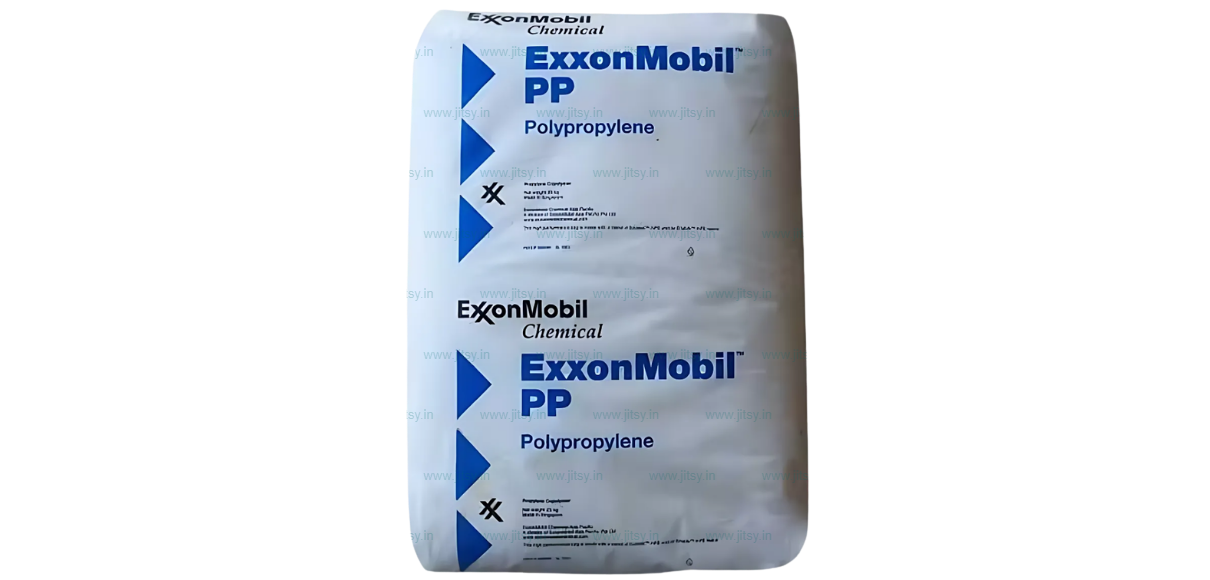
Exceed PP3155E5 is a polypropylene homopolymer resin made by ExxonMobil Product Solutions for spunbond nonwovens, fibres and filaments. It belongs to the Exceed™ range within ExxonMobil Signature Polymers. It was previously sold as ExxonMobil™ PP3155E5 and is often searched as Exceed PP 3155 or ExxonMobil PP3155.
The grade is supplied as natural-colour pellets and is processed by fibre-spinning and filament extrusion. It has a melt flow rate of 36 g/10 min, controlled rheology and a narrow molecular-weight distribution. Together, these properties help molten polymer flow evenly through spinnerets. That supports stable spinning and uniform fabric at high line speeds.
Nonwoven producers choose PP3155E5 for its consistent spinnability, low smoke emission and resistance to gas-fading discoloration. ExxonMobil produces this E5 version with a catalyst system that has no intentionally added phthalates, and it includes a non-gas-fade additive package. Hygiene, filtration-support and industrial fabric makers use it where steady output and clean, white fabric matter.
Technical Insights
The values below are ExxonMobil typical values from the official product datasheet. They describe representative samples and are not guaranteed specification limits.
- Melt Flow Rate (MFR): 36 g/10 min (230°C/2.16 kg, ASTM D1238)
MFR shows how easily the melt flows. A value of 36 is a common target for spunbond lines. It gives good flow through fine spinneret holes without becoming too thin to draw into stable filaments.
- Density: 0.900 g/cm³
Low density gives more fabric area per kilogram of resin. That helps converters lower material cost per square metre.
- Tensile Strength at Yield: 34.6 MPa (ASTM D638)
This measures how much stress the solid resin takes before it deforms permanently. It indicates good base strength for fibres and bonded webs.
- Elongation at Yield: 10% (ASTM D638)
This shows how far the resin stretches before yielding. It reflects a balance of stiffness and flexibility typical of a homopolymer.
- Flexural Modulus, 1% Secant: 1,390 MPa (ASTM D790A) and 1,610 MPa (ASTM D790B)
Flexural modulus measures stiffness. These values point to a firm, stable resin that helps fabrics hold their shape.
- Notched Izod Impact at 23°C: 34 J/m (ASTM D256A)
This measures resistance to sudden impact at room temperature. Fibre grades are not built for impact, so this is a reference value.
- Gardner Impact at −30°C: 10.9 J (ASTM D5420)
This shows impact behaviour in cold conditions, which is useful for products stored or shipped in low temperatures.
- Heat Deflection Temperature: 90.0°C (66 psi, unannealed, ASTM D648)
This is the temperature at which a test bar bends under a set load. It gives a guide to heat resistance during bonding, storage and use.
- Rockwell Hardness: 106 (ASTM D785)
This indicates surface hardness and resistance to indentation. It is reported on the Rockwell scale only and should not be converted to Shore D.
- Formulation features: controlled rheology, narrow molecular-weight distribution, gas-fading resistance, low smoke emission and a non-gas-fade additive package. These features support uniform filaments, cleaner production areas and fabric that stays white in storage.
The datasheet does not state melting point, Vicat softening point, ash, moisture or a recommended processing-temperature profile. Set processing windows through line trials and ExxonMobil technical guidance.
Exceed™ PP3155E5 Applications
Hygiene and Personal Care Nonwovens
PP3155E5 is widely used for spunbond hygiene fabrics such as baby diaper components, adult incontinence products and feminine care layers. Its smooth spinning and consistent quality help converters run high-throughput lines with fewer breaks. Its gas-fading resistance helps keep white fabrics from yellowing during storage. Final suitability depends on fabric design, additives and converter qualification.
Filtration Support Fabrics
ExxonMobil lists PP3155E5 in its filtration portfolio as a reliable 36 MFR spunbond grade. It is used for support and carrier layers in filter media, where a light, uniform web adds strength. Polypropylene nonwovens also resist alkaline environments better than PET. Note that PP3155E5 is a spunbond grade, not an ultra-high-flow meltblown grade, so it does not replace meltblown resins for fine filtration layers.
Fibres, Filaments and Yarn
Fibre and filament producers use PP3155E5 for fibre-spinning and filament extrusion. Its controlled rheology and narrow molecular-weight distribution support even flow and steady filament formation. Achievable denier, draw ratio and line speed depend on the equipment and must be confirmed in trials.
Industrial Nonwovens and Packaging
ExxonMobil lists industrial applications and packaging among the uses for PP3155E5. Typical areas include technical nonwovens, protective covers, packaging fabrics and composite support layers. Each end use should be validated, as ExxonMobil does not publish finished-fabric performance limits for this grade.
Healthcare Nonwovens
ExxonMobil’s healthcare literature includes Exceed™ PP3155E5 for high-quality spunbond fabrics, such as layers used in protective apparel. This is not a medical-device approval. Buyers must obtain application-specific regulatory confirmation from ExxonMobil before medical or sterilised use.
Food-Contact Applications
Potential food-contact use is subject to application-specific confirmation and supporting compliance documentation from ExxonMobil. Contact ExxonMobil Customer Service for FDA, EU or Health Canada (HPFB) compliance details for your intended use.
Exceed™ PP3155E5 Alternatives and Comparable Grades in India
No manufacturer has published an official cross-reference declaring its grade fully equivalent to PP3155E5. The grades below are technically comparable, but equivalence is not confirmed. Any switch needs line trials and written approval.
Exceed™ PP3155E3 (ExxonMobil)
PP3155E3 is the related earlier version, with the same 36 g/10 min MFR and 0.900 g/cm³ density. The E5 grade is specifically documented with a catalyst system that has no intentionally added phthalates and with a non-gas-fade additive package. Do not swap E3 for E5 in purchase orders or compliance documents without written confirmation from ExxonMobil.
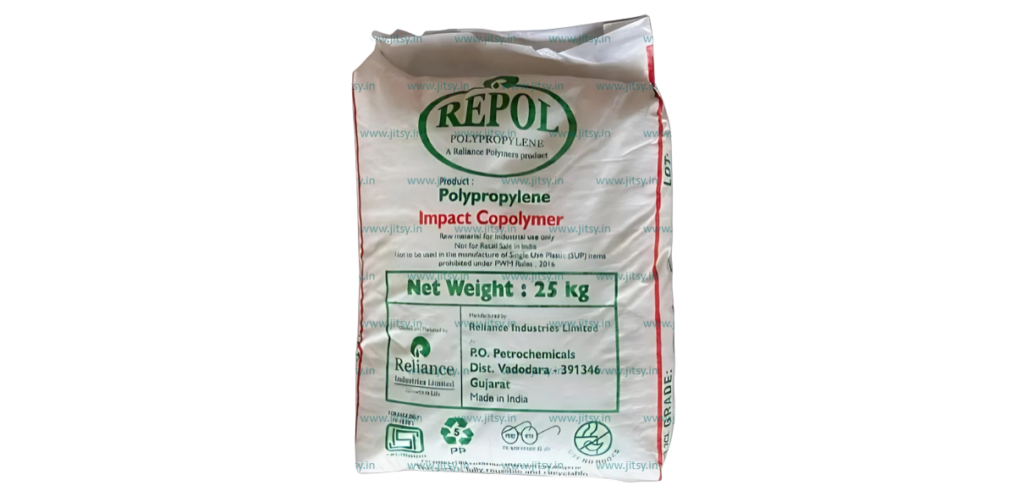
Reliance Repol H350FG
H350FG is a domestic PP homopolymer for fibres, filaments, spunbond nonwovens and extrusion coating, with anti-gas-fading performance. Its key values are:
- MFR of 38 g/10 min
- Flexural modulus of 1,500 MPa
- HDT of 104°C
Reliance declares IS 10910, IS 16738 and FDA 21 CFR 177.1520 compliance for H350FG. Those declarations apply to H350FG only, not to PP3155E5. It is a strong candidate for Indian line trials.
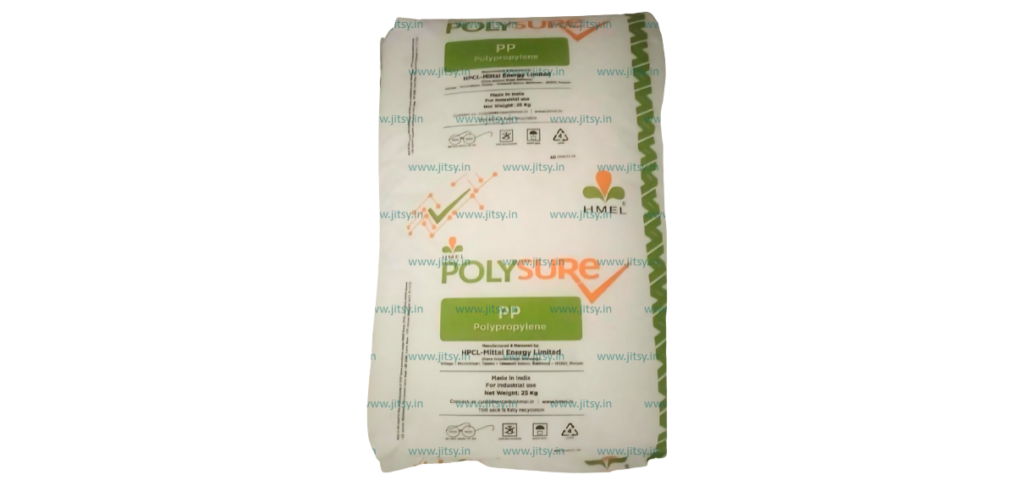
HMEL Polysure Y35GR
Y35GR is a controlled-rheology homopolymer for fine-denier yarn and spunbond fabrics, with gas-fading resistance and basic UV protection. Its key values are:
- MFR of 35 g/10 min
- Flexural modulus of 1,150 MPa, lower than PP3155E5’s 1,390 MPa
- HDT of 90°C
Validate web uniformity, tensile strength and colour stability before switching.
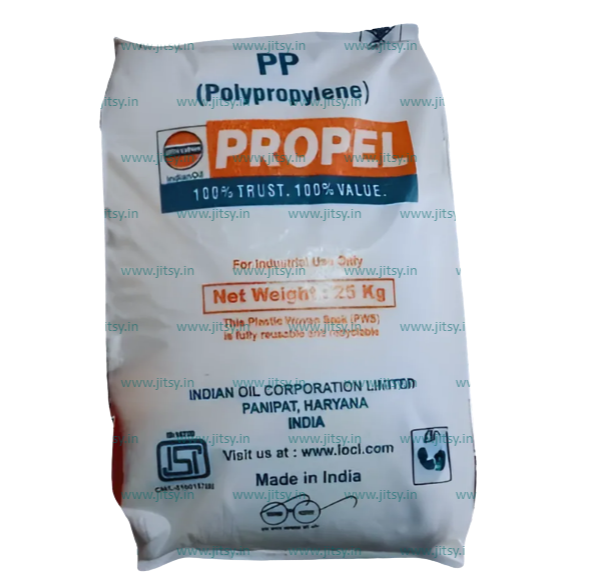
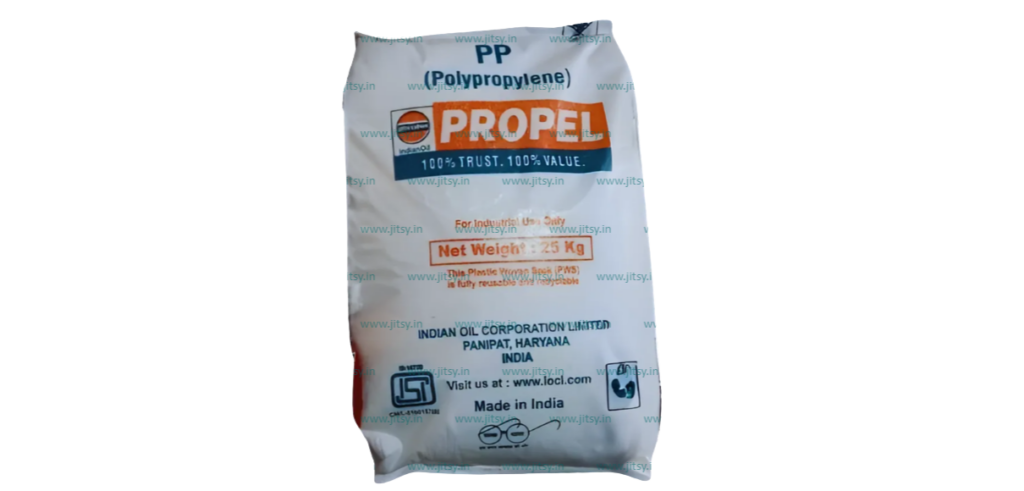
IndianOil PROPEL 1350YG
1350YG is a 35 MFR homopolymer for high-speed fine-denier fibre, spunbond fabrics and diaper materials, with anti-gas-fading properties. Its key values are:
- Flexural modulus of 1,200 MPa
- Notched Izod impact of 20 J/m
- HDT of 85°C
These differ from PP3155E5, so treat 1350YG as a close MFR and application match only.
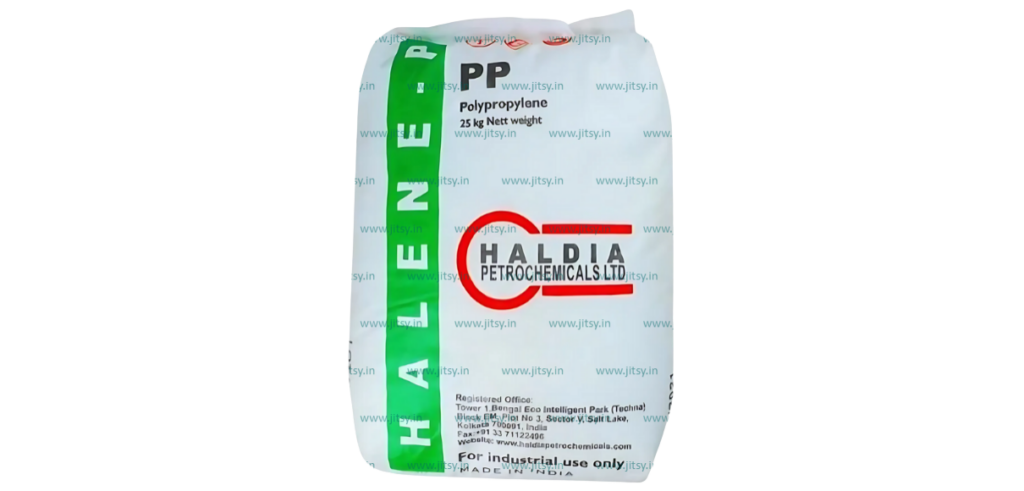
Haldia Petrochemicals Halene-P F135
F135 is a high-flow, controlled-rheology homopolymer with narrow molecular-weight distribution and gas-fading resistance. Haldia recommends it mainly for extrusion coating, with spunbond and hygiene as secondary uses. Its key values are:
- MFI of 35 g/10 min
- Flexural modulus of 1,350 MPa
- Notched Izod impact of 45 J/m
- HDT of 105°C
MRPL MANGPOL HY035R/HY035UR
This is a 35 MFR fibre and filament grade for nonwovens, hygiene, medical apparel and packaging. MRPL’s public data is limited, so equivalence remains unverified until you review its current TDS, SDS and regulatory declarations.
Advanced-PP 1101SC
1101SC is a 35 MFR homopolymer for high-speed, fine-titer spunbond hygiene fabrics, with phenol-free gas-fading stabilisation. Advanced Petrochemical Company reports its values using ISO test methods, so direct number-to-number comparison with PP3155E5’s ASTM data needs care.
Borealis HH450FB
HH450FB is a 37 MFR spunbond homopolymer with narrow molecular-weight distribution and anti-gas-fading additives for hygiene and technical textiles.
Why PP3155E5 stands out: it combines a 36 MFR, high stiffness for its class, documented low gas-fading, low smoke emission and a phthalate-free-by-design catalyst system. It is backed by ExxonMobil’s global quality consistency and is positioned for high-throughput spunbond production.
Common Search Variants
exxonmobil pp3155e5, exxon mobil pp 3155, exceed pp 3155 e5, exxonmobile pp3155, exon mobil pp3155, pp3155 polypropylene, pp 3155e5 datasheet, pp3155 tds, 36 mfi spunbond pp granules, pp homopolymer for nonwoven, exxon pp3155 price india, pp lamination, pp fibre

















Reviews
Clear filtersThere are no reviews yet.