Home ยป Products ยป Polymers ยป Polypropylene Homopolymer ยป Borouge PP HC205TF
Borouge PP HC205TF
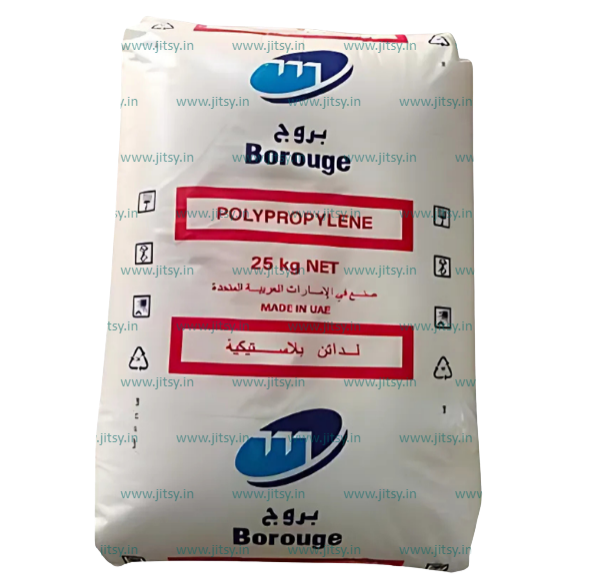
Borouge PP HC205TF is a nucleated polypropylene homopolymer for sheet extrusion and thermoforming of rigid packaging. It is made by Abu Dhabi Polymers Co. Ltd (Borouge) in Ruwais, UAE, using the proprietary Borstarยฎ process and Borstar Nucleation Technology (BNT). Buyers also search for it as Borouge HC205TF, HC205TF polypropylene and HC205TF thermoforming grade.
The grade is supplied as natural-colour pellets with a typical melt flow rate of 4 g/10 min. It suits both in-line and offline thermoforming of cups, trays, dairy containers, margarine tubs and other rigid food packaging.
Packaging converters choose HC205TF for a combination of benefits that Borouge highlights:
โข Faster crystallisation, which shortens cycle times and raises output
โข Excellent transparency
โข Good organoleptic properties (low taste and odour transfer)
โข A good balance of stiffness and impact at room temperature
โข Consistent post-forming shrinkage and a broad processing window
Borouge provides a current food-contact declaration for HC205TF as a plastic intermediate material. The grade is not intended for medical, pharmaceutical or healthcare applications.
Borouge HC205TF Technical Insights
The values below are typical values from Borouge’s official April 2025 Product Data Sheet. Borouge states they are not for specification work.
- Melt Flow Rate (MFR/MFI): 4 g/10 min (230ยฐC/2.16 kg, ISO 1133)
This is a core flow range for thermoforming PP. It gives enough melt strength for stable sheet extrusion with low sag during heating, while still forming well into detailed mould shapes. - Density: 900โ910 kg/mยณ (ISO 1183)
Low density gives more sheet area and more containers per kilogram. That helps lower the material cost per pack. - Tensile Modulus: 1,750 MPa (ISO 527-2)
High stiffness lets converters make thinner, lighter cups and trays that still hold their shape when stacked, filled and handled. - Tensile Stress at Yield: 35.5 MPa, and Tensile Strain at Yield: 8% (ISO 527-2)
These show good strength before permanent deformation. They support rigid containers that resist bending and crushing. - Flexural Modulus: 1,750 MPa (ISO 178) and 1,700 MPa (ASTM D790A, 1% secant)
Flexural modulus measures resistance to bending. These values confirm strong rigidity for container walls, rims and lids. - Notched Charpy Impact at 23ยฐC: 5 kJ/mยฒ (ISO 179/1eA), and Notched Izod Impact at 23ยฐC: 40 J/m (ASTM D256)
These show impact resistance at room temperature, typical of a stiff homopolymer. The two values use different tests and are not directly comparable. For cold storage or severe drop needs, test the finished part. - Heat Deflection Temperature: 107ยฐC at 0.45 MPa (ISO 75-2)
This indicates good shape stability under heat and load during filling, transport and warm-climate storage. - Vicat Softening Temperature: 145ยฐC (ISO 306, Method A)
This shows the temperature at which the material begins to soften. It is a useful guide for setting thermoforming and heat-exposure limits. - Rockwell Hardness: R106 (ISO 2039-2)
High surface hardness helps resist scratches and scuffs, keeping clear packs looking good on the shelf. - Borstar Nucleation Technology (BNT)
Nucleation raises the crystallisation temperature, so formed parts set faster in the mould. This leads to shorter cycles, higher output and more consistent shrinkage and clarity. - Processing Settings
The current datasheet does not give fixed setpoints because conditions depend on the equipment and application. Legacy Borealis guidance from 2004 suggests the following starting points:
โข Extrusion melt temperature: 210โ240ยฐC
โข Solid-phase forming: 140โ155ยฐC
โข Mould temperature: 20โ40ยฐC
โข Post-forming shrinkage: about 1.5โ2.5%
Confirm all settings through machine trials and Borouge technical support.
Borouge HC205TF Applications
Dairy and Food Packaging
HC205TF is widely used for thermoformed dairy containers, yoghurt cups and margarine tubs. Its good organoleptic properties help protect the taste and smell of sensitive foods, and its stiffness supports thin-wall, lightweight designs. Borouge’s food-contact declaration covers the resin under Indian, US FDA and EU rules. Finished packs must still pass migration testing for their actual food type, temperature and contact time.
Clear Trays and Cups
The grade’s excellent transparency makes it a strong choice for high-clarity trays, cups and rigid food containers where product visibility drives sales. High stiffness and surface hardness help packs hold their shape and keep a clean, glossy look on retail shelves.
Rigid Food Containers
HC205TF suits rigid PP containers for ready meals, deli products, fresh produce and takeaway packaging. Its stiffness-impact balance at room temperature and consistent shrinkage help keep container dimensions accurate for lid fit and stacking. Microwave, freezer, hot-fill or retort use is not covered by the datasheet and needs separate testing.
Lids and Copolymer Blends
Borouge lists blending HC205TF with copolymers for lids. This lets converters adjust stiffness, toughness and snap-fit behaviour. Blend ratio, sealing performance and impact strength should be validated on the intended copolymer and line.
In-Line and Offline Thermoforming
HC205TF is designed for both in-line (extrude-and-form) and offline (roll-fed) thermoforming. Its broad processing window, faster crystallisation and good consistency help converters raise output and reduce scrap on high-speed PP thermoforming lines.
Borouge HC205TF Alternatives and Comparable Grades in India
No manufacturer has confirmed any grade as a direct drop-in equivalent to Borouge HC205TF. The grades below are comparable thermoforming candidates. Any switch needs sheet extrusion, forming, clarity, odour and migration trials.
Reliance Repol H050MN
H050MN is the closest Indian-made functional alternative. Like HC205TF, it is a nucleated PP homopolymer for sheet extrusion, thermoforming and injection moulding. Its key published values are:
โข MFR of 3.4 g/10 min, slightly lower flow than HC205TF’s 4 g/10 min
โข Flexural modulus of 1,750 MPa
โข HDT of 110ยฐC
โข Izod impact of 35 J/m, versus 40 J/m for HC205TF
H050MN also contains an antistatic agent. Reliance does not make the same transparency and organoleptic claims that Borouge makes for HC205TF, so check optical and taste performance in trials.
LyondellBasell Moplen HP640J
HP640J is a nucleated PP homopolymer for extrusion and thermoforming, with an MFR of around 4 g/10 min. It is a close international technical match by flow and process, but regular availability in India is unverified. Its clarity, shrinkage and food-contact documentation should be confirmed separately.
IndianOil Propel P1060MG
P1060MG is a domestic PP homopolymer with high stiffness and good processability. Its MFR of about 6 g/10 min is notably higher than HC205TF’s, which can change sheet sag, thickness distribution and forming behaviour. It is a conditional candidate only.
Reliance Repol H030SG
H030SG has a similar MFR of 3.4 g/10 min but is designed for raffia tapes and woven sacks, not clear thermoformed packaging. Close MFR alone does not make it a suitable substitute.
HC205TF vs Random and Impact Copolymers
As a homopolymer, HC205TF generally offers higher stiffness and heat resistance than random copolymers. Random copolymers may give better impact strength or clarity depending on the grade. Impact copolymers are usually preferred for low-temperature toughness and heavy drop loads, while HC205TF suits packs where stiffness, clarity and appearance matter most.
Why HC205TF is positioned differently: it combines a 4 MFR thermoforming flow, BNT nucleation for faster cycles, excellent transparency, good organoleptics, consistent shrinkage and a current Borouge food-contact declaration in one grade.
Common Search Variants
Borouge HC205TF, HC205TF polypropylene, HC205TF datasheet, thermoforming PP granules, clear PP thermoforming grade, nucleated PP homopolymer, 4 MFI PP dana, PP for dairy containers, HC205TF equivalent India
Misspellings: HC 205 TF, HC205 TF, HC-205TF, Borogue HC205TF, Borouqe HC205TF, polypropelene HC205TF, thermo forming polypropylene, thermoforming granuals, PP homopolimer
Key Features
Need Technical guidance?
Why buy Borouge PP HC205TF from JITSY?
- Direct import & verified sourcing
- Authorised channelโled supply
- Pan-India B2B delivery
- Transparent pricing & documentation
- Mobile appโenabled procurement
- Full compliance (RoHS, BIS/ISI, EPR, GST)
- Batch traceability
FAQs
Frequently Asked Questions
What is Borouge HC205TF used for?
How does nucleation help HC205TF perform better?
Is Reliance H050MN a direct replacement for HC205TF?
What processing temperatures are used for HC205TF?
Can HC205TF be used for both in-line and offline thermoforming?
Is HC205TF suitable for food packaging?
Can HC205TF be used for microwave, hot-fill or medical packaging?
What Customers Say
You must be logged in to post a review.
Other Relevant Products Available in India
Related Articles
JITSY Microspheres Guide: Expandable vs Pre-Expanded โ Which Format Suits Your Process?
Expandable microspheres are small hollow beads that have a thin shell made of plastic and contain a liquid core. The liquid vaporises, the bead expands and the shell expands

COA Is Not Enough: How JITSY Goes Beyond Certification in Polymer Sourcing
Expandable microspheres are small hollow beads that have a thin shell made of plastic and contain a liquid core. The liquid vaporises, the bead expands and the shell expands

JITSY EVA Grade Selector: What VA Content Actually Means for Your Product
Expandable microspheres are small hollow beads that have a thin shell made of plastic and contain a liquid core. The liquid vaporises, the bead expands and the shell expands

JITSY DCP Buyer’s Guide: How to Choose the Right Dicumyl Peroxide Grade
Expandable microspheres are small hollow beads that have a thin shell made of plastic and contain a liquid core. The liquid vaporises, the bead expands and the shell expands
Circular Economy & Recycling in the Plastic Raw Material Value Chain
Expandable microspheres are small hollow beads that have a thin shell made of plastic and contain a liquid core. The liquid vaporises, the bead expands and the shell expands

How EVA Foam Material Is Used in Footwear Manufacturing
Expandable microspheres are small hollow beads that have a thin shell made of plastic and contain a liquid core. The liquid vaporises, the bead expands and the shell expands
Complete Guide to EVA Materials: Grades, Applications & Selection Tips
Expandable microspheres are small hollow beads that have a thin shell made of plastic and contain a liquid core. The liquid vaporises, the bead expands and the shell expands

How EVA Improves Adhesion in Packaging and Assembly?
Expandable microspheres are small hollow beads that have a thin shell made of plastic and contain a liquid core. The liquid vaporises, the bead expands and the shell expands

What Are Expandable Microspheres and How Are They Used in Textile Printing and PVC Footwear?
Expandable microspheres are small hollow beads that have a thin shell made of plastic and contain a liquid core. The liquid vaporises, the bead expands and the shell expands
How Small & Mid-Sized Manufacturers Can Compete Using Digital Procurement
Small and mid-sized manufacturers have never given up on competing. In the modern market, it is no longer sufficient to compete with the quality of the work and hard labour.

Why India Is Becoming a China+1 Option for Raw Material Sourcing
Businesses can no longer rely on a single nation. They currently diversify risk and seek partners who are stable. Meanwhile, the increased cost of labour in China.
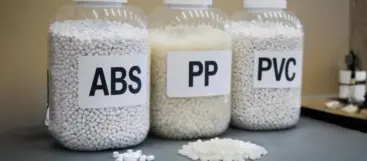
Choosing the Correct Polymer for Your Manufacturing Needs: ABS vs PP vs PVC
Confusion is common when manufacturers are considering ABS vs PP vs PVC. Different polymers are suitable for different applications, with specific pros and cons.

Top Procurement Mistakes Indian Manufacturers Make While Scaling
I have seen promising Indian manufacturers grow and then struggle during scaling. Often, success itself exposes operational cracks that were previously hidden.

Raw Materials Used in Toy Manufacturing: Safety, Compliance & Cost Factors
The materials used in toy manufacturing can impact the safety of children and the reputation of the company. There are multiple documented cases where improper material selection has led to recalls, litigation, and severe financial damage to toy manufacturers.

Choosing the Right Polymer Grades for Injection Molding
Purchasing the wrong polymer grade for injection molding can directly result in product failure, high rejection rates, or field performance issues. Different applications require vastly different material characteristics.

How Digital Procurement Platforms Reduce Raw Material Fraud
Raw material fraud is a frequent issue in conventional procurement. It usually happens due to the lack of supplier verification, the absence of records, and low levels of transparency. In manual systems, it is hard and time-consuming to keep track of materials.

Reviews
Clear filtersThere are no reviews yet.