IOCL PP Propel 1030MG
IOCL PP Propel 1030MG is a natural-coloured polypropylene homopolymer produced by Indian Oil Corporation Ltd (IOCL) using Spheripol II Technology at its Paradip manufacturing plant. It belongs to IOCL’s PROPEL range — a well-established line of PP grades trusted across Indian manufacturing.
1030MG is a general-purpose injection moulding and extrusion grade. It is designed to deliver high strength alongside easy processability, making it one of the more reliable choices for manufacturers who need consistent part quality without complex process adjustments. The grade is supplied as prime, virgin granules in natural colour — not compounded, not recycled.
Technical Insights
Chemistry and Polymer Family
1030MG is a polypropylene homopolymer — the purest form of PP, built entirely from propylene monomers with no co-monomer modification. Compared to copolymer grades, homopolymers like 1030MG typically offer better stiffness, higher heat resistance, and superior surface hardness. These properties make them the preferred choice for rigid, structural, or heat-exposed applications rather than impact-heavy or flexible end uses.
The grade is manufactured via the Spheripol II process, which delivers consistent molecular weight distribution and particle morphology — a key reason it processes predictably across injection moulding and extrusion lines.
Property Breakdown
Melt Flow Index (MFI): 3.0 g/10 min (ASTM D1238, 230°C / 2.16 kg) An MFI of 3.0 indicates a medium-flow material. It flows well enough for standard injection moulding cavities and sheet extrusion lines without sacrificing structural integrity. Grades below 2.0 tend to be sluggish and more suited to profiles or thick-wall parts; grades above 10 trade strength for flow. At 3.0, 1030MG sits in the balanced zone — suitable for general moulding without requiring elevated back pressure or temperature.
Density: 0.90 g/cm³ (ASTM D1505, 23°C) Standard for polypropylene homopolymers. This low density translates to lightweight finished parts — an important factor in packaging, household goods, and any application where weight-to-strength ratio matters.
Tensile Strength at Yield: 35 MPa (ASTM D638, 50 mm/min) Solid tensile performance for a general-purpose PP grade. A 35 MPa yield value supports parts that need to hold shape under moderate load — containers, closures, sheet, household articles — without over-engineering the material selection.
Elongation at Yield: 12% (ASTM D638, 50 mm/min) Reflects the material’s behaviour just before it begins to permanently deform. At 12%, 1030MG is stiff rather than flexible — it resists stretching under load, which is expected and desirable for rigid packaging and household articles.
Flexural Modulus: 1350 MPa (ASTM D790, 1.3 mm/min) This is the primary indicator of stiffness. At 1350 MPa, 1030MG produces parts that resist bending under load. This value makes it well suited to rigid containers, trays, and sheet applications where structural rigidity matters.
Notched Izod Impact Strength: 35 J/m (ASTM D256, 23°C) Moderate impact performance, typical for a PP homopolymer. It handles standard handling and light impact conditions adequately. For applications demanding high-impact resistance — such as automotive interior parts or heavy-duty crates — an impact copolymer would be more appropriate.
Heat Deflection Temperature (HDT): 94°C (ASTM D648, 0.46 N/mm²) Parts moulded from 1030MG can be exposed to temperatures up to approximately 94°C before they begin to deform under load. This is adequate for household articles, packaging, and sheet applications that may encounter warm environments.
Vicat Softening Point: 156°C (ASTM D1525, 10 N) Reflects the temperature at which the material softens under a defined load — an important value for understanding sterilisation and hot-fill compatibility.
Processing Temperature Range: 170–230°CA wide and manageable processing window. Standard injection moulding and extrusion equipment running conventional PP settings handles this grade without process modifications.
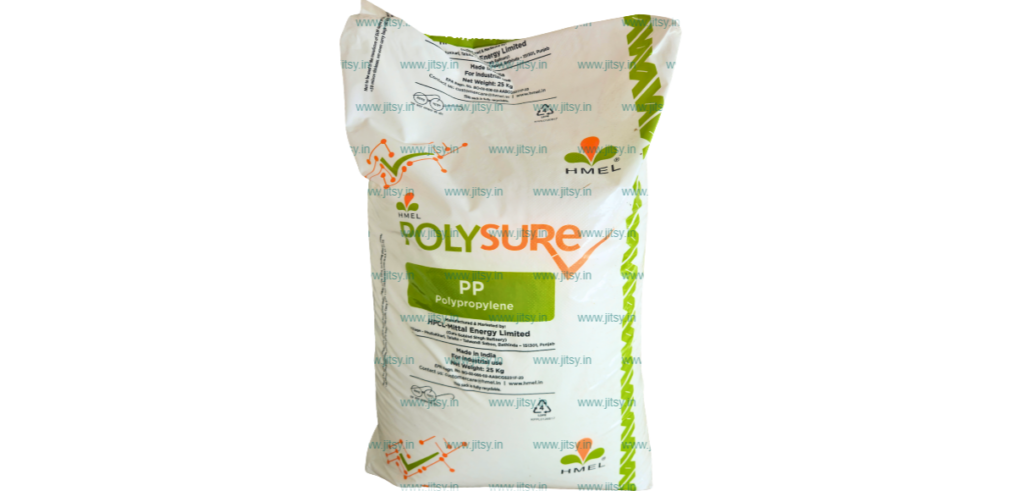
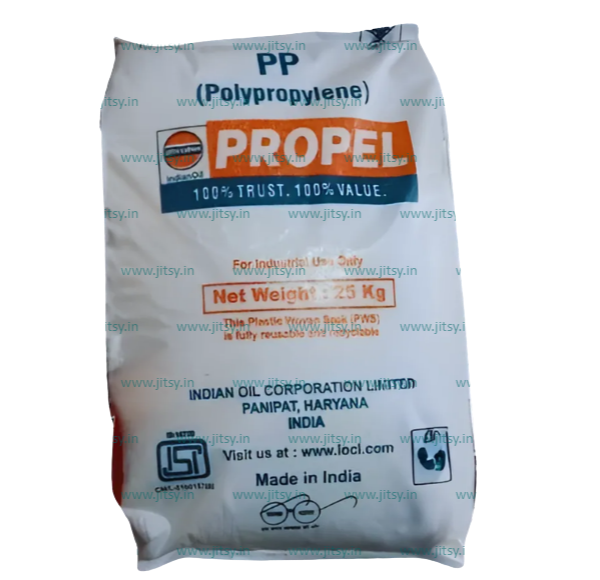
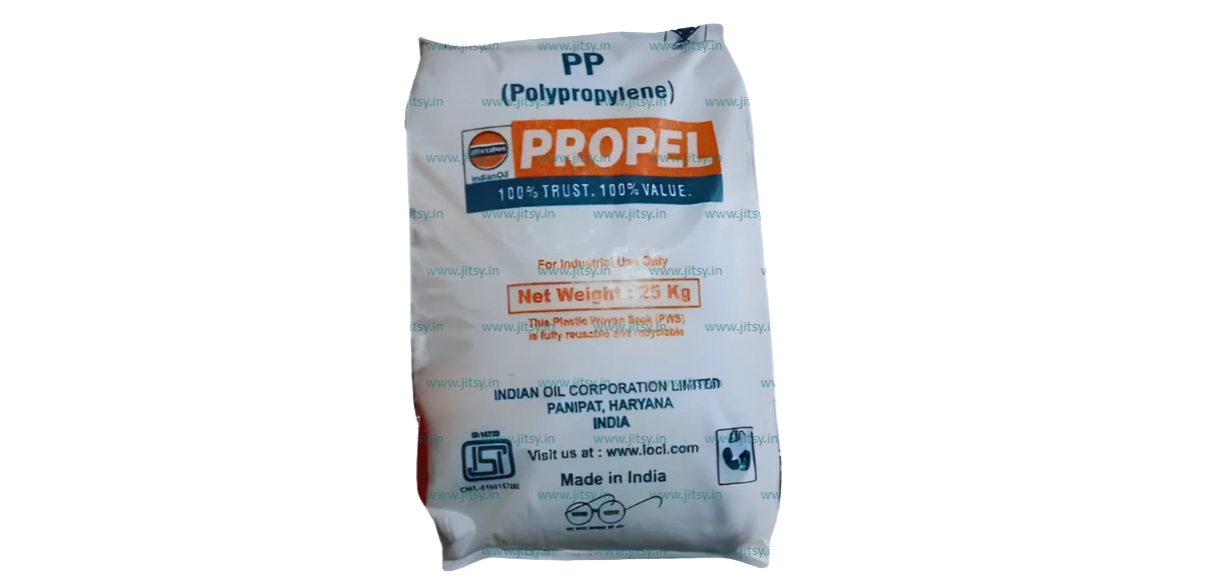
Packaging: 25 kg raffia bags only.
Shelf Life and Storage: Store below 50°C, away from direct sunlight and heat, in a dry and dust-free location. Process within 6 months of delivery. Exposure to heat or UV before processing degrades the resin and affects finished-part performance.
Applications and Use Cases
Household Articles and Consumer Goods
1030MG is purpose-designed for household article manufacturing. Stiffness, surface quality, and consistent flow at MFI 3.0 make it a natural fit for items such as storage containers, bins, tubs, trays, and everyday utility products. Processors running multi-cavity moulds for consumer goods benefit from the grade’s predictable fill behaviour and part release without extensive mould adjustments.
Rigid Packaging
For manufacturers producing rigid PP packaging — caps, closures, containers, and industrial bins — 1030MG delivers the combination of stiffness (flexural modulus 1350 MPa) and tensile yield strength (35 MPa) that rigid-walled packaging demands. The grade’s low density also contributes to cost-efficient material usage per unit of packaging produced.
Sheet Extrusion
In sheet extrusion, 1030MG’s medium MFI and high flexural modulus produce flat, dimensionally consistent sheets that resist warping. PP homopolymer sheet made from grades like 1030MG is widely used in thermoforming, industrial trays, protective packaging inserts, and in secondary processing to produce cut-to-size rigid panels for industries ranging from food service to logistics.
Tape and Strapping
The grade is listed by IOCL for tape applications. PP homopolymer tapes and strapping — used in packaging, bundling, and textile reinforcement — require a material that draws well in extrusion, retains strength after orientation, and maintains dimensional stability. The homopolymer chemistry and controlled MFI of 1030MG support these requirements in standard tape extrusion setups.
Comparable Grades in India
IOCL 1030FG (Not Equivalent)
1030FG is also a PP homopolymer from IOCL’s PROPEL line, but it is specifically designed for BOPP film and metallisable film applications. The grade is optimised for film-forming characteristics — thin gauge, high clarity, and orientation performance — which differ significantly from the moulding and sheet requirements of 1030MG. The two grades share the homopolymer family but are not interchangeable for injection moulding or rigid packaging.
IOCL 1110MG (Not Equivalent — Higher Flow)
1110MG is another moulding-grade PP homopolymer from IOCL, but with a higher MFI than 1030MG. Higher MFI improves cavity fill in thin-wall or complex mould geometries but trades some stiffness and strength. Manufacturers selecting between 1030MG and 1110MG should evaluate whether their mould geometry and part specification call for the balanced stiffness-flow of 1030MG or the enhanced flow of 1110MG. Manufacturer equivalence between these grades is not confirmed — they serve different positions within the moulding range.
IOCL 3030MG (Not Equivalent — Copolymer)
3030MG is a PP impact copolymer, not a homopolymer. It delivers significantly better impact resistance at the cost of lower stiffness and heat resistance. 1030MG and 3030MG are not interchangeable — switching between them requires revalidation of part design, mould settings, and finished-part performance. Choose 1030MG when stiffness and heat resistance are the priority; consider 3030MG when impact toughness is required.
Other PP Homopolymer Moulding Grades from Indian Suppliers
Several other Indian polymer producers offer PP homopolymer moulding grades with similar MFI and mechanical property ranges. These are functionally comparable for rigid packaging and household article applications but are not confirmed as direct technical equivalents to 1030MG. Manufacturer test certificates and property data should be compared directly before substitution.
Common Search Variants
This product is also searched as: PP H 1030MG, PP moulding 1030MG, P1030MG, 1030MG PP granules, PP 1030MG IOCL, PROPEL 1030MG, Indian Oil PP 1030, and common misspellings including 1030mg, 1030-mg, pp1030mg, 1030 MG, and p 1030 mg.
Need Technical guidance?
Why buy IOCL PP Propel 1030MG from JITSY?
- Direct import & verified sourcing
- Authorised channel–led supply
- Pan-India B2B delivery
- Transparent pricing & documentation
- Mobile app–enabled procurement
- Full compliance (RoHS, BIS/ISI, EPR, GST)
- Batch traceability
FAQs
Frequently Asked Questions
What is IOCL PP Propel 1030MG used for?
How does 1030MG perform in injection moulding?
Is IOCL PP Propel 1030MG suitable for food-contact or packaging applications?
What is the difference between 1030MG and a PP impact copolymer?
How should IOCL PP Propel 1030MG be stored before processing?
Can 1030MG be used for sheet and tape extrusion, or is it only for injection moulding?
What packaging does IOCL PP Propel 1030MG come in?
What Customers Say
You must be logged in to post a review.
Other Relevant Products Available in India
Related Articles
Circular Economy & Recycling in the Plastic Raw Material Value Chain
Expandable microspheres are small hollow beads that have a thin shell made of plastic and contain a liquid core. The liquid vaporises, the bead expands and the shell expands

How EVA Foam Material Is Used in Footwear Manufacturing
Expandable microspheres are small hollow beads that have a thin shell made of plastic and contain a liquid core. The liquid vaporises, the bead expands and the shell expands

Complete Guide to EVA Materials: Grades, Applications & Selection Tips
Expandable microspheres are small hollow beads that have a thin shell made of plastic and contain a liquid core. The liquid vaporises, the bead expands and the shell expands
How EVA Improves Adhesion in Packaging and Assembly?
Expandable microspheres are small hollow beads that have a thin shell made of plastic and contain a liquid core. The liquid vaporises, the bead expands and the shell expands
What Are Expandable Microspheres and How Are They Used in Textile Printing and PVC Footwear?
Expandable microspheres are small hollow beads that have a thin shell made of plastic and contain a liquid core. The liquid vaporises, the bead expands and the shell expands

How Small & Mid-Sized Manufacturers Can Compete Using Digital Procurement
Small and mid-sized manufacturers have never given up on competing. In the modern market, it is no longer sufficient to compete with the quality of the work and hard labour.
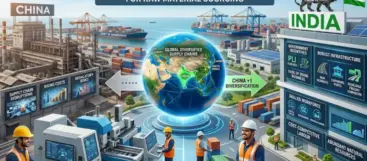
Why India Is Becoming a China+1 Option for Raw Material Sourcing
Businesses can no longer rely on a single nation. They currently diversify risk and seek partners who are stable. Meanwhile, the increased cost of labour in China.
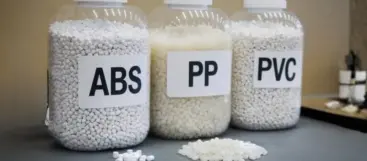
Choosing the Correct Polymer for Your Manufacturing Needs: ABS vs PP vs PVC
Confusion is common when manufacturers are considering ABS vs PP vs PVC. Different polymers are suitable for different applications, with specific pros and cons.
Top Procurement Mistakes Indian Manufacturers Make While Scaling
I have seen promising Indian manufacturers grow and then struggle during scaling. Often, success itself exposes operational cracks that were previously hidden.

Raw Materials Used in Toy Manufacturing: Safety, Compliance & Cost Factors
The materials used in toy manufacturing can impact the safety of children and the reputation of the company. There are multiple documented cases where improper material selection has led to recalls, litigation, and severe financial damage to toy manufacturers.
Choosing the Right Polymer Grades for Injection Molding
Purchasing the wrong polymer grade for injection molding can directly result in product failure, high rejection rates, or field performance issues. Different applications require vastly different material characteristics.

How Digital Procurement Platforms Reduce Raw Material Fraud
Raw material fraud is a frequent issue in conventional procurement. It usually happens due to the lack of supplier verification, the absence of records, and low levels of transparency. In manual systems, it is hard and time-consuming to keep track of materials.
How Crude Oil Prices Impact Plastic Raw Material Costs in India
Crude oil plays a powerful role in the worldwide plastic industry & India is no exception. Most of the plastic raw materials, like PE, PP, and PVC, are extracted from petrochemicals sourced from crude oil.
The Great Procurement Divide: Why Your Best Engineers Make Your Worst Buyers
Walk into any manufacturing facility across India—from PVC pipe makers in Gujarat to automotive component manufacturers in Chennai—and you’ll hear this logic echoed in boardrooms and production floors alike.
Copy-Paste vs. Innovation
Is playing it safe actually the riskiest strategy? The uncomfortable truth about innovation avoidance in Indian manufacturing
The Credit Cycle Shift: Why 30-Day Payments Are Winning Hearts (and Wallets)
If you’ve ever done business in India, you know this vibe. Long credit terms weren’t just about money—they were about trust, connection, and that warm cup of chai shared over a handshake deal. You’d walk into your supplier’s office, chat about life, and walk out with goods worth lakhs, no questions asked.

Reviews
Clear filtersThere are no reviews yet.