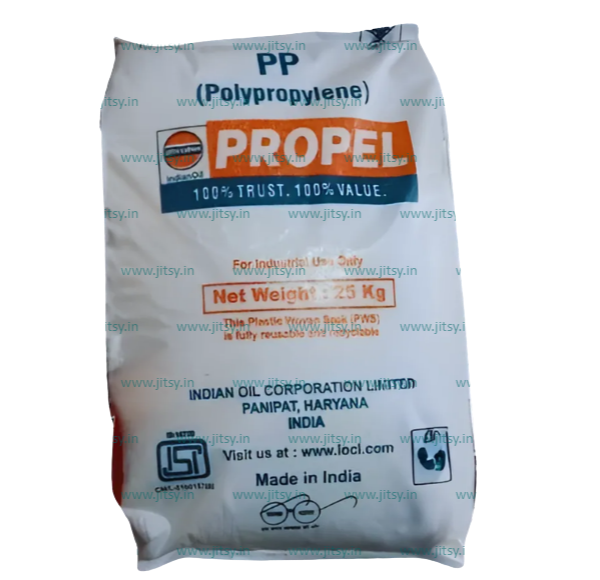
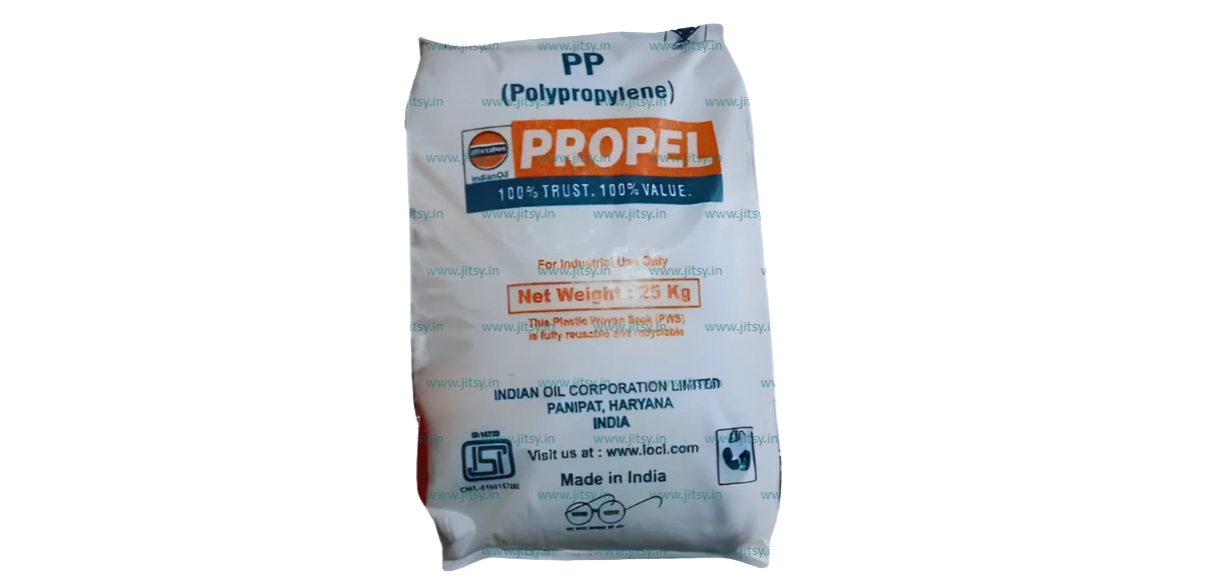
IOCL PPCP Propel 3250MN is a polypropylene impact copolymer (PPCP) manufactured by Indian Oil Corporation Ltd (IOCL) under its PROPEL polymer brand at the Panipat Petrochemical Complex, produced using Spheripol II Technology. IOCL classifies 3250MN as a heterophasic, natural-coloured, high-flow, medium-impact-resistance grade with good processability, good surface finish and gloss, and an optimised balance of stiffness and toughness — positioning language that defines it squarely as a workhorse injection moulding resin for consumer and industrial applications.
The grade’s MFI of 25 g/10 min at 230 °C / 2.16 kg places it in the high-flow segment of injection moulding PP impact copolymers. High flow supports fast cavity filling, shorter injection cycle times and reliable filling of complex or multi-cavity moulds without excessive injection pressure. The heterophasic structure — a dispersed elastomeric phase within a semi-crystalline PP matrix, built in-reactor via Spheripol II — delivers impact resistance of 80 J/m notched Izod, meaningfully higher than both PP homopolymer (typically 20–30 J/m) and PP random copolymer grades (typically 40–60 J/m). The result is a resin that combines the processing efficiency of a high-flow PP with the toughness margin needed for parts that must resist handling, assembly and service impacts.
Technical Insights
Resin Properties
- MFI: 25 g/10 min (ASTM D1238, 230 °C / 2.16 kg) — A high-flow MFI for an injection moulding PP impact copolymer. At 25 g/10 min, 3250MN fills mould cavities efficiently at normal injection pressures and temperatures, allowing good cycle times across a wide range of part geometries — from medium-wall housewares and appliance housings to rigid packaging containers. This MFI is significantly higher than standard injection moulding PP impact grades (often 8–15 MFI) used for thicker-wall parts, making 3250MN well-suited to faster production rates without the processing challenges of very high-flow grades at 50+ MFI.
- Density: 0.90 g/cm³ (ASTM D1505, 23 °C) — Standard PP impact copolymer density, reflecting the PP matrix with dispersed rubber phase. Parts moulded from 3250MN are light relative to engineering polymers, which is a practical advantage for housewares, appliance housings and packaging components where part weight contributes to consumer cost and logistics efficiency.
Mechanical Properties
- Tensile Yield Strength: 26 MPa (ASTM D638, 50 mm/min) — Adequate tensile performance for the structural requirements of injection-moulded appliance housings, houseware containers and rigid packaging, where parts must resist deformation under fill weight, stacking loads and handling stresses without permanent yield.
- Elongation at Yield: 8% (ASTM D638, 50 mm/min) — Higher than IOCL’s higher-flow injection moulding PPCP grades (3550MN at 5%, 3250MG at 6%), reflecting the slightly more compliant character of 3250MN’s impact copolymer structure at this flow level. Higher elongation at yield indicates that the material accommodates more deformation before permanent change — relevant for parts assembled with snap-fit connections or exposed to bending loads.
- Flexural Modulus: 1200 MPa (ASTM D790, 1.0% secant, 1.3 mm/min) — The wall stiffness of moulded parts from 3250MN is equivalent to IOCL’s 3250MG and 3550MN at the same 1200 MPa modulus. This means lids sit flat, container walls resist flex under hand pressure, and appliance panels hold dimensional tolerances across their service life — the “premium feel” associated with well-specified PP copolymer housewares and appliance parts.
- Notched Izod Impact Strength: 80 J/m (ASTM D256, 23 °C) — The best notched Izod impact performance among IOCL’s injection moulding-oriented PPCP grades documented in this series. At 80 J/m, 3250MN provides a meaningful toughness advantage over 3250MG (75 J/m) and 3550MN (65 J/m). For appliance parts that must survive assembly processes, occasional drops and mechanical loads during service, and for rigid packaging containers that must withstand distribution handling without cracking, this impact toughness directly reduces field failure risk.
Thermal Properties
- Heat Deflection Temperature: 110 °C (ASTM D648, 0.46 N/mm²) — The highest HDT in IOCL’s injection moulding PPCP range documented in this series. At 110 °C, moulded parts maintain structural integrity and dimensional stability under load well beyond the 80–90 °C operating environments typical of domestic appliances, hot-air environments and proximity to heating elements. This 10 °C advantage over 3250MG (100 °C) and 5 °C advantage over 3550MN (105 °C) reflects the thermally optimised character of 3250MN for its injection moulding target applications.
- Vicat Softening Point: 150 °C (ASTM D1525, 10 N) — The highest Vicat among IOCL’s injection moulding PPCP grades in this series, tied only with 4015EG. At 150 °C Vicat, the resin surface remains firm under needle load well above any practical service temperature for injection-moulded housewares, appliance components and automotive trim. This confirms strong underlying PP matrix crystallinity despite the impact-enhancing rubber phase.
Processing Temperature Window
IOCL recommends a processing temperature of 170–230 °C for PPCP 3250MN on injection moulding equipment. For standard housewares and appliance parts at normal wall thicknesses, melt temperatures in the 190–215 °C range are typical. For parts with longer flow paths or thinner sections where full cavity fill requires more flow, temperatures towards 215–225 °C may be used within the stated window. Processing below 170 °C risks incomplete melt homogenisation and poor surface quality. Processing above 230 °C risks thermal degradation and loss of the gloss and surface finish properties that IOCL highlights as key attributes of this grade.
Applications of IOCL PPCP 3250MN
Electrical Appliance Parts and Housings
IOCL lists electrical appliance parts as the first recommended application for 3250MN. Appliance components — outer housings, fan covers, control panel bases, motor brackets, vents and internal structural elements — require a combination of properties that 3250MN is specifically designed to deliver: good surface quality and gloss for visible panels and housings, 1200 MPa flexural modulus for dimensional stability and structural rigidity, 80 J/m impact resistance to survive assembly stresses and product lifetime use, and the highest HDT (110 °C) in IOCL’s injection moulding PPCP range to handle the thermal environment near motors, heating elements and compressors. The high-flow MFI of 25 g/10 min supports fast production cycles and consistent surface finish across high-volume appliance part runs.
Housewares and Consumer Storage Products
For household injection-moulded products — storage boxes, organisers, containers, utility items, trays and lids — 3250MN’s combination of good gloss, 80 J/m toughness and 1200 MPa stiffness creates a finished product with the surface quality and structural feel that consumers associate with premium housewares. At MFI 25, the resin fills standard houseware moulds reliably without needing extreme injection conditions, and the 110 °C HDT means moulded parts do not warp or distort under hot-storage conditions, dishwasher exposure or contact with warm contents. For houseware applications with food or beverage contact, the grade’s compliance with IS 10910 and FDA CFR 21, 177.1520 (see regulatory section) supports food-contact article production.
Automotive Components and Interior Trim
IOCL recommends 3250MN for automotive components — a broad category that in injection moulding includes interior trim panels, pillar covers, seat components, dashboard sub-assemblies, glove box bodies and door pocket inserts. Automotive interior injection moulding requires PP resins that combine good flow for filling complex cavity geometries, sufficient impact resistance to pass assembly and quality control impact tests, and adequate thermal stability for sustained in-car temperatures that can reach 80–100 °C on hot summer days in Indian conditions. 3250MN’s 110 °C HDT exceeds the typical automotive interior thermal requirement, and its 80 J/m impact provides the toughness needed for parts that must survive both assembly operations and long-term in-vehicle use. High flow at MFI 25 supports the injection of large, thin-section automotive trim parts with consistent surface finish.
Rigid Packaging
IOCL lists rigid packaging among the recommended applications for 3250MN. In this segment, the grade is applicable to injection-moulded rigid containers, closures, caps, jars and packaging trays where the combination of good gloss, food-contact compliance, adequate toughness and fast cycle processing makes PP impact copolymer a commercially practical choice over heavier or more expensive materials. The 80 J/m notched Izod ensures containers and closures resist cracking under the fill, closure and distribution stresses of rigid packaging supply chains, while the high-flow MFI supports the fast cycle times needed for high-volume packaging production.
Comparable Alternative Grades for PP Impact Copolymer Injection Moulding in India
3250MN sits at a well-defined point in IOCL’s injection moulding PPCP range: MFI 25, medium-high impact, and the best thermal performance among the standard-flow injection moulding PPCP grades in the PROPEL line.
IOCL PPCP Propel 3550MN is the directly comparable higher-flow injection moulding PPCP grade, reviewed separately in this series. At MFI 55, 3550MN is designed for thin-wall and very high-speed injection moulding where maximum flow is the priority. The trade-off is slightly lower impact (65 J/m vs 80 J/m), lower HDT (105 °C vs 110 °C) and lower Vicat (145 °C vs 150 °C). For applications where standard cycle times and moderate-wall part geometries are acceptable, 3250MN’s better thermal and impact performance makes it the stronger material choice. For ultra-thin-wall parts or maximum throughput applications, 3550MN’s higher flow is the priority driver and 3250MN may not fill the mould adequately without process changes.
IOCL PPCP Propel 3650MN appears in IOCL’s grade documentation alongside 3250MN and 3550MN within the nucleated injection moulding PPCP family. The grade code suggests 3650MN represents a different (likely higher) flow point in the same family. Without a full accessible TDS for 3650MN, a numerical property comparison is not possible here. Processors requiring flow above MFI 25 and below MFI 55 should investigate 3650MN as a potential intermediate grade, subject to IOCL’s official documentation and processing trials. Equivalence to 3250MN is not confirmed.
IOCL PPCP Propel 3250MG is the extrusion coating-oriented grade with the same MFI of 25 g/10 min (reviewed separately). Despite sharing the same flow rate, 3250MG is formulated for substrate bonding and low neck-in in extrusion coating applications — a different additive system and performance focus from 3250MN, which is injection moulding-specific. The two grades are not interchangeable; 3250MN should be used for injection moulding and 3250MG for extrusion coating and lamination.
IOCL PPCP Propel 5080MG is a super-impact copolymer grade with a much larger rubber phase delivering very high toughness — well above the 80 J/m of 3250MN. 5080MG is positioned for applications where maximum impact is the overriding requirement (heavy-duty crates, containers, automotive bumpers). Its higher rubber content typically means lower stiffness and lower flow compared to 3250MN. It is not a substitute for 3250MN in appliance, houseware or rigid packaging applications.
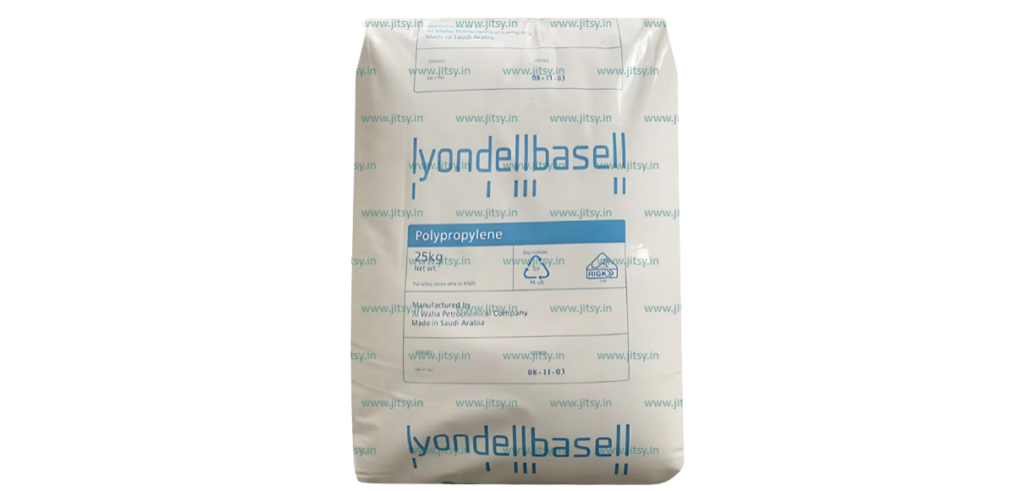
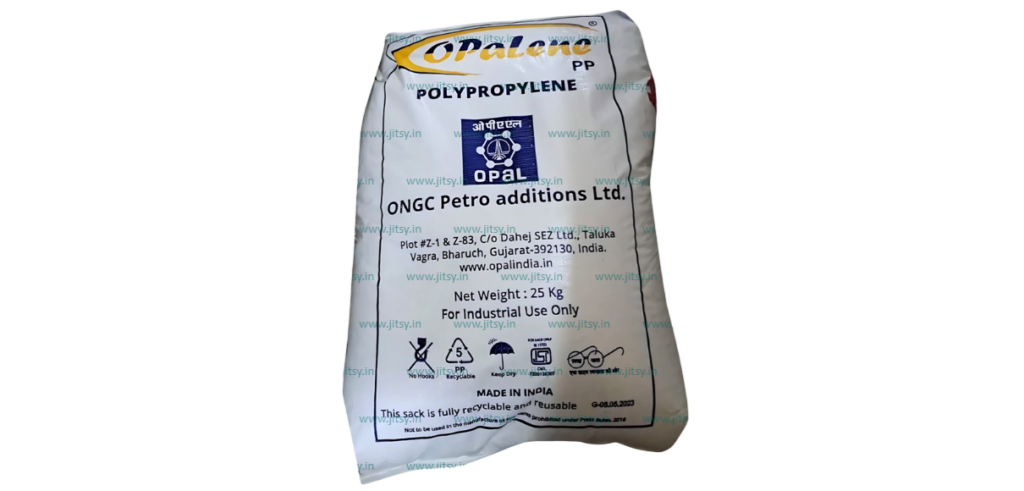
PP impact copolymer injection moulding grades from other Indian producers — OPaL, Reliance Industries and GAIL produce PP impact copolymer grades for injection moulding. A grade with MFI in the 20–30 g/10 min range and notched Izod above 70 J/m from any of these producers would occupy a comparable application space to 3250MN. No specific grade from another producer has been confirmed as equivalent to IOCL 3250MN; TDS comparison and processing trials are required before substitution.
Regulatory Compliance and Food Contact Information
IOCL’s product technical datasheet for PPCP 3250MN confirms compliance with the relevant Indian and international standards for polypropylene copolymer materials in food and pharmaceutical contact applications.
The grade meets IS 10910 (Specification for Polypropylene Copolymers for Use in Manufacture of Utensils and Articles Intended to Come into Contact with Foodstuff, Pharmaceuticals and Drinking Water) — the BIS standard governing PP copolymers in food-contact applications, distinct from IS 10909, which applies to PP homopolymers. IS 10910 compliance establishes 3250MN as a suitable material for food-contact injection-moulded articles, including containers, trays, lids and rigid packaging when processed and used within the conditions of the standard.
The grade and its incorporated additives also comply with FDA CFR Title 21, Section 177.1520 (Olefin Polymers) — the US FDA regulation for olefin-based polymers in food-contact applications. For processors manufacturing food-contact rigid packaging, houseware containers or food-service components from 3250MN, final regulatory qualification of the finished article — including any colorants, additional additives and end-use conditions — remains the responsibility of the processor and brand owner.
Alternative Names, Common Search Variants and Grade Misspellings
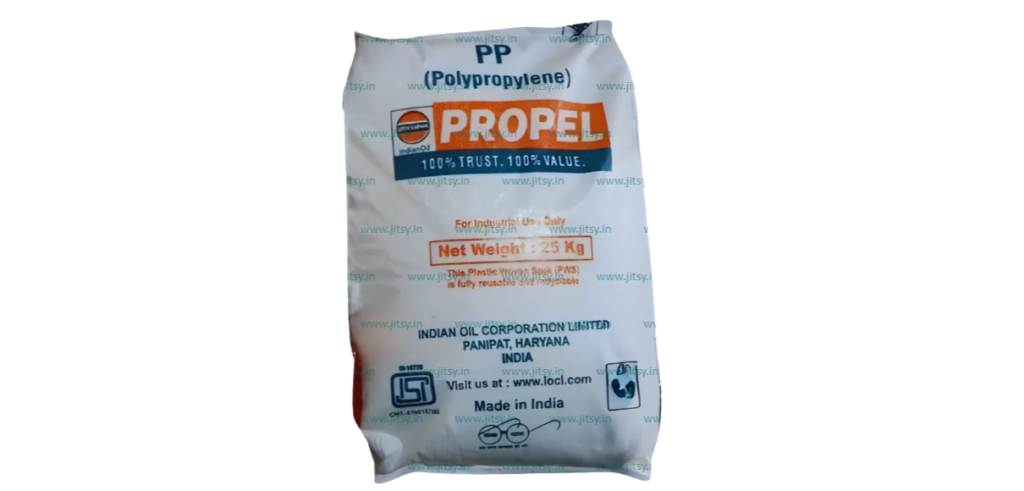
IOCL PPCP Propel 3250MN is also commonly searched and referenced as: PROPEL PP 3250MN, IOCL 3250MN injection moulding granules, PP impact copolymer 3250MN, PP CP 3250MN, PPCP 3250MN IOCL, high-flow PP copolymer 3250MN, IOCL 3250MN appliance grade, and Propel 3250MN PP granules 25 kg.
Frequent misspellings and alternate spellings include: 3250 MN, 3250-MN, 3250mn iocl, 3250mg propel, PPCP 3250 MN, PP impact IOCL 3250MN, and propel pp 3250-mn injection.



















Reviews
Clear filtersThere are no reviews yet.