IOCL LLDPE Propel 042R35U is a medium-density linear low-density polyethylene (LLDPE) manufactured by Indian Oil Corporation Ltd (IOCL) under its PROPEL polymer brand. It is produced at IOCL’s LLDPE/HDPE swing plant in Panipat using Nova Chemicals’ Sclairtech solution polymerization technology — the same precision polymerization process that underpins the entire IOCL PROPEL roto grade range and delivers consistent batch-to-batch MFI, density and mechanical performance.
The defining feature of 042R35U is its UV stabilizer package. IOCL’s product technical datasheet describes 042R35U as “a natural-coloured polymer, adequately stabilised with UV stabilizer to give long service with continuous outdoor exposure with or without blending of any carbon black.” This explicit UV stabilization sets 042R35U apart from IOCL’s other roto grades and makes it the preferred resin for overhead water tanks and outdoor moulded articles that will face sustained direct sunlight over their service life. The grade is classified in IOCL’s LLDPE rotational grade slate with an MFI of 4.8 g/10 min and a density of 0.935 g/cm³.
IOCL LLDPE Propel 042R35U is designed specifically for rotational moulding of containers intended for outdoor exposure. IOCL’s product technical datasheet states that the grade is designed to produce “rotomolded containers for outdoor exposure like: Overhead water tanks; Toys and Furniture.” These applications share a common requirement — parts that must maintain structural integrity, surface appearance and mechanical performance over years of direct UV exposure, temperature cycling and physical use, without the need to rely solely on carbon black pigmentation for UV protection.
Technical Insights
Resin Properties
- MFI: 4.8 g/10 min (ASTM D1238, 190 °C / 2.16 kg) — A well-established melt flow index for rotational moulding. At 4.8 g/10 min, 042R35U flows readily through the rotomoulding oven cycle, sintering uniformly to produce fully fused, void-free tank walls across standard oven temperature settings. This is the same MFI as IOCL’s 042R35A grade, meaning the UV-stabilised 042R35U delivers identical processability to its non-UV counterpart with no change to mould setup, cycle time or equipment settings.
- Density: 0.935 g/cm³ (ASTM D1505, 23 °C) — Medium-density LLDPE, in the range optimised for roto moulding of self-supporting hollow containers. This density provides a practical balance between stiffness and toughness: stiff enough for overhead tanks to hold shape under water load, tough enough to resist cracking under impact during handling, filling or accidental knocks.
- Hardness: 55 Shore D (ASTM D2240) — Consistent with other IOCL LLDPE roto grades at the same density. A 55 Shore D surface finish resists indentation and abrasion from handling, stacking and installation while remaining flexible enough not to crack under point loads.
Mechanical Properties
- Tensile Yield Strength: 15 MPa (ASTM D638) — Adequate yield resistance for the hydrostatic loads generated by full overhead water tanks. The tank wall resists permanent deformation under the weight of stored water before any plastic yielding begins.
- Ultimate Tensile Strength: 20 MPa (ASTM D638) — The resin can carry significantly more stress beyond yielding before rupture — a safety reserve that protects tank integrity under overload or unexpected mechanical stress.
- Elongation at Break: >600% (ASTM D638) — Very high elongation, characteristic of Sclairtech-produced LLDPE grades. This means tank walls stretch substantially before any crack propagates, preventing brittle failure and providing the toughness needed for impact events during transport, installation and service.
- Flexural Yield Strength: 13 MPa (ASTM D790) — Reflects the force required to begin bending a moulded panel. At 13 MPa, 042R35U provides sufficient resistance to bending deformation under the combined hoop stress and gravity load of a full overhead water tank.
- Flexural Modulus: 450 MPa (ASTM D790) — The primary measure of tank wall stiffness. At 450 MPa, 042R35U provides the structural rigidity typical of standard overhead tank LLDPE grades, allowing tanks to maintain their cylindrical or rectangular shape under normal water fill levels without unacceptable bulging or creep.
- Notched Izod Impact Strength: >500 J/m (ASTM D256, 23 °C) — Exceptionally high impact toughness. A notched Izod of >500 J/m means the moulded tank wall can absorb substantial impact energy without fracture — critical for overhead tanks that may be hit during roof installation, maintenance or delivery, and for outdoor toys and furniture subject to accidental impacts.
Thermal Properties
- Vicat Softening Point: 117 °C (ASTM D1525, 10 N) — The material begins to soften at 117 °C, well above the maximum surface temperatures of overhead tanks exposed to direct Indian summer sun (typically 60–80 °C surface temperatures). This thermal stability ensures tank walls do not deform or lose shape under normal outdoor operating conditions.
UV Stabilizer and Processing Window
The UV stabilizer incorporated by IOCL in 042R35U protects the polymer chains from photo-oxidative degradation caused by prolonged UV exposure. Without UV stabilization, LLDPE experiences surface chalking, colour fade, embrittlement and loss of impact resistance over time — failures that would compromise tank structural integrity and service life. IOCL’s TDS notes that 042R35U provides long outdoor service “with or without blending of any carbon black,” meaning natural-colour tanks (white, blue, green) can be produced without depending entirely on carbon black as the UV barrier.
IOCL recommends a rotomoulding oven temperature of 170–215 °C for 042R35U — identical to the processing window for 042R35A and 040R40A. Maintaining this range ensures complete sintering without thermal degradation of the UV stabilizer package. Processing above 215 °C risks stabilizer depletion and discolouration; processing below 170 °C risks under-sintering, pinholes and reduced impact performance.
Applications of IOCL LLDPE 042R35U
Overhead Water Storage Tanks
IOCL LLDPE Propel 042R35U is the natural choice for rotomoulding overhead water storage tanks in colours other than black. Black tanks can use carbon black alone as UV protection. But for white, blue, green or other coloured tanks — which represent a large share of the domestic, commercial and agricultural overhead tank market in India — UV stabilisation in the base resin is essential. The UV stabilizer in 042R35U shields the polymer matrix from photo-oxidative chain scission across the tank’s service life, maintaining impact toughness, surface appearance and structural integrity without relying solely on pigment for UV protection. The notched Izod impact of >500 J/m and elongation of >600% ensure the tank wall resists cracking under the physical stresses of transport, rooftop installation, thermal cycling and incidental impacts during service. IS 10146:1982 and IS 10141:1982 compliance confirms suitability for direct drinking water contact.
Outdoor Toys and Furniture
IOCL specifically recommends 042R35U for rotomoulded toys and furniture intended for outdoor use — playground equipment, ride-on toys, large moulded chairs, benches and garden containers that spend their service life exposed to sunlight, rain and temperature variation. In these applications, UV degradation shows up as surface chalking, colour fade and eventual embrittlement, which compromises both the appearance and safety of the product. The UV stabilizer package in 042R35U extends the colour retention and surface integrity of moulded toys and furniture without requiring the high carbon black loadings that would restrict colour choices. The combination of 55 Shore D hardness, >500 J/m impact toughness and >600% elongation provides the durability needed for products subject to daily physical use by children and adults in outdoor settings.
General Outdoor Rotomoulded Containers and Equipment
Beyond water tanks and toys, 042R35U is a practical material choice for any outdoor rotomoulded product where colour options are commercially important and UV exposure is sustained — storage containers, garden planters, water butts, chemical tanks used outdoors, and similar hollow moulded articles. The medium-density LLDPE formulation provides the impact toughness and stiffness balance appropriate for self-supporting containers, and the UV stabilizer ensures these properties are maintained across the operational life of the product rather than degrading rapidly under direct sun exposure.
Comparable Alternative Grades for UV-Stabilised Roto Moulding
042R35U occupies a specific and well-defined position: UV-stabilised LLDPE roto grade for overhead water tanks and coloured outdoor products, with the same mechanical property set as IOCL’s standard 042R35A grade. Understanding how it compares to closely related grades helps procurement and technical teams make the right selection.
IOCL LLDPE 042R35A is the direct non-UV counterpart to 042R35U within IOCL’s own grade range. Both are produced on the same Sclairtech plant at Panipat and share identical reported properties: MFI 4.8 g/10 min, density 0.935 g/cm³, tensile yield 15 MPa, UTS 20 MPa, elongation >600%, flexural yield 13 MPa, flexural modulus 450 MPa, notched Izod >500 J/m, hardness 55 Shore D and Vicat 117 °C. The IOCL TDS for 042R35A recommends it for overhead water tanks, loft tanks, septic tanks, chemical storage tanks, toys and furniture — a broader application list than 042R35U. The critical difference is that 042R35A’s TDS does not carry the explicit UV stabilizer statement that appears in 042R35U’s datasheet. For outdoor overhead tanks in lighter colours produced without significant carbon black loading, 042R35U is the appropriate grade. For tanks produced in black or with high carbon black content, or for indoor/below-grade applications where UV exposure is not a design consideration, 042R35A is equally suited at the same processing conditions.
GAIL G-Lene R35U042 is GAIL India’s UV-stabilised roto LLDPE grade and the closest third-party analogue to IOCL 042R35U in terms of application positioning. GAIL describes R35U042 as an LLDPE grade “duly stabilized with HALS (Hindered Amine Light Stabilizer) for long service life under outdoor exposure for colored products,” recommended for water storage tanks, bins, road dividers, playground equipment, toys and boats. It is classified for rotational moulding and positioned for the same outdoor coloured-product segment as IOCL 042R35U. GAIL’s use of HALS (Hindered Amine Light Stabilizer) is a specific UV stabilizer technology that works by interrupting the free radical chain reactions of UV degradation — a well-established approach in outdoor polyolefin applications. GAIL’s published data for R35U042 does not include a full TDS-level property table in accessible public sources, so a direct numerical comparison of MFI, density and mechanical properties cannot be made with confidence. Equivalence is not confirmed by either manufacturer and must be treated as unverified until processors conduct side-by-side TDS review and processing trials.
IOCL LLDPE 040R40A is IOCL’s higher-density roto grade (0.940 g/cm³, flexural modulus 900 MPa) and is not a UV-stabilised grade in the same sense as 042R35U. It targets underground and structurally demanding applications where stiffness is the priority over toughness. It is not a substitute for 042R35U in overhead water tank or outdoor toy applications.
Regulatory Compliance, Food Contact and Drinking Water Approvals
IOCL’s product technical datasheet for LLDPE 042R35U carries the standard IOCL LLDPE regulatory declarations applicable across the range.
The grade meets IS 10146:1982 (Specification for Polyethylene for Safe Use in Contact with Foodstuff, Pharmaceuticals and Drinking Water) and conforms to the positive list of constituents as per IS 10141:1982 — the core BIS standards for food and drinking water contact polyethylene in India. The datasheet also states that the grade and its incorporated additives, including the UV stabilizer, comply with FDA CFR Title 21, Section 177.1520 (Olefin Polymers), the US FDA regulation for olefin-based polymers in food-contact articles.
For overhead drinking water tanks — one of the primary applications for 042R35U — these approvals are directly relevant. Tanks produced from 042R35U can be used for potable water storage, and the additive system, including the UV stabilizer, has been confirmed by IOCL to meet the requirements of these food and drinking water contact standards.
Alternative Names, Common Search Variants and Grade Misspellings
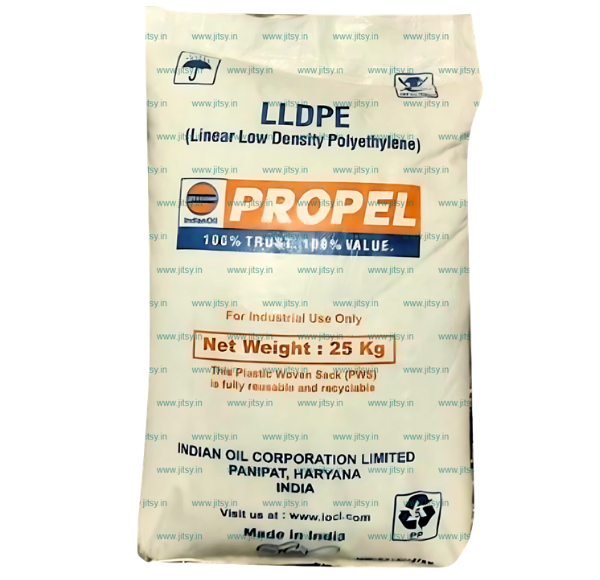
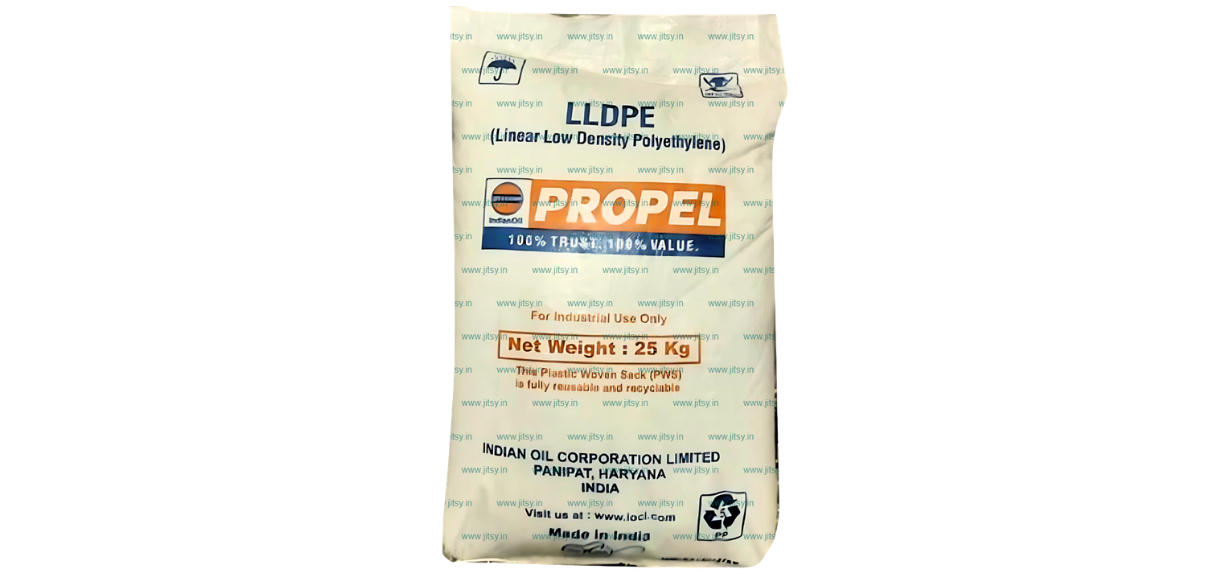
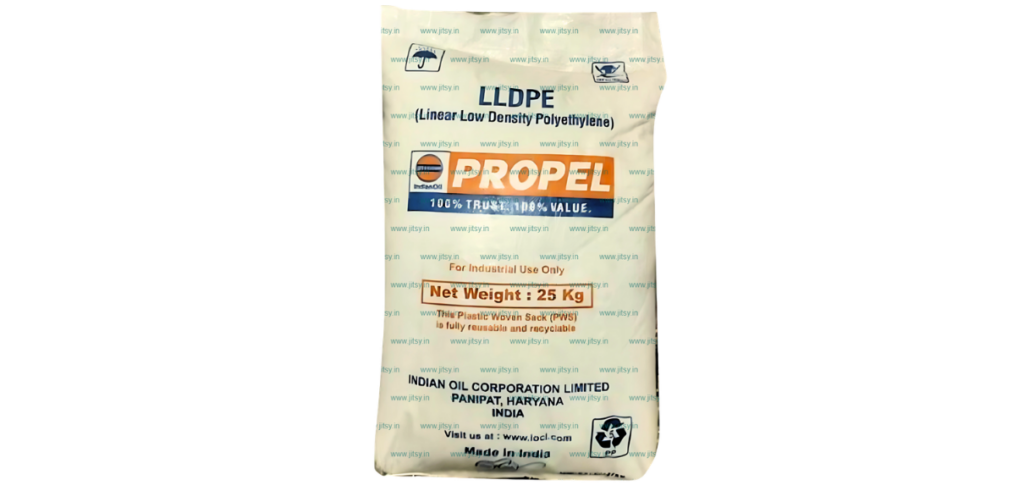
IOCL LLDPE Propel 042R35U is also commonly searched and referenced as: LLDPE 042R35U, IOCL 042R35U granules, LLDPE PROPEL 042R35U, IOCL 042R35U UV stabilised roto grade, medium density polyethylene 042R35U water tank grade, LLDPE roto 4.8 MFI UV grade 042R35U, IOCL LLDPE overhead water tank grade 042R35U, and LLDPE PROPEL 042R35U 25KG bags.
Frequent misspellings and alternate spellings include: 042 R35U, 042r35u lldpe, IOCL LLDPE Propel 042-R35-U, roto moulding lldpe 042R35U iocl, 042r35u uv stabilised polyethylene, and IOCL MDPE roto grade 042R35U.









Reviews
Clear filtersThere are no reviews yet.