





Brand
 Bhansali Engineering Polymers LimitedBhansali Engineering Polymers Limited 3
 Borouge Pte LtdBorouge Pte Ltd 1
 Dongsung ChemicalDongsung Chemical 2
 Dow-MitsuiDow-Mitsui 4
 FPC Formosa Plastics CorporationFPC Formosa Plastics Corporation 1
 Gail India LimitedGail India Limited 32
 Haldia Petrochemicals LtdHaldia Petrochemicals Ltd 25
 Hanwha Solutions ChemicalHanwha Solutions Chemical 4
 Hanwha Total Energies PetrochemicalHanwha Total Energies Petrochemical 7
 HMEL - HPCL-Mittal Energy LimitedHMEL - HPCL-Mittal Energy Limited 55
 IOCL - Indian Oil Corporation LimitedIOCL - Indian Oil Corporation Limited 71
 Jiangsu Daoming Chemical Co LtdJiangsu Daoming Chemical Co Ltd 2
 LG ChemLG Chem 8
 Lotte ChemicalLotte Chemical 4
 LyondellBasell Industries NVLyondellBasell Industries NV 1
 Mangalore Refinery & Petrochemicals LimitedMangalore Refinery & Petrochemicals Limited 7
 Marcopolo International LLCMarcopolo International LLC 2
 Nouryon Functional ChemicalsNouryon Functional Chemicals 8
 ONGC Petro Additions LtdONGC Petro Additions Ltd 44
 Reliance Industries LimitedReliance Industries Limited 48
 SabicSabic 1
 Sipchem - Saudi International PetrochemicalSipchem - Saudi International Petrochemical 8
 SK Functional PolymerSK Functional Polymer 6
 The Dow Chemical CompanyThe Dow Chemical Company 3
 TPI Polene Public Company LimitedTPI Polene Public Company Limited 3
 VersalisVersalis 4
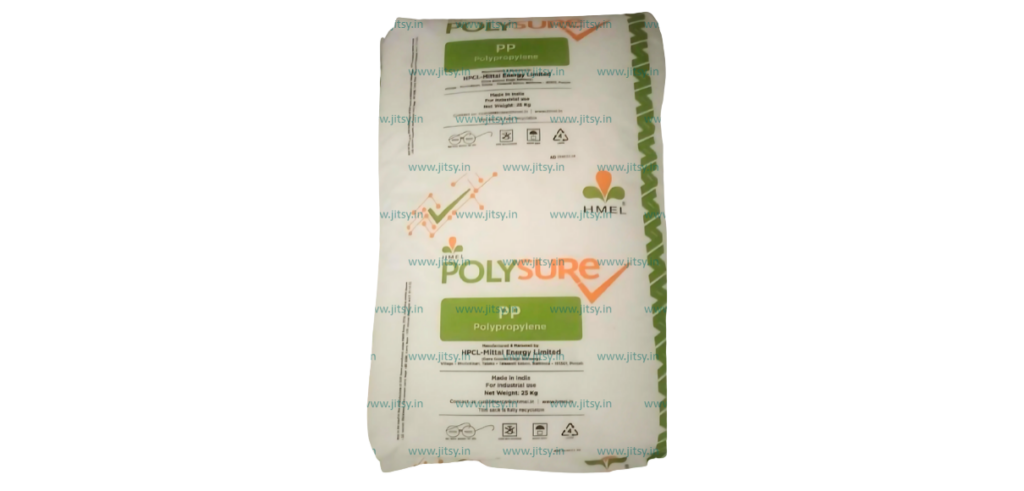
HMEL PPRCP Polysure RP01TR
Polysure RP01TR is HMEL’s flagship polypropylene random copolymer, engineered for hot and cold water PPR pipe extrusion. Manufactured with advanced Spheripol-II technology, this grade ensures ultra-low MFI (0.3 g/10 min), exceptional thermal stability, and a smooth surface finish for long-lasting, corrosion-free plumbing systems. IS 10910 and IS 16738:2018 certified, it is trusted for safe potable water distribution and delivers over 50 years of service life under real-world conditions.
RP01TR leverages fifth-generation Spheripol-II process, producing uniform spherical particles and ultra-consistent molecular weight distribution. Integrated thermal stabilizers enable continuous operation at 95°C and short-term spikes up to 120°C. The grade’s “No Break” impact rating, high Vicat softening point (135°C), and tight MFI control ensure pipe performance under pressure, thermal cycling, and installation stress. Ultra-low catalyst residuals and low xylene solubles guarantee water safety and long-term reliability, meeting the strictest Indian and global standards.
Applications & Industry Use Cases
Residential Plumbing
Ideal for hot water supply in homes, apartments, and radiant floor heating, RP01TR’s low thermal conductivity, smooth bore, and fusion welding compatibility ensure energy efficiency, quiet operation, and leak-proof joints in modern plumbing networks.Commercial & Institutional
Widely adopted in hotels, hospitals, and schools for 24/7 hot water systems, it supports reliable distribution, corrosion resistance, and compliance with healthcare and hospitality standards. Its non-porous surface prevents biofilm and mineral buildup, ensuring hygiene and durability.Industrial Process Water
RP01TR is used in chemical, food, and pharma plants for process water lines. Its chemical inertness, high pressure ratings, and resistance to scaling make it ideal for demanding industrial environments.Renewable Energy & Solar
With high temperature tolerance and long-term stability, this grade is preferred for solar water heating, geothermal piping, and district heating circuits, performing reliably even in fluctuating and high-temperature conditions.Pipe Manufacturing
Optimized for thick-walled, high-pressure pipe extrusion (SDR 6/7.4), it delivers dimensional stability, minimal sag, and excellent surface finish, supporting efficient production and long service life for pipe manufacturers.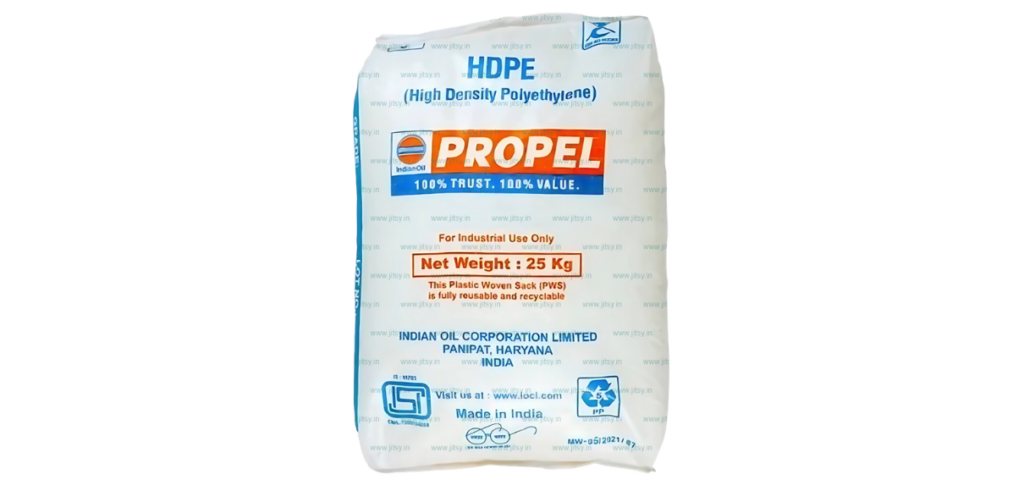
IOCL HDPE Propel 001DB52
IOCL HDPE Propel 001DB52 is a high molecular weight bimodal high density polyethylene grade developed by Indian Oil Corporation Limited under the Propel brand for large blow moulding applications. Manufactured using LyondellBasell Hostalen slurry process technology, this grade is designed for processors producing large containers and L-ring drums up to 240 litres for chemical and industrial packaging.
Indian Oil Corporation Limited is one of India’s leading integrated petrochemical manufacturers, supplying polymer grades for blow moulding, injection moulding, raffia, and pipe applications across industrial and packaging sectors. Within the IOCL Propel HDPE portfolio, 001DB52 is positioned as a large blow moulding grade for high-capacity rigid packaging where processors need dependable melt strength, structural integrity, and stable performance in demanding industrial applications. Its positioning makes it especially relevant for manufacturers of large chemical drums, industrial containers, and other heavy-duty blow moulded packs.
Technical Specifications and Deep Technical Insights
IOCL HDPE Propel 001DB52 has a melt flow index of 0.40 g/10 min at 190°C/10 kg and 2.8 g/10 min at 190°C/21.6 kg, along with a density of 0.952 g/cm³. This profile reflects a high molecular weight HDPE resin engineered for large blow moulding, where processors require strong parison control, good melt strength, and the ability to maintain wall stability in larger container formats. The grade’s bimodal structure is important because large blow moulding applications demand more than simple flow performance. In practical terms, processors need a resin that can support large part formation without sacrificing rigidity or handling strength. That is why 001DB52 is assigned to large containers and L-ring drums rather than smaller bottle applications. Its density level supports the stiffness expected from HDPE industrial packaging, while the flow profile is aligned with larger-capacity moulding requirements. Another major strength of 001DB52 is its suitability for regulated packaging environments. IOCL states that the grade meets IS:10146-1982 for safe use in contact with foodstuff, pharmaceutical products, and drinking water, and also conforms to positive list additive requirements. This adds documentation value for buyers who need both performance and compliance-backed confidence in industrial or regulated packaging supply chains.Applications
Large Chemical Drums
IOCL HDPE Propel 001DB52 is highly suitable for large chemical drums where processors need a blow moulding resin capable of supporting high-capacity rigid packaging. In these applications, the resin must help maintain drum shape, wall stability, and handling performance during filling, storage, transport, and industrial use.L-Ring Drums
For L-ring drum manufacturing, 001DB52 offers the type of high molecular weight HDPE profile required for larger blow moulded parts. These drums are commonly used in industrial and chemical packaging, where structural integrity and dependable processing behavior are critical for converter productivity and final pack reliability.Industrial Containers up to 240 Litres
The grade is recommended for industrial containers up to 240 litres, making it relevant for bulk packaging formats used across chemicals, process industries, utility storage, and industrial distribution. Its positioning in the large blow moulding segment makes it a strong fit where smaller bottle grades are not technically suitable.Chemical Packaging
Chemical packaging applications require a resin that can support rigid container formation in larger sizes while also offering the documentation confidence buyers often expect in industrial supply chains. IOCL 001DB52 fits this requirement well because it is specifically assigned to large-capacity blow moulded packaging rather than general-purpose small bottle use.Regulated Contact Packaging
Because the grade carries foodstuff, pharmaceutical, and drinking water contact references under IOCL documentation, it may also be considered in regulated contact packaging applications where the final use and compliance scope are properly validated. This gives procurement teams an additional trust factor when evaluating the grade.Comparable Alternatives
Within the IOCL portfolio, 001DB52, 003DB52, and 012DB54 serve clearly different blow moulding segments. 012DB54 is positioned for small containers up to 5 litres, 003DB52 is assigned to medium blow moulding applications up to 100 litres, and 001DB52 is the large blow moulding option for containers and L-ring drums up to 240 litres. This makes 001DB52 the logical choice when processors move beyond medium-capacity packaging and require a resin specifically aligned with large industrial drum production. Compared with HMEL B0053D, which is also positioned for large blow moulding and 240 litre drums, IOCL 001DB52 competes in the same broad industrial packaging space. Compared with HMEL B0148D, which is more suited to medium-to-large containers around the 120 litre range, 001DB52 is more clearly dedicated to higher-capacity drum and container applications. The rationale behind the assigned grade is therefore straightforward: 001DB52 is selected when the application demands large-part blow moulding capability, industrial packaging strength, and a manufacturer-backed HDPE grade for 240 litre class containers.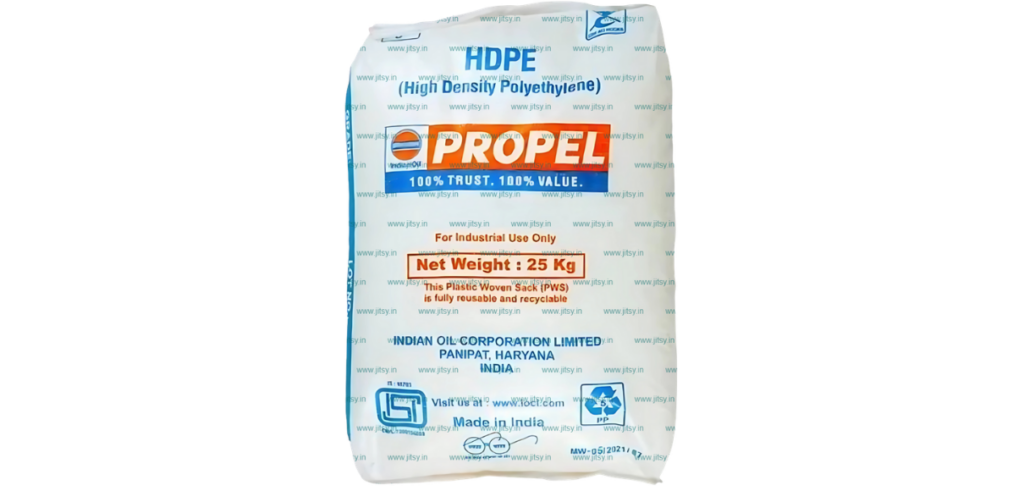
IOCL HDPE Propel 002DB52
IOCL HDPE Propel 002DB52 is a high-density bimodal polyethylene blow-moulding grade manufactured by Indian Oil Corporation Ltd. (IOCL) under the Propel brand. Unlike IOCL’s injection-moulding HDPE grades — which are produced using Nova Chemical’s Sclairtech solution polymerisation technology — HDPE 002DB52 is produced at IOCL’s dedicated HDPE plant using LyondellBasell’s Hostalen slurry process. This is a critical distinction: the Hostalen slurry process is specifically designed to produce bimodal molecular weight distribution HDPE, a polymer architecture that delivers an exceptional balance of stiffness and impact toughness that unimodal grades typically cannot achieve simultaneously at the same density.
The grade is supplied as natural-coloured granules in 25 kg BIS-compliant raffia bags and is positioned by IOCL for extrusion blow moulding applications — specifically for blow-moulded containers for lubricating oil packaging up to 5 L capacity, as stated in IOCL’s grade sheet, and for large blow-moulded containers up to 100 L for the transport and storage of chemicals. The grade is also associated with the water tank industry in distributor-channel documentation, though IOCL’s primary grade for large blow-moulded water tanks up to 1,000 L is the sister grade 003DB52; 002DB52 is better positioned for chemical containers and smaller-volume lube oil packaging.
The term “bimodal” in the grade designation refers to the molecular weight distribution of the resin. Bimodal HDPE contains two distinct polymer populations — a high-molecular-weight fraction that contributes toughness, ESCR (environmental stress crack resistance), and long-term strength, and a lower-molecular-weight fraction that provides the melt processability needed for blow-moulding equipment to run efficiently. The Hostalen slurry process, developed by LyondellBasell, achieves this distribution through a dedicated reactor cascade, producing a polymer that outperforms single-reactor unimodal HDPE on the stiffness-impact balance at equivalent density. This is why IOCL’s own positioning for 002DB52 describes it as a grade with “excellent processability and mechanical properties” and “a good balance of stiffness and impact properties.”
Technical Insights
The property profile of IOCL HDPE Propel 002DB52 is built around the requirements of industrial blow-moulding applications — particularly chemical containers and lube oil packaging — where wall-thickness consistency, top-load strength, drop resistance, and chemical resistance all play a role in determining product performance and service life.- Melt Flow Index — 0.2 g/10 min (ASTM D1238, 190 °C / 5 kg) and 5.5 g/10 min (ASTM D1238, 190 °C / 21.6 kg): Blow-moulding HDPE grades are characterised using two MFI values measured at different loads — unlike injection-moulding HDPE grades, which are measured at 2.16 kg. The low-load MFI (0.2 g/10 min at 5 kg) reflects the melt viscosity under conditions closest to parison formation, where the molten tube of resin must hold its shape and resist gravitational sag between the die exit and mould closure. An MFI as low as 0.2 g/10 min indicates a highly viscous melt with strong parison integrity — the property that enables wall-thickness uniformity in tall or large-diameter blow-moulded containers. The high-load MFI (5.5 g/10 min at 21.6 kg) characterises the shear-thinning behaviour of the melt under the higher stress conditions of the die, indicating that the resin flows adequately through the blow-moulding head and produces acceptable throughput rates despite its high molecular weight.
- Density — 0.953 g/cm³ (ASTM D1505, 23 °C): At 0.953 g/cm³, HDPE 002DB52 sits at the higher-density end of standard blow-moulding HDPE. High density in HDPE correlates with crystallinity, which directly governs stiffness, moisture barrier performance, and chemical resistance. For chemical containers and lube oil packaging, the density level ensures that the container wall provides adequate barrier against moisture ingress, resists permeation by hydrocarbon-based contents, and maintains dimensional integrity when exposed to the chemicals it is designed to hold.
- Tensile Strength at Yield — 28 MPa (ASTM D638): A tensile yield strength of 28 MPa is slightly higher than the 25 MPa typical of IOCL’s injection-moulding HDPE grades, reflecting the density advantage of this bimodal resin. For blow-moulded containers, this governs how much internal pressure or external mechanical load the container wall can absorb before beginning to deform permanently — relevant for filled chemical drums and oil containers that experience hydrostatic pressure, handling stress, and stacking loads.
- Elongation at Yield — 10% / Elongation at Break — >600% (ASTM D638): The combination of a defined yield point at 10% strain and very high elongation at break exceeding 600% describes a tough, ductile material that resists sudden brittle fracture under impact. This high ductility is critical for blow-moulded containers subject to drop testing during certification, rough handling in chemical plants, and the cyclic stresses of repeated filling and emptying cycles over a long service life.
- Flexural Modulus — 1,100 MPa (ASTM D790): At 1,100 MPa, HDPE 002DB52 delivers significantly higher stiffness than IOCL’s injection-moulding grades, which typically range from 800 to 900 MPa. This elevated modulus is a direct outcome of the grade’s higher density and bimodal molecular weight distribution, both of which increase crystallinity and contribute to stiffer polymer chains. For blow-moulded containers, high flexural modulus translates into better top-load performance — the ability to stack filled containers without the bottom containers deforming — and better dimensional stability of container walls under hydrostatic pressure from the contents.
- Notched Izod Impact Strength — 500 J/m (ASTM D256, 23 °C): This is the standout figure in the 002DB52 property set and the most direct expression of the bimodal architecture’s performance advantage. At 500 J/m, the grade delivers notched impact strength more than five times higher than IOCL’s standard injection-moulding HDPE grades (80–90 J/m range). The high-molecular-weight fraction of the bimodal distribution creates polymer chain entanglements that bridge crack fronts and resist crack propagation — the mechanism that produces this exceptional toughness. For chemical drums and large containers, 500 J/m impact strength means container walls and base sections resist cracking at notch-like weld lines, parting lines, and handle attachment points even under severe drop and impact conditions.
- Hardness — 63 Shore D (ASTM D2240): At 63 Shore D, the moulded container surface is firmer than most injection-moulding HDPE grades in the Propel family and resistant to surface indentation and scuffing in industrial handling environments. This hardness level reflects the high density and crystallinity of the resin.
- Vicat Softening Point — 126 °C (ASTM D1525) / HDT — 75 °C at 0.455 MPa (ASTM D648): The Vicat softening point of 126 °C indicates that the polymer begins to soften under a defined load at this temperature. The heat deflection temperature of 75 °C at 0.455 MPa is the more operationally relevant figure for container design: it indicates the temperature at which the moulded container will begin to deflect under a defined bending load. For blow-moulded chemical containers stored in industrial environments or exposed to hot-fill contents, the 75 °C HDT confirms that containers maintain their functional shape under moderate thermal loads but should not be used for contents significantly exceeding this temperature on a continuous basis.
- Processing Temperature — 180–220 °C (Extrusion Blow Moulding): The 180–220 °C processing window for 002DB52 is standard for industrial blow-moulding HDPE and is compatible with conventional continuous and accumulator-head blow-moulding machines used for containers ranging from 1 L to 100 L capacity.
Applications
Lubricating Oil and Automotive Fluid Packaging
IOCL’s grade sheet explicitly positions Propel 002DB52 for blow-moulded containers for lubricating oil packaging up to 5 L capacity. This is the most directly manufacturer-confirmed application for the grade. Lube oil containers — used for engine oils, transmission fluids, hydraulic oils, and industrial lubricants — require a blow-moulding HDPE that combines good parison control for consistent wall thickness, adequate stiffness for stable stacking on filling lines and in retail display, and chemical resistance to the hydrocarbon-based contents. The 0.953 g/cm³ density and 1,100 MPa flexural modulus of 002DB52 provide the stiffness and barrier properties for this application, while the 500 J/m notched Izod impact strength ensures containers survive the drop impacts and rough handling of automotive aftermarket distribution channels.Large Chemical Containers and Industrial Drums
For large blow-moulded chemical containers up to 100 L for the transport and storage of chemicals, HDPE 002DB52 is positioned as a technically capable blow-moulding resin. Large chemical containers face the most demanding combination of requirements in industrial packaging: high hydrostatic pressure from the fill weight, chemical contact with a wide range of aggressive substances, regulatory requirements for materials that are not adulterated by the contents, and the mechanical demands of industrial logistics environments that include forklift handling, pallet stacking, and long-distance transport. The bimodal molecular weight distribution of 002DB52 directly addresses the ESCR challenge — the tendency of HDPE to develop stress cracks when under mechanical stress in contact with surfactants, solvents, or aggressive chemicals. Bimodal HDPE grades produced via the Hostalen slurry process are well established in the chemical packaging industry for precisely this combination of high ESCR, high stiffness, and good blow-moulding processability.Water Storage and Utility Containers
IOCL’s grade family documentation and distributor-channel data associate 002DB52 with the water tank industry and large blow-moulded containers. For smaller blow-moulded water tanks, water storage containers, and utility vessels in this size range, 002DB52’s mechanical property profile is relevant. It is important to note, however, that IOCL’s dedicated blow-moulding grade for large water tanks up to 1,000 L is the sister grade 003DB52, which is explicitly positioned by IOCL for that application. Buyers specifying blow-moulded water storage products at the larger end of the range should evaluate 003DB52 as the primary IOCL option, while 002DB52 remains suitable for smaller water containers and utility storage applications where the chemical container and lube oil packaging property profile is appropriate.Industrial Packaging for Detergents, Agrochemicals, and Process Chemicals
Beyond lubricant and bulk chemical applications, HDPE blow-moulded containers produced from 002DB52 are applicable across the industrial packaging landscape for detergents, cleaning chemicals, agrochemical formulations, and process industry fluids. The IS 10146:1982 and IS 10141:1982 compliance certifications provide the regulatory basis for containers used in segments where material compliance to Indian standards is a procurement requirement. The grade’s HDPE chemistry provides inherent resistance to the surfactants, alkalis, and aqueous formulations common across these sectors, and the high notched Izod impact strength ensures containers remain structurally sound through the handling conditions of industrial supply chains.Comparable Alternatives
IOCL HDPE Propel 003DB52 is the most directly related sister grade and the most important comparison for buyers evaluating blow-moulding HDPE options within the IOCL HDPE Propel family. Both grades are bimodal HDPE produced via LyondellBasell’s Hostalen slurry process at the same IOCL plant. The key published differences from 003DB52’s TDS are a slightly higher MFI (0.32 g/10 min at 5 kg versus 0.2 g/10 min for 002DB52), a marginally lower density of 0.952 g/cm³, a higher flexural modulus of 1,300 MPa, and a higher tensile yield of 32 MPa, but lower notched Izod impact strength of 300 J/m compared with 500 J/m for 002DB52. The 003DB52 grade is explicitly positioned by IOCL for blow-moulded water tanks up to 1,000 L, solar panel floaters, and containers for detergents and chemicals up to 100 L, with a specific ESCR rating (F50 500 h) published in its TDS. For buyers requiring confirmed ESCR performance data for chemical containers or selecting a grade for large water tanks, 003DB52’s documented ESCR value and water-tank positioning make it the preferred specification. HDPE 002DB52, with its higher published impact strength at 500 J/m, is better positioned for applications where notch-toughness is the dominant selection criterion. The two grades are not confirmed equivalents and must be evaluated separately through blow-moulding trials. IOCL HDPE Propel 012DB54 is another bimodal blow-moulding grade within the Propel family, positioned for general-purpose containers and bottles up to 5 L for lube oil, edible oil, and FMCG products. With a higher MFI than 002DB52, 012DB54 is better suited to smaller, thin-wall containers and general-purpose packaging where processability and output rate are prioritised over the parison strength and heavy-duty mechanical performance that 002DB52 is designed to deliver. For buyers whose application requires containers up to 5 L in a general-purpose FMCG or edible oil context, 012DB54 is the more appropriate IOCL option; for lubricating oil packaging and chemical containers where structural performance matters, 002DB52 is the correct specification. IOCL’s injection-moulding HDPE grades — including Propel 080M60, 080M55, 020M52, and 180M50 — are produced by a completely different polymerisation technology (Sclairtech solution process), have a different molecular architecture, and are formulated for injection moulding, not blow moulding. These grades are not alternatives for blow-moulded containers and should not be evaluated as substitutes. The processing equipment, mould design, and wall-thickness expectations are entirely different between injection and blow moulding applications. Reliance Relene 52GB002 is a broadly comparable Indian blow-moulding HDPE grade with published MFI of 0.25 g/10 min and density 0.952 g/cm³, described for blow-moulded containers up to approximately 100 L with good ESCR. On headline MFI and density, this grade occupies a similar space to 002DB52. However, direct property-by-property equivalence between Relene 52GB002 and Propel 002DB52 is not confirmed by either manufacturer, and the differences in polymerisation technology, additive systems, and property measurement protocols can produce meaningful variation in ESCR performance, impact behaviour, and processing characteristics. Any substitution must be validated through independent blow-moulding trials and relevant container testing before qualification. Haldia Petrochemicals B5500 is another Indian bimodal HDPE blow-moulding grade with a slightly higher density (0.956 g/cm³) and a focus on high-ESCR bulk containers and water tanks. It is a higher-density variant that sits in the same general application segment but differs on density and performance profile. Equivalence to 002DB52 is not confirmed; it should be evaluated independently for any specific container application.Common Search Variants
Buyers and engineers commonly search for this grade using terms such as bimodal HDPE for chemical drums, IOCL blow moulding HDPE granules, Propel large container grade, 002DB52 IOCL granules, and HDPE blow moulding grade for lube oil containers India. Frequent spacing variants and alternate notations include IOCL HDPE 002 DB 52, 002DB52 HDPE granules, IOCL 002DB52 blow moulding, and Propel bimodal HDPE 002DB52 — all refer to the same product.
IOCL HDPE Propel 002DF50
IOCL HDPE Propel 002DF50 is a high molecular weight high density bimodal HDPE grade developed by Indian Oil Corporation Limited for blown film extrusion. Produced using LyondellBasell Hostalen Slurry Process technology, this grade is designed for packaging converters who need a reliable HM film resin with strong puncture resistance, good sealing behavior, and attractive film appearance.
Indian Oil Corporation Limited is one of India’s major petrochemical producers supplying HDPE and polypropylene grades across film, pipe, blow moulding, injection moulding, and industrial packaging applications. Within the IOCL Propel HDPE portfolio, 002DF50 is positioned as an HM film grade for counter bags, carrier bags, wrapping film, and liners. Its bimodal molecular structure supports a practical balance of processability and film performance, making it suitable for converters targeting durable packaging films with dependable sealing and handling properties.
Technical Specifications and Deep Technical Insights
IOCL HDPE Propel 002DF50 has a melt flow index of 0.22 g/10 min at 190°C/5 kg and a density of 0.950 g/cm³, which places it in the high density blown film category for HM film applications. This combination supports stable extrusion behavior and helps converters achieve films with useful stiffness, handling strength, and packaging utility. The grade offers hardness of 60 Shore D, tensile strength at yield of 29 MPa, elongation at break of 1000%, flexural modulus of 1000 MPa, and notched Izod impact strength of 300 J/m at 23°C. A major performance highlight is its dart impact strength of 180 g, which is especially relevant for film converters producing bags and liners that need better puncture resistance and handling durability. It also provides a Vicat softening point of 127°C, supporting thermal stability during processing and downstream use. A key technical advantage of 002DF50 is the way it combines good processability, superior dart impact strength, good sealing properties, and good optical properties in one HM film grade. For packaging manufacturers, this means the resin is not only suitable for efficient blown film extrusion, but also capable of producing films that seal well, resist damage in handling, and maintain a commercially acceptable visual appearance. The recommended processing temperature range is 180 to 240°C. The material is supplied in 25 kg raffia bags and should be protected from prolonged sunlight exposure and poor storage conditions to maintain resin quality before conversion.Applications
Counter Bags
IOCL HDPE Propel 002DF50 is well suited for counter bag manufacturing where converters need HM film with a good balance of stiffness, sealing, and puncture resistance. Its dart impact performance and processability make it useful for retail and general packaging bags that must handle regular loading and movement without easy failure.Carrier Bags
For carrier bag applications, 002DF50 supports production of durable HDPE bags with dependable film strength and seal integrity. Its combination of stiffness and impact performance is especially useful where bag performance during carrying, stacking, and transport matters to both converters and end users.Wrapping Film
In wrapping film applications, this grade offers the processability and optical quality needed for practical packaging use. Converters looking for an HDPE HM film grade for wrapping applications can use 002DF50 where film appearance, sealing behavior, and handling durability all contribute to better packaging performance.Liners
IOCL 002DF50 is also recommended for liner applications where puncture resistance and sealing reliability are important. Its superior dart impact strength makes it relevant for liners that need to withstand handling stress while maintaining containment and packaging consistency.Comparable Alternatives
Within the Indian HDPE film market, IOCL 002DF50 competes with grades such as HMEL F0050D, HMEL F0146D, and GAIL 18H55. Based on the available data, 002DF50 stands out as a bimodal HM film grade with MFI 0.22 and density 0.950, positioned specifically for counter bags, carrier bags, wrapping film, and liners. Its strongest differentiators are its dart impact strength of 180 g, good sealing properties, and good optical properties, which make it highly relevant for packaging converters rather than only commodity film processors. Compared with HMEL F0050D, which is positioned more toward heavy duty HM film, IOCL 002DF50 is a more targeted choice where converters need a practical balance of processability, bag performance, and film appearance rather than a heavier-duty film orientation. Compared with HMEL F0146D and GAIL 18H55, 002DF50 offers a strong value proposition for converters who want IOCL-backed Hostalen technology and a film grade clearly aligned to retail bag, wrapping, and liner applications. The rationale behind this grade assignment is straightforward: it is selected where film manufacturers need an HM film resin that combines puncture resistance, seal performance, and usable optics in day-to-day blown film production.
IOCL HDPE Propel 002DP48
IOCL HDPE Propel 002DP48 is a high molecular weight bimodal high density polyethylene grade developed by Indian Oil Corporation Limited for pressure pipe extrusion applications. Produced using LyondellBasell Hostalen Slurry Process technology, this PE 100 pipe grade is designed for manufacturers who need strong long-term hydrostatic performance, reliable extrusion behavior, and durable pipe properties for infrastructure and industrial use.
Indian Oil Corporation Limited is one of India’s major integrated petrochemical producers supplying HDPE and PP grades across pipe, blow moulding, injection moulding, and packaging applications. Within the IOCL Propel HDPE portfolio, 002DP48 is positioned as a PE 100 pressure pipe grade with Minimum Required Strength of 10 MPa as per ISO 9080. It is recommended for pressure pipe systems used in water transportation, sewage networks, and industrial piping where long service life, pressure resistance, and dependable processing are essential.
Technical Specifications and Deep Technical Insights
IOCL HDPE Propel 002DP48 has a melt flow index of 0.22 g/10 min at 190°C/5 kg and a density of 0.948 g/cm³, which places it firmly in the PE 100 pressure pipe category. This balance is important because pipe extruders need a resin that can support high output processing while still delivering the long-term strength and durability expected from pressure pipe systems. The grade offers hardness of 61 Shore D, tensile strength at yield of 28 MPa, elongation at break above 600%, and flexural modulus of 850 MPa. It also shows no break in notched Izod impact testing at 23°C, ESCR above 1000 hours under F50 10% Igepal conditions, Vicat softening point of 125°C, and oxidative induction time above 30 minutes. Together, these values indicate a pipe resin built for toughness, crack resistance, oxidative stability, and dependable long-term field performance. A major technical strength of 002DP48 is its bimodal molecular weight distribution, which supports excellent processability in pipe extrusion while also helping the resin meet the hydrostatic pressure requirements associated with PE 100 classification. For pipe manufacturers, this means the grade is not only about pressure rating on paper, but also about maintaining extrusion stability, pipe integrity, and long service life in real-world installations. The recommended processing temperature range is 180 to 220°C. The material is supplied in 25 kg raffia bags and should be stored away from sunlight and poor storage conditions to preserve resin quality before processing.Applications
Water Transportation Pipes
IOCL HDPE Propel 002DP48 is highly suitable for PE 100 pressure pipes used in water transportation systems. Its MRS 10 MPa classification, strong ESCR performance, and durable mechanical profile make it relevant for municipal water supply networks, infrastructure projects, and long-life distribution pipelines where reliability is critical.Sewage Pipes
For sewage applications, 002DP48 offers the toughness and crack resistance needed for underground and utility piping systems. Pipe manufacturers looking for a bimodal HDPE pipe grade with strong long-term performance can use this grade in sewage and drainage pressure pipe systems where durability matters over years of service.Industrial Piping
Industrial piping applications require a resin that combines pressure performance with dependable extrusion behavior and long-term stability. IOCL 002DP48 fits this requirement well, making it suitable for industrial fluid transport systems where processors and project buyers need confidence in both material performance and specification compliance.Pressure Pipe Systems
This grade is designed for pressure pipe systems where PE 100 classification is a key requirement. Its technical profile supports use in infrastructure and utility projects where hydrostatic strength, environmental stress crack resistance, and oxidation stability are all important selection criteria.Regulated Water Contact Applications
Because the grade also references compliance for safe use in contact with foodstuff, pharmaceutical products, and drinking water, it offers additional trust for buyers working on regulated water-contact applications. This makes it useful not only from a processing standpoint but also from a documentation and approval perspective.Comparable Alternatives
Within the Indian PE 100 pipe market, IOCL 002DP48 competes with grades such as HMEL P0049D, GAIL PE100, OPaL P100, and Reliance Relene P100. Based on the available data, 002DP48 is positioned as a PE 100 pressure pipe grade for water, sewage, and industrial piping with a density of 0.948 and MFI of 0.22, which places it in the expected performance range for high-quality bimodal HDPE pipe extrusion resins. Compared with HMEL P0049D, which is also a PE 100 grade for water, gas, and industrial pipe applications, IOCL 002DP48 presents a strong case where buyers want IOCL-backed Hostalen technology, PE 100 classification, and very high ESCR performance. The rationale behind 002DP48 is clear: it is assigned where pipe manufacturers need a pressure pipe resin with long-term hydrostatic strength, strong crack resistance, and extrusion suitability for demanding infrastructure applications rather than general-purpose extrusion use.
IOCL HDPE Propel 003DB52
IOCL HDPE Propel 003DB52 is a high molecular weight bimodal high density polyethylene grade developed by Indian Oil Corporation Limited under the Propel brand for medium blow moulding and sheet extrusion applications. Produced using LyondellBasell Hostalen slurry process technology, this grade is designed for processors who need good processability, balanced stiffness, and dependable impact performance in larger blow moulded containers and industrial packaging formats.
Indian Oil Corporation Limited is one of India’s largest integrated petrochemical manufacturers, supplying HDPE and PP grades across packaging, blow moulding, injection moulding, raffia, and pipe applications. Within the IOCL Propel portfolio, 003DB52 is positioned in the HDPE blow moulding segment as a medium blow moulding grade for containers and bottles up to 100 litres, while also supporting sheet extrusion applications. This positioning makes it commercially relevant for converters serving industrial packaging, lubricant packaging, utility containers, FMCG packaging, and selected regulated contact applications where documentation and processing stability matter.
Technical Specifications and Deep Technical Insights
IOCL HDPE Propel 003DB52 has a melt flow index of 0.32 g/10 min at 190°C/5 kg and 9.5 g/10 min at 190°C/21.6 kg, along with a density of 0.952 g/cm³. This property profile reflects a high molecular weight bimodal HDPE resin engineered for medium blow moulding, where processors need a combination of parison strength, stable processing, and finished container rigidity. The grade delivers tensile strength at yield of 32 MPa, elongation at yield of 10%, flexural modulus of 1300 MPa, notched Izod impact strength of 300 J/m at 23°C, and a Vicat softening point of 126°C. These values indicate a resin that offers a useful balance between stiffness and toughness, helping converters produce containers that hold shape well while still resisting handling stress and impact during transport and use. A major technical advantage of 003DB52 is its bimodal molecular structure, which supports good processability and a broader performance balance in medium blow moulding applications. In practical converter terms, this means the grade is better suited to larger container formats than small bottle-focused GPBM grades, because it supports the combination of melt strength, rigidity, and impact behavior needed in medium-capacity packaging. The recommended processing temperature range is 180 to 220°C. IOCL also notes the importance of proper storage and handling. The resin is supplied in 25 kg raffia bags and should be stored in a dry, protected environment away from prolonged sunlight exposure, since poor storage can affect bag condition and material quality.Applications
Containers and Bottles up to 100 Litres
IOCL HDPE Propel 003DB52 is primarily suited for containers and bottles up to 100 litre capacity where processors need a medium blow moulding HDPE grade with reliable parison behavior, good stiffness, and impact support. This makes it relevant for industrial packaging, utility containers, and larger rigid blow moulded packs that must maintain shape during filling, stacking, and transport.Medium Blow Moulding Applications
For medium blow moulding lines, 003DB52 offers a practical balance of processability and mechanical performance. Converters working with medium-capacity bottles, jerry-style packs, and industrial containers can benefit from a resin that runs consistently while supporting strong finished part performance.Sheet Extrusion Applications
Beyond blow moulding, the grade is also recommended for sheet extrusion applications. This expands its usefulness for processors who need a versatile HDPE grade that can support rigid industrial sheet and utility product manufacturing where stiffness and durability remain important.Lubricant and Utility Packaging
The grade can be used in packaging formats for lubricants, household chemicals, and utility products where larger pack sizes demand better structural integrity than small retail bottles. Its balanced stiffness and impact profile make it suitable for these practical packaging environments.Food and Regulated Contact Packaging
Because IOCL documentation references compliance for foodstuff, pharmaceutical products, and drinking water contact, 003DB52 also carries added value for buyers who require documentation-backed confidence in regulated packaging applications. This is especially useful where procurement teams evaluate both performance and compliance support before grade selection.Comparable Alternatives
Within the IOCL portfolio, 003DB52 and 012DB54 serve different blow moulding needs. 012DB54 is a general purpose blow moulding grade intended for smaller bottles and containers up to 5 litres, with stronger positioning around small-pack packaging. 003DB52, by contrast, is assigned to the medium blow moulding segment for containers and bottles up to 100 litres, making it the more suitable option where larger capacity, stronger parison behavior, and medium-pack structural performance are required. Compared with Indian alternatives such as HMEL B0155D and HMEL B0148D, IOCL 003DB52 sits between small-container and large-container blow moulding use cases. HMEL B0155D is more closely aligned with containers up to 20 litres, while HMEL B0148D is positioned for larger medium-to-large blow moulding applications such as tanks and bigger containers. The rationale behind 003DB52 is therefore clear: it is selected when processors need a medium blow moulding HDPE grade that bridges productivity, stiffness, impact performance, and broader application versatility including sheet extrusion.
IOCL HDPE Propel 003DF49
IOCL HDPE Propel 003DF49 is a high molecular weight high density bimodal HDPE grade developed by Indian Oil Corporation Limited for blown film extrusion. Produced using LyondellBasell Hostalen Slurry Process technology, this grade is designed for film converters who need a reliable HDPE film resin with strong mechanical performance, good sealing behavior, and better optical appearance in processed films.
Indian Oil Corporation Limited is one of India’s leading petrochemical producers supplying HDPE and polypropylene grades across film, pipe, blow moulding, injection moulding, and industrial packaging applications. Within the IOCL Propel HDPE film portfolio, 003DF49 is positioned as an HM film grade for shopping bags, carrier bags, liners, and wrapping applications. Its bimodal molecular design supports a useful balance of processability, stiffness, toughness, and film appearance, making it relevant for packaging converters who want both production efficiency and commercially attractive film output.
Technical Specifications and Deep Technical Insights
IOCL HDPE Propel 003DF49 has a melt flow index of 0.35 g/10 min at 190°C/5 kg and a density of 0.951 g/cm³, placing it in the high density blown film category for HM film applications. This combination supports stable film extrusion while helping converters achieve films with good stiffness, handling strength, and packaging utility. The grade offers hardness of 62 Shore D, tensile strength at yield of 32 MPa, elongation at break of 1000%, flexural modulus of 1000 MPa, and notched Izod impact strength of 300 J/m at 23°C. It also delivers dart impact strength of 120 g, gloss of 14% at 60°, and a Vicat softening point of 126°C. These values show that 003DF49 is designed not only for smooth blown film processing, but also for producing films with good puncture resistance, useful stiffness, and improved visual appeal. A major technical strength of 003DF49 is its combination of good processability, excellent optical properties, and good mechanical and sealing properties. For packaging manufacturers, this means the resin supports efficient film production while also helping create bags and liners that look better, seal reliably, and perform well during handling, transport, and end use. The recommended processing temperature range is 180 to 220°C. The material is supplied in 25 kg raffia bags and should be protected from prolonged sunlight exposure and poor storage conditions to maintain resin quality before processing.Applications
Shopping Bags
IOCL HDPE Propel 003DF49 is well suited for shopping bag manufacturing where converters need a film grade with a good mix of stiffness, sealability, and visual appeal. Its optical properties and mechanical strength make it useful for retail packaging bags that must look presentable while still offering dependable performance in use.Carrier Bags
For carrier bag applications, 003DF49 supports production of durable HDPE bags with reliable sealing and handling strength. Its balance of tensile performance, impact resistance, and processability makes it a practical choice for converters serving general retail and commercial bag requirements.Liners
In liner applications, this grade offers the film strength and sealing behavior needed for dependable packaging performance. Its mechanical profile and blown film suitability make it relevant for liners that must withstand handling stress while maintaining containment and consistency.Wrapping Applications
IOCL 003DF49 is also recommended for wrapping film applications where converters need a practical balance of processability, optical quality, and functional durability. It is suitable for packaging uses where film appearance, seal integrity, and day-to-day handling performance all matter.Comparable Alternatives
Within the Indian HDPE film market, IOCL 003DF49 competes with grades such as IOCL 002DF50, HMEL F0146D, HMEL F0050D, and GAIL 18H55. Based on the available data, 003DF49 stands out with MFI 0.35 and density 0.951, positioned specifically for shopping bags, carrier bags, liners, and wrapping applications. Its strongest differentiators are its excellent optical properties, good sealing behavior, and a balanced mechanical profile that supports both packaging performance and film appearance. Compared with IOCL 002DF50, which is more strongly positioned around superior dart impact and counter bag applications, 003DF49 is the more suitable choice where the converter prioritizes shopping bags, carrier bags, and better film optics. Compared with HMEL F0146D and GAIL 18H55, 003DF49 offers a strong value proposition for converters who want IOCL-backed Hostalen technology and a film grade clearly aligned to visually better retail and packaging film applications. The rationale behind this grade assignment is straightforward: it is selected where film manufacturers need a balanced HM film resin with good optics, sealing reliability, and practical bag performance rather than a more heavy-duty or purely commodity film orientation.
IOCL HDPE Propel 003F46
Propel 003F46 is a high-density polyethylene blown film grade manufactured by Indian Oil Corporation Ltd. (IOCL) under the Propel brand, produced at IOCL’s Product Application and Development Centre (PADC) at Panipat Refinery, Haryana. Like IOCL’s injection-moulding Propel grades, it is manufactured using Nova Chemical’s Sclairtech solution polymerisation technology — a process that delivers controlled molecular weight distribution, excellent homogeneity, and the low gel content that film converters require for defect-free production runs. The grade is supplied as natural-coloured granules, consistent with IOCL’s standard packaging for Propel grades.
HDPE 003F46 occupies a different processing domain from IOCL’s injection-moulding and blow-moulding HDPE grades. It is not designed for moulded parts or rigid containers; it is formulated exclusively for the blown film extrusion process, where the resin is melted, extruded as a tubular parison upward through a circular die, and then inflated with air to produce a continuous film bubble that is collapsed, wound, and slit into film or bag stock. IOCL’s own product technical datasheet states explicitly: “HDPE 003F46 is designed for co-extrusion film and liners.” This positioning is reinforced by distributor documentation and commercial listings across the Indian polymer trade, which consistently identify co-extrusion films, liners, and general-purpose blown film as the recommended end uses.
The two defining characteristics that IOCL and distributors consistently highlight for HDPE 003F46 are good processability and low gel content. In the blown film context, these attributes matter because gel particles — localised high-molecular-weight inclusions in the melt — produce visible defects in the finished film, create points of mechanical weakness, and in severe cases can rupture the film bubble during production. Low gel content, achieved through the homogeneous molecular architecture of the Sclairtech solution process, makes 003F46 suitable for film structures where surface quality, optical performance, and consistency across widths and gauges are production requirements. Good processability in the blown film context means the resin builds and holds a stable bubble at the recommended blow-up ratios and die conditions, supporting consistent output without frequent bubble collapses or gauge variations.
At a density of 0.946 g/cm³, HDPE 003F46 provides the crystallinity and stiffness characteristic of HDPE films — higher stiffness, better moisture barrier, and stronger tensile properties than LLDPE or LDPE at equivalent gauge — while the MFI of approximately 0.30–0.35 g/10 min at 190 °C / 2.16 kg kg provides the melt viscosity and melt strength needed to maintain bubble integrity at blow-up ratios of 2.0–3.0. The mechanical properties of the grade are characterised on oriented film rather than compression-moulded specimens — a critical distinction from the injection and blow-moulding grades in the Propel family. The film properties therefore reflect both the resin’s molecular characteristics and the orientation effect of the blown film process, which explains the high elongation at break values (780–800% in the machine direction, 950% in the transverse direction) that would not be seen on moulded specimens of the same polymer.
IOCL’s documentation confirms regulatory compliance with IS 10146:1982, IS 10141:1982, and FDA CFR Title 21 Section 177.1520 for olefin polymers. These certifications support the grade’s use in packaging films that come into contact with food, pharmaceuticals, or drinking water, subject to the finished article also meeting applicable end-use testing requirements.
Technical Insights
Understanding the Key Properties of HDPE 003F46
The properties of Propel 003F46 must be read in the context of blown film production — all mechanical values are measured on 40 μm film produced at a specific die gap (0.75 mm) and blow-up ratio (2.75), as stated in IOCL’s TDS. This means the numbers reflect both the resin’s base molecular properties and the orientation introduced by the film-making process, and they are not directly comparable with property values from injection-moulded or compression-moulded specimens.- Melt Flow Index — 0.30–0.35 g/10 min (ASTM D1238, 190 °C / 2.16 kg): A small but notable discrepancy exists between sources: IOCL’s own TDS reports MFI 0.30 g/10 min, while distributor documentation consistently cites 0.35 g/10 min. Both figures are typical values — not specification limits — and the difference is within the batch-to-batch variability expected for HDPE resins. The practical implication for blown film converters is the same in either case: an MFI in the 0.30–0.35 g/10 min range places 003F46 in the moderate-viscosity segment for HDPE film grades, providing enough melt strength to hold a stable bubble at standard blow-up ratios without excessive extruder back-pressure. Unlike the very low-MFI blow-moulding grades (such as HDPE 002DB52 at 0.2 g/10 min at 5 kg load), the film-grade MFI is measured at 2.16 kg and reflects extrusion film die conditions rather than parison behaviour.
- Density — 0.946 g/cm³ (ASTM D1505, 23 °C): At 0.946 g/cm³, HDPE 003F46 is firmly within the high-density polyethylene classification and at the characteristic density level for HDPE film grades. This density level drives the stiffness, moisture barrier, and tensile strength that make HDPE films preferred over LLDPE or LDPE in applications where film rigidity, rustling hand-feel, and strength-to-gauge ratio matter. It is slightly lower than IOCL’s injection-moulding and blow-moulding grades (0.952–0.960 g/cm³), which is typical for film-grade HDPEs where the molecular weight distribution is tuned for film processability rather than maximum crystallinity.
- Low Gel Content — Manufacturer-stated Feature: Gel content is not captured by a single numeric test value but is explicitly identified by IOCL as a defining feature of 003F46. Gel particles in blown film resin originate from localised high-molecular-weight or cross-linked polymer fractions that do not melt uniformly. In finished film, they appear as translucent or opaque spots, create thin points that reduce puncture resistance, and can cause film breaks during high-speed extrusion. IOCL’s Sclairtech solution polymerisation process produces a molecularly homogeneous polymer that minimises gel formation — a direct functional benefit for co-extrusion film lines and high-quality liner applications where defect-free production runs and consistent film structure across all layers are required.
- Tensile Strength at Yield — 29 MPa (MD) / 26 MPa (TD) (ASTM D882): Film tensile properties are reported in two directions: machine direction (MD, along the direction of film travel) and transverse direction (TD, perpendicular to film travel). The slightly higher MD yield strength reflects the molecular orientation introduced during film drawing in the machine direction. At 29 / 26 MPa, the grade delivers tensile yield values comparable with typical HDPE film grades and appropriate for packaging films and liners that must resist the stresses of filling, sealing, and handling without deforming at the yield point.
- Ultimate Tensile Strength — 45 MPa (MD) / 40 MPa (TD) (ASTM D882): The ultimate tensile strength — the stress at which the film fractures — of 45 MPa (MD) and 40 MPa (TD) indicates that films produced from 003F46 have significant residual strength after yielding. The difference between yield and ultimate tensile values is itself a measure of the strain-hardening capability of the film, which contributes to puncture resistance and toughness in dynamic loading situations such as drop impacts on filled bags and liner penetration by sharp edges.
- Elongation at Break — 780% (MD) / 950% (TD) (ASTM D882, IOCL TDS) / 800% (MD) / 950% (TD) (Instamine): The very high elongation at break values in both machine and transverse directions are characteristic of HDPE film produced by the blown film process. The higher TD elongation reflects the molecular orientation balance achieved at the blow-up ratio used for testing. These values confirm that the film will stretch substantially before fracturing — a property that contributes to puncture resistance, dynamic impact performance, and the film’s ability to conform to irregular contents without tearing.
- Dart Impact Strength — 2 g/μm (ASTM D1709, F50, 38 mm dart, 66 cm height): Dart impact strength is the standard measure of film’s resistance to a falling weight puncture — the most relevant test for bags and liners that must withstand contents falling against the film surface. At 2 g/μm, the film needs to be 2 grams thick per micron of gauge to resist puncture at the F50 failure level. For practical purposes, a 25 μm film would need the full surface mass of the film to absorb the impact; this value provides a basis for gauge specification against known drop weight requirements in the end-use application.
- Tear Strength — 0.4 g/μm (MD) / 0.45 g/μm (TD) (ASTM D1922): Tear strength measured by the Elmendorf method reflects resistance to tear propagation once a notch has initiated. The slightly higher TD tear value is typical for HDPE blown film and reflects the transverse molecular orientation. For liner applications where the film must resist tearing from sharp edges, contact stress, or rough surfaces, these values confirm that the film has the tear propagation resistance expected of a well-formed HDPE blown film grade.
- Processing Temperature — Barrel 180–200 °C / Melt 190–210 °C; BUR 2.0–3.0; Die Gap 0.75–2.5 mm (IOCL TDS): These manufacturer-stated parameters define the operating envelope for blown film processing of 003F46. The relatively narrow barrel temperature range of 180–200 °C reflects the need to maintain consistent melt homogeneity and viscosity for stable bubble formation. The BUR range of 2.0–3.0 covers most standard single and co-extrusion blown film configurations, and the die gap range of 0.75–2.5 mm accommodates a range of target film gauges.
Applications
Co-extrusion Films for Multilayer Packaging
IOCL’s own TDS explicitly identifies co-extrusion films as the primary designed application for HDPE 003F46, and this is the segment where its low gel content and processability attributes have the greatest impact. In multilayer co-extrusion blown film — where HDPE, LLDPE, LDPE, or other polymers are simultaneously extruded through a multi-layer die to form a composite film structure — each layer’s melt must be homogeneous and free of defects that would propagate through the layer boundary and into adjacent layers. A gel particle in an HDPE layer of a co-extrusion structure creates a localised thin spot that compromises the barrier, strength, and sealability of the entire film at that point. HDPE 003F46’s low gel content, delivered by the Sclairtech solution process, directly addresses this requirement. The grade provides the stiffness and barrier performance expected of an HDPE layer — higher modulus than LLDPE, better moisture barrier than LDPE — within a co-extrusion structure designed for industrial bags, heavy-duty sacks, multilayer food packaging, or technical protective films.Liners for Industrial Bags, Containers, and Bulk Packaging
For blown film liners — used inside woven polypropylene sacks, big bags (FIBC), cardboard boxes, and bulk containers — the critical film properties are puncture resistance, tear resistance, and dimensional consistency across the liner circumference. HDPE 003F46’s 2 g/μm dart impact strength, 780–950% elongation at break, and 0.4–0.45 g/μm tear strength confirm a film that resists the puncture and tearing stresses from the granular, powder, or lumpy contents typical of industrial liner applications. The density of 0.946 g/cm³ also provides the moisture barrier performance that many liner applications require to protect hygroscopic contents such as cement, fertiliser, chemical powders, and food ingredients from ambient humidity.General-Purpose Blown Film for Bags and Protective Packaging
Beyond the co-extrusion and liner applications that IOCL positions as primary, HDPE 003F46 is suitable for general-purpose blown film applications — carry bags, shopping bags, garbage bags, and protective wrapping films — where HDPE’s characteristic stiffness, print-friendliness, and strength-to-gauge ratio are the selection drivers. For converters serving the grocery, retail, and general packaging sectors, 003F46’s MFI in the 0.30–0.35 g/10 min range supports bubble stability on standard single-layer blown film lines, while the high elongation at break enables controlled downgauging — producing thinner films that still meet the tensile and impact requirements of the application — which directly reduces raw material cost per unit of film produced.Extrusion Blow-Moulded Products — General Purpose
Distributor documentation also lists general-purpose extrusion blow moulding as a suitable processing route for 003F46, extending its applicability to small blow-moulded containers and bottles where the film-grade MFI and density provide adequate parison behaviour for compact, thin-wall applications. Buyers considering 003F46 for blow-moulded containers should note that IOCL’s dedicated blow-moulding grades — including 002DB52 and 003DB52 — are specifically engineered for medium to large containers with defined ESCR performance and container-specific mechanical profiles. The extrusion blow-moulding positioning for 003F46 is therefore most applicable to smaller, general-purpose blown items where the film-grade resin’s property profile is sufficient, not to large industrial drums or tanks where blow-moulding-specific grade selection is required.Comparable Alternatives
Within the IOCL HDPE Propel film grade family, the most directly relevant comparisons are with other HDPE film grades in the Propel portfolio — including HDPE 002DF50 and HDPE 003DF49, both listed under IOCL’s HDPE film category. These grades exist for specific film segments (potentially narrower gauge, food packaging, or different MFI/density combinations) but their full property profiles are not publicly confirmed in accessible IOCL documentation. They should be treated as related alternatives — same manufacturer and film-grade family — but not confirmed substitutes for 003F46. Any converter considering a switch between these grades must verify the MFI, density, and film property set from IOCL’s current TDS and run production trials to confirm processability and end-product performance. IOCL HDPE Propel 002DB52 is the blow-moulding grade in the same Propel portfolio. Despite being made by the same manufacturer, it is a fundamentally different product: bimodal molecular weight distribution from the Hostalen slurry process, very low MFI of 0.2 g/10 min measured at 5 kg load, and a property set designed for container wall thickness and parison strength rather than film orientation and gauge uniformity. It is not an alternative for blown film applications, and 003F46 is not an alternative for large container blow moulding. The two grades serve entirely different processing technologies and end-use requirements. Reliance Relene F46003 and F46003E are the most directly comparable grades from another major Indian HDPE producer in the co-extrusion and liner film segment. Reliance’s grade summary lists F46003 for co-extrusion, liners, and blow-moulding under 5 L, with a reported MFI of 0.35 and density of 0.948 — close to the 003F46 profile. The more detailed F46003E TDS shows tensile values of 29/26 MPa (yield) and 45/40 MPa (ultimate), elongation at break of 780/950%, dart impact of 2 g/μm, and tear strength of 0.40/0.45 g/μm — a mechanical property set that mirrors IOCL 003F46 closely. However, F46003E has a notably higher MFI of 1.0 g/10 min (compared to 003F46’s 0.30–0.35 g/10 min), which represents a meaningful difference in melt viscosity and processing characteristics on the film line. Direct property equivalence between F46003/F46003E and 003F46 is not confirmed by either manufacturer; any commercial substitution requires independent film trials and customer qualification. OPaL HDPE F52H04 is a film extrusion grade from ONGC Petro Additions Limited, produced using Mitsui CX slurry technology and positioned for garment bags, grocery bags, merchandise bags, and similar blown film applications. The grade carries the same IS 10146:1982, IS 10141:1982, and FDA CFR 21 177.1520 regulatory compliance as 003F46. However, the Mitsui CX slurry technology differs from IOCL’s Sclairtech solution process in molecular weight distribution architecture, which can affect gel behaviour, processability, and film property profiles differently. OPaL F52H04 is a comparable film-grade option for bag applications, but not a confirmed equivalent to 003F46 for co-extrusion film structures where low gel content is the specific selection driver.Common Search Variants
Buyers and engineers commonly search for this grade using terms such as HDPE blown film granules India, IOCL film grade HDPE 003F46, co-extrusion HDPE resin granules, Propel liner grade, and IOCL HDPE 0.35 MFI film grade. Frequent spacing variants and alternate notations include IOCL HDPE 003 F46, 003F46 HDPE granules, HD raffia IOCL 003F46, and IOCL HDPE blown film 003F46 0.35 MFI — all refer to the same product.
IOCL HDPE Propel 004DP44
IOCL HDPE Propel 004DP44 is a natural high density bimodal polyethylene grade developed by Indian Oil Corporation Limited for pressure pipe extrusion applications. Manufactured using LyondellBasell Hostalen Slurry Process technology, this grade is designed for pipe manufacturers looking for dependable processability, strong mechanical performance, and reliable hydrostatic strength in PE 80 pipe systems.
Indian Oil Corporation Limited is one of India’s leading petrochemical producers with a broad portfolio of HDPE and PP grades serving pipe, packaging, moulding, and industrial processing applications. Within the IOCL Propel HDPE range, 004DP44 is positioned as a PE 80 pressure pipe grade developed for water transportation, sprinkler irrigation, sewerage, and related pressure pipe applications. Its bimodal structure helps balance extrusion efficiency with long-term mechanical performance, making it relevant for processors who need both output consistency and dependable finished pipe quality.
Technical Specifications and Deep Technical Insights
IOCL HDPE Propel 004DP44 has a melt flow index of 0.45 g/10 min at 190°C/5 kg and a density of 0.945 g/cm³, giving it a processing and stiffness profile suitable for PE 80 pipe extrusion. This combination supports good melt behavior during extrusion while maintaining the structural properties expected in pressure pipe applications. The grade delivers hardness of 61 Shore D, tensile strength at yield of 27 MPa, elongation at break above 600%, and flexural modulus of 800 MPa. It also demonstrates hydrostatic pressure test performance of 165 hours at 80°C and 4.6 MPa and 48 hours at 80°C and 4.9 MPa, along with ESCR above 1000 hours under F50 10% Igepal conditions. In addition, it offers a Vicat softening point of 126°C and oxidative induction time above 30 minutes. These values show that 004DP44 is not just easy to process, but also built for long-term field durability, crack resistance, and thermal stability. A key technical advantage of 004DP44 is its bimodal molecular weight distribution, which helps pipe processors achieve stable extrusion and consistent pipe properties. For manufacturers, this matters because pipe grades must perform not only in laboratory testing but also during continuous production runs where melt strength, dimensional consistency, and long-term pressure performance all influence final product quality. The recommended processing temperature range is 180 to 220°C. The material is supplied in 25 kg raffia bags and should be protected from direct sunlight and poor storage conditions to maintain resin quality before use.Applications
Water Transportation Pipes
IOCL HDPE Propel 004DP44 is well suited for PE 80 pressure pipes used in water transportation systems. Its hydrostatic performance, mechanical strength, and extrusion stability make it suitable for water supply lines where processors need a reliable HDPE pipe grade for long service life and consistent manufacturing output.Sprinkler Irrigation Pipes
For sprinkler irrigation pipe manufacturing, 004DP44 offers a practical balance of processability and durability. Agricultural and irrigation pipe producers benefit from a resin that can run efficiently on extrusion lines while still delivering the pressure performance and toughness required for field conditions.Sewerage Pipes
In sewerage applications, this grade supports the production of durable HDPE pipes that need to withstand long-term use, handling stress, and environmental exposure. Its high ESCR performance is especially relevant where resistance to stress cracking contributes to better reliability in service.General Pressure Pipe Applications
Beyond standard water and irrigation uses, 004DP44 is also relevant for general PE 80 pressure pipe applications where manufacturers require a dependable extrusion grade with proven hydrostatic test performance. It is a suitable choice for processors serving utility, infrastructure, and project-based pipe demand in the Indian market.Comparable Alternatives
Within the Indian HDPE pipe resin market, IOCL 004DP44 competes with grades such as HMEL P0148D, GAIL P80, and OPaL P80. Based on the available technical positioning, 004DP44 stands out as an IOCL PE 80 grade with a density of 0.945 and MFI of 0.45, making it a practical option for processors who prioritize smoother extrusion behavior and dependable pressure pipe performance in PE 80 applications. Compared with IOCL 002DP48, which is a PE 100 grade for higher pressure and more demanding long-term performance requirements, 004DP44 is the more appropriate choice where PE 80 classification is sufficient and the application is focused on water transportation, sprinkler irrigation, or sewerage systems. Compared with HMEL P0148D and other PE 80 alternatives, 004DP44 offers a clear value proposition through IOCL-backed Hostalen technology, strong ESCR performance, and verified hydrostatic test results. The rationale behind this grade assignment is straightforward: it is intended for pressure pipe manufacturers who need a PE 80 resin that combines processability, durability, and compliance-oriented performance.
IOCL HDPE Propel 010DB50
Propel 010DB50 is a high-density polyethylene blow-moulding grade manufactured by Indian Oil Corporation Ltd. (IOCL) at its Panipat Naphtha Cracker Complex under the Propel brand. Like IOCL’s 002DB52 and 003DB52 blow-moulding grades, it is produced using LyondellBasell’s Hostalen slurry process — a two-reactor technology that creates a bimodal molecular weight distribution. IOCL classifies 010DB50 officially as a “High ESCR GPBM Grade,” where GPBM stands for General Purpose Blow Moulding. This classification is the grade’s defining market identity: it is the Propel grade specifically formulated for blow-moulded containers where environmental stress crack resistance is the primary design requirement.
IOCL’s own provisional technical datasheet states the recommended applications as containers and bottles up to 5 L capacity, high ESCR blow-moulded containers, and containers for packing chemicals and pesticides. This is a narrower and more application-specific positioning than IOCL’s larger-container blow-moulding grades. The 5 L upper-bound capacity is directly linked to the grade’s MFI of 1.2 g/10 min at 190 °C / 5 kg — a higher MFI than the large-container grades (002DB52 at 0.2 g/10 min), reflecting the smaller container geometry where parison sag is less critical and faster cycle speeds are operationally valuable. The Hostalen bimodal architecture still delivers the molecular structure needed for exceptional ESCR and toughness at this higher MFI, because in bimodal HDPE it is the high-molecular-weight fraction — not the bulk viscosity — that governs stress-crack performance.
The defining property that differentiates HDPE 010DB50 from general-purpose HDPE blow-moulding grades is its ESCR of greater than 500 hours under ASTM D1693 Condition B at 10% Igepal — an industry-standard surfactant that accelerates stress cracking in HDPE. ESCR is the property that determines how long a container wall can resist cracking when it is simultaneously under residual moulding stress and in contact with a surfactant-active, chemically aggressive, or otherwise ESCR-active medium. For pesticide bottles, agrochemical containers, cleaning product bottles, and industrial chemical containers — all of which hold formulations that act as ESCR-active agents — this property directly governs container shelf life and the risk of leakage or structural failure in the field. IOCL’s choice to explicitly ESCR-rate 010DB50 at >500 h and to classify it as a “High ESCR” grade signals that this performance level is built into the grade specification as a design intent, not an incidental outcome.
The grade’s full property profile supports the applications it is designed for. Flexural modulus of 900 MPa provides the container wall stiffness needed for good top-load performance and dimensional stability on filling lines. Notched Izod impact strength of 150 J/m at 23 °C ensures containers survive drop impacts during transport and retail handling. Vicat softening point of 125 °C and HDT of 70 °C at 0.455 MPa confirm that containers maintain their shape and closure integrity across the temperature conditions of Indian distribution environments. IOCL certifies the grade family as compliant with IS 10146:1982, IS 10141:1982, and FDA CFR Title 21 Section 177.1520 for olefin polymers.
Technical Insights
Understanding the Key Properties of HDPE 010DB50
Every property in the HDPE 010DB50 datasheet can be read as an answer to a specific design question that a packaging engineer or procurement team would ask when specifying a resin for chemical or pesticide containers.- ESCR — >500 h (ASTM D1693, Condition B, 10% Igepal): This is the grade’s anchor property and the reason for its existence as a distinct IOCL grade. ESCR measures the time to failure when a notched specimen is immersed in a surfactant solution while bent under stress — a controlled simulation of the stress and chemical environment that a blow-moulded container experiences in service. A value exceeding 500 hours at 10% Igepal is a high benchmark for a general-purpose blow-moulding grade, confirming that containers produced from 010DB50 are designed to hold aggressive chemical formulations for the duration of shelf life and use cycles without developing the fine stress cracks that cause leakage and container failure. This performance is delivered by the bimodal molecular weight distribution of the Hostalen process, where the high-molecular-weight polymer chains bridge crack fronts and resist propagation under sustained stress in a chemical environment.
- Melt Flow Index — 1.2 g/10 min (ASTM D1238, 190 °C / 5 kg): The MFI of blow-moulding HDPE grades is measured at 5 kg load — a higher test weight than the 2.16 kg used for injection-moulding grades — because blow-moulding dies operate at higher shear conditions. At 1.2 g/10 min, HDPE 010DB50 flows significantly more freely than the large-container blow-moulding grades (002DB52 at 0.2 g/10 min), which is appropriate for the smaller cavity geometries and thinner wall sections of containers up to 5 L. The higher MFI supports faster cycle times, good mould filling in compact tools, and efficient production on standard continuous extrusion blow-moulding equipment for small bottles and containers.
- Density — 0.950 g/cm³ (ASTM D1505, 23 °C): The density governs crystallinity, which underpins the stiffness, chemical barrier, and moisture resistance of the container wall. At 0.950 g/cm³, the grade delivers reliable chemical resistance across the range of formulations typical in agrochemical, household chemical, and industrial chemical packaging. The bimodal architecture of the Hostalen process means that this density level coexists with the high ESCR performance — a combination that is harder to achieve in unimodal HDPE at equivalent density.
- Tensile Strength at Yield — 25 MPa (ASTM D638, Type IV): This defines the load at which the container wall begins to deform permanently under tensile stress. For chemical containers that must resist internal pressure from fill weight, handle stresses, and external clamping or stacking forces, 25 MPa provides the structural basis for container integrity across the product’s service life.
- Elongation at Break — >600% (ASTM D638, Type IV): High elongation at break in a blow-moulding HDPE indicates ductile failure behaviour — the material will stretch substantially before it fractures. For chemical and pesticide bottles, this is the property that prevents sudden, brittle cracking at weld lines, base sections, and handle attachment points when the container is dropped or stressed. It complements the ESCR value by providing a secondary toughness mechanism against rapid mechanical failure.
- Notched Izod Impact Strength — 150 J/m (ASTM D256, 23 °C): At 150 J/m, the grade delivers solid impact resistance for containers in the 1–5 L range. This value is lower than IOCL’s 002DB52 large-container grade (500 J/m), which is appropriate given the size and wall-thickness difference between the two applications. For small chemical bottles operating within their designed drop and handling conditions, 150 J/m provides adequate resistance to crack initiation at notch-like stress concentrations.
- Flexural Modulus — 900 MPa (ASTM D790): The flexural modulus determines container wall stiffness — how much the wall resists bending under applied load. At 900 MPa, blow-moulded containers from 010DB50 maintain their shape under top-load stacking, resist handling deformation during capping and labelling, and give end users the firm-wall feel associated with quality chemical packaging.
- Vicat Softening Point — 125 °C (ASTM D1525, 10 N) / HDT — 70 °C at 0.455 MPa (ASTM D648): The HDT of 70 °C is the practical upper service temperature for the container under load. For chemical containers in Indian distribution environments — where palletised goods may reach elevated temperatures in transit and storage — this value confirms that containers will not distort or lose closure integrity under the thermal conditions they encounter before reaching the end user.
- Processing Temperature — 160–190 °C: The 160–190 °C processing window for 010DB50 is notably lower than IOCL’s large-container blow-moulding grades, which operate at 180–220 °C. This lower window reduces energy consumption on the extrusion blow-moulding line, minimises the risk of thermal degradation during machine start-up and pauses, and supports faster colour consistency when pigmented compounds are co-processed with the natural resin.
Applications
Chemical and Pesticide Bottles for the Agrochemical Sector
The explicitly manufacturer-stated primary application for Propel 010DB50 is containers and bottles for packing chemicals and pesticides. In the Indian agrochemical market, HDPE bottles for crop protection products — insecticides, herbicides, fungicides, and plant growth regulators — are the dominant primary packaging format across the 100 mL to 5 L range. The formulations in these containers present one of the most demanding ESCR environments in consumer and agricultural packaging: surfactants are commonly used as emulsifiers and dispersants in agrochemical formulations, and these act directly as ESCR-active agents in contact with the container wall. HDPE 010DB50’s ESCR rating of greater than 500 hours at 10% Igepal under ASTM D1693 Condition B provides the quantified performance basis for specifying this grade in agrochemical bottles where container integrity through the full product shelf life and field distribution cycle is a regulatory and commercial requirement.Household and Industrial Chemical Containers Up to 5 L
For household cleaning products — bleach, disinfectants, toilet cleaners, multi-surface sprays — and industrial chemical containers in the 500 mL to 5 L range, the performance requirements closely mirror the agrochemical sector. The active ingredients and surfactants in these formulations are ESCR-active, and containers are expected to maintain closure integrity and wall integrity from filling through retail shelf life and consumer use cycles. HDPE 010DB50’s combination of ESCR >500 h, 900 MPa flexural modulus, and Vicat 125 °C delivers the stiffness, thermal stability, and stress-crack resistance that household and industrial chemical container specifications typically require. The grade’s 150 J/m notched Izod impact strength supports retail-channel drop performance, where containers on shop floors encounter drop heights and hard-surface impacts that standard general-purpose blow-moulding HDPE may not consistently withstand without stress cracking.High ESCR General-Purpose Blow-Moulded Packaging
Beyond the agrochemical and household cleaning segments, IOCL positions 010DB50 as a high ESCR general-purpose blow-moulding grade — meaning it is applicable wherever a small to medium blow-moulded container is required to resist stress cracking in contact with an aggressive medium. This covers a broad range of industrial packaging: engine treatment bottles, lubricant additives in small packs, specialty chemical samples, laboratory reagent containers, and personal care products with high surfactant content. In all these cases, the explicit >500 h ESCR rating of 010DB50 differentiates it from standard GPBM grades where ESCR is not specifically rated or guaranteed to this level, providing packaging designers with a quantified basis for material selection that passes internal specification requirements and customer qualification audits.Small-Volume Industrial and Laboratory Chemical Bottles
For industrial distributors, laboratory suppliers, and specialty chemical companies that package products in 1–5 L HDPE bottles, 010DB50 offers a production-ready blow-moulding solution that combines technical performance with domestic supply reliability from IOCL’s Panipat facility. The grade’s moderate MFI of 1.2 g/10 min at 5 kg load suits the compact cavity geometries of small bottle tools, enabling fast cycle times on continuous extrusion blow-moulding lines and consistent wall-thickness distribution in bottle geometries with handle features, neck finishes, and shoulder contours.Comparable Alternatives
IOCL HDPE Propel 012DB60 is the most directly comparable grade within the IOCL blow-moulding family and the most important distinction for buyers to understand. IOCL’s Grade Sheet 2025 classifies 012DB60 as a “High Density GPBM Grade” — emphasising rigidity — while 010DB50 is classified as a “High ESCR GPBM Grade” — emphasising stress-crack resistance. Instamine data shows 012DB60 with MFI 1.3 g/10 min at 5 kg (similar to 010DB50’s 1.2 g/10 min) but a notably higher density of 0.960 g/cm³ versus 010DB50’s 0.950 g/cm³. The higher density of 012DB60 translates to higher crystallinity and greater stiffness, making it the appropriate choice for applications like lubricant containers and edible oil containers where rigidity and top-load strength are the dominant requirements. The lower density and explicit high ESCR rating of 010DB50 make it the correct specification for pesticide bottles, agrochemical packaging, and chemical containers where the fill product is ESCR-active and long-term stress-crack performance is the primary selection criterion. These two grades serve related but distinct application spaces and should not be treated as equivalents. IOCL HDPE Propel 002DB52 is the large-container blow-moulding grade in the same Propel family. At MFI 0.2 g/10 min at 5 kg versus 010DB50’s 1.2 g/10 min, 002DB52 has approximately six times higher melt viscosity — the characteristic needed for parison strength and wall-thickness uniformity in containers up to 100 L. For chemical containers and lube oil packaging at the smaller scale (up to 5 L) where 010DB50 is positioned, the higher MFI of 010DB50 is operationally appropriate and supports faster cycling on small bottle equipment. The two grades operate in different size segments with different processing conditions and are not substitutes for each other. IOCL HDPE Propel 003DB52, the medium blow-moulding grade, has a lower MFI of approximately 0.32 g/10 min at 5 kg and is positioned for containers up to 100 L, water tanks, and solar panel floaters. Its published ESCR (F50 500 h) is in the same range as 010DB50, but its application positioning is for larger containers and tanks rather than the 1–5 L chemical bottle segment. It is a related IOCL alternative but not a confirmed equivalent or substitute for 010DB50 in small-container pesticide and chemical packaging. Reliance Relene 54GB012 is a broadly comparable high ESCR blow-moulding HDPE from Reliance Polymers with published MFI of 1.20 at I5 and density 0.954 g/cm³, described for blow-moulding up to 20 L with good ESCR. The MFI is almost identical to 010DB50, and the application overlap — high ESCR blow-moulded chemical containers — is clear. However, 54GB012 is positioned for a larger container range (up to 20 L versus 010DB50’s up to 5 L), and direct property-by-property equivalence is not confirmed by either manufacturer. Any commercial substitution between 010DB50 and 54GB012 must be validated through independent blow-moulding trials and regulatory re-qualification. Haldia Petrochemicals B5500 has a notably lower MFI (0.35 at I5) and higher density (0.956 g/cm³) than 010DB50, targeting high-ESCR bulk chemical containers and water tanks. While it occupies the same high-ESCR segment, it is designed for a different container size range and processing window, and is not a confirmed equivalent to 010DB50 for small-bottle applications.Common Search Variants
Buyers and engineers commonly search for this grade using terms such as high ESCR HDPE for pesticide bottles, IOCL blow moulding HDPE chemical container grade, 010DB50 IOCL granules, Propel pesticide packaging grade, and HDPE high ESCR GPBM grade India. Frequent spacing variants and alternate notations include IOCL HDPE 010 DB 50, 010DB50 1 MFI HDPE, HD Blow IOCL 010DB50, and IOCL HDPE 010DB50 blow moulding granules — all refer to the same product.
IOCL HDPE Propel 010DP45
IOCL HDPE Propel 010DP45 is a natural high density bimodal polyethylene grade developed by Indian Oil Corporation Limited for PE 63 pipe extrusion and related processing applications. Produced using LyondellBasell Hostalen Slurry Process technology, this grade is designed for manufacturers who need smooth extrusion, dependable mechanical performance, and a practical balance of stiffness and impact strength in lower pressure HDPE pipe systems.
Indian Oil Corporation Limited is one of India’s leading petrochemical manufacturers supplying HDPE and polypropylene grades for pipe, blow moulding, injection moulding, and packaging industries. Within the IOCL Propel HDPE portfolio, 010DP45 is positioned as a PE 63 grade for applications such as drinking water pipes, drip irrigation pipes, sprinkler systems, industrial effluent pipes, and blow moulded pesticide bottles up to 1 litre. Its bimodal structure supports stable processing and balanced end-use performance, making it relevant for converters who require both production efficiency and reliable finished product properties.
Technical Specifications and Deep Technical Insights
IOCL HDPE Propel 010DP45 has a melt flow index of 0.9 g/10 min at 190°C/5 kg and a density of 0.947 g/cm³, giving it a processing profile suited to PE 63 pipe extrusion and selected small blow moulding applications. This melt flow level supports easier processing and good line behavior, while the density helps maintain the stiffness required for pipe and rigid container use. The grade offers hardness of 60 Shore D, tensile strength at yield of 28 MPa, elongation at break above 600%, flexural modulus of 850 MPa, and notched Izod impact strength of 300 J/m at 23°C. It also provides ESCR above 800 hours under F50 10% Igepal conditions and oxidative induction time above 30 minutes. These values show that 010DP45 is engineered to deliver a useful combination of processability, toughness, stiffness, and long-term resistance to environmental stress cracking. A key technical strength of 010DP45 is its balance of impact strength and stiffness, which is especially important in PE 63 applications where processors want a resin that runs efficiently without sacrificing basic durability. For pipe manufacturers, this means better confidence in extrusion consistency and finished pipe handling performance. For small blow moulded pesticide bottles, it supports rigid container formation with dependable toughness. The recommended processing temperature range is 160 to 200°C. The material is supplied in 25 kg raffia bags and should be stored away from direct sunlight and poor storage conditions to avoid degradation before processing.Applications
Drinking Water Pipes
IOCL HDPE Propel 010DP45 is suitable for PE 63 drinking water pipe applications where manufacturers need a reliable HDPE grade with good extrusion behavior and balanced mechanical strength. Its processing ease and compliance-oriented positioning make it relevant for standard water supply pipe production where consistent output and dependable pipe quality matter.Drip Irrigation Pipes
For drip irrigation pipe manufacturing, 010DP45 offers the processability needed for efficient extrusion along with the stiffness and toughness required for agricultural use. This makes it a practical choice for irrigation pipe processors serving farms, horticulture systems, and water management applications.Sprinkler Systems
In sprinkler pipe applications, the grade supports production of durable PE 63 pipes that need to perform reliably under outdoor use conditions. Its impact-stiffness balance is useful for processors who want a resin that handles both manufacturing efficiency and field-level functional performance.Industrial Effluent Pipes
IOCL 010DP45 is also recommended for industrial effluent pipes where a dependable HDPE extrusion grade is needed for fluid handling systems. Its crack resistance and stable mechanical profile help make it suitable for utility and industrial pipe applications within the PE 63 category.Blow Moulded Pesticide Bottles up to 1 Litre
A notable advantage of 010DP45 is its suitability for blow moulded pesticide bottles up to 1 litre. This gives processors additional flexibility when selecting a grade that can serve both pipe and small rigid packaging applications, especially where controlled stiffness and impact performance are important.Comparable Alternatives
Within the Indian HDPE market, IOCL 010DP45 competes with grades such as HMEL P0147D, GAIL P63, and OPaL P63 in the PE 63 segment. Based on the available data, 010DP45 stands out through its density of 0.947, MFI of 0.9, and positioning across drinking water, drip irrigation, sprinkler, industrial effluent, and small blow moulding applications. This makes it broader in practical use than many grades positioned only around basic pipe extrusion. Compared with IOCL 004DP44, which is a PE 80 grade for higher pressure pipe applications, 010DP45 is better suited where PE 63 classification is sufficient and easier processability is preferred. Compared with HMEL P0147D and other PE 63 alternatives, 010DP45 offers a strong case for processors who want IOCL-backed Hostalen technology and a resin with a clear balance of stiffness, impact strength, and ESCR performance. The rationale behind this grade assignment is that it fits converters needing a versatile PE 63 resin for water, irrigation, effluent, and small bottle applications rather than higher pressure PE 80 or PE 100 systems.
IOCL HDPE Propel 010DP45U
Propel 010DP45U is a UV-stabilized, bimodal high-density polyethylene pipe extrusion grade manufactured by Indian Oil Corporation Ltd. (IOCL) under its Propel brand. Produced using LyondellBasell’s Hostalen slurry polymerisation process, the grade meets the PE 63 pipe classification and carries TEC/CACT approval under reference GR/TX/CDS-008/03/MAR-2011 for use in optical fibre cable (OFC) duct applications. It is supplied as natural-coloured granules in 25 kg BIS-compliant raffia bags.
The grade designation encodes its design logic precisely. The “01” prefix places it in IOCL’s bimodal family, produced via the Hostalen slurry process rather than the solution-phase Sclairtech route used for injection-moulding and film grades. The “0” following “01” designates a pipe grade, distinct from the “B” designation used for blow-moulding grades. The “P” is the direct identifier for pipe extrusion as the intended processing method. “45” corresponds to the PE 63 pressure classification — specifically the minimum required strength (MRS) value at 20 °C over 50 years — and the “U” carries the same meaning it does across the Propel range: a UV stabilisation package built into the polymer formulation at the compounding stage.
The TEC/CACT approval is the grade’s most commercially distinctive attribute. The Telecom Engineering Centre (TEC), operating under the Department of Telecommunications (DoT) of the Government of India, issues Generic Requirements (GR) approvals for materials and conduits used in India’s optical fibre telecom infrastructure. HDPE 010DP45U’s approval under GR/TX/CDS-008/03/MAR-2011 qualifies it for use in ducts carrying optical fibre cables in Indian telecom networks — a regulatory gateway that narrows the field of compliant PE 63 pipe grades substantially. For telecom EPC contractors, BSNL, private operators, and duct system suppliers serving regulated telecom infrastructure, this approval is not optional; it is the entry requirement.
The UV stabilisation addresses a direct environmental challenge in telecom duct deployment. OFC ducts are frequently laid partly above ground, on poles, on building facades, or in shallow surface trenches where sections of the conduit are exposed to direct sunlight for extended periods. In unstabilised HDPE, this exposure initiates photo-oxidative degradation — a progressive chain reaction that causes surface embrittlement, chalking, and eventual loss of mechanical integrity in the duct wall. The UV stabilisers in 010DP45U interrupt this mechanism and extend the functional service life of the duct through multi-year outdoor exposure conditions.
Technical Insights
Understanding the Key Properties of HDPE 010DP45U
The properties of Propel 010DP45U must be read as an integrated system for pipe extrusion — not as isolated datasheet values, but as a coordinated set of attributes that together define performance for underground and outdoor telecom duct service.- Melt Flow Index — 0.90 g/10 min (ASTM D1238, 190 °C / 5 kg): The MFI for 010DP45U is reported at 5 kg load, which is the standard test condition for blow-moulding and pipe-extrusion grades — not the 2.16 kg load used for injection-moulding and film grades. At 0.90 g/10 min under 5 kg, this is a low-flow, high-molecular-weight grade by design. Pipe extrusion requires a polymer melt that develops sufficient back-pressure to form a dimensionally stable tube without sagging or wall variation, and the low MFI reflects the molecular weight necessary for that extrusion stability. Higher-MFI pipe grades flow more easily but sacrifice the long-chain density that ESCR and toughness performance depend on. The 0.90 g/10 min value is characteristic of PE 63 pipe grades and consistent with the Hostalen bimodal grades in IOCL’s pipeline series.
- Density — 0.947 g/cm³ at 23 °C / 0.945 g/cm³ at 27 °C (ASTM D1505): IOCL’s technical documentation for this grade provides two density measurements at different temperatures, reflecting the thermal sensitivity of HDPE density measurement and the different reference conditions used in international and Indian standards. At 0.947 g/cm³, the grade sits in the lower-density range of HDPE pipe grades, consistent with the PE 63 classification’s property balance. The density governs crystallinity, and at this value the grade retains meaningful flexibility in the duct wall — relevant for directional drilling, tight-radius conduit laying, and installation conditions where the duct must negotiate non-linear paths without kinking.
- PE 63 Classification: PE 63 denotes the minimum required hydrostatic strength (MRS) of 6.3 MPa at 20 °C over a 50-year design life. This is the lowest pressure classification in the PE pipe system, below PE 80 and PE 100. For telecom OFC ducts, operating pressure is not the governing design requirement — the duct’s function is to protect optical fibre cables, not to contain pressurised fluid. The PE 63 classification is the correct and widely accepted specification for non-pressure OFC duct applications, providing regulatory compliance with standard telecom duct specifications without over-engineering to PE 80 or PE 100 performance levels that are unnecessary for the end use.
- ESCR (F50) — >600 h (ASTM D1693, 10% Igepal, Condition B): At greater than 600 hours, HDPE 010DP45U achieves the highest ESCR value in the Propel series reviewed here — exceeding the >500 h value of the high-ESCR blow-moulding grade HDPE 010DB50. ESCR is critical for buried pipe and conduit grades because soil, groundwater, and chemical backfill compounds can act as ESCR-active agents on the outer duct surface over the multi-decade service life of telecom infrastructure. The bimodal molecular architecture is the primary enabler of this ESCR performance: high-molecular-weight tie molecules in the bimodal distribution create the entanglement density that resists slow crack growth at the stress concentrations that develop in buried pipe under sustained loading.
- OIT — >30 min (ASTM D3895): Oxidative Induction Time measures the time to onset of oxidative degradation in a polymer sample exposed to oxygen at elevated temperature. It is a direct indicator of the residual antioxidant package in the material and serves as a quality indicator for both the as-supplied granule and the extruded pipe. An OIT exceeding 30 minutes confirms that 010DP45U contains a thermal stabiliser package robust enough to survive the extrusion process and retain meaningful antioxidant protection in the finished duct. For buried infrastructure with a 30-40 year design life, antioxidant depletion is a real long-term failure mechanism; OIT is the measurement that confirms the stabiliser package is present and effective.
- Notched Izod Impact Strength — 300 J/m (ASTM D256, 23 °C): At 300 J/m, HDPE 010DP45U is the toughest grade in the Propel injection/pipe/film series by this measure — and the value is not incidental. Bimodal Hostalen pipe grades are specifically engineered for high impact performance through the molecular architecture that distributes toughness across the pipe wall. For OFC ducts subjected to point loading from compaction equipment during backfill, dropped objects during handling, and cyclic ground movement in service, the ability to absorb and distribute impact energy without initiating brittle fracture is a critical long-term reliability attribute.
- Tensile Strength at Yield — 28 MPa (ASTM D638, Type IV): The 28 MPa tensile yield strength reflects the combined contribution of the crystalline and amorphous phases in the bimodal HDPE structure. For pipe grades, this value governs the resistance of the duct wall to hoop stress from soil overburden and handling loads. At 28 MPa, the duct wall resists sustained deformation under the ground pressures encountered in typical civil installation depths.
- Elongation at Break — >600% (ASTM D638): High elongation at break is a consistent attribute of bimodal HDPE grades and reflects ductile failure behaviour. A duct that deforms plastically before fracturing gives engineering margins that a brittle material does not — particularly relevant during installation when ducts may be bent around obstacles, handled roughly, or subjected to localized stress concentrations.
- Flexural Modulus — 850 MPa (ASTM D790): The 850 MPa flexural modulus defines the ring stiffness contribution of the pipe wall material. For non-pressure OFC ducts, ring stiffness determines resistance to pipe ovalization under soil loading — a critical factor for maintaining the circular cross-section needed to allow optical fibre cable blowing or pulling through the duct after installation.
- Vicat Softening Point — 126 °C (ASTM D1525): The 126 °C Vicat point confirms that the pipe wall retains its dimensional geometry and load-bearing cross-section well above the thermal conditions encountered in buried and above-ground duct service, including the elevated ground temperatures experienced in Indian summer conditions.
- Processing Temperature — 160–210 °C: The 160–210 °C extrusion window is the standard range for Hostalen bimodal pipe grades. The relatively wide window provides operational flexibility across screw configurations, die sizes, and line speeds used in PE pipe extrusion without approaching temperatures where thermal degradation of the UV and antioxidant stabiliser packages would occur.
Applications
Telecom OFC Ducts and Optical Fibre Cable Conduit
Propel 010DP45U’s primary application and the driver of its TEC/CACT approval is the manufacture of telecom ducts carrying optical fibre cables. India’s national and last-mile fibre rollout — including BharatNet, 5G backhaul networks, and private telecom operator fibre builds — requires OFC ducts that meet specified regulatory requirements for the material used in government and regulated telecom infrastructure. The TEC approval under GR/TX/CDS-008/03/MAR-2011 is the specific qualification that allows 010DP45U to be used in these applications. For duct manufacturers and telecom EPC contractors supplying infrastructure for regulated networks, sourcing from a TEC-approved grade is not discretionary. The grade’s bimodal architecture delivers the combination of ring stiffness, impact resistance, ESCR, and long-term thermal stability that telecom duct specifications require — including the properties needed to survive directional drilling, deep burial, and above-ground cable routing with multi-decade service life expectations.Above-Ground and Exposed OFC Duct Installations
In urban and semi-urban fibre builds, OFC ducts are routinely routed above ground — on poles, along building facades, in open cable trays, and on surface-mounted cable routes — where sections of the duct are permanently or seasonally exposed to direct sunlight. The UV stabilisation in 010DP45U is directly relevant in these deployment contexts. An unstabilised PE 63 grade used in above-ground routes will undergo photo-oxidative surface degradation over seasons of sun exposure, progressively compromising the mechanical integrity of the duct wall. The UV stabiliser package in 010DP45U prevents this degradation cycle, extending the protective function of the duct through the multi-year exposure conditions of outdoor telecom infrastructure. For network builds that mix buried and above-ground routing in the same cable run, specifying 010DP45U throughout the route eliminates the need to source and manage a separate UV-stabilised grade for the exposed sections.General-Purpose PE 63 Non-Pressure Pipe Applications
Beyond telecom ducts specifically, HDPE 010DP45U is applicable to the broader segment of general-purpose PE 63 non-pressure pipe applications where UV stability and long-term chemical resistance are required. This includes cable management conduits for electrical installations in outdoor and semi-outdoor environments, drainage and surface water management ducts in landscaping and civil construction, agricultural irrigation distribution pipes in systems that include surface-laid sections, and utility protection sleeves for underground service lines. For any non-pressure PE 63 pipe application where the duct will see sunlight during installation or service, the UV stabilisation of 010DP45U addresses a degradation risk that a non-UV grade of the same PE 63 classification would not.Directional Drilling and Trenchless Telecom Duct Installation
Horizontal directional drilling (HDD) is the primary installation method for OFC ducts crossing roads, rail lines, waterways, and congested urban areas without open trenching. HDD subjects the duct to significant tensile and compressive loads during the pull-back phase, as well as sustained contact with drilling muds and soil slurries that can include ESCR-active chemical components. HDPE 010DP45U’s ESCR of greater than 600 hours, 300 J/m impact strength, and greater than 600% elongation at break make it mechanically well-suited to the demands of HDD installation. The bimodal molecular architecture that delivers these properties also ensures the duct wall resists the slow crack growth mechanisms that can develop at stress concentrations in buried pipe under sustained soil loading after installation is complete.Comparable Alternatives
Propel 010DP45 — the non-UV variant — is the most direct comparison. The two grades share the same Hostalen bimodal base polymer, the same MFI of 0.90 g/10 min, the same density of 0.947 g/cm³, and the same PE 63 classification. The differentiating factor is the UV stabilisation package present in 010DP45U and absent in 010DP45. For buried-only OFC duct routes where no section of the installed duct will be exposed to sunlight — including fully underground systems installed by open trench with immediate cover — 010DP45 is technically appropriate. For any installation that includes above-ground sections, pole-mounted routing, or exposed cable trays, 010DP45U is the required specification. In practice, most telecom duct supply programmes specify 010DP45U as the single source grade for a network build to avoid the risk of non-UV material being installed at exposed points — a risk that is difficult to audit after burial. TEC/CACT approval status should be verified separately for 010DP45 before specifying it for regulated telecom applications; the approval reviewed here is specifically for 010DP45U. Propel 010DB50 is the grade in the Propel range that is closest in structural architecture to 010DP45U: both are Hostalen bimodal grades with low MFI (5 kg load), both target chemical resistance and ESCR as primary performance attributes, and both achieve ESCR above 500 hours by ASTM D1693. The key distinctions are processing method and application positioning. 010DB50 is an extrusion blow-moulding grade with MFI 1.2 g/10 min (5 kg) and a processing window of 160–190 °C, positioned for chemical containers and pesticide canisters. 010DP45U is a pipe extrusion grade with MFI 0.90 g/10 min (5 kg), a processing window of 160–210 °C, PE 63 classification, and TEC/CACT approval for telecom duct applications. The two grades serve entirely different processing and end-use segments and are not interchangeable despite their structural similarities. Other Indian PE 63 pipe grades from producers including HMEL, GAIL, OPAL, and Haldia Petrochemicals may carry PE 63 classification and UV stabilisation. For regulated telecom duct applications in India, TEC/CACT approval status under GR/TX/CDS-008/03/MAR-2011 is the governing qualification criterion — not PE 63 classification alone. Buyers should confirm that any alternative grade carries current TEC/CACT approval before substituting it for 010DP45U in a regulated telecom supply programme.Common Search Variants
Buyers and engineers commonly search for this grade using terms such as PE 63 HDPE pipe grade India, TEC approved HDPE duct grade, OFC duct HDPE granules, UV-stabilized PE 63 pipe resin, Propel 010DP45U, and IOCL telecom duct grade. Frequent misspellings and alternate notations include HDPE 10DP45U, 010DP45-U, Propel PE63 duct grade, IOCL HDPE pipe granules UV, and 010DP45U HDPE datasheet — all refer to the same product.
IOCL HDPE Propel 010E52
Propel 010E52 is an oriented tape and monofilament grade of high-density polyethylene manufactured by Indian Oil Corporation Ltd. (IOCL) under its Propel polymer brand. Produced using Nova Chemicals’ Sclairtech Solution Polymerization Technology at IOCL’s Panipat Naphtha Cracker Complex in Haryana, the grade is designed specifically for the production of raffia tapes, woven sack fabrics, tarpaulin, agricultural shade nets, and Raschel bags — the segment of HDPE processing defined by high-speed mechanical drawing of thin extruded profiles into oriented tapes, strips, or filaments with high tensile strength and dimensional stability. The grade is supplied as natural-coloured granules in 25 kg BIS-compliant raffia bags.
The grade designation communicates its processing family within the Propel system. The “01” prefix identifies it as a Sclairtech solution-polymerised grade — the same technology platform used for the Propel injection-moulding and film grades — which is distinct from the Hostalen slurry process used for IOCL’s bimodal blow-moulding and pipe grades. The “E” designates the oriented tape and monofilament processing family, setting 010E52 clearly apart from the “M” injection-moulding grades, the “B” blow-moulding grades, the “F” film grades, and the “P” pipe grades in the Propel portfolio. The “52” corresponds to a density classification of approximately 0.952 g/cm³.
IOCL’s technical datasheet describes three defining characteristics for the grade: excellent orientation characteristics, low water carry-over, and superior mechanical properties. Each of these addresses a specific processing or performance requirement in tape and monofilament extrusion. Excellent orientation characteristics refers to the ability of the melt to be stretched by mechanical drawing — typically at draw ratios of 5:1 to 8:1 or higher — without neck-in, breakage, or surface defects, so that the applied orientation converts into usable tenacity in the finished tape. Low water carry-over refers to the tendency of the granule surface to shed absorbed moisture before processing: HDPE is inherently low in moisture uptake, but in high-speed tape extrusion lines with water-bath quench systems, a grade’s surface characteristics and moisture affinity affect how cleanly the tape enters the drawing zone without surface imperfections from residual water. Superior mechanical properties refers to the combination of high ultimate tensile strength and very high elongation at break that makes oriented 010E52 tapes strong enough for the load-bearing roles of woven sacks and tarpaulins.
The Sclairtech solution process produces a narrow-to-moderate molecular weight distribution with good homogeneity. For oriented tape grades, this distribution controls the balance between processability and orientation efficiency: the molecular chains align consistently during drawing, producing tapes with predictable strength-to-denier relationships that converters rely on for consistent woven fabric density and weight. The 0.952 g/cm³ density reflects a degree of crystallinity appropriate for raffia tapes — high enough for stiffness and tensile strength in the oriented state, but not so high as to produce a melt that resists orientation or a tape that is brittle at room temperature.
Manufacturer
Propel 010E52 is produced by Indian Oil Corporation Ltd. (IOCL), India’s largest oil refining and petrochemicals company, at the Panipat Naphtha Cracker Complex in Haryana. The grade is developed and documented by IOCL’s Product Application and Development Centre (PADC), Panipat. IOCL supplies the grade to converters across India under the Propel brand through its authorised distributor network.Technical Insights
The properties of Propel 010E52 are reported as film properties — measured on 40 μm blown film produced at 0.75 mm die gap and a blow-up ratio (BUR) of 2.75 — rather than as compression-moulded specimen values. This is the standard reporting convention for oriented tape and film grades because the processing geometry of a blown film approximates the biaxial stress state experienced during tape orientation, making these values more directly relevant to what a converter will achieve in production than isotropic compression-moulded specimens would be. Direct numeric comparison between 010E52’s film-method tensile and elongation values and the compression-moulded values reported for injection-moulding or blow-moulding grades in the same Propel series is not appropriate.- Melt Flow Index — 0.90 g/10 min (ASTM D1238, 190 °C / 2.16 kg): The 2.16 kg test load distinguishes 010E52 from the blow-moulding and pipe grades in the Propel range, which are tested at 5 kg. At 0.90 g/10 min under 2.16 kg, 010E52 is a lower-MFI grade relative to the injection-moulding grades in the series (which range from 2.7 to 18 g/10 min at the same load), and a higher-MFI grade than the blown film grade HDPE 003F46 (approximately 0.30 g/10 min). The 0.90 g/10 min value is typical for oriented tape and raffia grades: the melt must have enough resistance to develop stable parison or die-swell behaviour as it exits the flat film die or annular die, preventing neck-in and ensuring a uniform tape cross-section enters the draw rolls. Too high an MFI produces a melt that flows too easily and sags or thins unevenly before the drawing zone stabilises; too low an MFI produces excessive back-pressure and processing temperatures that risk degradation of the thin tape profile.
- Density — 0.952 g/cm³ at 23 °C (ASTM D1505): At 0.952 g/cm³, 010E52 is the highest-density grade among IOCL’s Sclairtech-produced grades in the Propel series reviewed here. Higher density corresponds to higher crystallinity, and in an oriented tape this translates directly to higher stiffness in the drawn direction and stronger inter-chain packing that resists elongation before yield. For woven sacks carrying fertilisers or food grains at 25–50 kg per sack, and for tarpaulins resisting wind load and mechanical abrasion, this density-crystallinity relationship is what makes 010E52 mechanically competitive with other raffia grades at comparable denier.
- Tensile Strength at Yield — 21.5 MPa (MD) / 26.0 MPa (TD) (ASTM D882, 50 mm/min): The yield values for this grade show a transverse-direction advantage over machine direction — a consequence of the BUR 2.75 test film conditions, where the lateral inflation of the bubble stretches the TD more uniformly than the MD is stretched before the gauge length used in D882 testing. In a flat tape extrusion and drawing line, where the primary draw is uniaxial in the machine direction and TD relaxation is minimal, the effective tensile yield of the finished tape will reflect the orientation applied by the draw ratio and annealing conditions specific to the converter’s line. The yield values on the datasheet are reference points for grade selection, not the converter’s final tape specification.
- Ultimate Tensile Strength — 46.0 MPa (MD) / 45.5 MPa (TD) (ASTM D882, 50 mm/min): The UTS values are notably higher than the yield values and are close to balanced in MD and TD at film-test conditions. For woven sack and tarpaulin applications, ultimate tensile strength at high elongation determines the burst resistance of the woven structure and the resistance of the tarpaulin to progressive tearing from a puncture. The 46 MPa UTS in the test film indicates that 010E52 can sustain high stress before fracture, which at higher draw ratios in tape production translates into elevated tenacity in the finished tape.
- Elongation at Break — 1100% (MD) / 1250% (TD) (ASTM D882, 50 mm/min): These are the highest elongation-at-break values across the Propel grades reviewed in this series. The very high values in both directions confirm that 010E52 is a highly ductile, orientation-efficient grade at film conditions. For tape converters, high raw elongation in the undrawn film is a prerequisite for achieving high draw ratios — if the material breaks at lower elongation, the draw ratio is limited and the maximum tenacity achievable in the final tape is capped. The 1100–1250% values indicate that converters running 010E52 have substantial headroom to apply high draw ratios before approaching the failure limit of the material. The TD elongation exceeding MD elongation is consistent with the blown film test geometry.
- Dart Impact Strength — 1.5 g/μm (ASTM D1709, 38 mm dart, 66 cm drop height): The dart impact value is normalised per micron of film thickness, making it comparable across film gauges. At 1.5 g/μm, 010E52 delivers moderate puncture resistance at the test film condition. For woven sacks and wrapping fabrics, puncture resistance is relevant at the tape level before weaving, where breakage during winding or warping on the loom would reduce efficiency, and at the fabric level after weaving, where the interlaced tape structure distributes impact loads across multiple tape elements. The 1.5 g/μm value is lower than the 2 g/μm reported for the blown film grade HDPE 003F46, which is expected given 003F46’s lower density (0.946 g/cm³) and lower MFI; the higher crystallinity of 010E52 at 0.952 g/cm³ increases stiffness at some cost to dart impact relative to lower-density grades.
- Processing Temperature — 180–250 °C: The wide 180–250 °C processing window is specific to 010E52 as an oriented tape and raffia grade. The upper end of the range (well above the 180–215 °C range typical for injection-moulding grades) reflects the demands of flat film die or annular die systems used in tape extrusion, where the die must maintain a uniform melt temperature across the full die width or circumference to produce consistent tape thickness before drawing. The broad window gives converters operational flexibility to tune melt temperature against output rate, die geometry, and desired tape profile without approaching either the lower limit of acceptable melt uniformity or the upper limit of thermal stabiliser consumption.
Applications
Raffia Tapes for Woven Sacks — Fertilisers, Food Grains and Cement
The dominant application for Propel 010E52 is the production of raffia tapes for woven polypropylene-style sacks made from HDPE — used across India’s fertiliser, food grain, cement, sugar, and chemical packaging industries. In a raffia tape line, 010E52 granules are extruded as a continuous flat film or tubular film, slit into narrow tapes of defined width, and drawn through a hot-air oven or water bath at draw ratios that stretch the tape to several times its original length. The drawing process orients the polymer chains in the machine direction, converting the isotropic film into a high-tenacity tape with stiffness and strength far exceeding the undrawn state. IOCL explicitly recommends 010E52 for “raffia for woven sacks” — reflecting the grade’s design intent around the three properties IOCL highlights: excellent orientation characteristics, low water carry-over, and superior mechanical properties. The combination of 0.952 g/cm³ density and 0.90 g/10 min MFI delivers the melt stability and orientation efficiency that high-speed raffia lines require to maintain consistent tape denier, tensile strength, and on-loom weave efficiency for sacks that must carry 25–50 kg payloads through multiple handling, transport, and storage cycles without seam or fabric failure.Wrapping Fabrics and Industrial Packaging
Propel 010E52 is recommended by IOCL for wrapping fabric production — a related but distinct application from woven sacks. HDPE wrapping fabrics are woven or laminated structures used to unitise and protect bulk goods on pallets, to wrap baled materials in logistics and agriculture, and to create woven protective covers for construction materials, pipes, and cable reels. The dimensional stability and moisture resistance of HDPE raffia tapes are critical in wrapping applications where the fabric must maintain tension around the wrapped load without creep relaxation, and where outdoor storage conditions demand resistance to rain, humidity, and temperature cycling without mechanical property loss. The high elongation at break and balanced MD/TD ultimate tensile strength of 010E52 support woven wrapping fabrics that resist progressive tearing if punctured by forklift tines, strapping corners, or sharp edges of the wrapped goods.Tarpaulins for Agriculture, Construction and Industrial Use
IOCL lists tarpaulin as a primary application for 010E52. HDPE tarpaulins are manufactured as laminated woven fabrics — a base woven tape fabric coated or laminated with HDPE or LDPE film layers — for use in agricultural crop coverage, construction site protection, truck and vehicle covering, temporary shelters, and waterproofing applications. The tarpaulin fabric’s performance is driven first by the mechanical properties of the woven tape base layer: tensile strength, tear resistance, and elongation at break determine how the tarpaulin resists wind loading, edge tearing from grommets and fasteners, and repeated folding and unfolding in use. The high UTS of 010E52’s oriented tapes and the very high elongation at break — which contributes to energy absorption before failure — make the grade appropriate for the heavy-duty tarpaulin segment where the woven base fabric must carry significant structural loads. The 0.952 g/cm³ density supports tape stiffness and surface hardness that resist abrasion from ground contact and from mechanical fasteners.Agricultural Shade Nets and Raschel Bags
Agricultural shade nets and Raschel bags are two structurally related applications where HDPE monofilament or narrow raffia tapes are knitted or woven into open-mesh structures. Shade nets are used in horticulture to regulate light intensity and temperature under polytunnels and open-field crop canopies, protecting vegetables, flowers, and seedlings from excess sunlight, hailstone damage, and bird damage. Raschel bags are knitted mesh packaging bags for onions, potatoes, citrus fruits, and other produce where ventilation and visibility of the product are required alongside adequate load-bearing strength. Both applications require tapes and monofilaments that can be processed at the narrow denier levels appropriate for mesh knitting and that retain mechanical integrity through multi-season outdoor UV exposure and repeated handling from harvest through retail. IOCL’s designation of 010E52 as a shade net and Raschel bag grade reflects the grade’s orientation efficiency at the finer tape dimensions these applications use, combined with the mechanical consistency that industrial knitting machines require for even mesh structures and acceptable yarn-breakage rates.Monofilament for Industrial and Agricultural Netting
Beyond woven and knitted fabric structures, HDPE 010E52 is also used in monofilament extrusion — the production of continuous solid round or profiled filaments drawn from individual die holes or spinneret plates. HDPE monofilaments are used in horticultural support string, baling twine, industrial netting and mesh products, and rope construction. The same properties that make 010E52 effective for flat raffia tapes — MFI appropriate for stable single-hole die extrusion, orientation capability for high draw-ratio drawing, and high elongation allowing drawing to fine diameter without breakage — make the grade effective for monofilament production. Instamine identifies monofilament as a processing category for 010E52, and IOCL’s own product classification titles the grade as an “Oriented Tape and Monofilament” grade.Comparable Alternatives
Reliance Relene E52009 is the most directly comparable grade to IOCL 010E52 in the Indian market. Reliance’s documentation describes E52009 as a high-density polyethylene grade with low gel content, excellent orientation characteristics, and negligible water carry-over — identical feature language to IOCL’s description of 010E52 — with density 0.952 g/cc and MFI 0.85 g/10 min at 190 °C / 2.16 kg. Both grades target raffia tapes and monofilaments for woven sacks and tarpaulins at essentially the same property level. The MFI difference (0.90 vs 0.85 g/10 min) is within typical production variability and would not be expected to produce a meaningful processing difference on most tape lines. Equivalence is not confirmed by either manufacturer; buyers should evaluate E52009 against their own line qualification data before substituting one for the other in a production programme. Reliance Relene EE20 is a lower-MFI, lower-density raffia variant from Reliance, with MFI 1.45 g/10 min and density 0.945 g/cm³. The higher MFI of EE20 makes it better suited to low-denier tape production where higher flow rates and lower melt pressures reduce the risk of fine-tape breakage in drawing. The lower density (0.945 vs 0.952 g/cm³) means EE20 tapes will have lower stiffness and tensile yield in the drawn state compared to 010E52 tapes at the same draw ratio. For heavy-duty woven sack applications requiring maximum tenacity, 010E52’s higher density and lower MFI are the preferred combination. For lighter wrapping fabrics and low-denier shade nets where output rate and processing flexibility are prioritised over maximum tape strength, EE20 represents an alternative in the same manufacturer’s portfolio. Equivalence with 010E52 is not confirmed. OPaL HDPE R5410 is OPaL’s raffia grade for woven sacks and tarpaulins, produced using Ineos gas-phase polymerisation technology. Market sources describe R5410 as having MFI 0.90 g/10 min at 190 °C / 2.16 kg and density 0.954 g/cm³ — almost identical resin properties to 010E52 at 0.952 g/cm³. The slightly higher density of R5410 (0.954 vs 0.952 g/cm³) would be expected to deliver marginally higher stiffness in the drawn tape, though the difference is small and within measurement variability. The production technology difference — Ineos gas phase versus Sclairtech solution polymerisation — will produce some difference in molecular weight distribution and crystallinity distribution that influences processing behaviour on specific tape lines. OPaL does not confirm R5410 as equivalent to IOCL 010E52; buyers should conduct line trials with each grade if switching. GAIL HDPE Y50A010U is GAIL India’s raffia and monofilament grade, with MFI approximately 1.0 g/10 min and density approximately 0.950 g/cm³. It is positioned more strongly toward monofilament applications including fishing nets, mosquito nets, and tarpaulin tapes, rather than the heavier-denier woven sack tapes that are 010E52’s primary use. The slightly higher MFI of Y50A010U makes it more suited to the narrower die holes of monofilament spinnerets, where lower back-pressure reduces drawing tension variability. For high-tenacity raffia woven sacks, the combination of density and MFI in 010E52 and E52009 is more specific to that application than Y50A010U. Equivalence is not confirmed. In all comparisons, no manufacturer confirms grade equivalence. Property comparisons are based on publicly available technical documentation. Converters should independently verify performance on their processing equipment before qualifying any alternative grade.Common Search Variants
Buyers and engineers commonly search for this grade using terms such as IOCL HDPE raffia grade, Propel 010E52 granules, IOCL 010E52 woven sack grade, HDPE raffia 010E52, IOCL HDPE Propel oriented tape HDPE, and 010E52 technical datasheet. Frequent misspellings and alternate notations include 010 E 52, 010E 52, IOCL 10E52, Propel HD 010E52, and HDPE RAFFIA IOCL 010E52 grade — all refer to the same product.
IOCL HDPE Propel 012DB54
IOCL HDPE Propel 012DB54 is a high density bimodal polyethylene grade developed by Indian Oil Corporation Limited under the Propel brand for general purpose blow moulding applications. Manufactured using LyondellBasell Hostalen slurry process technology, this grade is designed for converters producing bottles and containers up to 5 litres where stable processing, good stiffness, and dependable impact performance are essential.
Indian Oil Corporation Limited is one of India’s leading integrated petrochemical producers, supplying polymer grades across packaging, blow moulding, injection moulding, raffia, and pipe applications. Within the IOCL Propel portfolio, 012DB54 is positioned as a general purpose blow moulding HDPE grade for small container applications. Its market relevance comes from its suitability for lube oil bottles, edible oil containers, FMCG bottles, and general foodstuff packaging where processors need a practical balance of processability, rigidity, and toughness.
Technical Specifications and Deep Technical Insights
IOCL HDPE Propel 012DB54 has a melt flow index of 1.3 g/10 min at 190°C/5 kg and a density of 0.954 g/cm³, giving it the profile expected from a high density bimodal blow moulding resin for rigid packaging. This combination supports good parison control, stable moulding behavior, and a useful balance between stiffness and impact resistance for bottles and containers up to 5 litres. The grade offers hardness of 61 Shore D, tensile strength at yield of 33 MPa, elongation at yield of 8%, elongation at break of 1000%, and flexural modulus of 1350 MPa. These values indicate a resin capable of delivering rigid container walls while still maintaining toughness during handling, filling, transport, and end use. It also shows notched Izod impact strength of 90 J/m at 23°C and a Vicat softening point of 124°C, which further supports its use in everyday packaging formats that require dimensional stability and practical durability. A key technical strength of 012DB54 is its bimodal molecular architecture, which helps explain why the grade is positioned for a balanced combination of processability, stiffness, ESCR, and impact performance rather than only one isolated property. For blow moulders, this matters because small packaging formats often need easy processing on standard lines without sacrificing bottle feel, wall integrity, or handling performance. The recommended processing temperature range is 160 to 200°C. IOCL also advises that the material should ideally be processed within six months after delivery and stored properly away from sunlight and poor conditions, since exposure can affect appearance, odour, and performance.Applications
Lube Oil Bottles
IOCL HDPE Propel 012DB54 is well suited for lube oil bottles up to 5 litres where processors need rigid blow moulded containers with dependable handling strength and good shape retention. Its balance of stiffness and impact properties makes it relevant for lubricant packaging that must perform well through filling, transport, shelf handling, and end-user use.Edible Oil Containers
For edible oil packaging, 012DB54 offers a strong fit because it combines blow moulding processability with compliance references that support food-contact related applications. This makes it useful for manufacturers producing small retail edible oil bottles and containers that require both packaging performance and documentation confidence.FMCG Bottles
The grade is also suitable for FMCG bottles used for household and daily-use packaged products. In these applications, converters typically look for a resin that can run reliably on production lines while delivering a good balance of rigidity, toughness, and finished pack consistency, which is exactly where 012DB54 is positioned.Foodstuff Containers
012DB54 is recommended for general purpose foodstuff containers where a blow moulding HDPE grade with reliable processability and packaging stability is required. Its technical profile supports non-pressurised rigid container applications where manufacturers value both performance and regulatory support.Small Blow Moulded Industrial Containers
Beyond retail packaging, this grade can also be considered for small industrial and utility containers where processors need a general purpose HDPE blow moulding resin with predictable output and a balanced mechanical profile. This widens its relevance across packaging converters serving multiple market segments.Comparable Alternatives
Within IOCL’s own blow moulding portfolio, 012DB54 is positioned in the GPBM category, while 010DB50 appears as a high ESCR alternative. That means 012DB54 is the more balanced choice when the application priority is general purpose small-container blow moulding with good processability, stiffness, and impact performance, whereas other grades may be selected when higher ESCR becomes the dominant requirement. Compared with Indian market alternatives such as HMEL B0155D, HMEL B0148D, and similar blow moulding grades from GAIL or other domestic suppliers, IOCL 012DB54 is more clearly aligned with the up to 5 litre bottle and container segment. HMEL B0155D is positioned for containers up to 20 litres, while B0148D serves larger medium-to-large blow moulding applications such as tanks and bigger containers. The rationale behind 012DB54 is therefore very specific: it is assigned where converters need a small-packaging HDPE blow moulding grade with a practical balance of stiffness, impact, processability, and compliance support rather than a heavy-duty large-container resin.
IOCL HDPE Propel 012DB60
Propel 012DB60 is a high-density general-purpose blow moulding (GPBM) grade of high-density polyethylene manufactured by Indian Oil Corporation Ltd. (IOCL) under its Propel polymer brand. Produced using LyondellBasell’s Hostalen slurry polymerisation process at IOCL’s Panipat Naphtha Cracker Complex in Haryana, the grade is designed for the extrusion blow moulding of rigid containers and bottles up to approximately 20 litres, with primary application in the packaging of lubricants, engine oils, and edible oils. It is supplied as natural-coloured granules in 25 kg BIS-compliant raffia bags.
The grade designation positions it clearly within IOCL’s Propel blow moulding family. The “01” prefix identifies it as a Hostalen slurry-processed grade — the same production platform used for IOCL’s bimodal blow moulding and pipe grades. The “2” following “01” is a variant identifier within the Hostalen blow moulding sub-family, not a processing category indicator. The “D” designates blow moulding as the processing method, the “B” identifies the bimodal molecular weight architecture, and “60” corresponds to the density classification of approximately 0.960 g/cm³ — the highest density coding in the Propel blow moulding series reviewed here.
The 0.960 g/cm³ density is the defining characteristic of 012DB60 and the design logic behind it. Density in semi-crystalline HDPE is a direct function of the degree of crystallinity: at 0.960 g/cm³, 012DB60 has more tightly packed crystalline lamellae than lower-density bimodal grades in the same series, which translates into higher flexural modulus, higher tensile yield strength, greater surface hardness, and better top-load performance in the finished container. For lubricant containers and edible oil jerry cans in the 10–20 litre range — where containers are stacked multiple layers deep in warehouse storage and transport, and where dimensional stability under load directly affects pallet integrity — this combination of rigidity attributes makes 012DB60 the appropriate grade selection within the Propel portfolio.
Manufacturer
Propel 012DB60 is produced by Indian Oil Corporation Ltd. (IOCL) at the Panipat Naphtha Cracker Complex, Haryana, and developed by IOCL’s Product Application and Development Centre (PADC), Panipat. IOCL is India’s largest integrated refining and petrochemicals company. The grade is distributed across India under the Propel brand through IOCL’s authorised distributor network.Technical Insights
The properties of Propel 012DB60 are measured on compression-moulded specimens — isotropic test pieces that reflect the bulk polymer properties independently of blow moulding processing conditions. This is the standard reporting convention for blow moulding grades in the Propel series and allows direct comparison between grades on a consistent basis. The actual properties achieved in a blown container wall will depend on blow moulding parameters including parison temperature, blow pressure, mould temperature, and cooling time, but the compression-moulded values serve as the grade-selection reference for material engineers specifying a container programme.- Melt Flow Index — 1.3 g/10 min (ASTM D1238, 190 °C / 5 kg): The MFI for 012DB60 is measured at 5 kg load, the standard test condition for blow moulding grades — not the 2.16 kg load used for injection moulding and film grades. At 1.3 g/10 min, 012DB60 sits between the lower-MFI bimodal blow moulding grades designed for larger containers (such as IOCL 003DB52 at approximately 0.32 g/10 min) and the higher-MFI grades suited to very small bottles. The 1.3 g/10 min value provides the melt stability needed for parison formation in medium and large blow moulding machines producing 5–20 litre containers, with enough melt strength to maintain parison wall uniformity at these container sizes without requiring excessively high melt temperatures. The Hostalen bimodal architecture achieves this balance by distributing melt strength across the high-molecular-weight fraction while using the low-molecular-weight fraction to control viscosity and flow behaviour at the die.
- Density — 0.960 g/cm³ at 23 °C (ASTM D1505): At 0.960 g/cm³, 012DB60 carries the highest density of any blow moulding grade in the Propel series reviewed here. Density is not an independent variable in HDPE — it reflects the degree of crystallinity, which is governed by the molecular architecture set during polymerisation. Higher crystallinity at 0.960 g/cm³ means more ordered chain packing, which is directly responsible for the grade’s elevated flexural modulus, tensile yield strength, and surface hardness relative to lower-density blow moulding grades at comparable MFI. For container engineers, density is the single fastest proxy for predicting rigidity: a 0.960 g/cm³ grade will produce a stiffer container wall at a given wall thickness than a 0.952 g/cm³ grade of the same MFI, allowing design engineers to achieve the required top-load specification at a thinner wall, or to exceed it at the standard wall.
- Tensile Strength at Yield — 32 MPa (ASTM D638, Type IV specimen): The 32 MPa tensile yield strength is the highest among the Propel blow moulding grades in this series, directly reflecting the higher crystallinity at 0.960 g/cm³. For blow-moulded containers, tensile yield strength governs the onset of permanent deformation under hoop stress — the stress that develops in the container wall when the container is squeezed, dropped on its side, or subject to internal pressure from thermal expansion of the contents. A 32 MPa yield point means the container wall can absorb a substantial stress before the onset of plastic deformation, maintaining its shape and sealing geometry through normal use.
- Elongation — >850% (ASTM D638, Type IV specimen, labelled “Elongation at Yield” in source datasheet): The >850% value in the Instamine and Plastic Dealers data for this grade is reported under the column labelled “Elongation at Yield.” For HDPE, elongation at yield is typically in the range of 8–15% for compression-moulded specimens; a value of >850% is characteristic of elongation at break. Buyers should note this labelling discrepancy and treat the value as IOCL’s datasheet-stated figure pending direct confirmation of the test column definition from IOCL’s current TDS. In practical terms, whether the value represents yield elongation or break elongation, its very high level confirms that 012DB60 is a ductile, tough material that undergoes significant plastic deformation before fracture — a property that protects blow-moulded containers from sudden brittle failure in impact scenarios.
- Notched Izod Impact Strength — 300 J/m at 23 °C (ASTM D256): The 300 J/m Notched Izod value confirms that 012DB60 achieves high toughness despite its elevated density and stiffness. In a bimodal Hostalen grade, the high-molecular-weight chains create the entanglement and tie-molecule density that absorbs impact energy — the same molecular mechanism responsible for ESCR performance in the more chemically demanding blow moulding grades. At 300 J/m, containers made from 012DB60 resist the impact of drops from handling height and the point-loading from conveyor rails and filling line guides that blow-moulded lubricant and edible oil containers experience in production and logistics. The combination of 1300 MPa flexural modulus and 300 J/m impact at the same grade is the stiffness-toughness balance the bimodal architecture is specifically designed to deliver.
- Flexural Modulus — 1300 MPa (ASTM D790): The 1300 MPa flexural modulus is the highest in the Propel series reviewed here. Flexural modulus directly determines how resistant the container wall is to bending and deflection under applied load — the property that governs top-load performance when filled containers are stacked for storage or transport. At 1300 MPa, a 012DB60 container wall resists deflection substantially more than a container moulded from a grade at 900–1100 MPa flexural modulus, allowing higher stack heights or thinner wall designs for equivalent top-load rating. For 20 litre lubricant containers that may carry 15–17 kg of oil and be stacked three or four pallet layers high, flexural modulus is the primary material property the container engineer specifies.
- Hardness — 65 Shore D (ASTM D2240): Shore D hardness at 65 reflects the high surface hardness associated with the 0.960 g/cm³ density level. Surface hardness in blow-moulded containers affects scratch resistance during transport, the quality of printed or labelled surfaces, and resistance to indentation from strap banding and shrink-wrap tension. The 65 Shore D value for 012DB60 is consistent with the elevated crystallinity of the grade and higher than the Shore D values reported for lower-density blow moulding grades in the Propel series.
- Vicat Softening Point — 125 °C, 10 N load (ASTM D1525): The 125 °C Vicat point confirms that the 012DB60 container wall retains its dimensional geometry well above the maximum temperatures encountered in lubricant and edible oil container service — including heated warehouses and truck loading in Indian summer conditions. Containers are not designed for sustained high-temperature service, but the Vicat point provides assurance that the container will not distort during hot-fill operations, in enclosed transport environments, or in distribution centres where temperatures can reach 50–60 °C.
- Heat Deflection Temperature (HDT) — 75 °C at 0.455 MPa (ASTM D648): HDT measures the temperature at which a standard test bar deflects by a defined amount under a specified bending stress. At 75 °C under 0.455 MPa (66 psi), 012DB60 maintains structural stiffness through the upper range of ambient storage and transport temperatures relevant to the Indian market. HDT is a more conservative measure than Vicat because it measures deflection under load rather than surface softening alone; the 75 °C HDT confirms that a stacked container column will not progressively deflect under its own load at elevated ambient temperatures.
- Processing Temperature — 160–190 °C: The 160–190 °C processing window is IOCL’s recommended temperature range for 012DB60 blow moulding operations. This is a relatively narrow and moderately low window compared with some injection moulding and film grades, reflecting the thermal sensitivity of the stabiliser package at the high density/crystallinity level of this grade. Processors should optimise barrel zone temperatures, die temperature, and parison cooling within this window for their specific machine configuration and container size. As with all HDPE blow moulding grades, detailed zone profiles should be established through line trials; the 160–190 °C range is the manufacturer-stated starting envelope, not a complete machine setup specification.
Applications
Lubricant and Engine Oil Containers — 5 to 20 Litres
Propel 012DB60’s primary and most commercially significant application is the blow moulding of rigid containers and jerry cans for the packaging of lubricants and engine oils — the 1 litre, 2.5 litre, 5 litre, 10 litre, and 20 litre container formats that dominate India’s lubricant retail and wholesale supply chain. IOCL explicitly recommends 012DB60 for “containers for packing of lubricants” and for “containers and bottles up to 20 litres capacity.” The grade’s combination of high density (0.960 g/cm³), flexural modulus (1300 MPa), and tensile yield strength (32 MPa) is specifically suited to the structural requirements of these containers: they must maintain their dimensional profile under stacking loads of multiple filled units, resist the creep deformation that can allow caps to loosen over extended storage, and withstand the impact of drops in warehousing and retail environments. The 300 J/m Notched Izod impact resistance ensures that containers blown from 012DB60 absorb the point impacts from conveyor lines, pallet drops, and consumer handling without fracture or permanent deformation that would compromise the container seal.Edible Oil and Food-Grade Containers
IOCL lists edible oil containers as a primary application for 012DB60, and Instamine’s industry categorisation includes the food packaging industry in the grade’s target sectors. HDPE containers for edible oils — including the widely used 5 litre, 10 litre, and 15 litre jerry can formats for cooking oil, sunflower oil, and mustard oil in the Indian consumer and institutional market — require the same combination of rigidity, top-load performance, and transparency of regulatory compliance that lubricant containers demand. According to IOCL’s datasheet-level compliance statements (attributed to IOCL TDS and corroborated by Instamine), 012DB60 meets IS 10146-1982 (specification for polyethylene for safe use in contact with foodstuffs, pharmaceuticals, and drinking water), IS 10141-1982 (positive list of constituents), and FDA CFR Title 21, Section 177.1520 (olefin polymers). Buyers specifying 012DB60 for food-contact containers should obtain IOCL’s current Safety Data Sheet and confirm compliance with their regulatory team for the specific end-use before finalising the container programme.General-Purpose Rigid Containers for FMCG, Cleaning, and Pharmaceutical Packaging
Beyond lubricants and edible oils, 012DB60’s GPBM classification and high-rigidity property profile make it applicable to a broader segment of rigid HDPE containers for FMCG, household cleaning products, and pharmaceutical liquids where container volumes in the 1–20 litre range and good stiffness performance are the primary material selection drivers. Instamine identifies the Food Packaging and Pharmaceutical Packaging industries as target sectors and lists “General purpose blow moulding grade” and “Container grade” among the processing categories for 012DB60. For FMCG containers carrying liquid detergents, disinfectants, personal care products, or industrial cleaning compounds in standard blow-moulded formats, the grade provides consistent parison control, dimensional accuracy across the container height, and surface finish quality compatible with labelling and screen-printing processes. Buyers for applications involving aggressive chemical content — solvents, oxidising agents, strong acids or bases — should additionally evaluate the grade’s ESCR performance for their specific chemical, as 012DB60’s primary design focus is rigidity rather than ESCR maximisation.Comparable Alternatives
Propel 012DB54 is the most direct comparison within IOCL’s own blow moulding portfolio. Both grades are Hostalen bimodal grades with an MFI of 1.3 g/10 min at 190 °C / 5 kg, and both target lubricant containers, edible oil containers, and FMCG packaging. The key difference is density and the associated rigidity level: 012DB54 has density 0.952 g/cm³ and flexural modulus approximately 1200 MPa, compared to 012DB60’s 0.960 g/cm³ and 1300 MPa. IOCL positions 012DB54 for containers up to 5 litres across a wider range of applications including chemicals, detergents, and pesticides, supported by an ESCR of greater than 200 hours under ASTM D1693. IOCL positions 012DB60 for larger containers up to 20 litres where top-load rigidity and wall stiffness are the governing design requirements. For a converter producing both small chemical bottles and large lubricant jerry cans, 012DB54 offers a broader application range with moderate ESCR; 012DB60 provides the maximum rigidity for the larger container formats. The grades are not confirmed equivalents and both are in IOCL’s current portfolio. Propel 010DB50 is a high-ESCR bimodal blow moulding grade with MFI 1.2 g/10 min (5 kg) and density 0.950 g/cm³, with ESCR greater than 500 hours under ASTM D1693. It is positioned specifically for containers up to 5 litres carrying chemicals, pesticides, and other ESCR-aggressive liquids. Compared with 012DB60, the 010DB50 design prioritises chemical resistance at the expense of density and flexural modulus: its 0.950 g/cm³ density and lower flexural modulus are appropriate for small aggressive-chemical containers where ESCR is critical, but would not deliver the top-load rigidity that large lubricant containers require. The two grades are not alternatives for the same application — they serve distinct segments of the blow moulding container market. A buyer should select 012DB60 for large-format lubricant and edible oil containers, and 010DB50 for small-format chemical and pesticide containers where ESCR is the primary specification. Reliance Relene 54GB012 is Reliance Industries’ blow moulding grade for containers up to 20 litres, with density approximately 0.954 g/cm³ and MFI approximately 1.20 g/10 min, positioned for lubricants, edible oils, and chemicals with good ESCR. Compared to 012DB60’s 0.960 g/cm³ density and 1300 MPa flexural modulus, Relene 54GB012’s slightly lower density would be expected to produce marginally lower container stiffness at equivalent wall thickness, though the trade-off may come with improved ESCR for chemical-content applications. Reliance does not publish 54GB012 as equivalent to IOCL 012DB60; converters switching between the two should conduct line trials to confirm parison behaviour, top-load results, and container dimensional stability on their specific machines before changing the production grade. Haldia Petrochemicals HPL B5500 is a higher-density, lower-MFI blow moulding grade from Haldia (density 0.956 g/cm³, MFI approximately 0.35 g/10 min at 5 kg load) positioned for bulk chemical containers up to 100 litres and water tanks. The substantially lower MFI of B5500 means it is designed for larger container sizes and slower blow moulding lines than 012DB60’s 20-litre target. For a converter producing 20-litre lubricant containers on standard machine configurations, the processing window and parison behaviour of B5500 at 0.35 g/10 min would require different machine settings and is not a straightforward alternative to 012DB60. HPL does not confirm B5500 as equivalent to IOCL 012DB60. In all comparisons above, equivalence between grades is not confirmed by any manufacturer. Property comparisons are based on publicly available technical documentation. Independent line qualification is required before substituting any alternative grade into production.Common Search Variants
Buyers and engineers commonly search for this grade using terms such as IOCL 012DB60 HDPE granules, Propel blow moulding grade 012DB60, OCL-012DB60 HDPE, HDPE 012DB60 lubricant container grade, and IOCL HDPE 20L container grade. Frequent misspellings and alternate notations include 012 DB 60, 012DB 60, IOCL HDPE 12DB60, IOCL 012DB60 blow molding resin, and OCL 012DB60 granules — all refer to the same product.
IOCL HDPE Propel 012E50
Propel 012E50 is a raffia and monofilament grade of high-density polyethylene manufactured by Indian Oil Corporation Ltd. (IOCL) under its Propel polymer brand. Produced using Nova Chemicals’ Sclairtech Solution Polymerization Technology at IOCL’s Panipat Naphtha Cracker Complex in Haryana, the grade is designed for oriented tape and monofilament extrusion applications with an emphasis on process stability, drawability to fine denier, and mechanical integrity in the finished fibre or tape. Primary applications include woven sacks, tarpaulins, monofilament yarn for mosquito nets, fishing nets, and filter cloth. The grade is supplied as natural-coloured granules in 25 kg BIS-compliant raffia bags.
The grade designation is consistent with IOCL’s Propel naming system. The “01” prefix identifies it as a Sclairtech solution-polymerised grade — the same production platform as the Propel injection moulding, film, and other raffia grades — as distinct from the Hostalen slurry process used for bimodal blow moulding and pipe grades. The “2” following “01” is a variant identifier within the Sclairtech raffia sub-family. The “E” designates the oriented tape and monofilament processing family, identical to the “E” designation used for the related grade 010E52. The “50” corresponds to the density classification of approximately 0.950 g/cm³.
IOCL characterises 012E50 with four defining attributes: excellent orientation characteristics, low water carry-over, superior mechanical properties, and good processability. These attributes have the same meaning in the context of 012E50 as they do for IOCL’s broader raffia grade family. Excellent orientation characteristics refers to the polymer’s ability to be drawn to high draw ratios without breakage, producing high-tenacity tape or filament. Low water carry-over means the granule surface and the extruded profile shed moisture cleanly, avoiding surface inconsistencies in the drawing zone on lines using water-bath quench systems. Good processability and superior mechanical properties refer collectively to the balance between melt stability during extrusion and tensile performance in the drawn product. IOCL’s 2025 grade sheet also associates 012E50 with UV stabilisation, extending the grade’s relevance to outdoor applications including tarpaulin fabric and agricultural shade netting where multi-season UV exposure is a service condition.
Manufacturer
Propel 012E50 is produced by Indian Oil Corporation Ltd. (IOCL), India’s largest integrated refining and petrochemicals company, at the Panipat Naphtha Cracker Complex, Haryana. Grade development and technical documentation are managed by IOCL’s Product Application and Development Centre (PADC), Panipat. The grade is distributed across India under the Propel brand through IOCL’s authorised distributor network.Technical Insights
The properties of Propel 012E50 are reported on compression-moulded Type IV specimens tested per ASTM D638 — the standard isotropic test geometry rather than the film geometry (ASTM D882 at defined BUR and die gap) used for IOCL’s blown film grades. This distinction matters for how the values should be interpreted. Compression-moulded tensile and impact properties reflect the behaviour of the polymer in an unoriented, isotropic state before any drawing or orientation is applied. They characterise the raw material and allow consistent grade comparison, but they do not directly represent the tensile strength or elongation of the finished drawn tape or monofilament, which will be substantially higher in the draw direction after orientation. Buyers should not use the compression-moulded tensile yield of 20 MPa as a predictor of the drawn tape’s tenacity; the actual drawn tape properties depend on the draw ratio, draw temperature, and line configuration of the converter’s process.- Melt Flow Index — 1.2 g/10 min (ASTM D1238, 190 °C / 2.16 kg): The MFI is measured at the 2.16 kg load convention used for injection moulding, film, and raffia grades — not the 5 kg load used for blow moulding and pipe grades. At 1.2 g/10 min, 012E50 flows more readily than the companion raffia grade 010E52 (0.90 g/10 min at the same load). In practice, this means 012E50 generates lower back-pressure at the die head at equivalent extrusion temperatures and screw speeds, making it better suited to the smaller die-hole geometries used in monofilament spinneret systems. For woven tape production, the higher MFI also provides a wider processing window at the lower end of the temperature range, which is useful for converters running high-speed tape lines where maintaining low melt temperature reduces the thermal degradation risk for a UV-stabilised grade.
- Density — 0.950 g/cm³ at 23 °C (ASTM D1505): The 0.950 g/cm³ density positions 012E50 at the lower end of the HDPE raffia grade density range. Lower density corresponds to lower crystallinity, which in the undrawn state produces a more ductile, flexible polymer with higher elongation at break and impact absorption before the orientation step. For monofilament yarn applications — fishing nets, mosquito net yarn, filter cloth — the lower crystallinity of 0.950 g/cm³ means the filament retains flexibility and knot strength after drawing, properties that are critical for net mesh structures that see repeated dynamic loading. For woven tape applications, the 0.950 g/cm³ density delivers slightly lower initial stiffness in the undrawn tape compared to denser grades, but orientation at the draw stage adds the tenacity needed for functional woven sack or tarpaulin fabric.
- Tensile Strength at Yield — 20 MPa (ASTM D638, 50 mm/min, compression-moulded Type IV): The 20 MPa yield strength on a compression-moulded specimen is the baseline isotropic tensile yield of the material before drawing. It is lower than the yield values reported for blow moulding grades in this series at comparable or higher densities, which is expected: the Sclairtech solution process and the moderate density of 0.950 g/cm³ produce a molecular structure optimised for orientation efficiency rather than maximum isotropic stiffness. The yield value of the drawn tape or filament after orientation will be significantly higher, determined by the draw ratio and thermal conditions of the converter’s line.
- Ultimate Tensile Strength — 37 MPa (ASTM D638, 50 mm/min, compression-moulded Type IV): The 37 MPa UTS on the compression-moulded specimen indicates the total load the isotropic material can sustain before fracture. For a raffia-family grade, this value is meaningful primarily as a grade comparison reference. After orientation in production, the UTS in the draw direction will exceed this value substantially, while the transverse direction will reflect the lower undrawn properties. The ratio of drawn-to-undrawn UTS is governed by the draw ratio and is an outcome the converter optimises for their target tape denier and fabric construction.
- Elongation at Break — >1000% (ASTM D638, compression-moulded Type IV): The >1000% elongation at break in the compression-moulded state is the single most directly useful property for predicting how far the material can be mechanically drawn before failure during tape or monofilament production. A grade with >1000% elongation in the unoriented state can in principle be drawn to very high ratios before the tape or filament breaks in the drawing zone, provided the drawing temperature and rate are within the grade’s orientation window. The >1000% value for 012E50 provides substantial headroom for converters to apply the draw ratios needed for their target tenacity while maintaining acceptable line breakage rates.
- Notched Izod Impact Strength — 400 J/m at 23 °C (ASTM D256, compression-moulded specimen): The 400 J/m Notched Izod value is the highest of any Sclairtech or Hostalen grade in the Propel series reviewed here, and it reflects the combination of 0.950 g/cm³ density (lower crystallinity, more flexible amorphous phase) and the Sclairtech solution process architecture at this MFI level. In a raffia-grade context, the Notched Izod on a compression-moulded specimen is not a container drop-test predictor — it is a characterisation of the unoriented polymer’s energy absorption capacity. For monofilament yarn applications, high toughness in the undrawn polymer is beneficial because it reduces the incidence of brittle fracture initiation at surface defects in the extrusion and drawing process. For woven fabric applications, the drawn tape’s impact behaviour in service is governed by the woven construction, not the isotropic Notched Izod value.
- Hardness — 65 Shore D (ASTM D2240): The 65 Shore D hardness reflects the surface hardness of the compressed, isotropic polymer at the 0.950 g/cm³ density level. In raffia and monofilament applications, Shore D is not a primary selection criterion, but it gives converters a reference for the surface quality of the extruded profile before drawing and for resistance to surface abrasion in the drawing and winding process.
- Processing Temperature — 180–250 °C: IOCL’s recommended processing window of 180–250 °C for 012E50 is wide by design, reflecting the variety of extrusion systems used in raffia and monofilament production. Tape extrusion with flat film dies typically operates toward the higher end of the range; monofilament spinneret systems may operate closer to 190–210 °C at the die for fine-denier filaments where precise temperature control is needed to prevent draw resonance. The wide manufacturer-stated window is the starting envelope; converters optimise within it for their specific machine, die geometry, and draw configuration. IOCL advises processing the material within six months of delivery and storing it below 50 °C in a dry, dust-free environment away from direct sunlight.
Applications
Woven Sacks and Wrapping Fabrics for Bulk Packaging
Propel 012E50’s most widely recognised application is the production of raffia tapes for woven HDPE sacks used across India’s bulk packaging supply chain — fertilisers, food grains, sugar, cement, salt, and chemical commodities. IOCL explicitly positions 012E50 for woven sacks as part of its raffia product family. The grade’s higher MFI of 1.2 g/10 min, relative to the companion grade 010E52, makes it suitable for tape lines that benefit from greater melt flow at the die — including high-speed flat-film extrusion systems and lines producing a wide range of tape widths from a single die configuration. After tape slitting and orientation at the draw rolls, the >1000% elongation at break in the undrawn state translates into the line headroom to apply draw ratios that produce tapes with the tenacity and denier specifications required for woven sacks carrying 25–50 kg payloads through the handling, transport, and storage cycles typical of agricultural and industrial bulk packaging.Tarpaulins for Agriculture, Construction and Outdoor Protection
IOCL lists tarpaulin as a primary application for 012E50, and IOCL’s newer grade sheet further associates the grade with UV stabilisation — a direct reference to outdoor-use service conditions. HDPE tarpaulins are manufactured as laminated woven structures where raffia tape forms the structural base layer, typically coated or laminated with LDPE or HDPE film to provide the waterproofing function. In tarpaulin applications, the raffia tape base layer must resist tensile loading from wind, mechanical fasteners, and the weight of materials it covers, while the UV stabilisation package in the grade protects the tape from photo-oxidative embrittlement during seasons of outdoor sun exposure. The combination of 012E50’s orientation capability, elongation at break exceeding 1000%, and UV stability in the newer grade specification makes it an appropriate resin for tarpaulin woven-base fabric, where both mechanical performance and long-term outdoor durability are required from the same grade.Monofilament Yarn for Mosquito Nets and Insect-Netting Products
One of the most technically demanding applications for 012E50 is monofilament yarn extrusion for mosquito nets — the residential and institutional insect-netting products used widely across India and export markets for malaria and vector-borne disease prevention. Mosquito net monofilaments are produced at very fine deniers, typically 20–50 denier, through multi-hole spinneret systems at high draw ratios. The requirements for the resin in this application are precise: the melt must flow consistently through very small die holes without melt fracture or pressure variation, the undrawn filament must have sufficient elongation to survive the drawing zone at the draw ratios needed for target denier, and the drawn filament must achieve adequate knot strength for the warp-knitting process used to produce the net mesh. IOCL explicitly includes mosquito net monofilaments in 012E50’s application set. The 1.2 g/10 min MFI at 2.16 kg load provides the melt flow level for fine spinneret-hole extrusion; the 0.950 g/cm³ density and >1000% elongation at break ensure drawing headroom and filament toughness in the final net product.Fishing Nets and Aquaculture Netting
IOCL identifies fishing nets as a recommended application for 012E50. HDPE monofilament for fishing nets and aquaculture cage netting is produced at a range of deniers — from fine monofilament for gill nets and cast nets to heavier-gauge yarn for trawl nets and aquaculture containment cages. The requirements for fishing-net monofilament include resistance to prolonged water immersion without mechanical property loss, UV resistance for surface-set nets and aquaculture installations with above-water exposure, knot strength for the knotted-mesh constructions used in many fishing net types, and fatigue resistance for nets that cycle through regular use, hauling, and drying. The 400 J/m Notched Izod impact value and >1000% elongation at break for 012E50 in the undrawn state indicate a tough, ductile base polymer that, after orientation, can deliver the knot strength and dynamic toughness that fishing net applications require. IOCL’s association of the grade with UV stabilisation in the 2025 grade sheet is particularly relevant here, as fishing nets deployed in surface-set conditions can receive continuous UV exposure through a season.Filter Cloth and Industrial Technical Fabrics
IOCL lists filter cloth among 012E50’s confirmed applications. HDPE monofilament filter cloth is used in industrial filtration systems for liquid-solid separation across the mining, chemical, food processing, and wastewater treatment industries — woven or knitted from HDPE monofilament into flat or tubular filter media with defined mesh apertures, air permeabilities, and mechanical strength ratings. Filter cloth applications require a monofilament with consistent diameter uniformity (for reproducible mesh aperture), adequate stiffness for handling and installation, and chemical resistance to the process fluid being filtered. The moderate MFI and 0.950 g/cm³ density of 012E50 produce a monofilament with the balance of drawability and mechanical performance that filter cloth converters require, and HDPE’s inherent chemical resistance to most non-oxidising acids, alkalis, and aqueous media provides the service-fluid compatibility that makes HDPE the standard choice for many industrial filter cloth applications.Comparable Alternatives
Propel 010E52 is the closest comparable grade within IOCL’s own raffia portfolio and the most relevant starting point for any buyer considering a switch. Both grades are Sclairtech solution-polymerised HDPE raffia grades from IOCL Panipat, sharing the same processing technology platform, the same recommended application set for woven sacks, tarpaulin, and monofilament, and the same 180–250 °C processing window. The primary documented difference is MFI: 012E50 at 1.2 g/10 min versus 010E52 at 0.90 g/10 min, both measured at 2.16 kg load. The higher MFI of 012E50 means lower melt viscosity and reduced die pressure at equivalent extrusion conditions, making it preferable for fine-denier monofilament lines where die pressure control is critical and for tape lines running at high output rates where lower back-pressure reduces melt temperature build-up. 010E52, with its slightly higher density (0.952 g/cm³) and lower MFI, is preferred where maximum tensile yield and stiffness in the drawn tape are the priority — for example, heavy-denier woven sack tapes where higher draw-direction tenacity is needed from the denser grade. IOCL does not confirm the grades as equivalents; they are differentiated by MFI and the associated processing and performance trade-offs, and converters should validate both on their specific line configurations before committing to one grade. Other Indian HDPE raffia grades from producers including Reliance Industries (Relene EE20, E52009), OPaL (R5410), and GAIL India (Y50A010U) occupy the same application space as 012E50. Among these, Reliance Relene EE20 (MFI 1.45 g/10 min, density 0.945 g/cm³) is positioned similarly to 012E50 for low-to-medium denier raffia and monofilament at higher MFI and lower density, making it a candidate for comparison in fine-filament applications. OPaL R5410 (MFI 0.90 g/10 min, density 0.954 g/cm³) is closer in profile to 010E52 — the denser, lower-flow variant. No manufacturer has confirmed any of these grades as equivalent to IOCL 012E50. Property differences across production technologies (Sclairtech solution process versus Ineos gas-phase versus other routes) will influence molecular weight distribution, gel content, and orientation behaviour, and converters switching supply source should conduct line trials rather than assuming process-neutral substitution.Common Search Variants
Buyers and engineers commonly search for this grade using terms such as IOCL HDPE 012E50 raffia grade, Propel 012E50 granules, 012E50 monofilament HDPE, IOCL 012E50 woven sack resin, HDPE for mosquito net yarn India, and 012E50 technical datasheet. Frequent misspellings and alternate notations include 012E5O (letter O instead of zero), 012-E50, HDPE 012E50 IOCL, IOCL HDPE Propel 012 E50, and 012E50 raffia granules IOCL — all refer to the same product.
IOCL HDPE Propel 020M52
HDPE Propel 020M52 is a high-density polyethylene resin manufactured by Indian Oil Corporation Ltd. (IOCL) under its Propel brand. It is produced using Nova Chemical’s Sclairtech solution polymerisation technology and is formulated specifically for injection moulding applications, with IOCL’s own positioning identifying caps and closures as the primary end-use. The grade is supplied as natural-coloured granules and is an active commercial product available in India.
What distinguishes HDPE 020M52 from higher-flow grades in the Propel injection family is its property balance. With an MFI of 2.7 g/10 min and a notched Izod impact strength of 180 J/m, the grade is built for applications where toughness and long-term mechanical integrity in the moulded part matter more than raw throughput speed. IOCL characterises 020M52 as having superior processability and superior mechanical properties — a pairing that reflects the grade’s ability to process cleanly within a defined window while producing closures with the impact resistance, dimensional stability, and surface quality required for repeated open-close service across multiple packaging formats.
The processing window for HDPE 020M52 is 160–190 °C — notably lower than many injection-moulding HDPE grades, which typically run at 180–215 °C. This lower processing temperature reduces thermal stress on the polymer during moulding, supports consistent part colour when pigmented compounds are processed, and makes the grade compatible with energy-efficient machine settings on modern injection moulding equipment. For high-cavitation closure moulds running continuously, this thermal efficiency is a meaningful operational benefit.
At a density of 0.952 g/cm³, HDPE 020M52 delivers the chemical resistance, moisture barrier, and stiffness characteristics expected of high-density polyethylene, while the 800 MPa flexural modulus and 125 °C Vicat softening point confirm that finished closures retain shape and function across the temperatures and chemical environments typical of food, beverage, agrochemical, and household product packaging. IOCL certifies the grade as compliant with IS 10146:1982, IS 10141:1982, and FDA CFR Title 21 Section 177.1520 for olefin polymers, establishing its suitability for food-contact and regulated end uses.
Technical Insights
Understanding the Key Properties of HDPE 020M52
The property profile of HDPE Propel 020M52 makes most sense when read as a set of interconnected choices optimised for caps and closures rather than as isolated datasheet values. Each figure answers a specific question a closure designer or procurement team would ask before qualifying the grade.- Melt Flow Index — 2.7 g/10 min (ASTM D1238, 190 °C / 2.16 kg): An MFI of 2.7 g/10 min is relatively low by injection-moulding HDPE standards. This indicates a higher molecular weight polymer, which is the direct source of the grade’s superior impact strength and elongation at break. For caps and closures, a moderate-to-low MFI is not a limitation — closure moulds are typically compact with short flow paths, and the higher molecular weight that comes with lower MFI produces tougher, more durable parts that survive repeated mechanical stress without cracking or deforming.
- Density — 0.952 g/cm³ (ASTM D1505, 23 °C): This density places the grade firmly in the HDPE range, delivering the chemical resistance and barrier properties that closure applications demand. Closures for food, beverage, agrochemical, lubricant, and cleaning product containers all benefit from HDPE’s resistance to moisture ingress and chemical attack, which the 0.952 g/cm³ density supports.
- Tensile Strength at Yield — 25 MPa (ASTM D638): The tensile yield strength determines how much pulling or stretching force the moulded closure can absorb before it begins to deform permanently. At 25 MPa, closures produced from HDPE 020M52 have adequate structural strength for container handling, capping-line torque, and consumer use without requiring over-engineered wall thicknesses.
- Elongation at Break — >600% (ASTM D638): An elongation at break exceeding 600% is a strong indicator of toughness and ductility. It means that if a closure is stressed beyond its yield point, it will stretch and deform substantially before fracturing rather than snapping suddenly. For closures that experience hinge flexing, tamper-evident band separation, or drop impacts, this high ductility is a critical safety and performance characteristic.
- Notched Izod Impact Strength — 180 J/m (ASTM D256, 23 °C): This is the standout figure in the HDPE 020M52 property set. At 180 J/m, the grade delivers more than double the notched impact resistance of many standard injection-moulding HDPEs in the crate and pallet segment. For closures, this translates directly to resistance against cracking at notch-like stress concentrations — thread roots, snap-fit undercuts, tamper-evident perforations, and sharp internal corners — which are the geometries most likely to initiate failure in service.
- Flexural Modulus — 800 MPa (ASTM D790): At 800 MPa, closures have the stiffness needed to maintain dimensional accuracy on capping lines, resist cross-threading during application, and hold their shape through the temperature excursions of filled-container distribution. The modulus is sufficient for rigid closure applications without being so high that the part becomes brittle at notch-sensitive features.
- Vicat Softening Point — 125 °C (ASTM D1525, 10 N): The Vicat point defines the service temperature ceiling under load. At 125 °C, closures on hot-fill containers, pasteurised products, or items distributed through warm climates will maintain dimensional integrity without distortion or loss of seal. This also supports the grade’s use in applications where filled containers are briefly exposed to elevated temperatures during sterilisation adjacent processes.
- Processing Temperature — 160–190 °C: The lower end of this window — starting at 160 °C — is a practical advantage for processors. It reduces cycle energy consumption, lowers the risk of thermal degradation when the machine pauses or purges, and allows easier processing of pigmented compounds where colour stability at high temperatures can be a concern.
Applications
Caps and Closures for Food and Beverage Packaging
HDPE Propel 020M52 is IOCL’s designated grade for caps and closures, and the food and beverage packaging segment is its most direct application. Closures on water bottles, edible oil containers, juice cartons, dairy tubs, and condiment jars are subject to capping-line torque, consumer removal force, and repeated open-close cycles across the product’s shelf life. The 180 J/m notched Izod impact strength ensures that thread roots and tamper-evident band perforations — the two most common fracture initiation points on injection-moulded closures — do not crack under normal mechanical stress. Food-contact compliance under IS 10141:1982 and FDA CFR 21 177.1520 makes HDPE 020M52 directly applicable to closures where material traceability to an approved regulatory standard is a packaging specification requirement.Caps and Closures for Household Chemical and Cleaning Product Packaging
Closures on cleaning agents, detergents, disinfectants, and personal care products must resist the very chemicals they seal. HDPE’s chemical resistance — a function of its density and crystallinity — makes 020M52 a reliable choice for this segment. The 0.952 g/cm³ density and the structural property balance of the grade ensure that closures do not swell, soften, or lose thread engagement after sustained exposure to surfactants, acids, and alkaline formulations. The 125 °C Vicat softening point also supports hot-fill applications in this category, where cleaning products are occasionally filled at elevated temperatures before capping.Caps and Closures for Agrochemical and Industrial Container Packaging
In the Indian agrochemical sector, HDPE closures on pesticide, herbicide, and fertiliser containers are subject to both chemical compatibility and regulatory requirements. HDPE 020M52’s inherent chemical resistance to hydrocarbons, solvents, and aqueous solutions positions it well for this application. The grade’s IS 10146:1982 compliance supports its use in containers and closures for agrochemical products that fall under India’s packaging regulations for crop protection materials. The high elongation at break and notched Izod impact strength also provide assurance that closures on heavy-fill containers will not crack during transport and stacking in distribution environments.Closures for Pharmaceutical-Adjacent and Personal Care Packaging
While HDPE 020M52 is not a pharmaceutical-grade resin in the strict regulatory sense, its FDA CFR 21 177.1520 compliance and consistent mechanical profile make it a credible choice for closures on nutraceuticals, health supplement bottles, and personal care containers where the packaging specification calls for a food-contact compliant closure material. The defined processing window and IOCL’s documentation trail — including batch traceability from the Sclairtech process — support the audit requirements that procurement teams in these sectors typically impose on their packaging material suppliers.Injection-Moulded Industrial Containers and Fitments
Beyond standalone closures, HDPE 020M52’s property balance is applicable to injection-moulded fitments, dispensing plugs, valve seats, and container accessories where a combination of chemical resistance, impact toughness, and dimensional stability in small-to-medium part geometries is required. The lower processing temperature of 160–190 °C also makes the grade compatible with thin-feature mould tools that may be sensitive to thermal expansion at the higher end of standard HDPE processing ranges.Comparable Alternatives
Within the IOCL Propel injection-moulding family, the most relevant comparisons are with higher-flow grades used in the same caps-and-closures segment and with the broader crate-and-pallet grades that occupy a different MFI range. HDPE Propel 180M50 runs at MFI 18 g/10 min — more than six times the MFI of 020M52 — and is positioned for thin-wall housewares and fast-cycle, high-gloss consumer applications. For closure applications that prioritise throughput and surface finish over maximum impact toughness, 180M50 would be considered. HDPE Propel 080M60, at MFI 8.0 g/10 min, sits between the two and is used primarily for large structural mouldings such as industrial crates and pallets where impact resistance and modulus at higher wall thicknesses matter. HDPE 020M52 is the appropriate grade when the design requires maximum toughness at the notch-sensitive geometries common in closures, and when the lower processing temperature is operationally advantageous. The grade’s 180 J/m notched Izod impact strength is the most important differentiator when comparing 020M52 against other HDPE injection grades for closure applications. Many standard injection-moulding HDPEs in the 5–12 g/10 min MFI range deliver 60–120 J/m notched Izod values. At 180 J/m, HDPE 020M52 is positioned at the tough end of the injection-moulding HDPE spectrum, which is relevant for closures with fine threads, snap-fit features, or tamper-evident bands where stress concentration at thin sections is unavoidable in the design. Other Indian HDPE injection grades for caps and closures exist from producers including HMEL, GAIL, OPAL, and Haldia Petrochemicals. Grades in a comparable MFI range may appear similar on a headline datasheet, but differences in polymerisation technology, molecular weight distribution, and additive package can produce meaningful variation in impact performance, gloss, and long-term environmental stress crack resistance (ESCR) — all of which are functionally important in closure applications. Direct equivalence to HDPE Propel 020M52 is not confirmed unless the relevant grades are matched property-by-property from manufacturer TDS and validated through closure-specific mould trials. Imported closure-grade HDPEs from producers such as Borouge, LyondellBasell, and Hanwha are available in the Indian market and are specified by some converters for premium closure lines. These grades may offer additional ESCR optimisation or tighter molecular weight control relevant to specific closure geometries. However, for the majority of Indian closure converters where domestic supply reliability, GST-compliant procurement documentation, and cost are primary procurement drivers, HDPE Propel 020M52 provides a well-documented, domestically available option backed by IOCL’s production and supply infrastructure.Common Search Variants
Buyers and engineers commonly search for this grade using terms such as HDPE dana for caps, closure-grade HDPE granules India, cap resin injection moulding, Propel granules 020M52, and IOCL HDPE closure grade. Frequent misspellings and alternate notations include HDPE 20M52, 020M5O (with the letter O instead of zero), Propel 020M52 HDPE, IOCL 020M52 granules, and 0.95 MFI HDPE closures — all refer to the same product.
IOCL HDPE Propel 080M55
HDPE Propel 080M55 is a high-density polyethylene resin manufactured by Indian Oil Corporation Ltd. (IOCL) under its Propel brand. Produced using Nova Chemicals’ Sclairtech solution polymerisation technology, the grade is engineered specifically for injection moulding and is officially positioned by IOCL for caps and closures alongside a broader range of industrial moulded products. The grade is supplied as natural-coloured granules and is available commercially in India, packed in 25 kg BIS-compliant raffia bags.
IOCL characterises HDPE 080M55 as a polymer with good processability, very good mechanical properties, and good dimensional stability. This three-attribute description is deliberate: it captures the functional logic of the grade’s design. At MFI 8.0 g/10 min, the resin provides enough flow to fill closure cavities efficiently and support good surface detail in industrial moulded parts, without sacrificing the structural integrity that repeat-use caps and industrial fitments require. At density 0.955 g/cm³ and flexural modulus 850 MPa, it delivers the stiffness needed for closures to engage threads reliably and maintain part geometry through the handling, filling, and distribution cycle.
What makes the grade particularly relevant for closure applications is the combination of a high elongation at break — exceeding 800% — and an 80 J/m notched Izod impact strength. Together, these properties mean that closures moulded from HDPE 080M55 fail in a ductile manner rather than brittle fracture when stressed. For tamper-evident bands, snap-fit lids, hinge closures, and threaded caps that must open and close repeatedly without cracking at stress concentration points, ductile failure behaviour is the preferable failure mode by design. The 127 °C Vicat softening point further ensures that finished closures and industrial components retain their dimensions and function under the elevated temperatures encountered in hot-fill packaging lines, warm-climate distribution, and industrial environments.
IOCL certifies the HDPE Propel injection grade family — including 080M55 — as compliant with IS 10146:1982, IS 10141:1982, and FDA CFR Title 21 Section 177.1520 for olefin polymers. These certifications establish the grade’s applicability to food-contact closures and regulated packaging formats.
Technical Insights
The property set of HDPE Propel 080M55 reflects a balance engineered for caps, closures, and injection-moulded industrial parts — applications where flow, toughness, and dimensional stability must all be adequate, without any single attribute being pushed to an extreme at the expense of the others.- Melt Flow Index — 8.0 g/10 min (ASTM D1238, 190 °C / 2.16 kg): An MFI of 8.0 g/10 min positions 080M55 in the productive mid-range of injection-moulding HDPEs. For closure moulds, this MFI supports clean cavity fill, good surface replication in fine thread geometries, and reasonable cycle times across standard single- and multi-cavity tooling. It is fast enough to fill efficiently without requiring the ultra-high pressures that lower-MFI grades demand, while retaining enough molecular weight for good toughness performance in the moulded part.
- Density — 0.955 g/cm³ (ASTM D1505, 23 °C): The density governs the level of crystallinity, which directly influences stiffness, chemical resistance, and barrier behaviour. At 0.955 g/cm³, HDPE 080M55 delivers reliable chemical resistance to moisture, oils, detergents, and a wide range of aqueous solutions — relevant for closures across food, chemical, and industrial packaging. The density is consistent with the HDPE classification and appropriate for parts expected to resist dimensional change through fill-line temperatures and distribution environments.
- Tensile Strength at Yield — 25 MPa (ASTM D638): The tensile yield strength determines how much tensile load the part can absorb before permanent deformation begins. For closures, this governs how much capping torque or consumer removal force the part can handle without deforming at the thread engagement zone. A 25 MPa yield strength is well-matched to the structural demands of rigid injection-moulded caps and fitments.
- Elongation at Yield — 11% / Elongation at Break — >800% (ASTM D638): The combination of an 11% elongation at yield and a very high elongation at break exceeding 800% is significant for closure design. It means the part has a well-defined elastic limit before yielding, but once past that limit it can deform substantially before fracturing. This ductile behaviour is particularly relevant for tamper-evident closures — where the band is designed to stretch and separate rather than snap — and for snap-fit lids where the design relies on controlled elastic deformation during opening.
- Flexural Yield Strength — 20 MPa / Flexural Modulus — 850 MPa (ASTM D790): Flexural modulus is the primary measure of part stiffness in bending. At 850 MPa, closure panels, container lids, and industrial fitments will hold their shape under stacking loads and resist the warping that can prevent proper sealing or lead to line jams on automated filling equipment. The 20 MPa flexural yield strength supports the same conclusion: parts will spring back from moderate deformation without taking a permanent set.
- Notched Izod Impact Strength — 80 J/m (ASTM D256, 23 °C): An impact strength of 80 J/m is appropriate for caps, closures, and injection-moulded industrial products that encounter mechanical shock during filling-line handling, transport vibration, and consumer use. It is not the highest impact value in the Propel injection family — lower-MFI grades like 020M52 deliver higher notched Izod values at the cost of flow — but it is sufficient for the geometry and wall thicknesses typical of rigid closure designs where the part is not under sustained impact loading.
- Hardness — 55 Shore D (ASTM D2240): Shore D hardness reflects surface firmness and scratch resistance. At 55 Shore D, closures have a firm, rigid surface that retains its appearance through retail handling and repeat consumer use. This hardness level is consistent with IOCL’s “very good mechanical properties” characterisation of the grade.
- Vicat Softening Point — 127 °C (ASTM D1525): The Vicat point confirms that the moulded part retains dimensional stability well above ambient and warm-climate service temperatures. For closures on hot-fill beverages and food products, and for industrial fitments exposed to process heat, a 127 °C Vicat point provides meaningful thermal headroom above actual service conditions.
- Processing Temperature — 180–215 °C: This standard HDPE injection window provides flexibility across machine configurations, closure geometries, and cycle rates. Staying within this range preserves the balance of flow, surface quality, and mechanical properties that the grade is formulated to deliver.
Applications
Caps and Closures for Food and Beverage Packaging
The primary positioning of HDPE Propel 080M55 is for injection-moulded caps and closures, and food and beverage packaging is the segment where this is most directly applicable. Closures on water bottles, juices, edible oils, dairy products, and condiment containers require a resin that fills thread geometries cleanly, maintains dimensional accuracy on high-speed capping lines, and survives consumer open-close cycles without cracking at thread roots or tamper-band perforations. HDPE 080M55’s MFI 8.0 g/10 min enables efficient fill in compact closure cavities, while the elongation at break exceeding 800% ensures ductile behaviour at the stress-concentration points built into tamper-evident and snap-closure designs. Food-contact compliance under IS 10141:1982 and FDA CFR 21 177.1520 supports direct use in food packaging without additional material qualification steps.Caps and Closures for Chemical, Agrochemical, and Household Product Packaging
Closures for cleaning products, agrochemicals, lubricants, and household chemicals must seal effectively while resisting the contents they are applied to. The density and crystallinity of HDPE 080M55 provide the chemical resistance profile expected in this segment, including resistance to surfactants, dilute acids and alkalis, agricultural formulations, and hydrocarbon-based products. The 127 °C Vicat softening point also supports hot-fill applications in household chemical packaging where the product is filled at elevated temperature before the closure is applied. IS 10146:1982 compliance provides the regulatory basis for closures applied to containers carrying products within that standard’s scope.Industrial Moulded Products and Fitments
IOCL’s positioning of HDPE 080M55 extends explicitly to industrial moulded products, which covers a wide range of injection-moulded components beyond consumer-facing closures: dispensing plugs, vent caps, container fitments, valve components, pipe end caps, and similar rigid parts used across manufacturing, logistics, and process industries. For these applications, the combination of good processability — MFI 8.0 g/10 min with a standard 180–215 °C processing window — and very good mechanical properties supports efficient production of consistent, dimensionally stable parts across standard injection-moulding equipment.Material-Handling and Packaging Components
IOCL’s broader Propel injection-moulding grade family associates this MFI and property range with crates, pallets, and handling products alongside caps and closures. For smaller-format injection-moulded material-handling components — tote handles, container fitments, bin clips, and pallet accessories — HDPE 080M55 offers a processable, structurally adequate option. The elongation at break exceeding 800% and the 80 J/m impact strength are relevant for parts that experience repeated mechanical stress in warehouse and logistics environments, where brittleness would cause rapid in-service failure.Industrial and Consumer Container Components
For moulded components attached to or integrated with industrial containers — including pail handles, lid fitments, drum closures, and bulk container caps — HDPE 080M55’s combination of dimensional stability, chemical resistance, and moderate impact performance is a practical choice. The grade’s regulatory compliance statements support its use in containers for food-grade industrial products, while its processing profile suits the varied part geometries and wall thicknesses encountered across container fitment applications.Comparable Alternatives
HDPE Propel 020M52 — IOCL’s other primary caps-and-closures injection grade — runs at MFI 2.7 g/10 min and delivers 180 J/m notched Izod impact strength. Compared with 080M55, it is significantly tougher at notch-sensitive stress concentrations, which is the appropriate choice when closure geometry — thin tamper bands, sharp undercuts, fine thread roots — creates high local stress concentrations that demand maximum ductile resistance to cracking. The trade-off is that 020M52’s lower MFI requires more injection pressure and typically longer fill times, which affects throughput on high-cavitation tools. HDPE 080M55, at MFI 8.0 g/10 min with adequate 80 J/m impact, is the better fit when closure productivity and fill efficiency are the primary production requirements alongside acceptable toughness performance. HDPE Propel 080M60 shares the same MFI of 8.0 g/10 min with HDPE 080M55, making it the most directly comparable grade in terms of processing behaviour. The key differences are density — 080M60 at 0.960 g/cm³ versus 080M55 at 0.955 g/cm³ — and the application positioning IOCL assigns: 080M60 is targeted at industrial crates and pallets where heavier-wall structural moulding is the dominant use, while 080M55 is targeted at caps, closures, and industrial products. The marginally higher density of 080M60 gives it slightly greater stiffness, which is meaningful for large structural crate and pallet geometries but is less relevant for the thinner, more compact geometry of most closures. Converters running the same injection equipment and needing to process both closure and crate grades should confirm process parameters separately for each, despite the shared MFI. HDPE Propel 180M50, at MFI 18 g/10 min, is the high-flow end of the Propel injection family. For very thin-wall closure designs, high-cavitation tools, or applications where gloss and fast fill dominate the requirements, 180M50 is the more appropriate choice. The substantially higher MFI of 180M50 compared with 080M55 represents a different processing regime and a different molecular weight profile; the two are not interchangeable and each suits different closure converter needs. Other Indian HDPE injection grades in the caps-and-closures segment from producers including HMEL, GAIL, OPAL, and Haldia Petrochemicals may appear in the same MFI and density range. Direct equivalence to HDPE Propel 080M55 is not confirmed unless grades are matched property-by-property from manufacturer TDS and validated through trials on the specific closure mould and machine configuration in use.Common Search Variants
Buyers and engineers commonly search for this grade using terms such as HDPE dana for caps and closures, 8 MFI HDPE injection granules, closure-grade HDPE resin India, Propel granules 080M55, and IOCL HDPE cap grade. Frequent misspellings and alternate notations include HDPE 80M55, 080M5O (with the letter O instead of zero), Propel 080M55 HDPE, IOCL 080M55 granules, and HDPE Propel 080M55 datasheet — all refer to the same product.
IOCL HDPE Propel 080M60
HDPE Propel 080M60 is a high-density polyethylene resin manufactured by Indian Oil Corporation Ltd. (IOCL) under its Propel brand. It is produced using Nova Chemical’s Sclairtech solution polymerization technology, which delivers a narrow molecular weight distribution and a consistent melt behavior — characteristics that directly translate to stable, high-throughput injection moulding.
The grade is supplied as natural-coloured granules and is engineered specifically for injection moulding applications. It is not a general-purpose HDPE; its formulation is optimised for rigid, high-volume moulded parts where fast mould filling, dimensional stability under load, and impact resistance during repeated use all matter simultaneously. IOCL launched 080M60 to improve productivity and part performance in material-handling applications, and the grade’s property profile reflects that intent clearly.
With a melt flow index of 8.0 g/10 min and a density of 0.960 g/cm³, HDPE 080M60 occupies the high-flow end of the injection-moulding HDPE spectrum. This makes it well-suited to large, geometrically complex cavities — such as crate bodies and pallet decks — where lower-flow grades would require higher injection pressures, longer cycles, and more frequent rejects. At the same time, the balance of tensile yield strength, flexural modulus, and notched impact resistance ensures that moulded parts remain serviceable under demanding logistics and warehouse conditions.
IOCL certifies HDPE 080M60 as compliant with IS 10146:1982, IS 10141:1982, and FDA CFR Title 21 Section 177.1520 for olefin polymers. These designations confirm the material’s suitability for applications where food contact or regulatory traceability is required, including closures, caps, and reusable crates used in food distribution.
Technical Insights
The technical profile of HDPE Propel 080M60 is best understood not as a list of numbers but as an integrated set of performance signals. Each property answers a specific question that a moulding engineer or procurement team would ask before qualifying a grade.- Melt Flow Index — 8.0 g/10 min (ASTM D1238, 190 °C / 2.16 kg): A high MFI means the resin flows readily under injection pressure. For large moulded parts like crate bodies and pallets, this reduces cycle time, lowers clamp pressure requirements, and minimises sink marks or short shots. It is the primary reason this grade is positioned for productivity-focused injection operations.
- Density — 0.960 g/cm³ (ASTM D1505, 23 °C): At 0.960 g/cm³, this is a fully high-density polyethylene. Higher density in HDPE correlates with greater crystallinity, which in turn delivers better rigidity, chemical resistance, and barrier properties compared with lower-density variants. For material-handling crates and pallet components, this density level is the standard expectation.
- Tensile Yield Strength — 25 MPa (ASTM D638): This is the stress level at which the part begins to deform plastically under tension. A 25 MPa yield strength is appropriate for structural moulded parts that must resist warping under load without requiring wall thickness overdesign.
- Elongation at Yield — 11% / Elongation at Break — >800% (ASTM D638): The combination of a defined yield point with very high elongation at break indicates a tough rather than brittle failure mode. Parts will deform before they fracture, which is critical for crates and pallets that experience drop impacts, corner stresses, and forklift tine loads.
- Flexural Yield Strength — 20 MPa / Flexural Modulus — 850 MPa (ASTM D790): Flexural modulus is the most direct indicator of part stiffness. At 850 MPa, moulded panels and crate walls will hold shape under stacking loads without excessive deflection. This value also guides rib and wall thickness decisions at the design stage.
- Notched Izod Impact Strength — 90 J/m (ASTM D256, 23 °C): An impact strength of 90 J/m at room temperature is strong for a high-flow injection grade. It reflects the grade’s ability to absorb sudden energy — drops, collisions, forklift impacts — without cracking along notch or weld-line geometries.
- Hardness — 55 Shore D (ASTM D2240): Shore D hardness governs surface scratch resistance and the perception of part quality. At 55 Shore D, the moulded surface is firm and scuff-resistant, which matters for crates and closures that move through high-contact logistics environments.
- Vicat Softening Point — 127 °C (ASTM D1525, 10 N): This indicates the temperature at which the material begins to soften under a defined load. At 127 °C, the grade retains dimensional integrity well above the temperatures encountered in warehouse storage, automotive interiors, or hot-fill applications for caps and closures.
- Recommended Processing Temperature — 180–215 °C: This window allows flexibility across different machine configurations and part geometries without degrading the material. Staying within this band is important for colour consistency and mechanical property retention in moulded parts.
Applications
Industrial Crates and Material-Handling Equipment
The primary application for HDPE Propel 080M60 is injection-moulded crates used in logistics, warehousing, food distribution, and industrial material handling. The combination of high melt flow and strong flexural modulus allows processors to fill large, ribbed crate cavities quickly while producing parts that stack under load without creeping or warping. The high elongation at break ensures that crates survive corner drops and forklift impacts through deformation rather than brittle fracture. This grade is well-matched to crate moulds ranging from small 15-litre fish crates to large 600×400 footprint logistics containers.Pallets and Load-Bearing Platforms
For injection-moulded pallets, the balance of rigidity and impact toughness in HDPE 080M60 is particularly relevant. Pallets experience compressive loads in racking systems, dynamic impact during forklift entry, and bending stress when loaded across unsupported spans. The 850 MPa flexural modulus and 90 J/m impact strength together support part geometries designed to handle these conditions without wall thickness overdesign, which in turn reduces raw material consumption per pallet and improves cycle economics.Caps, Closures, and Fitments
HDPE 080M60’s high MFI makes it an efficient choice for the thin-wall, high-cavitation moulds used in caps and closures for industrial containers, lubricant packaging, and household chemical bottles. The 55 Shore D hardness gives closures the firmness needed for consistent thread engagement and torque retention. The regulatory compliance with FDA CFR 21 177.1520 and IS 10141:1982 also positions this grade for closures on food and beverage containers where material traceability to an approved standard is a procurement prerequisite.Luggage Shells and Hard-Shell Consumer Goods
The grade’s dimensional stability and impact resistance profile extends its applicability to injection-moulded luggage shells, equipment cases, and similar rigid enclosures. While IOCL positioned crates and pallets as the primary use case at launch, the underlying property set — particularly the notched impact performance and high Vicat softening point — is consistent with what luggage and equipment-case manufacturers require to pass impact and thermal specifications.Caps and Closures for Agrochemical and Chemical Packaging
In the Indian agrochemical and chemical packaging market, HDPE caps and containers are the dominant format. HDPE 080M60’s chemical resistance (a function of its high density and crystallinity) and regulatory basis (IS 10146:1982) make it a credible choice for closures on containers holding fertilisers, crop protection products, and industrial chemicals, provided that the specific chemical compatibility of HDPE is verified against the end product.Comparable Alternatives
IOCL HDPE Propel 080M60 is the most directly related variant. The “U” designation indicates UV stabilisation, making 080M60U the preferred option for outdoor crates, pails, and material-handling equipment exposed to direct sunlight over extended periods. In terms of base polymer properties — MFI, density, mechanical profile, and processing temperature — the two grades are closely aligned. The distinction is purely in additive package: 080M60 is the standard injection grade for indoor or covered-environment applications, while 080M60U adds stabilisation for outdoor durability. Processors running outdoor crate or open-yard pallet applications should specify 080M60U; those running indoor logistics or food-chain applications typically use 080M60. Other Indian injection-moulding HDPE grades exist from manufacturers such as HMEL, GAIL, OPAL, and Haldia Petrochemicals in broadly similar MFI and density ranges targeting crates, pallets, and closures. However, direct property-by-property equivalence between those grades and HDPE Propel 080M60 cannot be confirmed without manufacturer-to-manufacturer TDS comparison. Differences in polymerization technology, additive selection, and property measurement protocols can produce meaningful performance variation even at nominally similar MFI and density values. Any substitution decision should be preceded by mould and process trials on the specific equipment and geometry in use. International grades in the comparable range — such as Borouge, LyondellBasell, and similar producers’ injection-moulding HDPE lines — are available in the Indian market through import. These may offer different additive systems or narrower molecular weight distributions relevant to specific applications, but landed cost, lead time, import documentation, and lot traceability are factors that typically favour domestic IOCL supply for buyers operating in India’s SME manufacturing segment. The competitive position of HDPE Propel 080M60 in the Indian market rests on domestic availability through IOCL’s distribution network, established compliance documentation (BIS, FDA), and the consistency of supply backed by India’s largest refiner-petrochemical producer. For buyers whose primary concern is supply reliability, regulatory documentation, and domestic GST-compliant procurement, 080M60 is a well-supported choice within the injection-moulding crate and pallet segment.Common Search Variants
Buyers and engineers commonly search for this grade using terms such as HDPE dana for crates, injection grade HDPE granules, crate-grade HDPE resin India, Propel granules 080M60, and IOCL HDPE injection moulding grade. Frequent misspellings and alternate notations include HDPE 80M60, 080M6O (with the letter O instead of zero), Propel 080M60 HDPE, and IOCL 080M60 granules — all refer to the same product.
IOCL HDPE Propel 080M60U
HDPE Propel 080M60U is a UV-stabilized high-density polyethylene injection-moulding grade manufactured by Indian Oil Corporation Ltd. (IOCL) under the Propel brand. Produced using Nova Chemical’s Sclairtech solution technology, it is supplied as natural-coloured granules in 25 kg BIS-compliant raffia bags and is positioned by IOCL for injection-moulded crates and paint pails intended for outdoor applications.
The “U” in the grade designation is the defining identifier: it indicates a UV stabilisation package built into the polymer formulation. Without UV stabilisation, prolonged exposure to sunlight causes photo-oxidative degradation in HDPE — a process that progressively embrittles the polymer, causes surface chalking, and leads to premature cracking and structural failure in moulded parts. The UV stabilisers in HDPE 080M60U interrupt this degradation mechanism, extending the functional service life of outdoor crates, storage pails, and open-environment material-handling equipment significantly beyond what a non-stabilised grade of equivalent properties would deliver.
Alongside UV stabilisation, IOCL characterises 080M60U as having good ESCR — environmental stress crack resistance — in addition to good processability and very good mechanical properties. ESCR is the resistance of a polymer to cracking when simultaneously under mechanical stress and in contact with chemical agents that accelerate surface degradation. For paint pails and outdoor storage containers that may hold paints, detergents, agricultural chemicals, or cleaning products, good ESCR is not a secondary consideration; it is the property that determines whether the container wall and base remain structurally sound through fill, storage, and distribution without developing stress cracks at mould weld lines, corners, or load-bearing sections.
The mechanical and flow profile of HDPE 080M60U is built on the same foundation as the base 080M60 grade. At MFI 8.0 g/10 min, the grade fills large crate and pail cavities efficiently. The 850 MPa flexural modulus and 90 J/m notched Izod impact strength provide the rigidity and toughness combination that outdoor material-handling products require to survive repeated loading, stacking, forklift handling, and environmental exposure. The 127 °C Vicat softening point ensures parts retain their dimensional integrity through India’s summer ambient temperatures and direct-sun exposure, where surface temperatures on outdoor plastic can exceed 60 °C significantly. IOCL’s compliance certifications for IS 10146:1982, IS 10141:1982, and FDA CFR Title 21 Section 177.1520 apply to this grade family, providing the regulatory basis for food-adjacent and regulated packaging applications.
Technical Insights
Understanding the Key Properties of HDPE 080M60U
The properties of HDPE Propel 080M60U are best evaluated as an integrated profile for outdoor injection moulding, where UV durability and ESCR are layered on top of a solid mechanical and processing foundation.- UV Stabilisation — Built-in Additive Package: This is the grade’s defining attribute and the reason for specifying 080M60U over any non-UV grade of similar MFI and density. The UV stabilisers work by absorbing or scavenging the UV radiation and free radicals that initiate photo-oxidative chain reactions in polyethylene. Without them, prolonged outdoor exposure leads to surface chalking, colour fade, loss of elongation, and ultimately brittle fracture under loads that the original moulded part would have handled without issue. The stabiliser package in 080M60U is formulated to extend service life in open-environment conditions where crates and pails face daily UV cycling and weather exposure.
- ESCR — Good Environmental Stress Crack Resistance: ESCR is the resistance of a moulded HDPE part to cracking when it is under mechanical stress and in contact with an ESCR-active medium such as a surfactant, detergent, paint solvent, or cleaning agent. For paint pails specifically, the combination of the filled container weight, residual moulding stresses, and the chemical nature of the pail contents makes ESCR a critical selection criterion. IOCL’s explicit ESCR characterisation for 080M60U distinguishes it from standard crate grades and positions it for the pail and outdoor container segment where this property matters.
- Melt Flow Index — 8.0 g/10 min (ASTM D1238, 190 °C / 2.16 kg): The MFI of 8.0 g/10 min supports efficient filling of the deep, ribbed cavities common in industrial crate and pail moulds. It delivers a balance between fill speed and molecular weight retention — high enough for good productivity, low enough to preserve the mechanical and ESCR performance that outdoor applications require.
- Density — 0.960 g/cm³ (ASTM D1505, 23 °C): The 0.960 g/cm³ density reflects a high degree of crystallinity, which underpins the stiffness, chemical barrier, and moisture resistance of the moulded crate or pail. High crystallinity also contributes positively to ESCR by reducing the free volume in the polymer matrix through which stress-cracking agents can diffuse.
- Tensile Strength at Yield — 25 MPa / Elongation at Break — >800% (ASTM D638): The 25 MPa tensile yield strength provides structural integrity under the loads that filled crates and pails experience in transit and stacking. The high elongation at break of over 800% confirms ductile failure behaviour, meaning that parts deform plastically before fracturing — a property that contributes to impact and ESCR performance in service.
- Flexural Modulus — 850 MPa / Flexural Yield Strength — 20 MPa (ASTM D790): At 850 MPa, moulded crate walls and pail bases resist bending under stacked loads. This stiffness level ensures that crates maintain their shape in racking and palletised storage systems, and that pails do not deform or oval when handled by their handles under full fill weight.
- Notched Izod Impact Strength — 90 J/m (ASTM D256, 23 °C): Outdoor crates and pails are exposed to drop impacts, rough handling, and impact from loading equipment. At 90 J/m, HDPE 080M60U provides meaningful toughness at notch-sensitive weld lines, corner features, and rim sections where cracking would otherwise initiate under sudden mechanical load.
- Hardness — 55 Shore D (ASTM D2240): A Shore D of 55 gives crate and pail surfaces a firm, scuff-resistant finish that withstands the abrasion and surface contact of warehouse and yard environments without marking easily.
- Vicat Softening Point — 127 °C (ASTM D1525): The 127 °C Vicat point is directly relevant to outdoor products in India where surface temperatures on dark-coloured or black crates left in direct sun can rise substantially above ambient air temperature. At 127 °C, moulded parts retain dimensional stability well above the thermal conditions encountered in outdoor storage yards, uncovered logistics environments, and agricultural field use.
- Processing Temperature — 180–215 °C: The standard HDPE injection processing window applies to 080M60U, providing compatibility with existing machine and mould configurations used for non-UV crate and pail grades.
