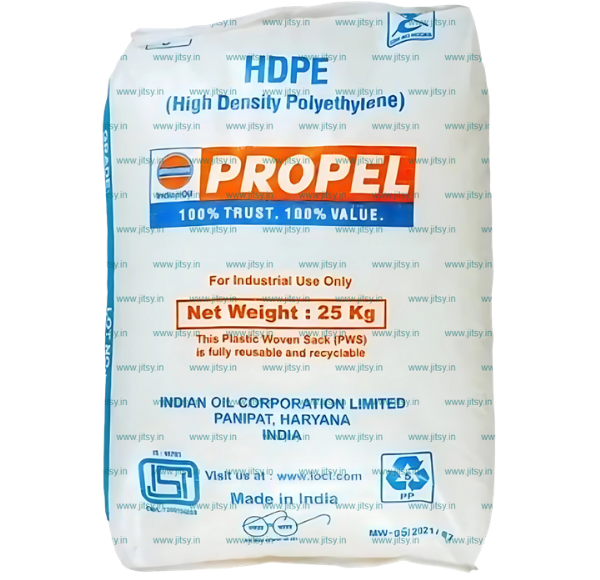
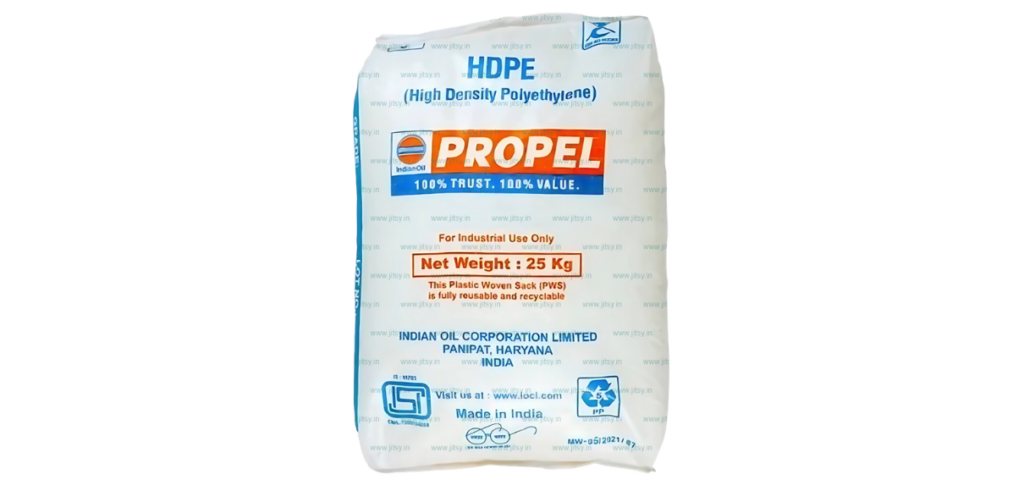
Propel 012DB60 is a high-density general-purpose blow moulding (GPBM) grade of high-density polyethylene manufactured by Indian Oil Corporation Ltd. (IOCL) under its Propel polymer brand. Produced using LyondellBasell’s Hostalen slurry polymerisation process at IOCL’s Panipat Naphtha Cracker Complex in Haryana, the grade is designed for the extrusion blow moulding of rigid containers and bottles up to approximately 20 litres, with primary application in the packaging of lubricants, engine oils, and edible oils. It is supplied as natural-coloured granules in 25 kg BIS-compliant raffia bags.
The grade designation positions it clearly within IOCL’s Propel blow moulding family. The “01” prefix identifies it as a Hostalen slurry-processed grade — the same production platform used for IOCL’s bimodal blow moulding and pipe grades. The “2” following “01” is a variant identifier within the Hostalen blow moulding sub-family, not a processing category indicator. The “D” designates blow moulding as the processing method, the “B” identifies the bimodal molecular weight architecture, and “60” corresponds to the density classification of approximately 0.960 g/cm³ — the highest density coding in the Propel blow moulding series reviewed here.
The 0.960 g/cm³ density is the defining characteristic of 012DB60 and the design logic behind it. Density in semi-crystalline HDPE is a direct function of the degree of crystallinity: at 0.960 g/cm³, 012DB60 has more tightly packed crystalline lamellae than lower-density bimodal grades in the same series, which translates into higher flexural modulus, higher tensile yield strength, greater surface hardness, and better top-load performance in the finished container. For lubricant containers and edible oil jerry cans in the 10–20 litre range — where containers are stacked multiple layers deep in warehouse storage and transport, and where dimensional stability under load directly affects pallet integrity — this combination of rigidity attributes makes 012DB60 the appropriate grade selection within the Propel portfolio.
Manufacturer
Propel 012DB60 is produced by Indian Oil Corporation Ltd. (IOCL) at the Panipat Naphtha Cracker Complex, Haryana, and developed by IOCL’s Product Application and Development Centre (PADC), Panipat. IOCL is India’s largest integrated refining and petrochemicals company. The grade is distributed across India under the Propel brand through IOCL’s authorised distributor network.
Technical Insights
The properties of Propel 012DB60 are measured on compression-moulded specimens — isotropic test pieces that reflect the bulk polymer properties independently of blow moulding processing conditions. This is the standard reporting convention for blow moulding grades in the Propel series and allows direct comparison between grades on a consistent basis. The actual properties achieved in a blown container wall will depend on blow moulding parameters including parison temperature, blow pressure, mould temperature, and cooling time, but the compression-moulded values serve as the grade-selection reference for material engineers specifying a container programme.
- Melt Flow Index — 1.3 g/10 min (ASTM D1238, 190 °C / 5 kg): The MFI for 012DB60 is measured at 5 kg load, the standard test condition for blow moulding grades — not the 2.16 kg load used for injection moulding and film grades. At 1.3 g/10 min, 012DB60 sits between the lower-MFI bimodal blow moulding grades designed for larger containers (such as IOCL 003DB52 at approximately 0.32 g/10 min) and the higher-MFI grades suited to very small bottles. The 1.3 g/10 min value provides the melt stability needed for parison formation in medium and large blow moulding machines producing 5–20 litre containers, with enough melt strength to maintain parison wall uniformity at these container sizes without requiring excessively high melt temperatures. The Hostalen bimodal architecture achieves this balance by distributing melt strength across the high-molecular-weight fraction while using the low-molecular-weight fraction to control viscosity and flow behaviour at the die.
- Density — 0.960 g/cm³ at 23 °C (ASTM D1505): At 0.960 g/cm³, 012DB60 carries the highest density of any blow moulding grade in the Propel series reviewed here. Density is not an independent variable in HDPE — it reflects the degree of crystallinity, which is governed by the molecular architecture set during polymerisation. Higher crystallinity at 0.960 g/cm³ means more ordered chain packing, which is directly responsible for the grade’s elevated flexural modulus, tensile yield strength, and surface hardness relative to lower-density blow moulding grades at comparable MFI. For container engineers, density is the single fastest proxy for predicting rigidity: a 0.960 g/cm³ grade will produce a stiffer container wall at a given wall thickness than a 0.952 g/cm³ grade of the same MFI, allowing design engineers to achieve the required top-load specification at a thinner wall, or to exceed it at the standard wall.
- Tensile Strength at Yield — 32 MPa (ASTM D638, Type IV specimen): The 32 MPa tensile yield strength is the highest among the Propel blow moulding grades in this series, directly reflecting the higher crystallinity at 0.960 g/cm³. For blow-moulded containers, tensile yield strength governs the onset of permanent deformation under hoop stress — the stress that develops in the container wall when the container is squeezed, dropped on its side, or subject to internal pressure from thermal expansion of the contents. A 32 MPa yield point means the container wall can absorb a substantial stress before the onset of plastic deformation, maintaining its shape and sealing geometry through normal use.
- Elongation — >850% (ASTM D638, Type IV specimen, labelled “Elongation at Yield” in source datasheet): The >850% value in the Instamine and Plastic Dealers data for this grade is reported under the column labelled “Elongation at Yield.” For HDPE, elongation at yield is typically in the range of 8–15% for compression-moulded specimens; a value of >850% is characteristic of elongation at break. Buyers should note this labelling discrepancy and treat the value as IOCL’s datasheet-stated figure pending direct confirmation of the test column definition from IOCL’s current TDS. In practical terms, whether the value represents yield elongation or break elongation, its very high level confirms that 012DB60 is a ductile, tough material that undergoes significant plastic deformation before fracture — a property that protects blow-moulded containers from sudden brittle failure in impact scenarios.
- Notched Izod Impact Strength — 300 J/m at 23 °C (ASTM D256): The 300 J/m Notched Izod value confirms that 012DB60 achieves high toughness despite its elevated density and stiffness. In a bimodal Hostalen grade, the high-molecular-weight chains create the entanglement and tie-molecule density that absorbs impact energy — the same molecular mechanism responsible for ESCR performance in the more chemically demanding blow moulding grades. At 300 J/m, containers made from 012DB60 resist the impact of drops from handling height and the point-loading from conveyor rails and filling line guides that blow-moulded lubricant and edible oil containers experience in production and logistics. The combination of 1300 MPa flexural modulus and 300 J/m impact at the same grade is the stiffness-toughness balance the bimodal architecture is specifically designed to deliver.
- Flexural Modulus — 1300 MPa (ASTM D790): The 1300 MPa flexural modulus is the highest in the Propel series reviewed here. Flexural modulus directly determines how resistant the container wall is to bending and deflection under applied load — the property that governs top-load performance when filled containers are stacked for storage or transport. At 1300 MPa, a 012DB60 container wall resists deflection substantially more than a container moulded from a grade at 900–1100 MPa flexural modulus, allowing higher stack heights or thinner wall designs for equivalent top-load rating. For 20 litre lubricant containers that may carry 15–17 kg of oil and be stacked three or four pallet layers high, flexural modulus is the primary material property the container engineer specifies.
- Hardness — 65 Shore D (ASTM D2240): Shore D hardness at 65 reflects the high surface hardness associated with the 0.960 g/cm³ density level. Surface hardness in blow-moulded containers affects scratch resistance during transport, the quality of printed or labelled surfaces, and resistance to indentation from strap banding and shrink-wrap tension. The 65 Shore D value for 012DB60 is consistent with the elevated crystallinity of the grade and higher than the Shore D values reported for lower-density blow moulding grades in the Propel series.
- Vicat Softening Point — 125 °C, 10 N load (ASTM D1525): The 125 °C Vicat point confirms that the 012DB60 container wall retains its dimensional geometry well above the maximum temperatures encountered in lubricant and edible oil container service — including heated warehouses and truck loading in Indian summer conditions. Containers are not designed for sustained high-temperature service, but the Vicat point provides assurance that the container will not distort during hot-fill operations, in enclosed transport environments, or in distribution centres where temperatures can reach 50–60 °C.
- Heat Deflection Temperature (HDT) — 75 °C at 0.455 MPa (ASTM D648): HDT measures the temperature at which a standard test bar deflects by a defined amount under a specified bending stress. At 75 °C under 0.455 MPa (66 psi), 012DB60 maintains structural stiffness through the upper range of ambient storage and transport temperatures relevant to the Indian market. HDT is a more conservative measure than Vicat because it measures deflection under load rather than surface softening alone; the 75 °C HDT confirms that a stacked container column will not progressively deflect under its own load at elevated ambient temperatures.
- Processing Temperature — 160–190 °C: The 160–190 °C processing window is IOCL’s recommended temperature range for 012DB60 blow moulding operations. This is a relatively narrow and moderately low window compared with some injection moulding and film grades, reflecting the thermal sensitivity of the stabiliser package at the high density/crystallinity level of this grade. Processors should optimise barrel zone temperatures, die temperature, and parison cooling within this window for their specific machine configuration and container size. As with all HDPE blow moulding grades, detailed zone profiles should be established through line trials; the 160–190 °C range is the manufacturer-stated starting envelope, not a complete machine setup specification.
All values are typical figures from IOCL’s “High Density Polyethylene – High Density GPBM Grade – HDPE 012DB60 Product Technical Datasheet” (reproduced by Plastic Dealers and Instamine) and are not specification limits. IOCL notes that values may change without prior notice; buyers should verify against the current IOCL grade sheet before final qualification.
Applications
Lubricant and Engine Oil Containers — 5 to 20 Litres
Propel 012DB60’s primary and most commercially significant application is the blow moulding of rigid containers and jerry cans for the packaging of lubricants and engine oils — the 1 litre, 2.5 litre, 5 litre, 10 litre, and 20 litre container formats that dominate India’s lubricant retail and wholesale supply chain. IOCL explicitly recommends 012DB60 for “containers for packing of lubricants” and for “containers and bottles up to 20 litres capacity.” The grade’s combination of high density (0.960 g/cm³), flexural modulus (1300 MPa), and tensile yield strength (32 MPa) is specifically suited to the structural requirements of these containers: they must maintain their dimensional profile under stacking loads of multiple filled units, resist the creep deformation that can allow caps to loosen over extended storage, and withstand the impact of drops in warehousing and retail environments. The 300 J/m Notched Izod impact resistance ensures that containers blown from 012DB60 absorb the point impacts from conveyor lines, pallet drops, and consumer handling without fracture or permanent deformation that would compromise the container seal.
Edible Oil and Food-Grade Containers
IOCL lists edible oil containers as a primary application for 012DB60, and Instamine’s industry categorisation includes the food packaging industry in the grade’s target sectors. HDPE containers for edible oils — including the widely used 5 litre, 10 litre, and 15 litre jerry can formats for cooking oil, sunflower oil, and mustard oil in the Indian consumer and institutional market — require the same combination of rigidity, top-load performance, and transparency of regulatory compliance that lubricant containers demand. According to IOCL’s datasheet-level compliance statements (attributed to IOCL TDS and corroborated by Instamine), 012DB60 meets IS 10146-1982 (specification for polyethylene for safe use in contact with foodstuffs, pharmaceuticals, and drinking water), IS 10141-1982 (positive list of constituents), and FDA CFR Title 21, Section 177.1520 (olefin polymers). Buyers specifying 012DB60 for food-contact containers should obtain IOCL’s current Safety Data Sheet and confirm compliance with their regulatory team for the specific end-use before finalising the container programme.
General-Purpose Rigid Containers for FMCG, Cleaning, and Pharmaceutical Packaging
Beyond lubricants and edible oils, 012DB60’s GPBM classification and high-rigidity property profile make it applicable to a broader segment of rigid HDPE containers for FMCG, household cleaning products, and pharmaceutical liquids where container volumes in the 1–20 litre range and good stiffness performance are the primary material selection drivers. Instamine identifies the Food Packaging and Pharmaceutical Packaging industries as target sectors and lists “General purpose blow moulding grade” and “Container grade” among the processing categories for 012DB60. For FMCG containers carrying liquid detergents, disinfectants, personal care products, or industrial cleaning compounds in standard blow-moulded formats, the grade provides consistent parison control, dimensional accuracy across the container height, and surface finish quality compatible with labelling and screen-printing processes. Buyers for applications involving aggressive chemical content — solvents, oxidising agents, strong acids or bases — should additionally evaluate the grade’s ESCR performance for their specific chemical, as 012DB60’s primary design focus is rigidity rather than ESCR maximisation.
Comparable Alternatives
Propel 012DB54 is the most direct comparison within IOCL’s own blow moulding portfolio. Both grades are Hostalen bimodal grades with an MFI of 1.3 g/10 min at 190 °C / 5 kg, and both target lubricant containers, edible oil containers, and FMCG packaging. The key difference is density and the associated rigidity level: 012DB54 has density 0.952 g/cm³ and flexural modulus approximately 1200 MPa, compared to 012DB60’s 0.960 g/cm³ and 1300 MPa. IOCL positions 012DB54 for containers up to 5 litres across a wider range of applications including chemicals, detergents, and pesticides, supported by an ESCR of greater than 200 hours under ASTM D1693. IOCL positions 012DB60 for larger containers up to 20 litres where top-load rigidity and wall stiffness are the governing design requirements. For a converter producing both small chemical bottles and large lubricant jerry cans, 012DB54 offers a broader application range with moderate ESCR; 012DB60 provides the maximum rigidity for the larger container formats. The grades are not confirmed equivalents and both are in IOCL’s current portfolio.
Propel 010DB50 is a high-ESCR bimodal blow moulding grade with MFI 1.2 g/10 min (5 kg) and density 0.950 g/cm³, with ESCR greater than 500 hours under ASTM D1693. It is positioned specifically for containers up to 5 litres carrying chemicals, pesticides, and other ESCR-aggressive liquids. Compared with 012DB60, the 010DB50 design prioritises chemical resistance at the expense of density and flexural modulus: its 0.950 g/cm³ density and lower flexural modulus are appropriate for small aggressive-chemical containers where ESCR is critical, but would not deliver the top-load rigidity that large lubricant containers require. The two grades are not alternatives for the same application — they serve distinct segments of the blow moulding container market. A buyer should select 012DB60 for large-format lubricant and edible oil containers, and 010DB50 for small-format chemical and pesticide containers where ESCR is the primary specification.
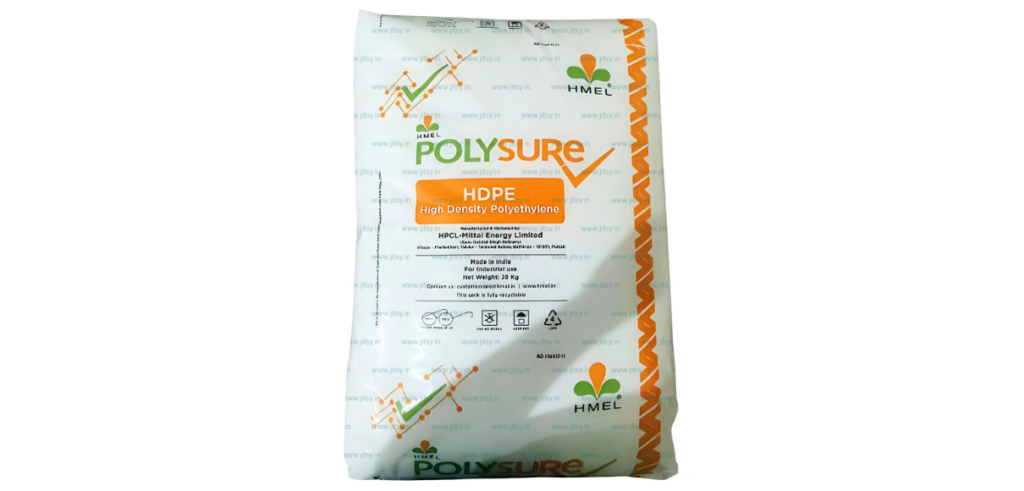
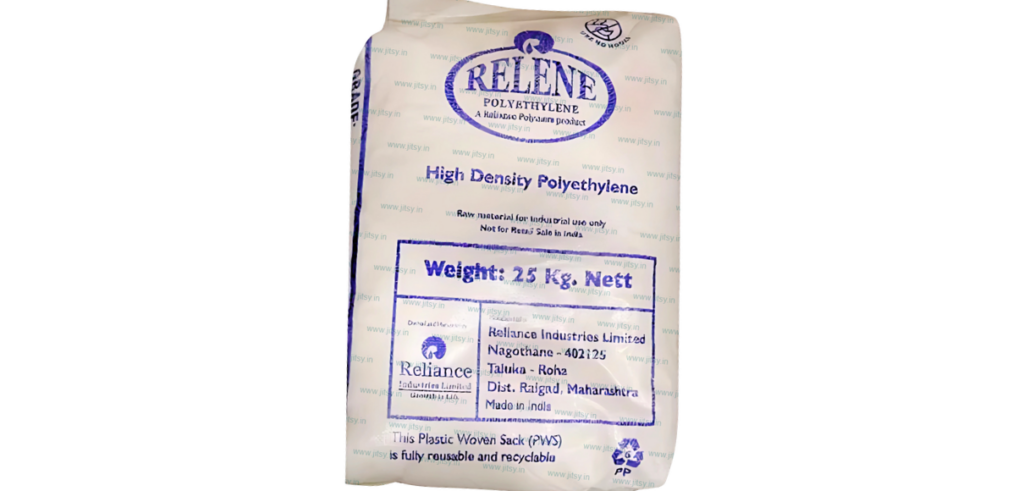
Reliance Relene 54GB012 is Reliance Industries’ blow moulding grade for containers up to 20 litres, with density approximately 0.954 g/cm³ and MFI approximately 1.20 g/10 min, positioned for lubricants, edible oils, and chemicals with good ESCR. Compared to 012DB60’s 0.960 g/cm³ density and 1300 MPa flexural modulus, Relene 54GB012’s slightly lower density would be expected to produce marginally lower container stiffness at equivalent wall thickness, though the trade-off may come with improved ESCR for chemical-content applications. Reliance does not publish 54GB012 as equivalent to IOCL 012DB60; converters switching between the two should conduct line trials to confirm parison behaviour, top-load results, and container dimensional stability on their specific machines before changing the production grade.
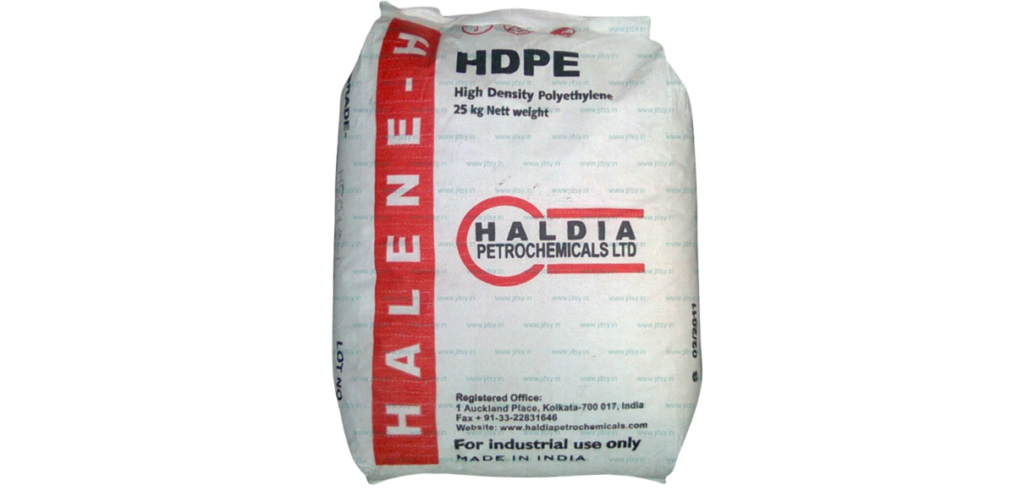
Haldia Petrochemicals HPL B5500 is a higher-density, lower-MFI blow moulding grade from Haldia (density 0.956 g/cm³, MFI approximately 0.35 g/10 min at 5 kg load) positioned for bulk chemical containers up to 100 litres and water tanks. The substantially lower MFI of B5500 means it is designed for larger container sizes and slower blow moulding lines than 012DB60’s 20-litre target. For a converter producing 20-litre lubricant containers on standard machine configurations, the processing window and parison behaviour of B5500 at 0.35 g/10 min would require different machine settings and is not a straightforward alternative to 012DB60. HPL does not confirm B5500 as equivalent to IOCL 012DB60.
In all comparisons above, equivalence between grades is not confirmed by any manufacturer. Property comparisons are based on publicly available technical documentation. Independent line qualification is required before substituting any alternative grade into production.
Common Search Variants
Buyers and engineers commonly search for this grade using terms such as IOCL 012DB60 HDPE granules, Propel blow moulding grade 012DB60, OCL-012DB60 HDPE, HDPE 012DB60 lubricant container grade, and IOCL HDPE 20L container grade. Frequent misspellings and alternate notations include 012 DB 60, 012DB 60, IOCL HDPE 12DB60, IOCL 012DB60 blow molding resin, and OCL 012DB60 granules — all refer to the same product.

















Reviews
Clear filtersThere are no reviews yet.