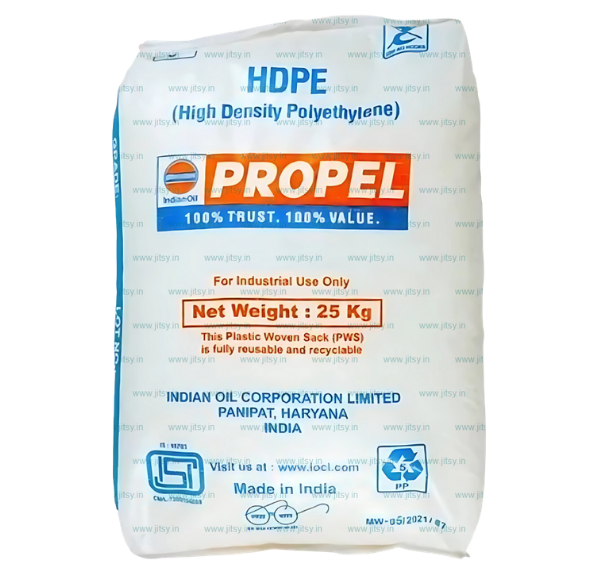
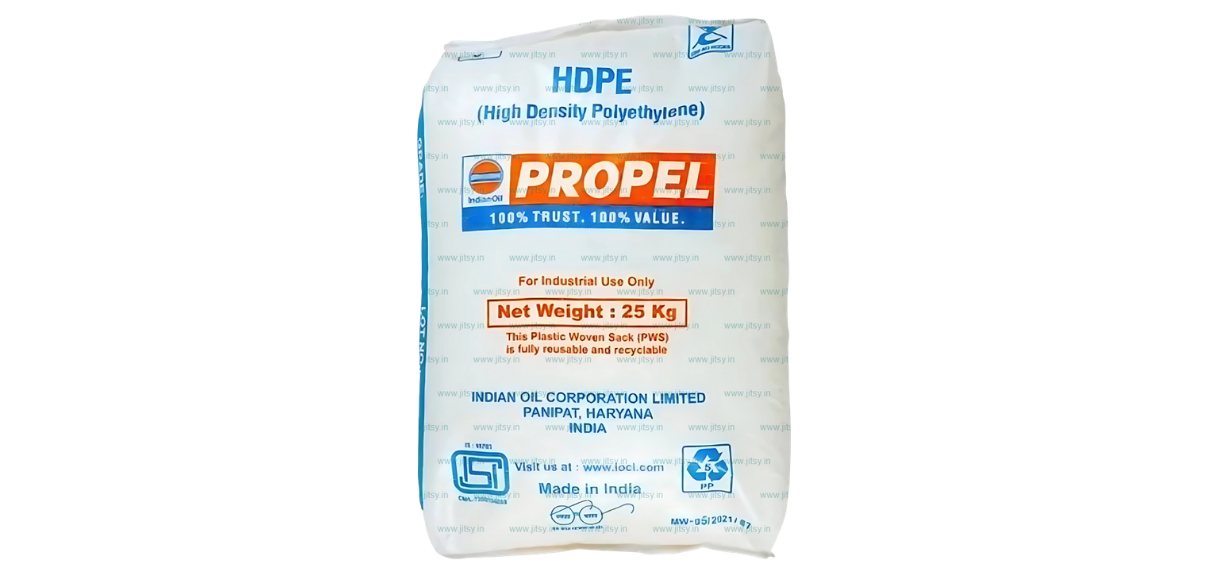
IOCL HDPE Propel 002DF50
IOCL HDPE Propel 002DF50 is a high molecular weight high density bimodal HDPE grade developed by Indian Oil Corporation Limited for blown film extrusion. Produced using LyondellBasell Hostalen Slurry Process technology, this grade is designed for packaging converters who need a reliable HM film resin with strong puncture resistance, good sealing behavior, and attractive film appearance.
Indian Oil Corporation Limited is one of India’s major petrochemical producers supplying HDPE and polypropylene grades across film, pipe, blow moulding, injection moulding, and industrial packaging applications. Within the IOCL Propel HDPE portfolio, 002DF50 is positioned as an HM film grade for counter bags, carrier bags, wrapping film, and liners. Its bimodal molecular structure supports a practical balance of processability and film performance, making it suitable for converters targeting durable packaging films with dependable sealing and handling properties.
Technical Specifications and Deep Technical Insights
IOCL HDPE Propel 002DF50 has a melt flow index of 0.22 g/10 min at 190°C/5 kg and a density of 0.950 g/cm³, which places it in the high density blown film category for HM film applications. This combination supports stable extrusion behavior and helps converters achieve films with useful stiffness, handling strength, and packaging utility.
The grade offers hardness of 60 Shore D, tensile strength at yield of 29 MPa, elongation at break of 1000%, flexural modulus of 1000 MPa, and notched Izod impact strength of 300 J/m at 23°C. A major performance highlight is its dart impact strength of 180 g, which is especially relevant for film converters producing bags and liners that need better puncture resistance and handling durability. It also provides a Vicat softening point of 127°C, supporting thermal stability during processing and downstream use.
A key technical advantage of 002DF50 is the way it combines good processability, superior dart impact strength, good sealing properties, and good optical properties in one HM film grade. For packaging manufacturers, this means the resin is not only suitable for efficient blown film extrusion, but also capable of producing films that seal well, resist damage in handling, and maintain a commercially acceptable visual appearance.
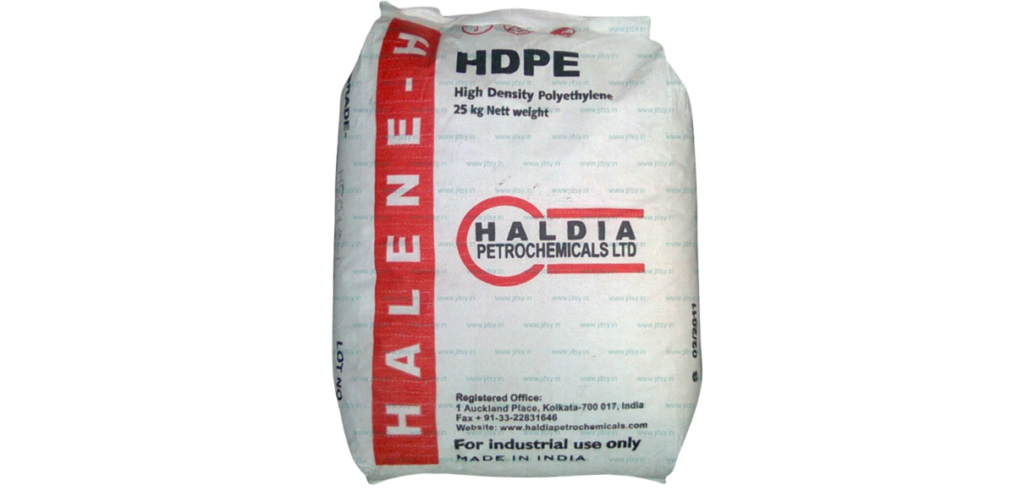
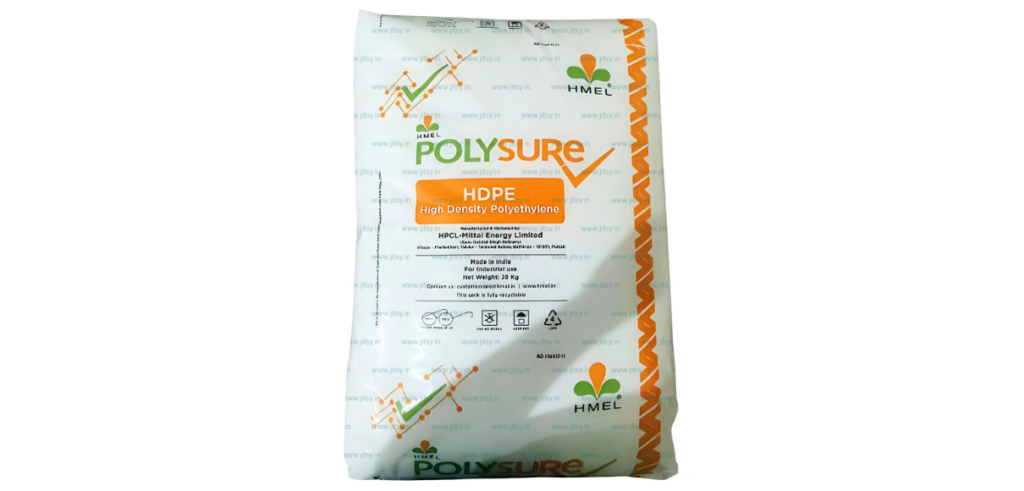
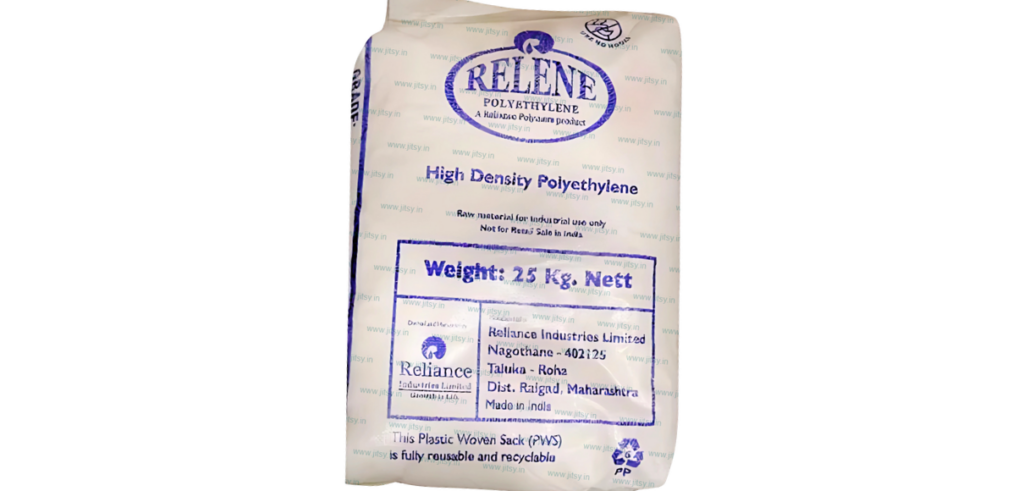
The recommended processing temperature range is 180 to 240°C. The material is supplied in 25 kg raffia bags and should be protected from prolonged sunlight exposure and poor storage conditions to maintain resin quality before conversion.
Applications
Counter Bags
IOCL HDPE Propel 002DF50 is well suited for counter bag manufacturing where converters need HM film with a good balance of stiffness, sealing, and puncture resistance. Its dart impact performance and processability make it useful for retail and general packaging bags that must handle regular loading and movement without easy failure.
Carrier Bags
For carrier bag applications, 002DF50 supports production of durable HDPE bags with dependable film strength and seal integrity. Its combination of stiffness and impact performance is especially useful where bag performance during carrying, stacking, and transport matters to both converters and end users.
Wrapping Film
In wrapping film applications, this grade offers the processability and optical quality needed for practical packaging use. Converters looking for an HDPE HM film grade for wrapping applications can use 002DF50 where film appearance, sealing behavior, and handling durability all contribute to better packaging performance.
Liners
IOCL 002DF50 is also recommended for liner applications where puncture resistance and sealing reliability are important. Its superior dart impact strength makes it relevant for liners that need to withstand handling stress while maintaining containment and packaging consistency.
Comparable Alternatives
Within the Indian HDPE film market, IOCL 002DF50 competes with grades such as HMEL F0050D, HMEL F0146D, and GAIL 18H55. Based on the available data, 002DF50 stands out as a bimodal HM film grade with MFI 0.22 and density 0.950, positioned specifically for counter bags, carrier bags, wrapping film, and liners. Its strongest differentiators are its dart impact strength of 180 g, good sealing properties, and good optical properties, which make it highly relevant for packaging converters rather than only commodity film processors.
Compared with HMEL F0050D, which is positioned more toward heavy duty HM film, IOCL 002DF50 is a more targeted choice where converters need a practical balance of processability, bag performance, and film appearance rather than a heavier-duty film orientation. Compared with HMEL F0146D and GAIL 18H55, 002DF50 offers a strong value proposition for converters who want IOCL-backed Hostalen technology and a film grade clearly aligned to retail bag, wrapping, and liner applications. The rationale behind this grade assignment is straightforward: it is selected where film manufacturers need an HM film resin that combines puncture resistance, seal performance, and usable optics in day-to-day blown film production.
Specifications
Need Technical guidance?
Why buy IOCL HDPE Propel 002DF50 from JITSY?
- Direct import & verified sourcing
- Authorised channel–led supply
- Pan-India B2B delivery
- Transparent pricing & documentation
- Mobile app–enabled procurement
- Full compliance (RoHS, BIS/ISI, EPR, GST)
- Batch traceability
FAQs
Frequently Asked Questions
What is IOCL HDPE Propel 002DF50 mainly used for?
Is 002DF50 suitable for counter bags and carrier bags?
Why is dart impact strength important in 002DF50?
Does 002DF50 offer good sealing performance?
Is 002DF50 a good choice for wrapping film?
What processing temperature is recommended for IOCL 002DF50?
How does 002DF50 compare with other HM film grades?
What Customers Say
You must be logged in to post a review.
Other Relevant Products Available in India
Related Articles
Choosing the Correct Polymer for Your Manufacturing Needs: ABS vs PP vs PVC
The materials used in toy manufacturing can impact the safety of children and the reputation of the company. There are multiple documented cases where improper material selection has led to recalls, litigation, and severe financial damage to toy manufacturers.
Top Procurement Mistakes Indian Manufacturers Make While Scaling
The materials used in toy manufacturing can impact the safety of children and the reputation of the company. There are multiple documented cases where improper material selection has led to recalls, litigation, and severe financial damage to toy manufacturers.
Raw Materials Used in Toy Manufacturing: Safety, Compliance & Cost Factors
The materials used in toy manufacturing can impact the safety of children and the reputation of the company. There are multiple documented cases where improper material selection has led to recalls, litigation, and severe financial damage to toy manufacturers.
Choosing the Right Polymer Grades for Injection Molding
Purchasing the wrong polymer grade for injection molding can directly result in product failure, high rejection rates, or field performance issues. Different applications require vastly different material characteristics.

How Digital Procurement Platforms Reduce Raw Material Fraud
Raw material fraud is a frequent issue in conventional procurement. It usually happens due to the lack of supplier verification, the absence of records, and low levels of transparency. In manual systems, it is hard and time-consuming to keep track of materials.
How Crude Oil Prices Impact Plastic Raw Material Costs in India
Crude oil plays a powerful role in the worldwide plastic industry & India is no exception. Most of the plastic raw materials, like PE, PP, and PVC, are extracted from petrochemicals sourced from crude oil.
The Great Procurement Divide: Why Your Best Engineers Make Your Worst Buyers
Walk into any manufacturing facility across India—from PVC pipe makers in Gujarat to automotive component manufacturers in Chennai—and you’ll hear this logic echoed in boardrooms and production floors alike.
Copy-Paste vs. Innovation
Is playing it safe actually the riskiest strategy? The uncomfortable truth about innovation avoidance in Indian manufacturing
The Credit Cycle Shift: Why 30-Day Payments Are Winning Hearts (and Wallets)
If you’ve ever done business in India, you know this vibe. Long credit terms weren’t just about money—they were about trust, connection, and that warm cup of chai shared over a handshake deal. You’d walk into your supplier’s office, chat about life, and walk out with goods worth lakhs, no questions asked.
The Great Inventory Debate
When COVID hit, I think all of us felt something shift in how we think about supply chains. It wasn’t just disruption. It was exposure. What we thought was working… suddenly wasn’t. Containers stuck. Prices all over the place. Buyers unsure. And for many manufacturers—raw material just wasn’t there when it was needed.
The 0.1% That Destroys the 99.9%: Why Documentation in B2B Trade Isn’t Optional Anymore
this is how businesses have functioned. Fast, informal, and based on mutual trust. And in 99.9% of the cases, it works. Goods are delivered, payments are made, and relationships grow stronger.
The Growing Crisis of Non-Compliance in India’s Polymer Supply Chain: Protecting Your Business
Complete Documentation Isn’t Optional – It’s Critical
Their prices are surprisingly competitive – sometimes 3-5% below market rates. Your production costs look great on paper. But six months later, you receive a notice from the GST department that sends a chill down your spine: your input tax credits are being reversed, with interest and penalties.
5 Ways to Optimise Your Polymer Supply Chain
With raw material costs fluctuating, logistics challenges mounting, and quality expectations rising, manufacturers need concrete strategies to optimise their polymer procurement process.
The Identity Crisis in Indian Manufacturing: Are We Building Products or Programming Them?
When a textile manufacturer in Surat recently won a major international contract, they didn’t credit their superior fabric quality. Their winning edge? “We’re not a textile company,” the CEO declared. “We’re a technology company that happens to make textiles.”
The Great Manufacturing Paradox: Why ‘Made in India’ Could Mean ‘Made By No One’
The Hidden Cost of Perfect Efficiency

Reviews
Clear filtersThere are no reviews yet.