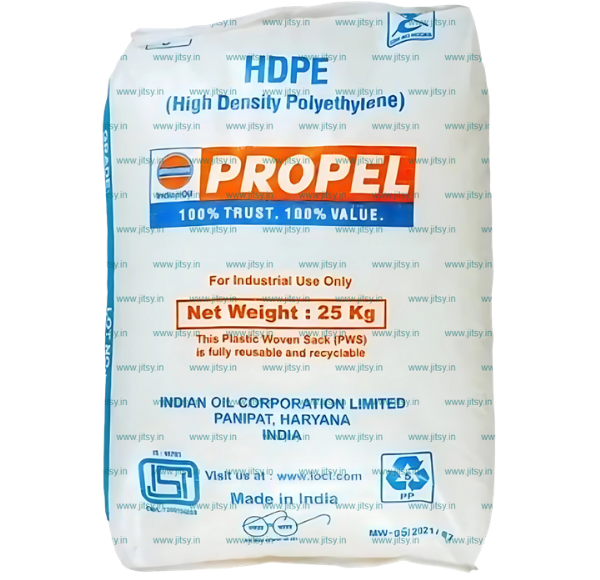
Propel 010DP45U is a UV-stabilized, bimodal high-density polyethylene pipe extrusion grade manufactured by Indian Oil Corporation Ltd. (IOCL) under its Propel brand. Produced using LyondellBasell’s Hostalen slurry polymerisation process, the grade meets the PE 63 pipe classification and carries TEC/CACT approval under reference GR/TX/CDS-008/03/MAR-2011 for use in optical fibre cable (OFC) duct applications. It is supplied as natural-coloured granules in 25 kg BIS-compliant raffia bags.
The grade designation encodes its design logic precisely. The “01” prefix places it in IOCL’s bimodal family, produced via the Hostalen slurry process rather than the solution-phase Sclairtech route used for injection-moulding and film grades. The “0” following “01” designates a pipe grade, distinct from the “B” designation used for blow-moulding grades. The “P” is the direct identifier for pipe extrusion as the intended processing method. “45” corresponds to the PE 63 pressure classification — specifically the minimum required strength (MRS) value at 20 °C over 50 years — and the “U” carries the same meaning it does across the Propel range: a UV stabilisation package built into the polymer formulation at the compounding stage.
The TEC/CACT approval is the grade’s most commercially distinctive attribute. The Telecom Engineering Centre (TEC), operating under the Department of Telecommunications (DoT) of the Government of India, issues Generic Requirements (GR) approvals for materials and conduits used in India’s optical fibre telecom infrastructure. HDPE 010DP45U’s approval under GR/TX/CDS-008/03/MAR-2011 qualifies it for use in ducts carrying optical fibre cables in Indian telecom networks — a regulatory gateway that narrows the field of compliant PE 63 pipe grades substantially. For telecom EPC contractors, BSNL, private operators, and duct system suppliers serving regulated telecom infrastructure, this approval is not optional; it is the entry requirement.
The UV stabilisation addresses a direct environmental challenge in telecom duct deployment. OFC ducts are frequently laid partly above ground, on poles, on building facades, or in shallow surface trenches where sections of the conduit are exposed to direct sunlight for extended periods. In unstabilised HDPE, this exposure initiates photo-oxidative degradation — a progressive chain reaction that causes surface embrittlement, chalking, and eventual loss of mechanical integrity in the duct wall. The UV stabilisers in 010DP45U interrupt this mechanism and extend the functional service life of the duct through multi-year outdoor exposure conditions.
Technical Insights
Understanding the Key Properties of HDPE 010DP45U
The properties of Propel 010DP45U must be read as an integrated system for pipe extrusion — not as isolated datasheet values, but as a coordinated set of attributes that together define performance for underground and outdoor telecom duct service.
- Melt Flow Index — 0.90 g/10 min (ASTM D1238, 190 °C / 5 kg): The MFI for 010DP45U is reported at 5 kg load, which is the standard test condition for blow-moulding and pipe-extrusion grades — not the 2.16 kg load used for injection-moulding and film grades. At 0.90 g/10 min under 5 kg, this is a low-flow, high-molecular-weight grade by design. Pipe extrusion requires a polymer melt that develops sufficient back-pressure to form a dimensionally stable tube without sagging or wall variation, and the low MFI reflects the molecular weight necessary for that extrusion stability. Higher-MFI pipe grades flow more easily but sacrifice the long-chain density that ESCR and toughness performance depend on. The 0.90 g/10 min value is characteristic of PE 63 pipe grades and consistent with the Hostalen bimodal grades in IOCL’s pipeline series.
- Density — 0.947 g/cm³ at 23 °C / 0.945 g/cm³ at 27 °C (ASTM D1505): IOCL’s technical documentation for this grade provides two density measurements at different temperatures, reflecting the thermal sensitivity of HDPE density measurement and the different reference conditions used in international and Indian standards. At 0.947 g/cm³, the grade sits in the lower-density range of HDPE pipe grades, consistent with the PE 63 classification’s property balance. The density governs crystallinity, and at this value the grade retains meaningful flexibility in the duct wall — relevant for directional drilling, tight-radius conduit laying, and installation conditions where the duct must negotiate non-linear paths without kinking.
- PE 63 Classification: PE 63 denotes the minimum required hydrostatic strength (MRS) of 6.3 MPa at 20 °C over a 50-year design life. This is the lowest pressure classification in the PE pipe system, below PE 80 and PE 100. For telecom OFC ducts, operating pressure is not the governing design requirement — the duct’s function is to protect optical fibre cables, not to contain pressurised fluid. The PE 63 classification is the correct and widely accepted specification for non-pressure OFC duct applications, providing regulatory compliance with standard telecom duct specifications without over-engineering to PE 80 or PE 100 performance levels that are unnecessary for the end use.
- ESCR (F50) — >600 h (ASTM D1693, 10% Igepal, Condition B): At greater than 600 hours, HDPE 010DP45U achieves the highest ESCR value in the Propel series reviewed here — exceeding the >500 h value of the high-ESCR blow-moulding grade HDPE 010DB50. ESCR is critical for buried pipe and conduit grades because soil, groundwater, and chemical backfill compounds can act as ESCR-active agents on the outer duct surface over the multi-decade service life of telecom infrastructure. The bimodal molecular architecture is the primary enabler of this ESCR performance: high-molecular-weight tie molecules in the bimodal distribution create the entanglement density that resists slow crack growth at the stress concentrations that develop in buried pipe under sustained loading.
- OIT — >30 min (ASTM D3895): Oxidative Induction Time measures the time to onset of oxidative degradation in a polymer sample exposed to oxygen at elevated temperature. It is a direct indicator of the residual antioxidant package in the material and serves as a quality indicator for both the as-supplied granule and the extruded pipe. An OIT exceeding 30 minutes confirms that 010DP45U contains a thermal stabiliser package robust enough to survive the extrusion process and retain meaningful antioxidant protection in the finished duct. For buried infrastructure with a 30-40 year design life, antioxidant depletion is a real long-term failure mechanism; OIT is the measurement that confirms the stabiliser package is present and effective.
- Notched Izod Impact Strength — 300 J/m (ASTM D256, 23 °C): At 300 J/m, HDPE 010DP45U is the toughest grade in the Propel injection/pipe/film series by this measure — and the value is not incidental. Bimodal Hostalen pipe grades are specifically engineered for high impact performance through the molecular architecture that distributes toughness across the pipe wall. For OFC ducts subjected to point loading from compaction equipment during backfill, dropped objects during handling, and cyclic ground movement in service, the ability to absorb and distribute impact energy without initiating brittle fracture is a critical long-term reliability attribute.
- Tensile Strength at Yield — 28 MPa (ASTM D638, Type IV): The 28 MPa tensile yield strength reflects the combined contribution of the crystalline and amorphous phases in the bimodal HDPE structure. For pipe grades, this value governs the resistance of the duct wall to hoop stress from soil overburden and handling loads. At 28 MPa, the duct wall resists sustained deformation under the ground pressures encountered in typical civil installation depths.
- Elongation at Break — >600% (ASTM D638): High elongation at break is a consistent attribute of bimodal HDPE grades and reflects ductile failure behaviour. A duct that deforms plastically before fracturing gives engineering margins that a brittle material does not — particularly relevant during installation when ducts may be bent around obstacles, handled roughly, or subjected to localized stress concentrations.
- Flexural Modulus — 850 MPa (ASTM D790): The 850 MPa flexural modulus defines the ring stiffness contribution of the pipe wall material. For non-pressure OFC ducts, ring stiffness determines resistance to pipe ovalization under soil loading — a critical factor for maintaining the circular cross-section needed to allow optical fibre cable blowing or pulling through the duct after installation.
- Vicat Softening Point — 126 °C (ASTM D1525): The 126 °C Vicat point confirms that the pipe wall retains its dimensional geometry and load-bearing cross-section well above the thermal conditions encountered in buried and above-ground duct service, including the elevated ground temperatures experienced in Indian summer conditions.
- Processing Temperature — 160–210 °C: The 160–210 °C extrusion window is the standard range for Hostalen bimodal pipe grades. The relatively wide window provides operational flexibility across screw configurations, die sizes, and line speeds used in PE pipe extrusion without approaching temperatures where thermal degradation of the UV and antioxidant stabiliser packages would occur.
All values are typical figures from IOCL’s provisional technical datasheet and are not specification limits. Values may change without prior notice; buyers should verify against the current IOCL grade sheet before final grade qualification.
Applications
Telecom OFC Ducts and Optical Fibre Cable Conduit
Propel 010DP45U’s primary application and the driver of its TEC/CACT approval is the manufacture of telecom ducts carrying optical fibre cables. India’s national and last-mile fibre rollout — including BharatNet, 5G backhaul networks, and private telecom operator fibre builds — requires OFC ducts that meet specified regulatory requirements for the material used in government and regulated telecom infrastructure. The TEC approval under GR/TX/CDS-008/03/MAR-2011 is the specific qualification that allows 010DP45U to be used in these applications. For duct manufacturers and telecom EPC contractors supplying infrastructure for regulated networks, sourcing from a TEC-approved grade is not discretionary. The grade’s bimodal architecture delivers the combination of ring stiffness, impact resistance, ESCR, and long-term thermal stability that telecom duct specifications require — including the properties needed to survive directional drilling, deep burial, and above-ground cable routing with multi-decade service life expectations.
Above-Ground and Exposed OFC Duct Installations
In urban and semi-urban fibre builds, OFC ducts are routinely routed above ground — on poles, along building facades, in open cable trays, and on surface-mounted cable routes — where sections of the duct are permanently or seasonally exposed to direct sunlight. The UV stabilisation in 010DP45U is directly relevant in these deployment contexts. An unstabilised PE 63 grade used in above-ground routes will undergo photo-oxidative surface degradation over seasons of sun exposure, progressively compromising the mechanical integrity of the duct wall. The UV stabiliser package in 010DP45U prevents this degradation cycle, extending the protective function of the duct through the multi-year exposure conditions of outdoor telecom infrastructure. For network builds that mix buried and above-ground routing in the same cable run, specifying 010DP45U throughout the route eliminates the need to source and manage a separate UV-stabilised grade for the exposed sections.
General-Purpose PE 63 Non-Pressure Pipe Applications
Beyond telecom ducts specifically, HDPE 010DP45U is applicable to the broader segment of general-purpose PE 63 non-pressure pipe applications where UV stability and long-term chemical resistance are required. This includes cable management conduits for electrical installations in outdoor and semi-outdoor environments, drainage and surface water management ducts in landscaping and civil construction, agricultural irrigation distribution pipes in systems that include surface-laid sections, and utility protection sleeves for underground service lines. For any non-pressure PE 63 pipe application where the duct will see sunlight during installation or service, the UV stabilisation of 010DP45U addresses a degradation risk that a non-UV grade of the same PE 63 classification would not.
Directional Drilling and Trenchless Telecom Duct Installation
Horizontal directional drilling (HDD) is the primary installation method for OFC ducts crossing roads, rail lines, waterways, and congested urban areas without open trenching. HDD subjects the duct to significant tensile and compressive loads during the pull-back phase, as well as sustained contact with drilling muds and soil slurries that can include ESCR-active chemical components. HDPE 010DP45U’s ESCR of greater than 600 hours, 300 J/m impact strength, and greater than 600% elongation at break make it mechanically well-suited to the demands of HDD installation. The bimodal molecular architecture that delivers these properties also ensures the duct wall resists the slow crack growth mechanisms that can develop at stress concentrations in buried pipe under sustained soil loading after installation is complete.
Comparable Alternatives
Propel 010DP45 — the non-UV variant — is the most direct comparison. The two grades share the same Hostalen bimodal base polymer, the same MFI of 0.90 g/10 min, the same density of 0.947 g/cm³, and the same PE 63 classification. The differentiating factor is the UV stabilisation package present in 010DP45U and absent in 010DP45. For buried-only OFC duct routes where no section of the installed duct will be exposed to sunlight — including fully underground systems installed by open trench with immediate cover — 010DP45 is technically appropriate. For any installation that includes above-ground sections, pole-mounted routing, or exposed cable trays, 010DP45U is the required specification. In practice, most telecom duct supply programmes specify 010DP45U as the single source grade for a network build to avoid the risk of non-UV material being installed at exposed points — a risk that is difficult to audit after burial. TEC/CACT approval status should be verified separately for 010DP45 before specifying it for regulated telecom applications; the approval reviewed here is specifically for 010DP45U.
Propel 010DB50 is the grade in the Propel range that is closest in structural architecture to 010DP45U: both are Hostalen bimodal grades with low MFI (5 kg load), both target chemical resistance and ESCR as primary performance attributes, and both achieve ESCR above 500 hours by ASTM D1693. The key distinctions are processing method and application positioning. 010DB50 is an extrusion blow-moulding grade with MFI 1.2 g/10 min (5 kg) and a processing window of 160–190 °C, positioned for chemical containers and pesticide canisters. 010DP45U is a pipe extrusion grade with MFI 0.90 g/10 min (5 kg), a processing window of 160–210 °C, PE 63 classification, and TEC/CACT approval for telecom duct applications. The two grades serve entirely different processing and end-use segments and are not interchangeable despite their structural similarities.
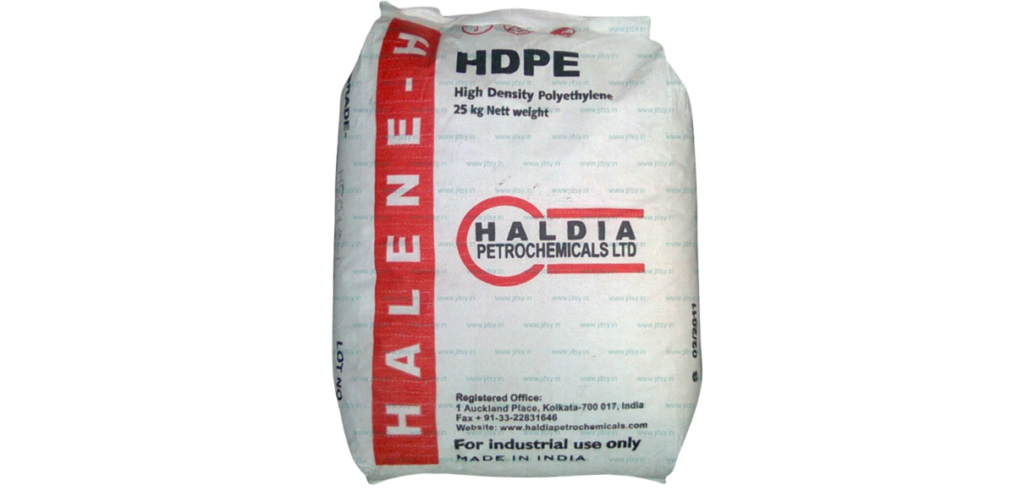
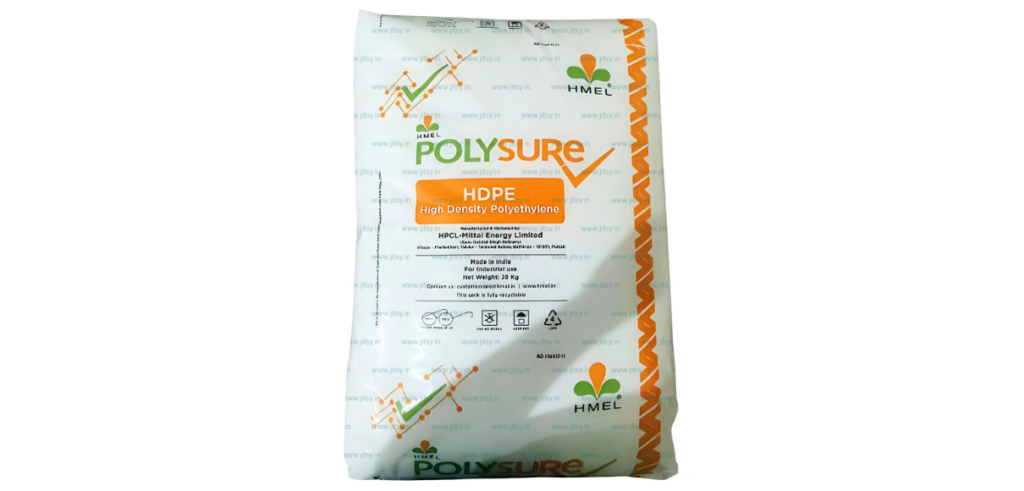
Other Indian PE 63 pipe grades from producers including HMEL, GAIL, OPAL, and Haldia Petrochemicals may carry PE 63 classification and UV stabilisation. For regulated telecom duct applications in India, TEC/CACT approval status under GR/TX/CDS-008/03/MAR-2011 is the governing qualification criterion — not PE 63 classification alone. Buyers should confirm that any alternative grade carries current TEC/CACT approval before substituting it for 010DP45U in a regulated telecom supply programme.
Common Search Variants
Buyers and engineers commonly search for this grade using terms such as PE 63 HDPE pipe grade India, TEC approved HDPE duct grade, OFC duct HDPE granules, UV-stabilized PE 63 pipe resin, Propel 010DP45U, and IOCL telecom duct grade. Frequent misspellings and alternate notations include HDPE 10DP45U, 010DP45-U, Propel PE63 duct grade, IOCL HDPE pipe granules UV, and 010DP45U HDPE datasheet — all refer to the same product.
















Reviews
Clear filtersThere are no reviews yet.