







Brand
 Bhansali Engineering Polymers LimitedBhansali Engineering Polymers Limited 3
 Borouge Pte LtdBorouge Pte Ltd 1
 Dongsung ChemicalDongsung Chemical 2
 Dow-MitsuiDow-Mitsui 4
 FPC Formosa Plastics CorporationFPC Formosa Plastics Corporation 1
 Gail India LimitedGail India Limited 32
 Haldia Petrochemicals LtdHaldia Petrochemicals Ltd 25
 Hanwha Solutions ChemicalHanwha Solutions Chemical 4
 Hanwha Total Energies PetrochemicalHanwha Total Energies Petrochemical 7
 HMEL - HPCL-Mittal Energy LimitedHMEL - HPCL-Mittal Energy Limited 55
 IOCL - Indian Oil Corporation LimitedIOCL - Indian Oil Corporation Limited 72
 Jiangsu Daoming Chemical Co LtdJiangsu Daoming Chemical Co Ltd 2
 LG ChemLG Chem 8
 Lotte ChemicalLotte Chemical 4
 LyondellBasell Industries NVLyondellBasell Industries NV 1
 Mangalore Refinery & Petrochemicals LimitedMangalore Refinery & Petrochemicals Limited 7
 Marcopolo International LLCMarcopolo International LLC 2
 Nouryon Functional ChemicalsNouryon Functional Chemicals 8
 ONGC Petro Additions LtdONGC Petro Additions Ltd 44
 Reliance Industries LimitedReliance Industries Limited 48
 SabicSabic 1
 Sipchem - Saudi International PetrochemicalSipchem - Saudi International Petrochemical 8
 SK Functional PolymerSK Functional Polymer 6
 The Dow Chemical CompanyThe Dow Chemical Company 3
 TPI Polene Public Company LimitedTPI Polene Public Company Limited 3
 VersalisVersalis 4
IOCL PP Propel 1350YG
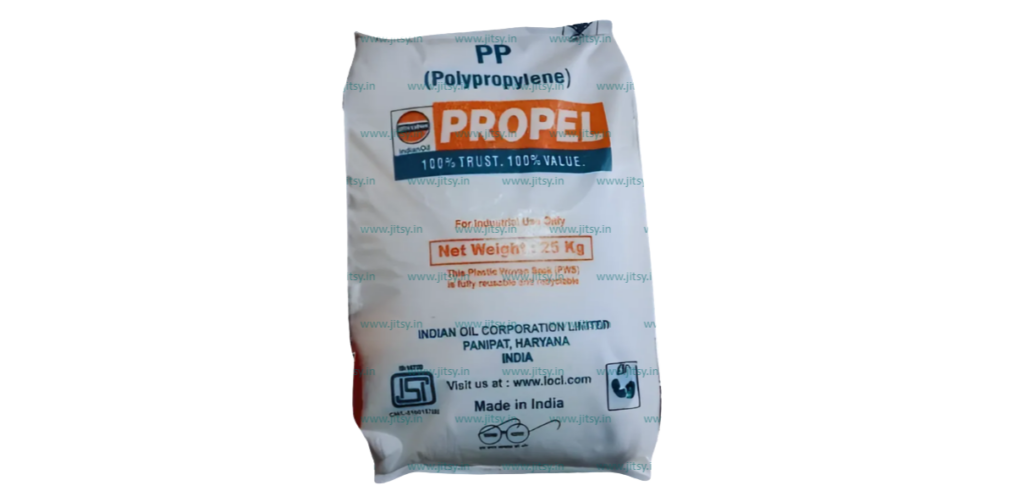
IOCL PP Propel 1350YG is a prime, virgin polypropylene homopolymer resin from Indian Oil Corporation Ltd's high-performance PROPEL petrochemical portfolio. Synthesized utilizing advanced Spheripol II technology, this natural-colored material features high isotacticity and an extremely uniform structural makeup. This exact molecular arrangement provides high polymer crystallinity, yielding fibers with predictable mechanical limits and dependable structural integrity during fast drawing.
Technical directors and nonwoven plant managers specify this grade due to its high flow kinetics and excellent thermal stability. The chemical formulation contains an optimized melt processability package that limits thermal fracturing and prevents polymer pooling at the die. This design allows operators to maximize spinning throughput speeds while minimizing line blockages, leading to uniform web distribution across large production runs.
Technical Specifications of 1350YG
Resin and Rheological Properties
- Melt Flow Index (MFI): 35.0 g/10 min (Tested via ASTM D1238 at 230°C with a 2.16 kg load). An elevated flow index of 35 indicates low melt viscosity under dynamic pressure. This high fluid mobility allows the polymer to pass easily through dense spinneret micro-holes, making it ideal for thin web formation.
- Density: Unverified for this specific grade in current documentation; standard homopolymer variations generally mirror 0.90 g/cm³ when measured using official ASTM D1505 protocols.
Mechanical and Impact Properties
- Tensile Strength at Yield: 36.0 MPa (Tested via ASTM D638 at 50 mm/min). This rating indicates the material has high resistance to stretching. It enables fine filaments to endure significant drawing tensions without experiencing structural thinning or line failures.
- Flexural Modulus: 1200 MPa (Tested via ASTM D790 at 1.3 mm/min). This moderate stiffness level provides a soft texture while maintaining sufficient structural strength, helping lightweight nonwoven products resist collapsing under load.
- Elongation at Yield: 11.0% (Tested via ASTM D638 at 50 mm/min). This performance parameter ensures that the cooling strands maintain enough elastic flex to adapt to sudden changes on high-speed pull rollers, preventing web tears.
- Notched Izod Impact Strength: 20 J/m (Tested via ASTM D256 at 23°C). This toughness value ensures that finished nonwoven webs can withstand dynamic handling pressures during slitting, winding, and automated packing.
Thermal Properties
- Heat Deflection Temperature (HDT): 85°C (Tested via ASTM D648 at 0.46 N/mm²). This structural metric confirms that the fiber network maintains its shape in hot storage setups or under thermal processing conditions up to 85°C.
- Vicat Softening Point: 150°C (Tested via ASTM D1525 under a 10 N load). This broad thermal parameter provides a reliable calendar bonding window, allowing for clean thermofusion without melting the core fiber filaments.
Applications and Use Cases
Spunbond Nonwoven Fabric Production
This material is explicitly designed for high-capacity spunbond nonwoven manufacturing lines. Its low melt viscosity ensures a steady, pulse-free feed through the extrusion head, allowing the extruded filaments to be drawn thin by high-velocity air streams. The resulting fabric webs provide uniform density and excellent coverage, making them ideal for hygiene products, protective apparel, and filtration media.Fine Denier Multifilament Yarns
Industrial spinners specify this polymer to extrude fine denier multifilament yarns used in performance textiles. The high melt flow index of 35 allows for clean extrusion through fine-gauge spinnerets without creating high backpressure. This uniform strand formation yields soft, high-tenacity yarns suitable for technical webbings, sewing threads, and lightweight upholstery fabrics.Processing and Handling Guidelines
Stated Processing Temperature Windows
The manufacturer-stated processing temperature window for this high-flow grade is set between 170°C and 230°C. Maintaining the extrusion barrel within this thermal range ensures complete melting and uniform viscosity, while fully protecting the polymer from premature thermal oxidation.Storage and Handling
The material is distributed in heavy-duty 25.0 kg bags. To preserve the resin's properties, store the bags indoors within a dry, dust-free warehouse where ambient temperatures do not exceed 50°C. Protect the pallets from direct sunlight and heat, and process the inventory within 6 months of delivery to ensure optimal spinning performance.Compliance, Safety, and Regulatory Information
Food-Contact Compliance and Standards
The chemical composition of this homopolymer grade meets the non-toxic plastics criteria defined in Indian Standards IS 10910 and IS 10909. It also complies with the international parameters regulated by US FDA CFR Title 21 177.1520. This formal compliance ensures that fabrics produced from this resin are safe for direct contact food wrapping and personal care products.Comparable Grades in India
- IOCL 1200YG: A dedicated fiber grade with an MFI of 20. It is designed for heavier multifilament yarns and staple fibers, meaning it lacks the high flow performance required for lightweight spunbond nonwovens.
- IOCL 1100FS: A specialized TQPP film grade with an MFI of 11. It contains slip and antiblock additives designed for packaging films, making it unsuitable for fiber spinning.
- IOCL 1350EG: A dedicated extrusion coating and lamination grade. Although it shares a high melt flow profile, it is formulated for thin coating adhesion on substrates rather than freestanding fiber spinning.
- Alternative Domestic Suppliers: Other Indian polymer producers manufacture alternative 35 MFI homopolymers for nonwovens. While these substitutes offer similar performance, processing teams should verify melt drawability and calendar response before changing feeds.
Generic Terms and Frequent Misspellings
Industrial sourcing buyers search for this grade using terms like PP H 1350YG, PP fiber 1350YG, 1350YG PP, and 1350 YG PP. Common typographical variations found in supply databases include 1350yg, 1350-yg, p1350yg, and pp 1350y g.
IOCL PP Propel 1350YH
IOCL PP Propel 1350YH is a prime, virgin polypropylene homopolymer resin belonging to the specialized PROPEL petrochemical portfolio by Indian Oil Corporation Ltd. Synthesized via state-of-the-art Spheripol II technology, this natural-colored material features a highly controlled isotactic molecular structure. This crystalline design ensures predictable cooling rates, high thermal stability, and exceptional uniformity during rapid melt-spinning processes.
Technical directors and nonwoven manufacturing plant managers select this grade primarily for its high melt flow rate and excellent processability. The formulation includes an integrated, optimum process stabilizer package designed to protect the polymer matrix from thermal degradation under extreme shear forces. This stabilizer configuration minimizes filament breaks, prevents die lip buildup, and ensures uninterrupted operation on modern, high-speed fiber lines.
Technical Specifications of 1350YH
Resin and Rheological Properties
- Melt Flow Index (MFI): 35.0 g/10 min (Tested via ASTM D1238 under 230°C and 2.16 kg conditions). A 35 MFI indicates a low melt viscosity, allowing the molten polymer to distribute evenly through dense spinneret holes without creating excessive backpressure in the extruder barrel.
- Density: Unverified for this specific grade in current documentation; standard homopolymers typically mirror 0.90 g/cm³ when measured using official ASTM D1505 protocols.
Mechanical and Impact Properties
- Tensile Strength at Yield: 36.0 MPa (Tested via ASTM D638 at a crosshead speed of 50 mm/min). This high yield rating provides the necessary mechanical strength to withstand intense high-velocity air attenuation or mechanical drawing forces without snapping.
- Elongation at Yield: 11.0% (Tested via ASTM D638 at 50 mm/min). This performance value indicates an optimal structural balance, allowing the polymer to stretch uniformly into fine denier filaments while maintaining mechanical toughness.
- Flexural Modulus: 1200 MPa (Tested via ASTM D790 at 1.3 mm/min). This tailored stiffness ensures that the converted nonwoven webs possess ideal fabric hand, structural drape, and resistance to deformation.
- Notched Izod Impact Strength: 20 J/m (Tested via ASTM D256 at 23°C). This value guarantees that the extruded filaments retain sufficient baseline toughness to resist micro-cracking during subsequent mechanical bonding or web-slitting operations.
Thermal and Processing Properties
- Heat Deflection Temperature (HDT): 85°C (Tested via ASTM D648 at 0.46 N/mm²). This thermal property ensures that the spun filaments resist structural distortion or premature softening under the heat generated during rapid commercial downstream processing.
- Vicat Softening Point: 150°C (Tested via ASTM D1525 under a 10 N load). A high softening point allows the finished nonwoven fabrics or multifilament yarns to safely undergo hot calender bonding or thermal lamination cycles.
Applications and Use Cases
Spunbond Nonwoven Fabric Production
This material is engineered for high-throughput spunbond nonwoven manufacturing lines. The combination of a high 35 MFI and an optimum process stabilizer package allows for smooth, continuous extrusion through multi-hole spinneret dies to form uniform filament webs. This process yields reliable high-coverage nonwoven fabrics, which are heavily used in the hygiene, medical, and agricultural sectors for products like face masks, protective surgical gowns, and crop covers.Fine Denier Multifilament Yarn Spinning
Textile manufacturers specify this homopolymer for the high-speed spinning of fine denier multifilament yarns. The low melt viscosity under high shear prevents polymer pulsing at the die exit, allowing air attenuation systems to draw the molten streams into ultra-fine filaments. These high-strength yarns are subsequently knitted or woven into specialized industrial sewing threads, technical narrow fabrics, and upholstery textiles.Processing and Handling Guidelines
Stated Processing Temperature Windows
The manufacturer-stated processing temperature window for this grade is between 170°C and 230°C. Operating within this thermal profile ensures proper polymer melting and consistent viscosity, allowing high-speed lines to run smoothly while protecting the stabilized homopolymer from localized thermal oxidation.Storage and Handling
This material is packed and distributed in raffia bags with a strict net content of 25.0 kg only. To maintain the initial property profile of the resin, store the bags indoors within a dry, dust-free warehouse sheltered from direct heat and sunlight. Ambient storage temperatures must not exceed 50°C, and conversion teams should process the granules within 6 months of delivery to prevent surface aging or additive migration.Compliance, Safety, and Regulatory Information
The chemical formulation of this homopolymer resin is engineered to align with strict non-toxic safety parameters for food-contact and personal hygiene products. It complies with Indian Standards IS 10910 and IS 10909, alongside international guidelines outlined under US FDA CFR Title 21 177.1520, making it fully certified for direct-contact consumer articles, medical apparel, and sanitary single-use fabrics.Comparable Grades in India
- IOCL 1350YG: An adjacent high-flow fiber and nonwoven grade. It targets a highly similar application profile, though conversion teams must verify localized datasheet differences as manufacturer equivalence is not officially confirmed.
- IOCL 1200YG: A dedicated homopolymer grade for multifilament yarn spinning. It features a lower melt flow design, making it better suited for heavier denier industrial yarns than ultra-lightweight spunbond webs.
- IOCL 1030RG: A structural raffia-grade resin. Formulated for flat tape extrusion and mechanical weaving, it lacks the high flow and stabilizer profile required for multi-hole fiber spinnerets.
- Alternative Domestic Suppliers: Other domestic polyolefin producers offer alternative 35 MFI homopolymers for nonwovens. While these substitutes target similar parameters, melt drawability and thermal calender settings must be evaluated before switching primary bulk feeds.
Common Search Variants and Frequent Misspellings
Industrial buyers search for this resin using terms like PP H P1350YH, PP fiber P1350YH, P1350YH PP, and P1350 YH PP granules. Common typographical errors found in digital inventory logs include 1350yh, 1350-yh, p1350yh, and pp 1350y h.
IOCL PP Propel P1030FG
IOCL PP Propel P1030FG is a virgin, natural-colored polypropylene homopolymer resin from Indian Oil Corporation Ltd's premium PROPEL line. It is polymerized using advanced Spheripol II technology, ensuring excellent structural consistency and a uniform molecular weight distribution. This highly stable structure helps film converters achieve predictable flow dynamics and uniform melt thickness during long-run production campaigns.
Film manufacturers select this specific grade to maintain high operational yield on high-speed biaxially oriented polypropylene (BOPP) extrusion lines. It is engineered to withstand extreme mechanical stretching in both machine and transverse directions without structural tearing. The polymer formulation delivers high optical clarity, superior surface gloss, and an optimal balance of structural stiffness and puncture resistance required for industrial consumer packaging.
Technical Specifications of P1030FG
Resin and Melt Flow Characteristics
- Melt Flow Index (MFI): 3.0 g/10 min (ASTM D1238, 230°C / 2.16 kg). A 3.0 MFI provides the high melt strength needed for uniform bubble or cast-sheet formation. It ensures that the molten polymer web does not sag or split during the initial extrusion phase before it enters the orientation ovens.
- Density: Unverified for this specific grade in standard technical summaries, though typical polypropylene homopolymer baselines fall near 0.90 g/cm³ via ASTM D1505.
Mechanical and Impact Properties
- Tensile Strength at Yield: 36.0 MPa (ASTM D638, 50 mm/min). This rating ensures the finished film can handle high pulling tension on automated form-fill-seal (FFS) packaging machines without stretching out of shape or breaking.
- Flexural Modulus: 1400 MPa (ASTM D790, 1.3 mm/min). This level of stiffness gives thin films a premium, crinkly feel and good structural body, which prevents the film from jamming inside automated feeding systems.
- Elongation at Yield: 11% (ASTM D638, 50 mm/min). This balanced elastic threshold allows the oriented film to absorb sudden mechanical stress during shipping and handling without fracturing.
- Notched Izod Impact Strength: 32 J/m (ASTM D256, 23°C). This impact rating gives the thin polymer layer excellent puncture resistance, preventing sharp box corners or stiff contents from piercing the film wrap.
Thermal Properties
- Heat Deflection Temperature (HDT): 93°C (ASTM D648, 0.46 N/mm²). This thermal threshold keeps the film stable and flat when exposed to high temperatures in shipping containers or warehouses.
- Vicat Softening Point: 155°C (ASTM D1525, 10 N). This high softening point provides a wide thermal processing window, allowing downstream metallization or hot-knife sealing lines to run smoothly without melting the film base prematurely.
Applications and Use Cases
General-Purpose and Co-Extruded BOPP Films
This grade serves as the core layer for multi-layer co-extruded films used to wrap consumer items like textiles and adhesive tapes. Its low water carry-over feature is vital on high-speed cast lines, preventing water droplets from escaping the cooling bath. This prevents optical flaws, pinholes, or surface haze from marring the clear wrap.Metallisable Film for Food and Biscuit Packaging
Converters rely on this resin to produce premium metallisable BOPP films for snacks, biscuits, and confectionery. The clean, additive-optimized homopolymer surface allows aluminum vapor layers to bond perfectly during vacuum metallization. This creates an excellent barrier against moisture and oxygen, keeping food fresh while maintaining a bright, reflective finish.Protective Overwraps and Cigarette Packaging
The polymer is widely used for clear overwraps on cigarette boxes, media cases, and luxury retail cartons. Thanks to its excellent clarity and gloss, the film acts as an invisible shield that enhances the printed graphics beneath it. Its high flexural stiffness also ensures tight, crisp fold lines during high-speed overwrapping operations.Processing and Handling Guidelines
Stated Processing Temperature Windows
The recommended processing temperature window for P1030FG ranges from 220°C to 280°C. This broad thermal window allows operators to fine-tune the melt viscosity across the extruder zones, ensuring a smooth, defect-free melt skin on the die lips and stable film orientation.Storage and Handling
The raw granules are delivered in standard 25.0 kg bags. To prevent premature thermal aging or moisture buildup, store the material indoors in a clean, dust-free warehouse below 50°C. Keep the pallets away from direct sunlight, and process the resin within 6 months of delivery to ensure optimal film clarity.Compliance, Safety, and Regulatory Information
The material composition meets the strict food-grade plastic requirements set by Indian Standards IS 10910 and IS 10909. It also complies with international food-safety criteria under US FDA CFR Title 21 177.1520. This allows film manufacturers to safely use this resin for direct-contact food packaging, dry snack wraps, and consumer goods.Comparable Grades in India
- IOCL 1100FS: A film-grade variant designed primarily for tubular quenched polypropylene (TQPP) film lines. It contains a unique blend of slip and anti-block additives, making it less suitable for the high stretching forces used on tenter-frame BOPP lines.
- IOCL 1350EG: A specialized lamination and extrusion coating grade. It features a much higher melt flow rate to ensure thin coating layers, making it completely incompatible with high-speed standalone film extrusion.
- IOCL 1030RG: A dedicated raffia grade. While it shares a similar low-MFI homopolymer chemistry, it is tailored for drawing flat, heavy-duty structural tapes for woven sacks rather than high-clarity packaging films.
- Alternative Indian Suppliers: Other domestic petrochemical manufacturers offer alternative 3.0 MFI BOPP film resins. While these options serve the same general applications, operators should re-verify the optical clarity and skin-layer compatibility before changing materials.
Common Search Variants
Sourcing professionals often search for this grade using designations like PP H P1030FG, PP film 1030FG, 1030FG PP, and 1030 FG PP. Frequent typographical misspellings found in procurement systems include 1030fg, 1030-fg, p1030fg, and pp 1030f g.
IOCL PP Propel P1030MG
IOCL PP Propel P1030MG is a natural-coloured polypropylene homopolymer manufactured by Indian Oil Corporation Ltd (IOCL) using Spheripol II Technology at its Paradip plant. It is part of the PROPEL range — one of India’s most widely referenced domestic PP grade portfolios — and is designed for general-purpose injection moulding and extrusion.
P1030MG is positioned by IOCL on high strength and good processability. It is a balanced, medium-stiffness homopolymer suited to processors who need reliable, consistent part performance without the complexity of managing specialised or functionally modified grades. The grade covers a broad application range including household articles, rigid packaging containers, sheet, and extruded tapes — all standard PP output formats where strength and predictable processing are the primary requirements.
Technical Insights
Chemistry and Polymer Family
P1030MG is a polypropylene homopolymer — built from propylene monomers only, with no ethylene or other co-monomer modification. This gives it the characteristic attributes of the homopolymer family: good rigidity, dimensional stability, solid heat resistance, and clean melt processing behaviour. It does not contain functional additives such as antistatic agents, slip, or antiblock — making it a clean-chemistry, general-purpose base resin. The Spheripol II manufacturing process gives P1030MG consistent molecular weight distribution and controlled particle morphology, resulting in predictable melt behaviour and part-to-part consistency across production runs.Property Breakdown
Melt Flow Index (MFI): 3.0 g/10 min (ASTM D1238, 230°C / 2.16 kg) MFI 3.0 is a medium-low flow value, positioning P1030MG at the balanced end of the moulding spectrum — well suited for standard cavity geometries and extrusion lines where control and strength matter more than fill speed. It flows adequately for household article and rigid packaging moulds without the strength trade-off that comes with higher-flow grades. For thin-wall parts or high-speed multi-cavity tools, a higher-MFI grade would be more appropriate. Density: 0.90 g/cm³ (ASTM D1505, 23°C) Standard for PP homopolymers. The low density delivers lightweight finished parts — a relevant factor in packaging and household goods where material-to-weight efficiency is valued. Tensile Strength at Yield: 35 MPa (ASTM D638, 50 mm/min) A solid tensile value for a general-purpose PP moulding grade. Parts moulded from P1030MG hold their shape well under moderate static and applied loads — appropriate for household articles, containers, and rigid packaging that must withstand normal handling and stacking conditions. Elongation at Yield: 12% (ASTM D638, 50 mm/min) At 12% elongation, P1030MG is a stiff, rigid material. It resists deformation under load before yielding — the right behaviour for rigid packaging, bins, containers, and sheet applications where dimensional stability is more important than flexibility. Flexural Modulus: 1350 MPa (ASTM D790, 1.3 mm/min) The flexural modulus is the clearest measure of part stiffness. At 1350 MPa, P1030MG produces parts with good resistance to bending and flexing under load. This is the appropriate stiffness range for rigid packaging, household storage items, sheet, and tapes where shape retention under load is required. Notched Izod Impact Strength: 35 J/m (ASTM D256, 23°C) A moderate impact value, consistent with a PP homopolymer of this flow and stiffness profile. It handles routine handling impacts — drops, minor knocks, shipping conditions — without cracking under normal use. Applications requiring high impact resistance, such as heavy-duty crates or automotive parts, would need an impact copolymer instead. Heat Deflection Temperature (HDT): 94°C (ASTM D648, 0.46 N/mm²) Parts moulded from P1030MG retain their shape under load up to approximately 94°C. This is adequate for household goods, packaging, and sheet that may encounter elevated ambient temperatures during storage and transport without being exposed to extreme heat. Vicat Softening Point: 156°C (ASTM D1525, 10 N) The Vicat value indicates the temperature at which the material begins to soften under a defined needle load. The 156°C Vicat is relevant for understanding sterilisation and hot-environment tolerance in end-use applications. Processing Temperature Range: 170–230°CA standard and manageable window compatible with conventional injection moulding and extrusion equipment configured for PP. No special tooling or unusual process parameters are required. Packaging: 25 kg raffia bags only. Shelf Life and Storage: Store below 50°C, away from direct sunlight and heat, in a dry, dust-free environment. Process within 6 months of delivery. Heat and UV exposure before processing can degrade the resin and reduce mechanical performance and appearance in the finished part.Applications and Use Cases
Household Articles and Consumer Goods
P1030MG is well matched to household article injection moulding. Its MFI 3.0 flow profile supports reliable cavity fill in standard multi-impression moulds for items such as storage containers, bins, hangers, utility trays, and everyday household goods. The flexural modulus of 1350 MPa and tensile strength of 35 MPa ensure the finished part is rigid, dimensionally stable, and resistant to load-induced deformation in daily use. Natural colour base also makes downstream pigmentation straightforward.Rigid Packaging
For rigid PP packaging — containers, industrial bins, closures, and general-purpose packaging forms — P1030MG provides the stiffness and tensile performance that rigid-walled packaging demands. At 1350 MPa flexural modulus, packaging parts resist deformation under stacking and transit loads. The low density of 0.90 g/cm³ keeps unit material weight efficient at scale, which matters in high-volume packaging production where material cost per part is closely managed.Sheet Extrusion
P1030MG is listed by IOCL for sheet applications. PP homopolymer sheet extruded from this grade produces a stiff, well-formed product suitable for thermoforming, rigid trays, industrial packaging inserts, and cut-to-size rigid panels. The MFI 3.0 and balanced mechanical profile support consistent gauge and dimensional stability in extruded sheet, with the flexural modulus maintaining rigidity in the finished sheet product.Tape Extrusion
In PP tape extrusion — used for packaging strapping, textile reinforcement tapes, and woven sack yarns — the grade’s homopolymer chemistry and controlled MFI support stable extrusion output and consistent tape draw performance. PP homopolymer tapes require a material that draws evenly after extrusion while retaining tensile strength. P1030MG’s 35 MPa tensile yield and balanced flow make it suitable for standard PP tape extrusion setups.Comparable Grades in India
IOCL 1060MG (Not Equivalent — Higher Flow, Higher Stiffness)
1060MG has an MFI of 6.0 and a flexural modulus of 1500 MPa — higher flow and higher stiffness than P1030MG. It is better suited to applications requiring faster cavity fill, shorter cycle times, or higher part rigidity, such as thermoforming sheet and multi-cavity rigid packaging moulds. For standard-wall household articles and general packaging where the balanced stiffness-flow of P1030MG is specified, 1060MG is not a direct substitute. Process revalidation is required before switching.IOCL 1110MG / 1110MAS (Not Equivalent — Higher Flow)
1110MG and 1110MAS both operate at MFI 11, offering significantly higher flow than P1030MG for applications like furniture components, auto parts, and high-speed household article production. 1110MAS also includes an antistatic agent not present in P1030MG. These grades are not appropriate substitutes for P1030MG where balanced stiffness and medium flow are the design basis.IOCL 1200MG (Not Equivalent — Different Flow and Stiffness Profile)
1200MG is a higher-flow PROPEL homopolymer with additional positioning on stiffness and gloss. It serves a different part of the moulding market. Without confirmed manufacturer equivalence data, substitution for P1030MG requires full process and part revalidation.IOCL 1030FG (Not Equivalent — Film Grade)
1030FG is a PP homopolymer optimised for BOPP film extrusion, not for injection moulding or general extrusion of rigid parts. Its molecular weight distribution and property balance are tuned for film orientation processes. It is not substitutable for P1030MG in moulding or sheet/tape applications.Other PP Homopolymer Moulding Grades from Indian Suppliers
Several domestic polymer producers supply PP homopolymer moulding grades at MFI values close to 3.0 with similar mechanical property ranges. These may be functionally comparable for household article and rigid packaging applications but should not be assumed equivalent to P1030MG without direct TDS comparison and, where relevant, production trials.Common Search Variants
This product is also searched as: PP H P1030MG, PP moulding P1030MG, 1030MG IOCL, P1030MG PP granules, PROPEL P1030MG, Indian Oil PP 1030, PP homopolymer 3 MFI, and common misspellings including p1030mg, 1030mg, 1030-mg, pp 1030m g, P 1030 MG, and propel 1030 mg.
IOCL PP Propel P1030RG
IOCL PP Propel P1030RG is a prime, virgin polypropylene homopolymer resin supplied by Indian Oil Corporation Ltd. It is a natural-coloured thermoplastic polymer manufactured utilizing the advanced Spheripol II technology platform. This production process delivers a highly uniform molecular structure, minimizing structural defects and ensuring exceptionally consistent physical properties across processing batches.
Raffia extrusion plants and packaging engineers select this specific grade to achieve high-speed production stability and heavy-duty structural integrity. Its formulation is engineered to provide a balanced combination of high tensile tenacity and practical structural elongation. This ensures that the extruded plastic tapes can be stretched tightly during the drawdown phase without splitting, snapping, or introducing costly line interruptions on industrial circular looms.
Technical Specifications of P1030RG
Resin and Rheological Properties
- Melt Flow Index (MFI): 3.3 g/10 min (Tested via ASTM D1238 at 230°C with a 2.16 kg load). A controlled MFI of 3.3 indicates an optimal melt viscosity for film or tape extrusion. This structural thickness gives the molten polymer curtain enough structural stability to withstand high mechanical drawing forces before cooling.
- Density: 0.90 g/cm³ (Tested via ASTM D1505 at 23°C). The light volumetric baseline allows plastics plants to reduce individual bag weights while achieving high commercial volumetric part yields per metric ton of raw material.
- Tensile Strength at Yield: 35 MPa (Tested via ASTM D638 at 50 mm/min). This rating confirms high structural resistance against continuous pulling loads, allowing woven fabrics to carry heavy weights without structural tearing.
- Flexural Modulus: 1550 MPa (Tested via ASTM D790 at 1.3 mm/min). This moderate-to-high stiffness rating ensures that individual woven tapes retain structural crispness and resist structural sagging under load, which optimizes flat tape alignment on industrial winders.
- Elongation at Yield: 12% (Tested via ASTM D638 at 50 mm/min). This balanced stretch allowance provides excellent drop impact protection, allowing finished industrial packaging to deform slightly under shock loads rather than rupturing.
- Notched Izod Impact Strength: 50 J/m (Tested via ASTM D256 at 23°C). This level of toughness ensures superior resistance to mechanical abuse during typical handling, transit, and automated loading operations.
Thermal Characteristics
- Heat Deflection Temperature (HDT): 95°C (Tested via ASTM D648 at 0.46 N/mm²). This broad thermal performance threshold ensures that industrial storage sacks preserve their mechanical shape and structural integrity when exposed to elevated storage environments.
- Vicat Softening Point: 156°C (Tested via ASTM D1525 under a 10 N load). This structural melting boundary protects the integrity of individual woven tapes during high-heat downstream processes like automatic hot-knife stitching or thermal sealing.
Applications and Use Cases
Woven Sacks and Stretched Tapes
This grade is highly optimized for the extrusion of high-strength stretched tapes used to weave commercial packaging bags. Its excellent low water carry-over feature is critical here, preventing water droplets from traveling out of the cooling bath and into the orienting oven. This eliminates steam pockets and uneven tape thinning, allowing plants to produce highly uniform strands for defect-free weaving.Cement and Fertilizer Packaging
The heavy industrial sector utilizes this raw material to manufacture durable bags for transporting cement, minerals, chemical fertilizers, and heavy building polymers. The 35 MPa tensile yield ensures that the woven fabrics withstand harsh mechanical handling, stacking, and rough transport over long distribution networks. The balance of high tenacity and structural elasticity keeps container failures to an absolute minimum.Food Grains and Industrial FIBC Packaging
This polymer is widely applied in producing bulk food grain bags and Flexible Intermediate Bulk Containers (FIBC) or jumbo bags. The clean, unadulterated homopolymer base keeps food storage safe, pure, and taint-free. The balanced mechanical toughness allows heavy jumbo sacks to support loads up to one metric ton safely, preventing unexpected failures during crane liftoff and automated depot stacking.Processing and Handling Guidelines
Stated Processing Temperature Windows
The recommended processing temperature window for this raffia grade is established between 170°C and 230°C. Extrusion line technicians can easily adjust these temperature zones across the extruder barrel to maintain steady melt pressures, minimize thermal degradation, and optimize the drawing performance of the flat tape die.Packaging and Storage
The virgin resin is supplied in heavy-duty raffia bags with a fixed net content of 25.0 kg. To preserve the base material characteristics, store the polymer pallets indoors in a clean, dust-free warehouse away from heat and direct UV sunlight. Ambient storage temperatures must remain below 50°C, and the granules should be processed within 6 months of delivery.Compliance, Safety, and Regulatory Information
The material formulation satisfies the food-grade plastic criteria outlined in Indian Standards IS 10910 and IS 10909. Additionally, it complies with international food-contact safety frameworks specified under US FDA CFR Title 21 177.1520. This guarantees that woven fabrics produced from this resin are safe for the direct packaging and long-term storage of agricultural commodities, lentils, flour, and sugar.Comparable Grades in India
- IOCL 1030FG: A specialized film-grade homopolymer. While it shares a similar low melt flow structure, it is formulated with distinct slip and anti-blocking additives optimized for film blowing rather than the mechanical drawing demands of the raffia tape process.
- IOCL 1110MG / 1110MAS: Specialized high-flow injection moulding resins with an MFI of 11.0. These grades lack the low-viscosity melt strength needed for tape extrusion and cannot be used for manufacturing woven fabrics.
- IOCL 1060MG / 1200MG: These are rigid injection moulding polymers designed to fill complex cavities quickly. They are completely non-equivalent to raffia grades and cannot be substituted into stretched tape extrusion lines.
- Alternative Domestic Suppliers: Other major Indian petrochemical firms offer 3.3 MFI homopolymer raffia grades. While these alternatives provide functionally comparable results for woven sacks, exact structural drawing parameters should be re-validated on the loom line before making a complete swap.
Common Search Variants
Industrial buyers looking for this product often search using variations like PP H P1030RG, PP raffia 1030RG, 1030RG PP, and 1030 RG PP. Common typographical errors found in sourcing inquiries include 1030rg, 1030-rg, p1030rg, and pp 1030r g.
IOCL PP Propel P1030TC
IOCL PP Propel P1030TC is a virgin polypropylene homopolymer resin from Indian Oil Corporation Ltd’s PROPEL petrochemical line. Produced using advanced Spheripol II technology, this natural-colored material possesses a clean molecular design with high isotacticity. This specialized polymer structure yields high crystallinity, providing the extruded plastic sheets with predictable cooling patterns, reliable geometric uniformity, and exceptional structural stability during subsequent reheating and negative-pressure forming steps.
Technical engineers and food packaging converters select this grade due to its excellent melt strength and high structural rigidity. The chemical formulation contains a processing package specifically balanced to mitigate sag when plastic sheets are suspended in thermoforming heating ovens. This specific property helps operators minimize wall thinning and avoid web tears, making it possible to achieve uniform material distribution even across complex, deep-draw mold cavities.
Technical Specifications of P1030TC
Resin and Rheological Properties
- Melt Flow Index (MFI): Unverified for this specific grade in early documentation; typical thermoforming variations operate at a lower flow scale to maintain sufficient melt strength during sheet hanging.
- Density: Unverified for this specific grade in current documentation; standard homopolymer variations generally mirror 0.90 g/cm³ when measured using official ASTM D1505 protocols.
Mechanical and Impact Properties
- Flexural Modulus: 1600 MPa (Tested via ASTM D790 at 1.3 mm/min). This high stiffness value indicates excellent resistance to bending forces under mechanical load. It allows thin-walled thermoformed trays and container lids to resist buckling, deformities, or collapsing during automated high-stack storage.
- Notched Izod Impact Strength: 45 J/m (Tested via ASTM D256 at 23°C). This impact rating ensures that the final rigid packaging retains an ideal balance of toughness. This level of impact resistance prevents the plastic from micro-cracking or fracturing along sharp corners during high-speed die-cutting, trimming, and subsequent commercial transit.
- Tensile Parameters: Unverified for this specific grade in current provisional documentation.
Thermal and Processing Properties
- Thermal Deflection Values: Unverified for this specific grade in current provisional documentation.
- Stated Processing Temperatures: Unverified for this specific grade; standard homopolymer configurations typically run on processing profiles between 190°C and 240°C depending on sheet extrusion line configurations.
Applications and Use Cases
Sheet Extrusion and Rigid Thermoformed Packaging
This material is specifically designed for high-capacity sheet extrusion lines that feed directly or indirectly into thermoforming units. Its optimal melt stability ensures an exceptionally flat, low-stress plastic sheet matrix with minimal gauge variation across the die width. The resulting extruded sheets provide a reliable foundation for producing rigid food packaging, shallow takeaway trays, and display containers that require consistent wall thicknesses.Formed Consumer Trays and Container Lids
Industrial packaging plants specify this polymer to form high-volume consumer trays, lids, and structural blister packs. The material's mechanical balance of 1600 MPa flexural modulus allows for thin-gauge down-gauging without sacrificing the ultimate load-bearing capability of the finished lid or tray. This feature yields crisp, high-definition contours along corners, which ensures secure lid-snapping mechanisms and clean flange trimming during automated packing runs.Processing and Handling Guidelines
Sheet Extrusion and Forming Parameters
While precise temperature profiles remain unverified until the final technical datasheet is released, industrial processing parameters for thermoforming-grade homopolymers require strict barrel heat management. Maintaining steady melt pressures prevents localized overheating and eliminates micro-voids, ensuring the raw extruded sheet maintains structural integrity before entering the forming tool.Storage and Handling
The packaging configuration for this grade is currently unverified in provisional data sheets, though standard primary resins ship in industrial bags. To preserve the properties of the raw polymer, store the lot indoors within a dry, dust-free warehouse away from direct sunlight, moisture, and high heat. Keep temperatures below 50°C and process the inventory within the standard window to avoid surface oxidation.Food-Contact Compliance and Standards
The core formulation of this homopolymer resin is engineered to meet the strict non-toxic material regulations required for commercial food containment. It aligns with Indian Standards IS 10910 and IS 10909, along with international guidelines set under US FDA CFR Title 21 177.1520, verifying its safety for single-use containers, produce trays, and direct-contact dairy packaging.Comparable Grades in India
- IOCL 1060MG: A general-purpose injection and extrusion grade. It lacks the specific melt strength and low-sag attributes required for large-scale thermoforming sheet suspension.
- IOCL 1110MG / 1110MAS: High-flow injection moulding grades. These are non-equivalent due to their high flow rates, which cause sheets to sag and tear if used on standard thermoforming equipment.
- IOCL 1030FG: A specialized BOPP film-grade resin. It is engineered for biaxial film stretching and is entirely unsuitable for thick sheet extrusion or rigid tray forming.
- Alternative Domestic Suppliers: Other domestic polyolefin manufacturers offer alternative thermoforming-grade homopolymers. While these alternatives target similar specifications, conversion parameters and trimming behaviors must be validated on-site before changing bulk resin feeds.
Common Search Variants and Frequent Misspellings
Industrial sourcing teams search for this product using phrases such as PP H P1030TC, PP thermoforming P1030TC, P1030TC PP, and P1030 TC PP granules. Common typographical mistakes in supply logs include 1030tc, 1030-tc, p1030tc, and pp 1030t c.
IOCL PP Propel P1045RG
IOCL PP Propel P1045RG is a natural-colored polypropylene homopolymer raffia grade developed by Indian Oil Corporation Limited under the PROPEL brand for woven sack fabrics, geotextiles, carpet packing, leno bags, and related raffia extrusion applications. Produced using Spheripol II technology, this grade is designed for processors who need excellent processability, low water carry-over, and a dependable balance of tenacity and elongation for tape extrusion and woven fabric conversion. For buyers searching for IOCL Propel P1045RG, P1045RG raffia grade, polypropylene homopolymer for geotextiles, or PP raffia grade for woven sacks in India, this grade is a strong application-specific option.
IndianOil is one of India’s leading petrochemical producers, and the PROPEL polypropylene portfolio is widely recognized across raffia, film, and moulding segments. Within that portfolio, P1045RG is positioned as a raffia and woven fabric grade rather than a film or injection moulding resin. That distinction is commercially important because woven sack manufacturers, geotextile processors, and leno bag producers need a PP homopolymer grade that supports stable tape extrusion, consistent orientation, and reliable fabric performance in demanding packaging and technical textile applications.
Technical Insights and Material Performance
IOCL PP Propel P1045RG has a melt flow index of 4.5 g/10 min at 230°C/2.16 kg, making it a higher-flow raffia grade compared with lower-MFI alternatives in the same family. This flow profile supports easier extrusion and smooth processability on raffia lines while still maintaining the mechanical balance needed for stretched tape and woven fabric production. For processors, this can be especially useful where line efficiency and stable tape formation are key selection criteria. Typical mechanical values include tensile strength at yield of 35 MPa, elongation at yield of 10 percent, flexural modulus of 1500 MPa, and notched Izod impact strength of 30 J/m at 23°C. These values indicate a good balance of stiffness, strength, and toughness for woven applications. The flexural modulus supports fabric rigidity and structural performance, while the tensile and elongation profile helps maintain workable tape behavior during stretching, weaving, and end use. The most commercially important technical strengths of P1045RG are its excellent processability, low water carry-over, and good tenacity-to-elongation balance. In raffia conversion, these are critical performance factors. Good processability helps processors run tape lines more smoothly. Low water carry-over supports more consistent tape quality and fewer moisture-related variations. A balanced tenacity and elongation profile helps woven sacks, geotextiles, and leno structures perform reliably without becoming too brittle or too soft. The recommended processing temperature range of 170°C to 230°C further supports its positioning as a practical raffia extrusion grade. This range makes it suitable for processors looking for a PP homopolymer that can run efficiently across woven sack and technical textile applications while maintaining stable conversion performance.Applications and Industry Use Cases
Woven Sacks for General Packaging
IOCL PP Propel P1045RG is highly suitable for woven sacks used in general packaging applications where processors need stable tape extrusion and dependable woven fabric quality. Its balance of processability and mechanical performance makes it a practical raw material for manufacturers producing sacks for routine industrial and commercial packaging.Geotextiles and Technical Woven Fabrics
One of the most important differentiators of P1045RG is its relevance for geotextiles. These applications require woven structures with reliable strength, dimensional stability, and processing consistency. The grade’s raffia-oriented design and balanced stiffness make it suitable for technical textile applications where performance during weaving and end use both matter.Leno Bags for Agricultural and Produce Packaging
P1045RG is also well positioned for leno bags used in agricultural and produce packaging. In these applications, processors need a raffia grade that can support tape extrusion and woven mesh-like structures with consistent quality. The grade’s processability and woven fabric suitability make it a strong option for leno bag manufacturing.Carpet Packing and Industrial Fabric Packaging
The grade is relevant for carpet packing and other industrial woven packaging formats where durable raffia fabric is required. These applications benefit from the grade’s stiffness, tape-line compatibility, and woven sack orientation, helping manufacturers produce packaging that performs reliably during storage and transport.Food Grain, Cement and Bulk Packaging
P1045RG also fits food grain bags, cement sacks, and other bulk packaging applications where woven fabric strength and process consistency are essential. Its compliance positioning adds value in food-related packaging, while its raffia performance profile supports industrial sack production for demanding handling conditions.Performance Advantages
The biggest advantage of P1045RG is that it is purpose-positioned for raffia extrusion and woven applications rather than being treated as a general PP homopolymer. This gives processors more confidence when selecting a grade for woven sacks, geotextiles, and leno bags where tape behavior and fabric performance are critical. Its higher flow profile compared with lower-MFI raffia grades can support easier extrusion and efficient line operation. For processors aiming for smooth throughput and stable conversion, this can be a practical advantage, especially in applications where consistent tape formation is essential. Low water carry-over is another important benefit. In raffia and woven fabric production, moisture-related inconsistency can affect tape quality and process stability. A grade positioned for low water carry-over helps support more predictable output and cleaner conversion performance.Comparable Alternatives
Within the IOCL PROPEL portfolio, P1045RG is best understood as a raffia grade with a somewhat higher flow profile than P1030RG. While both are designed for woven sack and tape applications, P1030RG is the lower-flow option and may be preferred where processors want a different draw-down and tape behavior balance. P1045RG, on the other hand, is better suited where easier extrusion and broader woven application flexibility are priorities, especially in geotextiles and leno bags. Compared with film-grade materials such as P1030FG, P1045RG belongs to a completely different application family. Film grades are intended for BOPP and packaging film lines, while P1045RG is designed for raffia extrusion and woven structures. This distinction matters because buyers sometimes compare grades by number pattern, but the suffix and intended conversion route determine the actual suitability. Against competing raffia grades from Reliance, HMEL, and OPaL, IOCL PP Propel P1045RG competes on domestic availability, woven sack relevance, geotextile suitability, compliance positioning, and process stability. For Indian converters producing woven sacks, technical fabrics, and leno bags, P1045RG is particularly attractive when the requirement is a higher-flow raffia homopolymer with broad woven application fit.
IOCL PP Propel P1060MG
IOCL PP Propel P1060MG is a prime, virgin polypropylene homopolymer resin manufactured by Indian Oil Corporation Ltd. It is a natural-coloured plastic raw material produced using advanced Spheripol II technology, ensuring consistent polymer structure and uniform performance.
Industrial buyers and plastic engineers select this specific grade due to its excellent balance of high stiffness and reliable processability. It serves as an ideal choice for manufacturing durable household goods and rigid thin-walled containers. The resin fills a vital market gap for processors seeking low-warpage, high-rigidity final parts.
Technical Specifications of P1060MG
Resin and Rheological Properties
- Melt Flow Index (MFI): 6.0 g/10 min (Tested via ASTM D1238 at 230°C with a 2.16 kg load). This specific flow rate offers a well-balanced processing window, making the material versatile enough for both general-purpose injection moulding and uniform extrusion profiles.
- Density: 0.90 g/cm³ (Tested via ASTM D1505 at 23°C). The lightweight nature of this polymer allows manufacturers to produce lightweight parts without sacrificing physical structure or bulk volume.
Mechanical and Structural Strength
- Flexural Modulus: 1500 MPa (Tested via ASTM D790 at 1.3 mm/min). This high modulus indicates exceptional flexural stiffness, ensuring that molded containers and rigid structural parts resist bending under external mechanical loads.
- Tensile Strength at Yield: 35 MPa (Tested via ASTM D638 at 50 mm/min). High tensile yield strength allows finished plastic parts to withstand high structural stress and pull forces before suffering any permanent deformation.
- Elongation at Yield: 12% (Tested via ASTM D638 at 50 mm/min). A moderate elongation value guarantees the material maintains its structural shape under stress rather than stretching out or weakening.
- Notched Izod Impact Strength: 40 J/m (Tested via ASTM D256 at 23°C). This level of impact toughness protects rigid items against accidental drops and daily handling impacts at room temperature.
Thermal Characteristics
- Vicat Softening Point: 154°C (Tested via ASTM D1525 under a 10 N load). The elevated softening point protects molded articles from deformation during high-temperature washing or heat-sealing operations.
- Heat Deflection Temperature (HDT): 94°C (Tested via ASTM D648 at 0.46 N/mm²). A high HDT ensures the material retains its shape and structural integrity under moderate mechanical loads in warm environments.
Applications and Use Cases
Manufacturing Durable Household Articles
This grade is widely utilized for injection moulding high-quality household plastic items. The material delivers a glossy, aesthetic surface finish alongside structural strength for buckets, basins, storage bins, and kitchenware. Its high stiffness allows thin-walled domestic products to hold weight without bending out of shape.Rigid Packaging and Thin-Walled Containers
The packaging sector utilizes this resin to produce durable, rigid containers and protective caps. The combination of an optimal 6.0 MFI and high tensile yield facilitates the rapid cycle moulding of lightweight structural walls. The finished packaging protects contents efficiently while maintaining stackability in warehouses.Industrial Thermoforming and Extrusion
Extrusion processors utilize this polymer for sheet extrusion and subsequent thermoforming operations. The structural integrity of the melt ensures uniform sheet thickness during processing. The thermoformed components achieve sharp details, excellent dimensional stability, and high rigidity, which are vital for industrial trays and display components.Processing and Handling Guidelines
Stated Processing Temperature Windows
The recommended processing temperature profile for this homopolymer ranges between 170°C and 230°C. Machine operators can easily fine-tune this temperature window across barrel zones depending on whether they are running thin-walled injection moulding cycles or steady profile extrusion lines.Packaging and Storage
The resin is distributed strictly in durable raffia bags containing a net weight of 25.0 kg. Bags must be stored in dry, dust-free environments shielded from direct sunlight and moisture. The storage area ambient temperature must not exceed 50°C to prevent thermal degradation, and the material should ideally be processed within 6 months from delivery.Compliance, Safety, and Regulatory Information
Food-Contact Compliance and Standards
This resin formulation complies with the strict food safety guidelines defined under Indian Standards IS 10910 and IS 10909. It also meets the international regulatory criteria set by the US FDA CFR Title 21 177.1520. This allows it to be safely utilized in direct food-contact packaging, food storage containers, and drinking water vessels.Comparable Grades in India
Comparable IOCL and Non-IOCL Grades
- IOCL 1030MG: Belongs to the same homopolymer family but features a lower melt flow index. It is not a direct equivalent and is better suited for parts requiring higher melt strength rather than easy flow.
- IOCL 1110MG / 1110MAS: These variations offer a significantly higher melt flow profile. They are not direct equivalents and are customized for thin-wall high-speed injection moulding lines rather than high-stiffness thermoforming.
- IOCL 1200MG: Features an entirely different flow matrix designed for specialized moulding needs, making it non-equivalent for standard P1060MG setups.
- IOCL 1030FG: Formulated explicitly as a high-clarity film grade. It cannot be used as an equivalent substitute for rigid injection moulding or thermoforming applications.
- Alternative Domestic Suppliers: Other Indian petrochemical producers manufacture general-purpose PP homopolymer moulding grades with a 6.0 MFI. While functionally comparable for rigid articles, exact manufacturer equivalence must be independently revalidated before substitution.
Common Search Variants
Users searching for this raw material frequently use terms like PP H P1060MG, PP moulding P1060MG, P1060MG PP, and P1060 MG PP. Common misspellings found in market listings include 1060mg, 1060-mg, p1060mg, and pp 1060m g.
IOCL PP Propel P1070FG
IOCL PP Propel P1070FG is a virgin polypropylene homopolymer resin engineered specifically for high-performance film extrusion. Manufactured by Indian Oil Corporation Ltd within their specialized PROPEL petrochemical portfolio, this natural-colored grade is synthesized using state-of-the-art Spheripol II technology. The resulting molecular design delivers excellent structural uniformity, minimal gel presence, and consistent orientation kinetics crucial for high-speed biaxially oriented stretching processes.
Packaging converters and film engineers select P1070FG for its exceptional processing stability during high-draw biaxial orientation. The polymer architecture minimizes web breaks and structural defects during intensive machine-direction and transverse-direction stretching. This grade provides a reliable material base that yields films with exceptional clarity, high surface gloss, and strong barrier performance tailored for demanding packaging systems.
Technical Specifications of P1070FG
Technical Insights
- Melt Flow Index (MFI): Unverified for this specific grade in provisional documentation. The melt rheology is precisely controlled to support high-speed orientation without causing film web instability or premature necking at the die exit.
- Density: Unverified for this specific grade in current provisional documentation. Standard polypropylene homopolymers consistently settle near 0.90 g/cm³ under standard test conditions, maintaining a lightweight profile for maximum yield per kilogram.
- Mechanical Strength: Unverified for this specific grade in current provisional documentation. The material is molecularly tuned to balance directional tensile properties, ensuring excellent puncture resistance and high stiffness after orientation.
- Thermal Properties: Unverified for this specific grade in current provisional documentation. Crystallization parameters are optimized to enable wide processing windows and efficient thermal setting in film lines.
- Stated Processing Window: 220–280°C. This specific thermal profile ensures complete, homogeneous melting while preserving the molecular weight distribution needed for stable, continuous web production.
Applications and Use Cases
Co-Extruded and Metallisable BOPP Films
This grade serves as a premier raw material for manufacturing general-purpose co-extruded and metallisable Biaxially Oriented Polypropylene (BOPP) films. Its low water carry-over characteristics during extrusion prevent bubble voids and surface imperfections, making it ideal for base films requiring subsequent high-vacuum aluminum metallization.Consumer and Industrial Flexible Packaging
Converters process this resin into specialized consumer packaging films, including textile wraps, food and biscuit packaging, and high-clarity cigarette overwraps. The excellent optical gloss and superior clarity maximize shelf appeal, while its high puncture resistance ensures product protection throughout automated logistics and high-speed overwrapping operations.Pressure-Sensitive Adhesive Tapes
The mechanical stiffness and reliable tensile performance of oriented P1070FG make it highly suitable for industrial adhesive tape backing. The film exhibits uniform thickness and stable tracking during high-speed coating lines, yielding excellent dimensional stability under continuous mechanical tension.Processing and Handling Guidelines
Sheet Extrusion and Biaxial Orientation
Extrusion setups must operate within the recommended temperature band of 220–280°C to achieve uniform plasticization without inducing thermal degradation. Fine-tuning the cooling rolls and quenching conditions is critical to controlling initial crystallinity, which directly influences the ease of subsequent stretching steps.Packaging and Storage
The specific commercial packaging sizes and bag materials for P1070FG remain unverified in primary provisional documents. To preserve raw polymer integrity, granules must be kept in a dry, dust-free warehouse where storage temperatures are strictly maintained below 50°C. Protect the raw resin from direct sunlight and environmental moisture to avoid premature physical or chemical breakdown.Compliance, Safety, and Regulatory Information
The base polymer configuration of this homopolymer resin is formulated to align with rigorous safety standards for materials in contact with food. It meets the non-toxic safety parameters required under Indian Standards IS 10910 and IS 10909, alongside international compliance alignments like US FDA CFR Title 21 177.1520, qualifying it for use in sensitive biscuit and food packaging wraps.Comparable Grades in India
- IOCL 1030FG: A highly established domestic reference for BOPP film production. It is not an exact equivalent to P1070FG, as variations in melt index, additive packages, or production refinery locations may require parameter adjustments on high-speed extrusion lines.
- IOCL 1100FS: A dedicated Tubular Quenched Polypropylene (TQPP) film grade. It is not equivalent because it is formulated for downward blown-film water quenching rather than the sequential horizontal stretching lines utilized in BOPP processing.
- IOCL 1350EG: A specialized polyolefin lamination and coating grade. It is entirely non-equivalent due to its high-flow characteristics designed for extrusion coating rather than film orientation.
- Alternative Domestic Suppliers: Other major domestic polyolefin producers manufacture competitive homopolymer BOPP film resins. While these grades target similar end-use spaces, processing teams must cross-verify exact rheological profiles and web stabilities during physical line changeovers.
Common Search Variants
Generic Terms and Frequent Misspellings
Buyers frequently search for this resin using terms like PP H P1070FG, P1070FG PP granules, and polypropylene film grade P1070FG. Common clerical spelling errors in industrial inventory sheets include 1070fg, 1070-fg, p1070fg, and pp 1070f g
IOCL PP Propel P1100FS
What is IOCL PP Propel P1100FS?
IOCL PP Propel P1100FS is a natural-coloured polypropylene homopolymer film grade manufactured by Indian Oil Corporation Ltd (IOCL) using Spheripol II Technology at its Paradip plant. It belongs to IOCL’s PROPEL range and is designed specifically for Tubular Water Quench Polypropylene — commonly known as TQPP — film extrusion, one of the primary processes used to produce flexible PP packaging films. P1100FS is not a general-purpose moulding grade. It is purpose-built for film extrusion and differentiated from standard homopolymer grades by three key additive and optical attributes: built-in slip and antiblock additives, and a positioning on excellent gloss and clarity. These characteristics address the specific handling, converting, and appearance requirements of packaging film applications — areas where standard moulding-grade PP would be inadequate. The grade is used by film producers supplying packaging for food, garments, textiles, and bakery products. Its combination of high flow, good optical quality, and functional additives makes it a practical choice for film lines targeting the flexible packaging market. P1100FS is supplied as prime, virgin granules in natural colour — not compounded or recycled.Technical Insights
Chemistry, Polymer Family, and Additive System
P1100FS is a polypropylene homopolymer — built entirely from propylene monomers without ethylene co-monomer addition. The homopolymer base delivers the stiffness, clarity, and processing consistency that packaging film extrusion requires. What separates P1100FS from standard PROPEL homopolymer grades is its functional additive package. The grade contains slip and antiblock additives incorporated at the resin manufacturing stage — not added downstream. Slip additives reduce the coefficient of friction on the film surface, which is critical for high-speed converting lines where film must travel smoothly across rollers and through packaging equipment without sticking or jamming. Antiblock additives prevent adjacent layers of film from adhering together during winding, storage, and unwinding, ensuring clean separation in commercial use. Together, these additives significantly improve film runnability and downstream handling without requiring the film converter to source and compound them separately. The grade is also positioned by IOCL on excellent gloss and clarity — the optical attributes buyers in food packaging, garment, and retail overwrap markets require for product visibility.Property Breakdown
Melt Flow Index (MFI): 11 g/10 min (ASTM D1238, 230°C / 2.16 kg) An MFI of 11 provides good melt flow for tubular film extrusion. It supports consistent bubble formation and stable throughput on TQPP film lines, with sufficient melt strength to maintain bubble integrity during the water quench process. Lower MFI grades may struggle with consistent bubble stability in TQPP lines, while excessively high flow can reduce melt strength and cause bubble instability. Tensile Strength at Yield: 35 MPa (ASTM D638, 50 mm/min) This tensile value reflects the resin’s mechanical character as a film-forming material. In the final film, tensile performance is influenced by extrusion conditions and the degree of molecular orientation achieved during the process. The resin’s 35 MPa yield value provides a baseline of structural integrity appropriate for packaging film applications. Elongation at Yield: 10% (ASTM D638, 50 mm/min) At 10% elongation, P1100FS is moderately stiff in the resin form. The film’s final elongation characteristics will be influenced by processing conditions, but the resin’s homopolymer structure delivers a degree of rigidity that supports crisp, stable film rather than a limp or elastic product. Flexural Modulus: 1500 MPa (ASTM D790, 1.3 mm/min) Consistent with a high-stiffness PP homopolymer film grade. A flexural modulus of 1500 MPa supports the dimensional stability and crinkle resistance expected in packaging films used for bakery, garment, and textile overwrap applications. Notched Izod Impact Strength: 21 J/m (ASTM D256, 23°C) Lower than impact copolymers, as expected for a PP homopolymer. In film applications, the primary requirements are optical quality, processing behaviour, and surface properties rather than impact resistance. The 21 J/m value is consistent with a grade optimised for film performance rather than structural impact toughness. Heat Deflection Temperature (HDT): 100°C (ASTM D648, 0.46 N/mm²) An HDT of 100°C is higher than most standard PROPEL moulding grades at 94°C, which is relevant for films that may encounter moderate heat in food processing environments, hot-fill packaging, or storage in warm conditions. Vicat Softening Point: 151°C (ASTM D1525, 10 N) Indicates the temperature threshold at which the resin softens under a defined load — relevant for understanding heat seal compatibility and high-temperature processing limits in converting operations. Processing Temperature Range: 170–220°CThe upper limit of 220°C is narrower than the 230°C ceiling on PROPEL moulding grades. This is typical for film-grade PP, where controlled melt temperature supports consistent bubble quality and prevents thermal degradation of the slip and antiblock additives during extrusion. Density: Not confirmed in available sources. Buyers requiring the density value should request the official IOCL technical datasheet. Packaging: 25 kg raffia bags only. Shelf Life and Storage: Store below 50°C, away from direct sunlight and heat, in a dry, dust-free environment. Process within 6 months of delivery. Heat and UV exposure before processing can degrade the resin, affect additive performance, and reduce film optical quality. All values above are manufacturer-stated typical values, not specification limits.Applications and Use Cases
Food Packaging Films
P1100FS is specifically positioned for food packaging film production. Its excellent gloss and clarity allow the packaged product to remain fully visible through the film — a commercial requirement in snack, bakery, and fresh food categories where retail shelf appeal drives purchase decisions. The built-in slip and antiblock additives enable the film to run cleanly through high-speed form-fill-seal and flow-wrap packaging lines. For snack manufacturers, bakeries, and food processors sourcing TQPP film, a grade like P1100FS that combines optical quality with functional additives in a single resin simplifies film converter procurement.Garment Bags and Retail Packaging
Garment bag film requires clarity for product display, adequate stiffness to maintain shape, and smooth surface properties for clean sealing and easy opening. P1100FS’s homopolymer clarity, flexural modulus of 1500 MPa, and slip-enhanced surface make it appropriate for garment bag film extrusion. Clothing manufacturers, laundries, and textile distributors using PP film for garment protection and retail presentation are the primary buyers of film converted from grades like P1100FS.Textile Overwrap
In textile overwrap applications — packaging rolls of fabric, bundles of yarn, or finished goods in retail-ready PP film — the requirements are similar to garment bags: clarity, stiffness, and smooth handling in automated packaging lines. The antiblock additive in P1100FS prevents film layers from sticking during winding and storage, which is essential when film is produced and stored in roll form before conversion and use.Snack and Bakery Packaging Films
The snack and bakery segment is one of the highest-volume end markets for TQPP film. These applications demand consistent film gauge, good heat sealability at the film converter level, and attractive packaging appearance. P1100FS’s high-flow resin character supports consistent film extrusion at commercial throughput rates, while its optical properties maintain the clarity expected in snack and bakery retail packaging formats.Comparable Grades in India
IOCL 1030FG (Not Equivalent — BOPP Film Grade)
1030FG is a PP homopolymer film grade from IOCL, but it is positioned for BOPP (Biaxially Oriented Polypropylene) film rather than TQPP film. BOPP and TQPP are fundamentally different extrusion processes — BOPP requires biaxial stretching of the film after extrusion, which demands different resin morphology, molecular weight distribution, and additive requirements. A BOPP-targeted grade like 1030FG is not a direct substitute for a TQPP-targeted grade like P1100FS. Using a BOPP grade on a TQPP line, or vice versa, requires full revalidation of the film extrusion process.IOCL Moulding Grades (1030MG, 1060MG, 1110MG — Not Equivalent)
PROPEL moulding grades such as 1030MG, 1060MG, and 1110MG do not contain slip and antiblock additives and are not designed for film extrusion. Using a moulding-grade PP on a film extrusion line produces film with poor surface handling characteristics — high blocking tendency, high friction, and inadequate optical quality for packaging applications. P1100FS is the appropriate grade when film extrusion is the process.Other PP Homopolymer TQPP Film Grades from Indian Suppliers
Other domestic PP producers supply homopolymer film grades designed for TQPP film extrusion with slip and antiblock additives. These may be functionally comparable for food, garment, and textile film applications. However, confirmed technical equivalence with P1100FS has not been established, and additive content, MFI, and optical property differences should be assessed through direct TDS comparison and film trials before substitution.Common Search Variants
This product is also searched as: PP H 1100FS, TQPP film PP grade, P1100FS IOCL, 1100FS PP granules, PROPEL 1100FS, Indian Oil PP film grade, PP homopolymer for food packaging film, slip antiblock PP resin, and common misspellings including 1100fs, 1100-fs, p1100fs, 1100 FS, pp 1100 f s, and iocl 1100 fs.
IOCL PP Propel P1110MAS
IOCL PP Propel P1110MAS is a prime, virgin polypropylene homopolymer resin supplied by Indian Oil Corporation Ltd. It is a natural-coloured polymer manufactured utilizing the advanced Spheripol II technology platform. This production process ensures an ultra-pure resin structure with highly consistent batch-to-batch physical properties.
Plastic injection molders and product design engineers select this specific grade to achieve an optimal blend of rapid mold filling, high structural stiffness, and premium aesthetics. Its specialized formulation includes a built-in antistatic agent that actively reduces static charge build-up on finished surfaces. This prevents ambient dust attraction during storage and handling, ensuring a pristine cosmetic finish. Furthermore, it is designed to offer faster molding cycles, allowing molders to achieve a cycle time reduction of up to 18% depending on product geometry and machine equipment.
Technical Specifications of P1110MAS
Resin and Rheological Properties
- Melt Flow Index (MFI): 11.0 g/10 min (Tested via ASTM D1238 at 230°C with a 2.16 kg load). An elevated MFI ensures high-flow performance inside the mold cavity. This property allows the molten plastic to flow swiftly through complex gates and thin wall paths, reducing injection pressure requirements.
- Density: 0.90 g/cm³ (Tested via ASTM D1505 at 23°C). The lightweight density footprint provides highly cost-effective part yields, allowing manufacturers to generate more structural pieces per kilogram of virgin raw material.
Mechanical and Structural Strength
- Tensile Strength at Yield: 42 MPa (Tested via ASTM D638 at 50 mm/min). This high yield performance indicates that finished items can withstand heavy structural pulling forces and mechanical loads before experiencing structural stretching or permanent part distortion.
- Flexural Modulus: 1800 MPa (Tested via ASTM D790 at 1.3 mm/min). This rating demonstrates excellent bending stiffness. It ensures that wide-surface components, such as plastic furniture panels and heavy stackable containers, retain their flat profiles under pressure.
- Elongation at Yield: 8% (Tested via ASTM D638 at 50 mm/min). The low elongation percentage points to a rigid, highly stable mechanical structure that maintains its tight dimensional tolerances when subjected to continuous physical stress.
- Notched Izod Impact Strength: 30 J/m (Tested via ASTM D256 at 23°C). This level of impact resistance provides balanced toughness for everyday handling conditions, maintaining structural soundness in typical ambient environments.
Thermal Characteristics
- Heat Deflection Temperature (HDT): 115°C (Tested via ASTM D648 at 0.46 N/mm²). A high thermal deflection temperature allows molded industrial parts and consumer goods to preserve their mechanical shape and load-bearing properties during hot weather exposure.
- Vicat Softening Point: 154°C (Tested via ASTM D1525 under a 10 N load). This broad thermal threshold prevents surface softening or physical deformation when finished articles undergo high-temperature assembly processes or hot filling.
Applications and Use Cases
Household Articles
This grade is highly favored for injection moulding consumer housewares, home organizers, and kitchen products. The high-flow material completely fills intricate decorative details and multi-cavity molds with ease. The integrated antistatic additive ensures that items on retail shelves or home environments remain free from dust accumulation, maintaining an attractive, clean, and premium appearance.Rigid Packaging
The commercial packaging sector utilizes this resin to manufacture thin-walled containers, storage tubs, and protective closures. The 11.0 MFI accelerates cycle times by allowing faster cooling and quick ejection from the mold, which optimizes energy consumption. The high flexural modulus provides superb structural stackability, allowing packed goods to be stored safely in tiers without collapsing.Plastic Furniture
Furniture manufacturers utilize this polymer to produce durable plastic chairs, stools, tables, and structural furniture components. The 42 MPa tensile strength ensures the finished furniture can support continuous occupant weight safely. Furthermore, the excellent flow behavior and low warpage characteristics eliminate unsightly weld lines and shrinkage distortions on large visible surfaces, ensuring a pristine cosmetic finish.Automotive Components
In the automotive manufacturing space, this grade is applied to internal trims, structural brackets, and various under-the-dash housing components. The very high stiffness of 1800 MPa flexural modulus satisfies rigid engineering specifications, ensuring parts stay mechanically stable against ongoing engine vibrations and typical in-cabin temperature variations.Processing and Handling Guidelines
Stated Processing Temperature Windows
The recommended processing temperature window for this homopolymer grade is established between 170°C and 230°C. Plastic machine technicians can easily configure these heat zones across the injection barrel to optimize melt viscosity, control thermal shrinkage, and achieve the best possible surface gloss.Packaging and Storage
The virgin resin is supplied in heavy-duty raffia bags with a fixed net content of 25.0 kg. To protect the polymer from premature aging, store the bags in a clean, dust-free indoor area away from heat and direct UV sunlight. Ambient storage temperatures must never exceed 50°C, and the granules should be processed within 6 months of delivery.Compliance, Safety, and Regulatory Information
Food-Contact Compliance and Standards
The material formulation satisfies the food-grade plastic criteria outlined in Indian Standards IS 10910 and IS 10909. Additionally, it complies with international food-contact safety frameworks specified under US FDA CFR Title 21 177.1520. This makes it fully safe for manufacturing reusable food containers, beverage caps, and kitchen prep tools.Comparable Grades in India
- IOCL 1110MG: Shares an identical melt flow rate of 11.0 and basic processing parameters. However, it lacks the specialized antistatic additive and exhibits a lower flexural modulus (1550 MPa vs 1800 MPa). It is not a direct substitute if dust-repelling characteristics or extreme stiffness are required.
- IOCL 1060MG: Belongs to the same homopolymer family but features a lower melt flow index of 6.0. It is not a direct equivalent and is designed for applications where high-melt strength and thermoforming are prioritized over high-speed flow.
- IOCL 1030MG: A general-purpose homopolymer with a much lower flow profile. It cannot act as a direct substitute because it lacks the fast mold-filling speeds and high stiffness characteristics of the P1110MAS grade.
- Alternative Domestic Suppliers: Competitor petrochemical firms in India produce 11.0 MFI homopolymer injection moulding resins. While these options are functionally comparable for consumer goods and furniture, exact technical equivalence must be independently tested before replacing IOCL stock.
Common Search Variants
Industrial buyers looking for this product often search using variations like PP H P1110MAS, PP moulding P1110MAS, P1110MAS PP, and P1110 MAS PP. Common typographical errors found in sourcing inquiries include 1110mas, 1110-mas, p1110mas, and pp 1110m a s.
IOCL PP Propel P1110MG
IOCL PP Propel P1110MG is a prime, virgin polypropylene homopolymer resin supplied by Indian Oil Corporation Ltd. It is a natural-coloured polymer manufactured utilizing the advanced Spheripol II technology platform. This production process ensures an ultra-pure resin structure with highly consistent batch-to-batch physical properties.
Plastic injection molders and product design engineers select this specific grade to achieve an optimal blend of rapid mold filling, structural stiffness, and premium aesthetics. Its formulation provides superior surface gloss and high mechanical rigidity. The material allows processors to streamline thin-walled production lines without risking brittle failures or component warpage.
Technical Specifications of P1110MG
Resin and Rheological Properties
- Melt Flow Index (MFI): 11.0 g/10 min (Tested via ASTM D1238 at 230°C with a 2.16 kg load). An elevated MFI ensures high-flow performance inside the mold cavity. This property allows the molten plastic to flow swiftly through complex gates and thin wall paths, reducing injection pressure requirements.
- Density: 0.90 g/cm³ (Tested via ASTM D1505 at 23°C). The lightweight density footprint provides highly cost-effective part yields, allowing manufacturers to generate more structural pieces per kilogram of virgin raw material.
Mechanical and Structural Strength
- Tensile Strength at Yield: 40 MPa (Tested via ASTM D638 at 50 mm/min). This high yield performance indicates that finished items can withstand heavy structural pulling forces and mechanical loads before experiencing structural stretching or permanent part distortion.
- Flexural Modulus: 1550 MPa (Tested via ASTM D790 at 1.3 mm/min). This rating demonstrates excellent bending stiffness. It ensures that wide-surface components, such as plastic furniture panels and heavy stackable containers, retain their flat profiles under pressure.
- Elongation at Yield: 8% (Tested via ASTM D638 at 50 mm/min). The low elongation percentage points to a rigid, highly stable mechanical structure that maintains its tight dimensional tolerances when subjected to continuous physical stress.
- Notched Izod Impact Strength: 21 J/m (Tested via ASTM D256 at 23°C). This level of impact resistance provides balanced toughness for everyday handling conditions, maintaining structural soundness in typical ambient environments.
Thermal Characteristics
- Heat Deflection Temperature (HDT): 100°C (Tested via ASTM D648 at 0.46 N/mm²). A high thermal deflection temperature allows molded industrial parts and consumer goods to preserve their mechanical shape and load-bearing properties during hot weather exposure.
- Vicat Softening Point: 154°C (Tested via ASTM D1525 under a 10 N load). This broad thermal threshold prevents surface softening or physical deformation when finished articles undergo high-temperature assembly processes or hot filling.
Applications and Use Cases
Household Articles
This grade is highly favored for injection moulding consumer housewares, home organizers, and kitchen products. The high-flow material completely fills intricate decorative details and multi-cavity molds with ease. The resulting household articles feature an exceptionally high surface gloss that makes retail products look cleaner, brighter, and more premium.Rigid Packaging
The commercial packaging sector utilizes this resin to manufacture thin-walled containers, storage tubs, and protective closures. The 11.0 MFI accelerates cycle times by allowing faster cooling and quick ejection from the mold. The high flexural modulus provides superb structural stackability, allowing packed goods to be stored safely in tiers without collapsing.Plastic Furniture
Furniture manufacturers utilize this polymer to produce durable plastic chairs, stools, tables, and structural furniture components. The 40 MPa tensile strength ensures the finished furniture can support continuous occupant weight safely. Furthermore, the excellent flow behavior eliminates unsightly weld lines on large visible surfaces, ensuring a pristine cosmetic finish.Processing and Handling Guidelines
Stated Processing Temperature Windows
The recommended processing temperature window for this homopolymer grade is established between 170°C and 230°C. Plastic machine technicians can easily configure these heat zones across the injection barrel to optimize melt viscosity, control thermal shrinkage, and achieve the best possible surface gloss.Packaging and Storage
The virgin resin is supplied in heavy-duty raffia bags with a fixed net content of 25.0 kg. To protect the polymer from premature aging, store the bags in a clean, dust-free indoor area away from heat and direct UV sunlight. Ambient storage temperatures must never exceed 50°C, and the granules should be processed within 6 months of delivery.Compliance, Safety, and Regulatory Information
Food-Contact Compliance and Standards
The material formulation satisfies the food-grade plastic criteria outlined in Indian Standards IS 10910 and IS 10909. Additionally, it complies with international food-contact safety frameworks specified under US FDA CFR Title 21 177.1520. This makes it fully safe for manufacturing reusable food containers, beverage caps, and kitchen prep tools.Comparable Grades in India
Comparable IOCL and Non-IOCL Grades
- IOCL 1060MG: Belongs to the same homopolymer family but features a lower melt flow index of 6.0. It is not a direct equivalent and is designed for applications where high-melt strength and thermoforming are prioritized over high-speed flow.
- IOCL 1030MG: A general-purpose homopolymer with a much lower flow profile. It cannot act as a direct substitute because it lacks the fast mold-filling speeds and high gloss characteristics of the P1110MG grade.
- IOCL 1110MAS: Offers a matching melt flow rate and similar base mechanical properties but includes a specialized antistatic additive package. It is not equivalent and should be reserved for dust-sensitive or static-free applications.
- IOCL 1200MG: A high-stiffness homopolymer variation engineered with a distinct flow profile, making it a non-equivalent option for standard P1110MG production setups.
- Alternative Domestic Suppliers: Competitor petrochemical firms in India produce 11.0 MFI homopolymer injection moulding resins. While these options are functionally comparable for consumer goods and furniture, exact technical equivalence must be independently tested before replacing IOCL stock.
Common Search Variants
Industrial buyers looking for this product often search using variations like PP H P1110MG, PP moulding P1110MG, P1110MG PP, and P1110 MG PP. Common typographical errors found in sourcing inquiries include 1110mg, 1110-mg, p1110mg, and pp 1110m g.
IOCL PP Propel P1200MAS
IOCL PP Propel P1200MAS is a natural-colored polypropylene homopolymer injection moulding grade developed by Indian Oil Corporation Limited under the PROPEL brand for high-speed, thin-wall, and multi-cavity moulding applications. Produced using Spheripol II Technology, this grade is engineered to deliver high flow, high stiffness, excellent gloss, antistatic performance, dimensional stability, and reduced warpage in demanding conversion environments. For buyers searching for IOCL PP Propel P1200MAS, high-stiffness PP homopolymer, antistatic polypropylene for injection moulding, or thin-wall moulding polypropylene grade in India, this grade is positioned as a strong technical and commercial choice.
IndianOil is one of India’s leading petrochemical manufacturers with a broad polypropylene portfolio serving injection moulding, film, raffia, and specialty processing segments. Within that portfolio, P1200MAS is assigned to converters that need a faster-cycle moulding resin with a balanced combination of rigidity, surface appearance, and moulding efficiency. It is not a general-purpose low-flow PP grade for thick parts or a transparent specialty grade. Instead, it is tailored for processors looking for a high-flow homopolymer that can support fast production cycles, maintain part stiffness, and reduce moulding defects in thin-wall and multi-cavity tools.
Deep Technical Insights
The technical identity of P1200MAS is built around high flow and high stiffness. The grade is specified with a melt flow index of 20 g/10 min, which places it in a strong position for fast-filling injection moulding applications, especially where thin sections, multiple cavities, and shorter cycle times are important. A melt flow level in this range is particularly useful for converters producing rigid packaging, household mouldings, and industrial parts that require efficient filling without moving into ultra-high-flow territory meant for highly specialized transparent or medical mouldings. One of the most important datasheet strengths of this grade is its flexural modulus of 1750 MPa. This is a strong stiffness value for a polypropylene homopolymer injection grade and makes P1200MAS especially suitable for moulded parts where rigidity, shape retention, and dimensional stability are key buying criteria. In thin-wall products, stiffness becomes even more important because reduced wall thickness can otherwise compromise structural feel and performance. The high modulus helps offset that risk. The grade is also designed with antistatic properties, which add practical value in end uses where dust attraction, surface cleanliness, or handling performance matter. Antistatic PP homopolymer grades are often preferred in packaging, household, and selected industrial moulding applications because they can improve surface usability and reduce static-related issues during storage and handling. Another major technical advantage is excellent gloss. For consumer-facing rigid packaging, houseware, and visible moulded parts, gloss contributes to perceived quality and shelf appeal. When combined with low warpage and dimensional stability, this makes P1200MAS a commercially attractive grade for moulders who need both functional and visual performance. The grade is also described as supporting faster moulding cycles. This is a major processing benefit because shorter cycle times directly affect output, machine productivity, and cost efficiency. In high-volume injection moulding operations, a resin that combines high flow, fast cycle response, and low warpage can deliver meaningful commercial advantages over more conventional moulding grades.Processing and Moulding Performance
IOCL PP Propel P1200MAS is best suited for injection moulding operations that demand fast filling, quick cycle turnaround, and stable part geometry. Its high-flow profile supports easier mould filling in thin-wall and multi-cavity tools, while its stiffness package helps maintain part integrity after moulding. For processors, the practical value of this grade lies in its ability to balance productivity and part quality. Many moulding grades offer flow, and others offer stiffness, but P1200MAS is positioned specifically for converters who need both in one material system. That makes it highly relevant for fast-cycle production environments where output speed, part finish, and dimensional consistency all matter at the same time.Compliance and End-Use Relevance
Propel P1200MAS meets IS 10910 requirements for safe use in contact with foodstuffs, pharmaceuticals, and drinking water. This expands its relevance beyond standard industrial moulding and makes it suitable for regulated or contact-sensitive applications where compliance confidence is part of the material selection process. For buyers in food-contact packaging, pharmaceutical-related mouldings, and consumer-use rigid products, this compliance positioning strengthens the commercial appeal of the grade. It supports the use of P1200MAS in applications where both performance and regulatory suitability are important.Applications and Industry Use Cases
Thin-Wall Injection Moulding
IOCL PP Propel P1200MAS is highly suitable for thin-wall injection moulding where fast filling, stiffness, and low warpage are critical. In these applications, processors need a resin that can move quickly through the mould while still producing rigid, dimensionally stable parts. This makes the grade relevant for thin-wall containers, lids, trays, and other high-volume rigid packaging components.Multi-Cavity Moulded Products
The grade is also well aligned with multi-cavity moulding operations where production efficiency and cavity-to-cavity consistency matter. Its high flow helps support uniform mould filling across multiple cavities, while its dimensional stability contributes to repeatable part quality in high-output manufacturing environments.Rigid Packaging and Food-Contact Articles
Because of its stiffness, gloss, and compliance positioning, P1200MAS is a strong candidate for rigid packaging applications that require both performance and presentation. It can be considered for food-contact containers, caps, closures, and molded packaging articles where appearance, structural feel, and process efficiency all influence grade selection.Houseware and Consumer Mouldings
The combination of gloss, rigidity, and low warpage also makes this grade relevant for houseware and consumer-use moulded products. In these segments, converters often need a PP homopolymer that can deliver a clean surface finish, good stiffness, and stable geometry in visible finished parts.Industrial and General Injection Moulded Components
P1200MAS can also serve industrial moulders producing general-purpose injection moulded parts that need better stiffness and faster cycle performance than standard commodity grades. For applications where structural feel, production speed, and moulding consistency are important, it offers a strong balance of properties.Comparable Alternatives
Within the IOCL PROPEL portfolio, P1200MAS can be compared with standard injection moulding homopolymer grades that may offer similar processing routes but different property balances. Compared with lower-stiffness or non-antistatic grades, P1200MAS stands out for its 1750 MPa flexural modulus, antistatic functionality, and suitability for faster-cycle thin-wall moulding. This makes it a more specialized choice where rigidity and production efficiency are key. Compared with transparent grades such as Propel 1200MC, P1200MAS is not intended for applications where optical clarity is the primary requirement. Instead, it is better suited for natural-colored rigid mouldings where stiffness, gloss, and low warpage matter more than transparency. That distinction is important when selecting between grades for medical, packaging, or consumer applications. Against comparable domestic and global PP homopolymer injection grades, P1200MAS competes well in applications requiring high stiffness, antistatic behavior, and commercial moulding efficiency. For Indian converters looking for a high-flow PP homopolymer for thin-wall and multi-cavity moulding, it offers a technically differentiated option with clear end-use relevance.
IOCL PP Propel P1250YG
IOCL PP Propel P1250YG is a prime, virgin polypropylene homopolymer resin from Indian Oil Corporation Ltd's high-performance PROPEL petrochemical portfolio. Synthesized utilizing advanced Spheripol II technology, this natural-colored material features high isotacticity and an extremely uniform structural makeup. This exact molecular arrangement provides high polymer crystallinity, yielding finished filaments with predictable mechanical limits and dependable structural integrity during fast drawing.
Technical directors and nonwoven plant managers specify this grade due to its excellent rheological stability and optimized processing kinetics. The chemical formulation contains an optimum process stabilizer package that limits thermal fracturing and prevents polymer pulsing at the die. This design allows operators to maximize high-speed spinning throughput while minimizing strand breakages, leading to uniform web distribution across large production runs.
Technical Specifications of P1250YG
Resin and Rheological Properties
- Melt Flow Index (MFI): Unverified for this specific grade in provisional documentation; fiber and nonwoven variations operate at an elevated flow scale to maintain low melt viscosity during micro-hole extrusion.
- Density: Unverified for this specific grade in current documentation; standard homopolymer variations generally mirror 0.90 g/cm³ when measured using official ASTM D1505 protocols.
Mechanical and Impact Properties
- Tensile Strength at Yield: Unverified for this specific grade in provisional documentation; custom fiber homopolymers are engineered to withstand extreme dynamic drawing forces without experiencing premature filament snapping.
- Flexural Modulus: Unverified for this specific grade in current provisional documentation; optimized fiber grades maintain a balanced stiffness level to provide fabric softness while retaining adequate tensile resilience under load.
- Elongation and Impact Strength: Unverified for this specific grade in current provisional data sheets.
Thermal and Processing Properties
- Thermal Deflection Values: Unverified for this specific grade in current provisional documentation.
- Stated Processing Temperatures: 170°C to 230°C. This manufacturer-stated processing temperature window ensures complete melting and uniform viscosity, while fully protecting the polymer from premature thermal oxidation.
Applications and Use Cases
High-Speed Fine Denier Fiber Spinning
This material is explicitly designed for high-capacity multifilament spinning manufacturing lines. Its optimum process stabilizer package ensures a steady, pulse-free feed through the extrusion head, allowing the extruded filaments to be drawn thin by high-velocity air streams or mechanical rollers. The resulting fine denier fibers provide uniform density and excellent tensile strength, making them ideal for technical yarns, industrial sewing threads, and apparel textiles.Spunbond Nonwoven Fabric Conversion
Industrial fabric converters specify this polymer to produce high-volume spunbond nonwoven webs used in medical and hygiene products. The material's high processability allows for clean extrusion through dense spinneret micro-holes without creating high backpressure or die buildup. This uniform filament formation yields soft, high-coverage nonwoven fabrics suitable for protective face masks, surgical gowns, and filtration media.Processing and Handling Guidelines
Stated Processing Temperature Windows
The manufacturer-stated processing temperature window for this grade is set between 170°C and 230°C. Maintaining the extrusion barrel within this thermal range ensures complete melting and uniform viscosity, while fully protecting the polymer from premature thermal oxidation.Storage and Handling
The packaging configuration for this grade is currently unverified in provisional data sheets, though standard primary resins ship in industrial bags. To preserve the properties of the raw polymer, store the lot indoors within a dry, dust-free warehouse away from direct sunlight, moisture, and high heat. Keep temperatures below 50°C and process the inventory within 6 months of delivery to avoid surface oxidation.Food-Contact Compliance and Standards
The core formulation of this homopolymer resin is engineered to meet the strict non-toxic material regulations required for commercial packaging and personal care containment. It aligns with Indian Standards IS 10910 and IS 10909, along with international guidelines set under US FDA CFR Title 21 177.1520, verifying its safety for hygiene components, single-use medical webs, and direct-contact applications.Comparable Grades in India
- IOCL 1200YG: A dedicated fiber grade designed for multifilament yarns. It serves as a close alternative for general textile spinning, though exact manufacturer equivalence must be confirmed based on required filament thinness.
- IOCL 1350YG: A higher-flow fiber and nonwoven grade. It is functionally adjacent but exhibits a faster melt flow profile designed for ultra-lightweight spunbond web lines.
- IOCL 1030RG: A specialized raffia-grade resin. It is formulated for flat tape extrusion and weaving, making it entirely unsuitable for fine denier multi-hole fiber spinning.
- Alternative Domestic Suppliers: Other Indian polyolefin producers manufacture alternative high-flow homopolymers for nonwovens. While these substitutes offer similar performance, processing teams should verify melt drawability and calendar response before changing feeds.
Common Search Variants and Frequent Misspellings
Industrial sourcing buyers search for this grade using terms like PP H P1250YG, PP fiber P1250YG, P1250YG PP, and P1250 YG PP granules. Common typographical variations found in supply databases include 1250yg, 1250-yg, p1250yg, and pp 1250y g.
IOCL PP Propel P1350EG
IOCL PP Propel P1350EG is a natural-coloured polypropylene homopolymer manufactured by Indian Oil Corporation Ltd (IOCL) using Spheripol II Technology at its Panipat plant. It belongs to IOCL’s PROPEL range and is purpose-built for extrusion coating and lamination — a different processing category from both injection moulding grades and film extrusion grades in the same portfolio.
P1350EG is defined by three process-critical attributes that IOCL states directly: excellent flow, low neck-in, and excellent adhesion to substrate. With an MFI of 35 — among the highest in the PROPEL homopolymer range — it is designed to coat substrates at high line speeds without the processing difficulties that arise when lower-flow PP resins are used in coating applications. Its low neck-in characteristic reduces draw resonance and maintains consistent coating width across the substrate, which is a significant operational benefit on wide-web lamination lines. The strong substrate adhesion makes it effective for bonding to PP raffia fabric structures used in woven bags and industrial packaging.
P1350EG is supplied as prime, virgin granules in natural colour. IOCL is one of India’s largest domestic polymer producers, and PROPEL PP grades are supported by full documentation including test certificates, GST invoices, and e-way bills. P1350EG is listed in IOCL’s active grade portfolio.
Technical Insights
Chemistry, Polymer Family, and Process Position
P1350EG is a polypropylene homopolymer — built entirely from propylene monomers without co-monomer additions. As a dedicated extrusion coating and lamination grade, it is chemically part of the same homopolymer family as PROPEL moulding and film grades but is formulated and tested for a fundamentally different process. The coating and lamination application demands very different resin behaviour from moulding or blown/cast film extrusion: the resin must flow at high speed, spread uniformly across a moving substrate, resist edge draw-in, and bond effectively to the base material.Property Breakdown
Melt Flow Index (MFI): 35 g/10 min (ASTM D1238, 230°C / 2.16 kg) The highest MFI in the commonly compared PROPEL homopolymer moulding and film range. At MFI 35, P1350EG is a very high-flow resin, which is a direct requirement for extrusion coating. In coating applications, the molten curtain of resin must cover the substrate uniformly at high line speeds. Lower-flow resins cannot spread effectively at the speeds commercial lamination lines operate, leading to coating defects, uneven coverage, and edge instability. MFI 35 ensures the melt flows freely, coats evenly, and supports high-speed production. Low Neck-in: Neck-in is the reduction in coating width that occurs as the melt curtain narrows between the die lips and the nip point on the substrate. Excessive neck-in wastes material, creates uncoated edges, and forces line operators to run wider die gaps to compensate — reducing coating uniformity and efficiency. IOCL positions P1350EG specifically on low neck-in, which means the melt curtain maintains its width more effectively during draw-down, improving material efficiency and coating consistency on wide-web lines. Excellent Adhesion to Substrate: The primary functional requirement in raffia fabric coating and lamination is that the PP coating bonds reliably to the woven or non-woven substrate. Poor adhesion produces delamination in service — a critical failure mode for industrial bags and packaging used to carry bulk materials. IOCL states excellent adhesion to substrate as a key attribute of P1350EG, distinguishing it from general-purpose PP grades that are not formulated for coating adhesion. Tensile Strength at Yield: 35 MPa (ASTM D638, 50 mm/min) Consistent with the homopolymer family. In coating applications, the final laminate’s tensile performance is a function of both the substrate and the coating layer together; the resin’s base tensile value contributes to overall laminate integrity. Elongation at Yield: 9% (ASTM D638, 50 mm/min) Slightly lower than standard moulding grades, reflecting the high MFI and the trade-off between flow and ductility at this flow level. For coating applications, elongation at yield is less critical than flow, adhesion, and neck-in behaviour. Flexural Modulus: 1500 MPa (ASTM D790, 1.3 mm/min) Consistent with other PROPEL homopolymer grades at similar stiffness positions. A flexural modulus of 1500 MPa ensures the coating layer contributes rigidity to the laminate structure — relevant for bags and packaging that must resist flexing and maintain shape under load. Notched Izod Impact Strength: 22 J/m (ASTM D256, 23°C) Appropriate for a high-flow homopolymer in a coating application. Impact resistance in the laminate is primarily governed by the substrate; the coating layer’s role is adhesion and surface quality rather than impact absorption. Heat Deflection Temperature (HDT): 95°C (ASTM D648, 0.46 N/mm²) Adequate for industrial bags and packaging used in ambient and warm storage environments. PP raffia-based bags often encounter elevated temperatures during storage and transport, and an HDT of 95°C ensures the coating layer does not soften and lose adhesion under typical service conditions. Vicat Softening Point: 150°C (ASTM D1525, 10 N) Indicates the resin’s resistance to localised softening under a defined load — relevant for understanding processing window margins and service temperature limits. Processing Temperature Range: 180–250°C The upper limit of 250°C is higher than PROPEL film grades (220°C) and standard moulding grades (230°C). The wider and higher processing window reflects the demands of extrusion coating lines, where higher melt temperatures are needed to achieve flow uniformity, effective draw-down, and substrate adhesion at commercial line speeds. Density: Not confirmed in available sources. Buyers requiring density data should request the official IOCL technical datasheet. Packaging: 25 kg raffia bags only. Shelf Life and Storage: Store below 50°C, away from direct sunlight and heat, in a dry, dust-free environment. Process within 6 months of delivery. Heat and UV exposure before processing can degrade the resin and negatively affect melt behaviour, coating adhesion, and surface quality.Applications and Use Cases
Extrusion Coating on PP Raffia Fabric
The primary application for P1350EG is extrusion coating onto woven PP raffia fabric — the substrate used in industrial woven bags for cement, fertiliser, food grains, chemicals, and construction materials. In this application, molten P1350EG is extruded as a thin melt curtain and pressed onto the fabric surface under a nip roller, bonding the coating to the woven structure. The coating improves the bag’s moisture resistance, surface printability, and structural integrity. For this process to work reliably at commercial production speeds, the resin needs very high flow, low neck-in to maintain consistent coating width, and strong adhesion to the PP raffia substrate. P1350EG is designed to meet all three requirements simultaneously.Lamination Processes for Industrial Packaging
Beyond direct raffia coating, P1350EG is also used in lamination — bonding two or more layers of substrate material together using the PP resin as an adhesive layer applied through an extrusion die. In woven bag manufacturing and flexible industrial packaging, laminated structures improve barrier performance, stiffness, and print quality compared to uncoated substrates. The high MFI of 35 supports fast, even laminate bonding at commercial line speeds, while the substrate adhesion attribute ensures the laminate holds together under the mechanical stress of filling, handling, and transport.High-Speed Coating Lines for Wide-Web Applications
Manufacturers running wide-web extrusion coating lines for industrial flexible packaging benefit directly from P1350EG’s low neck-in characteristic. On wide-web lines, even modest neck-in creates significant material waste and requires wider die gaps that reduce coating uniformity. A resin with controlled neck-in behaviour runs more efficiently, reduces trim waste, and allows operators to run at higher line speeds without compromising coating consistency across the full web width.Comparable Grades in India
IOCL 1100FS (Not Equivalent — Film Grade with Additives)
P1100FS is a PROPEL homopolymer film grade designed for TQPP film extrusion with built-in slip and antiblock additives. Its MFI of 11 and additive profile are optimised for bubble extrusion and film converting — not for the high-flow, high-adhesion requirements of coating and lamination. Using a TQPP film grade in a coating application would result in insufficient flow for high-speed coating lines and the wrong surface additive chemistry for substrate bonding. P1100FS and P1350EG are not interchangeable.IOCL 1350YG (Not Equivalent — Different Application)
1350YG is a high-flow PROPEL homopolymer at a similar MFI level, but positioned for nonwoven and yarn-related applications rather than extrusion coating and lamination. While both grades share a high-flow positioning, their application-specific property optimisation, additive systems, and processing guidance differ. They are not confirmed equivalents, and substitution should not be made without full revalidation on the coating or lamination line.IOCL 1030FG (Not Equivalent — BOPP Film Grade)
1030FG is a PP homopolymer film grade designed for BOPP film production. Its MFI, molecular weight profile, and property balance are tuned for biaxial film orientation — a completely different process from extrusion coating. Flow, neck-in, and adhesion performance in a coating context would not be equivalent to P1350EG.IOCL Moulding Grades (1030MG, 1060MG, 1110MG — Not Equivalent)
Standard PROPEL moulding grades have MFI values between 3 and 11 — significantly lower than the MFI 35 of P1350EG. At these lower flow levels, the resin cannot spread uniformly across substrates at coating line speeds and will not deliver the adhesion performance required for raffia lamination. Moulding grades are not suitable for extrusion coating applications.Other PP Extrusion Coating and Lamination Grades from Indian Suppliers
Other domestic PP producers supply high-flow homopolymer grades designed for extrusion coating and lamination applications with comparable MFI ranges. These may be functionally similar for raffia fabric coating and industrial packaging lamination, but confirmed technical equivalence with P1350EG — particularly in neck-in control and substrate adhesion — has not been established. Coating trial runs and direct TDS comparison are the appropriate basis for substitution decisions.Common Search Variants
This product is also searched as: PP H 1350EG, high flow PP coating resin, P1350EG IOCL, 1350EG PP granules, PROPEL 1350EG, Indian Oil PP coating grade, PP homopolymer for raffia lamination, low neck-in PP resin, extrusion coating PP granules, and common misspellings including 1350eg, 1350-eg, p1350eg, 1350 EG, pp 1350 eg, and iocl 1350 eg.
IOCL PP Propel P1400MN
IOCL PP Propel P1400MN is a prime, virgin polypropylene homopolymer resin produced by Indian Oil Corporation Ltd. As an essential part of the PROPEL petrochemical portfolio, this natural-coloured grade is synthesized using advanced Spheripol II technology. The modern manufacturing process delivers exceptional molecular uniformity, highly controlled pellet geometry, and minimal residual impurities, making it highly reliable for precision processing.
Plastic processors and masterbatch compounding engineers select this specialized homopolymer grade primarily for its high flow rate and superior processability. In the plastic manufacturing sector, thin-walled parts require an incredibly low melt viscosity to ensure the fluid plastic completely fills long, restrictive mold paths before solidifying. This grade provides the necessary material flow to achieve stress-free molding, minimal part warpage, and elevated production efficiency without needing extreme processing pressures.
Technical Specifications of P1400MN
Resin and Rheological Properties
- Melt Flow Index (MFI): 40 g/10 min (Tested via ASTM D1238 at 230°C with a 2.16 kg load). An elevated melt flow index indicates a very low fluid viscosity during the melting phase. This highly fluid state allows the resin to fill intricate, ultra-thin mold channels effortlessly, reducing machinery strain and cutting cycle times significantly.
- Density: 0.90 g/cm³ (Tested via ASTM D1505 at 23°C). The typical low-density baseline of this homopolymer allows molders to maximize part yields per metric ton, driving down material costs for high-volume consumer goods and industrial compounding lines.
Mechanical and Structural Performance
- Tensile and Flexural Properties: Stated typical values for parameters like tensile strength at yield, flexural modulus, and elongation are currently pending official manufacturer datasheet publication. As a high-flow homopolymer, it naturally presents a rigid crystalline matrix that balances structural stiffness with excellent thermal endurance.
- Impact and Softening Data: Comprehensive notched Izod impact ratings, heat deflection temperatures (HDT), and Vicat softening points remain unverified until the full technical datasheet is officially distributed. However, standard Spheripol II homopolymers of this flow class typically show consistent thermal dimensional stability and rigid mechanical baselines under typical indoor handling stresses.
Applications and Use Cases
Thin-Wall Injection Moulding
This grade is extensively used to manufacture ultra-thin container walls, disposable food packaging, airline catering trays, and delicate plastic caps. The 40 MFI allows the material to shoot into high-cavity molds swiftly, preventing premature freezing or cold slugs. Using this high-flow polymer helps commercial plastic facilities eliminate visual molding defects like sink marks or short shots, keeping daily part reject rates remarkably low.Masterbatch Carrier Resin
Compounding plants select this grade as a highly efficient masterbatch carrier matrix for blending color pigments and chemical additives. Its low mechanical viscosity enables high filler loadings and ensures excellent dispersion of active ingredients across the polymer melt. This uniform wetting capability translates to vibrant, streak-free color distribution when the masterbatch is later let down into final production resins.Processing and Handling Guidelines
Stated Processing Temperature Windows
The definitive processing thermal window and barrel zone profiles are currently unverified pending the official technical datasheet release. In general injection moulding setups, high-flow homopolymers operate efficiently within a standard thermal zone range from 190°C to 240°C, though exact temperatures should be fine-tuned to prevent material degradation.Packaging and Storage
The raw plastic granules are distributed in industrial packaging, typically packed in sturdy bags with a net content of 25.0 kg. To preserve the base physical properties of the polymer, keep the bags sealed in a clean, dust-free warehouse. Avoid exposing the pallets to direct outdoor sunlight or damp conditions, ensure storage temperatures stay below 50°C, and consume the virgin stock within 6 months of initial delivery.Compliance, Safety, and Regulatory Information
Food-Contact Compliance and Standards
Official regulatory declarations for this specific grade are pending formal documentation. Polypropylene homopolymers originating from the IOCL PROPEL family are typically formulated to align with food-safe plastic guidelines, including Indian Standards IS 10910 and international US FDA CFR Title 21 177.1520 regulations, allowing safe deployment in consumer kitchenware and retail packaging.Comparable Grades in India
- IOCL 1110MG: A recognized injection moulding homopolymer, but it carries a lower melt flow index of 11.0. It cannot serve as a direct equivalent for thin-wall molding because it lacks the high flow performance and rapid cavity filling speed of the 40 MFI grade.
- IOCL 1060MG: Designed as a general-purpose moulding plastic with a melt flow of 6.0. It is completely non-equivalent and is reserved for structural components or thicker parts needing high melt strength.
- IOCL 1200MC: A high-flow moulding resin with an MFI of 20. While it offers good fluid properties for detailed parts, it does not match the ultra-high flow of P1400MN, making it only a partial match rather than a true drop-in substitute.
- Alternative Domestic Suppliers: Other Indian petrochemical producers manufacture 40 MFI homopolymer grades for thin-wall packaging and masterbatch bases. While these grades are functionally comparable, exact property matching must be verified prior to a total line substitution.
Common Search Variants
Sourcing professionals often look up this grade using terms like PP H P1400MN, PP moulding P1400MN, P1400MN PP, and P1400 MN PP. Typical typographical variations found in supplier inquiries include 1400mn, 1400-mn, p1400mn, and pp 1400m n.
IOCL PP Propel P1500MG
IOCL Propel PP P1500MG is a high-flow polypropylene homopolymer engineered by Indian Oil Corporation Limited (IOCL) specifically for high-speed injection molding applications. This natural-colored resin is produced using advanced Spheripol II Technology, ensuring excellent lot-to-lot consistency and reliable processing stability. Designed without an impact-copolymer rubber phase, this homopolymer grade delivers superior stiffness and exceptional flow performance, making it highly effective for complex molding operations where fast cycle times are critical.
As an independent third-party distributor, Jitsy supplies this premium industrial resin to help manufacturers optimize production throughput. The material is formulated to provide excellent cavity filling, reducing mechanical strain on molding equipment while maintaining high rigidity in finished plastic parts. It is an ideal raw material selection for thin-walled components and high-volume industrial manufacturing runs across India.
Technical Insights
- Ultra-High Melt Flow Index (MFI): Featuring an MFI of 48 gm/10 min (tested at 230°C/2.16 kg under ASTM D 1238), this grade provides exceptional melt flowability. This allows the polymer to fill intricate or thin-walled molds quickly, directly reducing cycle times and increasing machine productivity.
- Optimized Flexural Rigidity: With a flexural modulus of 1450 MPa (ASTM D 790), the material offers high structural stiffness. This structural rigidity allows manufacturers to down-gauge wall thickness in packaging applications without sacrificing the mechanical integrity of the final product.
- Balanced Tensile Performance: A tensile strength at yield of 35 MPa combined with a 12% elongation at yield (ASTM D 638) ensures that molded parts can withstand operational stresses. This balance provides reliable dimensional stability during automated post-molding handling and stacking.
- Thermal Properties and Processing: The resin features a heat deflection temperature of 105°C (ASTM D 648) and a Vicat softening point of 152°C (ASTM D 1525). It processes efficiently within a recommended temperature window of 170–220°C, ensuring clean thermal behavior during high-speed injection.
Applications
Thin-wall packaging represents the primary application for this high-flow grade. The high melt flow index allows the resin to fill narrow mold cavities uniformly, making it a reliable choice for manufacturing rigid food containers, disposable consumer packaging, and fast-moving consumer goods (FMCG) containers. Multi-cavity injection molding setups benefit significantly from the material’s rapid flow properties. It ensures uniform melt distribution across complex, multi-cavity tools, minimizing short shots and balancing pressure drops during high-speed production cycles. Industrial compounding processes utilize this homopolymer as an excellent foundational base resin. Its high flow and native stiffness make it highly compatible with mineral, talc, or glass-fiber reinforcements, allowing compounders to create customized, high-performance plastics. Housewares and rigid consumer goods production leverage the material's balanced stiffness and processing efficiency. It provides a clean, natural-colored finish and high structural rigidity for everyday household items, storage bins, and lightweight plastic utility products.Comparable Alternatives
When evaluating comparable grades in the Indian market, buyers frequently look at high-flow polypropylene homopolymer injection molding options. While an exact manufacturer-certified equivalent is unverified without side-by-side datasheet cross-references, potential alternatives include generic high-flow PP homopolymer granules with similar MFI ranges from domestic producers like Reliance Industries (RIL) or alternative high-flow grades within the IOCL PROPEL family. Before substituting materials, technical teams must carefully compare specific melt flow indices, differential shrinkage characteristics, tensile stiffness, impact strength values, and the exact molding window required by the machinery setup. Replacing P1500MG requires matching its unique combination of an MFI of 48 and its specific Spheripol II mechanical profile to avoid altering production cycle times.Common Search Variants
Generic terms and frequent misspellings: Propel 1500MG, P1500 MG, P 1500MG, PP1500MG, propell 1500mg, PP homopolymer granules, high flow poly propylene.
IOCL PP Propel P1600MN
IOCL PP Propel P1600MN is a prime, virgin polypropylene homopolymer resin from Indian Oil Corporation Ltd's high-performance PROPEL petrochemical portfolio. Synthesized utilizing advanced Spheripol II technology, this natural-colored material features high isotacticity and an extremely uniform structural makeup. This exact molecular arrangement provides high polymer crystallinity, yielding finished components with predictable mechanical limits and dependable structural integrity during fast fabrication cycles.
Technical directors and injection moulding plant managers specify this grade due to its high flow kinetics and excellent thermal stability. The chemical formulation contains an optimized melt processability package that limits thermal fracturing and prevents polymer pooling at the die. This design allows operators to maximize moulding throughput speeds while minimizing line blockages, leading to uniform wall distribution across large production runs.
Technical Specifications of P1600MN
Resin and Rheological Properties
- Melt Flow Index (MFI): 60.0 g/10 min (Tested via ASTM D1238 at 230°C with a 2.16 kg load). An elevated flow index of 60 indicates exceptionally low melt viscosity under dynamic pressure. This high fluid mobility allows the polymer to pass easily through complex, narrow gates, making it ideal for thin-walled part formation.
- Density: Unverified for this specific grade in current documentation; standard homopolymer variations generally mirror 0.90 g/cm³ when measured using official ASTM D1505 protocols.
Mechanical and Impact Properties
- Tensile Strength at Yield: 37 MPa (Tested via ASTM D638 at 50 mm/min). This rating indicates the material has high resistance to stretching. It enables thin structural walls to endure significant ejection tensions without experiencing structural thinning or part failures.
- Flexural Modulus: 1700 MPa (Tested via ASTM D790 at 1.3 mm/min). This high stiffness level provides robust structural integrity while maintaining lightweight properties, helping ultra-thin containers resist collapsing under stacking loads.
- Elongation at Yield: 10% (Tested via ASTM D638 at 50 mm/min). This performance parameter ensures that the cooling molded parts maintain enough elastic flex to adapt to sudden mechanical ejection movements, preventing part tears.
- Notched Izod Impact Strength: 27 J/m (Tested via ASTM D256 at 23°C). This toughness value ensures that finished thin-walled products can withstand dynamic handling pressures during stacking, packing, and automated filling.
Thermal Properties
- Heat Deflection Temperature (HDT): 105°C (Tested via ASTM D648 at 0.46 N/mm²). This structural metric confirms that the molded plastic network maintains its shape in hot storage setups or under thermal processing conditions up to 105°C.
- Vicat Softening Point: 150°C (Tested via ASTM D1525 under a 10 N load). This broad thermal parameter provides a reliable welding window, allowing for clean thermofusion or heat-sealing without melting the core structural walls.
Applications and Use Cases
Thin-Walled Injection Moulding (TWIM) Container Production
This material is explicitly designed for high-capacity thin-walled injection moulding manufacturing lines. Its low melt viscosity ensures a steady, pulse-free feed through the hot runner system, allowing the extruded melt to fill thin-walled cavities completely before cooling. The resulting containers provide uniform density and excellent coverage, making them ideal for food packaging, protective cases, and disposable food trays.Multicavity Moulding and Packaging Components
Industrial moulders specify this polymer to produce high-volume multicavity products such as lids, caps, and closures used in consumer goods. The high melt flow index of 60 allows for clean filling across complex, multi-gate tools without creating high backpressure or flash lines. This uniform cavity filling yields sharp, high-definition parts suitable for media packaging, container lids, and lightweight compounding base applications.Processing and Handling Guidelines
Stated Processing Temperature Windows
The manufacturer-stated processing temperature window for this high-flow grade is set between 170°C and 220°C. Maintaining the extrusion barrel within this thermal range ensures complete melting and uniform viscosity, while fully protecting the polymer from premature thermal oxidation.Storage and Handling
The material is distributed in heavy-duty raffia bags. To preserve the resin's properties, store the bags indoors within a dry, dust-free warehouse where ambient temperatures do not exceed 50°C. Protect the pallets from direct sunlight and heat, and process the inventory within 6 months of delivery to ensure optimal moulding performance.Compliance, Safety, and Regulatory Information
Food-Contact Compliance and Standards
The chemical composition of this homopolymer grade meets the non-toxic plastics criteria defined in Indian Standards IS 10910 and IS 10909. It also complies with the international parameters regulated by US FDA CFR Title 21 177.1520. This formal compliance ensures that containers produced from this resin are safe for direct food contact, takeaway packaging, and personal care products.Comparable Grades in India
- IOCL 1400MN: A high-flow injection moulding grade designed for thinner-wall applications. It offers a close match for similar use cases, though exact manufacturer equivalence must be verified per tool configuration.
- IOCL 1110MG / 1110MAS: High-flow moulding grades designed for standard injection setups. They are not equivalent because they do not offer the aggressive flow rates required for rapid thin-wall cavity filling.
- IOCL 1200MG: A general-purpose injection moulding grade. It lacks the ultra-high flow characteristics of P1600MN, making it less suitable for reducing cycle times in fast TWIM systems.
- Alternative Domestic Suppliers: Other Indian polymer producers manufacture alternative high-flow homopolymers for thin-walled parts. While these substitutes offer similar performance, processing teams should verify mold shrinkage and cycle times before changing feeds.
Generic Terms and Frequent Misspellings
Industrial sourcing buyers search for this grade using terms like PP H P1600MN, PP moulding P1600MN, P1600MN PP, and P1600 MN PP. Common typographical variations found in supply databases include 1600mn, 1600-mn, p1600mn, and pp 1600m n.
IOCL PPCP Propel 2020EC
IOCL PPCP Propel 2020EC is a premium polypropylene random copolymer (PP-RCP) produced using advanced Spheripol II Technology at Indian Oil Corporation’s Panipat Refinery & Petrochemical Complex. This food-grade, high-clarity PP resin is engineered for blow molding, extrusion, and thermoforming applications where clarity, impact strength, and regulatory compliance are essential. IOCL, India’s largest commercial enterprise, ensures consistent batch quality, pan-India supply, and robust technical support through its Product Application Development Centre (PADC).
Deep Technical Insights
- Melt Flow Index (MFI):9 g/10 min (ASTM D1238)
- Density:90 g/cm³ (ASTM D1505)
- Tensile Strength at Yield: 30 MPa (ASTM D638)
- Elongation at Yield: 12% (ASTM D638)
- Flexural Modulus: 900 MPa (ASTM D790)
- Notched Izod Impact: >100 J/m (ASTM D256)
- Heat Deflection Temp: 75°C (ASTM D648)
- Vicat Softening Point: 130°C (ASTM D1525)
- Processing Temp Range: 180–230°C
- Physical Form: Natural colored granules, prime/virgin resin
Applications & Industry Use Cases
Blow Molded Bottles & Containers
Propel 2020EC is the resin of choice for manufacturing milk bottles, water bottles, juice containers, and pharmaceutical bottles. Its high clarity and food-contact compliance ensure product safety and consumer appeal, while its >100 J/m impact strength delivers durability in handling and transport.Sheet Extrusion & Thermoforming
Perfect for disposable food packaging, rigid trays, and thermoformed cups, Propel 2020EC’s processability, clarity, and dimensional stability enable efficient production of lightweight, attractive packaging for food service, retail, and medical device applications.Industrial & Technical Applications
The grade’s chemical resistance and stiffness make it suitable for pipe and fitting systems, automotive trim, and injection-molded housewares. Its versatility supports converters seeking a single grade for multiple end uses.Alternatives & Comparative Analysis
Comparable Grades:- Reliance Repol R120MK (MFI 12, injection focus)
- Reliance Repol SRX100 (ultra-high clarity, ISBM)
- Haldia B200 (similar MFI, regional)
- HMEL Polysure RB02CR (clarified, blow molding)
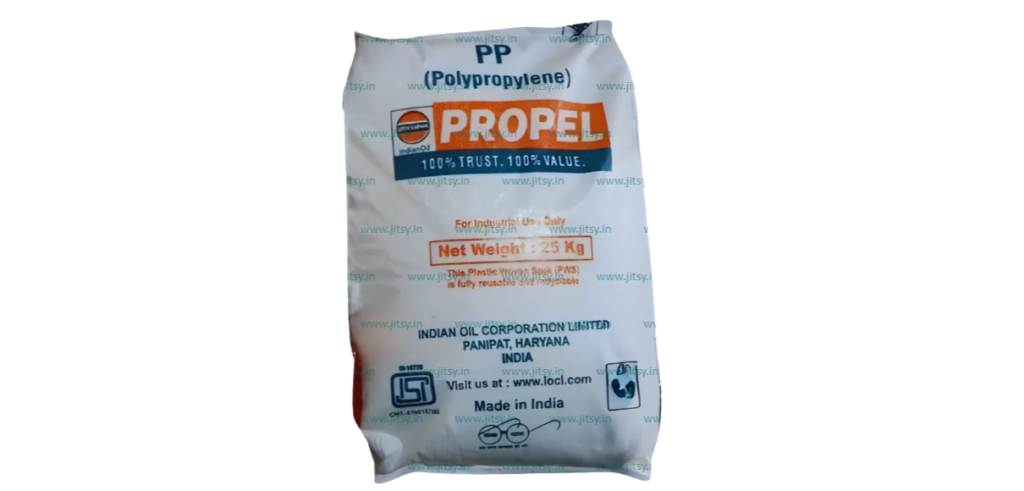
IOCL PPCP Propel 3030MG
Propel 3030MG is a medium-flow, high-impact polypropylene impact block copolymer (PPCP) from Indian Oil Corporation Ltd (IOCL), manufactured using Spheripol II technology. Designed for injection moulding, it delivers a reliable balance of impact strength and stiffness, making it ideal for automotive components, appliances, industrial parts, and caps & closures. As a prime, virgin PPCP 3.5 MFI grade, Propel 3030MG offers high-volume moulders repeatable performance, excellent surface finish, and consistent supply.
Technical Properties and Datasheet for Propel 3030MG
Typical Physical and Mechanical Properties
- Melt Flow Index (230°C/2.16kg):5 g/10 min
- Density:90 g/cm³
- Tensile strength at yield: 27 MPa
- Elongation at yield: 9%
- Flexural modulus: 1100 MPa
- Notched Izod impact (23°C): >150 J/m
- Heat deflection temp (0.46 N/mm²): 88°C
- Vicat softening point (10N): 150°C
Recommended Injection Moulding Conditions
- Melt temperature: 170–230°C
- Mold temperature: standard
- Storage: 25 kg bags, store below 50°C, process within 6 months for best results
Regulatory Information
Food-Contact and Regulatory Compliance
- Complies with IS 10910 (food, pharma, drinking water contact)
- Additives meet IS 10909 positive list
- Meets US FDA 21 CFR 177.1520 for specific food-contact applications
- Always confirm suitability for your process and end-use
Applications and Industry Use Cases of Propel 3030MG
Automotive Components and Under-Bonnet Parts
Propel 3030MG is trusted for interior trim, instrument-panel carriers, brackets, and fuse-box covers. Its >150 J/m impact and 1100 MPa modulus allow for stiff, impact-tolerant parts that withstand vibration and handling, while lightweight density helps reduce vehicle mass.Appliance and Consumer Product Housings
Used for housings and structural parts in washing machines, air-coolers, refrigerators, and vacuum cleaners, 3030MG’s chemical resistance and impact strength ensure durable, crack-resistant components that stand up to daily use and detergents.Industrial Components and Engineering Parts
Ideal for machine guards, technical mouldings, and brackets, Propel 3030MG’s flow and toughness support multi-cavity, complex part production with reliable snap-fit and hinge performance.Caps and Closures
Commonly used in beverage and personal-care caps, flip-tops, and threaded closures, 3030MG’s strength and stiffness support hinge designs and tamper-evident features, while PP’s chemical resistance allows safe use with a wide range of products.Performance Advantages of IOCL 3030MG vs Generic PPCP
- High impact resistance and useful stiffness for demanding parts
- Medium-flow MFI 3.5 for efficient processing and complex moulds
- Strong thermal performance with HDT 88°C and Vicat 150°C
- Excellent chemical resistance for appliance and industrial use
- Lightweight, recyclable, and batch-consistent for OEMs
