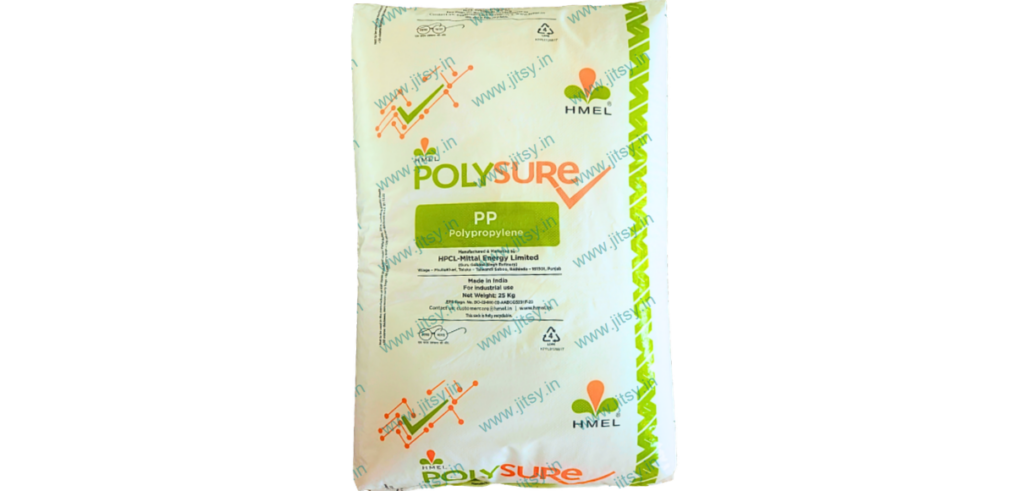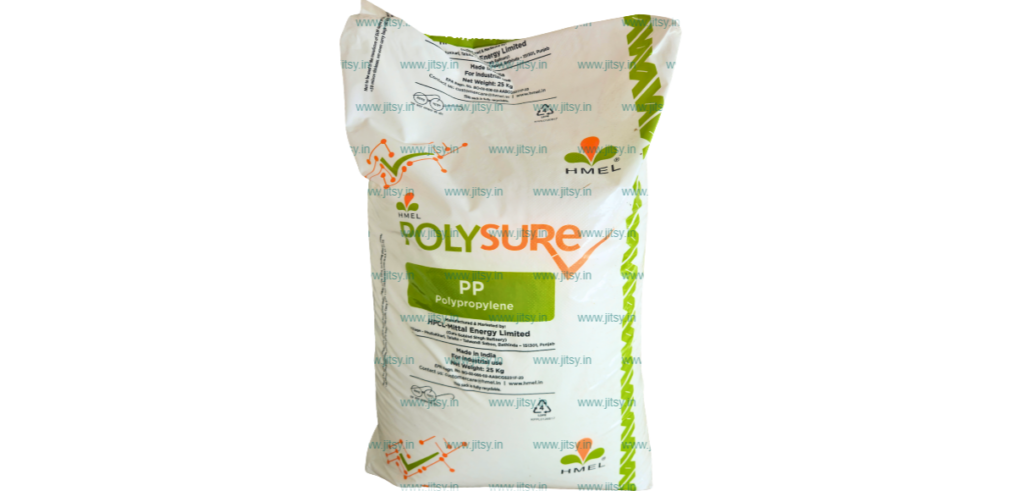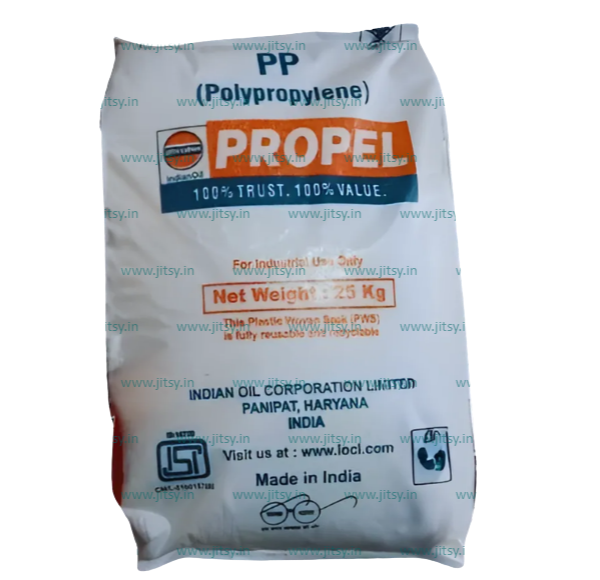
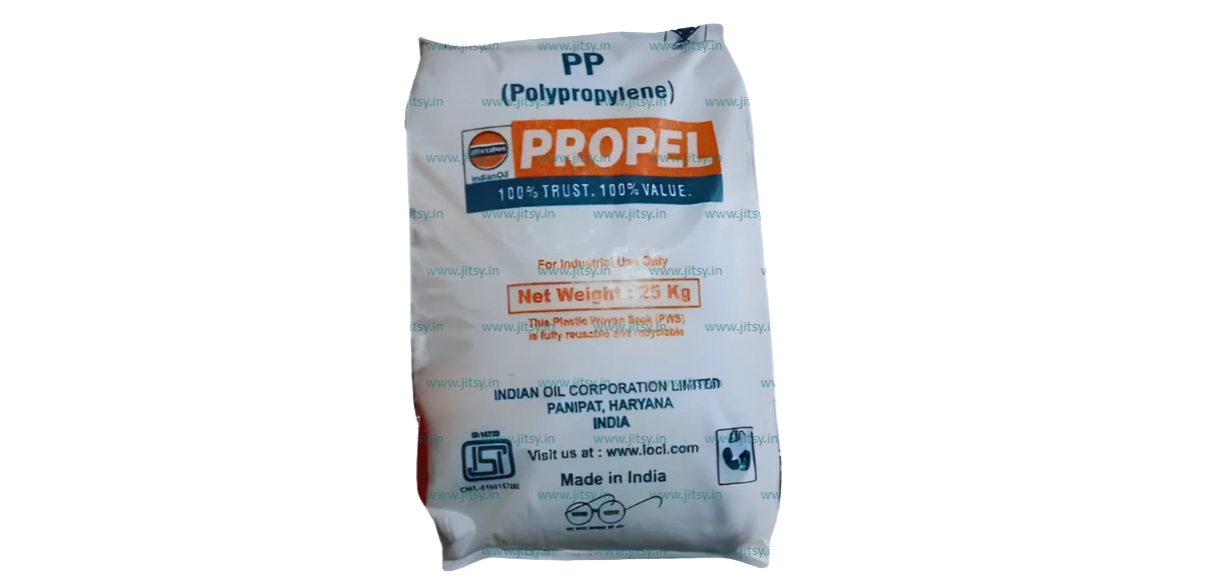
IOCL PP Propel P1070FG
IOCL PP Propel P1070FG is a virgin polypropylene homopolymer resin engineered specifically for high-performance film extrusion. Manufactured by Indian Oil Corporation Ltd within their specialized PROPEL petrochemical portfolio, this natural-colored grade is synthesized using state-of-the-art Spheripol II technology. The resulting molecular design delivers excellent structural uniformity, minimal gel presence, and consistent orientation kinetics crucial for high-speed biaxially oriented stretching processes.
Packaging converters and film engineers select P1070FG for its exceptional processing stability during high-draw biaxial orientation. The polymer architecture minimizes web breaks and structural defects during intensive machine-direction and transverse-direction stretching. This grade provides a reliable material base that yields films with exceptional clarity, high surface gloss, and strong barrier performance tailored for demanding packaging systems.
Technical Specifications of P1070FG
Technical Insights
- Melt Flow Index (MFI): Unverified for this specific grade in provisional documentation. The melt rheology is precisely controlled to support high-speed orientation without causing film web instability or premature necking at the die exit.
- Density: Unverified for this specific grade in current provisional documentation. Standard polypropylene homopolymers consistently settle near 0.90 g/cm³ under standard test conditions, maintaining a lightweight profile for maximum yield per kilogram.
- Mechanical Strength: Unverified for this specific grade in current provisional documentation. The material is molecularly tuned to balance directional tensile properties, ensuring excellent puncture resistance and high stiffness after orientation.
- Thermal Properties: Unverified for this specific grade in current provisional documentation. Crystallization parameters are optimized to enable wide processing windows and efficient thermal setting in film lines.
- Stated Processing Window: 220–280°C. This specific thermal profile ensures complete, homogeneous melting while preserving the molecular weight distribution needed for stable, continuous web production.
Applications and Use Cases
Co-Extruded and Metallisable BOPP Films
This grade serves as a premier raw material for manufacturing general-purpose co-extruded and metallisable Biaxially Oriented Polypropylene (BOPP) films. Its low water carry-over characteristics during extrusion prevent bubble voids and surface imperfections, making it ideal for base films requiring subsequent high-vacuum aluminum metallization.
Consumer and Industrial Flexible Packaging
Converters process this resin into specialized consumer packaging films, including textile wraps, food and biscuit packaging, and high-clarity cigarette overwraps. The excellent optical gloss and superior clarity maximize shelf appeal, while its high puncture resistance ensures product protection throughout automated logistics and high-speed overwrapping operations.
Pressure-Sensitive Adhesive Tapes
The mechanical stiffness and reliable tensile performance of oriented P1070FG make it highly suitable for industrial adhesive tape backing. The film exhibits uniform thickness and stable tracking during high-speed coating lines, yielding excellent dimensional stability under continuous mechanical tension.
Processing and Handling Guidelines
Sheet Extrusion and Biaxial Orientation
Extrusion setups must operate within the recommended temperature band of 220–280°C to achieve uniform plasticization without inducing thermal degradation. Fine-tuning the cooling rolls and quenching conditions is critical to controlling initial crystallinity, which directly influences the ease of subsequent stretching steps.
Packaging and Storage
The specific commercial packaging sizes and bag materials for P1070FG remain unverified in primary provisional documents. To preserve raw polymer integrity, granules must be kept in a dry, dust-free warehouse where storage temperatures are strictly maintained below 50°C. Protect the raw resin from direct sunlight and environmental moisture to avoid premature physical or chemical breakdown.
Compliance, Safety, and Regulatory Information
The base polymer configuration of this homopolymer resin is formulated to align with rigorous safety standards for materials in contact with food. It meets the non-toxic safety parameters required under Indian Standards IS 10910 and IS 10909, alongside international compliance alignments like US FDA CFR Title 21 177.1520, qualifying it for use in sensitive biscuit and food packaging wraps.
Comparable Grades in India
- IOCL 1030FG: A highly established domestic reference for BOPP film production. It is not an exact equivalent to P1070FG, as variations in melt index, additive packages, or production refinery locations may require parameter adjustments on high-speed extrusion lines.
- IOCL 1100FS: A dedicated Tubular Quenched Polypropylene (TQPP) film grade. It is not equivalent because it is formulated for downward blown-film water quenching rather than the sequential horizontal stretching lines utilized in BOPP processing.
- IOCL 1350EG: A specialized polyolefin lamination and coating grade. It is entirely non-equivalent due to its high-flow characteristics designed for extrusion coating rather than film orientation.
- Alternative Domestic Suppliers: Other major domestic polyolefin producers manufacture competitive homopolymer BOPP film resins. While these grades target similar end-use spaces, processing teams must cross-verify exact rheological profiles and web stabilities during physical line changeovers.
Common Search Variants
Generic Terms and Frequent Misspellings
Buyers frequently search for this resin using terms like PP H P1070FG, P1070FG PP granules, and polypropylene film grade P1070FG. Common clerical spelling errors in industrial inventory sheets include 1070fg, 1070-fg, p1070fg, and pp 1070f g
Key Features
Specifications
Need Technical guidance?
Why buy IOCL PP Propel P1070FG from JITSY?
- Direct import & verified sourcing
- Authorised channel–led supply
- Pan-India B2B delivery
- Transparent pricing & documentation
- Mobile app–enabled procurement
- Full compliance (RoHS, BIS/ISI, EPR, GST)
- Batch traceability
FAQs
Frequently Asked Questions
What makes IOCL PP Propel P1070FG ideal for high-speed BOPP film lines?
Can P1070FG be used for metallisable film applications?
How does this grade prevent moisture issues during extrusion?
Is this material safe for wrapping food items like biscuits?
Can I use P1070FG on standard blown film lines?
What is the recommended processing temperature for this grade?
How should raw P1070FG granules be stored to avoid degradation?
What Customers Say
You must be logged in to post a review.
Other Relevant Products Available in India
Related Articles
JITSY Microspheres Guide: Expandable vs Pre-Expanded — Which Format Suits Your Process?
Expandable microspheres are small hollow beads that have a thin shell made of plastic and contain a liquid core. The liquid vaporises, the bead expands and the shell expands

COA Is Not Enough: How JITSY Goes Beyond Certification in Polymer Sourcing
Expandable microspheres are small hollow beads that have a thin shell made of plastic and contain a liquid core. The liquid vaporises, the bead expands and the shell expands

JITSY EVA Grade Selector: What VA Content Actually Means for Your Product
Expandable microspheres are small hollow beads that have a thin shell made of plastic and contain a liquid core. The liquid vaporises, the bead expands and the shell expands

JITSY DCP Buyer’s Guide: How to Choose the Right Dicumyl Peroxide Grade
Expandable microspheres are small hollow beads that have a thin shell made of plastic and contain a liquid core. The liquid vaporises, the bead expands and the shell expands
Circular Economy & Recycling in the Plastic Raw Material Value Chain
Expandable microspheres are small hollow beads that have a thin shell made of plastic and contain a liquid core. The liquid vaporises, the bead expands and the shell expands

How EVA Foam Material Is Used in Footwear Manufacturing
Expandable microspheres are small hollow beads that have a thin shell made of plastic and contain a liquid core. The liquid vaporises, the bead expands and the shell expands
Complete Guide to EVA Materials: Grades, Applications & Selection Tips
Expandable microspheres are small hollow beads that have a thin shell made of plastic and contain a liquid core. The liquid vaporises, the bead expands and the shell expands

How EVA Improves Adhesion in Packaging and Assembly?
Expandable microspheres are small hollow beads that have a thin shell made of plastic and contain a liquid core. The liquid vaporises, the bead expands and the shell expands
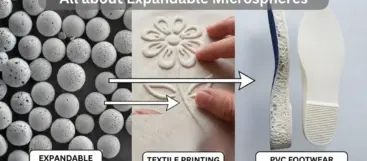
What Are Expandable Microspheres and How Are They Used in Textile Printing and PVC Footwear?
Expandable microspheres are small hollow beads that have a thin shell made of plastic and contain a liquid core. The liquid vaporises, the bead expands and the shell expands
How Small & Mid-Sized Manufacturers Can Compete Using Digital Procurement
Small and mid-sized manufacturers have never given up on competing. In the modern market, it is no longer sufficient to compete with the quality of the work and hard labour.

Why India Is Becoming a China+1 Option for Raw Material Sourcing
Businesses can no longer rely on a single nation. They currently diversify risk and seek partners who are stable. Meanwhile, the increased cost of labour in China.
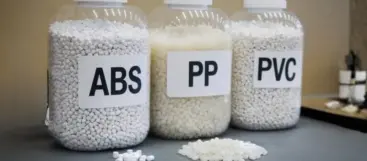
Choosing the Correct Polymer for Your Manufacturing Needs: ABS vs PP vs PVC
Confusion is common when manufacturers are considering ABS vs PP vs PVC. Different polymers are suitable for different applications, with specific pros and cons.
Top Procurement Mistakes Indian Manufacturers Make While Scaling
I have seen promising Indian manufacturers grow and then struggle during scaling. Often, success itself exposes operational cracks that were previously hidden.

Raw Materials Used in Toy Manufacturing: Safety, Compliance & Cost Factors
The materials used in toy manufacturing can impact the safety of children and the reputation of the company. There are multiple documented cases where improper material selection has led to recalls, litigation, and severe financial damage to toy manufacturers.
Choosing the Right Polymer Grades for Injection Molding
Purchasing the wrong polymer grade for injection molding can directly result in product failure, high rejection rates, or field performance issues. Different applications require vastly different material characteristics.

How Digital Procurement Platforms Reduce Raw Material Fraud
Raw material fraud is a frequent issue in conventional procurement. It usually happens due to the lack of supplier verification, the absence of records, and low levels of transparency. In manual systems, it is hard and time-consuming to keep track of materials.

Reviews
Clear filtersThere are no reviews yet.