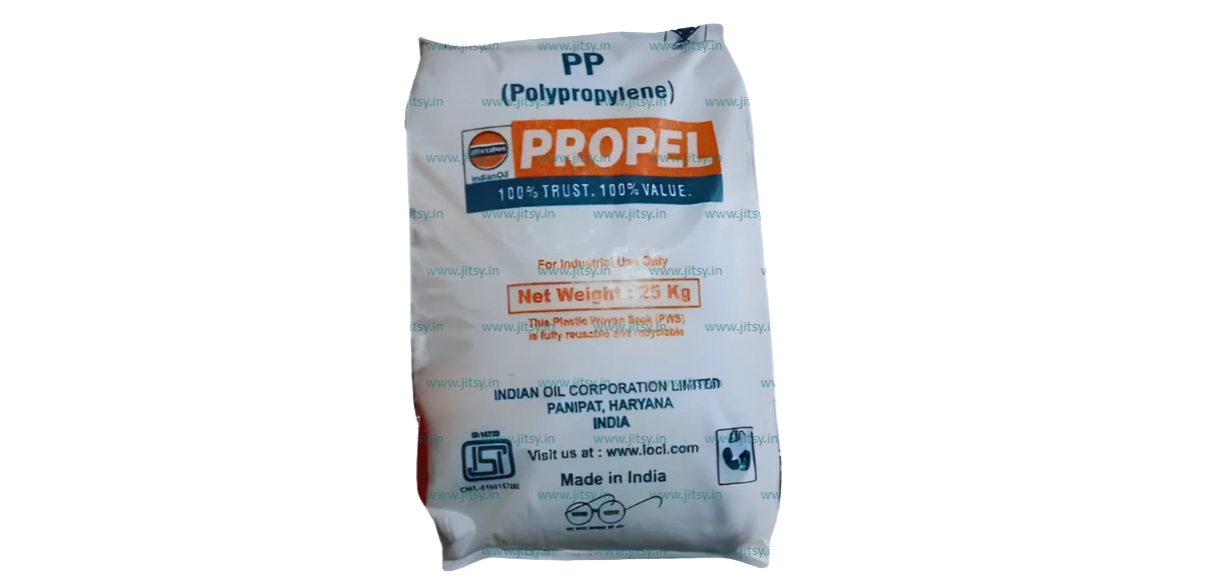
IOCL PP Propel P1060MG
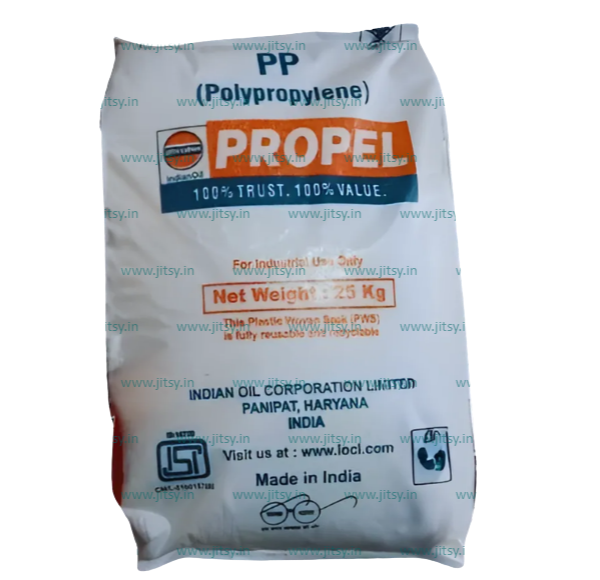
IOCL PP Propel P1060MG is a prime, virgin polypropylene homopolymer resin manufactured by Indian Oil Corporation Ltd. It is a natural-coloured plastic raw material produced using advanced Spheripol II technology, ensuring consistent polymer structure and uniform performance.
Industrial buyers and plastic engineers select this specific grade due to its excellent balance of high stiffness and reliable processability. It serves as an ideal choice for manufacturing durable household goods and rigid thin-walled containers. The resin fills a vital market gap for processors seeking low-warpage, high-rigidity final parts.
Technical Specifications of P1060MG
Resin and Rheological Properties
- Melt Flow Index (MFI): 6.0 g/10 min (Tested via ASTM D1238 at 230°C with a 2.16 kg load). This specific flow rate offers a well-balanced processing window, making the material versatile enough for both general-purpose injection moulding and uniform extrusion profiles.
- Density: 0.90 g/cm³ (Tested via ASTM D1505 at 23°C). The lightweight nature of this polymer allows manufacturers to produce lightweight parts without sacrificing physical structure or bulk volume.
Mechanical and Structural Strength
- Flexural Modulus: 1500 MPa (Tested via ASTM D790 at 1.3 mm/min). This high modulus indicates exceptional flexural stiffness, ensuring that molded containers and rigid structural parts resist bending under external mechanical loads.
- Tensile Strength at Yield: 35 MPa (Tested via ASTM D638 at 50 mm/min). High tensile yield strength allows finished plastic parts to withstand high structural stress and pull forces before suffering any permanent deformation.
- Elongation at Yield: 12% (Tested via ASTM D638 at 50 mm/min). A moderate elongation value guarantees the material maintains its structural shape under stress rather than stretching out or weakening.
- Notched Izod Impact Strength: 40 J/m (Tested via ASTM D256 at 23°C). This level of impact toughness protects rigid items against accidental drops and daily handling impacts at room temperature.
Thermal Characteristics
- Vicat Softening Point: 154°C (Tested via ASTM D1525 under a 10 N load). The elevated softening point protects molded articles from deformation during high-temperature washing or heat-sealing operations.
- Heat Deflection Temperature (HDT): 94°C (Tested via ASTM D648 at 0.46 N/mm²). A high HDT ensures the material retains its shape and structural integrity under moderate mechanical loads in warm environments.
Applications and Use Cases
Manufacturing Durable Household Articles
This grade is widely utilized for injection moulding high-quality household plastic items. The material delivers a glossy, aesthetic surface finish alongside structural strength for buckets, basins, storage bins, and kitchenware. Its high stiffness allows thin-walled domestic products to hold weight without bending out of shape.
Rigid Packaging and Thin-Walled Containers
The packaging sector utilizes this resin to produce durable, rigid containers and protective caps. The combination of an optimal 6.0 MFI and high tensile yield facilitates the rapid cycle moulding of lightweight structural walls. The finished packaging protects contents efficiently while maintaining stackability in warehouses.
Industrial Thermoforming and Extrusion
Extrusion processors utilize this polymer for sheet extrusion and subsequent thermoforming operations. The structural integrity of the melt ensures uniform sheet thickness during processing. The thermoformed components achieve sharp details, excellent dimensional stability, and high rigidity, which are vital for industrial trays and display components.
Processing and Handling Guidelines
Stated Processing Temperature Windows
The recommended processing temperature profile for this homopolymer ranges between 170°C and 230°C. Machine operators can easily fine-tune this temperature window across barrel zones depending on whether they are running thin-walled injection moulding cycles or steady profile extrusion lines.
Packaging and Storage
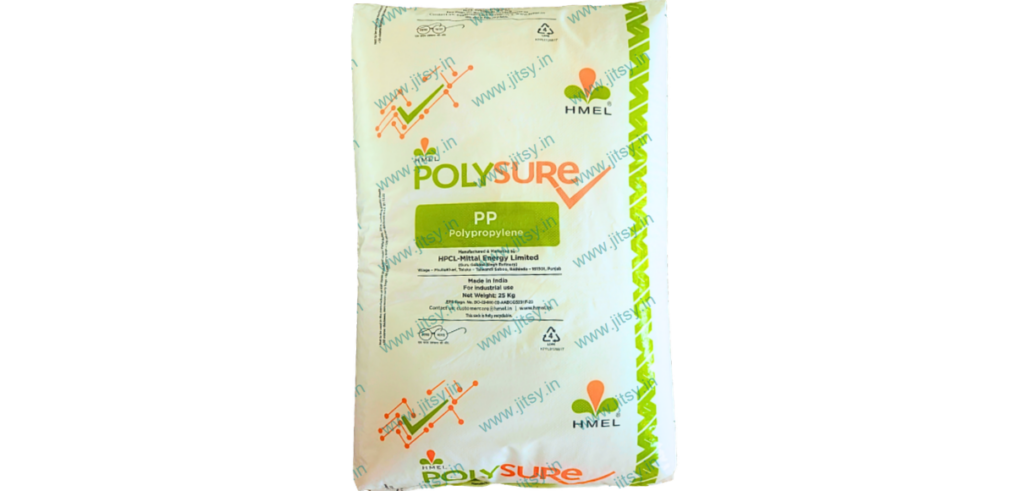
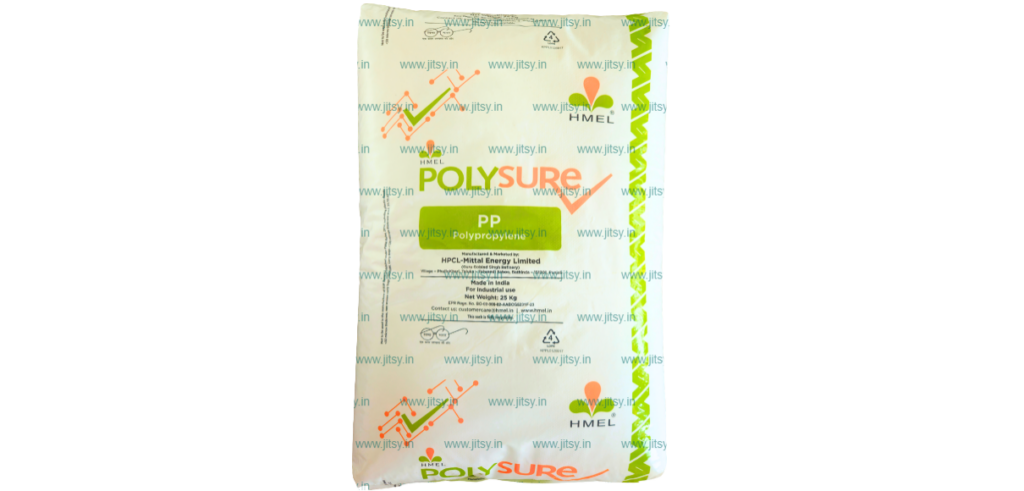
The resin is distributed strictly in durable raffia bags containing a net weight of 25.0 kg. Bags must be stored in dry, dust-free environments shielded from direct sunlight and moisture. The storage area ambient temperature must not exceed 50°C to prevent thermal degradation, and the material should ideally be processed within 6 months from delivery.
Compliance, Safety, and Regulatory Information
Food-Contact Compliance and Standards
This resin formulation complies with the strict food safety guidelines defined under Indian Standards IS 10910 and IS 10909. It also meets the international regulatory criteria set by the US FDA CFR Title 21 177.1520. This allows it to be safely utilized in direct food-contact packaging, food storage containers, and drinking water vessels.
Comparable Grades in India
Comparable IOCL and Non-IOCL Grades
- IOCL 1030MG: Belongs to the same homopolymer family but features a lower melt flow index. It is not a direct equivalent and is better suited for parts requiring higher melt strength rather than easy flow.
- IOCL 1110MG / 1110MAS: These variations offer a significantly higher melt flow profile. They are not direct equivalents and are customized for thin-wall high-speed injection moulding lines rather than high-stiffness thermoforming.
- IOCL 1200MG: Features an entirely different flow matrix designed for specialized moulding needs, making it non-equivalent for standard P1060MG setups.
- IOCL 1030FG: Formulated explicitly as a high-clarity film grade. It cannot be used as an equivalent substitute for rigid injection moulding or thermoforming applications.
- Alternative Domestic Suppliers: Other Indian petrochemical producers manufacture general-purpose PP homopolymer moulding grades with a 6.0 MFI. While functionally comparable for rigid articles, exact manufacturer equivalence must be independently revalidated before substitution.
Common Search Variants
Users searching for this raw material frequently use terms like PP H P1060MG, PP moulding P1060MG, P1060MG PP, and P1060 MG PP. Common misspellings found in market listings include 1060mg, 1060-mg, p1060mg, and pp 1060m g.
Need Technical guidance?
Why buy IOCL PP Propel P1060MG from JITSY?
- Direct import & verified sourcing
- Authorised channel–led supply
- Pan-India B2B delivery
- Transparent pricing & documentation
- Mobile app–enabled procurement
- Full compliance (RoHS, BIS/ISI, EPR, GST)
- Batch traceability
FAQs
Frequently Asked Questions
What is the primary processing application for IOCL PP Propel P1060MG?
Can this polypropylene grade be safely used for food packaging?
Can I substitute P1060MG directly with IOCL 1030MG?
What are the specific storage requirements for these granules?
What is the recommended melting temperature for processing this resin?
Is P1060MG suitable for outdoor applications with prolonged UV exposure?
What packaging size is available for industrial buyers?
What Customers Say
You must be logged in to post a review.
Other Relevant Products Available in India
Related Articles
Circular Economy & Recycling in the Plastic Raw Material Value Chain
Expandable microspheres are small hollow beads that have a thin shell made of plastic and contain a liquid core. The liquid vaporises, the bead expands and the shell expands

How EVA Foam Material Is Used in Footwear Manufacturing
Expandable microspheres are small hollow beads that have a thin shell made of plastic and contain a liquid core. The liquid vaporises, the bead expands and the shell expands

Complete Guide to EVA Materials: Grades, Applications & Selection Tips
Expandable microspheres are small hollow beads that have a thin shell made of plastic and contain a liquid core. The liquid vaporises, the bead expands and the shell expands

How EVA Improves Adhesion in Packaging and Assembly?
Expandable microspheres are small hollow beads that have a thin shell made of plastic and contain a liquid core. The liquid vaporises, the bead expands and the shell expands
What Are Expandable Microspheres and How Are They Used in Textile Printing and PVC Footwear?
Expandable microspheres are small hollow beads that have a thin shell made of plastic and contain a liquid core. The liquid vaporises, the bead expands and the shell expands

How Small & Mid-Sized Manufacturers Can Compete Using Digital Procurement
Small and mid-sized manufacturers have never given up on competing. In the modern market, it is no longer sufficient to compete with the quality of the work and hard labour.
Why India Is Becoming a China+1 Option for Raw Material Sourcing
Businesses can no longer rely on a single nation. They currently diversify risk and seek partners who are stable. Meanwhile, the increased cost of labour in China.
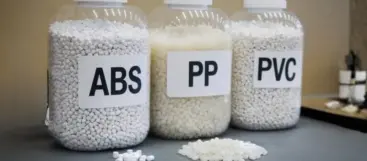
Choosing the Correct Polymer for Your Manufacturing Needs: ABS vs PP vs PVC
Confusion is common when manufacturers are considering ABS vs PP vs PVC. Different polymers are suitable for different applications, with specific pros and cons.
Top Procurement Mistakes Indian Manufacturers Make While Scaling
I have seen promising Indian manufacturers grow and then struggle during scaling. Often, success itself exposes operational cracks that were previously hidden.

Raw Materials Used in Toy Manufacturing: Safety, Compliance & Cost Factors
The materials used in toy manufacturing can impact the safety of children and the reputation of the company. There are multiple documented cases where improper material selection has led to recalls, litigation, and severe financial damage to toy manufacturers.
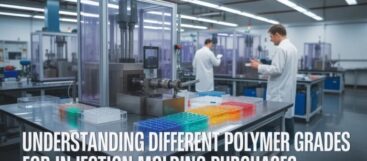
Choosing the Right Polymer Grades for Injection Molding
Purchasing the wrong polymer grade for injection molding can directly result in product failure, high rejection rates, or field performance issues. Different applications require vastly different material characteristics.

How Digital Procurement Platforms Reduce Raw Material Fraud
Raw material fraud is a frequent issue in conventional procurement. It usually happens due to the lack of supplier verification, the absence of records, and low levels of transparency. In manual systems, it is hard and time-consuming to keep track of materials.
How Crude Oil Prices Impact Plastic Raw Material Costs in India
Crude oil plays a powerful role in the worldwide plastic industry & India is no exception. Most of the plastic raw materials, like PE, PP, and PVC, are extracted from petrochemicals sourced from crude oil.
The Great Procurement Divide: Why Your Best Engineers Make Your Worst Buyers
Walk into any manufacturing facility across India—from PVC pipe makers in Gujarat to automotive component manufacturers in Chennai—and you’ll hear this logic echoed in boardrooms and production floors alike.
Copy-Paste vs. Innovation
Is playing it safe actually the riskiest strategy? The uncomfortable truth about innovation avoidance in Indian manufacturing
The Credit Cycle Shift: Why 30-Day Payments Are Winning Hearts (and Wallets)
If you’ve ever done business in India, you know this vibe. Long credit terms weren’t just about money—they were about trust, connection, and that warm cup of chai shared over a handshake deal. You’d walk into your supplier’s office, chat about life, and walk out with goods worth lakhs, no questions asked.

Reviews
Clear filtersThere are no reviews yet.