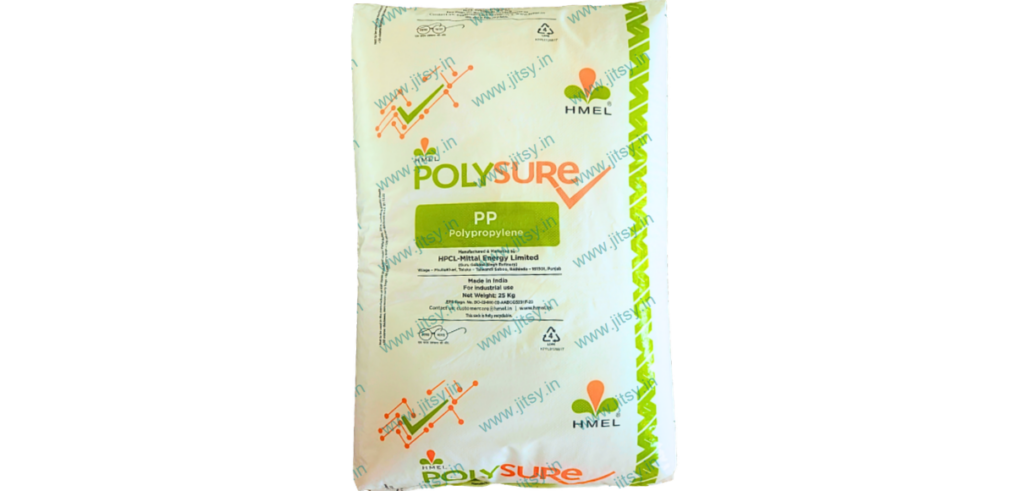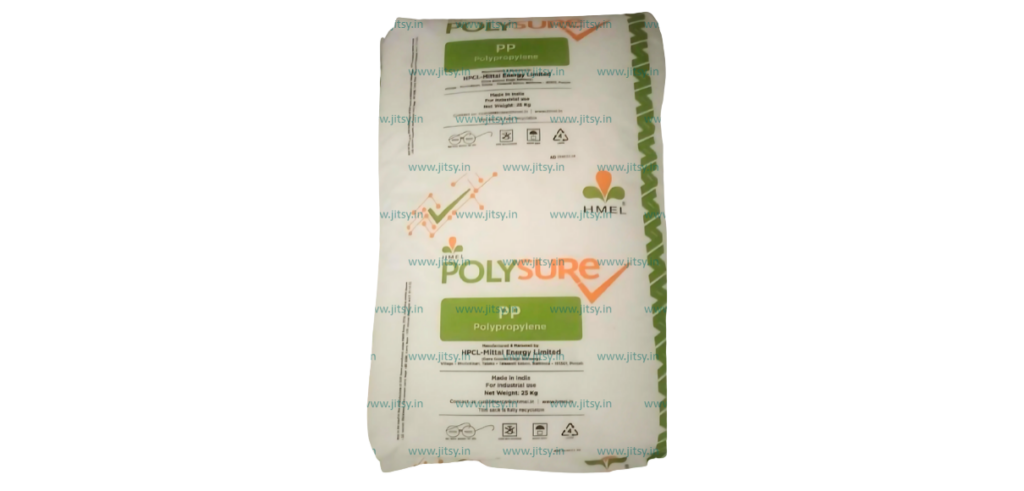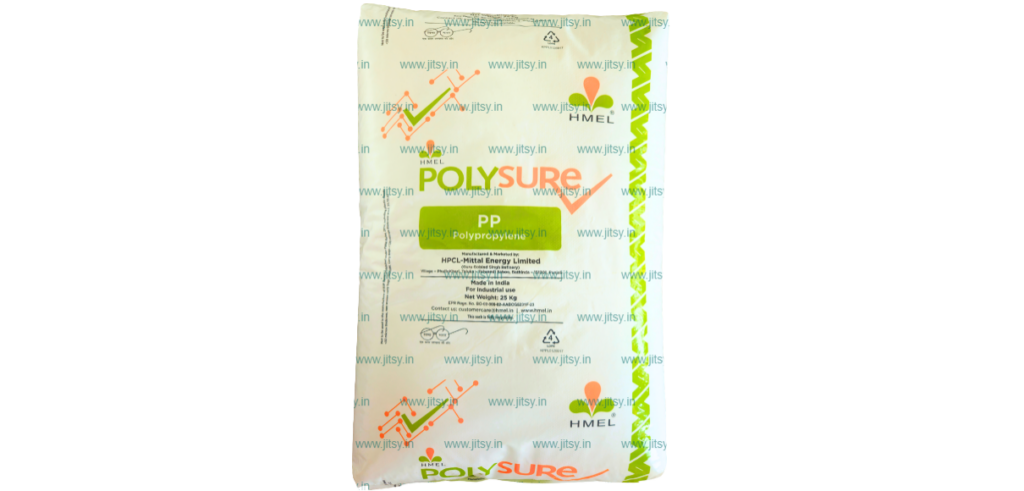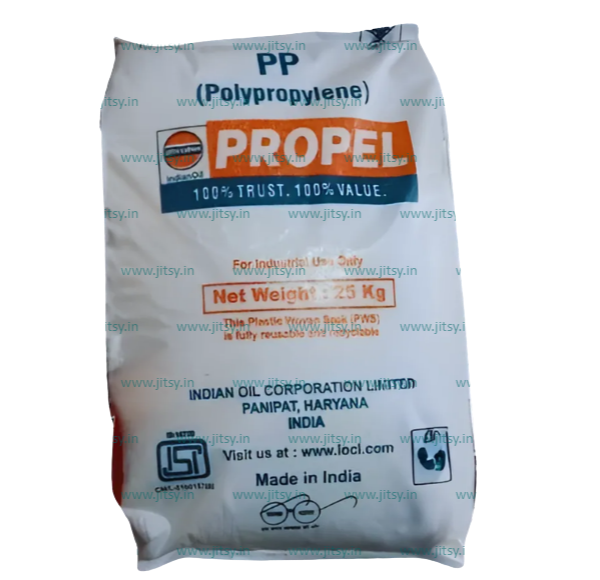
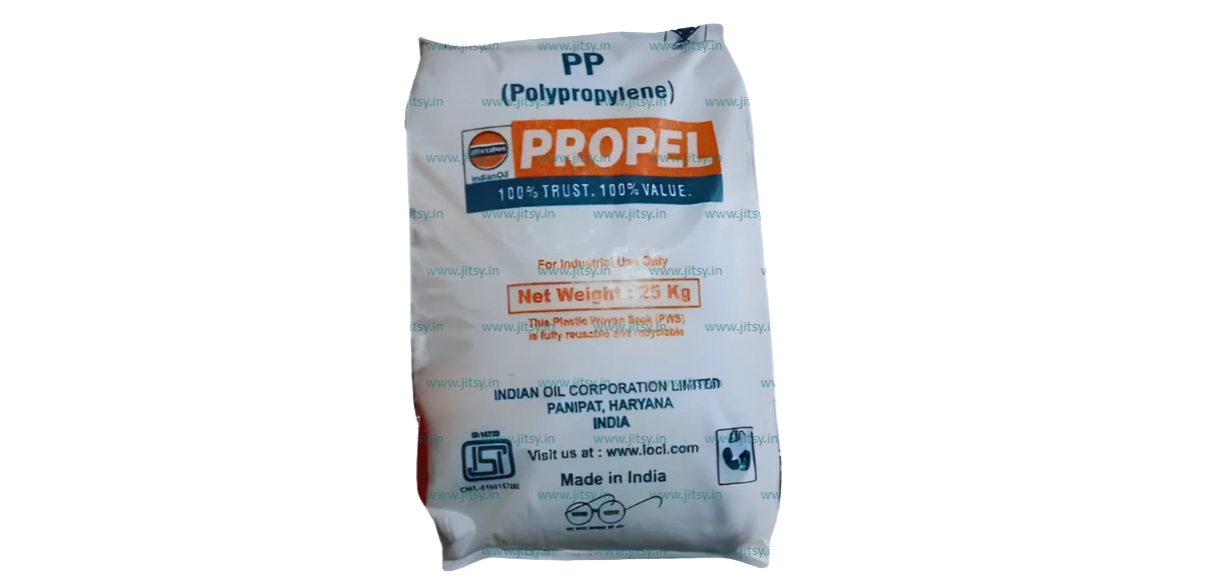
IOCL PP Propel 1350YG
IOCL PP Propel 1350YG is a prime, virgin polypropylene homopolymer resin from Indian Oil Corporation Ltd’s high-performance PROPEL petrochemical portfolio. Synthesized utilizing advanced Spheripol II technology, this natural-colored material features high isotacticity and an extremely uniform structural makeup. This exact molecular arrangement provides high polymer crystallinity, yielding fibers with predictable mechanical limits and dependable structural integrity during fast drawing.
Technical directors and nonwoven plant managers specify this grade due to its high flow kinetics and excellent thermal stability. The chemical formulation contains an optimized melt processability package that limits thermal fracturing and prevents polymer pooling at the die. This design allows operators to maximize spinning throughput speeds while minimizing line blockages, leading to uniform web distribution across large production runs.
Technical Specifications of 1350YG
Resin and Rheological Properties
- Melt Flow Index (MFI): 35.0 g/10 min (Tested via ASTM D1238 at 230°C with a 2.16 kg load). An elevated flow index of 35 indicates low melt viscosity under dynamic pressure. This high fluid mobility allows the polymer to pass easily through dense spinneret micro-holes, making it ideal for thin web formation.
- Density: Unverified for this specific grade in current documentation; standard homopolymer variations generally mirror 0.90 g/cm³ when measured using official ASTM D1505 protocols.
Mechanical and Impact Properties
- Tensile Strength at Yield: 36.0 MPa (Tested via ASTM D638 at 50 mm/min). This rating indicates the material has high resistance to stretching. It enables fine filaments to endure significant drawing tensions without experiencing structural thinning or line failures.
- Flexural Modulus: 1200 MPa (Tested via ASTM D790 at 1.3 mm/min). This moderate stiffness level provides a soft texture while maintaining sufficient structural strength, helping lightweight nonwoven products resist collapsing under load.
- Elongation at Yield: 11.0% (Tested via ASTM D638 at 50 mm/min). This performance parameter ensures that the cooling strands maintain enough elastic flex to adapt to sudden changes on high-speed pull rollers, preventing web tears.
- Notched Izod Impact Strength: 20 J/m (Tested via ASTM D256 at 23°C). This toughness value ensures that finished nonwoven webs can withstand dynamic handling pressures during slitting, winding, and automated packing.
Thermal Properties
- Heat Deflection Temperature (HDT): 85°C (Tested via ASTM D648 at 0.46 N/mm²). This structural metric confirms that the fiber network maintains its shape in hot storage setups or under thermal processing conditions up to 85°C.
- Vicat Softening Point: 150°C (Tested via ASTM D1525 under a 10 N load). This broad thermal parameter provides a reliable calendar bonding window, allowing for clean thermofusion without melting the core fiber filaments.
Applications and Use Cases
Spunbond Nonwoven Fabric Production
This material is explicitly designed for high-capacity spunbond nonwoven manufacturing lines. Its low melt viscosity ensures a steady, pulse-free feed through the extrusion head, allowing the extruded filaments to be drawn thin by high-velocity air streams. The resulting fabric webs provide uniform density and excellent coverage, making them ideal for hygiene products, protective apparel, and filtration media.
Fine Denier Multifilament Yarns
Industrial spinners specify this polymer to extrude fine denier multifilament yarns used in performance textiles. The high melt flow index of 35 allows for clean extrusion through fine-gauge spinnerets without creating high backpressure. This uniform strand formation yields soft, high-tenacity yarns suitable for technical webbings, sewing threads, and lightweight upholstery fabrics.
Processing and Handling Guidelines
Stated Processing Temperature Windows
The manufacturer-stated processing temperature window for this high-flow grade is set between 170°C and 230°C. Maintaining the extrusion barrel within this thermal range ensures complete melting and uniform viscosity, while fully protecting the polymer from premature thermal oxidation.
Storage and Handling
The material is distributed in heavy-duty 25.0 kg bags. To preserve the resin’s properties, store the bags indoors within a dry, dust-free warehouse where ambient temperatures do not exceed 50°C. Protect the pallets from direct sunlight and heat, and process the inventory within 6 months of delivery to ensure optimal spinning performance.
Compliance, Safety, and Regulatory Information
Food-Contact Compliance and Standards
The chemical composition of this homopolymer grade meets the non-toxic plastics criteria defined in Indian Standards IS 10910 and IS 10909. It also complies with the international parameters regulated by US FDA CFR Title 21 177.1520. This formal compliance ensures that fabrics produced from this resin are safe for direct contact food wrapping and personal care products.
Comparable Grades in India
- IOCL 1200YG: A dedicated fiber grade with an MFI of 20. It is designed for heavier multifilament yarns and staple fibers, meaning it lacks the high flow performance required for lightweight spunbond nonwovens.
- IOCL 1100FS: A specialized TQPP film grade with an MFI of 11. It contains slip and antiblock additives designed for packaging films, making it unsuitable for fiber spinning.
- IOCL 1350EG: A dedicated extrusion coating and lamination grade. Although it shares a high melt flow profile, it is formulated for thin coating adhesion on substrates rather than freestanding fiber spinning.
- Alternative Domestic Suppliers: Other Indian polymer producers manufacture alternative 35 MFI homopolymers for nonwovens. While these substitutes offer similar performance, processing teams should verify melt drawability and calendar response before changing feeds.
Generic Terms and Frequent Misspellings
Industrial sourcing buyers search for this grade using terms like PP H 1350YG, PP fiber 1350YG, 1350YG PP, and 1350 YG PP. Common typographical variations found in supply databases include 1350yg, 1350-yg, p1350yg, and pp 1350y g.
Specifications
Need Technical guidance?
Why buy IOCL PP Propel 1350YG from JITSY?
- Direct import & verified sourcing
- Authorised channel–led supply
- Pan-India B2B delivery
- Transparent pricing & documentation
- Mobile app–enabled procurement
- Full compliance (RoHS, BIS/ISI, EPR, GST)
- Batch traceability
FAQs
Frequently Asked Questions
What is the primary difference between the 1350YG and 1200YG polymer grades?
Why is an MFI of 35 critical for high-speed spunbond manufacturing?
Can IOCL PP Propel 1350YG be utilized for extrusion lamination?
Is this homopolymer grade safe for manufacturing medical hygiene products?
What processing issues occur if the extrusion temperature exceeds 230°C?
Does this grade contain any built-in slip or antiblock additives?
What is the exact packaging structure for commercial delivery of this grade?
What Customers Say
You must be logged in to post a review.
Other Relevant Products Available in India
Related Articles
JITSY Microspheres Guide: Expandable vs Pre-Expanded — Which Format Suits Your Process?
Expandable microspheres are small hollow beads that have a thin shell made of plastic and contain a liquid core. The liquid vaporises, the bead expands and the shell expands

COA Is Not Enough: How JITSY Goes Beyond Certification in Polymer Sourcing
Expandable microspheres are small hollow beads that have a thin shell made of plastic and contain a liquid core. The liquid vaporises, the bead expands and the shell expands

JITSY EVA Grade Selector: What VA Content Actually Means for Your Product
Expandable microspheres are small hollow beads that have a thin shell made of plastic and contain a liquid core. The liquid vaporises, the bead expands and the shell expands

JITSY DCP Buyer’s Guide: How to Choose the Right Dicumyl Peroxide Grade
Expandable microspheres are small hollow beads that have a thin shell made of plastic and contain a liquid core. The liquid vaporises, the bead expands and the shell expands
Circular Economy & Recycling in the Plastic Raw Material Value Chain
Expandable microspheres are small hollow beads that have a thin shell made of plastic and contain a liquid core. The liquid vaporises, the bead expands and the shell expands

How EVA Foam Material Is Used in Footwear Manufacturing
Expandable microspheres are small hollow beads that have a thin shell made of plastic and contain a liquid core. The liquid vaporises, the bead expands and the shell expands
Complete Guide to EVA Materials: Grades, Applications & Selection Tips
Expandable microspheres are small hollow beads that have a thin shell made of plastic and contain a liquid core. The liquid vaporises, the bead expands and the shell expands

How EVA Improves Adhesion in Packaging and Assembly?
Expandable microspheres are small hollow beads that have a thin shell made of plastic and contain a liquid core. The liquid vaporises, the bead expands and the shell expands

What Are Expandable Microspheres and How Are They Used in Textile Printing and PVC Footwear?
Expandable microspheres are small hollow beads that have a thin shell made of plastic and contain a liquid core. The liquid vaporises, the bead expands and the shell expands
How Small & Mid-Sized Manufacturers Can Compete Using Digital Procurement
Small and mid-sized manufacturers have never given up on competing. In the modern market, it is no longer sufficient to compete with the quality of the work and hard labour.

Why India Is Becoming a China+1 Option for Raw Material Sourcing
Businesses can no longer rely on a single nation. They currently diversify risk and seek partners who are stable. Meanwhile, the increased cost of labour in China.
Choosing the Correct Polymer for Your Manufacturing Needs: ABS vs PP vs PVC
Confusion is common when manufacturers are considering ABS vs PP vs PVC. Different polymers are suitable for different applications, with specific pros and cons.
Top Procurement Mistakes Indian Manufacturers Make While Scaling
I have seen promising Indian manufacturers grow and then struggle during scaling. Often, success itself exposes operational cracks that were previously hidden.

Raw Materials Used in Toy Manufacturing: Safety, Compliance & Cost Factors
The materials used in toy manufacturing can impact the safety of children and the reputation of the company. There are multiple documented cases where improper material selection has led to recalls, litigation, and severe financial damage to toy manufacturers.

Choosing the Right Polymer Grades for Injection Molding
Purchasing the wrong polymer grade for injection molding can directly result in product failure, high rejection rates, or field performance issues. Different applications require vastly different material characteristics.

How Digital Procurement Platforms Reduce Raw Material Fraud
Raw material fraud is a frequent issue in conventional procurement. It usually happens due to the lack of supplier verification, the absence of records, and low levels of transparency. In manual systems, it is hard and time-consuming to keep track of materials.

Reviews
Clear filtersThere are no reviews yet.