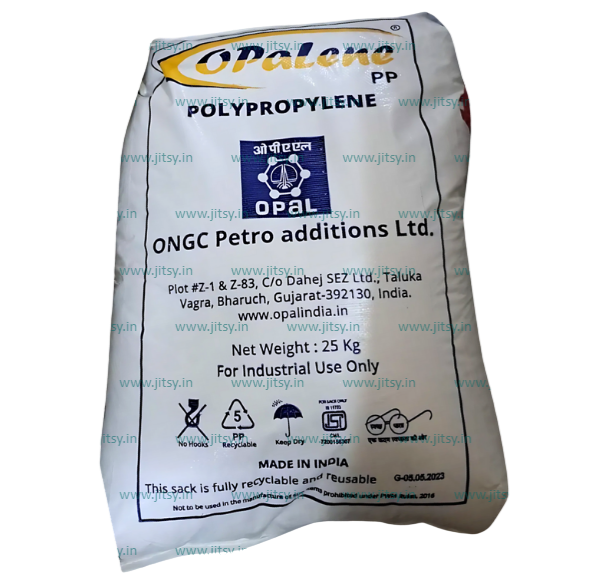
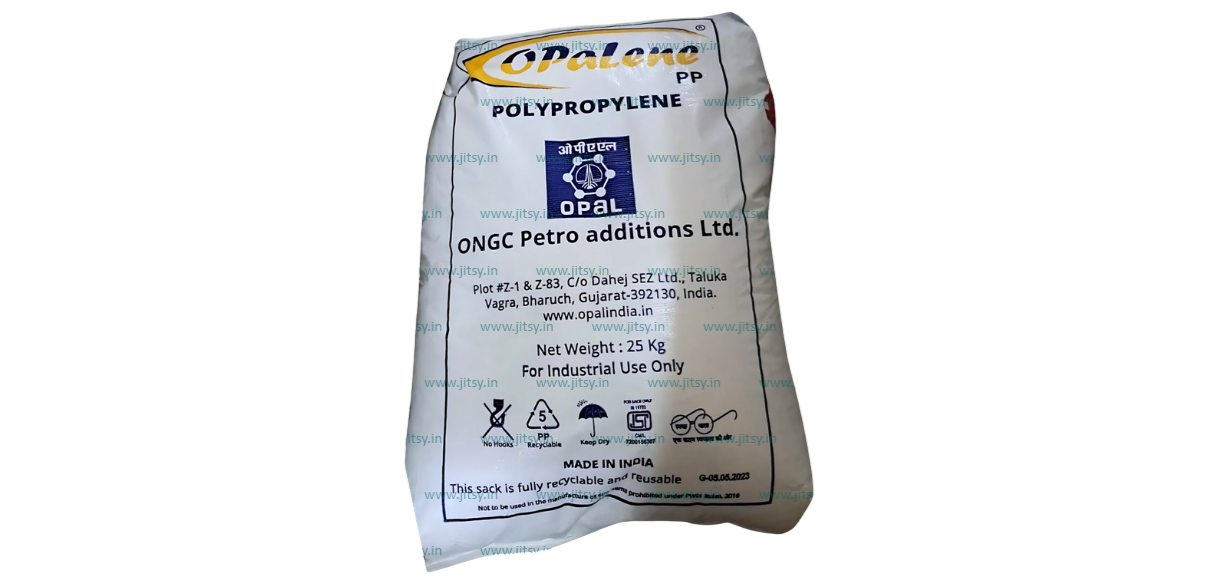
OPAL PP Opalene RH25X
OPAL PP Opalene RH25X is a polypropylene homopolymer fibers and filaments grade manufactured by ONGC Petro Additions Ltd. under the OPaLene PP brand. Developed using Ineos gas phase polymerization technology, this natural-colored high-performance resin is designed for multi filament yarns, fine denier staple fibers, and spun bond non-woven applications. The grade is positioned for processors who need strong spinning performance, reliable resin consistency, and stable output across demanding fiber conversion lines.
ONGC Petro Additions Ltd. is a recognized Indian petrochemical manufacturer with an established polypropylene portfolio supported by official technical data sheets and food-contact declarations. For buyers searching for Opalene RH25X supplier India, RH25X PP fiber grade, or polypropylene homopolymer for spunbond nonwoven, this grade stands out for its combination of processability, strength, resin purity, and anti-gas fading performance.
A key commercial advantage of RH25X is its anti-gas fading property. In practical terms, this helps support appearance stability in finished fiber-based products where discoloration risk can affect acceptance in the market. Combined with good mechanical strength and balanced stiffness, RH25X is a strong fit for manufacturers looking for a PP homopolymer grade for multi filament yarns, fine denier staple fibers, and spunbond nonwoven structures.
OPAL PP Opalene RH25X has a melt flow index of 25 g/10 min at 230°C/2.16 kg, making it suitable for higher-speed fiber and filament processing where flow consistency is important. The density is 0.90 g/cm³, which aligns with polypropylene homopolymer characteristics expected in fiber-grade applications.
From a mechanical standpoint, RH25X offers tensile strength at yield of 35 MPa, elongation at break of 20%, and flexural modulus of 1450 MPa. This property balance supports fiber formation with useful stiffness and strength, helping converters target stable processing and dependable end-product performance. The grade also shows notched Izod impact strength of 20 J/m at 23°C and Rockwell hardness of 95 on the R scale, indicating a robust homopolymer profile for industrial fiber applications.
Thermally, the heat deflection temperature is 100°C, which supports processing environments where dimensional and thermal behavior matter during conversion. The technical strength of RH25X lies not in optical film performance but in its suitability for fiber spinning, staple fiber production, and spunbond nonwoven manufacturing where resin uniformity, throughput, and consistent output are commercially critical.
Applications
Multi Filament Yarns
OPAL PP Opalene RH25X is well suited for multi filament yarn production where processors need a polypropylene homopolymer grade with smooth flow, good spinning behavior, and reliable strength. Its high-flow profile and resin uniformity help support stable extrusion conditions, making it relevant for industrial yarn manufacturers focused on output consistency and reduced variation across batches.
Fine Denier Staple Fibers
For fine denier staple fibers, RH25X offers a balanced combination of processability, strength, and purity. These characteristics are important in applications where fiber quality, consistency, and appearance matter during downstream conversion. The anti-gas fading property also adds practical value in staple fiber applications where long-term visual stability can influence product acceptance.
Spunbond Nonwoven
RH25X is also positioned for spun bond non-woven applications, making it relevant for nonwoven producers serving hygiene, industrial textile, filtration, and packaging-related segments. Its fiber-oriented processing profile supports high-performance conversion, while the resin’s uniformity helps manufacturers maintain more dependable line behavior and product consistency in spunbond structures.
Industrial Fiber and Nonwoven Processing
Across fiber and nonwoven industries, RH25X fits buyers looking for a PP grade for spunbond nonwoven, PP raw material for staple fiber, and polypropylene grade for filament extrusion. Its technical profile makes it especially relevant where production efficiency, stable resin behavior, and commercially acceptable finished output are key purchasing criteria.
Comparable Alternatives
Within the OPaL portfolio, RH25X sits in a fiber and filament-focused position with clear relevance for multi filament yarns, fine denier staple fibers, and spunbond nonwovens. Compared with OPaL RH03, RH25X is the more suitable choice when the application is centered on fiber spinning rather than stretched tapes, raffia-style structures, or woven industrial packaging. RH03 is more tape-oriented, while RH25X is better aligned to yarn and nonwoven processing.
Compared with OPaL RH38, RH25X appears better suited when buyers want a balanced high-flow fiber grade for multi filament yarns and staple fibers along with spunbond use. RH38 is closer to higher-flow, high-speed spunbond and fine denier fiber requirements, so substitution should be evaluated based on line speed, denier targets, and the dominance of spunbond versus yarn applications.
The rationale behind RH25X is clear: it is assigned as a polypropylene homopolymer grade for processors who need a commercially balanced combination of processability, strength, purity, uniformity, and anti-gas fading performance. For buyers validating alternatives in India, RH25X should be considered when the requirement is not general PP molding or film use, but a dedicated PP fiber grade with manufacturer-backed application positioning.
Specifications
Need Technical guidance?
Why buy OPAL PP Opalene RH25X from JITSY?
- Direct import & verified sourcing
- Authorised channel–led supply
- Pan-India B2B delivery
- Transparent pricing & documentation
- Mobile app–enabled procurement
- Full compliance (RoHS, BIS/ISI, EPR, GST)
- Batch traceability
FAQs
Frequently Asked Questions
Is OPAL PP Opalene RH25X a homopolymer grade?
What is RH25X mainly used for?
Is RH25X suitable for spunbond nonwoven production?
What makes RH25X different from regular PP grades?
How does RH25X compare with OPaL RH03?
Why is anti-gas fading important in RH25X?
What should processors keep in mind while storing RH25X?
What Customers Say
You must be logged in to post a review.
Other Relevant Products Available in India
Related Articles
JITSY Microspheres Guide: Expandable vs Pre-Expanded — Which Format Suits Your Process?
Expandable microspheres are small hollow beads that have a thin shell made of plastic and contain a liquid core. The liquid vaporises, the bead expands and the shell expands

COA Is Not Enough: How JITSY Goes Beyond Certification in Polymer Sourcing
Expandable microspheres are small hollow beads that have a thin shell made of plastic and contain a liquid core. The liquid vaporises, the bead expands and the shell expands

JITSY EVA Grade Selector: What VA Content Actually Means for Your Product
Expandable microspheres are small hollow beads that have a thin shell made of plastic and contain a liquid core. The liquid vaporises, the bead expands and the shell expands

JITSY DCP Buyer’s Guide: How to Choose the Right Dicumyl Peroxide Grade
Expandable microspheres are small hollow beads that have a thin shell made of plastic and contain a liquid core. The liquid vaporises, the bead expands and the shell expands
Circular Economy & Recycling in the Plastic Raw Material Value Chain
Expandable microspheres are small hollow beads that have a thin shell made of plastic and contain a liquid core. The liquid vaporises, the bead expands and the shell expands

How EVA Foam Material Is Used in Footwear Manufacturing
Expandable microspheres are small hollow beads that have a thin shell made of plastic and contain a liquid core. The liquid vaporises, the bead expands and the shell expands
Complete Guide to EVA Materials: Grades, Applications & Selection Tips
Expandable microspheres are small hollow beads that have a thin shell made of plastic and contain a liquid core. The liquid vaporises, the bead expands and the shell expands

How EVA Improves Adhesion in Packaging and Assembly?
Expandable microspheres are small hollow beads that have a thin shell made of plastic and contain a liquid core. The liquid vaporises, the bead expands and the shell expands

What Are Expandable Microspheres and How Are They Used in Textile Printing and PVC Footwear?
Expandable microspheres are small hollow beads that have a thin shell made of plastic and contain a liquid core. The liquid vaporises, the bead expands and the shell expands
How Small & Mid-Sized Manufacturers Can Compete Using Digital Procurement
Small and mid-sized manufacturers have never given up on competing. In the modern market, it is no longer sufficient to compete with the quality of the work and hard labour.

Why India Is Becoming a China+1 Option for Raw Material Sourcing
Businesses can no longer rely on a single nation. They currently diversify risk and seek partners who are stable. Meanwhile, the increased cost of labour in China.
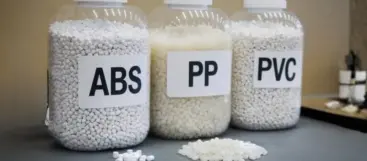
Choosing the Correct Polymer for Your Manufacturing Needs: ABS vs PP vs PVC
Confusion is common when manufacturers are considering ABS vs PP vs PVC. Different polymers are suitable for different applications, with specific pros and cons.

Top Procurement Mistakes Indian Manufacturers Make While Scaling
I have seen promising Indian manufacturers grow and then struggle during scaling. Often, success itself exposes operational cracks that were previously hidden.

Raw Materials Used in Toy Manufacturing: Safety, Compliance & Cost Factors
The materials used in toy manufacturing can impact the safety of children and the reputation of the company. There are multiple documented cases where improper material selection has led to recalls, litigation, and severe financial damage to toy manufacturers.

Choosing the Right Polymer Grades for Injection Molding
Purchasing the wrong polymer grade for injection molding can directly result in product failure, high rejection rates, or field performance issues. Different applications require vastly different material characteristics.

How Digital Procurement Platforms Reduce Raw Material Fraud
Raw material fraud is a frequent issue in conventional procurement. It usually happens due to the lack of supplier verification, the absence of records, and low levels of transparency. In manual systems, it is hard and time-consuming to keep track of materials.

Reviews
Clear filtersThere are no reviews yet.