




Brand
 Bhansali Engineering Polymers LimitedBhansali Engineering Polymers Limited 3
 Borouge Pte LtdBorouge Pte Ltd 1
 Dongsung ChemicalDongsung Chemical 2
 Dow-MitsuiDow-Mitsui 4
 FPC Formosa Plastics CorporationFPC Formosa Plastics Corporation 1
 Gail India LimitedGail India Limited 32
 Haldia Petrochemicals LtdHaldia Petrochemicals Ltd 25
 Hanwha Solutions ChemicalHanwha Solutions Chemical 4
 Hanwha Total Energies PetrochemicalHanwha Total Energies Petrochemical 7
 HMEL - HPCL-Mittal Energy LimitedHMEL - HPCL-Mittal Energy Limited 55
 IOCL - Indian Oil Corporation LimitedIOCL - Indian Oil Corporation Limited 71
 Jiangsu Daoming Chemical Co LtdJiangsu Daoming Chemical Co Ltd 2
 LG ChemLG Chem 8
 Lotte ChemicalLotte Chemical 4
 LyondellBasell Industries NVLyondellBasell Industries NV 1
 Mangalore Refinery & Petrochemicals LimitedMangalore Refinery & Petrochemicals Limited 7
 Marcopolo International LLCMarcopolo International LLC 2
 Nouryon Functional ChemicalsNouryon Functional Chemicals 8
 ONGC Petro Additions LtdONGC Petro Additions Ltd 44
 Reliance Industries LimitedReliance Industries Limited 48
 SabicSabic 1
 Sipchem - Saudi International PetrochemicalSipchem - Saudi International Petrochemical 8
 SK Functional PolymerSK Functional Polymer 6
 The Dow Chemical CompanyThe Dow Chemical Company 3
 TPI Polene Public Company LimitedTPI Polene Public Company Limited 3
 VersalisVersalis 4
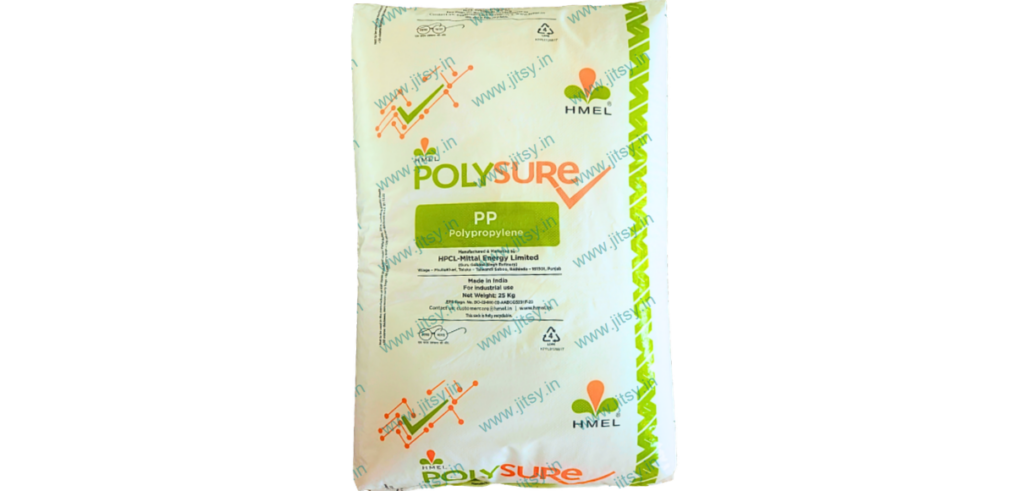
HMEL PP Polysure T03NR1
HMEL PP POLYSURE T03NR1 is a polypropylene homopolymer produced by HMEL using Spheripol-II technology. Designed for sheet extrusion and thermoforming, T03NR1 offers high clarity, gloss, stiffness, and fast cycle times, with anti-static properties for premium food packaging, containers, and trays.
Technical Properties
- Melt Flow Index (230°C/2.16kg):5 g/10 min
- Tensile Strength @ Yield: 35 MPa
- Tensile Elongation @ Yield: 12%
- Flexural Modulus: 1500 MPa
- Notched Izod Impact (23°C): 50 J/m
- Vicat Softening Point: 156°C
- HDT (0.455 MPa): 105°C
- Processing: Sheet extrusion/thermoforming: 210–250°C melt, 20–50°C mould; injection: high speed, 200–500 bar holding pressure
- Additives: Nucleator (fast cycles, high stiffness), antistatic agent (low dust)
Applications
Disposable Cups & Glasses
Ideal for high-speed thermoforming of disposable cups and glasses, delivering clarity, gloss, and rigidity for foodservice and consumer packaging.Food & Dairy Containers, Trays, Rigid Packaging
T03NR1 supports sheet extrusion and thermoforming of food containers, dairy cups, trays, and rigid packaging, offering superior heat resistance (HDT 105°C) and impact strength.Houseware & Industrial Packaging
The grade is suited for houseware, lids, and industrial rigid packaging where fast cycles, clarity, and toughness are required.Performance Advantages
T03NR1’s Spheripol-II technology provides gel-free, stretchable sheets with high optical quality. Nucleation ensures short cycle times and high productivity. High HDT (105°C) and impact (50 J/m) deliver better heat resistance and toughness than standard grades. Antistatic agent reduces dust, supporting clean production and handling.Competitor Comparison
- T03NR1 (HMEL): Spheripol-II, MFI 3.5, HDT 105°C, impact 50 J/m, food-contact
- T03NR (HMEL): Novolen, lower HDT/impact
- Reliance H200MA: Thin-wall injection PP
- Luban HP2106N: Thermoforming/houseware
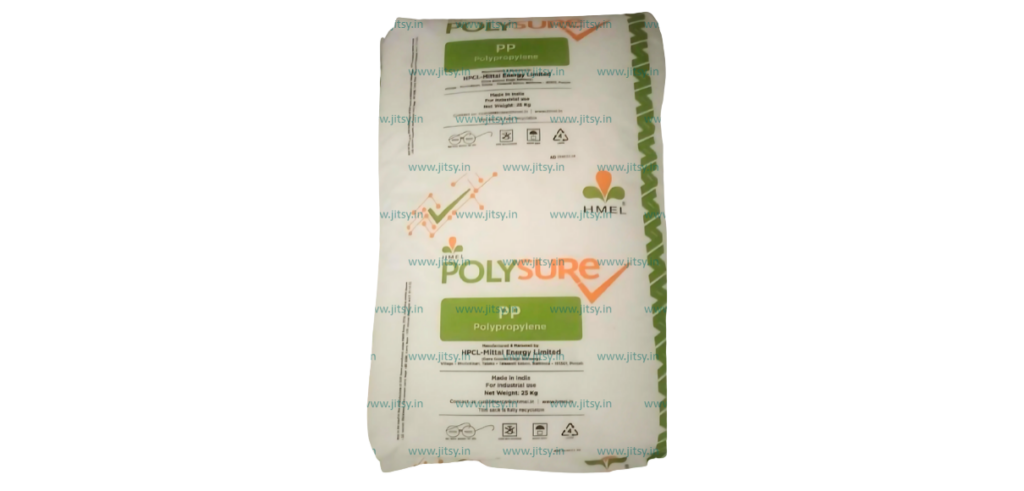
HMEL PP Polysure TF06RE
HMEL Polysure TF06RE is a polypropylene terpolymer engineered as the heat-seal skin layer in biaxially oriented polypropylene (BOPP) films for flexible packaging. Manufactured using HMEL's advanced Spheripol-II technology, TF06RE combines low seal initiation temperature, superior optical properties, and stable processability on modern high-speed BOPP lines. This specification-driven resin is trusted by converters and packaging brands across India and Asia for snack food, bakery, confectionery, and industrial packaging applications where heat-sealability, clarity, and compliance are non-negotiable.
Technical Insights & Industry Authority
Polysure TF06RE's semi-crystalline terpolymer structure delivers a critical balance between low seal initiation temperature (~110°C) and high melting point, enabling efficient sealing on vertical form-fill-seal (FFS) and flow-wrap machines without compromising film clarity or hot-tack strength. The integrated antiblock additive package improves film handling and winding while maintaining excellent processability across the full extrusion temperature window (230–280°C). The terpolymer design—distinct from generic random copolymers—provides superior comonomer distribution, resulting in consistent melt flow (MFI 6.0 g/10 min) and uniform seal performance across production runs. Advanced catalyst technology ensures minimal impurities and stable thermal behavior, supporting high line speeds (300+ m/min on modern tenter-frame BOPP lines) without gauge variation or seal defects.Applications & Industry Use Cases
Heat-Seal Skin Layer in Transparent BOPP Films
TF06RE is engineered specifically for the heat-seal layer of transparent BOPP film structures used in flexible packaging. Its low seal initiation temperature allows converters to seal at lower jaw temperatures or shorter dwell times, reducing energy consumption and enabling faster line speeds. The terpolymer's excellent hot-tack strength ensures strong seals even at the edge of the sealing window, critical for high-speed FFS and flow-wrap applications where seal consistency directly impacts production yield and pack integrity.Flexible Packaging for Snacks, Bakery & Confectionery
Snack food packaging—including chips, namkeen, biscuits, and chocolate bars—relies on heat-sealable BOPP films for shelf appeal and product protection. TF06RE delivers the gloss and clarity that premium snack brands demand, while its low SIT enables efficient sealing on vertical-FFS lines running at 100+ packs/minute. The resin's food-contact compliance and stable seal performance across temperature fluctuations make it ideal for both ambient and chilled snack applications.Form-Fill-Seal (FFS) and Shrinkable Co-Extruded BOPP Structures
Modern vertical-FFS machines require seal-layer resins that balance low sealing temperature with wide hot-tack window and minimal sticking. TF06RE meets these demands, enabling converters to optimize cycle times and reduce scrap. For shrinkable co-extruded BOPP films—used in high-shrink wraps, tamper-evident overwraps, and specialty packs—TF06RE's thermal stability supports the annealing and shrinking processes while maintaining seal integrity and optical clarity.Industrial, Pharmaceutical & Personal Care Overwraps
Beyond FMCG, TF06RE is specified for pharmaceutical blister overwraps, tissue and wipe packs, diaper and sanitary product overwraps, and industrial packaging where gloss, clarity, and reliable heat-sealing are essential. Its compliance with food and pharma standards, combined with excellent processability, makes it a go-to grade for converters serving regulated industries.Performance Advantages in BOPP Structures
Low Seal Initiation Temperature & Wide Sealing Window
TF06RE's SIT of approximately 110°C is significantly lower than generic PP random copolymers (typically 130–150°C), enabling converters to reduce jaw temperature and dwell time. This translates to energy savings, faster line speeds, and a wider sealing window—critical for maintaining seal strength even when line conditions vary. The combination of low SIT with high hot-tack strength ensures reliable seals across the full operating range without edge sticking or weak seals.Optical Quality: Clarity, Gloss & Transparency
The terpolymer's molecular design and HMEL's Spheripol-II process technology deliver exceptional optical properties. TF06RE provides high gloss (>90 ASTM D2457) and outstanding clarity, enabling premium visual presentation for consumer-facing packages. This optical advantage is particularly valuable for transparent BOPP films where product visibility and shelf impact drive purchasing decisions.Line Productivity & High-Speed Processing
TF06RE's balanced melt flow and thermal stability support consistent extrusion on modern tenter-frame BOPP lines operating at 300+ m/min. The resin's uniform processability minimizes gauge variation, die pressure fluctuations, and line stoppages, directly improving production efficiency and reducing waste. Converters report stable film formation, consistent seal performance, and reliable winding across extended production runs.Compliance, Safety & Regulatory Details
Food-Contact & Drinking-Water Compliance
TF06RE is manufactured to meet IS 10910 specifications for polypropylene in direct food contact, including foodstuff, pharmaceutical, and drinking-water applications. Its additive package complies with the positive list outlined in IS 16738:2018 (Plastics – Additives for use in food-contact materials) and aligns with FDA CFR 21 §177.1520 (Olefin polymers). This multi-standard compliance enables global market access for converters serving food, pharma, and beverage brands.Storage, Handling & Safety
Store TF06RE in a cool, dry environment (15–25°C, <65% relative humidity) in original sealed bags to prevent moisture absorption and oxidation. Avoid prolonged exposure to direct sunlight or heat sources. Standard industrial hygiene practices apply; consult the Safety Data Sheet (SDS) for detailed handling and emergency procedures. No special disposal requirements; TF06RE is recyclable as post-consumer and post-industrial polypropylene waste.Processing Guidelines for BOPP Film Lines
Recommended Extrusion Temperature Profile
Maintain barrel temperatures in the range of 230–280°C, with typical settings around 250–270°C for skin-layer extrusion. Gradual temperature rise from hopper to die prevents thermal degradation and ensures stable melt viscosity. Monitor die temperature closely; excessive heat can reduce seal strength and increase extractables, while insufficient heat may cause gauge variation and poor film formation.Quench, Orientation & Annealing Considerations
Cool the extruded film to approximately 10–15°C below the extrusion temperature using chilled water or air quench systems. Proper quenching locks in film crystallinity and improves optical properties. During biaxial orientation (machine direction and transverse direction stretching), maintain controlled temperature and stretch ratios to achieve balanced mechanical properties and seal performance. Post-orientation annealing at 100–120°C stabilizes dimensions and enhances heat resistance.Tips for Optimizing Seal Strength & Hot-Tack
To maximize seal performance, ensure consistent jaw temperature (typically 120–140°C for TF06RE) and dwell time (50–150 ms, depending on line speed and film thickness). Maintain even pressure across the sealing jaw to prevent edge sticking or weak seals. Regular jaw cleaning and maintenance prevent contamination-related seal defects. Monitor seal strength using standard hot-tack and seal-strength tests (ASTM F88, ASTM D6775) to validate process stability.Why Choose TF06RE Over Other BOPP Seal-Layer Resins
TF06RE vs Generic PP Random Copolymers
Random copolymers (PP-R) used in BOPP seal layers typically offer lower cost but require higher sealing temperatures (130–150°C) and narrower hot-tack windows. TF06RE's terpolymer structure delivers lower SIT (~110°C), wider sealing window, and superior hot-tack strength—enabling faster line speeds, energy savings, and fewer seal defects. For converters running high-speed FFS or flow-wrap lines, TF06RE's performance advantage justifies the grade premium.TF06RE vs Coated Heat-Seal BOPP Films
Some converters use coated BOPP films with applied heat-seal layers (e.g., wax or polymer coatings) to achieve low-temperature sealing. While coatings can lower SIT, they add cost, complexity, and environmental concerns. TF06RE achieves comparable or superior seal performance through inherent resin chemistry, eliminating coating steps and enabling full recyclability. Additionally, TF06RE's integrated antiblock package improves film handling without additional surface treatments.TF06RE vs Global Terpolymer Grades (INEOS, Borealis, COSMOPLENE)
Competing terpolymer grades (e.g., INEOS Eltex P KV309, Borealis TD310BF, COSMOPLENE FS5612) offer similar technical profiles but differ in supply footprint, lead times, and regional support. TF06RE is manufactured by HMEL, a major Indian PP producer with significant capacity and established distribution across Asia. For converters in India and neighboring regions, TF06RE provides comparable performance with shorter lead times, lower logistics costs, and dedicated technical support from HMEL's application team.Ordering, Packaging & Logistics
Supply Footprint & Lead Time Highlights
TF06RE is stocked at distribution centers across North India (Delhi, Haryana, UP), West India (Gujarat, Maharashtra), and select locations in South and East India. Standard lead time is 3–5 working days from order confirmation for ex-stock deliveries. Bulk orders and custom specifications may require 7–10 working days. Pan-India dispatch is supported by 50+ logistics partners with 24-hour delivery guarantees to major industrial hubs.Technical Support & Trials for BOPP Film Makers
Dedicated technical support is available to assist converters with grade selection, process optimization, and on-site line trials. HMEL's application engineers can provide guidance on extrusion parameters, seal-strength testing, and troubleshooting. Sample quantities (10–50 kg) are available for trial runs on existing BOPP lines, enabling converters to validate performance before bulk orders.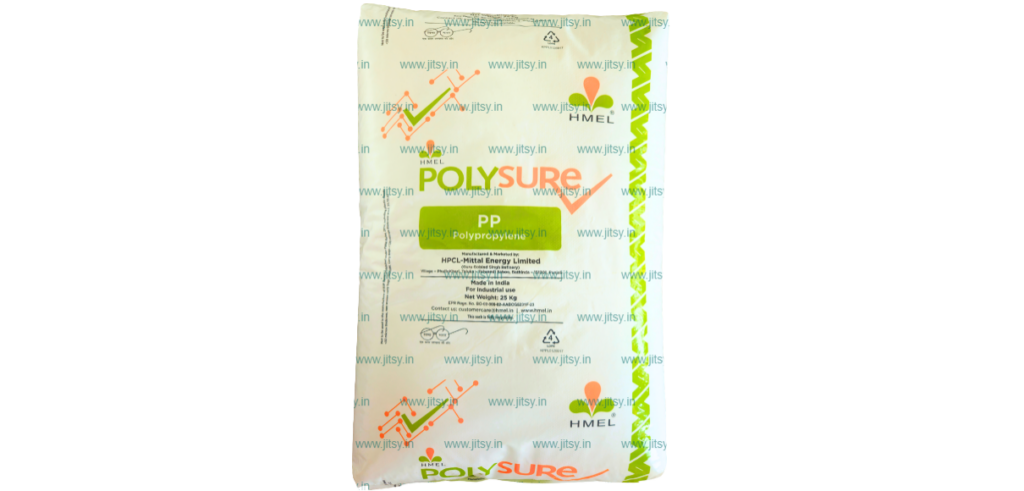
HMEL PP Polysure Y12GR
HMEL PP Polysure Y12GR is a polypropylene homopolymer fibre and filament grade developed by HPCL-Mittal Energy Limited under the Polysure brand for fibre spinning applications that demand strong processing consistency and dependable yarn performance. Officially positioned for staple fibres and high-tenacity multifilament yarn, this 12 MFI PP homopolymer is engineered for processors who need stable spinning behaviour, reliable output, and end-use performance in technically demanding textile and industrial fibre applications. HMEL highlights excellent processing, superior tenacity, and anti gas fading property as the defining strengths of Y12GR, making it a relevant choice for manufacturers focused on fibre quality, production efficiency, and long-term product appearance.
HMEL is one of India’s major petrochemical manufacturers, and the Polysure polypropylene portfolio is known for reactor-grade consistency across multiple application families including homopolymers, impact copolymers, random copolymers, and speciality grades. Within the fibre and filament segment, Y12GR is positioned as a specialised PP homopolymer grade for staple fibre and high-tenacity multifilament yarn where strength retention, process stability, and resistance to gas-fading-related quality issues matter. For buyers searching for HMEL Polysure Y12GR supplier in India, PP fibre spinning grade, or polypropylene homopolymer for staple fibre and multifilament yarn, this grade stands out as a purpose-built solution rather than a general polymer option.
Deep Technical Insights
The most important verified technical parameter for HMEL Polysure Y12GR is its melt flow index of 12 g/10 min as per ASTM D1238. In fibre and filament processing, this MFI range supports controlled melt behaviour that is suitable for spinning operations where consistency, filament formation, and process stability are more important than ultra-high flow. A 12 MFI PP homopolymer grade is generally well aligned with applications that require a balance between spinnability and mechanical performance, especially where the finished fibre or yarn must maintain useful tensile properties in downstream use. HMEL specifically positions Y12GR for staple fibres and high-tenacity multifilament yarn, and this is important because the assigned grade is not simply based on flow alone. The manufacturer also highlights superior tenacity and anti gas fading property, which signals that the grade is designed for fibre applications where strength, appearance retention, and service reliability are important. As a PP homopolymer, Y12GR also benefits from the stiffness and strength profile commonly associated with Homopolymer polypropylene, which supports fibre orientation and structural integrity in many textile and technical yarn applications. Since the public HMEL sources do not openly provide verified numerical values for tensile strength, elongation, hardness, flexural modulus, thermal properties, denier range, or exact processing temperatures for Y12GR, the most accurate technical approach is to present the manufacturer-confirmed MFI, fibre-grade positioning, and qualitative strengths without publishing unverified numbers. This keeps the page technically credible while still giving manufacturers the key decision-making signals they need.Applications and Industry Use Cases
Staple Fibre Manufacturing
HMEL Polysure Y12GR is well suited for staple fibre manufacturing where processors require a polypropylene homopolymer grade that can run consistently on fibre spinning lines while supporting dependable fibre strength. It is relevant for applications such as nonwovens, industrial staple fibre, hygiene-linked fibre products, automotive felt components, filtration media, and geotextile-related uses. In these applications, stable processing and reliable tenacity are important because the fibre must perform consistently through conversion and end use.High-Tenacity Multifilament Yarn
Y12GR is also positioned for high-tenacity multifilament yarn, making it suitable for technical textile applications where yarn strength and process reliability are central to product quality. This includes ropes, twines, industrial sewing yarn, carpet-related yarn systems, and other multifilament structures where manufacturers need a PP fibre grade that supports orientation and durable yarn formation. Its manufacturer-stated superior tenacity makes it particularly attractive for converters focused on strength-led Performance.Technical Textile and Industrial Fibre Applications
For technical textile producers, Y12GR offers a practical balance of processability and end-use strength in applications where polypropylene homopolymer is preferred for its lightweight nature, chemical resistance, and cost-effective fibre performance. It can fit industrial textile programs where fibre consistency, production stability, and quality retention are important to downstream converting operations.Applications Requiring Anti Gas Fading Performance
One of the more important differentiators of Y12GR is its anti gas fading property, which is especially relevant in fibre and yarn applications exposed to storage, packaging, transport, or service environments where oxidative gases can affect appearance or long-term quality. This makes the grade valuable in colour-sensitive textile and fibre segments where maintaining visual and performance stability is commercially important.Comparable Alternatives
Within the HMEL Polysure fibre portfolio, the closest alternative to Y12GR is Y25GR or Y25GR1. While Y12GR is a 12 MFI PP homopolymer designed for staple fibres and high-tenacity multifilament yarn, Y25GR and Y25GR1 are higher-MFI fibre grades positioned for carpets, multifilament yarn, and bulk continuous filament applications. In practical terms, Y12GR is the more suitable choice when the application is centred around strength-oriented fibre spinning and controlled processing, while Y25GR-series grades are better aligned with faster-flow fibre applications and carpet or BCF-focused Production. Across other Indian producers, IOCL and OPaL also offer PP homopolymer fibre grades for filament, nonwoven, carpet yarn, and related fibre applications. These can be considered functional alternatives, but they should not be treated as direct one-to-one equivalents unless the exact manufacturer TDS confirms matching MFI, spinning behaviour, and end-use orientation. The rationale behind choosing Y12GR is that it is a purpose-assigned HMEL fibre grade built specifically for staple fibre and high-tenacity multifilament yarn, with manufacturer-backed positioning around excellent processing, superior tenacity, and anti gas fading rather than broad generic fibre use.
HMEL PP Polysure Y25GR
Polysure Y25GR is a Novolen controlled-rheology polypropylene homopolymer from HMEL, engineered for high-performance fiber applications. With a melt flow index of 25 g/10min and narrow molecular weight distribution, Y25GR delivers outstanding spinnability, gas fading resistance, and UV stability, making it ideal for multifilament yarn, BCF, staple fiber, nonwovens, and extrusion coating. The grade is fully IS 10910 and FDA 21 CFR 177.1520 compliant and trusted by textile, carpet, and hygiene converters for high-speed, high-tenacity fiber output.
Key Technical Insights:
- MFI 25 g/10min
- Density 0.905 g/cc
- Tensile Yield 33 MPa
- Elongation at Yield 10%
- Flexural Modulus 1200 MPa
- Izod Impact @23°C 30 J/m
- Vicat 153°C
- HDT 90°C
Y25GR vs Y25GR1 Differences
Y25GR is Novolen-based, optimized for gas/UV fading resistance and fiber tenacity, while Y25GR1 (Spheripol-II reactor) offers smoother processing and higher flexural modulus for similar fiber and nonwoven applications. Both grades maintain high consistency and are suited for demanding textile and nonwoven lines.Applications
Multifilament Yarn, BCF Carpets & Nonwovens Y25GR is purpose-built for multifilament yarns, BCF for carpets, staple fibers for geotextiles, spunbond and meltblown nonwovens for hygiene, and extrusion coating for paper. Its narrow MWD ensures uniform spinning and fewer breaks, while superior gas fading resistance and UV protection safeguard fiber color and strength in end-use. The grade’s high tenacity and elongation post-draw make it the preferred choice for converters seeking reliability in high-speed fiber and nonwoven production. Processing Guidelines: Melt temperature 195–240°C (barrel), 240–250°C (die); draw ratio 1:3000+ recommended for fiber lines. Stable melt ensures consistent filament diameter and minimal downtime.Key Performance Advantages Over Standard PP
Polysure Y25GR stands out for its uniform spinnability, low gel content, and enhanced gas/UV fading resistance. The grade’s narrow molecular weight distribution and positive list additives support high-speed fiber extrusion with fewer filament breaks and higher output. Compared to standard reactor PP, Y25GR provides improved color stability, higher tenacity, and superior process reliability for both continuous and staple fiber applications.Comparable Fiber Grades in India
Top alternatives include Y25GR1 (Spheripol reactor, higher flexural modulus), Y35GR (higher MFI for extrusion coating/spunbond), OPAL RH25X (Ineos CR technology), and IOCL PPY2501 (cost-competitive reactor grade). Y25GR’s Novolen process and gas/UV stabilization offer a unique advantage for converters targeting demanding fiber and nonwoven markets. Please note: Y25GR has been superseded by Y25GR1 - superior alternative with improved performance metrics and cost efficiency. Explore full specifications, applications, and advantages to see how it delivers better value for your manufacturing needs.
HMEL PP Polysure Y25GR1
Polysure Y25GR1 is a reactor-grade polypropylene homopolymer manufactured by HMEL using latest Spheripol-II technology. Designed for multifilament yarn extrusion, nonwoven processes, and extrusion coating, it delivers smooth processing, superior gas fading resistance, and consistent mechanical performance. Fully IS 10910 and FDA 21 CFR 177.1520 compliant, Y25GR1 is trusted by fiber and nonwoven converters for high-speed, high-tenacity output.
Key Technical Insights:
- MFI 25 g/10min
- Tensile Yield 34 MPa
- Elongation at Yield 10%
- Flexural Modulus 1500 MPa
- Izod Notched 25 J/m
- Vicat 152°C
- HDT 95°C
Applications Multifilament Yarn, Nonwovens & BCF Carpets
Y25GR1 is engineered for multifilament and BCF yarns (carpet/textile), staple fiber (geotextiles/filling), spunbond and meltblown nonwovens (hygiene, medical, diapers), and extrusion coating for paper laminates. Its smooth melt, gas fading resistance, and process reliability make it ideal for converters demanding color stability, filament consistency, and robust nonwoven fabrics.Y25GR1 Performance Advantages
Polysure Y25GR1 stands out for its reactor-grade consistency, superior resistance to NOx/O3 gas fading, and balanced strength-impact profile. Compared to controlled-rheology grades (like Y25GR), Y25GR1 offers smoother processing and higher flexural modulus, supporting both high-speed yarn spinning and nonwoven line efficiency. Its regulatory compliance and positive list additives ensure suitability for food, pharma, and hygiene applications.Comparable Fiber Grades in India
Alternatives include Polysure Y25GR (Novolen CR, higher flexural), Y12GR (lower MFI, tenacity focus), OPAL RH25X (Ineos reactor), IOCL PPY2501 (cost/hygiene). Y25GR1’s Spheripol process, mechanical strength, and gas fading resistance provide a unique value for demanding fiber and nonwoven markets in India.
HMEL PP Polysure Y35GR
Polysure Y35GR is a controlled-rheology polypropylene homopolymer manufactured by HMEL using advanced Novolen technology. With a melt flow index of 35 g/10min, Y35GR is engineered for nonwoven spunbond fabrics, fine denier multifilament yarns, and industrial textiles. It delivers superior gas fading resistance, inherent UV protection, and narrow molecular weight distribution for consistent spinning and high-speed production. Fully IS 10910 and FDA 21 CFR 177.1520 compliant, Y35GR is trusted by medical, hygiene, and nonwoven converters for demanding applications.
Key Technical Insights:
- MFI 35 g/10min
- Tensile Yield 33 MPa
- Elongation at Yield 11%
- Flexural Modulus 1150 MPa
- Izod Notched 30 J/m
- Vicat 153°C
- HDT 90°C
Applications: Nonwoven Spunbond Fabrics & Multifilament Yarn
Y35GR is purpose-built for nonwoven spunbond production, excelling in face masks (N95/surgical), medical aprons, suit covers, and diaper topsheets. Its controlled rheology enables fine denier multifilament yarns for technical textiles, geotextiles, and industrial applications. The grade's superior gas fading resistance protects fiber color and strength against NOx, O3, and automotive emissions, making it ideal for outdoor and industrial nonwovens. High-speed spunbond lines benefit from Y35GR's smooth melt, low die pressure, and consistent output above 2000 m/min.Y35GR Performance Advantages
Polysure Y35GR stands out for its controlled-rheology design, narrow molecular weight distribution, and inherent UV stabilization. Compared to standard reactor PP grades, Y35GR offers superior gas fading resistance, enabling color-stable nonwovens for demanding hygiene and medical applications. The grade's higher MFI (35 vs 25) supports finer denier production and faster line speeds, while maintaining excellent mechanical balance for nonwoven durability. Its positive list additives and regulatory compliance ensure suitability for food contact, medical devices, and pharma packaging.Comparable Nonwoven Grades in India
Alternatives include Y35GR1 (Spheripol reactor, broader MWD), Y25GR (lower MFI for thicker denier), E35RR (extrusion coating focus), IOCL 1350YG (reactor, less gas fading resistance), OPAL RH38 (import alternative), and Reliance HY035R (reactor grade). Y35GR's Novolen controlled-rheology process and gas fading resistance provide a unique advantage for converters targeting medical-grade nonwovens and color-stable spunbond fabrics. Please note: Y35GR has been superseded by Y35GR1 - superior alternative with improved performance metrics and cost efficiency. Explore full specifications, applications, and advantages to see how it delivers better value for your manufacturing needs.
HMEL PP Polysure Y35GR1
Polysure Y35GR1 is a premium Controlled Rheology Polypropylene Homopolymer, engineered by HPCL-Mittal Energy Ltd (HMEL) using advanced Spheripol-II technology. Y35GR1 is purpose-built for high-speed spunbond nonwoven, fine denier multifilament yarn, and extrusion coating. It combines outstanding processability, superior spinnability, and proven resistance to gas fading—making it the first choice for medical, hygiene, and technical textile applications. Manufactured in HMEL’s Bathinda refinery, the brand Polysure stands for consistent quality, regulatory compliance, and technical support.
Technical Properties & Performance Specifications
- Melt Flow Index (ASTM D1238, 230°C/2.16 kg): 35 g/10 min, indicating excellent flow characteristics suitable for high-speed processing and precision moulding applications.
- Tensile Strength at Yield (ASTM D638): 32 MPa, providing strong mechanical performance and reliable structural integrity in finished components.
- Tensile Elongation at Yield (ASTM D638): 10%, offering balanced stiffness with moderate flexibility during processing and end-use.
- Flexural Modulus – 1% Secant (ASTM D790A): 1250 MPa, ensuring good rigidity and dimensional stability for molded products.
- Notched Izod Impact Strength at 23°C (ASTM D256A): 30 J/m, supporting adequate resistance to sudden impact under standard conditions.
- Vicat Softening Temperature (ASTM D1525, 10N): 151°C, demonstrating strong heat resistance for applications exposed to elevated temperatures.
- Heat Deflection Temperature (ASTM D648, 0.455 MPa): 90°C, allowing the material to maintain shape and performance under moderate thermal loads.
Applications & Industry Use Cases
Medical & Hygiene Nonwovens: Y35GR1 delivers high-speed, stable extrusion for spunbond fabrics used in face masks, surgical gowns, medical coveralls, and hygiene products like diaper topsheets and sanitary napkin backsheets. Its anti-gas fading formulation ensures color stability in sensitive medical and hygiene environments. Technical Yarns & Industrial Nonwovens: Ideal for fine denier multifilament yarns (<2 dpf), Y35GR1 provides excellent spinnability, making it suitable for applications such as sewing threads, carpet backing, and industrial textiles. In industrial nonwovens, it’s used for filtration media, geotextiles, and crop covers—delivering high throughput and reliable mechanical properties. Extrusion Coating: Y35GR1’s controlled rheology supports uniform coating in packaging, technical laminates, and nonwoven composites, ensuring process efficiency and product consistency.Alternatives & Comparative Overview
Several polypropylene grades offer similar processing performance to Y35GR1, with variations in stiffness, processing technology, and application focus. Key alternatives include:- Y35GR – Melt Flow Index (MFI) 35 using Novolen CR technology with a flexural modulus of around 1150 MPa. Commonly used in nonwoven and multifilament applications. Compared to Y35GR1, it offers slightly lower stiffness.
- 1350YG – MFI 35, produced with IOCL Spheripol-II technology, delivering a flexural modulus of approximately 1200 MPa. Suitable for spunbond nonwovens and diaper applications. Being reactor-based, it typically has less CR (controlled rheology) control compared to Y35GR1.
- RH38 – MFI 38 with OPaL Ineos Gas Phase technology and a flexural modulus of about 1200 MPa. Used in spunbond and fine denier fibers. Its higher MFI improves flow, and the grade is known for anti-gas fading performance.
- Y25GR1 – MFI 25 produced via Spheripol-II technology, with a flexural modulus near 1200 MPa. Best suited for BCF (Bulk Continuous Filament) and heavier denier yarn applications. The lower MFI supports stronger yarn formation.
- E35RR1 – MFI 35 using Spheripol-II technology, flexural modulus around 1200 MPa. Primarily designed for extrusion coating applications, offering coating-optimized processing characteristics.
HMEL PPCP Polysure CE02RR
Polysure CE02RR is a polypropylene impact copolymer (PPCP) extrusion grade from HPCL-Mittal Energy Ltd (HMEL), purpose-built for sheet extrusion, corrugated/flute board, and blow moulding. Manufactured with advanced Spheripol-II technology, CE02RR delivers a unique blend of high rigidity, impact toughness, and stable processing, making it a workhorse grade for rigid sheets and containers demanding stackability and durability.
Deep Technical Insights
Polysure CE02RR is engineered for converters needing a balance of stiffness and impact. The 1.8 MFI enables efficient sheet extrusion with good melt strength for thickness control, while the 1100 MPa flexural modulus provides structural rigidity in boards and containers. Notched Izod impact of 250 J/m ensures resistance to drops and handling, and a Vicat softening point of 150°C supports hot filling and elevated service temperatures. Spheripol-II process technology ensures consistent pellet morphology and process stability, reducing line downtime and scrap.Applications & Industry Use Cases
Sheet Extrusion & Thermoforming: CE02RR is ideal for solid and corrugated PP sheets, panels, trays, and lids used in industrial packaging, logistics, and agriculture. Its rigidity and impact profile allow for lightweight, stackable designs that withstand handling and transport. Corrugated/Flute Board & Packaging: For PP hollow sheets and boxes, CE02RR delivers the strength needed for agricultural crates, logistics totes, and protective packaging, supporting both manual and automated handling. Blow-Moulded Containers: CE02RR performs in blow-moulded bottles, drums, and containers for industrial and consumer goods, offering dimensional stability and resistance to deformation under load.Performance Advantages of CE02RR PPCP
Polysure CE02RR stands out for its stiffness–impact balance, making it suitable for converters seeking tough, stackable, and thermally stable products. Its processability supports high-speed extrusion and blow moulding lines with minimal variation. The grade’s chemical resistance and recyclability further add to its value in sustainable packaging and logistics chains.
HMEL PPCP Polysure CE06NR
HMEL PPCP Polysure CE06NR is a premium nucleated polypropylene impact copolymer engineered for high-speed continuous compression and injection molding applications. Developed using advanced Spheripol-II technology, this grade delivers exceptional mechanical properties, regulatory compliance, and batch-to-batch consistency. With a 6 MFI and robust performance characteristics, CE06NR is the preferred choice for demanding caps, closures, and food-contact applications requiring superior processability, impact strength, and organoleptic purity across packaging and pharmaceutical markets.
Technical Specifications & Performance
HMEL PPCP Polysure CE06NR is engineered with nucleation technology that accelerates crystallization and enhances material stiffness, delivering a high flexural modulus ideal for rigid packaging applications. The 6 MFI (Melt Flow Index) ensures rapid cycle times and efficient mold filling, enabling manufacturers to maximize throughput in continuous compression and injection molding processes. The nucleated structure provides superior clarity and transparency, critical for premium food and beverage packaging where visual appeal directly impacts consumer perception. With dual compliance to IS 10910 (Indian Standard for Polypropylene) and FDA 21 CFR 177.1520 (US Food and Drug Administration regulations for food-contact polymers), CE06NR guarantees safety for direct food contact and pharmaceutical applications. The grade's organoleptic purity ensures zero off-odors or taste transfer, maintaining product integrity in sensitive applications. HMEL's Spheripol-II process technology ensures consistent batch-to-batch quality, high impact resistance, and reliable performance across varying processing conditions. The material's robust mechanical properties—including high stiffness, excellent impact strength, and dimensional stability—make it suitable for complex geometries and demanding industrial applications where failure is not an option.Applications
Beverage Closures: CE06NR is engineered for carbonated drink caps and bottled water closures where high pressure resistance, impact durability, and clarity are essential. The nucleated structure ensures rapid cycle times in high-speed cap production, while the robust mechanical properties withstand carbonation pressure and repeated opening/closing cycles without degradation or stress cracking. Pharmaceutical Closures: For child-resistant and tamper-evident pharmaceutical caps, CE06NR delivers the precision, consistency, and regulatory compliance required by global pharma standards. Its organoleptic purity prevents any chemical interaction with medications, while superior impact strength ensures closures remain secure during transport, storage, and handling. The material's dimensional stability supports tight tolerances critical for pharmaceutical packaging integrity. Food Container Lids: Ideal for dairy products, condiments, and prepared food containers, CE06NR provides the stiffness and clarity needed for premium food packaging. The nucleated structure enhances rigidity, preventing lid warping under thermal stress or stacking loads, while organoleptic purity ensures no flavor or odor transfer to food contents. Personal Care Product Caps: From shampoo bottles to cosmetic jars, CE06NR offers the aesthetic clarity and mechanical reliability required for consumer-facing personal care packaging. The high flexural modulus ensures caps maintain their shape and snap-fit functionality throughout the product's shelf life. Household Chemical Closures: For detergents, cleaners, and chemical products, CE06NR's robust impact strength and chemical resistance provide dependable closure performance. The material withstands aggressive chemical exposure without degradation, ensuring product safety and preventing leakage or contamination.
HMEL PPCP Polysure CM03RR
Polysure CM03RR is HMEL’s Spheripol-II based polypropylene impact copolymer (PPCP) designed for general-purpose injection moulding. With a medium MFI of 3.5, CM03RR delivers an outstanding stiffness–impact balance, making it the go-to grade for automotive components, furniture, crates, industrial mouldings, and rigid packaging. Spheripol-II technology ensures uniform impact-phase dispersion and consistent mechanicals batch after batch, supporting dimensional stability and robust part performance for demanding structural applications.
Technical specifications of HMEL Polysure CM03RR
Flow & physical properties
- Melt Flow Index:5 g/10 min (230°C/2.16 kg) – tuned for general-purpose injection moulding
- Density: ~0.90 g/cm³ – standard for PP IC grades
- Implication: Medium MFI supports moderate wall thicknesses and high impact retention over ultra-high flow grades
Mechanical properties – stiffness & impact
- Tensile strength at yield: 27 MPa – strong for load-bearing and structural parts
- Elongation at yield: 9% – supports flexibility and shock absorption
- Flexural modulus: 1100 MPa – high stiffness for automotive, crates, and furniture
- Notched Izod impact (23°C): 160 J/m – high toughness for drop, stacking, and handling resistance
Thermal properties & service envelope
- Vicat softening point (10 N): 150°C – resists deformation under moderate heat
- Heat deflection temperature (0.455 MPa): 90°C – suitable for automotive interiors, furniture, and crates exposed to sunlight or warm conditions
Deep technical insights
- Spheripol-II technology: Ensures uniform heterophasic morphology for consistent impact and stiffness across batches—crucial for OEMs and high-reuse applications.
- Stiffness–impact synergy: 1100 MPa modulus and 160 J/m impact make CM03RR ideal for load-bearing, drop-resistant parts in automotive, logistics, and furniture.
- Medium MFI: Balances flow for moderate wall sections, avoiding brittleness or warpage common in ultra-high flow grades.
- Regulatory breadth: IS 10910 and IS 16738/10909 compliance covers food, pharma, and drinking water contact for packaging and consumer goods.
Applications & industry use cases
Automotive components
CM03RR is perfect for interior trims, semi-structural parts, and components where both rigidity and toughness are required—delivering reliable performance in the cabin and non-critical under-hood areas.Furniture & consumer durables
Moulders use CM03RR for chair shells, backs, arms, table tops, and storage systems. Its stiffness supports weight-bearing designs, while impact resistance ensures products survive daily use and handling.Crates, bins, and logistics items
For stackable crates, bins, and pallets, CM03RR’s high impact and stiffness enable repeated drops and high stacking loads without cracking, supporting efficient warehousing and transport.Rigid packaging & industrial mouldings
CM03RR is also used for buckets, pails, rigid containers, and technical housings—delivering drop resistance and stacking strength for robust packaging and industrial parts.Processing guidelines for CM03RR PPCP
Recommended injection-moulding window
- Barrel temperature: 190–230°C (mid-range 200–220°C for most parts)
- Mould temperature: 30–40°C (cooler for faster cycles, warmer for improved finish and reduced warpage)
- Packing pressure/time: Essential for ribs and thick sections to avoid sinks due to high stiffness
Design considerations for crates and furniture
- Use moderate wall thicknesses; avoid ultra-thin designs to maintain impact toughness
- Optimize rib and gate design for uniform fill and minimal warpage
Common PPCP moulding issues & troubleshooting
- Short shots: Raise melt temperature or injection speed
- Warpage: Use balanced cooling and uniform wall thickness
- Flow marks: Optimize gate location and injection speed
Performance advantages vs other Polysure PPCP grades
CM03RR vs CM08NR & CM10TE
- CM03RR (3.5 MFI): Best for automotive, furniture, crates—emphasizes stiffness and impact for moderate walls
- CM08NR (8 MFI): Suited for paint pails, higher throughput, slightly less toughness
- CM10TE (9.5 MFI): For battery casings, under-hood auto—optimized for thermal stability and impact
CM03RR vs competitor PPCP grades
Compared to typical 3–4 MFI grades from Reliance, IOCL, or OPaL, CM03RR offers a superior stiffness–impact balance and greater batch-to-batch consistency, thanks to HMEL’s Spheripol-II process and QC.
HMEL PPCP Polysure CM08NR
HMEL Polysure CM08NR is a polypropylene impact copolymer (PPCP) produced with advanced Spheripol-II technology, optimized for injection moulding of paint pails, furniture, industrial components, and crates. CM08NR delivers a unique combination of good stackability, impact–stiffness balance, and low cycle times for high productivity and reduced energy costs. The grade is enhanced with nucleating and antistatic agents, supporting clean processing, faster crystallization, and dust-free finished products. This makes CM08NR a preferred choice for furniture moulders, packaging producers, and industrial manufacturers in Delhi/NCR and across India.
Specifications
Physical Properties
- Melt Flow Index: 8 g/10 min (230°C/2.16 kg) – balances flow for industrial parts with impact retention
- Density:90 g/cm³ – standard for PP impact copolymers
Mechanical Properties
- Tensile Strength at Yield: 25 MPa – robust for structural and packaging applications
- Tensile Elongation at Yield: 6% – supports flexibility and drop resistance
- Flexural Modulus: 1100 MPa – high modulus for stackability and load-bearing
- Notched Izod Impact (23°C): 170 J/m – excellent impact for crate and pail durability
Thermal Properties
- Vicat Softening Point (10 N): 150°C – maintains shape under heat
- Heat Deflection Temperature (0.455 MPa): 95°C – suitable for industrial and packaging service
- Regulatory: IS 10910 compliant for food/pharma/water contact
Applications
Paint Pails
CM08NR is engineered for paint pails that require reliable stackability, high impact resistance, and dimensional stability. Its modulus and impact profile ensure pails withstand drops and stacking during transport or storage, while the antistatic agent keeps surfaces cleaner.Furniture
For chairs, tables, and modular furniture, CM08NR delivers the stiffness for structural integrity and the impact strength for long-term durability. The nucleated formulation supports quick cycles and a high-quality surface finish, making it ideal for high-volume furniture moulding.Industrial Components & Crates
In crates, bins, and technical mouldings, CM08NR’s balance of stiffness and impact ensures products resist deformation and breakage under heavy loads. Its antistatic and nucleated properties enable cleaner production and faster demoulding.Processing
- Barrel temperature: 190–230°C
- Mould temperature: 30–40°C
- Processing tips: Nucleated agent supports rapid crystallization and short cycles; antistatic agent minimizes dust pickup and surface defects
- Cycle time: Optimized for high productivity in packaging, furniture, and industrial moulding
Deep Technical Insights
- Nucleating agent: Accelerates crystallization, enabling faster cycles and improved dimensional stability
- Antistatic agent: Reduces dust attraction, ensuring cleaner, more appealing finished goods
- Stackability & modulus: 1100 MPa flexural modulus delivers reliable stacking and load-bearing for pails and crates
- Impact–stiffness synergy: 170 J/m impact strength balances toughness with rigidity for a wide range of applications
HMEL PPCP Polysure CM10TE
HMEL Polysure CM10TE is a polypropylene impact copolymer (PPCP) developed using advanced Spheripol-II technology for injection moulding applications that demand both high stiffness and superior impact resistance. CM10TE is purpose-built for battery casings, under-hood automotive components, and structural mouldings where mechanical integrity under heat and impact is a must. Its optimized morphology ensures consistent, OEM-ready performance, making it a preferred choice for automotive and industrial moulders in Delhi/NCR and across India.
Specifications
Physical Properties
- Melt Flow Index:5 g/10 min (230°C/2.16 kg) – ideal for medium-to-thick wall, structural parts
- Density:90 g/cm³ – lightweight, standard for PP ICPs
Mechanical Properties
- Flexural Modulus: ~1200 MPa – high stiffness for load-bearing, structural parts
- Notched Izod Impact: High (ICP standard) – engineered for impact and drop resistance
Technical Insights
- Stiffness–impact balance: Spheripol-II morphology delivers reliable strength and toughness for demanding environments
- Thermal stability: Suitable for under-hood and battery casing applications where heat and impact resistance are critical
Applications
Polysure CM10TE is engineered for structural and safety-critical automotive and industrial mouldings.Battery casings
CM10TE’s stiffness and impact profile make it ideal for battery casings, delivering dimensional stability, drop resistance, and long-term reliability under heat and stress.Under-hood automotive components
From fuse boxes to engine covers, CM10TE excels in under-hood parts exposed to heat and vibration. Its mechanical balance ensures components stay intact even in harsh conditions.Structural & industrial mouldings
Suitable for crates, bins, and heavy-duty covers, CM10TE supports applications where both load-bearing strength and impact protection are required.Processing
- Barrel temperature: 180–240°C
- Mould temperature: 30–50°C
- Processing tips: Medium-high MFI supports efficient mould filling; optimize packing and cooling for best dimensional accuracy and surface finish
- Cycle time: Spheripol-II morphology allows for consistent, repeatable cycles and high productivity
Deep Technical Insights
- Spheripol-II technology: Ensures uniform polymer morphology, batch consistency, and predictable mechanicals for OEM and compounding use
- Stiffness–impact synergy: CM10TE’s balanced profile helps meet automotive and industrial design requirements for safety and durability
- Thermal reliability: Withstands thermal cycling and environmental exposure common in automotive and battery applications
HMEL PPCP Polysure CM12RE
Polysure CM12RE from HMEL is a true "no-break" polypropylene impact copolymer (PPCP) granule, engineered for injection moulding and compounding of luggage, automotive, and industrial components demanding extreme toughness. Produced on advanced Spheripol-II technology, CM12RE delivers exceptional low-temperature impact resistance and consistent performance across batches. Its MFI of 12 g/10 min offers the ideal balance between flow and mechanical strength, making it the preferred choice for manufacturers seeking high-toughness PPCP alternatives to Reliance, Haldia, or OPaL grades. CM12RE is designed for applications where drop resistance, durability, and reliability are non-negotiable.
Technical specifications of HMEL Polysure CM12RE
Material identification, HSN & CAS
- Polymer type: Polypropylene impact copolymer (heterophasic PPCP)
- Form: Natural granules, Spheripol-II process
Flow & physical properties
- Melt Flow Index: 12 g/10 min (230°C/2.16 kg) – supports medium-wall, complex parts with high toughness
- Consistent morphology: Spheripol-II ensures reliable performance and OEM approvals
Mechanical toughness & impact performance
- No-break grade: Passes instrumented impact/Izod tests at room and low temperatures without fracturing
- Superior toughness: Engineered for hard-shell luggage, automotive compounds, and heavy-duty parts where drop and cold-weather performance matter
Thermal & regulatory profile
- Service temperature: Suitable for typical PP IC ranges in luggage, automotive, and industrial mouldings
- Compliance: IS 10910 & IS 16738:2018 for food, pharma, and drinking water contact (processed as recommended)
Applications & industry use cases
Luggage and travel goods
CM12RE is the benchmark PPCP for hard-shell suitcases, trolley bags, and protective frames. Its no-break toughness ensures superior drop and impact resistance—reducing cracking at corners and handles during baggage handling and travel, even in cold conditions.Automotive components & compounds
Ideal for compounding automotive bumpers, interior trims, battery boxes, and underbody shields, CM12RE serves as a robust base resin for filled and coloured compounds. Its consistent performance and impact strength meet demanding OEM specifications.Industrial & heavy-duty moulded parts
For industrial crates, pails, housings, and machinery covers, CM12RE’s impact resistance and load-bearing capability outclass standard PPCP, ensuring reliability in harsh environments.Compounding & custom PP impact formulations
As a masterbatch carrier or base for talc/fibre-reinforced or weatherable compounds, CM12RE delivers excellent dispersion, processability, and toughness—enabling custom solutions for technical and industrial applications.Processing guidelines for CM12RE PPCP
Recommended injection-moulding window
- Melt temperature: 200–240°C
- Mould temperature: 30–45°C
- Packing: Ensure sufficient packing to avoid sink marks in thick ribs and bosses
Compounding considerations
- Compatible with mineral, fibre, and pigment fillers
- Standard PP IC screw design; throughput optimised for medium-high flow
Common issues & troubleshooting with PP impact copolymers
- Warpage: Use balanced cooling, especially in large or thick parts
- Flow marks: Increase injection speed or optimise gate design
- Short shots: Raise melt temperature or injection pressure, check venting
Performance advantages vs other PP impact copolymers
CM12RE vs CM12RR and other Polysure grades
- CM12RE: Focus on no-break toughness and low-temperature impact for luggage/auto
- CM12RR: Designed for stackability and stiffness, more suited for housewares/pails
CM12RE vs competitor PPCP grades (Reliance, Haldia, OPaL)
- CM12RE: No-break performance, Spheripol-II consistency, Indian origin
- Competitors: General-purpose tough grades, but may not match CM12RE’s impact in demanding luggage/auto/industrial roles
HMEL PPCP Polysure CM12RR
HMEL’s PPCP Polysure CM12RR is a premium polypropylene impact copolymer (PPCP) granule engineered using Spheripol II technology, tailored for injection molding and compounding. This grade delivers a robust stiffness–impact balance, excellent stackability, and smooth processability. It’s trusted by injection molders, OEMs, compounders, and traders in furniture, luggage, industrial packaging, housewares, and automotive segments. Polysure CM12RR stands out for its consistency, traceability, and compliance with the latest IS standards.
Key Features & Benefits of Polysure CM12RR PPCP
- High impact strength with reliable toughness for demanding applications
- Medium melt flow (approx. 12 MFI) for versatile injection molding
- Excellent stackability, reducing handling and transport damage
- Food-contact compliant as per relevant IS standards
- Consistent quality and batch traceability from HMEL’s Polysure range
Technical Properties & Processing Guidelines
Material Properties of HMEL Polysure CM12RR
- Mechanical: Balanced stiffness and impact at room temperature
- Thermal: Suitable heat deflection for household and industrial use
- Rheological: Medium flow for efficient molding cycles
- Compliance: Meets IS standards for food/pharma/water contact
Recommended Processing Conditions (Injection Molding & Compounding)
- Barrel temp: 180–230°C (typical)
- Mold temp: 30–60°C (typical)
- Store bags below 50°C, dry, dust-free, away from sunlight
- Always refer to datasheet for precise part/machine tuning
Typical Applications of HMEL PPCP Polysure CM12RR
HMEL's Polysure CM12RR is the go-to PPCP grade for manufacturers seeking reliability and versatility. In automotive and engineering, it’s used for trim, housings, and non-critical covers. Furniture makers trust it for chair/table parts and storage boxes. Housewares and household product brands use it for containers, buckets, and utility items. It also powers luggage shells, paint pails, and industrial packaging. Its adaptable profile makes it ideal for compounding into appliance and specialty parts.
HMEL PPCP Polysure CM25NR
HMEL Polysure CM25NR is a nucleated heterophasic polypropylene impact copolymer (PPCP) reactor grade, engineered via Spheripol-II technology by HPCL-Mittal Energy Ltd. With a melt flow index of 25 g/10 min, CM25NR is optimized for injection moulding and compounding applications that demand dimensional stability, process efficiency, and excellent stiffness-impact balance. Nucleation accelerates crystallisation, reduces cooling time and energy consumption, and minimizes warpage—making CM25NR the material of choice for rigid packaging, automotive parts, and masterbatch compounding. Supplied as natural granules in 25 kg PP bags, CM25NR is compliant with IS 10910 for food, pharma, and drinking water contact, and is PWM Rules 2016 compliant (non-SUP).
Functional Features
Polysure CM25NR stands out for its reactor-grade consistency, nucleated crystallisation, and balanced mechanical properties. Its moderate-high flow supports efficient mould filling, while high stiffness and good impact resistance enable the production of rigid, durable parts. The grade’s food-contact compliance and process reliability make it a trusted solution for converters, compounders, and OEMs.Detailed Technical Specifications (Typical Values)
- Melt Flow Index: 25 g/10 min (ASTM D1238)
- Tensile Strength at Yield: 30 MPa (ASTM D638)
- Tensile Elongation at Yield: 6% (ASTM D638)
- Flexural Modulus (1% secant): 1500 MPa (ASTM D790A)
- Notched Izod Impact (23°C): 80 J/m (ASTM D256A)
- Vicat Softening Point (10N): 152°C (ASTM D1525)
- Heat Deflection Temp (0.455 MPa): 98°C (ASTM D648)
- Packaging: Natural granules, 25 kg PP bags
Applications & Industry Use Cases
Rigid Packaging
CM25NR is ideal for crates, pails, and rigid containers where high stiffness, dimensional stability, and warpage resistance are critical. Its nucleated structure supports precise, stackable, and durable packaging solutions.Automotive Components
Automotive OEMs and compounders use CM25NR for interior and exterior parts requiring a balance of impact strength and stiffness. The grade’s reactor-grade uniformity and moderate flow enable efficient production of complex, robust components.Compounding & Masterbatch
CM25NR serves as a reliable base resin for mineral-filled and colour masterbatch compounding. Its processability and nucleated morphology ensure efficient dispersion and consistent mechanical properties in custom PPCP blends.Performance Advantages
Compared to non-nucleated or higher-MFI PPCP, CM25NR delivers lower warpage, faster cycles, and superior dimensional accuracy for mid-wall and rigid parts. Its Spheripol-II reactor technology ensures batch consistency, while nucleation provides energy and productivity gains. CM25NR is especially competitive for rigid packaging, automotive, and compounding uses, and is an alternative to higher-MFI grades like Reliance Repol B400MN, IOCL Propel 3400MN, and Haldia M340.Compliance, Packaging & Storage
Food Contact Compliance: Certified to IS 10910 for food, pharma, and drinking water contact; converter must validate final article compliance. Packaging: Natural granules in 25 kg PP bags. Storage Guidelines: Store dry, below 50°C, and away from direct sunlight.
HMEL PPCP Polysure CM40NR
Polysure CM40NR is a reactor-grade nucleated polypropylene impact copolymer (PPCP) developed by HPCL-Mittal Energy Limited (HMEL) using Spheripol-II technology. With a melt flow index of 40 g/10 min, CM40NR is engineered for thin-wall injection moulding (TWIM), appliances, houseware, and compounding. Its nucleation ensures low warpage, enhanced dimensional stability, and shorter cycle times, directly supporting energy efficiency and sustainability. CM40NR is supplied as natural/white granules in 25 kg woven sacks and is fully compliant with IS 10910 for food, pharma, and drinking water contact, making it a versatile solution for B2B converters across India.
Functional Features
Polysure CM40NR stands out for its reactor-grade consistency, high-flow processability, and nucleated structure. The grade delivers a well-balanced stiffness-impact profile, supporting the production of rigid, durable parts with minimal warpage. Its fast crystallisation reduces cooling times and energy consumption, while the Spheripol-II process ensures batch-to-batch uniformity. CM40NR’s compliance with Indian and international food-contact standards makes it suitable for regulated applications.Detailed Technical Specifications (Typical Values)
- Melt Flow Index: 40 g/10 min (ASTM D1238)
- Tensile Strength at Yield: 28 MPa (ASTM D638)
- Tensile Elongation at Yield: 5% (ASTM D638)
- Flexural Modulus (1% secant): 1500 MPa (ASTM D790A)
- Notched Izod Impact (23°C): 65 J/m (ASTM D256A)
- Vicat Softening Point (10N): 150°C (ASTM D1525)
- HDT (0.455 MPa): 96°C (ASTM D648)
- Density: ~0.90 g/cm³
Applications and Industry Use Cases
Thin Wall Injection Moulding (TWIM) Containers and Housewares
CM40NR’s high flow and nucleated structure make it ideal for TWIM containers, buckets, storage bins, and household organizers. Its low warpage ensures that lids fit perfectly and stacked products remain stable, while its rigidity supports handle and hinge design for utility products.Appliance and White-Goods Components
Widely used for air cooler/AC louvers, grills, fan covers, and washing machine internals, CM40NR’s stiffness and dimensional stability support complex geometries and snap-fit assemblies. Its heat resistance and defect-free surface finish are valuable for appliance housings and panels.Compounding and Masterbatch Base Resin
CM40NR serves as a robust base for mineral-filled PP compounds and colour masterbatches. Its reactor-grade consistency and moderate MFI support efficient dispersion and processing, enabling custom PPCP blends for furniture, appliances, and automotive interiors.Performance Advantages of Polysure CM40NR
Compared to generic, non-nucleated PPCP grades of similar MFI, CM40NR offers lower warpage, faster cycle times, and superior dimensional stability. The grade’s Spheripol-II reactor technology ensures uniform mechanical properties, while nucleation reduces cooling time and energy per part. CM40NR is positioned between Polysure CM25NR and CM65NR, offering a unique balance of flow and mechanical performance for mid-thickness thin-wall parts and compounding.Compliance, Packaging and Storage
Food Contact Compliance: Certified to IS 10910 for food/pharma/water contact. Converter must validate final article for migration and use-case-specific compliance. Packaging: Supplied as natural/white PP granules in 25 kg woven sacks. Storage Guidelines: Store in a dry, dust-free area below 50°C, avoid direct sunlight and heat to prevent quality deterioration.
HMEL PPCP Polysure CM65NR
HMEL Polysure CM65NR is a high-flow, nucleated polypropylene impact copolymer (PPCP) engineered by HPCL-Mittal Energy Ltd using advanced Spheripol-II technology. This reactor-grade PPCP combines a melt flow index of 65 g/10 min with low warpage and a robust stiffness-impact balance, making it the ideal choice for thin-wall injection moulding (TWIM), compounding, appliances, and houseware applications. The nucleated formulation accelerates crystallisation, delivering faster cycle times and enhanced dimensional stability. CM65NR is supplied as natural, virgin granules in 25 kg bags, and is trusted by Indian and global converters for its process reliability and regulatory compliance.
Functional Features
Polysure CM65NR stands out for its high-flow processability, allowing rapid mould filling and energy-efficient cycles in high-cavitation tools. The nucleation technology minimizes warpage and shrinkage, ensuring dimensional accuracy for snap-fits and precision components. Its stiffness-impact balance supports structural integrity in moderately loaded parts, while the reactor-grade consistency guarantees predictable performance batch after batch. The grade is fully compliant with IS 10910 for food, pharma, and drinking water contact, making it suitable for sensitive and regulated end-uses.Applications:
Thin-Wall Injection Moulding & Appliances
Polysure CM65NR is engineered for thin-wall injection moulding, enabling the production of lightweight yet robust containers, lids, appliance internals, and storage bins. Its low warpage and high flow allow for complex geometries, long flow paths, and snap-fit features, all while maintaining dimensional stability. Appliance manufacturers rely on CM65NR for parts that demand a smooth finish, chemical resistance, and consistent performance under repeated thermal cycling.Compounding & Masterbatch
As a compounding base, CM65NR’s high flow and nucleation make it ideal for masterbatch production and filled PPCP grades. Its processability ensures efficient dispersion of pigments and additives, supporting the manufacture of colour masterbatches, mineral-filled compounds, and custom PPCP blends tailored for specific industrial needs.Housewares & Industrial Goods
Houseware producers use CM65NR for durable, thin-walled crates, organizers, and utility products where reduced cycle times and energy efficiency are critical. In industrial applications, it is valued for its ability to deliver both rigidity and moderate impact resistance, supporting the production of reliable, cost-effective components at scale.Compliance (IS 10910)
Polysure CM65NR meets the stringent requirements of IS 10910, ensuring safe use in contact with foodstuffs, pharmaceuticals, and drinking water. Its additive package aligns with Indian and international positive lists for food and pharma contact, and the grade references similar FDA compliance as HMEL’s other polyolefins. Each lot is supplied with a Technical Data Sheet (TDS), Safety Data Sheet (SDS), and Certificate of Analysis (COA) to support regulatory and quality assurance needs.Packaging and Storage
Polysure CM65NR is delivered in robust 25 kg bags designed for safe handling and storage. To preserve material quality, store bags in dry, covered spaces below 50°C, away from direct sunlight and heat sources. Avoid prolonged UV exposure to prevent bag deterioration and material caking. JITSY provides pan-India logistics support, rapid dispatch from regional warehouses, and export-ready documentation for international buyers.
HMEL PPCP Polysure RB02CR
Polysure RB02CR, manufactured by HPCL-Mittal Energy Limited (HMEL), is a clarified polypropylene random copolymer designed for extrusion blow molding and sheet extrusion. Produced using advanced Spheripol-II technology at HMEL’s Bathinda facility, this grade offers glass-like transparency, superior processability, and regulatory compliance for food and pharmaceutical packaging. HMEL is a leading integrated refinery and petrochemical company, backed by HPCL and the Mittal Group, with ISO-certified manufacturing and a strong distribution network across India.
Technical Specifications and Properties
- Melt Flow Index: 2 g/10 min (ASTM D1238)
- Tensile Strength: 30 MPa (ASTM D638)
- Tensile Elongation: 12%
- Flexural Modulus: 950 MPa (ASTM D790A)
- Notched Izod Impact: 90 J/m (ASTM D256A)
- Vicat Softening Point: 135°C (ASTM D1525)
- Heat Deflection Temp: 78°C (ASTM D648)
Deep Technical Insights
Polysure RB02CR is produced using Spheripol-II’s fifth-generation catalyst system, ensuring low xylene solubles, minimal extractables, and narrow molecular weight distribution. The grade’s clarified formulation, achieved with advanced nucleating agents, delivers exceptional optical properties—low haze, high gloss, and glass-like clarity. Its melt flow index of 2 provides the perfect balance of melt strength and flow for blow molding, ensuring uniform wall thickness and fast cycle times. All additives are FDA and IS listed, and the material is suitable for both hot-fill and cold-fill applications.Applications and Industry Uses
Extrusion Blow Molding Applications
RB02CR is the preferred choice for manufacturing transparent bottles and containers for food, beverage, pharmaceutical, and personal care packaging. Its clarity and impact resistance make it ideal for premium packaging and laboratory storage vessels.Sheet Extrusion & Thermoformed Packaging
The grade’s process stability supports the production of high-clarity thermoformed sheets for trays, medical device packaging, and display panels. Its heat resistance and food safety compliance enable use in hot-fill and cold-fill containers.Stationery, Ball Pen Refills & Industrial Applications
RB02CR’s balanced mechanical properties make it suitable for transparent pen refills, office organizers, and chemical storage bottles. Its chemical resistance and dimensional stability ensure reliable performance in industrial and consumer goods.Alternatives & Comparative Analysis
Comparable Grades:- Reliance REPOL (clarified PP, similar MFI)
- LyondellBasell (clarified random copolymer, Spheripol technology)
- IOCL PP copolymer (general blow molding)
HMEL PPRCP Polysure RM12CR
HMEL PPRCP Polysure RM12CR is a high-clarity polypropylene random copolymer (PPRCP) grade manufactured by HPCL-Mittal Energy Ltd (HMEL) under the Polysure brand. Produced using Spheripol II technology, this grade is engineered for injection moulding and ISBM, offering superior clarity, balanced stiffness–impact properties, and low cycle time. HMEL’s Polysure portfolio is trusted pan-India for quality, batch traceability, and technical support.
Polysure RM12CR is classified as a PPRCP (polypropylene random copolymer). It is food-contact compliant and aligns with IS 10910, IS 16738:2018, and FDA 21 CFR 177.1520 standards.
Technical Specifications and Material Properties
- Melt Flow Index: 12 g/10 min (ASTM D1238)
- Tensile Strength at Yield: ~34 MPa (ASTM D638)
- Elongation at Yield: ~12% (ASTM D638)
- Vicat Softening Point: ~130°C (ASTM D1525)
- Heat Deflection Temp: ~80°C (ASTM D648)
- Recommended Barrel Temp: 190–250°C
- Recommended Mould Temp: 30–40°C
Applications and Industry Use Cases
High-Clarity Rigid Containers and Food Packaging
RM12CR is ideal for injection-moulded and ISBM rigid food containers, transparent jars, and display packaging. Its clarity and food-contact compliance make it suitable for regulated packaging in FMCG, food service, and pharma.Laboratory Products and Healthcare Containers
The grade’s clarity, stiffness, and chemical resistance make it a preferred choice for labware, beakers, specimen jars, and transparent medical containers that require both aesthetics and safety.Kitchenware, Houseware and ISBM Bottles
Polysure RM12CR is widely used in kitchenware, measuring cups, canisters, and ISBM bottles for water, edible oils, and personal care. The material’s flow properties enable complex, thin-wall designs with excellent finish.Performance Advantages of HMEL PPRCP Polysure RM12CR
RM12CR delivers ultra-high clarity, superior stiffness–impact balance, and energy-efficient processing. Its Spheripol II morphology and clarifiers enable fast cycles, reduced energy consumption, and reliable food-contact safety for converters targeting premium packaging and labware applications.Alternative and Comparable PPRCP Grades in India
- Reliance Repol SRM100NC: 12 MFI, high-clarity PPRCP for rigid containers, ISBM, and houseware. Direct domestic competitor.
- IOCL Propel 2120MC: 12 MFI, Spheripol II-based, for rigid containers and ISBM. Comparable clarity and modulus.
- Polysure RM30CR (HMEL): Higher-flow PPRCP for thin/intricate parts and ISBM.
- Borouge 420MO: Imported reference for high-clarity household containers.
HMEL PPRCP Polysure RM30CR
Polysure RM30CR is a high-performance polypropylene random copolymer manufactured using Spheripol-II technology for injection molding and ISBM. It features a melt flow index of 30 g/10 min, density of 0.90 g/cm³, and combines outstanding clarity, antistatic performance, and superior stiffness. The grade is IS 10910 certified for food and medical contact, making it the top choice for transparent containers, medical devices, and laboratory products.
