




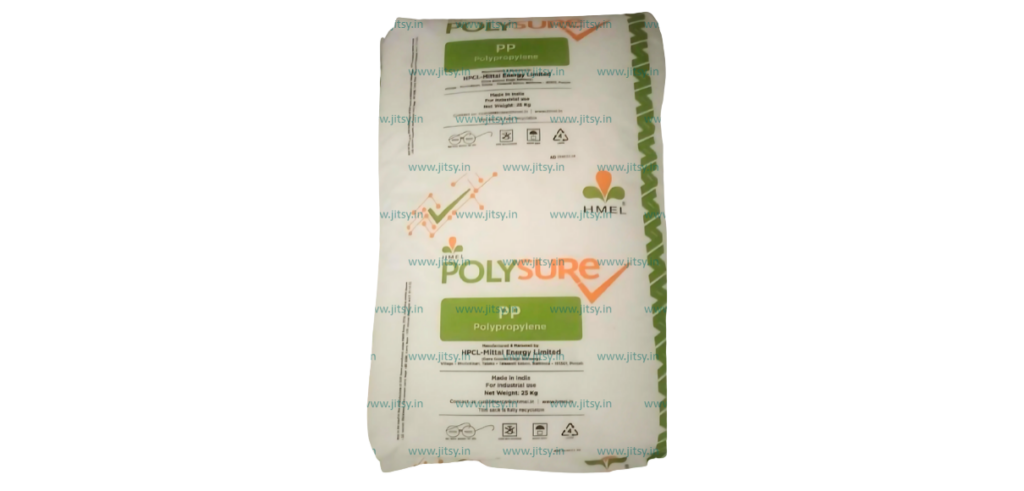
IOCL PPRCP Propel 2120MC
IOCL Propel 2120MC is a high-clarity polypropylene random copolymer grade manufactured by Indian Oil Corporation Ltd (IOCL) under the PROPEL brand. Produced using Spheripol II technology, this natural-coloured resin is designed for injection moulding and ISBM, delivering exceptional clarity, balanced stiffness–impact properties, and efficient processing. IOCL’s integrated refining and polymer infrastructure ensures consistent supply, batch traceability, and robust technical support across India.Propel 2120MC is classified as a PP random copolymer, not an impact copolymer, with HSN code 39023000 and CAS 9003-07-0. It is marketed under IOCL’s PROPEL brand, aligning with Indian and global regulatory standards for food and pharma packaging.
Technical Specifications and Material Properties
- Melt Flow Index: 12 g/10 min (ASTM D1238)
- Density:90 g/cm³ (ASTM D1505)
- Tensile Strength at Yield: ~34 MPa (ASTM D638)
- Elongation at Yield: ~12% (ASTM D638)
- Flexural Modulus: ~1100 MPa (ASTM D790)
- Notched Izod Impact: ~46 J/m (ASTM D256)
- Vicat Softening Point: ~130°C (ASTM D1525)
- Heat Deflection Temp: ~80°C (ASTM D648)
- Processing Temp Range: 180–230°C
- Compliance: IS 10910, FDA 21 CFR 177.1520
Applications and Industry Use Cases
Rigid Containers and Food Packaging
2120MC is ideal for injection-moulded rigid food containers, transparent jars, and packaging trays demanding clarity, stackability, and food-contact safety. Its compliance with IS 10910 and FDA 21 CFR 177.1520 ensures suitability for food and pharma packaging.Houseware and Household Products
The grade’s balanced modulus and impact strength make it a preferred choice for houseware, kitchenware, storage boxes, and organisers where clarity and durability are essential.ISBM Bottles and Transparent Containers
Optimised for injection stretch blow moulding, 2120MC delivers glass-like clarity and drop resistance for ISBM bottles, personal care packaging, and display containers. Its flow properties support complex shapes and thin-wall designs.Performance Advantages for Converters
2120MC offers converters high clarity and gloss, balanced stiffness and impact, lower processing temperatures for energy savings, and up to 15% cycle-time reduction. Its regulatory compliance, recyclability, and batch consistency support both manufacturing efficiency and sustainability goals.Alternative and Comparable Grades in India
- Reliance Repol SRM100NC: 12 MFI, clarified PP random, direct competitor for rigid containers and ISBM with similar clarity and modulus.
- HMEL Polysure RM12CR: 12 MFI, Spheripol II-based, high-clarity random copolymer for injection/ISBM, strong in North India.
- Hyosung Topilene R601: International equivalent, 12 MFI, used in food containers, ISBM bottles.
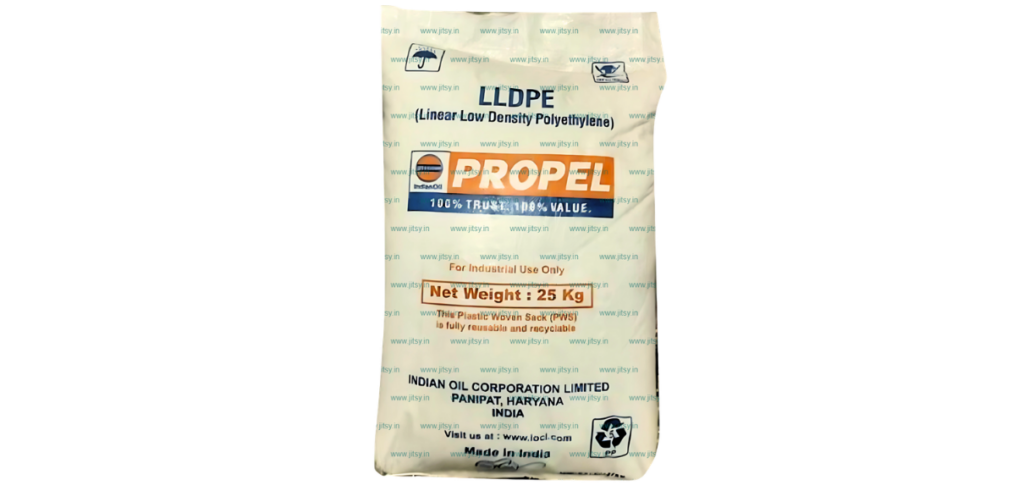
IOCL Propel LLDPE 010F18A
IOCL Propel LLDPE 010F18A is a butene comonomer-based linear low-density polyethylene (LLDPE) manufactured by Indian Oil Corporation Ltd (IOCL) under its PROPEL polymer brand. It is produced using Nova Chemicals’ Sclairtech solution polymerization technology — a precision process that delivers consistent molecular structure, reliable melt behaviour and well-balanced film properties. The grade is formulated without slip and antiblock additives, making it a non-slip film resin that gives converters full control over surface friction and ink adhesion through their own formulation rather than through resin-incorporated additives.IOCL describes 010F18A as a natural-coloured polymer offering good processability and good mechanical properties. Its classification as a non-slip LLDPE film grade makes it distinctly different from IOCL’s 010F18S, which contains built-in slip and antiblock. The absence of these additives in 010F18A makes it the preferred choice for lamination surfaces, print layers and co-extruded structures where high surface energy, good ink adhesion and strong laminate bond strength are needed — properties that slip additives can compromise by migrating to the film surface and reducing adhesion.According to IOCL’s product technical datasheet, LLDPE 010F18A is recommended for lamination films, co-extrusion films, drip laterals, stretch cling films and mulch films. This makes it a versatile blown film grade covering food packaging lamination structures, agricultural film applications and irrigation drip tape — all applications where the film must be strong, processable and either print-receptive or formulation-flexible.
Technical Insights
Resin Properties
- MFI: 0.90 g/10 min (ASTM D1238, 190 °C / 2.16 kg) — A low MFI characteristic of high-performance film-grade LLDPE. The 0.9 g/10 min value indicates high molecular weight, which translates directly into strong film toughness, high elongation and excellent impact resistance. It places 010F18A in the standard 1 MFI film grade category used widely across packaging, lamination and agricultural film applications in India.
- Density: 0.918 g/cm³ (ASTM D1505, 23 °C) — A low LLDPE density resulting from the butene comonomer content. This density gives 010F18A good flexibility combined with strength, and supports easy heat sealing at moderate temperatures — important for packaging films and laminate sealant layers.
Mechanical Film Properties
All values are typical, measured on 40 µm monolayer blown film at 1.8 mm die gap and 2.25 blow-up ratio, as stated in IOCL’s product technical datasheet. They are not specification limits.- Tensile Strength at Yield – MD/TD: 13 MPa / 12 MPa (ASTM D882) — Strong yield resistance in both film directions. This ensures lamination structures and mulch films resist permanent stretch deformation when placed under load during sealing, handling or field application.
- Ultimate Tensile Strength – MD/TD: 39 MPa / 30 MPa (ASTM D882) — Very high break strength confirms that 010F18A films can withstand sudden stress concentrations — critical for laminated pouches that must not rupture during form-fill-seal production, and for mulch or cling films pulled tight across surfaces.
- Elongation at Break – MD/TD: 700% / 850% (ASTM D882) — Exceptional elongation before rupture. This is especially important for stretch cling films and mulch films, where the material is stretched significantly during application and must elongate uniformly without tearing. The high elongation also acts as a safety buffer in heavy-duty laminated packaging against puncture and impact in the distribution chain.
Impact and Tear Properties
- Dart Impact Strength: 3.5 g/µm (ASTM D1709, 38 mm dart, 66 cm height) — Strong puncture resistance per micron of film thickness. At 3.5 g/µm, 010F18A films resist sharp-object puncture well within the range needed for agricultural films exposed to soil stones and debris, and for laminated food-packaging films on high-speed filling lines.
- Tear Strength – MD/TD: 3.3 g/µm / 10.2 g/µm (ASTM D1922) — The high transverse direction tear strength (10.2 g/µm) is critical for films used in stretch cling and mulch applications, where lateral tearing forces are common. The lower machine-direction tear (3.3 g/µm) is typical for oriented LLDPE films and is balanced by the grade’s exceptional elongation and impact toughness.
Recommended Processing Window
IOCL recommends a blown film processing temperature of 170–210 °C for LLDPE 010F18A. This is the same window as for the slip grade 010F18S and comparable to OPaL F2001S guidelines, confirming standard industry practice for 0.9 MFI LLDPE film grades. Operating within this range ensures stable bubble formation, consistent film gauge and full development of the mechanical and optical properties documented in IOCL’s datasheet. Processing below 170 °C risks incomplete melting and gauge inconsistency; exceeding 210 °C can cause oxidative degradation, loss of clarity and reduced film strength.Applications of IOCL LLDPE 010F18A
Lamination Films and Co-Extrusion Structures
LLDPE 010F18A is widely used as a functional layer in laminated and co-extruded film structures for food packaging, pharmaceutical wraps and consumer goods. In multilayer films, 010F18A is typically placed on the lamination or print surface because its non-slip, additive-free formulation provides high surface energy that promotes strong ink adhesion and durable laminate bond strength between layers. Converters use 010F18A in the outer layers of co-extruded films where surface quality, clarity and adhesion matter most, while a separate slip-grade resin like IOCL 010F18S may be used in inner or contact layers where low friction is needed for bag opening. IOCL explicitly recommends 010F18A for both lamination films and co-extrusion films in its product technical datasheet.Stretch Cling Films
For stretch cling film — used in food wrapping, pallet wrapping and produce packaging — IOCL 010F18A provides the high elongation (700–850%) and film toughness needed to stretch uniformly over irregular shapes without tearing. Its density of 0.918 g/cm³ and moderate MFI support the blown film co-extrusion process typically used for cling films, and the absence of antiblock additives means the film’s natural cling behaviour can be optimised through formulation choices (such as PIB tackifier addition) without additive interference. The grade’s dart impact strength (3.5 g/µm) also ensures stretch cling films resist puncture from packaged goods with sharp edges or protruding corners.Mulch Films for Agriculture
IOCL 010F18A is recommended for agricultural mulch films, which are laid over soil to retain moisture, suppress weeds and regulate soil temperature. Mulch films are subject to mechanical stress during laying by tractor-mounted equipment, UV exposure in the field and contact with sharp soil particles and plant stems. The combination of high tensile strength (39/30 MPa), very high elongation (>700%), strong tear resistance (10.2 g/µm TD) and dart impact performance (3.5 g/µm) makes 010F18A suited to withstand these stresses during both application and the growing season. Converters who need to incorporate UV stabilisers, colour masterbatch or antistatic additives into mulch films benefit from 010F18A’s additive-free base, which allows masterbatch formulations to perform without interference from pre-incorporated slip or antiblock agents.Drip Laterals and Agricultural Irrigation Films
IOCL includes drip laterals among the recommended applications for 010F18A, and the grade can be used for film-based drip tape or certain thin-wall irrigation tube geometries produced via blown film or extrusion processes. Its non-slip surface and good mechanical properties support consistent wall gauge and adequate pressure retention in drip tape applications. However, where dedicated pipe-grade properties — particularly higher environmental stress crack resistance and long-term pressure performance — are required, IOCL’s dedicated drip lateral grade 010L22S is listed separately in IOCL’s grade slate for that purpose. The selection between 010F18A and 010L22S should be based on the specific wall thickness, pressure rating and end-use performance requirements of the irrigation system.Comparable Alternative LLDPE Film Grades
IOCL 010F18A belongs to a well-defined group of 0.9–1.0 MFI non-slip LLDPE blown film grades available from Indian producers. These grades are regularly compared and evaluated together by film converters choosing between domestic polymer suppliers.OPaL LLDPE F2001A from ONGC Petro Additions Ltd is the closest structural analogue to IOCL 010F18A in the Indian market. F2001A is a 0.90 MFI butene-based LLDPE blown film grade with a density of 0.920 g/cm³, formulated without slip or antiblock additives — the same non-slip positioning as IOCL 010F18A. OPaL recommends F2001A for lamination films, multilayer films and general packaging applications where a non-slip surface is needed, exactly mirroring 010F18A’s primary use cases. The density difference is minor (0.918 vs 0.920 g/cm³), and both grades are produced by leading domestic petrochemical producers with food-contact regulatory approvals. OPaL has not published documentation confirming that F2001A is interchangeable with IOCL 010F18A; equivalence is not confirmed by the manufacturer and should be validated through processing trials before production qualification.OPaL LLDPE F2001S is the slip-grade counterpart to F2001A, with the same MFI (0.90 g/10 min) and similar density (~0.919 g/cm³) but formulated with slip and antiblock additives. F2001S is more comparable to IOCL 010F18S than to 010F18A. Understanding this distinction is important when evaluating Indian LLDPE film grades: within both IOCL and OPaL’s product lines, the “A” suffix designates the non-slip lamination grade and the “S” suffix designates the slip packaging grade — a consistent pattern that makes supplier-to-supplier grade navigation straightforward once the naming convention is understood.Haldia Petrochemicals 71601W is a 1 MFI LLDPE blown film grade produced via Spherilene gas-phase polymerization technology, formulated without slip or antiblocking additives. It is described as having controlled morphology, excellent processability and good mechanical properties, and is used for lamination films and general-purpose packaging. Its density falls in the 0.916–0.920 g/cm³ range, placing it close to IOCL 010F18A. The key difference is production technology — Sclairtech solution polymerization (IOCL) versus Spherilene gas-phase (Haldia) — which can result in differences in molecular weight distribution and film optical properties. Haldia has not confirmed that 71601W is equivalent to IOCL 010F18A; equivalence is not confirmed by the manufacturer.Haldia 71602W is a 2 MFI non-slip LLDPE film grade from the same producer, suitable for general-purpose packaging films. Its higher MFI makes it less comparable to IOCL 010F18A in terms of film toughness and elongation, but it is commonly offered alongside 010F18A by distributors serving the packaging film sector.The clearest differentiator for IOCL 010F18A across this peer group is its production via Sclairtech solution polymerization, which IOCL associates with consistent molecular architecture and predictable processing, combined with IOCL’s well-established PROPEL brand presence and direct TDS documentation of food-contact and drinking-water regulatory approvals.Regulatory Compliance, Food Contact and Safety for IOCL LLDPE 010F18A
IOCL’s product technical datasheet for LLDPE 010F18A carries explicit regulatory approvals that are important for packaging converters and their food and pharma sector customers.The grade meets IS 10146:1982 — the Bureau of Indian Standards specification for polyethylene for safe use in contact with foodstuffs, pharmaceuticals and drinking water — and conforms to the positive list of constituents as per IS 10141:1982, which governs permitted additives in food-contact polyethylene in India. IOCL also confirms that the grade and its incorporated additives comply with FDA CFR Title 21, Section 177.1520 (Olefin Polymers) — the US FDA regulation for olefin-based polymers in food-contact articles.These approvals make 010F18A suitable for use in food-contact lamination films, multilayer food pouches, co-extruded food packaging structures and pharmaceutical wrap films, where the regulatory status of every layer in a laminate structure must be verifiable by the packaging converter and brand owner.Manufacturer Details – IOCL PROPEL LLDPE 010F18A
IOCL Propel LLDPE 010F18A is manufactured by Indian Oil Corporation Ltd (IOCL), India’s largest public-sector oil and petrochemicals company. IOCL’s polymer range is marketed under the PROPEL brand, with polyethylene and polypropylene grades produced at the Panipat petrochemical complex. The LLDPE/HDPE swing plant at Panipat uses Nova Chemicals’ Sclairtech solution polymerization technology, which delivers precise comonomer incorporation and narrow molecular weight distribution — the technical foundation for 010F18A’s consistent film properties across production runs.Common Search Variants and Grade Misspellings
IOCL Propel LLDPE 010F18A is also commonly searched and referenced as: IOCL LLDPE Blown Film Non Slip 0.9 MFI 010F18A, LLDPE Film 1 MFI Non Slip IOCL 010F18A, 010F18A IOCL Linear Low Density Polyethylene Granules, IOCL LL Film 010F18A, PROPEL LLDPE 010F18A non-slip blown film granules, and IOCL 010 F18A lamination film grade 25 kg.Frequent misspellings and alternate formats include: 010 F18A LLDPE, 010f18a IOCL non slip granules, IOCL lldpe 010-F18-A blown film, and IOCL LLDPE 0.9 MFI non-slip film grade. IOCL Propel LLDPE 010F18S
IOCL Propel LLDPE 010F18S is a butene comonomer-based linear low-density polyethylene (LLDPE) manufactured by Indian Oil Corporation Ltd (IOCL) under its PROPEL polymer brand. It is produced using Nova Chemicals’ Sclairtech solution polymerization technology — a precision process that delivers consistent molecular structure, reliable melt behaviour and well-balanced film properties batch after batch. The grade is formulated with slip and antiblock additives, making it a ready-to-process film slip grade without the need for additional masterbatch in most standard packaging applications.IOCL describes 010F18S as a natural-coloured polymer offering good processability, good mechanical properties and the surface slip characteristics needed for smooth film handling and bag-making. It belongs to the linear low-density polyethylene family — thermoplastic resins where short-chain branching from butene comonomer incorporation delivers significantly higher toughness, puncture resistance and tensile strength compared with conventional LDPE at the same density, making LLDPE films thinner, stronger and more cost-efficient per unit area.According to IOCL’s product technical datasheet, LLDPE 010F18S is designed for liquid packaging films, heavy duty films, multilayer films, carrier bags and drip laterals — a broad range of blown film applications where a combination of high mechanical strength, good optical clarity and manageable film-to-film slip is essential. Its MFI of 0.90 g/10 min is specifically suited to blown film extrusion, where lower melt flow indices translate into better bubble stability and stronger film properties.
Technical Insights
Resin Properties
- MFI: 0.90 g/10 min (ASTM D1238, 190 °C / 2.16 kg) — A low MFI is characteristic of film-grade LLDPE. Lower melt flow means higher molecular weight, which directly improves film toughness, dart impact resistance and elongation. This 0.9 MFI rating places 010F18S in the mainstream of high-performance packaging film grades and ensures good bubble stability during blown film extrusion.
- Density: 0.918 g/cm³ (ASTM D1505, 23 °C) — A low density for LLDPE, this value reflects the butene comonomer content and gives the film a good balance of flexibility and strength. Lower density LLDPE films are more flexible and seal more easily at lower temperatures, both of which are valuable for liquid packaging and carrier bag applications.
Mechanical Film Properties
All mechanical values are typical, measured on 40 µm monolayer blown film at 1.8 mm die gap and 2.25 blow-up ratio (as noted in IOCL’s product technical datasheet).- Tensile Strength at Yield – MD/TD: 13 MPa / 12 MPa (ASTM D882) — The stress level at which the film begins to stretch permanently. A yield strength of 13 MPa in the machine direction indicates the film resists deformation under the load of liquid-filled pouches and heavy sacks.
- Ultimate Tensile Strength – MD/TD: 39 MPa / 30 MPa (ASTM D882) — This is the maximum stress the film can handle before rupturing. Values of 39 MPa (MD) and 30 MPa (TD) indicate excellent structural toughness, well above the range needed for milk pouches, heavy duty shipping sacks and multilayer laminations.
- Elongation at Break – MD/TD: 700% / 850% (ASTM D882) — Exceptional stretch before rupture. Films with >700% elongation absorb sudden impacts and stress concentrations, a critical attribute when bags are dropped, stuffed or mechanically handled at high speed.
- Dart Impact Strength: 3.5 g/µm (ASTM D1709, 38 mm dart, 66 cm height) — Measures resistance to puncture from a falling object. At 3.5 g/µm, 010F18S provides strong puncture resistance for thin-gauge liquid packaging films, reducing the risk of pouch failure during filling, handling and distribution.
- Elmendorf Tear Strength – MD/TD: 3.3 g/µm / 10.2 g/µm (ASTM D1922) — Tear resistance. The high transverse direction tear strength (10.2 g/µm) is important for carrier bags and heavy duty films, where side seams and edges are subject to tearing under load. The lower MD tear (3.3 g/µm) is typical for oriented LLDPE films and is balanced by the grade’s high elongation.
Optical and Surface Properties
- Gloss (60°): 80% (ASTM D523) — High gloss indicates good optical clarity and surface finish, which is important for liquid packaging films where product visibility and presentation matter. The slip and antiblock additives in 010F18S are formulated to maintain gloss while reducing film-to-film adhesion.
- Coefficient of Friction – Static/Dynamic: 0.22 / 0.16 (ASTM D1894) — These low COF values are the result of the built-in slip additives. Films with COF below 0.3 run smoothly on high-speed packaging lines, through form-fill-seal machines and over guide rollers, reducing jams, film tension issues and wastage.
Recommended Processing Window
IOCL recommends a barrel temperature of 180–200 °C, melt temperature of 190–210 °C, blow-up ratio of 2.0–3.0 and die gap of 1.8–2.5 mm for blown film processing of 010F18S. The overall recommended processing temperature range is 170–210 °C. Operating within these parameters ensures stable bubble formation, consistent gauge, good optical properties and full development of the grade’s mechanical and surface properties. Exceeding the upper limit risks resin degradation and loss of optical clarity; processing below the lower limit may cause incomplete melting and weak seams.All values above are typical values from IOCL’s Product Technical Datasheet for LLDPE 010F18S. They are not specification limits and may change without prior notice from the manufacturer.Applications of IOCL LLDPE 010F18S in Films, Packaging and Drip Laterals
Liquid Packaging Films
LLDPE 010F18S is widely used for liquid packaging films, including milk pouches, edible oil sachets, water pouches and beverage packs produced on blown film lines or form-fill-seal equipment. Its low density (0.918 g/cm³), high elongation (>700%), strong dart impact (3.5 g/µm) and low coefficient of friction make it ideal for films that must be formed, filled and sealed at high speeds without breaking, leaking or jamming on machinery. The grade’s compliance with IS 10146:1982 and IS 10141:1982 for food and drinking water contact, as stated in IOCL’s product technical datasheet, ensures it meets the regulatory requirements for direct food and liquid contact packaging in India.Heavy Duty Films and Sacks
For heavy duty packaging films and industrial sacks — used for fertilisers, chemicals, grains and construction materials — 010F18S delivers the tensile and tear performance required. The ultimate tensile strength of 39 MPa (MD) and 30 MPa (TD), combined with elongation at break above 700%, allows heavy duty films to absorb the mechanical stress of filling, sealing, stacking and transportation without rupturing. Processors in the packaging industry benefit from the grade’s good processability and consistent melt behaviour, which reduces scrap rates and improves output on high-speed extrusion lines.Multilayer Films and Lamination
010F18S is suited for use as a functional layer in co-extruded multilayer film structures — such as inner sealant layers, strength layers and tie layers — in packaging for food, pharmaceuticals and consumer goods. Its high mechanical strength and good sealability make it an effective sealant layer, while its controlled COF (0.22 static / 0.16 dynamic) ensures that bags and pouches open cleanly. For structures where printing or lamination is required on outer layers, processors typically use IOCL’s non-slip variant 010F18A or the higher MFI grade 020F18A as the print or lamination surface, while 010F18S serves as the slip inner layer — a distinction documented in IOCL’s LLDPE/HDPE grade slate.Carrier Bags and Shopping Bags
In carrier bag and shopping bag manufacturing, 010F18S offers the toughness to handle heavy loads and the surface slip needed for stacking and dispensing. The grade’s tear resistance in the transverse direction (10.2 g/µm) helps bags resist splitting at handles and side seams under the weight of contents. The slip and antiblock additives allow individual bags to be opened easily from a stack, which is essential for retail checkout applications. IOCL explicitly lists carrier bags as a recommended application for 010F18S.Drip Laterals
IOCL includes drip laterals among the recommended applications for 010F18S, where certain film-based drip tape geometries or thinner-wall extruded laterals can be produced from this grade. However, where dedicated pipe-grade properties are required — such as higher environmental stress crack resistance and pressure-rated wall consistency — IOCL also offers the dedicated drip lateral grade 010L22S, which is separately listed in IOCL’s grade slate without slip additives and optimised specifically for pipe extrusion. The choice between 010F18S and 010L22S for drip applications should be made based on the specific product geometry, wall thickness and performance requirements of the drip system.Comparable Alternative LLDPE Film Grades in India
IOCL 010F18S is one of several 0.9 MFI LLDPE film slip grades available from Indian producers. Understanding how it compares helps procurement managers and film processors make informed sourcing decisions when evaluating alternatives or building redundancy into their supply chain.OPaL LLDPE F2001S from ONGC Petro Additions Ltd is the closest comparable grade in the Indian market. F2001S is a butene comonomer-based LLDPE produced via Ineos gas-phase polymerization technology, with an MFI of 0.90 g/10 min and density of 0.919 g/cm³ — virtually identical to IOCL 010F18S. It contains slip and antiblock additives and carries the same regulatory approvals: IS 10146:1982, IS 10141:1982 and FDA CFR 21, 177.1520. OPaL recommends F2001S for co-extrusion films, liquid packaging films and drip laterals, mirroring 010F18S’s application scope almost exactly. However, OPaL has not published documentation confirming that F2001S is interchangeable with IOCL 010F18S. Equivalence is not confirmed by the manufacturer and should be validated through process trials before production qualification.OPaL F2001A is the non-slip counterpart to F2001S within OPaL’s film grade range — same density (~0.920 g/cm³) and similar MFI, but formulated without slip or antiblock additives. F2001A is better suited to outer print and lamination layers in multilayer structures where low COF would interfere with ink adhesion or laminate bonding. It is not a substitute for 010F18S in applications requiring built-in film slip.Haldia Petrochemicals 71601W and 71602W are LLDPE blown film grades produced using Spherilene technology. Both are described as non-slip grades (without slip or antiblocking additives), positioning them as base film grades for lamination and adhesive film applications rather than direct-run packaging. With MFIs in the 1.0–2.0 g/10 min range and densities around 0.916–0.920 g/cm³, they are broadly similar in resin properties but differ from 010F18S in their additive package. Processors using Haldia grades in applications that require slip would need to add external slip masterbatch, unlike 010F18S which is ready to process. Equivalence to 010F18S is not confirmed by the manufacturer.The key differentiator for IOCL 010F18S across all these alternatives is its combination of IOCL PROPEL brand reliability, Sclairtech solution polymerization technology, a fully verified regulatory profile and a built-in slip and antiblock package — all validated through IOCL’s product technical datasheet and grade slate.Regulatory Compliance, Food Contact and Safety for IOCL LLDPE 010F18S
IOCL’s product technical datasheet for LLDPE 010F18S carries three explicit regulatory approvals that are important for food, pharmaceutical and drinking water packaging applications.The grade meets IS 10146:1982 — the Bureau of Indian Standards specification for polyethylene for safe use in contact with foodstuffs, pharmaceuticals and drinking water. It also conforms to the positive list of constituents as per IS 10141:1982, which governs the additives and processing aids permitted in food-contact polyethylene in India. Additionally, IOCL confirms that the grade and its incorporated additives comply with FDA CFR Title 21, Section 177.1520 (Olefin Polymers) — the US FDA regulation covering olefin-based polymers in food-contact applications.Together, these approvals make IOCL LLDPE 010F18S suitable for use in liquid packaging films, milk pouches, edible oil sachets, pharmaceutical wraps and other food-contact packaging where regulatory certification is required by brand owners, retailers and food safety authorities.Manufacturer Details – IOCL PROPEL LLDPE 010F18S
IOCL Propel LLDPE 010F18S is manufactured by Indian Oil Corporation Ltd (IOCL), India’s largest public-sector refining and petrochemicals company. IOCL’s polymer range is marketed under the PROPEL brand, covering polyethylene and polypropylene grades from its Panipat petrochemical complex. The LLDPE/HDPE swing plant at Panipat uses Nova Chemicals’ Sclairtech solution polymerization technology, which allows IOCL to produce LLDPE grades with precise molecular weight control and consistent comonomer distribution — the foundation for reliable and reproducible film properties.LLDPE 010F18S is listed in IOCL’s official LLDPE/HDPE Grade Slate for the Sclairtech Swing Plant under the LLDPE film category, with MFI of 0.9 g/10 min and density of 0.918 g/cm³, described as a film grade with slip and antiblock additive package. Technical documentation is available through IOCL’s Product Application and Development Center (PADC), Panipat.Common Search Variants and Grade Misspellings
IOCL Propel LLDPE 010F18S is also commonly searched and referenced as: LLDPE 010F18S, IOCL 010F18S film slip granules, White 010F18S IOCL LLDPE film slip granules, IOCL blown film slip 0.9 MFI 010F18S, Propel LLDPE 010F18S, LLDPE 1 MFI slip film grade IOCL, and Natural PROPEL LLDPE 010F18S 25 kg bag.Frequent misspellings and alternate formats include: 010 F18S, 010f18s LLDPE, IOCL lldpe 010-F18-S, IOCL 0.9 MFI film slip LLDPE granules, and IOCL polyethylene film slip 0.9 MFI. IOCL Propel LLDPE 020F18A
IOCL Propel LLDPE 020F18A is a butene comonomer-based linear low-density polyethylene (LLDPE) manufactured by Indian Oil Corporation Ltd (IOCL) under its PROPEL polymer brand. It is produced using Nova Chemicals’ Sclairtech solution polymerization technology — a precision process that ensures consistent molecular weight distribution, predictable melt behaviour and reliable film properties across production runs. With a melt flow index of 2.0 g/10 min, 020F18A offers higher output and easier drawdown than 0.9 MFI film grades, while its non-slip, non-antiblock formulation gives converters full control over film surface properties through their own masterbatch selection.IOCL describes 020F18A as a natural-coloured polymer with easy processability, low gel content and no slip or antiblock additives. These three attributes together define the grade’s positioning: easy to run on blown and cast film lines at higher speeds, optically clean with minimal gel defects, and surface-neutral so that ink adhesion, laminate bonding and coefficient of friction can be engineered precisely through formulation. It is the 2 MFI counterpart to IOCL’s 0.9 MFI non-slip grade 010F18A — same density, same additive-free base, higher flow for applications that benefit from faster throughput or thinner film gauge.According to IOCL’s product technical datasheet, LLDPE 020F18A is recommended for lamination films, cast films, stretch cling films and air bubble film. This application set covers some of the most throughput-sensitive film processes in packaging and logistics — where a resin that flows well, stays optically clear, and delivers consistent mechanical performance across thin gauges creates measurable production and quality advantages over lower-flow or additive-loaded alternatives.
Technical Insights
Resin Properties
- MFI: 2.0 g/10 min (ASTM D1238, 190 °C / 2.16 kg) — The 2.0 MFI rating is the defining difference between 020F18A and IOCL’s 0.9 MFI film grades. Higher melt flow means lower melt viscosity, which translates into higher extrusion output rates, easier drawdown for thinner gauges and better processability on cast film lines and stretch cling equipment. For processors running thin lamination or cast films where output efficiency matters, 020F18A’s MFI allows faster line speeds than 010F18A while maintaining adequate film toughness for most packaging applications.
- Density: 0.918 g/cm³ (ASTM D1505, 23 °C) — Identical to IOCL 010F18A, this density places 020F18A in the flexible-to-semi-rigid zone of the LLDPE range. It enables good film sealability at moderate temperatures, balanced flexibility and strength in laminated structures, and the low-temperature toughness relevant for cold-chain and refrigerated packaging applications.
Mechanical Film Properties
- Tensile Strength at Yield – MD/TD: 12.5 MPa / 12.0 MPa (ASTM D882) — Balanced yield strength in both directions ensures lamination and cast films resist permanent deformation under the tension loads of form-fill-seal equipment, roll winding and pallet stretch application.
- Ultimate Tensile Strength – MD/TD: 33 MPa / 28 MPa (ASTM D882) — High break strength across both film orientations confirms that 020F18A provides structural integrity in laminated pouches, stretch wrap and bubble film even at thin gauges where each micron of film must carry more load.
- Elongation at Break – MD/TD: 700% / 800% (ASTM D882) — Very high elongation is essential for stretch cling films, which are stretched significantly during pallet wrapping and food cling applications. Values of 700% (MD) and 800% (TD) indicate that 020F18A films can accommodate high elongation without rupturing — a critical requirement for stretch and cling performance. It is marginally lower than the 850% TD value of 010F18A, consistent with the slightly lower molecular weight of the 2 MFI grade.
Impact, Tear and Optical Properties
- Dart Impact Strength: 2.5 g/µm (ASTM D1709, 38 mm dart, 66 cm height) — Solid puncture resistance per micron of film thickness. At 2.5 g/µm, 020F18A is slightly lower than the 3.5 g/µm of the 0.9 MFI grade 010F18A, which is the expected trade-off for higher melt flow. For lamination films, cast films and air bubble film where other film layers or construction geometries provide additional protection, this impact level is fully adequate.
- Tear Strength – MD/TD: 3 g/µm / 8 g/µm (ASTM D1922) — The transverse direction tear strength of 8 g/µm provides good resistance to edge tearing and side-seam splitting in laminated pouches and stretch-wrapped loads. The lower MD value (3 g/µm) is typical for oriented LLDPE films and is compensated by the grade’s high elongation.
- Haze: 9% (ASTM D1003) — A 9% haze value indicates good film optical clarity, which is important for packaging applications where product visibility matters — laminated food pouches, clear stretch wrap over pallets and transparent bubble film for protective packaging. The low gel formulation of 020F18A contributes directly to achieving this haze level consistently in production.
Recommended Processing Window
IOCL recommends a blown film processing temperature of 170–210 °C for LLDPE 020F18A. The higher MFI of this grade means the melt flows more easily within this window than lower-MFI grades, typically allowing processing towards the lower end of the range (170–190 °C) without sacrificing film properties — which reduces energy consumption and thermal degradation risk. Operating above 210 °C can cause oxidative degradation, increased gels and haze development, negating the low-gel advantage that IOCL highlights for this grade.Applications of IOCL LLDPE 020F18A
Lamination Films and Multilayer Cast Films
IOCL LLDPE 020F18A is widely used as a lamination film layer and as a component in multilayer cast film structures for food packaging, pharmaceutical wraps, industrial packaging and consumer goods. Its 2.0 MFI enables higher extrusion output compared with 0.9 MFI grades, making it more cost-efficient on high-speed lamination lines where throughput directly affects unit economics. The absence of slip and antiblock additives is critical here — converters who print or laminate the film surface need a clean, high-energy surface for ink adhesion and adhesive bonding, and built-in slip additives would migrate to the surface and reduce both. IOCL explicitly recommends 020F18A for lamination films in its product technical datasheet.Stretch Cling Films and Pallet Wrap
For stretch cling film and pallet wrap applications, 020F18A’s combination of 2.0 MFI, high elongation (700–800%) and good tear resistance (8 g/µm TD) makes it a strong candidate. Stretch and cling films are drawn down to very thin gauges on cast or blown lines and then stretched around loads — a process that demands both high drawdown flow and sufficient toughness to prevent film tearing during application. The non-slip, additive-free base allows formulators to add tackifier (such as PIB) and control cling performance precisely without interference from pre-dispersed antiblock, enabling better formulation flexibility than additive-containing grades. IOCL lists stretch cling films as a primary recommended application for 020F18A.Air Bubble Film for Protective Packaging
020F18A is recommended by IOCL for air bubble film — the cushioning material used for protective packaging of fragile goods. Bubble film requires a resin that processes easily (to form uniform bubble geometry), holds air retention well (good film barrier) and resists puncture when the packaged product shifts against the bubbles. The grade’s good dart impact strength (2.5 g/µm), high elongation and low haze (9%) support these requirements. The low gel specification is particularly important for bubble film: gel particles in the film create weak points that cause premature bubble bursting under light contact, so the “low gels” attribute IOCL highlights for 020F18A is a direct quality differentiator for this application.Cast Films
Cast film processes run at higher speeds and tighter gauge tolerances than blown film, placing greater demands on resin flow consistency and melt uniformity. 020F18A’s higher MFI (2.0 g/10 min) and narrow molecular weight distribution from Sclairtech technology support stable cast film extrusion with good gauge uniformity and consistent optical properties. For cast film applications in food packaging — such as direct-contact wraps, window patches and sealant films in multilayer structures — the grade’s food-contact regulatory approvals (IS 10146, IS 10141, FDA 177.1520) provide the necessary compliance foundation.Comparable Alternative LLDPE Film Grades
IOCL 020F18A sits in a clearly defined segment of 2 MFI non-slip LLDPE blown film grades produced by Indian domestic manufacturers. These grades are commonly evaluated side by side by converters running lamination, cast and stretch cling film applications.OPaL LLDPE F2002A and F2002S from ONGC Petro Additions Ltd are the closest structural analogues. Both are 2 MFI LLDPE film grades produced via Ineos gas-phase polymerization technology with densities around 0.920 g/cm³. F2002A is the non-slip lamination grade, positioned similarly to IOCL 020F18A for lamination and cast films; F2002S adds slip and antiblock for general packaging and stretch film applications. The OPaL grades are produced via gas-phase technology rather than Sclairtech solution polymerization, which can result in differences in molecular weight distribution and optical properties that may be visible on-line as minor differences in bubble stability or film haze. OPaL has not confirmed that F2002A is a drop-in replacement for IOCL 020F18A; equivalence is not confirmed by the manufacturer and should be validated through line trials.GAIL G-Lene F18A020U is a 2 MFI LLDPE film grade from GAIL (India) Ltd marketed as “LLDPE Film Non-Slip Granules” for blown film extrusion with an optimum balance of mechanical and optical properties. It is described as suitable for general-purpose, heavy-duty and liquid packaging films in both laminated and non-laminated blown film applications. However, some commercial descriptions of F18A020U mention that it contains adequate slip and antiblock agents — which would place it closer to a slip grade than IOCL 020F18A’s strictly non-slip formulation. Converters requiring a fully additive-free surface for lamination or printing should confirm the additive package directly with GAIL before substituting F18A020U for 020F18A. GAIL has not confirmed equivalence; equivalence is not confirmed by the manufacturer.IOCL 010F18A is the 0.9 MFI counterpart from the same IOCL product family — same density (0.918 g/cm³), same non-slip/non-antiblock formulation, but lower MFI. Compared with 020F18A, 010F18A offers higher dart impact (3.5 vs 2.5 g/µm) and slightly higher ultimate tensile strength (39/30 vs 33/28 MPa), making it the better choice for applications where maximum film toughness is the priority. 020F18A is the better choice when higher output, easier drawdown for thin gauges, or faster processing is the priority. IOCL does not market these as substitutes; the right grade depends on the application’s balance of output rate versus film toughness.Haldia 71602W is a 2 MFI non-slip LLDPE blown film grade from Haldia Petrochemicals, produced via Spherilene gas-phase technology, without slip or antiblock additives. It targets general-purpose packaging films in a similar MFI/density range, making it a comparable grade. Haldia has not confirmed equivalence to IOCL 020F18A; differences in production technology may result in subtle processing and optical property differences that need evaluation.Regulatory Compliance, Food Contact and Safety for IOCL LLDPE 020F18A
IOCL’s product technical datasheet for LLDPE 020F18A confirms three explicit regulatory approvals that are essential for packaging converters serving food, pharmaceutical and potable water sectors.The grade meets IS 10146:1982 — the Bureau of Indian Standards specification for polyethylene for safe use in contact with foodstuffs, pharmaceuticals and drinking water. It also conforms to the positive list of constituents as per IS 10141:1982, which governs permitted additives in food-contact polyethylene in India. Additionally, IOCL states that the grade and its incorporated additives comply with FDA CFR Title 21, Section 177.1520 (Olefin Polymers) — the US FDA regulation for olefin-based polymers in food-contact applications.These three approvals collectively make 020F18A suitable for use in food-contact lamination films, cast wraps, multilayer food pouches and pharmaceutical packaging structures — provided the full laminate or film construction also meets applicable regulations. For converters supplying brand owners who require documented resin-level compliance, IOCL’s regulatory statements in the datasheet serve as the primary reference.Manufacturer Details – IOCL PROPEL LLDPE 020F18A
IOCL Propel LLDPE 020F18A is manufactured by Indian Oil Corporation Ltd (IOCL), India’s largest public-sector oil and petrochemicals company. IOCL’s polymer range is marketed under the PROPEL brand, with LLDPE grades produced at the Panipat petrochemical complex using Nova Chemicals’ Sclairtech solution polymerization technology. This technology is noted for its ability to produce LLDPE with narrow, well-controlled molecular weight distribution — a key factor in 020F18A’s consistent processability, low gel levels and predictable film properties.Common Search Variants and Grade Misspellings
IOCL Propel LLDPE 020F18A is also commonly searched and referenced as: IOCL LLDPE Blown Film Non Slip 2.0 MFI 020F18A, LLDPE Film 2 MFI Non Slip IOCL 020F18A, 020F18A IOCL LLDPE granules, PROPEL LLDPE 020F18A lamination film grade, White 020F18A IOCL LLDPE 25 kg bag, and IOCL LL Film 020F18A 2 MFI blown film.Frequent misspellings and alternate formats include: 020 F18A LLDPE, 020f18a IOCL granules, IOCL lldpe 020-F18-A non slip, and IOCL LLDPE 2.0 MFI non-slip film grade 020F18A. IOCL Propel LLDPE 500M24A
IOCL Propel LLDPE 500M24A is a butene comonomer-based linear low-density polyethylene (LLDPE) manufactured by Indian Oil Corporation Ltd (IOCL) under its PROPEL polymer brand. It is produced using Nova Chemicals’ Sclairtech solution polymerization technology — a precision process that delivers a narrow molecular weight distribution, consistent melt behaviour and excellent flow properties. With a melt flow index of 50 g/10 min, 500M24A is one of the highest-flow LLDPE grades in IOCL’s portfolio, designed specifically for applications where fast mould filling, low warpage and good dispersion of pigments and additives are critical requirements.IOCL describes 500M24A as a natural-coloured polymer with narrow molecular weight distribution, excellent processability and outstanding flow properties. Its linear polymer structure, derived from the LLDPE family, gives it better tensile strength, toughness and chemical resistance compared with LDPE grades of similar density — making it a preferred base resin for colour and additive masterbatches where the carrier polymer must disperse high loadings uniformly without compromising melt flow or the final product’s mechanical integrity.According to IOCL’s product technical datasheet, LLDPE 500M24A is designed as a base resin for masterbatches and to make moulding of flat and large warpage-free products and lids. These two primary roles — masterbatch carrier and injection-moulded lid resin — both demand the same core attributes: very high flow for fast filling and dispersion, narrow molecular weight distribution for uniform melt behaviour, and adequate stiffness and toughness for the finished part or compound to hold its shape and performance through end-use.
Technical Insights
Resin Properties
- MFI: 50 g/10 min (ASTM D1238, 190 °C / 2.16 kg) — This exceptionally high melt flow index is the defining characteristic of 500M24A. At 50 MFI, the resin flows rapidly and evenly through hot-runner systems, multi-cavity moulds and mixing equipment, enabling fast injection cycles, complete cavity fill and thorough pigment dispersion in masterbatch compounding. It is the reason this grade is specified specifically for large, flat lids and high-loading masterbatch formulations where slower-flowing resins would result in incomplete fill or uneven dispersion.
- Density: 0.924 g/cm³ (ASTM D1505, 23 °C) — A medium-low density for LLDPE, this value reflects the butene comonomer content and places 500M24A in the flexible-to-semi-rigid range. It supports good toughness and elongation in moulded parts, balanced with the dimensional stability needed for flat, warp-resistant lids and covers.
Mechanical Properties
All values are typical figures from IOCL’s product technical datasheet, measured on injection-moulded specimens. They are not specification limits.- Tensile Yield Strength: 11–12 MPa (ASTM D638) — Two official TDS copies report slightly different typical values (11 MPa and 12 MPa respectively); both indicate adequate structural strength for lids, covers and moulded flat parts that are not subject to high sustained mechanical loads.
- Elongation at Break: >500% (ASTM D638) — Very high elongation before fracture confirms the grade’s toughness. In masterbatch applications, this ensures the carrier resin does not embrittle compounds, even at high filler loadings. For moulded lids, it means they can flex and absorb impact without cracking.
- Flexural Modulus: 300 MPa (ASTM D790) — Reflects the stiffness of a moulded part. At 300 MPa, 500M24A produces semi-rigid lids and flat parts with enough rigidity to hold their shape in service, without the brittleness of higher-modulus grades. This lower modulus compared to OPaL M2550 (400 MPa) also means slightly more flexibility, which can be advantageous for snap-fit lid applications.
Thermal and Environmental Properties
- Vicat Softening Point: 98 °C (ASTM D1525, 10 N) — The temperature at which the material begins to soften under load. At 98 °C, 500M24A moulded parts retain their shape well below typical sterilization or heat-filling temperatures and are suitable for most ambient and moderately warm storage and distribution environments.
- Environmental Stress Crack Resistance (ESCR), F50: <10 hours (ASTM D1693B) — A low ESCR value indicates limited resistance to cracking under sustained stress in the presence of aggressive chemicals. This is acceptable and expected for 500M24A, which is designed for masterbatch compounding and flat lids rather than pressure-rated pipes or chemical containers that require high ESCR. Specifying 500M24A for stress-crack-sensitive applications should be avoided.
Recommended Processing Window
IOCL recommends a processing temperature of 180–215 °C for injection moulding of LLDPE 500M24A. The high MFI means the resin flows easily within this window, enabling fast shot speeds and short fill times even for large, thin-section lids. Exceeding 215 °C risks oxidative degradation given the high surface area and low molecular weight of this high-flow grade — visible as colour change, odour development and loss of tensile properties. IOCL also advises processing the material within six months of delivery to maintain full performance.Applications of IOCL LLDPE 500M24A
Base Resin for Colour and Additive Masterbatches
The most widely cited application for IOCL LLDPE 500M24A is as a carrier or base resin in colour masterbatches, filler masterbatches and functional additive compounds. In masterbatch manufacturing, the carrier resin must have very high melt flow to allow thorough mixing of pigments, fillers and additives at high loading rates without causing excessive equipment wear or non-uniform dispersion. At 50 MFI, 500M24A provides the flow needed for twin-screw compounders and mixing extruders to blend high pigment concentrations — such as carbon black, titanium dioxide, organic pigments and inorganic fillers — into a homogeneous masterbatch that disperses cleanly when let down into final resin. Its narrow molecular weight distribution ensures consistent melt behaviour batch to batch, which is critical for masterbatch producers who need predictable processing and colour consistency across production runs.Injection-Moulded Lids, Covers and Flat Parts
500M24A is specifically designed by IOCL for injection moulding of flat and large warpage-free products and lids — a category that includes pail lids, drum covers, container caps, trays and other shallow mouldings where dimensional accuracy and flat surface finish are essential. Large flat injection mouldings are among the most demanding applications for any resin because differential cooling and uneven molecular orientation cause warpage — a chronic problem with lower-flow, broader-MWD grades. The 50 MFI and narrow molecular weight distribution of 500M24A allow very fast, even cavity fill with minimal frozen-in stresses, which directly reduces warpage and dimensional distortion after demoulding. The combination of adequate stiffness (300 MPa flexural modulus) and high elongation (>500%) ensures lids are rigid enough to seal containers properly while being tough enough not to crack on impact during handling or assembly.Filler Compounds and Polymer Blends
Beyond pure colour masterbatch, IOCL 500M24A is used in the broader filler compound and polymer blending sector — for example, as the polyethylene matrix or carrier in talc-filled compounds, calcium carbonate masterbatches and functional additive concentrates used in packaging, agriculture and industrial applications. The grade’s high flow reduces the viscosity of heavily filled compounds, improving their processability on single-screw extruders and injection moulding machines that would otherwise struggle with thick, high-viscosity blends. The food-contact approvals it carries (IS 10146, IS 10141 and FDA 177.1520) also make it suitable as a carrier in masterbatches intended for use in food-contact packaging resins, where the carrier resin’s regulatory status matters as much as its physical properties.Comparable Alternative 50 MFI LLDPE Injection Grades
IOCL 500M24A belongs to a small group of 50 MFI LLDPE injection grades available from Indian producers. These grades are routinely grouped together in distributor catalogues and are often evaluated side by side by masterbatch manufacturers and moulding processors.OPaL LLDPE M2550 from ONGC Petro Additions Ltd is the closest structural analogue to IOCL 500M24A in the Indian market. M2550 is a butene comonomer-based LLDPE produced via Ineos gas-phase polymerization technology with an MFI of 50.0 g/10 min and density of 0.934 g/cm³. OPaL explicitly recommends M2550 for masterbatch and compounding, housewares, thin-walled containers and lids, and notes it is “suitable for faster moulding cycle” — identical application positioning to IOCL 500M24A. Key differences: OPaL M2550 has a higher density (0.934 vs 0.924 g/cm³) and higher flexural modulus (400 MPa vs 300 MPa), which means M2550 produces stiffer moulded parts. Its Vicat softening point (95 °C) is marginally lower than 500M24A’s (98 °C). Both carry IS 10146, IS 10141 and FDA 177.1520 regulatory approvals. OPaL has not confirmed that M2550 is a drop-in replacement for IOCL 500M24A; equivalence is not confirmed by the manufacturer and should be validated through processing trials.Reliance Relene M26500 is a 50 MFI LLDPE injection grade from Reliance Industries Ltd with a density of 0.926 g/cm³, listed in Reliance’s LLDPE grade slate for lids, thin-walled injection mouldings and base resin for masterbatches — exactly the same use cases as IOCL 500M24A. Density (0.926 g/cm³) is very close to IOCL 500M24A (0.924 g/cm³). However, a full mechanical property comparison requires Reliance’s M26500 TDS, which is not available in the publicly published grade list alone. Reliance has not declared M26500 as interchangeable with 500M24A; equivalence is not confirmed by the manufacturer.GAIL G-Lene I26A500U is a 50 MFI LLDPE injection grade from GAIL (India) Ltd, listed by distributors as suitable for injection moulding applications requiring excellent gloss, high flow and a good balance of impact strength and rigidity. It is commonly offered alongside IOCL 500M24A, OPaL M2550 and Reliance M26500 in distributor product lines covering the LLDPE injection grade category. However, detailed density and mechanical property data from GAIL’s primary TDS for I26A500U were not available in the sources used for this page — making a full property comparison unverified. GAIL has not confirmed equivalence to 500M24A; equivalence is not confirmed by the manufacturer.The key differentiator for IOCL 500M24A in this peer group is its lower density (0.924 g/cm³) compared with M2550 and M26500, which contributes to a lower flexural modulus (300 MPa) and slightly more flexible finished parts. For applications where maximum rigidity is needed, OPaL M2550 may be the better fit. For applications where softer, more flexible lids or higher-toughness compounds are required, 500M24A’s lower density and modulus are advantages.Regulatory Compliance, Food Contact and Safety for IOCL LLDPE 500M24A
IOCL’s product technical datasheet for LLDPE 500M24A carries explicit regulatory approvals that are relevant for masterbatch producers and moulders supplying food-contact and drinking-water applications.The grade meets IS 10146:1982 — the Bureau of Indian Standards specification for polyethylene for safe use in contact with foodstuffs, pharmaceuticals and drinking water. It also conforms to the positive list of constituents as per IS 10141:1982, which specifies the additives and processing aids permitted in food-contact polyethylene. Additionally, IOCL confirms that the grade and its incorporated additives comply with FDA CFR Title 21, Section 177.1520 (Olefin Polymers) — the US FDA regulation for olefin-based polymers used in food-contact materials.These approvals are significant for masterbatch manufacturers who supply colour or additive concentrates to food-packaging producers. When 500M24A is used as the carrier resin, its regulatory clearances support the masterbatch supplier’s own compliance claims for food-contact applications, provided that the overall formulation (including pigments and additives) also meets the relevant standards.Manufacturer Details – IOCL PROPEL LLDPE 500M24A
IOCL Propel LLDPE 500M24A is manufactured by Indian Oil Corporation Ltd (IOCL), India’s largest public-sector oil and petrochemicals company. IOCL’s polymer portfolio is marketed under the PROPEL brand, covering polyethylene and polypropylene grades from its Panipat petrochemical complex. The LLDPE/HDPE swing plant at Panipat uses Nova Chemicals’ Sclairtech solution polymerization technology, which allows precise control of molecular weight distribution — the basis for 500M24A’s narrow MWD and highly consistent melt flow that distinguishes it from gas-phase LLDPE grades in processing predictability.Common Search Variants and Grade Misspellings
IOCL Propel LLDPE 500M24A is also commonly searched and referenced as: LLDPE IOCL 500M24A plastic granules, 500M24A IOCL LLDPE injection granules, IOCL Propel 500M24A 50 MFI LLDPE, LLD injection MFI50 IOCL, LL moulding IOCL 500M24A, masterbatch base resin LLDPE 50 MFI, and IOCL LLDPE injection grade 500 M24A.Frequent misspellings and alternate formats include: 500 M24A LLDPE, 500m24a IOCL granules, IOCL lldpe 500-M24-A injection moulding, and IOCL Propel LLDPE 50MFI injection grade. IOCL Propel PPRCP 2300MC
IOCL Propel PPRCP 2300MC is a polypropylene random copolymer (PPRCP) manufactured by Indian Oil Corporation Ltd (IOCL) under its PROPEL polymer brand. It is produced using Spheripol II Technology — a leading reactor polymerization process that incorporates the comonomer (typically ethylene) directly into the polypropylene chain in a random distribution during polymerization, rather than as a post-reaction blend. This reactor-grade approach gives 2300MC its defining characteristics: exceptionally good transparency, gloss, a well-balanced combination of stiffness and impact properties, and excellent organoleptic performance — meaning the resin imparts minimal taste, odour or extractable contamination to food or beverage contents in finished containers.With a melt flow index of 30 g/10 min at 230 °C/2.16 kg, 2300MC is a high-flow PP random copolymer grade, designed for fast, efficient injection moulding of thin-wall parts and for injection stretch blow moulding (ISBM) of transparent bottles and containers. IOCL describes the grade in its PROPEL product line as a natural-coloured resin in prime/virgin quality, positioned specifically for houseware and consumer packaging applications where visual clarity and clean organoleptic performance are commercial requirements.A polypropylene random copolymer is different from a PP homopolymer in a way that directly affects the properties relevant to transparent containers. In a homopolymer, propylene units pack into a highly ordered (isotactic) crystalline structure, which makes it stiff and strong but also opaque or hazy. In a random copolymer like 2300MC, a small amount of ethylene comonomer is distributed randomly along the PP chain. This disrupts regular crystallisation, producing smaller and more numerous crystallites — which scatter less light and give the resin its transparency and improved gloss. The random copolymer structure also softens the material slightly compared to homopolymer (lower melting point, better impact at lower temperatures), making it a more rounded material for everyday consumer product applications.
Technical Insights – Properties and What They Mean for Performance
Resin Properties
- MFI: 30 g/10 min (ASTM D1238, 230 °C / 2.16 kg) — A high melt flow index for a polypropylene grade. At 30 g/10 min, 2300MC flows rapidly through injection moulds, filling thin-wall sections completely and cleanly at high production speeds. This is the critical processing attribute for thin-wall injection moulded (TWIM) containers, where wall thicknesses of 0.5–1.5 mm must be filled reliably at short cycle times. High MFI also supports ISBM, where the preform must deform uniformly during blow moulding to produce consistent bottle wall thickness and optical clarity.
Mechanical Properties
- Tensile Yield Strength: 32 MPa (ASTM D638, 50 mm/min) — Good tensile performance at yield for a PP random copolymer. The lower tensile yield compared to PP homopolymer (typically 35–40 MPa) reflects the random copolymer’s slightly lower crystallinity, but 32 MPa is sufficient for rigid containers and housewares that must hold shape and resist deformation during filling, stacking and use.
- Elongation at Yield: 12% (ASTM D638, 50 mm/min) — Elongation at yield for a random copolymer is typically lower than for more flexible polyolefins. A 12% yield elongation indicates the material will deform in a controlled manner before yielding permanently — appropriate for rigid containers where some flex before permanent deformation is expected.
- Flexural Modulus: 1100 MPa (ASTM D790, 1.3 mm/min) — The primary measure of part stiffness. At 1100 MPa, 2300MC produces containers and housewares with good wall rigidity — the lids click shut positively, the container walls don’t flex under a firm grip, and the finished product has the premium feel associated with well-designed houseware products. This is lower than a PP homopolymer (typically 1400–1700 MPa), reflecting the softer random copolymer structure, but adequate for most rigid consumer container designs.
- Notched Izod Impact Strength: 50 J/m (ASTM D256, 23 °C) — Impact performance for a PP random copolymer at room temperature. At 50 J/m, 2300MC provides acceptable impact resistance for household containers, tubs and lids that may be dropped from handling height. This is significantly better than typical PP homopolymer at room temperature (often 20–30 J/m) — one of the practical advantages of the random copolymer structure. Applications requiring even higher impact performance, particularly at low temperatures, would be better served by a PP impact copolymer grade.
Thermal Properties
- Heat Deflection Temperature: 80 °C (ASTM D648, 0.46 N/mm²) — The temperature at which the material begins to deflect under load. An HDT of 80 °C means containers produced from 2300MC can withstand hot liquids and dishwasher lower rack temperatures without distorting. This is relevant for microwave-safe containers, hot-fill food packaging and kitchenware. However, for sustained high-temperature service above 80 °C, additional engineering assessment is needed.
- Vicat Softening Point: 125 °C (ASTM D1525, 10 N) — The point at which the surface begins to soften under needle pressure. At 125 °C, 2300MC provides thermal stability well above typical household use temperatures, confirming that the material is not at risk of surface softening or deformation under normal kitchen or houseware conditions.
