





Brand
 Bhansali Engineering Polymers LimitedBhansali Engineering Polymers Limited 3
 Borouge Pte LtdBorouge Pte Ltd 1
 Dongsung ChemicalDongsung Chemical 2
 Dow-MitsuiDow-Mitsui 4
 FPC Formosa Plastics CorporationFPC Formosa Plastics Corporation 1
 Gail India LimitedGail India Limited 32
 Haldia Petrochemicals LtdHaldia Petrochemicals Ltd 25
 Hanwha Solutions ChemicalHanwha Solutions Chemical 4
 Hanwha Total Energies PetrochemicalHanwha Total Energies Petrochemical 7
 HMEL - HPCL-Mittal Energy LimitedHMEL - HPCL-Mittal Energy Limited 55
 IOCL - Indian Oil Corporation LimitedIOCL - Indian Oil Corporation Limited 71
 Jiangsu Daoming Chemical Co LtdJiangsu Daoming Chemical Co Ltd 2
 LG ChemLG Chem 8
 Lotte ChemicalLotte Chemical 4
 LyondellBasell Industries NVLyondellBasell Industries NV 1
 Mangalore Refinery & Petrochemicals LimitedMangalore Refinery & Petrochemicals Limited 7
 Marcopolo International LLCMarcopolo International LLC 2
 Nouryon Functional ChemicalsNouryon Functional Chemicals 8
 ONGC Petro Additions LtdONGC Petro Additions Ltd 44
 Reliance Industries LimitedReliance Industries Limited 48
 SabicSabic 1
 Sipchem - Saudi International PetrochemicalSipchem - Saudi International Petrochemical 8
 SK Functional PolymerSK Functional Polymer 6
 The Dow Chemical CompanyThe Dow Chemical Company 3
 TPI Polene Public Company LimitedTPI Polene Public Company Limited 3
 VersalisVersalis 4
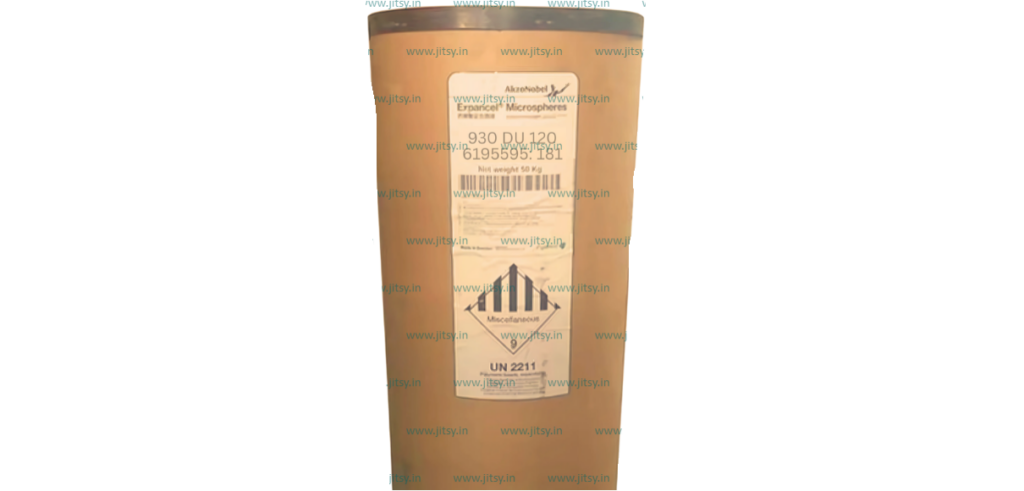
Nouryon Expancel 031 DU 40
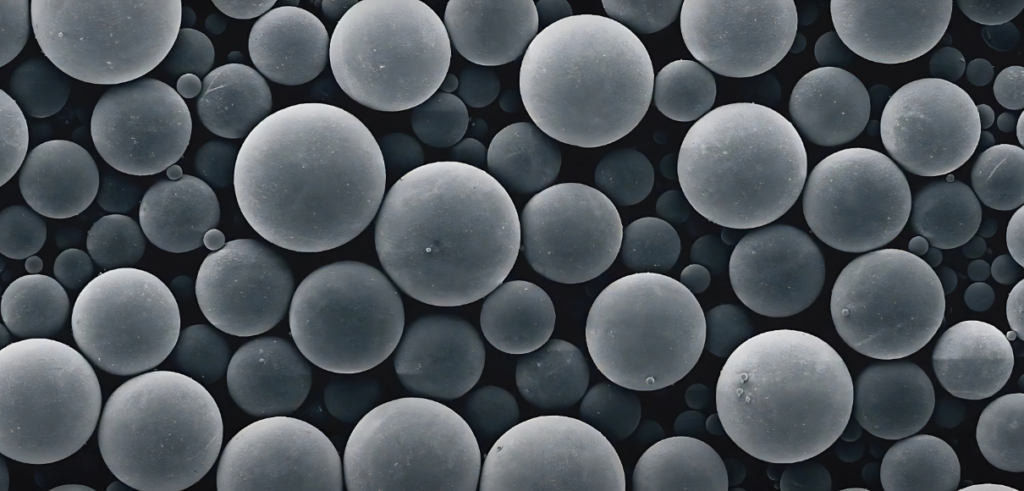
Nouryon Expancel 031 DU 40 is a high-performance dry, unexpanded thermoplastic microsphere blowing agent and lightweight filler engineered for thermoplastics, PVC plastisols, underbody coatings, adhesives, porous ceramics, construction materials, printing inks, and technical textiles. As a leading supplier in India, JITSY provides Expancel 031 DU 40 to all major industrial clusters backed by technical expertise, local stock, and compliant logistics.
Expancel 031 DU 40 features a robust acrylonitrile-based shell filled with volatile gas, expanding physically in a controlled temperature window (Tstart 80–95 °C, Tmax 120–135 °C). This enables fine, uniform cell structures, significant density reduction, and improved insulation and mechanical properties—without chemical residues or process disruption.
Functional Features & Technical Authority
Expancel 031 DU 40 is engineered for:- Dry, unexpanded microspheres: Free-flowing powder for easy dosing and uniform dispersion.
- Low expansion onset: Expands from as low as 80 °C, ideal for low-to-medium temperature processes including textile screen printing and puff printing inks.
- 40 µm expanded particle size: Delivers smooth surfaces, fine cell structure, and controlled texture in coatings, ceramics, and 3D effect inks.
- Very low expanded density: Achieves substantial weight reduction and material savings per unit volume.
- Closed-cell, compressible structure: Improves insulation, cushioning, impact resistance, and acoustic damping.
Applications & Industry Use
Expancel 031 DU 40 is widely applied in:- Thermoplastics & PVC Plastisols: Enables lightweight, flexible parts with fine, uniform cell structures for automotive, appliance, and industrial plastics. Reduces density and enhances insulation and impact resistance.
- Underbody Coatings, Paints & Inks: Used in automotive underbody coatings, high-build paints, and especially in puff printing inks for textiles and 3D effect screen printing inks. Delivers density reduction, matting, texture control, and the signature raised “puff” or 3D tactile effect for fashion and branding applications.
- Adhesives, Sealants, Putties & Porous Ceramics: Lowers density, improves gap-filling, reduces shrinkage and cracking, and forms controlled porosity for thermal insulation in ceramics.
- Construction Materials & Technical Textiles: Adds bulk, softness, and improved insulation to mortars, boards, and coated fabrics without increasing weight. Enhances crack resistance and acoustic performance in building products.
- Puff Additive for Textile Printing: As a specialty puff additive, Expancel 031 DU 40 is widely used by Indian textile printers for producing high-quality, soft, and durable raised prints on garments, t-shirts, and fashion textiles.
Nouryon Expancel 909 DU 80
Nouryon Expancel 909 DU 80 is a premium dry, unexpanded thermoplastic microsphere blowing agent and lightweight filler designed for advanced silicone rubber, coatings, plastics, construction materials, and technical textiles. As a leading supplier in India, JITSY delivers Expancel 909 DU 80 to all major industrial hubs backed by local technical support, regulatory guidance, and traceable documentation.
Nouryon Expancel 909 DU 80 features a robust acrylonitrile - based shell filled with volatile gas, expanding physically in a controlled temperature window (Tstart 118 - 128 °C, Tmax 172 - 187 °C). This enables precise density reduction, surface control, and matting effects without chemical residues, making it ideal for demanding Indian manufacturing environments.
Functional Features & Technical Authority
Nouryon Expancel 909 DU 80 is engineered for:- Dry, unexpanded microspheres: Free flowing powder for easy dosing and dispersion.
- Controlled physical expansion: Expands sharply in the 118 - 187 °C range, ideal for silicone vulcanization, coatings, and construction.
- 80 µm expanded particle size: Delivers fine to medium texture, matting, and smoothness in coatings and elastomers.
- Very low expanded density: Enables significant weight savings and cost reduction per unit volume.
- Closed cell, compressible structure: Enhances resilience, impact absorption, and crack resistance in coatings and sealants.
Applications & Industry Use
Nouryon Expancel 909 DU 80 is widely applied in:- Silicone Rubber & Elastomers: Reduces weight in automotive, electrical, and industrial silicone parts, improves cushioning and insulation, and supports closed cell structure without loss of flexibility.
- Coatings & Paints: Used in automotive underbody, industrial, and architectural coatings for density reduction, matting, micro texture, and improved stone chip resistance. Enables lower VOC, better film build, and antislip properties.
- Plastics & Construction Materials: Lowers density in molded plastics, profiles, and composite panels. Improves sag control, shrinkage, and spreadability in putties, mortars, and joint compounds.
- Technical Textiles & Specialty Surfaces: Adds bulk, tactile effects, and matting to coated fabrics, nonwovens, and specialty finishes especially where fine texture and low weight are critical.
Nouryon Expancel 920 DU 20
Nouryon Expancel 920 DU 20 is a high-performance, dry, unexpanded thermoplastic microsphere blowing agent and lightweight filler engineered for artificial leather, PVC plastisols, adhesives, weather strips, coatings, and construction materials. As an authorized JITSY distributor, we supply Nouryon Expancel 920 DU 20 to processors and manufacturers in Delhi NCR, Mumbai, Ahmedabad, Chennai, and industrial hubs across India—helping you achieve fine, uniform 20 µm-class cells for lightweight, resilient, and smooth-surface products.
Nouryon Expancel 920 DU 20 is a DU-grade (dry, unexpanded) thermoplastic microsphere supplied as a free-flowing powder of hollow polymer spheres with a gas core. When heated, the shell softens and the gas expands, inflating the particles into stable, closed-cell structures—delivering both blowing agent and lightweight filler benefits for advanced polymer, coating, and construction systems.
Key Features and Benefits
- Fine, uniform cell size: Expanded ~20 µm, ideal for smooth finishes and thin coatings
- Controlled expansion: Mid-range window (start ~118–145 °C, peak ~152–175 °C) for precise process integration
- Low density: Achieves significant weight reduction in artificial leather, PVC plastisols, and adhesives
- Shrinkage and surface control: Minimizes after-sinking, improves insulation, and limits shrinkage in foamed layers
- Solvent and temperature resistance: Suitable for alkaline, PVC, and solvent-based systems—no water content
Functional Features (Technical Authority)
- Physical expansion (not chemical): Clean, residue-free foaming
- Tiny cell structure: For smooth, resilient, and flexible end-products
- Closed-cell network: Enhanced insulation and acoustic damping
- Consistent cell population: Reliable bulk density and surface quality
- Optimized for Indian processing: Matches local curing and foaming lines
Applications & Industry Use
Nouryon Expancel 920 DU 20 is widely applied in:- Artificial leather and flexible coatings: Generates fine, uniform foams beneath the surface, improving hand feel, insulation, and surface smoothness for premium synthetic leather and coated textiles.
- PVC plastisols and underbody sealants: Delivers lightweight, resilient, and shrinkage-controlled foams for automotive, flooring, and technical textile applications.
- Adhesives, weather strips, and construction materials: Supports gap-filling, acoustic/thermal insulation, and weight reduction in automotive, building, and industrial products.
- Technical textiles, paints, and coatings: Used for lightweighting, surface modification, and shrinkage control in high-performance coatings and thin decorative layers.
- Other polymer systems: Ideal where very fine, discrete cells are needed for smoothness, flexibility, or thin foam layers.
Advantages vs Other Microspheres & Blowing Agents
- Sharper process control: Expands physically, not chemically—no decomposition byproducts
- Finer texture: 20 µm cell size for premium surfaces
- Superior insulation: Closed-cell network for thermal/acoustic performance
- Weight savings: Outperforms mineral fillers in density reduction
- Flexible selection: Choose 920 DU 20 for thin, smooth foams; higher-numbered DU grades for coarser effects
Handling, Storage & Safety
- Industrial hygiene: Use dust control, ventilation, PPE
- Storage: Keep sealed, cool, dry; avoid heat, humidity, and heavy compression
- Processing: Add after pigment/filler dispersion; avoid excess shear before expansion; optimize heating profile for full expansion before cooling
Why Source Nouryon Expancel 920 DU 20 from JITSY in India
- Local inventory: Fast supply to Delhi NCR, Mumbai, Ahmedabad, Chennai, and all major clusters
- Technical support: Application guidance for artificial leather, PVC plastisols, adhesives, and construction
- Traceability: Batch documentation, direct access to Nouryon technical data
- Collaboration: Global sourcing and best practices for Indian processors
Nouryon Expancel 920 DU 40
Nouryon Expancel 920 DU 40 is the industry’s preferred thermoplastic expandable microsphere blowing agent and lightweight filler for puff plastisol inks, textile printing inks, and raised garment effects. As an authorized/stocking distributor, JITSY supplies Nouryon Expancel 920 DU 40 to ink manufacturers, screen printers, and industrial formulators across India. We offer local stock, technical support, and batch traceability for both high-volume and specialty applications.
Nouryon Expancel 920 DU 40 is engineered for:
- Puff plastisol inks and textile screen printing (delivering uniform, soft, raised effects with a premium hand feel)
- PVC plastisols, underbody sealants, putties, polyurethane and acrylic caulks, weather strips, printing inks, coatings, and construction materials (enabling weight reduction, improved elasticity, and controlled expansion)
Key Features and Benefits Across Puff Ink, Plastisols and Sealants
- Uniform expansion: Consistent, stable puff height and smooth, 3D raised effect in textile prints
- Soft, elastic hand feel: Lightweight, compressible, and resilient puff prints for fashion and sportswear
- Closed-cell structure: Excellent wash durability, low after-sinking, and high recovery after deformation
- Low density: Significant weight reduction and material savings in inks, sealants, and construction materials
- Versatile compatibility: Works in PVC plastisols, solvent-based sealants, and non-aqueous coatings
Technical Specifications of Nouryon Expancel 920 DU 40
DU Grade and Chemical Nature
- DU = Dry, Unexpanded: Powder form for non-aqueous systems; expands only during user’s process
- Thermoplastic shell: Acrylonitrile-based, encapsulating a hydrocarbon gas
- No water content: Perfect for PVC plastisols, puff inks, and solvent-borne sealants
Expansion Temperature Window and 40 µm Expanded Particle Size
- Expansion onset: ~121 °C; max expansion: up to ~178 °C—matches typical puff ink curing and PVC plastisol gelling
- Expanded particle size: ~40 µm—yields smooth, rounded, uniform puff or foam structure
Density, Cell Structure and Mechanical Behaviour
- Very low expanded density—drives weight savings and high coverage
- Uniform, closed-cell microstructure—gives softness, resilience, and low shrinkage
- Improved vibration and sound absorption in automotive and construction sealants
Forms, Handling Characteristics and Storage Stability
- Supplied as: Dry, free-flowing white powder
- Storage: Cool, dry, sealed; avoid moisture and excessive compression
- Shelf life: Maintains expansion performance when properly stored
Puff Ink and Textile Printing Applications
Puff Plastisol Inks for Garment and Textile Printing
Nouryon Expancel 920 DU 40 is the industry standard for puff plastisol inks in India’s fashion, sportswear, and branding segments. It produces a stable, uniform puff height with soft, cushiony hand feel, and is compatible with typical screen printing, mesh counts (32–43T), and curing profiles (140–160 °C, 1–2 min).Raised Logos, Lettering and Graphic Effects
Delivers crisp, tactile 3D effects for logos, lettering, and graphics on cotton, blends, and technical textiles—favoured by exporters in Tiruppur, Ludhiana, Surat, and Mumbai.Process Guidelines for Puff Ink
- Ink formulation: Disperse DU powder into plastisol base; adjust viscosity for optimal laydown
- Mesh/film build: Medium mesh, generous deposit for best puff
- Curing: Oven/tunnel dryer or flash cure at 140–160 °C for 1–2 min; avoid overcuring
- Troubleshooting: Our technical team can advise on pinhole prevention, puff uniformity, and wash durability
Other End‑Use Applications Suggested by Manufacturer
PVC Plastisols and Underbody Sealants
- Lightweight, elastic underbody coatings and seam sealers for automotive and construction
- Uniform cell structure, low shrinkage, and easy sanding
Putties, Polyurethane and Acrylic Sealants
- Used in high-build putties, PU sealants, and acrylic caulks for shock/vibration absorption, easy application, and low after-sinking
Printing Inks, Weather Strips and Coatings
- Enhances density reduction and resilience in specialty inks, weather strips, and industrial coatings
Construction Materials and Polymer Systems
- Provides insulation, weight reduction, and crack resistance in mortars, boards, and composite systems
Advantages of Nouryon Expancel 920 DU 40 vs Chemical Blowing Agents and Conventional Fillers
Benefits in Puff Ink and Textile Printing
- Physical expansion: No chemical by-products, odor, or color change
- Uniform, soft, lightweight puff: Unmatched by mineral fillers or chemical agents
- Superior durability & wash fastness: Closed-cell structure resists compression and flexing
Benefits in PVC Plastisols, Sealants and Underbody Coatings
- Low after-sinking and shrinkage: Maintains build and smoothness over time
- Easy sanding and rework: Ideal for automotive and construction applications
Selection vs Other Expancel Grades
- 920 DU 40: Best for mid-to-high temp curing, fine puff, and soft hand feel
- 031/051/053 DU 40: For lower temp or different texture
- 930 DU 120/909 DU 80: For coarser, higher-build effects
Nouryon Expancel 930 DU 120
Nouryon Expancel 930 DU 120 is a high performance, dry, unexpanded thermoplastic microsphere blowing agent and lightweight filler engineered for PVC plastisols, coatings, sealants, plastics, and construction materials.
Nouryon Expancel 930 DU 120 features a unique polymer shell and encapsulated gas, expanding physically under heat to reduce density, control film build, and enhance surface finish without chemical decomposition by-products. Its expansion window (Tstart 117 - 127 °C, Tmax 189 - 204 °C) is tailored to Indian processing cycles in coatings, plastisols, and sealants, enabling precise process control and reliable weight reduction.
Functional Features & Technical Authority
Nouryon Expancel 930 DU 120 is defined by:- Dry, unexpanded microspheres: Free-flowing white powder for easy dosing and dispersion.
- Physical expansion: Expands with heat, no chemical residues or gas by-products.
- 120 µm class particle size: Balances bulk and surface smoothness in coatings and plastisols.
- Very low expanded density: Enables substantial weight savings and cost reduction.
- Robust shell chemistry: Acrylonitrile based copolymer for resilience and compressibility.
Applications & Industry Use
Nouryon Expancel 930 DU 120 is widely applied in:- PVC Plastisols & Thermoplastics: Reduces density in automotive underbody coatings, molded parts, and flexible profiles. Delivers lighter, more energy-efficient products with excellent impact resistance and controlled surface texture.
- Coatings & Underbody Systems: Used in automotive seam sealers, anti-slip industrial floors, and high-build paints to enhance film build, stone-chip resistance, and sanding properties. Lowers VOC per litre and improves surface finish for OEM and refinish lines.
- Sealants, Putties & Construction: Optimizes yield, sag control, and workability in building putties, caulks, and repair mortars. Minimizes cracking and shrinkage in thick applications and supports easier vertical/overhead use.
- Technical Textiles & Specialty Surfaces: Adds bulk, softness, and texture in textile coatings and specialty finishes (when process temperatures fit DU 120 expansion window).
- Lightweight Composites: Used in specialty foams and composite panels for precise density control and improved compressibility.
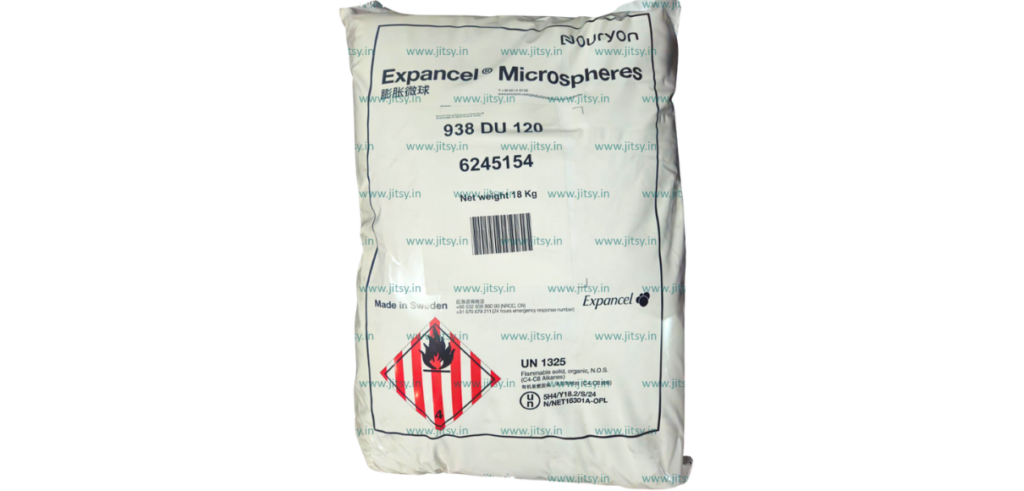
Nouryon Expancel 938 DU 120
Nouryon Expancel 938 DU 120 is a specialty dry, unexpanded thermoplastic microsphere blowing agent and lightweight filler engineered for advanced plastics, coatings, sealants, and construction materials.
Nouryon Expancel 938 DU 120’s unique dual action - physical expansion under heat and ultra lightweight filling; enables consistent density reduction, better surface finish, and improved mechanical properties in demanding applications. Its expansion profile (Tstart 120 - 132 °C, Tmax 192 - 210 °C) is tailored for Indian processing conditions in plastics, foams, coatings, and putties.
Product Description & Technical Details
Nouryon Expancel 938 DU 120 is an expandable microsphere which consists of dry, unexpanded thermoplastic microspheres: each is a copolymer shell encapsulating a volatile gas. When heated, the shell softens and the gas expands, multiplying the microsphere’s volume and creating a foaming effect in the host material. The “DU 120” designation means:- DU: Dry, unexpanded (expands only during processing)
- 938: Specific shell/gas chemistry for defined expansion and resilience
- 120: Expands to ~120 µm class particle size, ideal for bulk and smoothness
- Physical, residue free expansion (no chemical by-products)
- Low expanded density (≤7.5 kg/m³)
- Mid to high process temperature compatibility (Tstart 120 - 132 °C, Tmax 192 - 210 °C)
- Stable, free flowing powder for easy handling and dosing
Applications
Plastics & Polymeric Foams
Nouryon Expancel 938 DU 120 is widely used in PVC, EVA, and other thermoplastic compounds to achieve lightweight, low density profiles in shoe soles, automotive parts, and molded technical components. Its 120 µm class expansion delivers uniform cell structure, cushioning, and significant weight reduction (up to 30%) without sacrificing mechanical strength. Indian plastics processors use this grade for cost savings, energy efficiency, and improved product performance.Coatings & Underbody Systems
In automotive underbody coatings, industrial paints, and protective finishes, Nouryon Expancel 938 DU 120 acts as a physical blowing agent and lightweight filler. It reduces dry film density, enhances stone chip resistance, and improves surface smoothness. The grade’s expansion window is ideally suited to the baking/curing cycles used in Indian OEM and refinish operations. It also helps lower VOC per litre and minimizes cracking in thick films.Construction Putties, Joint Fillers & Sealants
Nouryon Expancel 938 DU 120 is a performance additive in construction putties, joint compounds, caulks, and repair mortars. It reduces compound weight, improves sag resistance, and makes application easier especially for vertical and overhead surfaces. In cementitious and gypsum based putties, it helps control shrinkage and cracking while maintaining smooth troweling and workability. For sealant manufacturers, it optimizes yield, flexibility, and cost per volume.Specialty Foams & Lightweight Composites
This grade is also used in specialty foam systems (e.g., for automotive, footwear, building insulation) and lightweight composite panels, where precise density control and improved compressibility are required. Its thermoplastic, closed cell structure ensures resilience and durability in demanding environments.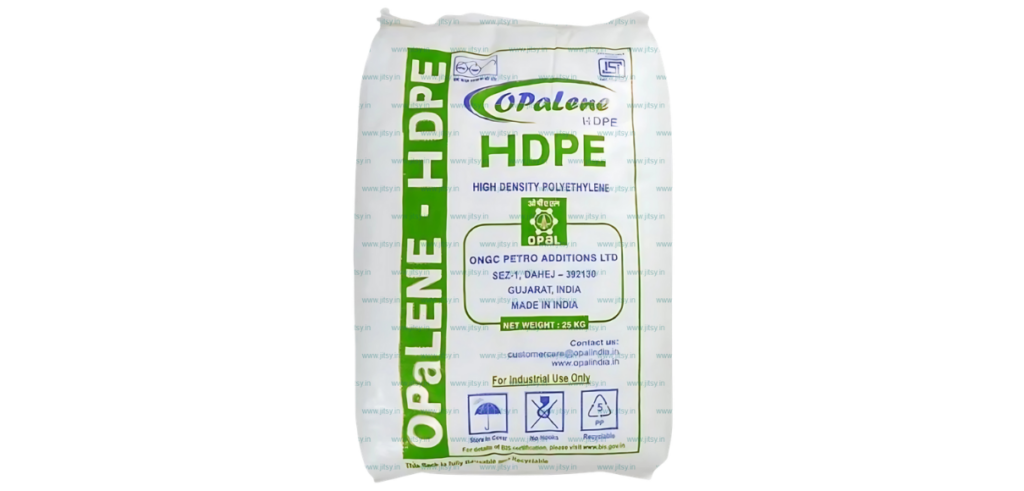
OPaL HDPE Opalene B48H03
OPaL HDPE Opalene B48H03 (also searched as Opalene B48H03 / HDPE B48H03 / OPAL HD B48H03) is a high density polyethylene (HDPE) polyolefin grade from ONGC Petro additions Limited (OPaL). OPaL documents B48H03 as a natural-colored material produced using Mitsui CX slurry polymerization technology, intended for blow moulding and extrusion where toughness and stress-crack resistance are key selection criteria.
This grade is positioned for high impact strength and excellent ESCR (environmental stress crack resistance). It is most commonly evaluated for small plastic fuel tanks, pesticide and surfactant packaging, and general-purpose extrusion applications where processors want strong melt strength, durable performance, and stable processing for thicker or more robust parts.
Manufacturer: ONGC Petro additions Limited (OPaL) (India)
Technical insights
OPaL HDPE Opalene B48H03 is defined by an extremely low melt flow combined with strong ESCR and impact performance indicators. This points to a resin engineered for melt strength and durability, often preferred for thicker-walled blow-moulded parts and extrusion profiles.- MFI 0.03 g/10 min (190°C/2.16 kg, ASTM D1238): Very low melt flow typically indicates very high molecular weight and strong melt strength. In blow moulding, this can support parison stability and help maintain wall thickness; in extrusion, it can support robust, tough profiles.
- Density 0.948 g/cm³ (23°C, ASTM D1505): Confirms HDPE class and supports rigid part structure and shape retention.
- Tensile Strength at Yield 23 MPa (ASTM D638): Indicates good resistance to deformation under load for tanks/containers.
- Elongation at Break >500% (ASTM D638): Suggests ductility and toughness under stress, supporting resistance to brittle failure.
- Notched Izod Impact 250 J/m (23°C, ASTM D256A): A useful indicator for impact performance in handling and service.
- Flexural Modulus 800 MPa (ASTM D790A) & Hardness 61 Shore D (ASTM D2240): Supports stiffness for shape retention while maintaining toughness.
- ESCR >600 hours (ASTM D1693B, F50, 10% Igepal): A key differentiator for chemical-contact packaging and parts exposed to surfactants where stress cracking is a common failure mode.
- Vicat 122°C (ASTM D1525) & HDT 75°C (ASTM D648): Helpful indicators for shape retention at elevated temperatures encountered in storage/transport (application-dependent).
Applications
Small plastic fuel tanks: Opalene B48H03 is documented for small fuel tanks where toughness and long-term integrity are critical. The very low MFI profile is typically evaluated where melt strength and robust part performance are prioritized over high-flow, thin-wall, fast-cycle packaging. Pesticide packaging: Agrochemical packs demand durability and resistance to cracking under stress and chemical exposure. With OPaL’s stated positioning on high impact and excellent ESCR, HDPE B48H03 is relevant for blow-moulded pesticide containers where leak prevention and service reliability matter. Surfactant packaging: Surfactants can increase stress-crack risk in plastics under load. B48H03’s ESCR-led profile makes it a practical candidate for surfactant-containing formulations and similar household/industrial liquids. General-purpose extrusion: OPaL also positions B48H03 for general extrusion applications. Processors typically evaluate it when they want a tough HDPE with strong melt strength for extruded products where durability and crack resistance are important.Comparable alternatives
For SEO accuracy and buyer trust, describe alternatives as comparable OPaL HDPE blow-moulding grades, not direct substitutes, because equivalence is not confirmed without matching the full manufacturer TDS and validating in trials.- Opalene B55H03: Positioned for large containers and water tanks with strong impact and ESCR. Comparable by performance intent (toughness/ESCR), but it targets different article sizes and has different flow/density behavior.
- Opalene B5004: Positioned for smaller bottles/containers with excellent ESCR and appearance. Comparable by process family (HDPE blow moulding), but it is not a confirmed replacement for B48H03.
Common search variants
Also searched as: Opalene B48H03, Opalene HD B48H03, HDPE B48H03, Opal B48H03, B48 H03, B48H03 MFI 0.03, fuel tank HDPE grade, HDPE dana / granules.
OPaL HDPE Opalene B5004
OPaL HDPE Opalene B5004 (also searched as Opalene B5004 / HDPE B5004 / OPAL HD B5004) is a high density polyethylene (HDPE) polyolefin blow-moulding grade from ONGC Petro additions Limited (OPaL). OPaL documents this grade under “HDPE Blow Molding” and states it is produced using Mitsui CX slurry polymerization technology.
B5004 is positioned as a natural colored blow-moulding resin with good processing properties, excellent ESCR (environmental stress crack resistance), and good external appearance. In practical terms, that makes it a strong choice for small rigid containers and bottles (up to 5 L) where processors need stable moulding, clean aesthetics, and durability against stress crackingespecially in regulated or performance-sensitive packaging.
Manufacturer: ONGC Petro additions Limited (OPaL) (India)
Technical insights
OPaL HDPE Opalene B5004 combines a low melt flow with a mid-to-high HDPE density, plus a standout ESCR valuea combination commonly evaluated for blow-moulded bottles that must resist cracking under chemical exposure and handling stress.- MFI 0.40 g/10 min (190°C/2.16 kg, ASTM D1238): Low melt flow typically supports melt strength and parison stability in blow moulding, helping maintain wall thickness and bottle consistency.
- Density 0.950 g/cm³ (23°C, ASTM D1505): Indicates an HDPE designed for rigid container structure and shape retention.
- Tensile Strength at Yield 24 MPa (ASTM D638): Signals good load-bearing performance for bottles that must hold shape during filling, capping, and stacking.
- Elongation at Break >500% (ASTM D638): Suggests strong ductility before failure, supporting toughness in real-world handling.
- Notched Izod Impact 140 J/m (ASTM D256A) / Charpy 8.5 kJ/m² (ISO 179-1): Useful indicators for impact performance in distribution and use.
- Flexural Modulus 900 MPa (ASTM D790A) & Hardness 65 Shore D (ASTM D2240): Reinforces the grade’s rigid-packaging intent while balancing processability.
- ESCR >500 hours (ASTM D1693B, F50, 10% Igepal): A key differentiator for packaging exposed to surfactants, agrochemicals, and household formulations where stress cracking risk is higher.
- Vicat 121°C (ASTM D1525) & HDT 78°C (ASTM D648): Helpful for shape retention at elevated temperatures encountered in storage/transport (application-dependent).
Applications
Small rigid bottles and containers (up to 5 L): Opalene B5004 is designed for blow-moulded bottles where consistent appearance and reliable processing matter. It’s a fit for everyday rigid packaging formats that need good stiffness and durability without sacrificing moulding stability. Pesticide packaging: Agrochemical containers demand resistance to stress cracking and handling abuse. With OPaL’s stated positioning on excellent ESCR, HDPE B5004 is commonly evaluated for pesticide bottles where long-term integrity and leak resistance are critical. Surfactant and household chemical packaging: Surfactants can accelerate stress cracking in plastics under load. B5004’s ESCR-led profile makes it relevant for blow moulding bottles used for surfactant-containing formulations and similar household liquids. Shampoo and cosmetic bottles: For personal-care packaging, processors care about external appearance alongside performance. OPaL documents B5004 for shampoo and cosmetic bottles, aligning with applications where aesthetics, consistency, and toughness are all decision factors.Comparable alternatives
When comparing Opalene B5004 to other HDPE blow-moulding grades, the most defensible approach is to treat B5004 as an ESCR- and appearance-positioned grade for small containers, then compare against manufacturer TDS values for the exact bottle design.- Opalene B6106: Another OPaL HDPE blow-moulding grade, but it is positioned for larger rigid containers (e.g., higher density/rigidity profile and different target sizes). It should be treated as a different fit rather than a direct substitute.
- OPaL B6003: A comparable OPaL HDPE grade with documented compliance context, but equivalence to B5004 is not confirmed without matching the full TDS property set and intended application.
Common search variants
Also searched as: Opalene B5004, Opalene HD B5004, HDPE B5004, Opal B5004, B 5004, OPAL HDPE B5004 granules, HDPE blow molding grade B5004, HDPE dana.
OPaL HDPE Opalene B55H03
OPaL HDPE Opalene B55H03 (also searched as Opalene B55H03 / HDPE B55H03 / OPAL HD B55H03) is a high density polyethylene (HDPE) polyolefin blow-moulding grade from ONGC Petro additions Limited (OPaL). OPaL documents this grade as a natural-colored HDPE produced using Mitsui CX slurry polymerization technology.
B55H03 is positioned for high impact strength, rigidity, low parison sag, and good ESCR (environmental stress crack resistance)—a performance set that matters most when you’re blow moulding large hollow parts where wall distribution, sag control, and long-term durability can make or break production yield.
This grade is intended for large rigid containers (up to 100 L) used for chemicals, detergent, and lube oil, and for blow-moulded water tanks (up to 1000 L). If your application involves bigger articles, heavier handling, and longer service life, B55H03 is typically evaluated as a purpose-built large-part blow-moulding material rather than a general packaging HDPE.
Manufacturer: ONGC Petro additions Limited (OPaL) (India)
Technical insights
OPaL HDPE Opalene B55H03 combines a very low melt flow at 5 kg load with strong impact and ESCR values—useful indicators for large blow-moulded parts that need melt strength, toughness, and crack resistance.- MFI 0.35 g/10 min (190°C/5.00 kg, ASTM D1238): A low MFI at this load generally signals higher molecular weight and melt strength, supporting parison stability and helping reduce sag in large-part blow moulding.
- MFI 9.00 g/10 min (190°C/21.6 kg, ASTM D1238): The higher-load flow figure helps processors understand shear-thinning behavior and how the melt may respond under higher stress during processing.
- Density 0.955 g/cm³ (23°C, ASTM D1505): Indicates an HDPE designed for rigidity and shape retention, important for large containers and tanks.
- Tensile Strength 28 MPa at yield / 40 MPa at break (ASTM D638): Supports structural integrity for large-volume containers that face stacking, handling, and transport loads.
- Elongation at Break >600% (ASTM D638): Suggests strong ductility and toughness before failure—useful for impact and abuse resistance.
- Notched Izod Impact 500 J/m (23°C, ASTM D256A): A strong indicator for impact performance in large articles where drops and handling shocks are common.
- Flexural Modulus 1000 MPa (ASTM D790A) & Hardness 64 Shore D (ASTM D2240): Reinforces the grade’s rigidity positioning for bigger blow-moulded parts.
- ESCR >600 hours (ASTM D1693B, F50, 10% Igepal): A key evaluation metric for chemical/detergent containers where stress cracking is a real-world failure mode.
- Vicat 129°C (ASTM D1525) & HDT 80°C (ASTM D648): Helpful for assessing shape retention at elevated temperatures encountered in storage, transport, and outdoor use (application-dependent).
Applications
Large chemical, detergent, and lube oil containers (up to 100 L): Opalene B55H03 is designed for large blow-moulded containers where impact strength, rigidity, and ESCR influence field performance. These packs often face rough handling and long-term liquid contact, so toughness and crack resistance become primary selection criteria. Blow-moulded water tanks (up to 1000 L): For large water tanks, processors typically prioritize parison stability (to control wall distribution), stiffness (to hold shape), and durability over time. OPaL positions B55H03 with low parison sag and high impact strength, aligning with the needs of large hollow articles.Comparable alternatives
For SEO and buyer clarity, it’s safest to describe alternatives as comparable OPaL HDPE blow-moulding grades rather than claiming direct substitutes, because each grade differs in density, flow behavior, and intended container size.- Opalene B5004: Documented for smaller bottles/containers and positioned strongly on ESCR and appearance. It may be “comparable” by process family (HDPE blow moulding), but it targets different container sizes and performance priorities.
- Opalene B6106: Documented for rigid blow-moulded packaging and mid-size containers; its typical density/rigidity profile and application positioning differ from B55H03.
Common search variants
Also searched as: Opalene B55H03, Opalene HD B55H03, HDPE B55H03, Opal B55H03, B 55H03, B55H03 MFI 0.35, water tank HDPE grade, HDPE dana / granules.
OPaL HDPE Opalene B6106
OPaL HDPE Opalene B6106 (also referenced as HDPE B6106 / HD B6106) is a high density polyethylene (HDPE) polyolefin blow-moulding grade from ONGC Petro additions Limited (OPaL). It is produced using Mitsui CX slurry polymerization technology and is positioned for high rigidity, very good processing, and excellent mechanical properties—a combination that makes it a strong fit for rigid packaging where stiffness, toughness, and stable production matter.
This grade is designed specifically for blow-moulded rigid containers, not as a broad “one resin for all HDPE applications” material. Buyers typically choose OPaL HDPE Opalene B6106 when they need consistent container performance across production runs, good mouldability at practical melt temperatures, and dependable mechanical strength for handling, stacking, and transport.
Manufacturer: ONGC Petro additions Limited (OPaL) (India)
Technical insights
OPaL HDPE Opalene B6106 is characterized by a high density and low melt flow, which together signal a resin engineered for rigidity and robust container performance.- Melt Flow Index (MFI) 0.40 g/10 min (190°C/2.16 kg, ASTM D1238): A lower MFI generally indicates higher molecular weight, which is commonly associated with improved toughness and melt strength—useful for blow moulding where parison stability and wall-thickness control are important.
- Density 0.964 g/cm³ (23°C, ASTM D1505): Higher density HDPE typically correlates with higher stiffness and improved barrier/rigidity characteristics, supporting rigid container applications.
- Tensile Strength at Yield 32 MPa (ASTM D638): Indicates strong resistance to deformation under load—valuable for containers that must hold shape during filling, capping, and handling.
- Elongation at Break >500% (ASTM D638): Suggests the material can stretch significantly before breaking, contributing to toughness in real-world handling and drop/impact scenarios.
- Notched Izod Impact 350 J/m (23°C, ASTM D256A): Signals good impact resistance for everyday packaging abuse, especially in distribution.
- Flexural Modulus 1300 MPa (ASTM D790A) & Hardness 68 Shore D (ASTM D2240): Reinforces the “rigid container” positioning—stiffer feel, better panel stability, and improved stack performance.
- Vicat Softening Point 129°C (ASTM D1525) & HDT 80°C (ASTM D648): Helpful indicators for shape retention under elevated temperatures encountered in storage, transport, or warm filling environments (process-dependent).
Applications
General-purpose rigid containers (up to 20 L): Opalene B6106 is suited for blow moulding of larger rigid containers where stiffness and dimensional stability are critical. It supports consistent container geometry and handling durability in industrial and general packaging. Lubricant oil containers (up to 15 L): For lubricant packaging, buyers often prioritize rigidity, toughness, and reliable processing. HDPE B6106 is positioned to deliver strong mechanical performance for containers that face handling stress, stacking, and transport vibration. Edible oil containers (up to 15 L): Opalene B6106 is used for blow-moulded edible oil packs where rigid structure and dependable production are key. Its density and modulus profile align with packaging that needs shape retention and robust performance. Food and milk packaging bottles: OPaL lists bottles for food and milk packaging as a target use case for this grade. Where application and regulatory requirements apply, users typically validate suitability against the relevant standards and their own packaging design and processing conditions.Comparable alternatives
If you are evaluating alternatives to OPaL HDPE Opalene B6106, the most defensible comparisons are within OPaL’s own HDPE blow-moulding portfolio, because naming consistency and application intent are clearer than many reseller listings.- OPaL HDPE blow-moulding grades such as B5004: Often considered a close substitute category-wise (HDPE blow moulding), but direct equivalence to B6106 should not be assumed without matching the manufacturer TDS values (especially MFI/density and mechanical profile) to your container design targets.
- OPaL B6003 (documented in a food-contact declaration): Relevant as another OPaL HDPE grade with compliance context, but it is a different grade and should be treated as a separate option rather than a confirmed replacement.
OPaL HDPE Opalene F5010
OPaL HDPE Opalene F5010 (HDPE F5010) is a natural‑colored high‑density polyethylene (HDPE) film‑extrusion grade manufactured by ONGC Petro additions Limited (OPaL) under the Opalene (Opalene HD) product line. Produced using Mitsui CX slurry polymerization technology, F5010 is positioned for food‑contact and general‑purpose flexible packaging films, including liners and wrapping applications where processors want a clean balance of processing stability, stiffness, and clarity.
As an HDPE film grade, F5010 is typically chosen when converters need films that feel crisper and stiffer than LLDPE, with strong barrier performance against moisture and good temperature resistance for everyday packaging use. The grade is widely referenced for packaging formats such as liners and wrapping films, where consistent extrusion, neat appearance, and dependable mechanical performance matter for both brand owners and industrial buyers.
A key differentiator for F5010 is its explicit food‑contact compliance positioning. OPaL’s food‑contact declaration states that the grade meets IS 10146:1982 for safe use in contact with foodstuffs, pharmaceuticals, and drinking water, and that the grade and its additives conform to IS 10141:1982 (positive list of constituents). The same declaration also references compliance alignment with major global food‑contact frameworks (including FDA and EC‑type requirements), which is especially valuable for regulated packaging and pharma‑liner projects.
Technical insights
Converters and packaging buyers typically evaluate F5010 using a small set of film‑relevant properties that predict output stability, film feel, and end‑use durability:- Melt Flow Index (190°C/2.16 kg): 1.0 g/10 min indicates a film‑friendly flow level that supports stable extrusion through film dies and consistent gauge control. It’s a practical balance between processability and mechanical performance.
- Density (23°C): 0.950 g/cm³ is characteristic of HDPE and is strongly linked to stiffness, tensile strength, and moisture‑barrier performance versus lower‑density polyethylenes.
- Tensile strength at yield: 21 MPa and tensile strength at break: >30 MPa indicate good load‑bearing capability and resistance to tearing under stress, supporting packaging integrity during filling, handling, and transport.
- Elongation at break: >500% signals useful ductility, helping films tolerate stretching and handling without brittle failure.
- Notched Izod impact (23°C): >250 J/m supports toughness, reducing cracking risk in real‑world packaging abuse.
- Flexural modulus: 900 MPa aligns with the “crisp” HDPE film feel and supports better bag/liner body and shape retention.
- Hardness: 62 Shore D indicates a robust surface and contributes to durability in liner and wrapping use.
- ESCR (ASTM D1693B, F50, 10% Igepal): 30 hours provides a stress‑crack resistance reference point relevant for certain packaged goods and handling conditions.
- Vicat softening point: 123°C indicates temperature resistance that can be beneficial for packaging exposed to warmer environments.
Applications
Food packaging films
F5010 is positioned as a food‑packaging HDPE film grade for converters producing films that require a clean appearance, good stiffness, and reliable performance in contact with food. It is relevant for packaging buyers who need documented compliance language (IS 10146/IS 10141 and FDA/EC‑type statements) to support internal QA and customer approvals.General‑purpose packaging and wrapping
For general‑purpose packaging films and wrapping, F5010 is used when processors want an HDPE film that runs consistently and delivers a crisp, strong film structure. This makes it suitable for everyday packaging formats where strength, neatness, and stable extrusion matter more than extreme stretch.Liners (industrial and consumer packaging)
F5010 is commonly referenced for liner film applications, where stiffness and durability help with easy handling and better bag/liner “body.” The HDPE density profile supports moisture‑barrier performance, which is often a key requirement for liners used in storage and transport.Film structures requiring higher stiffness than LLDPE
Where LLDPE films may feel too soft or lack the desired stiffness, F5010 can be selected to deliver a more rigid film structure and improved water‑vapour barrier characteristics typical of HDPE. This is especially relevant for packaging lines targeting better machinability and pack presentation.Comparable alternatives
- Other HDPE film grades (F‑series / market equivalents): Comparable HDPE film‑extrusion grades exist in India with similar “packaging film” positioning. However, exact equivalence should only be claimed after matching manufacturer TDS values (MFI, density, tensile, impact, Vicat, ESCR) and confirming food‑contact declarations.
- LLDPE film grades (material comparison): LLDPE is often chosen for higher toughness and stretch, but it typically delivers lower stiffness than HDPE. F5010 is positioned for converters who want stiffer, crisper films and stronger moisture‑barrier behavior associated with HDPE.
- HDPE grades without explicit food‑contact declarations: Some listings may show similar processing properties, but F5010’s advantage is the clear, documented IS 10146/IS 10141 and FDA/EC‑type compliance statements, which can simplify approvals for food and pharma‑adjacent packaging.
Common search variants
Also searched as: HDPE F5010, Opalene HD F5010, OPAL F5010 film grade, HDPE film granules, food grade HDPE dana, liner film HDPE resin. Common variants: F50 10, F5010 HD, Opal F5010, Opalene F5010 HD.
OPaL HDPE Opalene F52H04
OPaL HDPE Opalene F52H04 (HDPE F52H04) is a natural‑colored high‑density polyethylene (HDPE) film‑extrusion grade manufactured by ONGC Petro additions Limited (OPaL) under the Opalene (Opalene HD) portfolio. Produced using Mitsui CX slurry polymerization technology, this grade is engineered for high‑speed blown‑film extrusion where converters need excellent mechanical strength, high stiffness, and strong processability on bag‑making lines.
F52H04 is positioned as a carry‑bag / garment‑packaging / shopping‑bag HDPE film grade and is commonly selected for tissue‑like films and everyday bag applications that must feel crisp, hold shape, and resist draw‑down during conversion. As a low‑branching polyolefin, HDPE typically delivers higher tensile strength and modulus and a better water‑vapour barrier than many LLDPE alternatives—making it a practical choice for packaging formats where stiffness and barrier performance are prioritized.
A major trust signal for regulated packaging is OPaL’s explicit compliance positioning. The technical and food‑contact documents state that F52H04 meets IS 10146:1982 for safe use in contact with foodstuffs, pharmaceuticals, and drinking water, and that the grade and additives conform to IS 10141:1982 (positive list of constituents). The official food‑contact declaration also references alignment with major international food‑contact frameworks (including FDA and EU‑type requirements), supporting buyers who need documentation for audits, approvals, and customer QA.
Technical insights
F52H04’s typical properties are evaluated by film processors to predict extrusion stability, bubble strength, bag stiffness, and long‑term durability:- Melt Flow Index (190°C/2.16 kg): 0.04 g/10 min is an ultra‑low flow level that typically correlates with high melt strength and high stiffness in the finished film. It can be ideal for strong carry‑bag films, but may require appropriate extruder torque and stable processing control.
- Density (23°C): 0.952 g/cm³ supports higher rigidity and modulus, contributing to the crisp feel and shape retention expected in shopping and garment bags.
- Tensile strength at yield: 27 MPa indicates strong resistance to deformation under load—important for carry bags that must hold weight without excessive stretching.
- Elongation at break: >500% signals useful ductility, helping films tolerate handling and conversion stresses without brittle failure.
- ESCR (ASTM D1693B, F50, 10% Igepal): >500 hours is a major durability indicator, supporting performance in humid or chemically aggressive environments and reducing stress‑crack risk over time.
- Hardness: 64 Shore D aligns with a more rigid HDPE film feel and improved resistance to surface damage in handling.
- Vicat softening point: 124°C indicates temperature resistance that can be helpful for storage, transport, and use in warmer conditions.
Applications
Carry bags and shopping/counter bags
F52H04 is designed for carry‑bag and shopping‑bag film extrusion, where stiffness and draw resistance are critical for bag performance. The high‑stiffness HDPE profile helps bags hold shape, feel crisp, and carry loads with reduced sagging—making it suitable for retail, grocery, and merchandise packaging.Garment packaging and tissue‑like films
For garment packaging and tissue‑like films, converters often prioritize consistent processing at high speed and a neat, premium film feel. F52H04’s low MFI and high stiffness positioning supports stable blown‑film production and strong finished‑film structure for everyday packaging use.Garbage/disposal waste bags
In garbage and disposal waste bags, film toughness and resistance to cracking matter in real‑world handling. F52H04’s ESCR positioning helps improve durability, while the stiffness profile supports bag integrity and handling during filling and disposal.General bag‑making lines needing high‑speed output
F52H04 is a fit for converters running high‑speed blown‑film extrusion and bag conversion, where output consistency, mechanical strength, and stiffness are key. It is commonly evaluated for projects that require documented compliance statements alongside performance.Comparable alternatives
- OPaL HDPE Opalene F5010 (HDPE film grade): A packaging‑film grade with a much higher MFI (1.0 g/10 min) than F52H04. That difference typically changes processing behavior and finished‑film stiffness; F5010 may be easier flowing, while F52H04 is positioned for high stiffness and high‑speed bag film.
- Other OPaL/market HDPE bag film grades (e.g., F55H04 and similar): Comparable HDPE film grades exist for carry bags and packaging films, but direct grade equivalence should only be claimed after matching manufacturer TDS values (MFI, density, ESCR, tensile, Vicat) and verifying food‑contact declarations.
- LLDPE bag grades (material comparison): LLDPE is often chosen for higher stretch and puncture toughness, but it generally delivers lower stiffness than HDPE. F52H04 is positioned for converters who want crisper, stiffer bags and HDPE‑type barrier performance.
Common search variants
Also searched as: HDPE F52H04, Opalene F52H04, OPAL HD F52H04, carry bag HDPE granules, shopping bag HDPE dana, HM HDPE film grade. Common variants: F52 H04, F52H04 0.04 MFI, Opal F52H04, F52H04 HDPE film.
OPaL HDPE Opalene P4002
OPaL HDPE Opalene P4002 (also searched as Opalene P4002 / HDPE P4002 / OPAL HDPE P4002) is a high density polyethylene (HDPE) polyolefin pipe-extrusion grade from ONGC Petro additions Limited (OPaL). OPaL describes P4002 as a natural-colored HDPE produced using Mitsui CX slurry polymerization technology, positioned for very good processing properties, good mechanical properties, excellent stress crack resistance, and good external appearance.
P4002 is designed for utility and agriculture pipe systems, specifically water pipes, pressure pipes for city gas distribution, and sprinkler and irrigation pipes. In market conversations, this grade is commonly positioned as a PE80 pipe grade; however, for strict technical wording, treat the PE80 designation as verified only when stated in the OPaL TDS / manufacturer documentation.
Manufacturer: ONGC Petro additions Limited (OPaL) (India)
Technical insights
Pipe buyers and processors typically evaluate density/stiffness, tensile/ductility, impact toughness, thermal resistance, and oxidation stability. The following values are manufacturer-stated typical values (not specification limits) from the available TDS excerpt.- Density 0.950 g/cm³ (23°C, ASTM D1505): Supports stiffness and dimensional stability for extruded pipe applications.
- Tensile strength at yield 20 MPa (ASTM D638): A baseline strength indicator relevant to pressure-pipe performance expectations.
- Elongation at break >500% (ASTM D638): Indicates ductility, helping pipes tolerate deformation during installation and service without brittle failure.
- Notched Izod impact >200 J/m (23°C, ASTM D256A): Indicates toughness for handling, transport, and field installation.
- Flexural modulus 900 MPa (ASTM D790A): A stiffness indicator that can support pipe rigidity and resistance to deformation.
- Heat deflection temperature 65°C (0.455 MPa, ASTM D648): A thermal performance indicator relevant to service conditions and dimensional stability.
- OIT >30 minutes (ASTM D3895): Oxidative Induction Time indicates stabilization against oxidation; relevant for processing stability and long-term performance expectations.
Applications
Water pipes: Opalene P4002 is designed for water pipe extrusion where processors need stable processing, reliable mechanical performance, and strong resistance to stress cracking. It fits buyers searching for “HDPE water pipe grade” and “pressure pipe HDPE resin” for utility networks. City gas distribution pressure pipes: OPaL positions P4002 for pressure pipes used in city gas distribution. In gas networks, material selection often prioritizes consistency, toughness, and crack resistance for long service life under sustained stress. Sprinkler and irrigation pipes: For agriculture and industrial irrigation systems, processors want a pipe resin that runs well on extrusion lines and delivers dependable toughness in the field. P4002 is designed for sprinkler and irrigation pipe applications, aligning with high-intent queries like “irrigation pipe HDPE grade” and “sprinkler pipe resin.”Comparable alternatives
Comparable HDPE pipe grades are available in India, but direct equivalence to P4002 is not confirmed unless validated via a side-by-side manufacturer TDS comparison (same designation, intended use, and comparable performance profile).- OPaL pipe-grade basket (e.g., P5002 and other pipe grades): These may be considered depending on the target pipe standard and performance requirements, but they are not automatically interchangeable. Differences in stiffness/ductility balance, crack resistance, and any pipe-standard designation (PE class) can matter.
- PE80-positioned grades in the market: Third-party sources may label P4002 as PE80; use that phrasing carefully and anchor the final claim to OPaL’s own documentation.
- Generic HDPE (non-pipe) grades: Even if density looks similar, non-pipe grades may not be designed for pressure-pipe service or carry the same pipe-application intent. For pressure networks, prioritize pipe-grade documentation and compliance statements.
Common search variants
Also searched as: Opalene P4002, HDPE P4002, OPAL P4002 pipe grade, P4002 PE80, Opalene P 4002, P400 2 HDPE, HDPE pipe dana / polyethylene granules.
OPaL HDPE Opalene P4402
OPaL HDPE Opalene P4402 (also searched as Opalene P4402 / HDPE P4402 / OPAL HD P4402) is a high density polyethylene (HDPE) polyolefin pipe-extrusion grade from ONGC Petro additions Limited (OPaL). OPaL’s pipe-grade documentation describes P4402 as a natural-colored HDPE produced using Mitsui CX slurry polymerization technology, positioned for very good processing properties, good mechanical properties, excellent stress crack resistance, and good external appearance.
P4402 is designed for PE-63 pressure pipes used in drinking-water and irrigation networks, and also for steel pipe lining and ducting applications. This is important for SEO and buyer intent: P4402 should be presented as a pipe-extrusion grade (long-length extrusion performance and crack resistance focus), not as a general-purpose HDPE resin.
Manufacturer: ONGC Petro additions Limited (OPaL) (India)
Technical insights
The following are manufacturer-stated typical values (not specification limits) from the pipe-extrusion TDS-style sheet. These are the kinds of checkpoints pipe processors and project buyers use to evaluate PE63 pipe materials.- MFI 0.25 g/10 min (190°C/2.16 kg, ASTM D1238): Low melt flow is typical for pipe extrusion and generally supports melt strength and wall integrity in pressure-pipe manufacturing.
- Density 0.944 g/cm³ (23°C, ASTM D1505): Supports a balance of stiffness and toughness for PE63-class pipe applications.
- Tensile strength at yield 20 MPa (ASTM D638): A baseline strength indicator relevant to pressure-pipe performance expectations.
- Elongation at break >500% (ASTM D638): Indicates ductility, helping pipes tolerate deformation during installation and service.
- Notched Izod impact >200 J/m (23°C, ASTM D256A): Indicates toughness for handling, transport, and field installation.
- Flexural modulus 900 MPa (ASTM D790A): A stiffness indicator supporting pipe rigidity and resistance to deformation.
- Hardness 60 Shore D (ASTM D2240): A general rigidity/surface hardness indicator.
- ESCR >600 hours (ASTM D1693B, F50, 10% Igepal): Environmental stress crack resistance is a key durability indicator for long-life pipe systems.
Applications
PE63 drinking-water and irrigation pressure pipes: Opalene P4402 is designed for PE-63 pressure pipe extrusion where consistent processing and resistance to stress cracking support long service life. This aligns with high-intent searches like “PE63 HDPE pipe grade,” “drinking water pipe material,” and “irrigation pipe HDPE resin.” Steel pipe lining: P4402 is also positioned for steel pipe lining applications, where processors need stable extrusion behavior and a durable polymer layer to support internal protection and flow performance. Ducting and conduit applications: For ducting, processors typically prioritize consistent extrusion, toughness, and reliable performance in installation environments. P4402’s pipe-grade mechanical profile and ESCR positioning support this use case.Comparable alternatives
Comparable OPaL HDPE pipe grades exist, but exact equivalence to P4402 is not confirmed unless validated via a side-by-side manufacturer TDS comparison (same PE class, intended use, and comparable performance profile).- Opalene P4002 (often positioned as PE80): Typically positioned for water pipes, city gas distribution pressure pipes, and sprinkler/irrigation pipes. It sits in a different pressure-pipe class than PE63, so it should not be treated as a direct substitute without standards and TDS alignment.
- Opalene P50H03 / P51H10 (PE100 grades): These are higher-class pressure pipe grades with different long-term hydrostatic classification and performance context. They may be considered when the project specification calls for PE100, but they are not “equivalent” to PE63.
- Other market-listed pipe grades: Reseller/marketplace pages can help discover availability, but substitution decisions should be made from manufacturer documentation (PE class + properties + compliance statements).
Common search variants
Also searched as: Opalene P4402, HDPE P4402, OPAL P4402 pipe grade, P4402 PE63, P4402 MFI 0.25, Opalene P 4402, HDPE pipe dana / polyethylene granules.
OPaL HDPE Opalene P4402U
OPaL HDPE Opalene P4402U is a natural‑colored, UV‑stabilized high‑density polyethylene (HDPE) pipe‑extrusion grade manufactured by ONGC Petro additions Limited (OPaL) under the Opalene (Opalene HD) product line. Produced using Mitsui CX slurry polymerization technology, this grade is positioned for PE63 pressure pipe applications where outdoor exposure and long‑term durability matter.
P4402U is selected by pipe manufacturers and project buyers who need a practical balance of extrudability, mechanical strength, and excellent environmental stress crack resistance (ESCR)—with the key differentiator being UV stabilization using HALS additives. That UV package helps reduce the risk of embrittlement and property loss in installations that see sunlight during storage, transport, site handling, or partial above‑ground exposure.
The manufacturer‑anchored regulatory positioning states that the HDPE Pipe grade P4402U shall meet IS 10146:1982 for safe use in contact with foodstuffs, pharmaceuticals, and drinking water, and that the grade and additives must conform to IS 10141:1982 (positive list of constituents). This makes P4402U a strong fit for drinking‑water and irrigation networks where compliance signaling and consistent performance are non‑negotiable.
Technical insights
P4402U’s typical properties are commonly evaluated by engineers to predict extrusion stability, pressure‑pipe performance, and long‑term reliability:- Melt Flow Index (190°C/2.16 kg): 0.25 g/10 min indicates a relatively low flow, supporting melt strength and stable pipe extrusion—helpful for maintaining dimensional control and wall uniformity.
- Density (23°C): 0.944 g/cm³ signals an HDPE structure aligned with stiffness and strength requirements typical for PE63 service class pipe.
- Tensile strength at yield: 25 MPa reflects the material’s ability to resist deformation under load—important for pressure‑pipe handling and installation stresses.
- Elongation at break: >500% indicates good ductility, supporting toughness during bending, coiling (where applicable), and site handling.
- Notched Izod impact (23°C): >200 J/m points to strong impact resistance, reducing cracking risk from knocks during transport and installation.
- Flexural modulus: 900 MPa supports pipe stiffness and resistance to ovality under load.
- Hardness: 60 Shore D aligns with a robust HDPE feel and abrasion tolerance expected in ducting and buried lines.
- ESCR (ASTM D1693B, F50, 10% Igepal): >600 hours is a major trust signal for long‑term performance in contact with surfactants/chemicals and real‑world stress conditions.
- Vicat softening point: 120°C and HDT (0.455 MPa): 65°C help indicate thermal behavior during processing and service.
- Oxidative Induction Time (OIT): >30 minutes supports confidence in stabilization against oxidation—especially relevant for outdoor exposure and long service life.
Applications
Drinking‑water PE63 pressure pipes
Opalene P4402U is recommended for PE63 drinking‑water pressure pipes where buyers want a pipe material with strong ESCR and a UV‑stabilized package. It is a practical choice for municipal and rural water supply lines, distribution networks, and projects where compliance positioning (IS 10146/IS 10141) is important for approvals.Irrigation and agricultural water networks
For irrigation pressure pipes and agricultural water distribution, P4402U supports dependable performance under outdoor handling and field conditions. The UV stabilization helps when pipes are stored in open yards or exposed during installation, while the toughness and ESCR support long‑term reliability.Telecom/cable ducts and protective conduits
P4402U is widely positioned for telecom duct pipes and cable protection conduits, including buried ducting systems. The combination of stiffness, impact resistance, and ESCR helps reduce cracking risk, while UV stabilization adds resilience during above‑ground staging and site work.Buried piping systems with sunlight exposure during handling
In many buried installations, the pipe may still see sunlight during storage, transport, or partial exposure. P4402U is designed for these real‑world conditions, where a UV‑stabilized PE63 HDPE grade can reduce premature ageing compared to non‑UV pipe grades.Comparable alternatives
- Opalene P4402 (non‑UV stabilized): Often comparable in base pipe‑grade positioning and may show similar density/MFI behavior, but it lacks HALS UV stabilization. If your pipes will see outdoor exposure (even temporarily), P4402U is typically the safer choice from a durability standpoint.
- Other OPaL pipe grades (e.g., P4002): May be used in pipe/ducting contexts, but selection should be based on matching the project’s pressure class, stabilization needs, and the exact TDS values.
- PE80/PE100 grades (industry comparison): These higher‑strength classes are used for higher pressure ratings and demanding networks. P4402U is positioned as PE63, so it is generally chosen for low‑ to medium‑pressure service and ducting where PE63 is specified.
Common search variants
Also searched as: HDPE P4402U, Opal P4402U, Opalene HD P4402U, P4402U pipe grade, UV stabilized HDPE dana, PE63 HDPE pipe granules. Common variants: P4402 U, Opalene P4402 U, P4402u.
OPaL HDPE Opalene P50H03
OPaL HDPE Opalene P50H03 (also searched as Opalene P50H03 / HDPE P50H03 / OPAL HD P50H03) is a high density polyethylene (HDPE) polyolefin pipe-extrusion grade from ONGC Petro additions Limited (OPaL). OPaL documents this grade as a natural-colored HDPE produced using Mitsui CX slurry polymerization technology, engineered specifically for pipe extrusion.
What makes P50H03 different from generic HDPE granules is that it is designated PE100 (per ISO 12162) with an MRS classification of 10 MPa (per ISO 9080). That designation matters to pipe manufacturers and project buyers because it ties the resin to long-term hydrostatic performance expectations used in pressure-pipe design.
OPaL positions P50H03 for very good processing properties, high creep resistance, excellent stress crack resistance, and excellent mechanical properties—a combination aligned with high-pressure pipe applications, potable water transportation pipes, and larger-diameter drainage/sewerage pipes where durability and service life are critical.
Manufacturer: ONGC Petro additions Limited (OPaL) (India)
Technical insights
For pipe-grade HDPE, buyers typically evaluate flow behavior, density/stiffness, crack resistance, oxidation stability, and pipe-specific performance tests. The following are manufacturer-stated typical values and related pipe performance figures.- PE100 designation (ISO 12162) & MRS 10 MPa (ISO 9080): These classifications support pressure-pipe design confidence and indicate the resin’s long-term strength category for hydrostatic applications.
- MFI 0.27 g/10 min (190°C/5.0 kg, ASTM D1238): Low melt flow is common in pipe grades, balancing processability with mechanical integrity. It can support strong melt strength and robust pipe performance.
- Density 0.950 g/cm³ (23°C, ASTM D1505): A pipe-grade HDPE density level that supports stiffness and dimensional stability in extruded pipes.
- ESCR >1000 hours (ASTM D1693B, F50, 10% Igepal): A key indicator for resistance to slow crack growth and stress cracking—critical for pressure pipes and long service life.
- Elongation at Break >800% (ASTM D638): Indicates strong ductility, helping pipes tolerate deformation and installation stresses without brittle failure.
- Notched Izod Impact >250 J/m (23°C, ASTM D256A): Useful indicator for impact performance during handling, transport, and installation.
- OIT >30 minutes (ASTM D3895): Oxidative Induction Time is a stability indicator tied to antioxidant protection; relevant for processing stability and long-term performance expectations.
- SCG (ISO 13479, notch pipe test at 80°C, 9.2 bar) >500 hours: A pipe-specific slow crack growth performance figure that supports durability in demanding service conditions.
- RCP-S4 (ISO 13477) critical pressure at 0°C ≥10 bar: A pipe-specific rapid crack propagation indicator, relevant for safety margins in certain operating environments.
Applications
PE100 high-pressure pipe applications: Opalene P50H03 is designed for PE100 pressure pipes where long-term hydrostatic strength, creep resistance, and stress crack resistance are essential. Pipe manufacturers typically evaluate this grade for projects requiring dependable performance under sustained internal pressure. Potable water transportation pipes: P50H03 is positioned for potable-water pipe extrusion, where consistent mechanical performance and standards-backed material selection are important for regulatory confidence and long service life. Buyers often search for “PE100 HDPE grade” and “potable water pipe material,” and P50H03 aligns with that intent. Larger drainage and sewerage pipes: For higher-diameter drainage/sewerage pipes, processors prioritize stiffness, toughness, and crack resistance during installation and service. P50H03’s pipe-grade balance of density, impact performance, and ESCR supports these requirements.Comparable alternatives
When comparing OPaL HDPE Opalene P50H03, the most defensible comparison is to other PE100 pipe grades where the manufacturer explicitly documents the same PE100/MRS positioning and provides comparable pipe-performance data.- Other OPaL P-series pipe grades: These may be comparable by application (pipe extrusion), but equivalence is not confirmed unless the manufacturer documents matching PE100 designation, MRS, and a similar crack-growth/oxidation stability profile.
- Generic HDPE grades (non-pipe grades): Even if density or MFI looks similar, non-pipe HDPE typically lacks PE100/MRS and pipe-test context. For pressure-pipe projects, the PE100 designation and pipe-specific performance indicators are the key differentiators.
Common search variants
Also searched as: Opalene P50H03, HDPE P50H03, OPAL PE100 HDPE, PE100 pipe grade, P50 H03, P50H03 MFI 0.27, HDPE pipe dana / granules.
OPaL HDPE Opalene P51H10
OPaL HDPE Opalene P51H10 (also searched as Opalene P51H10 / HDPE P51H10 / OPAL HDPE P51H10) is a high density polyethylene (HDPE) polyolefin grade from ONGC Petro additions Limited (OPaL), engineered for pipe extrusion. OPaL describes it as a natural-colored HDPE produced using Mitsui CX slurry polymerization technology, designed to deliver very good processing properties, good mechanical properties, excellent stress crack resistance, and good creep resistance.
For buyers evaluating pressure-pipe resins, P51H10’s key differentiator is that OPaL identifies it as a PE100 grade (ISO 12162) with a Minimum Required Strength (MRS) classification of 10 MPa (ISO 9080). That standards-backed positioning is why this grade is selected for drinking-water pressure pipes, irrigation pipes, and other pipe systems where long-term performance and regulatory confidence matter.
OPaL positions P51H10 for a broad pipe basket: pressure pipes for drinking water and irrigation, pipes for civil engineering and drainage, and corrugated tubes and pipes, including large-diameter irrigation pipes.
Manufacturer: ONGC Petro additions Limited (OPaL) (India)
Technical insights
The following are manufacturer-stated typical values and pipe-performance figures used by processors and project buyers to evaluate PE100 pipe resins.- PE100 designation (ISO 12162) & MRS 10 MPa (ISO 9080): These classifications support pressure-pipe design confidence and indicate the resin’s long-term strength category for hydrostatic applications.
- MFI 0.45 g/10 min (190°C/5.0 kg, ASTM D1238): A low melt flow typical for pipe extrusion, supporting melt strength and robust mechanical performance while maintaining workable processing behavior.
- Density 0.951 g/cm³ (23°C, ASTM D1505): Supports stiffness and dimensional stability in extruded pipes—important for handling, installation, and service performance.
- ESCR >600 hours (ASTM D1693B, F50, 10% Igepal): Environmental stress crack resistance is a key durability indicator for pipe systems exposed to long-term stress and challenging environments.
- Tensile strength at yield 23 MPa (ASTM D638): A baseline strength indicator relevant to load-bearing performance in pipe applications.
- Elongation at break >700% (ASTM D638): Indicates ductility, helping pipes tolerate deformation and installation stresses without brittle failure.
- Notched Izod impact >200 J/m (23°C, ASTM D256A): Supports toughness during transport, handling, and installation.
- OIT >30 minutes (ASTM D3895): Oxidative Induction Time indicates stabilization against oxidation; relevant for processing stability and long-term performance expectations.
- SCG 430 hours (ISO 13479, notch pipe test at 80°C, 8.0 bar): Pipe-specific slow crack growth performance data used to assess durability under sustained stress.
- RCP-S4 critical pressure at 0°C ≥10 bar (ISO 13477): Rapid crack propagation indicator relevant to safety margins in certain operating conditions.
Applications
Potable-water pressure pipes (PE100): Opalene P51H10 is designed for drinking-water pressure pipe extrusion where long-term hydrostatic strength and crack resistance are critical. Buyers typically shortlist PE100 HDPE grades like P51H10 when projects require standards-backed material selection and consistent performance. Irrigation pipes and large-diameter irrigation lines: For agricultural and industrial irrigation networks, processors need a balance of processability and durability. P51H10 is positioned for irrigation pipes, including large-diameter applications, where toughness and resistance to slow crack growth support long service life. Civil engineering and drainage pipes: Civil and drainage pipe systems often prioritize stiffness, toughness, and resistance to cracking during installation and service. P51H10’s pipe-grade density and crack-resistance indicators support these requirements in practical field conditions. Corrugated tubes and corrugated pipes: Corrugated pipe applications demand consistent extrusion behavior and durability. P51H10 is positioned for corrugated tubes and pipes, making it relevant for processors seeking a PE100-class pipe resin for structured-wall pipe formats.Comparable alternatives
The safest comparison set for OPaL HDPE Opalene P51H10 is other manufacturer-documented PE100 pipe grades available in India. Direct equivalence should only be claimed after a side-by-side review of the manufacturer technical data sheets.- Opalene P50H03 vs P51H10 (both PE100): Both are positioned as PE100 with MRS 10 MPa, but they differ in typical flow and crack-resistance indicators. P51H10 shows MFI 0.45 and ESCR >600 h, while P50H03 is documented with lower MFI (0.27) and higher ESCR (>1000 h) in the provided dataset. Selection typically depends on the processor’s extrusion setup, pipe dimensions, and the specific performance emphasis required.
- Other PE100 pipe grades in India: Comparable PE100 grades exist across suppliers, but “substitute grade” claims are not confirmed without matching PE100/MRS documentation and comparable SCG/RCP and ESCR/OIT context.
- Generic HDPE (non-pipe) grades: Even if density/MFI appear close, non-pipe grades may not provide PE100/MRS and pipe-test context. For pressure-pipe and potable-water projects, PE100 positioning and pipe-performance indicators are the differentiators.
Common search variants
Also searched as: Opalene P51H10, HDPE P51H10, Opalene HD P51H10 granules, PE100 HDPE grade OPAL, P51 H10, P51H10 MFI 0.45, HDPE pipe dana / polyethylene granules.
OPaL HDPE Opalene R5106
OPaL HDPE Opalene R5106 is a natural‑colored high density polyethylene (HDPE) monofilament/raffia grade from ONGC Petro additions Limited (OPaL), produced using Mitsui CX slurry polymerization technology. It is engineered for extruded‑tape and monofilament extrusion lines where converters need high tensile strength, stable processing, and consistent stiffness for technical netting products.
Unlike general‑purpose HDPE film or blow‑moulding grades, R5106 is positioned specifically for geo‑grids, extruded nets, and related high‑tenacity tape and netting structures. Its typical property balance (low‑to‑medium melt flow with HDPE density) supports drawability and strength development in tapes/monofilaments—key for erosion control grids, soil reinforcement meshes, and industrial netting where dimensional stability matters.
OPaL’s TDS‑type sheet also includes explicit compliance statements that the grade shall meet IS 10146:1982 and IS 10141:1982 requirements (as stated in the datasheet), and references FDA 21 CFR 177.1520 for olefin polymers.
Technical insights
R5106 is often shortlisted by engineers and procurement teams based on a few “make‑or‑break” datasheet signals that correlate strongly with tape/monofilament performance and line stability. Melt Flow Index (MFI) - : Typical MFI is 0.60 g/10 min (190°C/2.16 kg). In monofilament/raffia extrusion, this melt flow range is commonly associated with good melt strength and stable extrusion through narrow dies, while still allowing efficient drawing/orientation to build tenacity in tapes and filaments. Density : Typical density is 0.951 g/cm³. For geo‑grid and extruded‑net products, higher HDPE density generally supports stiffness, better load‑bearing structure, and reduced deformation under stress compared with lower‑density polyethylenes. Tensile strength : Typical tensile strength at yield is 30 MPa, with tensile strength at break >16 MPa and elongation at break >500%. This combination points to a material that can resist load while still offering ductility—useful when grids/nets face handling, installation, and service stresses. Impact strength : Typical notched Izod impact >250 J/m (23°C) indicates good toughness, helping reduce breakage risk during conversion and in end‑use where netting can see knocks, bending, or localized stress. Flexural modulus : Typical flexural modulus is 850 MPa, supporting the “rigid enough to hold shape” requirement for grid‑type products and technical netting where sagging or deformation is undesirable. ESCR : Typical ESCR (F50, 10% Igepal, ASTM D1693B) is 120 hours. This is a relevant screening metric for applications exposed to stress plus chemicals/moisture, such as buried or outdoor geo‑synthetic structures. Vicat softening point : Typical Vicat softening point (10 N) is 124°C, supporting performance in warm environments and helping maintain stiffness at elevated service temperatures. Processing guidance : The recommended processing temperature range is 190–230°C (per the referenced TDS‑style sources), aligning with common HDPE monofilament/raffia extrusion practice.Applications
Geo‑grids for soil reinforcement and erosion control
Opalene R5106 is recommended for geo‑grid structures where high tensile strength and stiffness are needed to reinforce soil, stabilize slopes, and improve load distribution. Converters typically choose an HDPE monofilament/raffia grade like R5106 to support orientation/drawing and to maintain grid geometry under mechanical load.Extruded nets for industrial and technical uses
For extruded nets, R5106 is used where consistent extrusion, toughness, and dimensional stability matter—especially when nets are used as technical meshes, protective netting, or structural net layers. The balance of impact strength and flexural modulus supports both handling durability and shape retention.High‑tenacity tapes and monofilaments for netting‑type converted products
R5106 is also suited for high‑tenacity tape and monofilament production feeding downstream netting and grid products. Its MFI and HDPE density profile is aligned with converters seeking stable throughput and strength development during stretching/orientation.Comparable alternatives (positioning without claiming equivalence)
Comparable HDPE raffia/monofilament grades exist in India, including OPaL’s own R5410 and R5504, and similar “raffia/monofilament” grades from other producers. However, direct equivalence should not be assumed unless you match manufacturer datasheets side‑by‑side. As positioned in the provided references, R5106 is specifically promoted for geo‑grids and extruded nets, which typically pushes buyers to prioritize tensile performance, stiffness (density/modulus), and stable extrusion through fine dies. If another grade has a meaningfully different MFI or density, it may shift performance toward woven sacks/tarpaulin raffia, general tapes, or different draw ratios—so substitution should be validated with trials and converter process settings.Common search variants
Also searched as: Opal HDPE R5106, HDPE R5106 raffia, HDPE monofilament grade R5106, R5106 0.60 MFI, Opalene R5106 HD, HDPE dana R5106.
OPaL HDPE Opalene R5504
OPaL HDPE Opalene R5504 (HDPE R5504) is a natural‑colored high‑density polyethylene (HDPE) grade manufactured by ONGC Petro additions Limited (OPaL) under the Opalene (Opalene HD) range. Produced using Mitsui CX slurry polymerization technology, R5504 is positioned specifically for raffia (tape) and monofilament extrusion, where converters need stable output on high‑speed lines and strong mechanical performance in the finished woven or netted product.
R5504 is not a film, pipe, or blow‑moulding grade. It is engineered for extruded tape and monofilament used in woven and technical products such as fishing nets, ropes, insect/mosquito nets, packing straps, woven sacks, and tarpaulin fabrics. The grade is valued for good mechanical properties, low water carry‑over, and excellent processability, helping producers maintain consistent tape draw and monofilament quality while targeting stiffness and strength in end use.
For buyers who need compliance language for regulated or sensitive applications, the manufacturer‑style documentation states that the grade shall meet IS 10146:1982 for safe use in contact with foodstuffs, pharmaceuticals, and drinking water, that the grade and additives shall meet IS 10141:1982 (positive list of constituents), and that it complies with FDA 21 CFR 177.1520 (olefin polymers). As always, final suitability depends on the finished article design and the converter’s process/additive package.
Technical insights
R5504’s typical properties are commonly used by raffia and monofilament processors to estimate extrusion stability, tape/filament draw behaviour, stiffness, and durability:- Melt Flow Index (190°C/2.16 kg): 0.40 g/10 min indicates a relatively low flow level suited to tape and monofilament extrusion, supporting melt strength and stable draw‑down on high‑speed lines.
- Density (23°C): 0.955 g/cm³ is a high HDPE density that typically correlates with higher stiffness and tensile performance, supporting woven‑sack and strap structure.
- Tensile strength at yield: 26 MPa reflects strong resistance to deformation, supporting load‑bearing products like straps, ropes, and woven sacks.
- Elongation at break: >500% indicates useful ductility, helping tapes/filaments tolerate stretching and conversion stresses without brittle failure.
- Charpy impact (ISO 179‑1): 12 kJ/m² and Notched Izod impact: >250 J/m support toughness for products exposed to repeated handling and abrasion.
- Flexural modulus: 850 MPa and Hardness: 64 Shore D align with the stiff, “hard” HDPE feel preferred in many woven and strap applications.
- ESCR (ASTM D1693B, F50, 10% Igepal): 150 hours provides a stress‑crack resistance reference point; it’s suitable for many woven/raffia uses, while clearly not positioned as a high‑ESCR pipe grade.
- Vicat softening point: 124°C indicates thermal resistance relevant to processing and service conditions.
Applications
Fishing nets and marine netting
R5504 is recommended for fishing nets and related netting products where converters need strong monofilaments with good toughness and abrasion resistance. The HDPE stiffness profile supports net structure, while mechanical strength helps maintain performance under load and repeated use.Ropes and technical cords
For ropes and extruded‑tape cords, R5504 is selected when producers want consistent extrusion and a robust HDPE structure that can handle pulling forces and outdoor handling. The grade’s stiffness and tensile behaviour support dimensional stability in rope constructions.Insect/mosquito nets and mesh products
In insect and mosquito nets, processors often look for stable monofilament quality and long‑life performance. R5504’s toughness and stiffness positioning supports mesh integrity, while HDPE’s typical chemical resistance can be beneficial in real‑world environments.Packing straps and strapping tapes
R5504 is well‑suited for packing straps and strapping tapes where stiffness and tensile strength help straps hold tension and resist deformation. Its processing profile supports high‑speed tape extrusion and consistent draw for reliable strap performance.Woven sacks and tarpaulin fabrics
For woven sacks (e.g., fertilizer sacks) and tarpaulin‑type woven fabrics, R5504 supports stable tape extrusion and good mechanical strength in the woven structure. The high‑density HDPE profile helps deliver the stiffness and “body” expected in woven packaging.Comparable alternatives
- Other OPaL raffia/monofilament grades (e.g., R5410): These may be used for similar woven and tape applications, but direct equivalence should only be claimed after matching manufacturer TDS values (MFI, density, tensile, impact, ESCR, Vicat) and confirming any compliance declarations.
- Market HDPE raffia grades from other Indian producers: Comparable raffia and monofilament HDPE grades exist for woven sacks, straps, and nets. Selection should be based on the converter’s line capability, target denier/tape width, and the required stiffness‑toughness balance.
- Film or general‑purpose HDPE/LLDPE (material comparison): Film grades and many LLDPE grades are not designed for tape/monofilament draw behaviour. R5504 is positioned specifically for raffia and monofilament extrusion, which is why its property profile and processing guidance differ.
Common search variants
Also searched as: HDPE R5504, Opalene R5504, OPAL HD R5504, HDPE raffia granules, HDPE monofilament resin, woven sack HDPE grade. Common variants: R 5504, R5504 MFI 0.40, Opal R5504, R5504 raffia grade.
OPaL HDPE Opalene Y5808
OPaL HDPE Opalene Y5808 is a natural‑colored high density polyethylene (HDPE) raffia grade from ONGC Petro additions Limited (OPaL), produced using Mitsui CX slurry polymerization technology. It is designed for raffia extrusion and weaving operations that convert resin into stretched tapes and then into woven fabrics—especially woven sacks and tarpaulin‑type sheets used in industrial and agricultural bulk packaging.
OPaL positions Y5808 around two outcomes that matter most to sack and tarpaulin converters: high tear strength and excellent processability on high‑speed tape lines. In practical terms, that means stable tape extrusion, good drawability for orientation, and a stiffness/strength balance that helps woven‑sack walls resist tearing, puncture, and abrasion during filling, handling, transport, and storage.
The referenced TDS‑style documentation also includes explicit “food‑contact‑type” compliance statements, citing IS 10146:1982 and IS 10141:1982 (as stated in the sheet) and referencing FDA 21 CFR 177.1520 for olefin polymers—useful for buyers who require documented regulatory positioning for packaging‑adjacent applications.
