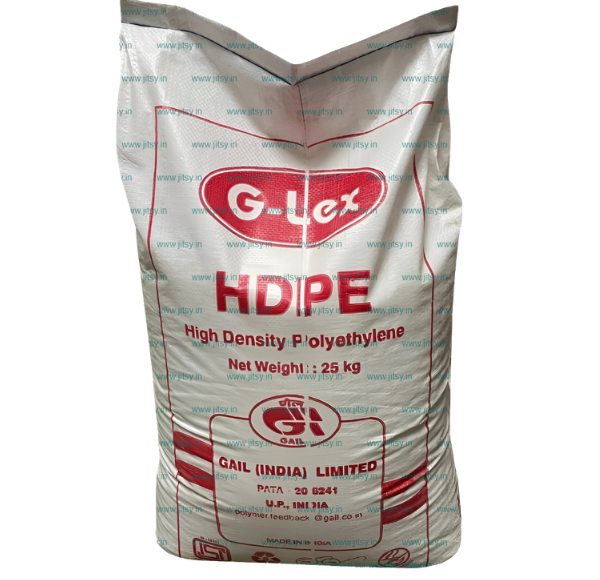
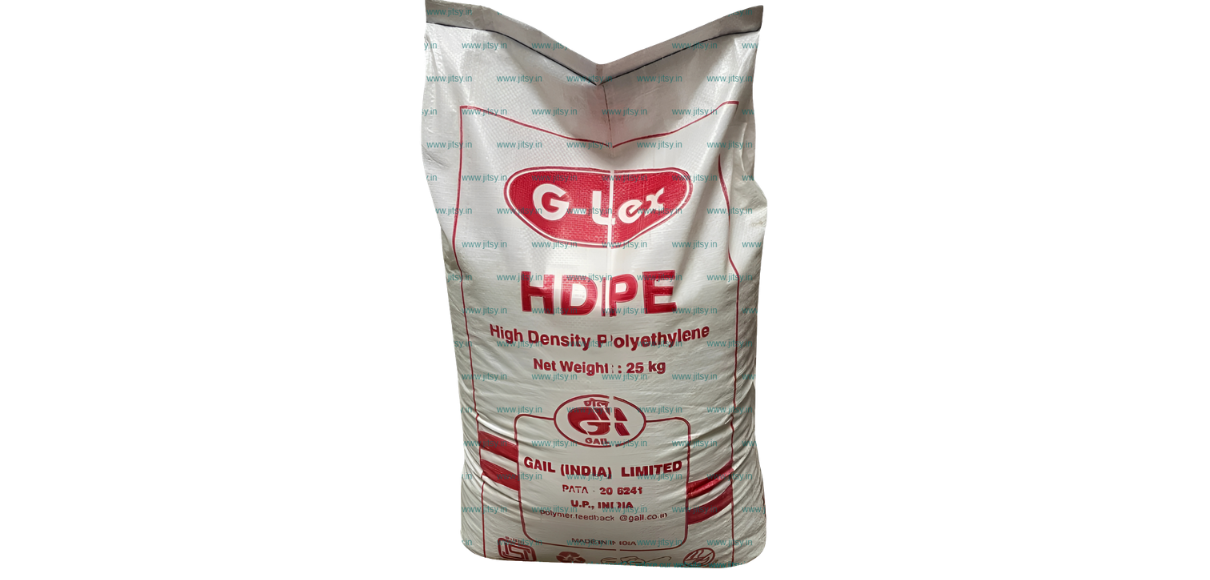
Gail HDPE G Lex F55HM0003
Gail HDPE G‑Lex F55HM0003 (and the related F55HM0003N) is a high‑density polyethylene (HDPE) blown‑film grade from GAIL (India) Limited engineered for thin‑gauge, high‑strength film. GAIL positions this resin as a high molecular weight HDPE with a bimodal molecular‑weight distribution, designed to deliver a strong balance of mechanical robustness and processing stability on blown‑film lines.
In practical converting terms, F55HM0003 is chosen when film producers need high load‑carrying capacity, puncture/tear resistance, and stable drawdown for bag and liner production. The combination of high strength and drawdownability helps reduce film breaks, supports gauge control, and enables downgauging in applications where performance matters more than ultra‑high clarity.
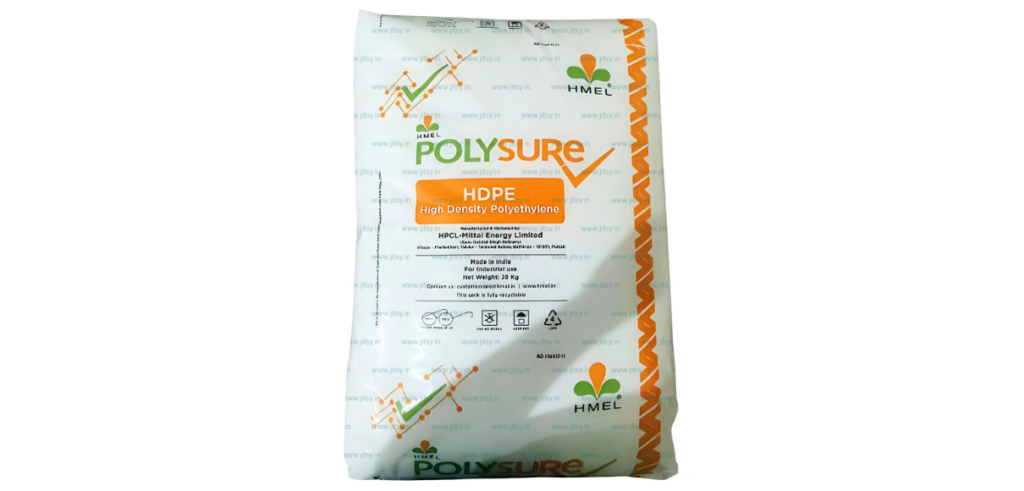
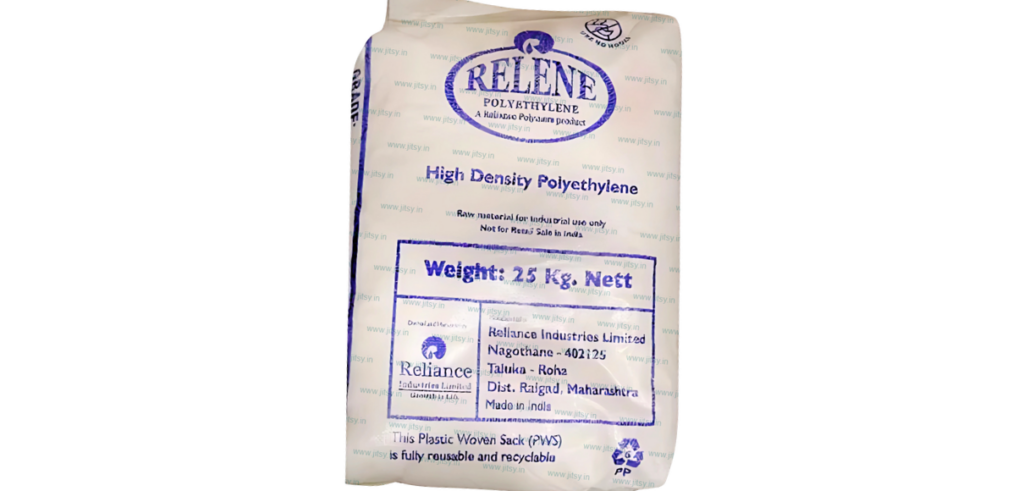
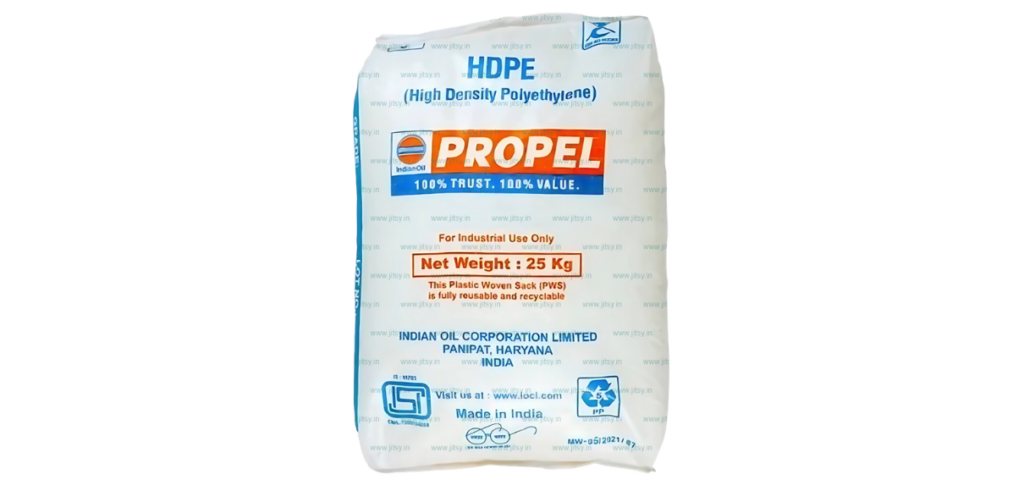
GAIL manufactures the G‑Lex HDPE family using CX slurry process technology (often referenced as the G‑Lex platform), which is commonly associated in GAIL’s product literature with strength, impact performance, and processability. The grade is supplied as natural‑colour pellets, typically in 25 kg woven sacks, with standard storage guidance: keep material dry, store below 50 °C, and protect from direct sunlight/UV during storage.
Technical insights
- Melt Flow Index (I2, 190 °C/2.16 kg): 0.09 g/10 min (typical): Very low MFI indicates high molecular weight, which generally supports higher melt strength and toughness in film—useful for thin‑gauge bags that must carry load without tearing.
- Density (23 °C): 0.955 g/cm³ (typical): A higher HDPE density supports stiffness and strength, which helps bags feel “crisp” and improves load-bearing performance versus lower-density polyethylenes.
- Bimodal molecular‑weight distribution: Typically used to combine processability with mechanical performance—helping film converters achieve stable extrusion while maintaining strength and puncture resistance.
- Thin‑gauge drawdownability (positioning): GAIL highlights drawdownability as a key benefit; in production this usually translates to improved gauge stability and fewer breaks when running thinner films.
- Conformance identifier (as stated): Conforms to natural‑resin designation IS 7328‑3B‑FBE‑FXDA of IS 7328:2020 for film-type products.
- Mechanical property cluster: The full datasheet family references mechanical properties for evaluation; where specific tensile/impact numbers are not available in the visible excerpt, treat them as available in the official GAIL datasheet and confirm with the latest COA/TDS for your lot.
Applications
Carry bags and shopping bags (thin‑gauge, high‑strength): F55HM0003 is commonly specified for retail carry bags and shopping bags where converters want higher strength at lower gauge. It suits applications where bag failure (handle tear, puncture, split) creates customer complaints and returns.
Grocery bags and trash bags: The grade is positioned for grocery and trash bag production where toughness and tear resistance matter. Film producers typically use HM HDPE grades like this to improve bag integrity under variable loading and handling.
Industrial liners and heavy‑duty packaging film: For industrial liners and packaging where puncture and tear resistance are critical, F55HM0003’s high molecular weight profile is relevant—especially when downgauging is a production target without sacrificing performance.
Comparable alternatives
Comparable HDPE film grades exist, but they are not automatically interchangeable—especially when MFI is very low and the grade is positioned as HM blown‑film.
- F55HM0003N: Often treated as the closest comparable within the same family (natural variants). Substitution should still be validated against the latest manufacturer documentation and availability.
- GAIL E45A003 (higher MFI film grade, commonly used for blends): Typically positioned for film applications with a much higher MFI (often used in blends with LD/LLDPE). Compared to F55HM0003, it may process differently and may not deliver the same HM thin‑gauge strength profile.
Procurement rule of thumb: treat “equivalence” as unconfirmed unless you match (1) MFI, (2) density, (3) intended film application window (thin‑gauge HM vs general film/blends), and (4) the exact IS 7328 designation and manufacturer positioning in the datasheets.
Common search variants
Also searched as: HDPE HM blown film granules, carry bag HDPE dana, shopping bag HDPE grade, industrial liner HDPE resin. Common variants/misspellings: F55HM003, F55HM0003N, G Lex F55HM0003, GAIL F55HM0003 HDPE.
Key Features
Need Technical guidance?
Why buy Gail HDPE G Lex F55HM0003 from JITSY?
- Direct import & verified sourcing
- Authorised channel–led supply
- Pan-India B2B delivery
- Transparent pricing & documentation
- Mobile app–enabled procurement
- Full compliance (RoHS, BIS/ISI, EPR, GST)
- Batch traceability
FAQs
Frequently Asked Questions
What is G‑Lex F55HM0003 used for?
Why is the MFI so low (0.09) and what does it mean for film performance?
Is F55HM0003 suitable for thin‑gauge carry bags and shopping bags?
What’s the typical density of this grade?
Can I replace a general-purpose film HDPE grade with F55HM0003?
Is it compatible with LDPE/LLDPE blends?
What processing guidance should I follow for blown‑film extrusion?
What Customers Say
You must be logged in to post a review.
Other Relevant Products Available in India
Related Articles
How Small & Mid-Sized Manufacturers Can Compete Using Digital Procurement
Small and mid-sized manufacturers have never given up on competing. In the modern market, it is no longer sufficient to compete with the quality of the work and hard labour.

Why India Is Becoming a China+1 Option for Raw Material Sourcing
Businesses can no longer rely on a single nation. They currently diversify risk and seek partners who are stable. Meanwhile, the increased cost of labour in China is driving consumers towards more favourable alternatives.
Choosing the Correct Polymer for Your Manufacturing Needs: ABS vs PP vs PVC
Confusion is common when manufacturers are considering ABS vs PP vs PVC. Different polymers are suitable for different applications, with specific pros and cons.
Top Procurement Mistakes Indian Manufacturers Make While Scaling
I have seen promising Indian manufacturers grow and then struggle during scaling. Often, success itself exposes operational cracks that were previously hidden.

Raw Materials Used in Toy Manufacturing: Safety, Compliance & Cost Factors
The materials used in toy manufacturing can impact the safety of children and the reputation of the company. There are multiple documented cases where improper material selection has led to recalls, litigation, and severe financial damage to toy manufacturers.

Choosing the Right Polymer Grades for Injection Molding
Purchasing the wrong polymer grade for injection molding can directly result in product failure, high rejection rates, or field performance issues. Different applications require vastly different material characteristics.

How Digital Procurement Platforms Reduce Raw Material Fraud
Raw material fraud is a frequent issue in conventional procurement. It usually happens due to the lack of supplier verification, the absence of records, and low levels of transparency. In manual systems, it is hard and time-consuming to keep track of materials.
How Crude Oil Prices Impact Plastic Raw Material Costs in India
Crude oil plays a powerful role in the worldwide plastic industry & India is no exception. Most of the plastic raw materials, like PE, PP, and PVC, are extracted from petrochemicals sourced from crude oil.
The Great Procurement Divide: Why Your Best Engineers Make Your Worst Buyers
Walk into any manufacturing facility across India—from PVC pipe makers in Gujarat to automotive component manufacturers in Chennai—and you’ll hear this logic echoed in boardrooms and production floors alike.
Copy-Paste vs. Innovation
Is playing it safe actually the riskiest strategy? The uncomfortable truth about innovation avoidance in Indian manufacturing
The Credit Cycle Shift: Why 30-Day Payments Are Winning Hearts (and Wallets)
If you’ve ever done business in India, you know this vibe. Long credit terms weren’t just about money—they were about trust, connection, and that warm cup of chai shared over a handshake deal. You’d walk into your supplier’s office, chat about life, and walk out with goods worth lakhs, no questions asked.
The Great Inventory Debate
When COVID hit, I think all of us felt something shift in how we think about supply chains. It wasn’t just disruption. It was exposure. What we thought was working… suddenly wasn’t. Containers stuck. Prices all over the place. Buyers unsure. And for many manufacturers—raw material just wasn’t there when it was needed.
The 0.1% That Destroys the 99.9%: Why Documentation in B2B Trade Isn’t Optional Anymore
this is how businesses have functioned. Fast, informal, and based on mutual trust. And in 99.9% of the cases, it works. Goods are delivered, payments are made, and relationships grow stronger.
The Growing Crisis of Non-Compliance in India’s Polymer Supply Chain: Protecting Your Business
Complete Documentation Isn’t Optional – It’s Critical
Their prices are surprisingly competitive – sometimes 3-5% below market rates. Your production costs look great on paper. But six months later, you receive a notice from the GST department that sends a chill down your spine: your input tax credits are being reversed, with interest and penalties.
5 Ways to Optimise Your Polymer Supply Chain
With raw material costs fluctuating, logistics challenges mounting, and quality expectations rising, manufacturers need concrete strategies to optimise their polymer procurement process.

Reviews
Clear filtersThere are no reviews yet.