











Haldia PPCP Halene M325
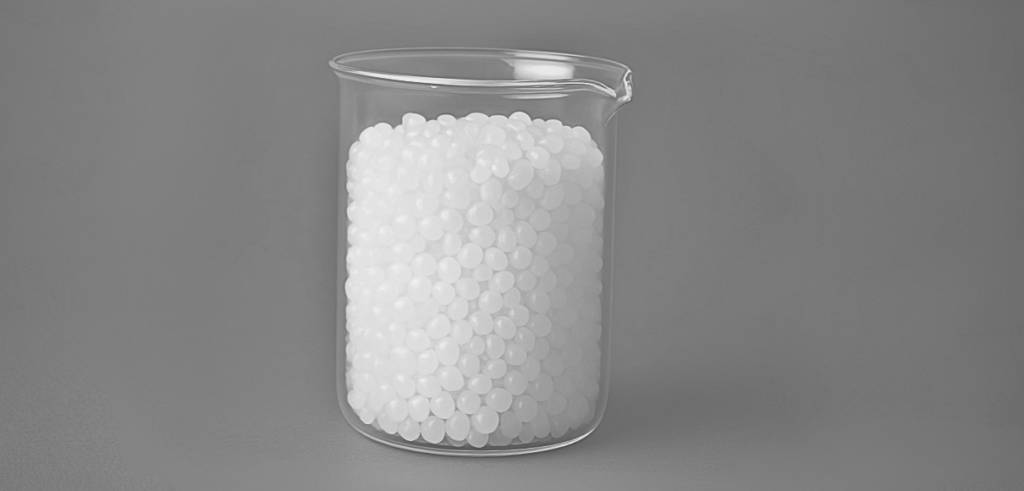
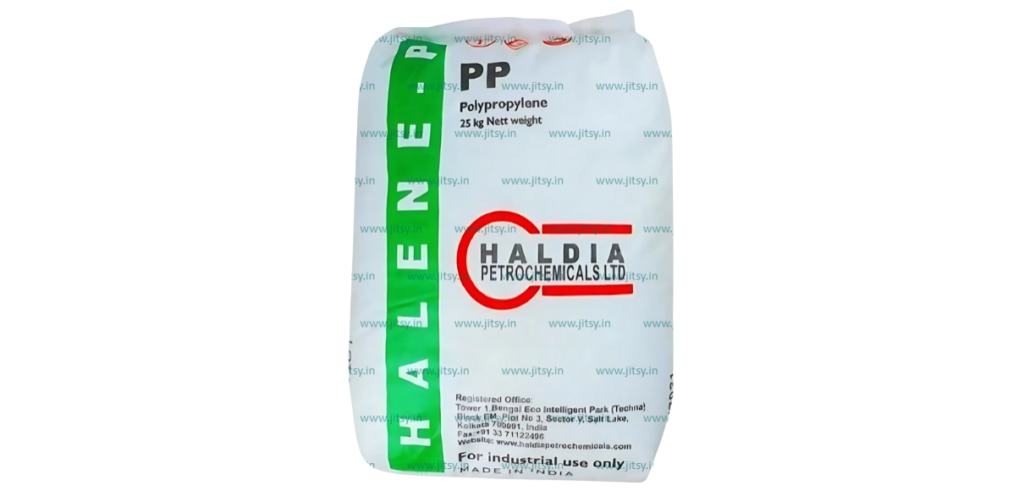
Haldia Petrochemicals’ Halene-P M325 is a heterophasic polypropylene impact copolymer (PPCP) granule engineered for high-flow injection moulding. Manufactured using Spheripol technology, M325 delivers an MFI of 25 g/10 min, density of 0.90 g/cm³, and a well-balanced stiffness-impact profile. This makes it ideal for moulders and OEMs producing furniture, appliance housings, automotive trims, and as a base for compounding. M325 stands out for its processability, short cycle times, and glossy surface finish, giving you both productivity and premium aesthetics.
Technical specifications
Physical properties (MFI/density)
- Melt Flow Index: 25 g/10 min (230°C/2.16 kg) – enables fast fill and cycle reduction in thin-wall, multi-cavity moulds
- Density:90 g/cm³ – standard for PP IC, supporting lightweight, robust parts
Mechanical properties (stiffness/impact)
- Tensile Strength at Yield: 25 MPa – balanced strength for structural and load-bearing applications
- Tensile Elongation at Yield: 7% – offers flexibility and resistance to sudden shocks
- Flexural Modulus: 1150 MPa – provides structural stiffness for furniture and appliance parts
- Notched Izod Impact (23°C): 60 J/m – ensures toughness versus PP homopolymers, reducing breakage during handling
Thermal properties (Vicat/HDT)
- Vicat Softening Point (10 N): 140°C – suitable for moderately heated environments in appliances and interiors
- Heat Deflection Temperature (0.455 MPa): 84°C – handles typical automotive and white goods service temps
- DSC Melting Temp: 165°C – stable during high-speed injection cycles
Functional Features
Halene M325’s unique combination of flow, stiffness, and impact performance makes it a versatile and reliable choice for demanding injection moulding and compounding applications. Spheripol process ensures batch-to-batch consistency and high gloss.Applications
Furniture and housewares
Halene M325 is widely used for chairs, tables, storage bins, and kitchenware. Its stiffness supports load-bearing, while impact resistance prevents breakage from drops. The glossy finish enhances product appearance for premium housewares.Appliances and white goods
For fans, mixers, washing machines, and refrigerator parts, M325 offers the strength and thermal stability needed for housings, panels, and internal structures. Its processability reduces cycle times and improves surface quality.Automotive components
M325 is suitable for non-critical interior trims, battery boxes, and under-hood covers. The grade’s impact-stiffness balance ensures durability against vibration and handling, while gloss adds aesthetic value to visible parts.Compounding base
M325 serves as an excellent base resin for compounding and masterbatch production. Its high flow aids filler dispersion and smooth twin-screw extrusion, making it a preferred carrier for mineral, glass, or colour concentrates.Processing guidelines
- Barrel temperature: 180–210°C
- Mould temperature: 30–40°C
- High-flow optimisation: Leverage 25 MFI for fast fill, short cycles, and thin-wall designs (1.5–2 mm possible in multi-cavity tools)
- Screw/mould design: Use standard PP IC compression ratio; ensure adequate packing to reduce sink marks in ribs and bosses
- Defect mitigation:
- Warpage: Use balanced cooling
- Flow marks: Increase injection speed
- Short shots: Optimise gate design and location
Advantages vs competitors
Halene M325 matches or exceeds Reliance Repol B220MN/B250EG in flow and mechanicals, offering Indian moulders an edge in price, availability, and technical support. Spheripol process ensures superior gloss and batch consistency, while high MFI reduces cycle times and energy costs. Comparison Table:| Property | Halene M325 | Repol B220MN | Advantage |
| MFI | 25 g/10 min | ~22 g/10 min | Faster cycles, thin walls |
| Flexural modulus | 1150 MPa | ~1100 MPa | Comparable stiffness |
| Impact (RT) | 60 J/m | Similar | Robustness, drop safety |
| Applications | Furniture, auto, appliances, compounding | Similar | Broader compounding use |
HMEL PPCP Polysure CM25NR
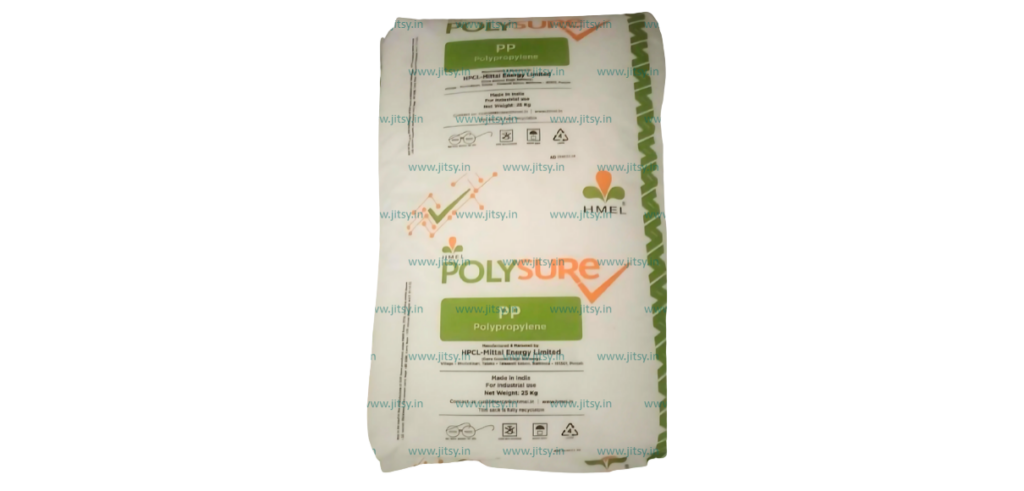
HMEL Polysure CM25NR is a nucleated heterophasic polypropylene impact copolymer (PPCP) reactor grade, engineered via Spheripol-II technology by HPCL-Mittal Energy Ltd. With a melt flow index of 25 g/10 min, CM25NR is optimized for injection moulding and compounding applications that demand dimensional stability, process efficiency, and excellent stiffness-impact balance. Nucleation accelerates crystallisation, reduces cooling time and energy consumption, and minimizes warpage—making CM25NR the material of choice for rigid packaging, automotive parts, and masterbatch compounding. Supplied as natural granules in 25 kg PP bags, CM25NR is compliant with IS 10910 for food, pharma, and drinking water contact, and is PWM Rules 2016 compliant (non-SUP).
Functional Features
Polysure CM25NR stands out for its reactor-grade consistency, nucleated crystallisation, and balanced mechanical properties. Its moderate-high flow supports efficient mould filling, while high stiffness and good impact resistance enable the production of rigid, durable parts. The grade’s food-contact compliance and process reliability make it a trusted solution for converters, compounders, and OEMs.Detailed Technical Specifications (Typical Values)
- Melt Flow Index: 25 g/10 min (ASTM D1238)
- Tensile Strength at Yield: 30 MPa (ASTM D638)
- Tensile Elongation at Yield: 6% (ASTM D638)
- Flexural Modulus (1% secant): 1500 MPa (ASTM D790A)
- Notched Izod Impact (23°C): 80 J/m (ASTM D256A)
- Vicat Softening Point (10N): 152°C (ASTM D1525)
- Heat Deflection Temp (0.455 MPa): 98°C (ASTM D648)
- Packaging: Natural granules, 25 kg PP bags
Applications & Industry Use Cases
Rigid Packaging
CM25NR is ideal for crates, pails, and rigid containers where high stiffness, dimensional stability, and warpage resistance are critical. Its nucleated structure supports precise, stackable, and durable packaging solutions.Automotive Components
Automotive OEMs and compounders use CM25NR for interior and exterior parts requiring a balance of impact strength and stiffness. The grade’s reactor-grade uniformity and moderate flow enable efficient production of complex, robust components.Compounding & Masterbatch
CM25NR serves as a reliable base resin for mineral-filled and colour masterbatch compounding. Its processability and nucleated morphology ensure efficient dispersion and consistent mechanical properties in custom PPCP blends.Performance Advantages
Compared to non-nucleated or higher-MFI PPCP, CM25NR delivers lower warpage, faster cycles, and superior dimensional accuracy for mid-wall and rigid parts. Its Spheripol-II reactor technology ensures batch consistency, while nucleation provides energy and productivity gains. CM25NR is especially competitive for rigid packaging, automotive, and compounding uses, and is an alternative to higher-MFI grades like Reliance Repol B400MN, IOCL Propel 3400MN, and Haldia M340.Compliance, Packaging & Storage
Food Contact Compliance: Certified to IS 10910 for food, pharma, and drinking water contact; converter must validate final article compliance. Packaging: Natural granules in 25 kg PP bags. Storage Guidelines: Store dry, below 50°C, and away from direct sunlight.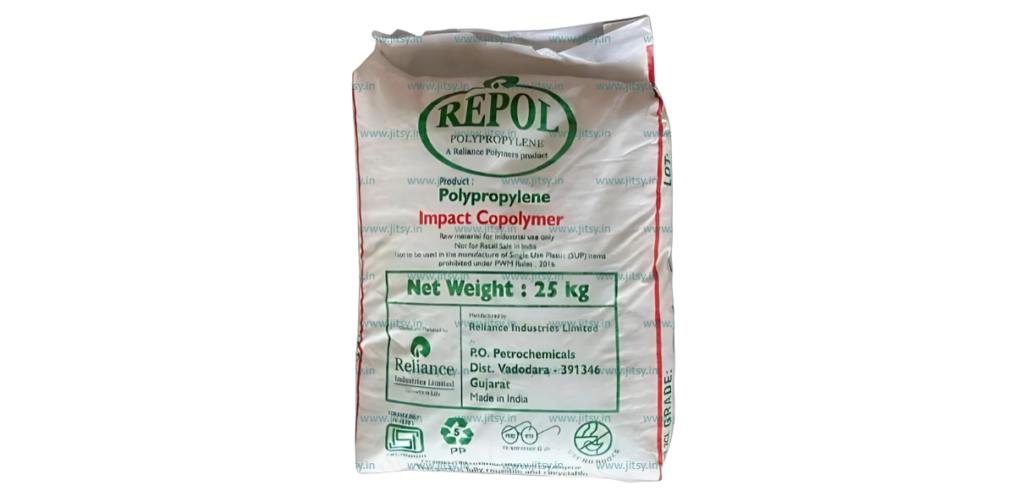
Reliance PPCP Repol B220MN
Reliance Repol B220MN is a high-flow polypropylene (PP) impact copolymer (PPCP) granule engineered by Reliance Industries for demanding injection moulding applications. With a melt flow rate of 22 g/10 min and nucleated for fast cycles, B220MN is trusted by OEMs and moulders for rigid packaging, automotive components, housewares, and appliance parts. The grade’s balanced stiffness and impact strength, combined with reliable dimensional stability, make it a go-to PPCP for consumer and industrial plastics. B220MN is supplied as natural granules and is suitable for food-contact and regulated applications (per FDA 21 CFR 177.1520 and IS 10910).
Technical specifications of Reliance Repol B220MN
Flow & physical properties
- Melt Flow Rate (MFR): 22 g/10 min (230°C/2.16 kg) – enables rapid filling of thin sections, ribs, and complex moulds, reducing cycle times
- Density:90 g/cc – typical of PP impact copolymers, supporting lightweight design
Mechanical performance: stiffness & impact strength
- Tensile Strength at Yield: ~25 MPa – offers a solid balance between flexibility and strength
- Flexural Modulus: ~1.1 GPa – medium stiffness, good for load-bearing and structural parts
- Notched Izod Impact: High toughness at room temperature, much tougher than PP homopolymer – ideal for parts that face drops or repeated handling
Thermal properties & service temperature window
- Heat Deflection Temp (HDT): ~100°C (0.46 MPa) – suitable for room-temperature and moderately warm conditions, such as appliance interiors and automotive trims
- Vicat Softening Point: Typical of PP IC, supporting service up to 90–100°C
Functional Features
Reliance Repol B220MN brings together process efficiency, material reliability, and design flexibility. It’s nucleated for faster crystallisation and shorter cycles, helping you boost productivity. The grade’s impact-stiffness balance allows for robust, lightweight parts, and its food-contact compliance opens up regulated market opportunities.Applications and industry use cases
Household and consumer plastic products
B220MN is used in buckets, storage bins, kitchenware, furniture components, and other houseware items. Its high flow and toughness mean parts are lightweight, durable, and resistant to everyday drops and knocks.Appliances and electrical components
Appliance makers use B220MN for housings, control panels, knobs, and internal parts in fans, coolers, washing machines, and more. The grade’s impact and stiffness help these parts last, while its thermal profile is great for room-temperature and mildly warm areas.Automotive and industrial parts
For non-critical interior trims, battery cases, and light covers, B220MN’s toughness and processability shine. It handles vibration and moderate impacts better than standard PP, making it a cost-effective solution for automotive interiors and industrial covers.Rigid packaging, crates, caps & closures
B220MN is trusted for injection-moulded crates, pallets, rigid packaging, and closures that need to withstand logistics stress. Its high flow enables thinner walls and faster cycles, helping manufacturers cut weight and boost output.Processing guidelines for PPCP Repol B220MN
Recommended injection-moulding parameters
- Melt temperature: 190–240°C (lower for standard parts, higher for thin-wall or complex shapes)
- Mould temperature: 20–50°C (colder for speed, warmer for finish/stability)
- Injection speed & pressure: Use high speed to exploit flow; ensure packing to avoid sink in ribs/bosses
- Regrind usage: Clean, limited regrind is generally safe if contamination is controlled
Design tips for thin-wall and multi-cavity tools
- Use uniform wall thickness and rounded corners to reduce stress
- Gates and runners should be sized for high-flow PP IC to avoid short shots
- Thin-wall designs benefit from B220MN’s flowability and cycle-time reduction
Common PP injection-moulding defects and troubleshooting
- Warpage: May be caused by uneven cooling or mould temperature; adjust cooling and packing
- Flow lines: Increase injection speed or temperature; check gate location
- Short shots: Raise temperature or speed; ensure venting is adequate
Performance advantages vs other PP grades
B220MN vs PP homopolymer: Much higher impact strength, especially at low temperatures, but slightly less stiff and heat-resistant. B220MN vs random copolymer PP: Much tougher but opaque; perfect where clarity isn’t needed but durability is. B220MN vs engineering plastics (ABS, PC/ABS): Lower cost and density, good for non-high-heat parts, but less heat-resistant than engineering plastics. Why choose B220MN?- Faster cycles, thinner walls, and higher productivity than many other PP grades
- Balanced performance for a wide range of consumer, appliance, and automotive parts
Reliance PPCP Repol B250EG
Reliance Repol B250EG is a specialized, high-flow polypropylene (PP) impact copolymer (PPCP) engineered using the Unipol gas-phase process and a high-activity stereospecific catalyst. Its standout feature is a melt flow rate of 25 g/10 min, making it ideal for high-speed extrusion coating lines where uniform coating and process reliability are critical. B250EG is recommended for extrusion coating of PP woven fabrics—think woven sacks, tarpaulins, agro-textiles, and flexible packaging—where its flow, adhesion, and toughness ensure optimal product quality. This grade is trusted by woven sack manufacturers, laminators, packaging converters, and OEMs across India.
Technical specifications of Reliance Repol B250EG
Flow and physical properties
- Melt Flow Rate (MFR): 25 g/10 min (230°C/2.16 kg) – delivers excellent flow for thin, even coatings at high line speeds
- Density: 0.90 g/cm³ – standard for PP impact copolymers, supporting lightweight coatings
Mechanical performance of coated structures
- Tensile Strength at Yield: ~24 MPa – ensures coated fabrics retain strength and flexibility
- Flexural Modulus: ~0.9 GPa – provides a balance of stiffness and drapability
- Impact Resistance: Superior to PP homopolymer coatings, reducing cracking and improving durability under handling/folding
Thermal behaviour and service conditions
- Service Temperature Range: Suitable for moderate temperatures found in outdoor sacks, tarps, and packaging—not for continuous high-heat use
- Thermal Stability: Maintains coating integrity during high-speed extrusion and typical end-use conditions
Functional Features
B250EG is purpose-built for extrusion coating, delivering process efficiency, product durability, and surface quality. The grade’s high melt flow, impact copolymer matrix, and process consistency make it a top choice for converters seeking reliability and productivity gains.Applications and industry use cases
Coating of PP woven fabrics and sacks
B250EG is the preferred PPCP for extrusion coating of polypropylene woven sacks, FIBC fabrics, and tarpaulins. Its high flow enables thin, uniform coatings at high line speeds, improving moisture barrier, printability, and seam strength. This results in tough, reliable sacks and tarps for cement, fertiliser, and agro applications.Tarpaulins, agro-textiles, and industrial fabrics
For tarpaulins, ground covers, and agro-textiles, B250EG delivers abrasion resistance and flexibility, helping products withstand outdoor exposure and repeated handling. Its impact copolymer base reduces cracking and improves service life.Flexible packaging and paper-poly laminates
B250EG is widely used for extrusion-coated films, paper-poly laminates, and board coatings. The PP layer adds chemical and moisture resistance to cartons and flexible packs, with high line speed compatibility.Other extrusion-coating and lamination applications
Beyond woven fabrics, B250EG serves in general plastics, non-woven fabric coatings, and specialty laminates where high-flow, thin, and tough coatings are required.Processing guidelines for PPCP Repol B250EG in extrusion coating
Recommended extrusion-coating conditions
- Melt temperature: 220–260°C (adjust as per line and substrate)
- Line speed: High MFR supports faster lines and thinner coatings at stable screw loads
- Substrate prep: Ensure clean, dry woven fabric for optimal adhesion
Coating design and thickness optimisation
- Target uniform, thin coatings for cost efficiency and performance
- Monitor edge stability and neck-in—B250EG’s flow helps control neck-in for consistent coverage
- Screw design: Standard PP IC screw with proper L/D and mixing section recommended
Common coating defects and troubleshooting
- Orange peel: May result from low melt temperature or poor substrate prep—raise temp, improve cleaning
- Neck-in: Excessive line speed or insufficient die temp—adjust line and thermal settings
- Poor adhesion: Check substrate moisture and surface tension; optimise melt temp and pressure
Performance advantages vs alternative PP grades
B250EG vs PP homopolymer coating grades
B250EG offers much better impact and crack resistance, especially in thin coatings on woven fabrics. This means fewer failures during folding, stacking, and transport.B250EG vs lower-MFI PPCP grades
Its very high MFR enables higher throughput, thinner coatings, and better coverage—translating to productivity gains and material savings on modern extrusion lines.Why choose Repol B250EG for extrusion coating?
- Faster lines: High flow means higher speed and lower energy use per unit
- Lighter coatings: Enables downgauging without sacrificing coverage or durability
- Stronger fabrics: Impact copolymer matrix improves resistance to cracking and abrasion
- Consistent finish: Uniform coating and reduced defects for better printability and appearance
Reliance PPCP Repol C200MN
Reliance Repol C200MN is provisionally described as a nucleated polypropylene impact copolymer (PPCP) in the 20–30 melt flow index (MFI) range, manufactured by Reliance Industries Ltd. While no official TDS or database records are available for C200MN, its product code and family suggest it is designed for injection moulding and compounding applications requiring moderate to high flow, medium impact, and dimensional stability. Like other Repol nucleated PPCP grades, C200MN would be expected to offer accelerated crystallisation, reduced cycle times, and reliable processability for converters and OEMs. For critical or regulated projects, buyers are encouraged to verify the grade or use documented alternatives such as Repol C320MN or B400MN.
Functional Features
Repol C200MN is intended for converters seeking high-flow processability, nucleated stability, and balanced mechanical performance in appliances, automotive, packaging, and compounding. Reactor-grade consistency and food-contact compliance (inferred from the Repol PPCP range) support reliable, traceable production.Detailed Technical Specifications (Provisional, Typical for 20–30 MFI PPCP)
- Melt Flow Index: ~20–30 g/10 min (estimated)
- Density: ~0.90 g/cm³
- Tensile Strength at Yield: ~22 MPa
- Elongation at Yield: ~6%
- Flexural Modulus: ~1100 MPa
- Notched Izod Impact (23°C): ~70 J/m
- Heat Deflection Temp (0.455 MPa): ~95°C
- Vicat Softening Point (10N): ~140°C
