



Bestsellers
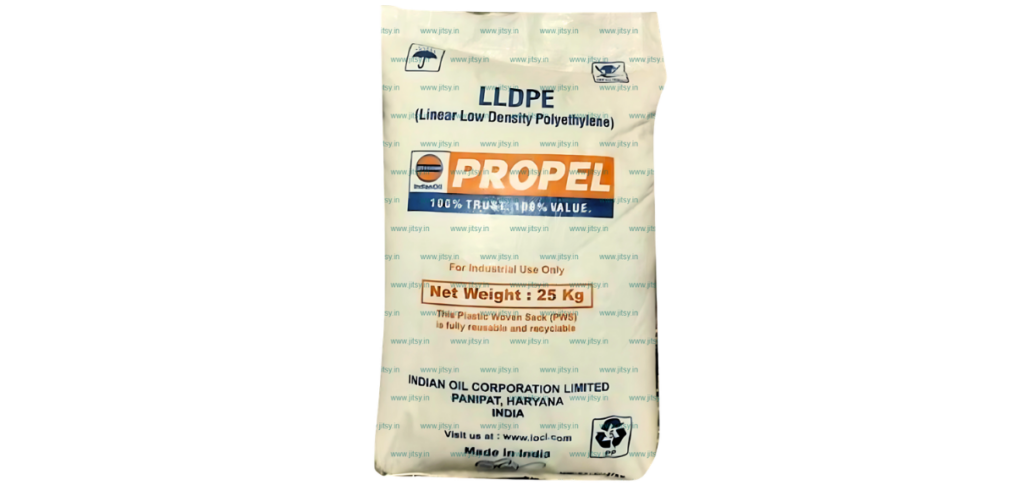
IOCL Propel LLDPE 020F18A
IOCL Propel LLDPE 020F18A is a butene comonomer-based linear low-density polyethylene (LLDPE) manufactured by Indian Oil Corporation Ltd (IOCL) under its PROPEL polymer brand. It is produced using Nova Chemicals’ Sclairtech solution polymerization technology — a precision process that ensures consistent molecular weight distribution, predictable melt behaviour and reliable film properties across production runs. With a melt flow index of 2.0 g/10 min, 020F18A offers higher output and easier drawdown than 0.9 MFI film grades, while its non-slip, non-antiblock formulation gives converters full control over film surface properties through their own masterbatch selection.
IOCL describes 020F18A as a natural-coloured polymer with easy processability, low gel content and no slip or antiblock additives. These three attributes together define the grade’s positioning: easy to run on blown and cast film lines at higher speeds, optically clean with minimal gel defects, and surface-neutral so that ink adhesion, laminate bonding and coefficient of friction can be engineered precisely through formulation. It is the 2 MFI counterpart to IOCL’s 0.9 MFI non-slip grade 010F18A — same density, same additive-free base, higher flow for applications that benefit from faster throughput or thinner film gauge.
According to IOCL’s product technical datasheet, LLDPE 020F18A is recommended for lamination films, cast films, stretch cling films and air bubble film. This application set covers some of the most throughput-sensitive film processes in packaging and logistics — where a resin that flows well, stays optically clear, and delivers consistent mechanical performance across thin gauges creates measurable production and quality advantages over lower-flow or additive-loaded alternatives.
Technical Insights
Resin Properties
- MFI: 2.0 g/10 min (ASTM D1238, 190 °C / 2.16 kg) — The 2.0 MFI rating is the defining difference between 020F18A and IOCL’s 0.9 MFI film grades. Higher melt flow means lower melt viscosity, which translates into higher extrusion output rates, easier drawdown for thinner gauges and better processability on cast film lines and stretch cling equipment. For processors running thin lamination or cast films where output efficiency matters, 020F18A’s MFI allows faster line speeds than 010F18A while maintaining adequate film toughness for most packaging applications.
- Density: 0.918 g/cm³ (ASTM D1505, 23 °C) — Identical to IOCL 010F18A, this density places 020F18A in the flexible-to-semi-rigid zone of the LLDPE range. It enables good film sealability at moderate temperatures, balanced flexibility and strength in laminated structures, and the low-temperature toughness relevant for cold-chain and refrigerated packaging applications.
Mechanical Film Properties
- Tensile Strength at Yield – MD/TD: 12.5 MPa / 12.0 MPa (ASTM D882) — Balanced yield strength in both directions ensures lamination and cast films resist permanent deformation under the tension loads of form-fill-seal equipment, roll winding and pallet stretch application.
- Ultimate Tensile Strength – MD/TD: 33 MPa / 28 MPa (ASTM D882) — High break strength across both film orientations confirms that 020F18A provides structural integrity in laminated pouches, stretch wrap and bubble film even at thin gauges where each micron of film must carry more load.
- Elongation at Break – MD/TD: 700% / 800% (ASTM D882) — Very high elongation is essential for stretch cling films, which are stretched significantly during pallet wrapping and food cling applications. Values of 700% (MD) and 800% (TD) indicate that 020F18A films can accommodate high elongation without rupturing — a critical requirement for stretch and cling performance. It is marginally lower than the 850% TD value of 010F18A, consistent with the slightly lower molecular weight of the 2 MFI grade.
Impact, Tear and Optical Properties
- Dart Impact Strength: 2.5 g/µm (ASTM D1709, 38 mm dart, 66 cm height) — Solid puncture resistance per micron of film thickness. At 2.5 g/µm, 020F18A is slightly lower than the 3.5 g/µm of the 0.9 MFI grade 010F18A, which is the expected trade-off for higher melt flow. For lamination films, cast films and air bubble film where other film layers or construction geometries provide additional protection, this impact level is fully adequate.
- Tear Strength – MD/TD: 3 g/µm / 8 g/µm (ASTM D1922) — The transverse direction tear strength of 8 g/µm provides good resistance to edge tearing and side-seam splitting in laminated pouches and stretch-wrapped loads. The lower MD value (3 g/µm) is typical for oriented LLDPE films and is compensated by the grade’s high elongation.
- Haze: 9% (ASTM D1003) — A 9% haze value indicates good film optical clarity, which is important for packaging applications where product visibility matters — laminated food pouches, clear stretch wrap over pallets and transparent bubble film for protective packaging. The low gel formulation of 020F18A contributes directly to achieving this haze level consistently in production.
Recommended Processing Window
IOCL recommends a blown film processing temperature of 170–210 °C for LLDPE 020F18A. The higher MFI of this grade means the melt flows more easily within this window than lower-MFI grades, typically allowing processing towards the lower end of the range (170–190 °C) without sacrificing film properties — which reduces energy consumption and thermal degradation risk. Operating above 210 °C can cause oxidative degradation, increased gels and haze development, negating the low-gel advantage that IOCL highlights for this grade.Applications of IOCL LLDPE 020F18A
Lamination Films and Multilayer Cast Films
IOCL LLDPE 020F18A is widely used as a lamination film layer and as a component in multilayer cast film structures for food packaging, pharmaceutical wraps, industrial packaging and consumer goods. Its 2.0 MFI enables higher extrusion output compared with 0.9 MFI grades, making it more cost-efficient on high-speed lamination lines where throughput directly affects unit economics. The absence of slip and antiblock additives is critical here — converters who print or laminate the film surface need a clean, high-energy surface for ink adhesion and adhesive bonding, and built-in slip additives would migrate to the surface and reduce both. IOCL explicitly recommends 020F18A for lamination films in its product technical datasheet.Stretch Cling Films and Pallet Wrap
For stretch cling film and pallet wrap applications, 020F18A’s combination of 2.0 MFI, high elongation (700–800%) and good tear resistance (8 g/µm TD) makes it a strong candidate. Stretch and cling films are drawn down to very thin gauges on cast or blown lines and then stretched around loads — a process that demands both high drawdown flow and sufficient toughness to prevent film tearing during application. The non-slip, additive-free base allows formulators to add tackifier (such as PIB) and control cling performance precisely without interference from pre-dispersed antiblock, enabling better formulation flexibility than additive-containing grades. IOCL lists stretch cling films as a primary recommended application for 020F18A.Air Bubble Film for Protective Packaging
020F18A is recommended by IOCL for air bubble film — the cushioning material used for protective packaging of fragile goods. Bubble film requires a resin that processes easily (to form uniform bubble geometry), holds air retention well (good film barrier) and resists puncture when the packaged product shifts against the bubbles. The grade’s good dart impact strength (2.5 g/µm), high elongation and low haze (9%) support these requirements. The low gel specification is particularly important for bubble film: gel particles in the film create weak points that cause premature bubble bursting under light contact, so the “low gels” attribute IOCL highlights for 020F18A is a direct quality differentiator for this application.Cast Films
Cast film processes run at higher speeds and tighter gauge tolerances than blown film, placing greater demands on resin flow consistency and melt uniformity. 020F18A’s higher MFI (2.0 g/10 min) and narrow molecular weight distribution from Sclairtech technology support stable cast film extrusion with good gauge uniformity and consistent optical properties. For cast film applications in food packaging — such as direct-contact wraps, window patches and sealant films in multilayer structures — the grade’s food-contact regulatory approvals (IS 10146, IS 10141, FDA 177.1520) provide the necessary compliance foundation.Comparable Alternative LLDPE Film Grades
IOCL 020F18A sits in a clearly defined segment of 2 MFI non-slip LLDPE blown film grades produced by Indian domestic manufacturers. These grades are commonly evaluated side by side by converters running lamination, cast and stretch cling film applications. OPaL LLDPE F2002A and F2002S from ONGC Petro Additions Ltd are the closest structural analogues. Both are 2 MFI LLDPE film grades produced via Ineos gas-phase polymerization technology with densities around 0.920 g/cm³. F2002A is the non-slip lamination grade, positioned similarly to IOCL 020F18A for lamination and cast films; F2002S adds slip and antiblock for general packaging and stretch film applications. The OPaL grades are produced via gas-phase technology rather than Sclairtech solution polymerization, which can result in differences in molecular weight distribution and optical properties that may be visible on-line as minor differences in bubble stability or film haze. OPaL has not confirmed that F2002A is a drop-in replacement for IOCL 020F18A; equivalence is not confirmed by the manufacturer and should be validated through line trials. GAIL G-Lene F18A020U is a 2 MFI LLDPE film grade from GAIL (India) Ltd marketed as “LLDPE Film Non-Slip Granules” for blown film extrusion with an optimum balance of mechanical and optical properties. It is described as suitable for general-purpose, heavy-duty and liquid packaging films in both laminated and non-laminated blown film applications. However, some commercial descriptions of F18A020U mention that it contains adequate slip and antiblock agents — which would place it closer to a slip grade than IOCL 020F18A’s strictly non-slip formulation. Converters requiring a fully additive-free surface for lamination or printing should confirm the additive package directly with GAIL before substituting F18A020U for 020F18A. GAIL has not confirmed equivalence; equivalence is not confirmed by the manufacturer. IOCL 010F18A is the 0.9 MFI counterpart from the same IOCL product family — same density (0.918 g/cm³), same non-slip/non-antiblock formulation, but lower MFI. Compared with 020F18A, 010F18A offers higher dart impact (3.5 vs 2.5 g/µm) and slightly higher ultimate tensile strength (39/30 vs 33/28 MPa), making it the better choice for applications where maximum film toughness is the priority. 020F18A is the better choice when higher output, easier drawdown for thin gauges, or faster processing is the priority. IOCL does not market these as substitutes; the right grade depends on the application’s balance of output rate versus film toughness. Haldia 71602W is a 2 MFI non-slip LLDPE blown film grade from Haldia Petrochemicals, produced via Spherilene gas-phase technology, without slip or antiblock additives. It targets general-purpose packaging films in a similar MFI/density range, making it a comparable grade. Haldia has not confirmed equivalence to IOCL 020F18A; differences in production technology may result in subtle processing and optical property differences that need evaluation.Regulatory Compliance, Food Contact and Safety for IOCL LLDPE 020F18A
IOCL’s product technical datasheet for LLDPE 020F18A confirms three explicit regulatory approvals that are essential for packaging converters serving food, pharmaceutical and potable water sectors. The grade meets IS 10146:1982 — the Bureau of Indian Standards specification for polyethylene for safe use in contact with foodstuffs, pharmaceuticals and drinking water. It also conforms to the positive list of constituents as per IS 10141:1982, which governs permitted additives in food-contact polyethylene in India. Additionally, IOCL states that the grade and its incorporated additives comply with FDA CFR Title 21, Section 177.1520 (Olefin Polymers) — the US FDA regulation for olefin-based polymers in food-contact applications. These three approvals collectively make 020F18A suitable for use in food-contact lamination films, cast wraps, multilayer food pouches and pharmaceutical packaging structures — provided the full laminate or film construction also meets applicable regulations. For converters supplying brand owners who require documented resin-level compliance, IOCL’s regulatory statements in the datasheet serve as the primary reference.Manufacturer Details – IOCL PROPEL LLDPE 020F18A
IOCL Propel LLDPE 020F18A is manufactured by Indian Oil Corporation Ltd (IOCL), India’s largest public-sector oil and petrochemicals company. IOCL’s polymer range is marketed under the PROPEL brand, with LLDPE grades produced at the Panipat petrochemical complex using Nova Chemicals’ Sclairtech solution polymerization technology. This technology is noted for its ability to produce LLDPE with narrow, well-controlled molecular weight distribution — a key factor in 020F18A’s consistent processability, low gel levels and predictable film properties.Common Search Variants and Grade Misspellings
IOCL Propel LLDPE 020F18A is also commonly searched and referenced as: IOCL LLDPE Blown Film Non Slip 2.0 MFI 020F18A, LLDPE Film 2 MFI Non Slip IOCL 020F18A, 020F18A IOCL LLDPE granules, PROPEL LLDPE 020F18A lamination film grade, White 020F18A IOCL LLDPE 25 kg bag, and IOCL LL Film 020F18A 2 MFI blown film. Frequent misspellings and alternate formats include: 020 F18A LLDPE, 020f18a IOCL granules, IOCL lldpe 020-F18-A non slip, and IOCL LLDPE 2.0 MFI non-slip film grade 020F18A.
IOCL Propel LLDPE 500M24A
IOCL Propel LLDPE 500M24A is a butene comonomer-based linear low-density polyethylene (LLDPE) manufactured by Indian Oil Corporation Ltd (IOCL) under its PROPEL polymer brand. It is produced using Nova Chemicals’ Sclairtech solution polymerization technology — a precision process that delivers a narrow molecular weight distribution, consistent melt behaviour and excellent flow properties. With a melt flow index of 50 g/10 min, 500M24A is one of the highest-flow LLDPE grades in IOCL’s portfolio, designed specifically for applications where fast mould filling, low warpage and good dispersion of pigments and additives are critical requirements.
IOCL describes 500M24A as a natural-coloured polymer with narrow molecular weight distribution, excellent processability and outstanding flow properties. Its linear polymer structure, derived from the LLDPE family, gives it better tensile strength, toughness and chemical resistance compared with LDPE grades of similar density — making it a preferred base resin for colour and additive masterbatches where the carrier polymer must disperse high loadings uniformly without compromising melt flow or the final product’s mechanical integrity.
According to IOCL’s product technical datasheet, LLDPE 500M24A is designed as a base resin for masterbatches and to make moulding of flat and large warpage-free products and lids. These two primary roles — masterbatch carrier and injection-moulded lid resin — both demand the same core attributes: very high flow for fast filling and dispersion, narrow molecular weight distribution for uniform melt behaviour, and adequate stiffness and toughness for the finished part or compound to hold its shape and performance through end-use.
Technical Insights
Resin Properties
- MFI: 50 g/10 min (ASTM D1238, 190 °C / 2.16 kg) — This exceptionally high melt flow index is the defining characteristic of 500M24A. At 50 MFI, the resin flows rapidly and evenly through hot-runner systems, multi-cavity moulds and mixing equipment, enabling fast injection cycles, complete cavity fill and thorough pigment dispersion in masterbatch compounding. It is the reason this grade is specified specifically for large, flat lids and high-loading masterbatch formulations where slower-flowing resins would result in incomplete fill or uneven dispersion.
- Density: 0.924 g/cm³ (ASTM D1505, 23 °C) — A medium-low density for LLDPE, this value reflects the butene comonomer content and places 500M24A in the flexible-to-semi-rigid range. It supports good toughness and elongation in moulded parts, balanced with the dimensional stability needed for flat, warp-resistant lids and covers.
Mechanical Properties
All values are typical figures from IOCL’s product technical datasheet, measured on injection-moulded specimens. They are not specification limits.- Tensile Yield Strength: 11–12 MPa (ASTM D638) — Two official TDS copies report slightly different typical values (11 MPa and 12 MPa respectively); both indicate adequate structural strength for lids, covers and moulded flat parts that are not subject to high sustained mechanical loads.
- Elongation at Break: >500% (ASTM D638) — Very high elongation before fracture confirms the grade’s toughness. In masterbatch applications, this ensures the carrier resin does not embrittle compounds, even at high filler loadings. For moulded lids, it means they can flex and absorb impact without cracking.
- Flexural Modulus: 300 MPa (ASTM D790) — Reflects the stiffness of a moulded part. At 300 MPa, 500M24A produces semi-rigid lids and flat parts with enough rigidity to hold their shape in service, without the brittleness of higher-modulus grades. This lower modulus compared to OPaL M2550 (400 MPa) also means slightly more flexibility, which can be advantageous for snap-fit lid applications.
Thermal and Environmental Properties
- Vicat Softening Point: 98 °C (ASTM D1525, 10 N) — The temperature at which the material begins to soften under load. At 98 °C, 500M24A moulded parts retain their shape well below typical sterilization or heat-filling temperatures and are suitable for most ambient and moderately warm storage and distribution environments.
- Environmental Stress Crack Resistance (ESCR), F50: <10 hours (ASTM D1693B) — A low ESCR value indicates limited resistance to cracking under sustained stress in the presence of aggressive chemicals. This is acceptable and expected for 500M24A, which is designed for masterbatch compounding and flat lids rather than pressure-rated pipes or chemical containers that require high ESCR. Specifying 500M24A for stress-crack-sensitive applications should be avoided.
Recommended Processing Window
IOCL recommends a processing temperature of 180–215 °C for injection moulding of LLDPE 500M24A. The high MFI means the resin flows easily within this window, enabling fast shot speeds and short fill times even for large, thin-section lids. Exceeding 215 °C risks oxidative degradation given the high surface area and low molecular weight of this high-flow grade — visible as colour change, odour development and loss of tensile properties. IOCL also advises processing the material within six months of delivery to maintain full performance.Applications of IOCL LLDPE 500M24A
Base Resin for Colour and Additive Masterbatches
The most widely cited application for IOCL LLDPE 500M24A is as a carrier or base resin in colour masterbatches, filler masterbatches and functional additive compounds. In masterbatch manufacturing, the carrier resin must have very high melt flow to allow thorough mixing of pigments, fillers and additives at high loading rates without causing excessive equipment wear or non-uniform dispersion. At 50 MFI, 500M24A provides the flow needed for twin-screw compounders and mixing extruders to blend high pigment concentrations — such as carbon black, titanium dioxide, organic pigments and inorganic fillers — into a homogeneous masterbatch that disperses cleanly when let down into final resin. Its narrow molecular weight distribution ensures consistent melt behaviour batch to batch, which is critical for masterbatch producers who need predictable processing and colour consistency across production runs.Injection-Moulded Lids, Covers and Flat Parts
500M24A is specifically designed by IOCL for injection moulding of flat and large warpage-free products and lids — a category that includes pail lids, drum covers, container caps, trays and other shallow mouldings where dimensional accuracy and flat surface finish are essential. Large flat injection mouldings are among the most demanding applications for any resin because differential cooling and uneven molecular orientation cause warpage — a chronic problem with lower-flow, broader-MWD grades. The 50 MFI and narrow molecular weight distribution of 500M24A allow very fast, even cavity fill with minimal frozen-in stresses, which directly reduces warpage and dimensional distortion after demoulding. The combination of adequate stiffness (300 MPa flexural modulus) and high elongation (>500%) ensures lids are rigid enough to seal containers properly while being tough enough not to crack on impact during handling or assembly.Filler Compounds and Polymer Blends
Beyond pure colour masterbatch, IOCL 500M24A is used in the broader filler compound and polymer blending sector — for example, as the polyethylene matrix or carrier in talc-filled compounds, calcium carbonate masterbatches and functional additive concentrates used in packaging, agriculture and industrial applications. The grade’s high flow reduces the viscosity of heavily filled compounds, improving their processability on single-screw extruders and injection moulding machines that would otherwise struggle with thick, high-viscosity blends. The food-contact approvals it carries (IS 10146, IS 10141 and FDA 177.1520) also make it suitable as a carrier in masterbatches intended for use in food-contact packaging resins, where the carrier resin’s regulatory status matters as much as its physical properties.Comparable Alternative 50 MFI LLDPE Injection Grades
IOCL 500M24A belongs to a small group of 50 MFI LLDPE injection grades available from Indian producers. These grades are routinely grouped together in distributor catalogues and are often evaluated side by side by masterbatch manufacturers and moulding processors. OPaL LLDPE M2550 from ONGC Petro Additions Ltd is the closest structural analogue to IOCL 500M24A in the Indian market. M2550 is a butene comonomer-based LLDPE produced via Ineos gas-phase polymerization technology with an MFI of 50.0 g/10 min and density of 0.934 g/cm³. OPaL explicitly recommends M2550 for masterbatch and compounding, housewares, thin-walled containers and lids, and notes it is “suitable for faster moulding cycle” — identical application positioning to IOCL 500M24A. Key differences: OPaL M2550 has a higher density (0.934 vs 0.924 g/cm³) and higher flexural modulus (400 MPa vs 300 MPa), which means M2550 produces stiffer moulded parts. Its Vicat softening point (95 °C) is marginally lower than 500M24A’s (98 °C). Both carry IS 10146, IS 10141 and FDA 177.1520 regulatory approvals. OPaL has not confirmed that M2550 is a drop-in replacement for IOCL 500M24A; equivalence is not confirmed by the manufacturer and should be validated through processing trials. Reliance Relene M26500 is a 50 MFI LLDPE injection grade from Reliance Industries Ltd with a density of 0.926 g/cm³, listed in Reliance’s LLDPE grade slate for lids, thin-walled injection mouldings and base resin for masterbatches — exactly the same use cases as IOCL 500M24A. Density (0.926 g/cm³) is very close to IOCL 500M24A (0.924 g/cm³). However, a full mechanical property comparison requires Reliance’s M26500 TDS, which is not available in the publicly published grade list alone. Reliance has not declared M26500 as interchangeable with 500M24A; equivalence is not confirmed by the manufacturer. GAIL G-Lene I26A500U is a 50 MFI LLDPE injection grade from GAIL (India) Ltd, listed by distributors as suitable for injection moulding applications requiring excellent gloss, high flow and a good balance of impact strength and rigidity. It is commonly offered alongside IOCL 500M24A, OPaL M2550 and Reliance M26500 in distributor product lines covering the LLDPE injection grade category. However, detailed density and mechanical property data from GAIL’s primary TDS for I26A500U were not available in the sources used for this page — making a full property comparison unverified. GAIL has not confirmed equivalence to 500M24A; equivalence is not confirmed by the manufacturer. The key differentiator for IOCL 500M24A in this peer group is its lower density (0.924 g/cm³) compared with M2550 and M26500, which contributes to a lower flexural modulus (300 MPa) and slightly more flexible finished parts. For applications where maximum rigidity is needed, OPaL M2550 may be the better fit. For applications where softer, more flexible lids or higher-toughness compounds are required, 500M24A’s lower density and modulus are advantages.Regulatory Compliance, Food Contact and Safety for IOCL LLDPE 500M24A
IOCL’s product technical datasheet for LLDPE 500M24A carries explicit regulatory approvals that are relevant for masterbatch producers and moulders supplying food-contact and drinking-water applications. The grade meets IS 10146:1982 — the Bureau of Indian Standards specification for polyethylene for safe use in contact with foodstuffs, pharmaceuticals and drinking water. It also conforms to the positive list of constituents as per IS 10141:1982, which specifies the additives and processing aids permitted in food-contact polyethylene. Additionally, IOCL confirms that the grade and its incorporated additives comply with FDA CFR Title 21, Section 177.1520 (Olefin Polymers) — the US FDA regulation for olefin-based polymers used in food-contact materials. These approvals are significant for masterbatch manufacturers who supply colour or additive concentrates to food-packaging producers. When 500M24A is used as the carrier resin, its regulatory clearances support the masterbatch supplier’s own compliance claims for food-contact applications, provided that the overall formulation (including pigments and additives) also meets the relevant standards.Manufacturer Details – IOCL PROPEL LLDPE 500M24A
IOCL Propel LLDPE 500M24A is manufactured by Indian Oil Corporation Ltd (IOCL), India’s largest public-sector oil and petrochemicals company. IOCL’s polymer portfolio is marketed under the PROPEL brand, covering polyethylene and polypropylene grades from its Panipat petrochemical complex. The LLDPE/HDPE swing plant at Panipat uses Nova Chemicals’ Sclairtech solution polymerization technology, which allows precise control of molecular weight distribution — the basis for 500M24A’s narrow MWD and highly consistent melt flow that distinguishes it from gas-phase LLDPE grades in processing predictability.Common Search Variants and Grade Misspellings
IOCL Propel LLDPE 500M24A is also commonly searched and referenced as: LLDPE IOCL 500M24A plastic granules, 500M24A IOCL LLDPE injection granules, IOCL Propel 500M24A 50 MFI LLDPE, LLD injection MFI50 IOCL, LL moulding IOCL 500M24A, masterbatch base resin LLDPE 50 MFI, and IOCL LLDPE injection grade 500 M24A. Frequent misspellings and alternate formats include: 500 M24A LLDPE, 500m24a IOCL granules, IOCL lldpe 500-M24-A injection moulding, and IOCL Propel LLDPE 50MFI injection grade.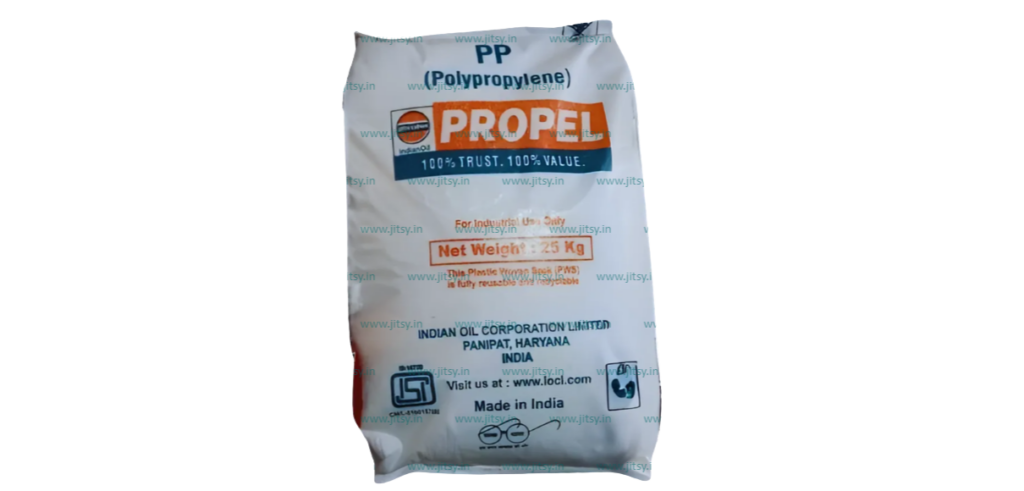
IOCL Propel PPRCP 2300MC
IOCL Propel PPRCP 2300MC is a polypropylene random copolymer (PPRCP) manufactured by Indian Oil Corporation Ltd (IOCL) under its PROPEL polymer brand. It is produced using Spheripol II Technology — a leading reactor polymerization process that incorporates the comonomer (typically ethylene) directly into the polypropylene chain in a random distribution during polymerization, rather than as a post-reaction blend. This reactor-grade approach gives 2300MC its defining characteristics: exceptionally good transparency, gloss, a well-balanced combination of stiffness and impact properties, and excellent organoleptic performance — meaning the resin imparts minimal taste, odour or extractable contamination to food or beverage contents in finished containers.
With a melt flow index of 30 g/10 min at 230 °C/2.16 kg, 2300MC is a high-flow PP random copolymer grade, designed for fast, efficient injection moulding of thin-wall parts and for injection stretch blow moulding (ISBM) of transparent bottles and containers. IOCL describes the grade in its PROPEL product line as a natural-coloured resin in prime/virgin quality, positioned specifically for houseware and consumer packaging applications where visual clarity and clean organoleptic performance are commercial requirements.
A polypropylene random copolymer is different from a PP homopolymer in a way that directly affects the properties relevant to transparent containers. In a homopolymer, propylene units pack into a highly ordered (isotactic) crystalline structure, which makes it stiff and strong but also opaque or hazy. In a random copolymer like 2300MC, a small amount of ethylene comonomer is distributed randomly along the PP chain. This disrupts regular crystallisation, producing smaller and more numerous crystallites — which scatter less light and give the resin its transparency and improved gloss. The random copolymer structure also softens the material slightly compared to homopolymer (lower melting point, better impact at lower temperatures), making it a more rounded material for everyday consumer product applications.
Technical Insights – Properties and What They Mean for Performance
Resin Properties
- MFI: 30 g/10 min (ASTM D1238, 230 °C / 2.16 kg) — A high melt flow index for a polypropylene grade. At 30 g/10 min, 2300MC flows rapidly through injection moulds, filling thin-wall sections completely and cleanly at high production speeds. This is the critical processing attribute for thin-wall injection moulded (TWIM) containers, where wall thicknesses of 0.5–1.5 mm must be filled reliably at short cycle times. High MFI also supports ISBM, where the preform must deform uniformly during blow moulding to produce consistent bottle wall thickness and optical clarity.
Mechanical Properties
- Tensile Yield Strength: 32 MPa (ASTM D638, 50 mm/min) — Good tensile performance at yield for a PP random copolymer. The lower tensile yield compared to PP homopolymer (typically 35–40 MPa) reflects the random copolymer’s slightly lower crystallinity, but 32 MPa is sufficient for rigid containers and housewares that must hold shape and resist deformation during filling, stacking and use.
- Elongation at Yield: 12% (ASTM D638, 50 mm/min) — Elongation at yield for a random copolymer is typically lower than for more flexible polyolefins. A 12% yield elongation indicates the material will deform in a controlled manner before yielding permanently — appropriate for rigid containers where some flex before permanent deformation is expected.
- Flexural Modulus: 1100 MPa (ASTM D790, 1.3 mm/min) — The primary measure of part stiffness. At 1100 MPa, 2300MC produces containers and housewares with good wall rigidity — the lids click shut positively, the container walls don’t flex under a firm grip, and the finished product has the premium feel associated with well-designed houseware products. This is lower than a PP homopolymer (typically 1400–1700 MPa), reflecting the softer random copolymer structure, but adequate for most rigid consumer container designs.
- Notched Izod Impact Strength: 50 J/m (ASTM D256, 23 °C) — Impact performance for a PP random copolymer at room temperature. At 50 J/m, 2300MC provides acceptable impact resistance for household containers, tubs and lids that may be dropped from handling height. This is significantly better than typical PP homopolymer at room temperature (often 20–30 J/m) — one of the practical advantages of the random copolymer structure. Applications requiring even higher impact performance, particularly at low temperatures, would be better served by a PP impact copolymer grade.
Thermal Properties
- Heat Deflection Temperature: 80 °C (ASTM D648, 0.46 N/mm²) — The temperature at which the material begins to deflect under load. An HDT of 80 °C means containers produced from 2300MC can withstand hot liquids and dishwasher lower rack temperatures without distorting. This is relevant for microwave-safe containers, hot-fill food packaging and kitchenware. However, for sustained high-temperature service above 80 °C, additional engineering assessment is needed.
- Vicat Softening Point: 125 °C (ASTM D1525, 10 N) — The point at which the surface begins to soften under needle pressure. At 125 °C, 2300MC provides thermal stability well above typical household use temperatures, confirming that the material is not at risk of surface softening or deformation under normal kitchen or houseware conditions.
Processing Temperature Window
IOCL recommends a processing temperature of 180–230 °C for PPRCP 2300MC on injection moulding and ISBM equipment. For thin-wall injection moulding, temperatures towards the upper end of this range (210–230 °C) combined with high injection speeds and pressures help achieve complete mould filling at minimum cycle time. For ISBM, preform temperature control is critical to achieving uniform wall distribution and consistent optical clarity in the finished bottle. Processing below 180 °C risks incomplete melt homogenisation, flow marks and poor weld line strength. Processing above 230 °C risks thermal degradation, discolouration and loss of organoleptic integrity — particularly important for food-contact grades.Applications of IOCL PPRCP 2300MC
Thin-Wall Injection Moulded Containers and Lids
The primary application for IOCL Propel PPRCP 2300MC is thin-wall injection moulding of transparent or translucent containers, lids and closures. The 30 g/10 min MFI allows the melt to flow rapidly through thin gates and wall sections at high injection speeds without incomplete fill, flow marks or weld line weakness — the common failure modes of low-flow resins in thin-wall moulds. The combination of 1100 MPa flexural modulus and 50 J/m notched Izod impact means the finished container has enough wall rigidity to feel solid and premium, while resisting the occasional drop or knock that consumer products routinely experience. Transparency and gloss — the defining optical properties of 2300MC — allow the consumer to see the contents clearly, which is a key purchase driver and quality signal for food containers, snack pots, salad bowls and similar products in retail settings.Rigid Housewares — Buckets, Tubs, Boxes and Storage Containers
IOCL lists rigid containers and housewares among the recommended applications for 2300MC, and the grade’s property balance suits a wide range of household injection moulded products beyond thin-wall packaging. For medium-wall buckets, storage tubs, utility boxes and food-grade containers, the random copolymer structure provides better clarity and lower haze than a standard PP homopolymer — allowing a semi-transparent or translucent appearance that lets users see contents without opening the lid. The flexural modulus of 1100 MPa provides adequate wall rigidity for stacking and filling, while the impact resistance of 50 J/m reduces cracking risk during normal household use. Excellent organoleptic properties — low odour and minimal flavour transfer — make 2300MC suitable for direct food contact housewares where taste integrity matters.Injection Stretch Blow Moulding (ISBM) — Bottles and Jars
Injection stretch blow moulding is a two-stage process where a polypropylene preform is injection moulded and then stretch blow moulded into a bottle or jar at elevated temperature. PP random copolymer grades like 2300MC are preferred for ISBM over homopolymers because the random comonomer distribution improves clarity in the blown article and softens the material enough to allow consistent stretch orientation across the bottle wall. The high MFI of 30 g/10 min supports efficient preform injection moulding at fast cycle times. The resulting bottle has the transparency associated with ISBM PP — approaching PET-like clarity for packaging of pharmaceuticals, food products, personal care items and household liquids where a clear rigid bottle is commercially preferred. For food and beverage ISBM applications, the food contact compliance of 2300MC is a direct qualification requirement.Comparable Alternative Grades for Transparent PP Injection Moulding
2300MC is positioned as a high-flow, transparent PP random copolymer for thin-wall and ISBM applications. Placing it in context with related grades helps buyers make informed decisions about which grade best matches their specific process and product requirements. IOCL Propel PPRCP 2120MC is another IOCL PP random copolymer grade from the same PROPEL range. Available technical references indicate 2120MC is positioned for similar injection moulding and houseware applications within the IOCL portfolio. The grade code suffix suggests a different MFI or property point compared to 2300MC — a lower flow suitable for slightly thicker-wall parts or where different mechanical performance trade-offs are needed. Without a directly accessible IOCL TDS for 2120MC in the same format, a numerical property comparison cannot be made with confidence. Buyers choosing between 2120MC and 2300MC should compare their respective TDS values and process the decision through mould trials, particularly if switching mid-production run. Equivalence between the two grades is not confirmed by IOCL documentation. IOCL Propel PPCP 3030MG is a polypropylene impact copolymer (PPCP) from IOCL — not a random copolymer. Impact copolymers are structurally different: they contain a rubber (elastomeric) dispersed phase that delivers significantly higher impact toughness, particularly at low temperatures, at the cost of optical clarity. 3030MG or similar impact copolymer grades from IOCL would be appropriate for applications where drop-impact performance is the priority and transparency is not required — crates, industrial containers, automotive parts. For transparent houseware containers and ISBM bottles where clarity is a commercial requirement, 3030MG and other impact copolymers are not suitable substitutes for 2300MC. PP random copolymer grades from Reliance Industries and other producers — Reliance produces PP copolymer grades under its own brand for injection moulding and ISBM applications. Other Indian producers of polypropylene, including HPL Additives’ downstream offerings, also market PP RCP grades for transparent container applications. Grades from any producer with MFI in the 25–35 g/10 min range and density near 0.900 g/cm³ (typical for PP RCP) would occupy a similar application space to 2300MC for thin-wall injection moulding and ISBM. However, no other producer has published documentation confirming their specific grade as a direct equivalent to IOCL 2300MC; MFI, mechanical properties, additive systems and organoleptic performance should be compared at the TDS level and validated through processing trials before substitution.Regulatory Compliance and Food Contact Approvals
IOCL’s product technical datasheet for PPRCP 2300MC confirms compliance with the relevant Indian and international food contact standards for polypropylene copolymers. For food contact use in India, polypropylene materials for articles intended to contact foodstuffs must meet IS 10910 (Specification for Polypropylene Materials for Use in Manufacture of Utensils and Articles Intended to Come into Contact with Foodstuff, Pharmaceuticals and Drinking Water — Copolymers). This standard sets requirements for PP copolymers specifically, distinguishing them from the homopolymer standard IS 10909. 2300MC’s compliance with this standard, as indicated in IOCL’s regulatory declarations, confirms its suitability as a food-contact material for the manufacture of food containers, storage boxes and kitchen utensils when processed and used within the conditions specified. The grade and its incorporated additives also comply with FDA CFR Title 21, Section 177.1520 (Olefin Polymers), the US FDA regulation governing olefin-based polymers in food-contact applications — a standard that applies to polypropylene resins and copolymers used in food packaging and storage articles. Excellent organoleptic properties — a specific positioning claim made by IOCL for 2300MC — means the resin is formulated to minimise taste, odour and extractable residue transfer to food or beverage contents. This is a direct commercial requirement for food-grade containers and bottles, where even mild taint or odour from the container material would be unacceptable to brand owners and consumers.Alternative Names, Common Search Variants and Grade Misspellings
IOCL Propel PPRCP 2300MC is also commonly searched and referenced as: PROPEL PP 2300MC, IOCL 2300MC PP granules, PP random copolymer 2300MC, PP RCP 2300MC, PPR 2300MC, PPRCP 2300MC IOCL, IOCL PP 2300MC injection moulding grade, and Propel 2300MC transparent PP granules. Frequent misspellings and alternate spellings include: 2300 MC, 2300-MC, 2300mc iocl, IOCL propel pp 2300 mc, pprcp 2300, PP copolymer IOCL 2300MC, and 2300ZMC propel.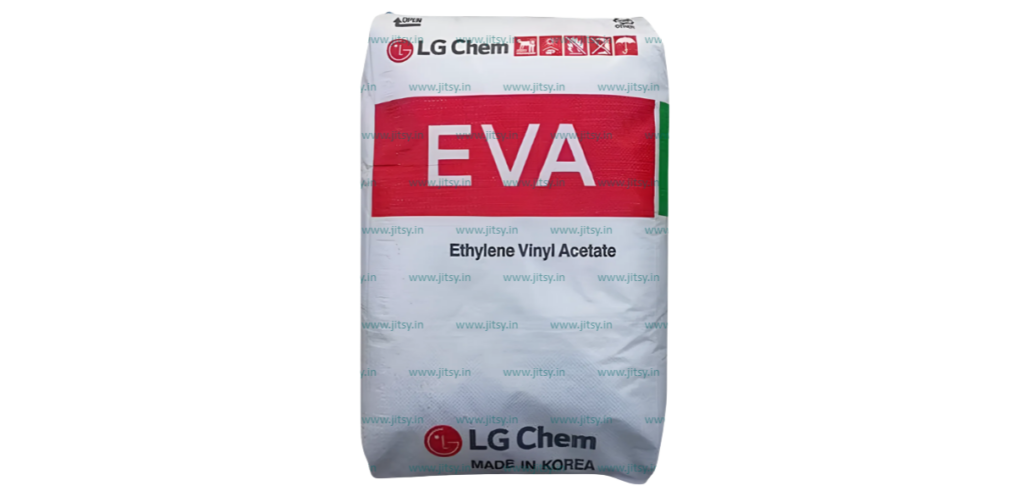
LG Chem EVA EA28025
LG Chem EVA EA28025 is a premium, dual-purpose ethylene-vinyl acetate (EVA) copolymer designed for hot melt adhesive (HMA) formulations and foam applications. With 28% vinyl acetate, MFI 25 g/10 min, density 0.950–0.951 g/cm³, elongation 850%, and Shore A 76, EA28025 delivers exceptional adhesive compatibility, outstanding flexibility, and reliable low-temperature sealability.
Manufactured by LG Chem (South Korea) with strict contaminant control and uniform VA/MI distribution, EA28025 is the trusted resin for packaging adhesives, foam cushioning, footwear assembly, lamination, and cable insulation. Its balanced flow, high polarity, and excellent additive compatibility ensure consistent batch-to-batch performance and versatile processing for India’s leading adhesive, foam, cable, and specialty manufacturers.
Functional Features & Technical Authority
- Uniform VA & MI: Consistent vinyl acetate content and melt index across batches guarantee stable adhesion, flexibility, and processing—eliminating production variability.
- HMA-Optimized Compatibility: Seamlessly blends with tackifying resins, waxes, plasticizers, and antioxidants, enabling simple, stable hot melt adhesive formulations for packaging, bookbinding, woodworking, and product assembly.
- Dual-Purpose Versatility: Designed as a single resin for both HMA and foam—reducing inventory, simplifying procurement, and supporting a wide range of bonding and cushioning applications.
- Outstanding Flexibility: 850% elongation ensures soft, resilient foam and flexible adhesive bonds that withstand thermal cycling, mechanical loading, and repeated use.
- Strict Contaminant Control: Low gel level and clean resin ensure defect-free films, adhesives, and foam products—critical for packaging, lamination, and consumer applications.
- Excellent Low-Temperature Sealability: Vicat 45°C and high VA provide reliable adhesion and foam flexibility, even in cold storage or winter conditions.
- Good Organoleptic Property: Transparent, odour-neutral resin suitable for food-contact and consumer applications.
- Regulatory Compliance: Meets FDA 21 CFR 177.1350 and ASTM D6400; documentation available via authorized LG Chem distributors.
Applications
Hot Melt Adhesive (HMA) Base Resin (Primary):
EA28025 is the benchmark for packaging adhesives, lamination, bookbinding, woodworking, and product assembly. Its high VA delivers strong adhesion to paper, cardboard, plastic, metal, fabric, and leather. Balanced MFI and excellent compatibility enable efficient blending with resins, waxes, and additives, producing stable, flexible, and durable bonds for a wide range of end uses.Foam Applications (Secondary but Significant):
Ideal for foam shoe soles, insoles, cushioning pads, and comfort layers, EA28025’s high elongation (850%) and 28% VA provide soft, responsive, and reliable foam for footwear, sports equipment, and industrial cushioning. Its consistent properties ensure reliable foam density, cell structure, and flexibility.Wire & Cable Compounds:
Used for cable insulation and jacketing, EA28025 delivers flexibility, low-temperature performance, and good adhesion to metal and polymer cable components—supporting semi-conductive and specialty cable applications.Specialty & Industrial Uses:
Perfect for extrusion coating on paper, foil, or film, thermal laminates, and custom compound formulations-where strong, flexible, and clean EVA is required.Key Application Highlights:
- Packaging, lamination, woodworking, bookbinding adhesives
- Foam shoe soles, insoles, cushioning, comfort padding
- Cable insulation, jacketing, semi-conductive compounds
- Thermal lamination, extrusion coating, specialty bonding
LG Chem EVA EA28150
LG Chem EVA EA28150 is a specialty ethylene-vinyl acetate (EVA) copolymer engineered for ultra-fast-extrusion hot melt adhesive (HMA) sticks, cartridge filling, road marking compounds, and high-speed coating applications. With 28% vinyl acetate, ultra-high MFI 150 g/10 min, density 0.950–0.960 g/cm³, elongation 850%, and Shore A 76, EA28150 delivers rapid melt flow, excellent adhesion, and reliable low-temperature sealability for high-speed, high-throughput production lines. Strict contaminant control and uniform VA/MI distribution ensure consistent, defect-free results for demanding HMA and specialty extrusion applications across India’s manufacturing and adhesive clusters.
Functional Features & Technical Authority
- Ultra-High MFI (150): Enables extrusion speeds 2–3x faster than standard HMA EVAs, ideal for rapid stick and cartridge production, road marking, and coatings.
- 28% VA Content: Delivers excellent adhesion to diverse substrates (paper, cardboard, plastic, leather, fabric) with strong polarity and flexibility.
- Uniform VA/MI & Contaminant Control: Guarantees batch-to-batch consistency, low gel level, and defect-free adhesive/coating output even at high speeds.
- Optical-Clarity: Transparent, clear formulation ideal for visible-finish adhesives and coatings; no yellowing or visual contamination.
- 850% Elongation: High flexibility ensures adhesive bonds remain durable under thermal and mechanical stress.
- Excellent Low-Temperature Sealability: Melting temperature 69°C, reliable bonding and quick setting in room/cold conditions.
- Regulatory Compliance: Meets FDA 21 CFR 177.1350, ASTM D1248/D1706, D638, D1505, D2240, D1238; non-hazardous, quality assured.
Applications
Hot Melt Adhesive Stick Extrusion & Cartridge Filling (Primary):
EA28150 is optimized for rapid extrusion of HMA glue sticks and cartridges, enabling high-speed, high-throughput production for office, craft, packaging, woodworking, and assembly adhesives. Ultra-high MFI ensures smooth, fast flow and quick cooling.Road Marking Compounds:
Used in thermoplastic road marking, traffic line materials, and fast-curing road applications. EA28150’s rapid melt and set properties allow for continuous, weather-resistant, high-visibility road lines.Paint & Coating Base Resin:
Ideal for hot melt paint, specialty coatings, and industrial/consumer coating applications requiring fast application, quick drying, and clear finishes.Specialty & Industrial Adhesive Applications:
Supports flexible packaging adhesives, lamination, footwear assembly, and custom HMA formulations where ultra-fast flow and reliable bonding are essential.Key Application Bullets:
- HMA stick extrusion, cartridge filling
- Road marking compounds, thermoplastic lines
- Paints, coatings (hot melt, specialty)
- Flexible packaging, assembly adhesives
- Lamination, custom HMA applications
LG Chem EVA EA28400
LG Chem EVA EA28400 is the flagship ultra-ultra-high-melt-flow ethylene-vinyl acetate (EVA) copolymer for maximum-speed hot melt adhesive (HMA) extrusion, injection molding, rapid cartridge filling, and high-flow specialty coatings. With 28% vinyl acetate, MFI 400 g/10 min (the highest among LG HMA grades), density 0.945 g/cm³, tensile 3 MPa, elongation 900%, Shore A 68, melting 68°C, and Vicat <40°C, EA28400 delivers unmatched extrusion and molding speeds, superior flexibility, and outstanding optical clarity. Strict contaminant control and uniform VA/MI distribution guarantee defect-free, precision results for the most demanding Indian adhesive, molding, and high-speed manufacturing sectors.
Functional Features & Technical Authority
- 400-MFI-Maximum: Enables extrusion speeds 4–5x faster than standard HMA EVAs, ideal for ultra-fast stick, cartridge, and molding production.
- 28% VA Adhesive: High polarity provides excellent adhesion to all substrates—paper, plastic, metal, fabric, and leather—without tie-layer.
- Ultra-Flexible & Soft: 900% elongation, Shore A 68, and Vicat <40°C deliver exceptional softness, flexibility, and shock absorption in adhesives and molded parts.
- Molding-Capable: Designed for both ultra-fast HMA extrusion and precision injection molding of soft, flexible components.
- Optical-Clarity: Transparent, clear resin ensures visually flawless adhesive sticks, molded parts, and coatings.
- Uniform VA/MI & Contaminant Control: Guarantees batch-to-batch consistency, low gel level, and defect-free output at maximum speeds.
- Excellent Low-Temperature Performance: Flexibility and adhesion maintained in cold storage and winter conditions.
- Regulatory Compliance: Meets FDA 21 CFR 177.1350, ASTM D1248/D1706, D638, D1505, D2240, D1238; non-hazardous, quality assured.
Applications
Ultra-Fast HMA Extrusion & Injection Molding (Primary):
EA28400 is engineered for maximum-speed extrusion of hot melt adhesive sticks, rapid cartridge filling, and precision injection molding of soft, flexible parts. Its ultra-ultra-high MFI 400 allows 4–5x faster production than standard grades, reducing cycle times and boosting throughput for office, craft, packaging, and industrial adhesives.Specialty Coating & Hot-Melt Paint:
Ideal for high-flow, rapid-setting coatings and hot-melt paints where fast application, quick drying, and optical clarity are crucial.General Molding & Polymer Applications:
Supports flexible packaging adhesives, product assembly, lamination, and custom HMA/molding formulations where speed and flexibility are essential.Key Application Bullets:
- Ultra-fast HMA stick extrusion, cartridge filling
- Precision injection molding of soft, flexible parts
- Specialty coatings, hot-melt paint
- Flexible packaging, assembly adhesives
- Lamination, custom HMA/molding applications
LG Chem EVA EA40055
LG Chem EVA EA40055 (commonly called EVA 40055 in trade) is a high-performance ethylene-vinyl acetate copolymer containing 40% vinyl acetate and a high melt flow index (~55 g/10 min). Developed by LG Chem, a global leader in petrochemicals, this grade is engineered as a base polymer for hot-melt adhesives (HMA) and ink formulations. Its property profile—high VA, high MFI, and balanced flexibility—makes it the preferred choice for packaging, bookbinding, woodworking, and specialty adhesive applications in India and worldwide.
Functional Features & Technical Detail
- High VA Content: 40% VA delivers strong polarity, adhesion, and flexibility for tough bonding tasks.
- High Melt Flow Index: ~55 g/10 min for rapid melting, excellent wetting, and fast line speeds in HMA systems.
- Low Hardness, High Elongation: Shore A ~46, elongation ~1350% for soft, flexible adhesive films.
- Excellent Compatibility: Miscible with a wide range of tackifiers, waxes, and resins for custom formulations.
- Consistent Quality: Low gel, uniform VA/MFI, and reliable supply from LG Chem’s global EVA portfolio.
Applications
LG Chem EVA EA40055 is trusted by Indian and global manufacturers for:- Packaging & Carton-Sealing Hot-Melt Adhesives: Enables high-speed case and carton sealing with strong tack, good wetting, and flexibility across temperature ranges.
- Bookbinding & Graphic Arts Adhesives: Delivers optimal open time, green strength, and final flexibility for spine and side glues in books, magazines, and notebooks.
- Woodworking, Furniture, and Edge-Banding Adhesives: Provides high adhesion to wood and laminates, with resistance to creep and excellent processability for edge-banding and veneering.
LG Chem EVA EC28005
LG Chem EVA EC28005 is a high-performance, contaminant-free ethylene-vinyl acetate (EVA) copolymer engineered for wire & cable insulation, semi-conductive compounds, and high-filler electrical applications. With 28% vinyl acetate, ultra-low MFI 5 g/10 min, density 0.951 g/cm³, tensile strength 12 MPa, elongation 800%, and Shore A 78, EC28005 delivers outstanding flexibility, electrical compatibility, and superior high-filler-loading capability. Developed by LG Chem (South Korea), EC28005 ensures uniform VA/MI, strict contaminant control, and predictable electrical and mechanical performance for cable manufacturers, compounders, and insulation specialists across India’s major electrical cable clusters.
Functional Features & Technical Authority
- Ultra-Low MFI (5): Enables high-filler loading (carbon black, flame retardant) without compromising melt flow or compound stability—crucial for semi-conductive and insulation applications.
- Contaminant-Free: Strict quality control ensures minimal gel, no fisheye, and particle-free resin—critical for electrical safety, breakdown prevention, and long cable life.
- 28% VA Content: Delivers exceptional flexibility and electrical compatibility, allowing cables to withstand bending, laying, and thermal or mechanical stress.
- Uniform VA/MI: Guarantees consistent batch-to-batch performance, electrical property predictability, and mechanical reliability in every cable production run.
- Electrical-Optimised: Designed for semi-conductive cable compounds, insulation shields, and conductor shields—ensuring stable electrical resistance, shielding, and cable safety.
- High Filler Loading Capability: Accepts up to 30–40% carbon black/flame retardant for required conductivity, flame resistance, and mechanical durability.
- Excellent Mechanical Strength: 12 MPa tensile, 800% elongation ensure cable jackets and insulation resist damage, abrasion, and environmental stress.
- Regulatory Compliance: Meets IEC, ASTM, and cable industry standards for mechanical, electrical, and safety performance; documentation available from LG Chem and Indian distributors.
Applications
Semi-Conductive Cable Jackets & Insulation Shields (Primary):
EC28005 is engineered for use in semi-conductive cable jackets, insulation shields, and conductor shields in medium and high-voltage power cables. Its ultra-low MFI and contaminant-free design enable high carbon black/flame retardant loading for precise electrical resistance, stable shielding, and long-term reliability.Wire Insulation & Jacket Compounds:
Ideal for flexible wire insulation and outer cable jackets, EC28005’s 28% VA and robust mechanical properties ensure pliable, durable, and flame-resistant cable structures.Specialty Electrical & Conductive Applications:
Used in bonded conductor/insulation shields, HV cable systems, underwater and marine cable compounds, and multi-layer cable structures—where electrical safety and environmental resistance are critical.General Foam & Other Applications:
EC28005’s flexibility and mechanical strength also enable use in foam compounds and general-purpose high-VA compounds where electrical neutrality and softness are desired.Key Application Bullets:
- Semi-conductive cable jackets, insulation/conductor shields
- Flexible wire insulation, cable jackets
- Power cable insulation systems, HV/MV cables
- Underwater, marine, and specialty electrical cables
- Foam compounds, general high-VA applications
LG Chem EVA EP28025
LG Chem EVA EP28025 is a premium, specialty-grade ethylene-vinyl acetate (EVA) copolymer designed for photovoltaic encapsulation, hot melt adhesive (HMA) base resin, and wire/cable compounding. With 28% vinyl acetate, MFI 25 g/10 min, density 0.950–0.951 g/cm³, elongation 850–950%, and a pure, additive-free formulation, EP28025 delivers crystal-clear optical properties, ultra-low gel/fisheye content, and outstanding adhesion and flexibility.
Manufactured by LG Chem (South Korea) through high-precision polymerization and strict contaminant control, EP28025 is the gold standard for solar module manufacturers, HMA producers, and cable compounders who demand defect-free films, reliable adhesion, and batch-to-batch consistency. Its high VA and controlled melt index ensure maximum light transmission, durable encapsulation, and robust mechanical performance for India’s renewable energy, packaging, and specialty polymer sectors.
Functional Features & Technical Authority
- Ultra-High VA Content (28%): Ensures exceptional optical clarity, low crystallinity, and superior adhesion—critical for solar encapsulation and specialty adhesives.
- Pure Resin, No Additives: No slip agents or antiblock additives; guarantees maximum transparency, zero haze, and no contamination risk in sensitive applications.
- Ultra-Low Gel Level: Strict gel and fisheye control deliver defect-free films for photovoltaic modules, maximizing solar cell efficiency and module lifespan.
- Outstanding Flexibility & Elongation: 850–950% elongation at break accommodates thermal cycling and mechanical stress in solar modules and cables.
- Precise Melt Flow (MFI 25): Optimized for efficient extrusion of encapsulation films and controlled HMA formulation, ensuring uniform adhesive application and film thickness.
- Excellent Adhesion Performance: Reliable bonding to glass, silicon cells, back-sheets, and diverse substrates—preventing delamination in solar and industrial assemblies.
- Consistent Batch Quality: Uniform VA and MI distribution for reliable, high-volume manufacturing with minimal process adjustment.
- Regulatory Compliance: Meets FDA 21 CFR 177.1350, ISO 13022, IEC 61215/61730, ISO 9001, and ISO 14001; certificates available on request.
Applications
Photovoltaic (Solar) Encapsulation Films:
EP28025 sets the benchmark for solar module encapsulation. Its 28% VA, ultra-low gel, and pure resin guarantee haze-free, transparent films that maximize light transmission and module efficiency. High elongation absorbs thermal stress and prevents cracking or delamination during 25+ years of solar module operation.Hot Melt Adhesive (HMA) Base Resin:
EP28025 is the preferred base for HMA formulations, offering high polarity for strong substrate adhesion and precise MFI for controlled flow. Used in lamination adhesives, flexible packaging, industrial assembly, and footwear adhesives, it delivers durable bonds and flexible performance.Wire & Cable Compound:
Used in cable insulation, semi-conductive jackets, and specialty cable compounds, EP28025’s flexibility, low-temperature toughness, and strong adhesion deliver bendable, impact-resistant cables for electrical, automotive, and specialty applications.Specialty Coating, Lamination & Industrial Applications:
Ideal for thermal lamination films, extrusion coatings, and custom compounding where optical clarity, flexibility, and adhesion are paramount.Key Application Highlights:
- Photovoltaic solar encapsulation films (core)
- Hot melt adhesive base resin (HMA)
- Wire & cable insulation, semi-conductive jackets
- Thermal lamination, extrusion coating, specialty compounds
LG Chem EVA ES28005
LG Chem EVA ES28005 is a premium, foam-specific ethylene-vinyl acetate (EVA) copolymer engineered for foam shoe soles, comfort cushioning, and specialty foam products. With 28% vinyl acetate, ultra-low MFI 5 g/10 min, density 0.951 g/cm³, 800% elongation, and Shore A 79, ES28005 delivers exceptional softness, precise foam density control, and outstanding mechanical strength. Manufactured by LG Chem (South Korea) with uniform VA/MI and strict contaminant control, ES28005 is the trusted solution for India’s top footwear, foam, and comfort product manufacturers seeking batch-to-batch consistency and premium foam performance.
Functional Features & Technical Authority
- Ultra-Low MFI (5): Enables slow-flow foam compounding, allowing precise density control for custom softness and resilience in footwear and cushioning.
- 28% VA Content: High vinyl acetate ensures ultra-soft, flexible foam with superior comfort, far exceeding lower-VA alternatives.
- Uniform VA/MI & Contaminant Control: Guarantees consistent foam characteristics, defect-free cell structure, and reliable mechanical properties across every batch.
- 800% Elongation & Robust Strength: Delivers excellent elasticity, shock absorption, and comfort—critical for high-performance footwear and protective padding.
- Excellent Additive Acceptance: Easily blends with crosslinking/blowing agents, enabling wide foam density range (0.10–0.50 g/cm³) and tailored mechanical/thermal properties.
- Good Low-Temperature Flexibility: Maintains softness and resilience in cold storage, winter, and demanding environments.
- Regulatory Compliance: Meets FDA 21 CFR 177.1350 and ASTM standards; documentation available from LG Chem and authorized Indian distributors.
Applications
Foam Shoe Soles & Footwear (Primary):
ES28005 is engineered for foam shoe outsoles, midsoles, insoles, and comfort footwear. Its ultra-low MFI and 28% VA enable precise control of foam softness, density, and rebound—delivering superior comfort, shock absorption, and fatigue reduction for athletic, casual, and premium footwear.General Cushioning & Protective Padding:
Ideal for cushioning pads, impact-absorbing materials, seating pads, mattress underlays, and comfort textiles. 800% elongation and Shore A 79 ensure effective impact absorption and long-term comfort.Specialty Foam & Industrial:
Used in foam sheets, blocks, laminates, and sports equipment padding. Uniform VA/MI and contaminant control guarantee consistent, defect-free foam for demanding industrial and consumer applications.Key Application Bullets:
- Foam shoe outsoles, midsoles, insoles
- Comfort cushioning, impact-absorbing pads
- Mattress underlays, seating pads, comfort textiles
- Foam laminates, sheets, blocks
- Sports equipment and protective foam
Lotte Chemical EVA VA600
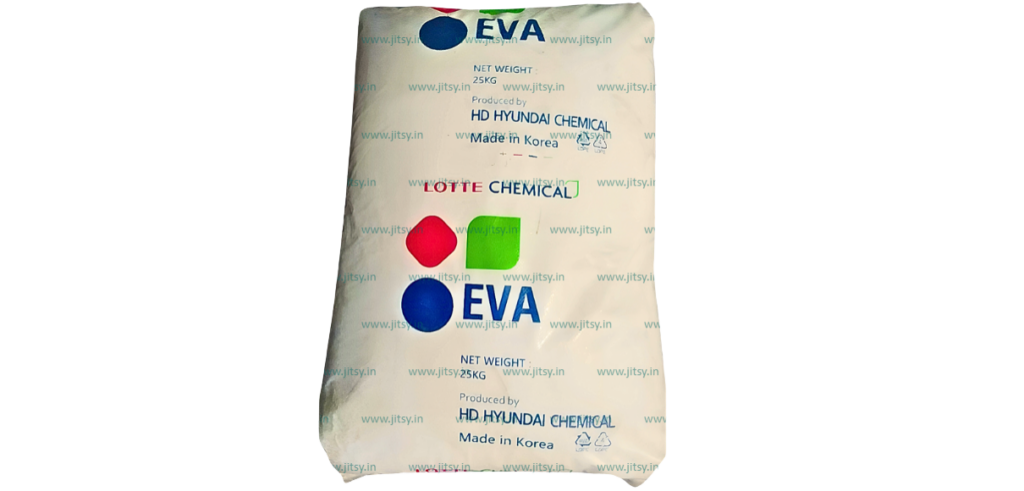
Lotte Chemical EVA VA600 is a premium, autoclave-process ethylene-vinyl acetate (EVA) copolymer engineered for hot melt adhesive (HMA) formulations, packaging, assembly, and specialty bonding. With 28% vinyl acetate, MFI 6.0 g/10 min, density 0.950 g/cm³, melting temperature 71°C, Vicat 42°C, Shore D 26, and a built-in antioxidant additive, VA600 delivers excellent adhesion, reliable processability, and extended shelf life for diverse hot melt bonding applications. Manufactured via ExxonMobil Chemical's autoclave process with strict contaminant control and uniform VA/MI, VA600 is the trusted choice for India’s leading HMA, packaging, and adhesive manufacturers.
Functional Features & Technical Authority
- 28%-VA-Adhesive: High polarity delivers strong adhesion to paper, cardboard, plastic, leather, fabric, and metal—no tie-layer needed.
- 6-MFI-Balanced: Optimal melt index ensures efficient HMA extrusion, stick production, and cartridge filling.
- Antioxidant-Built: Built-in antioxidant additive protects against oxidative degradation, extending shelf life and ensuring stable performance.
- Processable-Excellent: Superior flow and compatibility with tackifying resins, waxes, and additives for robust HMA formulations.
- Autoclave-Made: Manufactured via ExxonMobil’s autoclave process for consistent, premium HMA resin quality.
- Uniform VA/MI: Guarantees batch-to-batch consistency and reliable adhesive properties.
- Strict Contaminant Control: Low gel level for defect-free, clean adhesive compounds.
- Regulatory Compliance: Meets FDA 21 CFR 177.1350, ASTM D1248/D1706, D638, D1505, D2240, D1238, D1525; non-hazardous, quality assured.
Applications
Hot Melt Adhesive Formulations (Primary):
VA600 is optimized for HMA glue sticks, cartridge adhesives, packaging adhesives (carton sealing, edge banding, lamination), and assembly adhesives for footwear, furniture, and product assembly. Its 28% VA and balanced MFI 6.0 provide excellent wetting, strong bonds, and reliable flow in both manual and automated systems. The antioxidant package ensures adhesives remain stable and effective during extended storage and use.Composite & Lamination Adhesives:
Ideal for composite bonding, film lamination, and thermal lamination in multi-layer packaging or industrial assembly. VA600’s processability and adhesion properties enable robust, defect-free laminates.Specialty Adhesive Applications:
Supports custom HMA formulations, flexible packaging adhesives, and industrial assembly where stability, shelf life, and consistent performance are critical.Key Application Bullets:
- HMA glue sticks, cartridges
- Packaging adhesives, carton sealing, edge banding
- Assembly adhesives for footwear, furniture, products
- Composite bonding, film/thermal lamination
- Flexible packaging, specialty bonding
Lotte Chemical EVA VA800
Lotte Chemical EVA VA800 is a premium, autoclave-process ethylene-vinyl acetate (EVA) copolymer engineered for fast-extrusion hot melt adhesive (HMA) formulations, automotive, and specialty bonding. With 28% vinyl acetate, ultra-high MFI 20 g/10 min, density 0.950 g/cm³, melting temperature 69°C, Vicat <40°C, Shore D 25, and a dual-additive package (antioxidant + free flow agent), VA800 delivers exceptional adhesion, ultra-fast processability, and reliable low-temperature sealability for high-speed adhesive production. Manufactured via ExxonMobil Chemical's autoclave process with strict contaminant control and uniform VA/MI, VA800 is trusted by India’s top HMA, packaging, and automotive adhesive manufacturers.
Functional Features & Technical Authority
- 28%-VA-Adhesive: High polarity ensures strong adhesion to paper, cardboard, plastic, leather, fabric, and metal—no tie-layer needed.
- 20-MFI-Ultra: Ultra-high melt index enables extrusion 3–4x faster than standard HMA EVA, ideal for rapid stick and cartridge production.
- Flow-Agent: Built-in free flow agent guarantees smooth, uninterrupted extrusion at maximum speed, reducing downtime and pressure.
- Antioxidant-Protected: Antioxidant additive provides thermal stability, preventing oxidative degradation and extending shelf life.
- Autoclave-Premium: ExxonMobil autoclave process ensures consistent, premium quality and batch-to-batch reliability.
- Uniform VA/MI: Delivers consistent adhesive performance and quality across high-speed production.
- Strict Contaminant Control: Low gel level for defect-free, clean adhesive compounds even at rapid throughput.
- Regulatory Compliance: Conforms to FDA 21 CFR 177.1350, ASTM D1238/D1505/D2240/D1525, ISO 9001/14001/TS16949, and automotive standards.
Applications
Lotte EVA VA800 is optimized for fast-extrusion hot melt adhesive sticks, rapid cartridge adhesives, high-speed packaging adhesives (carton sealing, edge banding, lamination), rapid assembly adhesives, and automotive mat coating. Its 28% VA and ultra-high MFI 20 enable rapid, efficient production with strong, reliable bonds in both manual and automated systems. The free flow agent and antioxidant package ensure adhesives remain stable and effective during extended storage and high-speed use.Automotive & Coating Applications:
Perfect for automotive mat coating, high-end automotive adhesives, and specialty coating/lamination where fast processing and strong adhesion are critical.Specialty & Industrial Applications:
Custom fast-extrusion HMA formulations, flexible packaging adhesives, industrial assembly, and rapid lamination in high-speed manufacturing environments.Key Application Bullets:
- Rapid HMA sticks, cartridges
- Fast packaging, carton sealing, edge banding
- Automotive mat coating, high-end adhesives
- Assembly adhesives (footwear, furniture)
- Specialty coating, flexible packaging, industrial assembly
Lotte EVA LVS430
Lotte LVS430 is a premium 18% ethylene vinyl acetate (EVA) copolymer resin engineered by Lotte Chemical Corporation (South Korea), designed for high-performance foam, footwear, injection, and sheet molding applications. Produced via advanced high-pressure tubular polymerization, LVS430 offers unmatched foaming, mechanical strength, and processing consistency.
LVS430 is manufactured with tight control over molecular weight and vinyl acetate distribution, resulting in predictable processing and minimal batch variance (<2%). Physical form: white/natural pellets, 25 kg bags. Contains thermal stabilizers (300 ppm typical), no slip/anti-block, allowing custom additive integration. Fully compliant with ISO 9001:2015, RoHS, REACH, and ASTM standards.
Processing Guidelines
- Foam Molding: 1–3% blowing agent (azodicarbonamide or CO₂); mold at 160–180°C; density 40–150 kg/m³
- Injection/Sheet Molding: Barrel 150–180°C; MFI 2.0 ensures smooth cavity fill, minimal defects
- Extrusion: Tubes, strips, profiles; process at 150–180°C; avoid >190°C
- Best Practices: Keep material dry, avoid excessive residence time, regular purging
Performance Advantages
- Foaming: Uniform expansion, fine cell structure, minimal voids—critical for comfort and durability
- Mechanical: High tensile strength (260 kgf/cm²), elongation (~750%), 92 Shore A hardness
- Temperature: Low melting point (86°C) reduces energy use, shortens cycle times
- Chemical/Environmental: Resistant to oxidation, UV, ozone, common chemicals; flexible to -40°C
Applications
Foam Shoes & Midsoles (60% Market Share)
- Compression/injection molded EVA soles, midsoles, slippers, sandals, orthopedic insoles
- Delivers lightweight, resilient, and comfortable foam with uniform cell structure
- Used by leading Indian footwear brands and contract converters
Foam Sheets & Cushioning (20% Market Share)
- Sports/yoga mats, protective packaging, equipment padding, insulation, anti-fatigue mats
- Enables precise density control, excellent resilience, and long-term durability
Injection & Sheet Molding (15% Market Share)
- Flexible connectors, grips, appliance covers, vibration dampers, soft enclosures, gaskets
- Supports complex, high-precision geometries and clean melt behavior
Hot-Melt Adhesives & Compounds (3% Market Share)
- Base resin for hot-melt adhesives, custom EVA blends, color/formulation masterbatches
- No slip/antiblock additives for maximum compounding flexibility
Wire & Cable Coating (2% Market Share)
- Cable jacketing, insulation layers, flexible control cables for industrial/cold-climate use
- Maintains flexibility down to -40°C and resists oxidation/UV/ozone
Lotte EVA LVS520
Lotte Chemical EVA LVS520 is a next-generation, high-VA ethylene-vinyl acetate (EVA) copolymer engineered for foam applications, injection molding, and comfort-centric footwear. Developed by Lotte Chemical (South Korea) using proprietary tubular process technology, LVS520 stands out for its superior softness, fine-cell foamability, and robust mechanical properties-making it the top choice for Indian footwear manufacturers, foam converters, and cushion product makers.
With a melt flow rate (MFI) of 3.0 g/10 min, vinyl acetate content of 22 wt%, density 0.943 g/cm³, tensile strength at break 200 kg/cm² (~19.6 MPa), elongation at break 750%, Shore hardness 78A, Vicat softening 53 °C, and melt temperature 79 °C, LVS520 delivers unmatched foam softness, flexibility, and energy-efficient processing. Its high VA content and moderate MFI enable precise compounding, uniform cell structure, and soft, durable foam products-ideal for comfort footwear, sports pads, and custom molded foam parts.
Functional Features & Technical Authority
- High VA Content (22% VA): Delivers exceptional softness, elasticity, and comfort-outperforming standard 18–19% foam EVAs for premium feel and flexibility.
- Optimized MFI (3.0): Supports controlled foam mixing, uniform additive dispersal, and easy flow in injection and sheet molding equipment, reducing defects and boosting productivity.
- Fine-Cell Foamability: Proprietary process ensures fine, uniform cell structure for lightweight, soft, and resilient foam products.
- Low-Temperature Processing: Melt temperature of 79 °C and Vicat 53 °C allow for energy-efficient, thermally gentle processing-preserving material integrity and additive performance.
- Soft Yet Durable: Shore A 78 and 750% elongation provide a cushioned feel with robust mechanical support, resisting cracking and fatigue over repeated use.
- Excellent Mechanical Strength: Maintains tensile strength (200 kg/cm²) and flexibility even after crosslinking and foaming, ensuring long-term durability in footwear and cushioning.
- Versatile Processing: Readily processable in kneading, milling, injection, and sheet molding setups-compatible with standard equipment and a wide range of foam formulations.
- Consistent Quality: Lotte Chemical’s global pedigree ensures batch-to-batch reliability, traceability, and regulatory compliance.
Applications
Foam Shoe Soles & Footwear Components:
LVS520 is the benchmark for soft, comfortable EVA foam shoe soles, insoles, and footbeds-delivering superior cushioning, flexibility, and impact absorption for casual, comfort, and recreational footwear. Its high VA content ensures a plush, premium feel while maintaining structural support.Injection Molding & Sheet Molding:
Ideal for injection-molded EVA parts (grips, handles, decorative elements) and sheet-molded foam products (custom foam sheets, thermoformed pads, blocks). LVS520’s MFI 3.0 allows for smooth flow and easy coloring, supporting complex shapes and detailed parts.Cushion Products & Protective Padding:
Perfect for sports equipment padding, industrial cushioning, protective packaging, mats, and playground surfaces. Fine-cell foam structure and high elongation enable effective impact absorption and comfort.General EVA Foam & Industrial Compounds:
Adaptable for custom foam formulations, general foam sheets, blocks, and as a modifier resin to boost softness and flexibility in blends for technical and consumer applications.Key Application Highlights:
- EVA foam shoe soles, insoles, footbeds, sandals, slippers
- Injection-molded EVA parts and foam sheets
- Cushion pads, sports/protective padding, comfort layers
- Custom foam blocks, industrial compounds, modifier resin
Lotte EVA VS430
Lotte EVA VS430 is a high-performance ethylene‑vinyl acetate (EVA) copolymer engineered for foam, footwear, injection molding, adhesives, and flexible hoses. Produced by Lotte Chemical (formerly SEETEC VS430), it’s made using autoclave process technology and features 19 wt% vinyl acetate (VA), MFR 2.5 g/10 min (190°C/2.16 kg), and density 0.939 g/cm³. VS430 is trusted by Indian converters for its excellent processability, mechanical strength, and bead foaming properties-making it a go-to for shoe soles, cross-linked foam wheels, hot-melt adhesives, and more.
Widely used in: Footwear, foam, wire, hose, and adhesive industries across Delhi-NCR, Gujarat, Tamil Nadu, Maharashtra, and other major clusters.
Functional Features & Specs - Why VS430 Sets the Standard
- 19%-VA-Foam: 19 wt% VA delivers extra softness and elasticity vs. standard 18% grades-preferred for high-comfort footwear and resilient foam wheels.
- 2.5-MFR-Versatile: Melt flow rate of 2.5 g/10 min (190°C/2.16 kg, ASTM D1238) enables easy processing across foam molding, injection, and compounding.
- Autoclave-Engineered: Produced by advanced autoclave process for uniform bead foaming and reliable mechanical performance batch-to-batch.
- Soft-Tough-Balance: Tensile ≈ 19.1 MPa, elongation ≈ 740%, Shore D 34-delivers the ideal mix of comfort, flexibility, and durability for Indian market needs.
- Multi-Industry: Proven in shoe soles, cross-linked foam buggy wheels, injection parts, hot-melt adhesives, hoses, and cable base resins.
- Density: 0.939 g/cm³ (ASTM D1505)-lightweight yet robust for demanding applications.
- Thermal Profile: Melting temp 84°C, Vicat softening 61°C-well-suited for all standard EVA foam and injection processes.
Applications - Where VS430 Excels
Shoe Soles & Footwear Foam
- Regions: Delhi-NCR, Gujarat, Tamil Nadu, Maharashtra
- Uses: Soles, midsoles, slippers, sandals, cross-linked EVA footbeds
- Why: 19% VA = softer, more elastic foam vs 18% grades; MFR 2.5 for easy molding; 19 MPa tensile, 740% elongation for comfort + durability
Cross-Linked Foam & Foam Wheels
- Uses: Buggy/stroller wheels, trolley wheels, cross-linked EVA blocks
- Why: High VA and elongation for resilience; bead foaming for closed-cell, firm-yet-flexible wheels
Injection Molded Soft Parts
- Uses: Grips, handles, soft-touch molded components
- Why: MFR 2.5 for smooth injection; Shore D 34 for robust softness; reliable in varied climates
Hot-Melt Adhesives & Coatings
- Uses: EVA hot-melt adhesives, sealable coatings
- Why: 19% VA for tackifier compatibility; mechanical strength for demanding bonds
Flexible Hoses & Cable Base Resin
- Uses: Flexible hoses, inner semiconductive cable compounds
- Why: Toughness and flexibility for bending, impact, and vibration; aids filler dispersion
LyondellBasell PPCP Moplen EP546U
LyondellBasell Moplen EP546U is a nucleated heterophasic polypropylene impact copolymer (PPCP) designed for high-performance injection moulding. Engineered with a very high melt flow index (70 g/10 min), Moplen EP546U delivers outstanding fluidity, enabling the production of thin-walled, complex parts with remarkable efficiency and surface finish. The nucleated formulation accelerates crystallisation, reducing cycle times and improving dimensional stability. Antistatic additivation ensures dust-free, clean processing and handling—making this grade ideal for food packaging, housewares, and hygiene-critical applications. Moplen EP546U is supplied as natural granules (density 0.90 g/cm³), fully compliant with EU 10/2011 and FDA food-contact regulations.
Functional Features
Moplen EP546U stands out for its processability and mechanical balance. The high MFI supports rapid mould filling and lightweight design in thin-wall containers, while nucleation technology ensures consistently short cycle times and minimal warpage. The grade’s stiffness-impact balance allows it to perform in both rigid and semi-flexible applications. Antistatic properties prevent dust attraction and support hygiene in food and medical packaging. Its compliance with global food-contact standards enables safe use in regulated markets.Applications & Industry Insights
Thin-Wall Packaging & Food Containers
Moplen EP546U is engineered for high-speed production of thin-wall tubs, yoghurt pots, and margarine containers. Its high flow ensures rapid, complete mould filling, while antistatic and nucleation technologies deliver glossy, rigid, and hygienic packaging. The grade’s dimensional stability supports snap-fits and lightweight designs, making it a preferred choice for food and dairy packaging.Housewares & Rigid Containers
Houseware manufacturers leverage Moplen EP546U for kitchenware, storage solutions, and opaque containers. Its stiffness-impact balance provides durability and resistance to everyday use, while nucleation reduces shrinkage and improves part consistency in multi-cavity moulds.Sports, Leisure, and Toys
The grade’s mechanical performance and processability make it suitable for sports equipment, toy components, and leisure products, where safety, impact resistance, and visual appeal are critical.Performance Advantages
Compared to non-nucleated or lower-MFI PPCP, Moplen EP546U offers higher output, shorter cycles, and superior surface quality in thin-wall and complex mouldings. Its antistatic and nucleated formulation sets it apart from competitors like Borouge BJ368MO and Reliance B650MN, especially for food packaging and hygiene-sensitive applications.Compliance & Documentation
Moplen EP546U complies with EU 10/2011 and FDA food-contact requirements, with positive lists for all additives. Each batch is supplied with a Technical Data Sheet (TDS), Safety Data Sheet (SDS), Certificate of Analysis (COA), and regulatory compliance letters on request. Converters are responsible for verifying final article compliance under their specific use conditions.Packaging & Storage
Supplied in robust 25 kg bags, Moplen EP546U should be stored dry and protected from dust and sunlight to preserve material quality. JITSY ensures pan-India logistics, reliable stock, and export-ready documentation for global buyers.
Marpol EVA 1802
MARPOL EVA 1802 (often called Marco Polo EVA 1802) is an ethylene‑vinyl acetate (EVA) copolymer with 18 wt% vinyl acetate and melt flow rate 2.0 g/10 min (190°C/2.16 kg). It’s engineered for shoe compounds, films, and flexible packaging where flexibility, toughness, and processability are critical. Supplied as white/natural granules, EVA 1802 is globally trusted and widely used in India for footwear compounding, blown film, extrusion coating, foam, and general EVA applications.
Widely used in: Footwear, flexible packaging, film extrusion, foam, and industrial compounding across Delhi-NCR, Gujarat, Maharashtra, Tamil Nadu, and all major Indian manufacturing regions.
Functional Features & Specs - Why EVA 1802 is a Trusted Authority
- 18%-VA-Standard: 18 wt% VA - the classic shoe compound and packaging film composition, balancing flexibility and adhesion.
- 2-MFR-Balanced: Melt flow rate 2.0 g/10 min (190°C/2.16 kg, ASTM D1238) - ideal for compounding, film, and foam processing.
- Low-Temp-Resistant: Brittleness below -76°C, service range down to -80°C - remains flexible in cold-chain, winter, and freezer uses.
- High-Elasticity: Excellent elasticity and cushioning, with high shock absorption and comfort for footwear and packaging.
- Compound-Friendly: Designed for universal EVA compounding - blends well with fillers, rubbers, and other polymers.
- Mechanical Authority: Film yield tensile 41 MPa (MD), dart impact ≈606 g, elongation at yield 410-560% - top-tier for packaging and shoe bases.
- Environmental & Chemical Resistance: Stable across temperatures, with good resistance to chemicals and external impacts.
- Global Certification: Supported by MARPOL/Marco Polo datasheets and international distributor data, making it a reference EVA for technical buyers.
Applications - Where EVA 1802 Excels
Shoe Compounds & Footwear Components
- Regions: Delhi-NCR, Gujarat, Maharashtra, Tamil Nadu
- Uses: Shoe-sole EVA compounds, outsoles, midsoles, insoles, pads, cushioning
- Why: 18% VA, 2.0 MFR, high elasticity and shock absorption - perfect for comfort, durability, and all-weather performance
Films & Flexible Packaging
- Uses: Blown/cast EVA films, flexible packaging, lamination layers, co-extruded film structures
- Why: High mechanical and impact performance, low-temp flexibility, and reliable sealability
Foam & EVA Foam Products
- Uses: Foam sheets, blocks, pads, sports and protective goods, footwear-adjacent foam products
- Why: Good elasticity, low-temp resistance, and shock absorption for cushioning and impact protection
General EVA Compounds & Industrial Uses
- Uses: Base for EVA compounds, modifiers for PE blends, automotive, construction, and consumer goods
- Why: Universal, reliable, and compound-friendly with high mechanical stability
Marpol EVA 802
What Is Marpol EVA 802?
Marpol EVA 802 (MARPOL® EVA 802) is a low-vinyl acetate (8.7%) ethylene-vinyl acetate copolymer film resin engineered for blown and cast film extrusion. Distributed globally by Marco Polo International, Marpol EVA 802 is designed for high-clarity, high-impact, and high-sealability film structures, especially for food and meat packaging. Its unique balance of clarity, toughness, and low seal-initiation temperature makes it a preferred choice for Indian flexible packaging converters, meat packers, and industrial film producers.Functional Features & Technical Detail
- 7% VA Content: Delivers the ideal balance of flexibility, toughness, and sealability for food films.
- Excellent Impact Strength: High dart drop and tear resistance for robust, abuse-resistant packaging.
- Superior Heat Sealability: Low seal-initiation temperature and strong hot-tack, outperforming LDPE in seal reliability.
- High Clarity, Low Haze: Gloss ~88, haze ~1.5% for attractive, transparent packaging.
- Consistent Processing: MI ~2 g/10 min for stable blown/cast film extrusion and good bubble stability.
Applications
Marpol EVA 802 is trusted by Indian and global film producers for:- Meat and Food Packaging Films: Mono- and multi-layer films for fresh and processed meat, cheese, and chilled foods. Offers high dart impact, reliable seals, and excellent clarity for product visibility.
- Coextruded PE/EVA Films: Used as a sealant layer over LDPE/LLDPE base films, Marpol EVA 802 brings lower seal-initiation temperature, better hot-tack, and improved abuse resistance.
