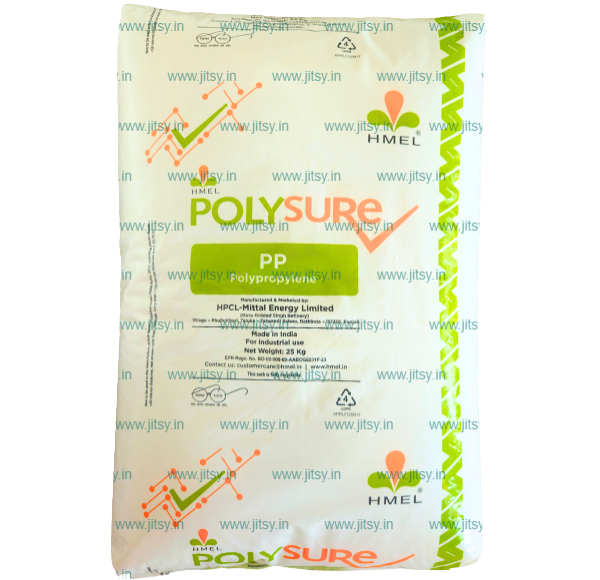
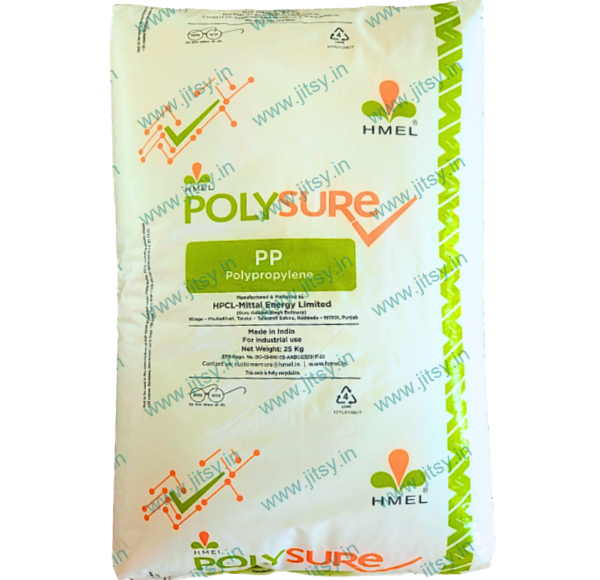
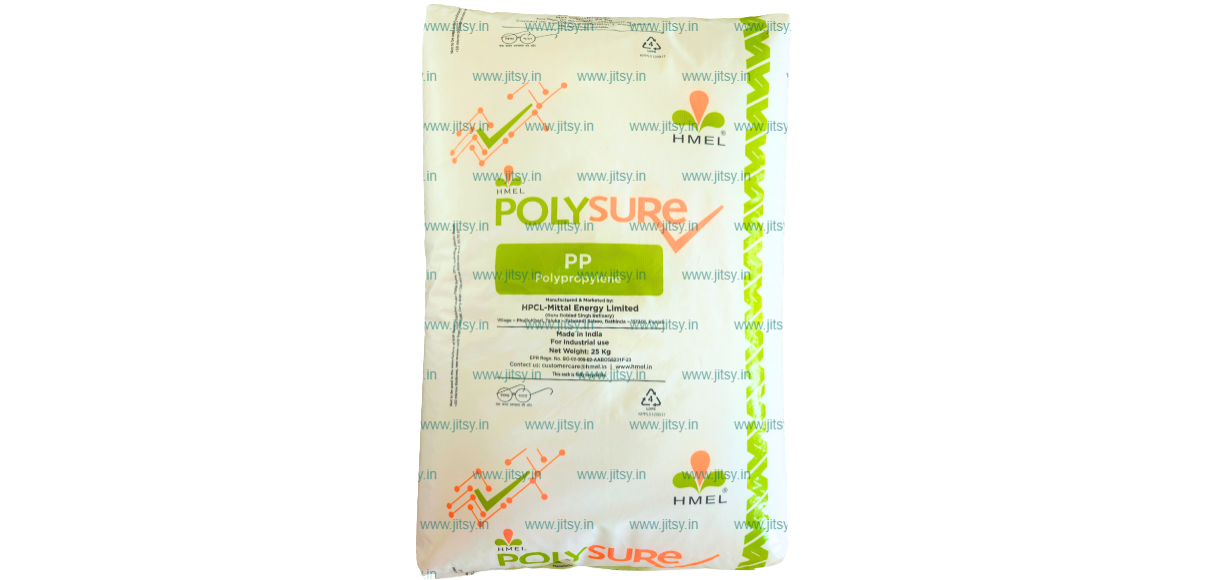
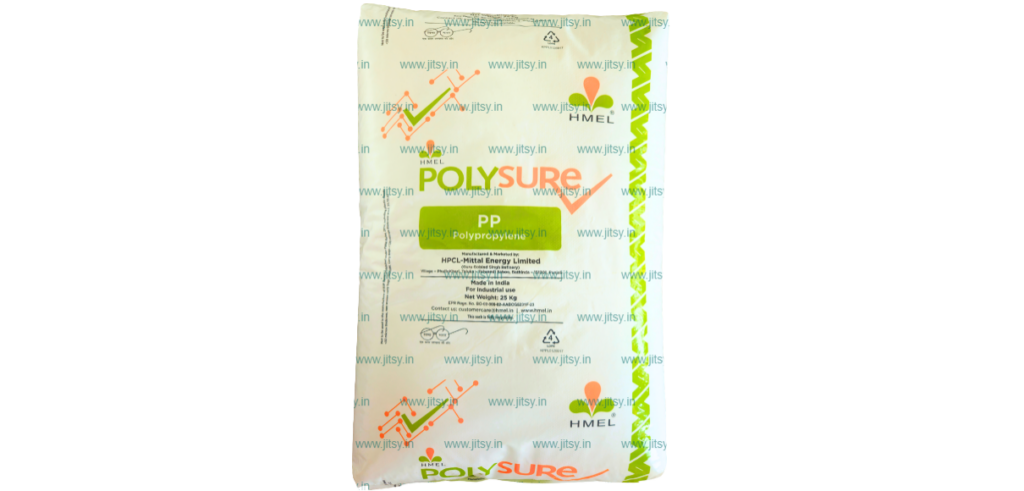
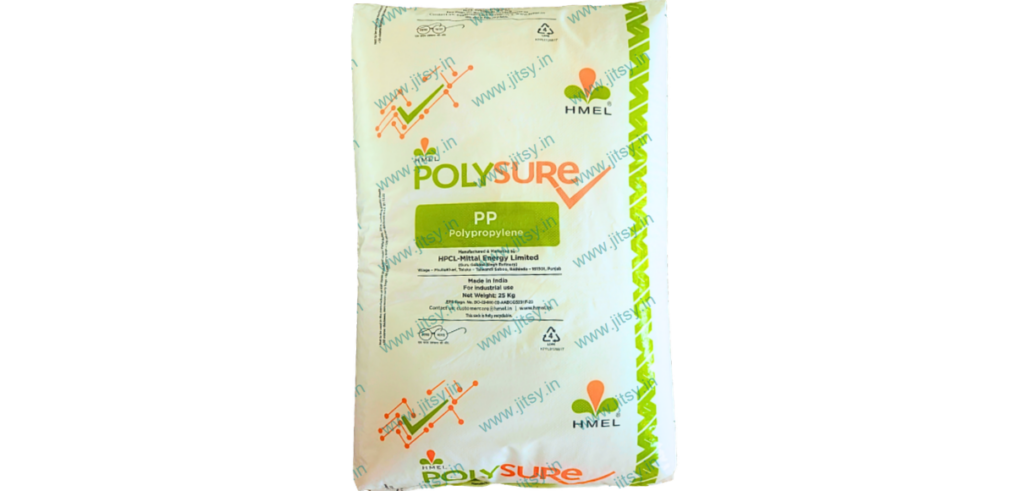
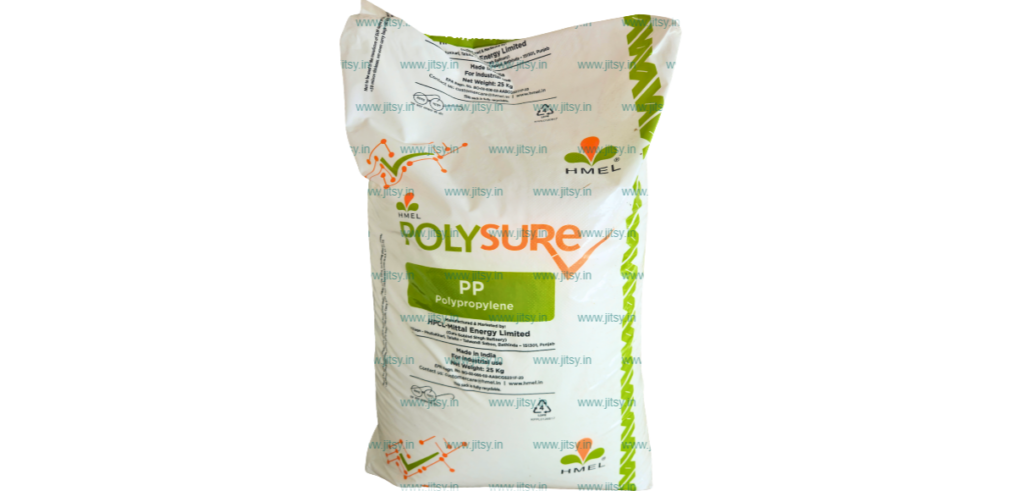
Polysure M20CR1 is a premium clarified, controlled rheology polypropylene homopolymer engineered by HPCL-Mittal Energy Ltd (HMEL) using advanced Spheripol-II technology. Manufactured at HMEL’s Bathinda Spheripol-II Unit-II (500 KTA capacity), M20CR1 is specifically formulated for medical syringe barrels and plungers (1–20ml disposable syringes), high-clarity pharmaceutical and cosmetic packaging, and multicavity thin wall injection molding applications. The grade features proprietary nucleating agents for crystal clarity, controlled rheology design for minimal warpage, and narrow molecular weight distribution for superior dimensional stability. M20CR1 delivers exceptional processability with 20 MFI flow, enabling 64–128 cavity high-speed production while maintaining medical-grade transparency and compliance. Fully certified under IS 10910 (Indian pharma plastics standard), IS 16738:2018, and FDA 21 CFR 177.1520, M20CR1 is gamma sterilization compatible (25–50 kGy per ISO 11137), making it the preferred choice for medical device manufacturers across India including Delhi NCR, Noida, Gurgaon, and Manesar medical clusters.
Deep Technical Insights & Specifications
Complete Property Profile (ASTM D4101 Injection-Molded Specimens)
- Melt Flow Index (ASTM D1238, 230°C/2.16 kg): 20 g/10 min – Supports fast filling in multi-cavity molds and is well suited for thin-wall injection molding applications.
- Tensile Strength at Yield (ASTM D638): 34 MPa – Provides strong structural integrity, important for medical device and precision molded components.
- Tensile Elongation at Yield (ASTM D638): 12% – Ensures controlled deformation without brittleness, improving durability during handling and use.
- Flexural Modulus – 1% Secant (ASTM D790A): 1600 MPa – Delivers high stiffness and rigidity, beneficial for syringe barrels and precision medical parts.
- Notched Izod Impact Strength at 23°C (ASTM D256A): 35 J/m – Offers good drop resistance and handling durability in manufacturing and end-use environments.
- Vicat Softening Temperature (ASTM D1525, 10N): 151°C – Demonstrates strong heat resistance, suitable for hot-fill or high-temperature processing conditions.
- Heat Deflection Temperature (ASTM D648, 0.455 MPa): 110°C – Maintains structural stability under elevated temperatures, supporting hot-fill or sterilization-compatible applications.
Processing Parameters (Multicavity Thin Wall Optimization)
Barrel Temperature Profile
Feed: 180–200°C
Compression: 200–230°C
Metering: 230–250°C
Nozzle: 240–250°C
Mold & Injection Parameters
Mold Temperature: 30–40°C (controlled cooling for clarity) | Injection Speed: High (fast fill for 0.8–1.5mm walls) | Injection Pressure: 800–1200 bar | Back Pressure: 10–20 bar | Screw Speed: 50–100 rpm | Cooling Time: 8–15 seconds | Cycle Time: 15–30 seconds total
Drying Recommendation
Not mandatory (moisture <0.05%), but 80°C for 2 hours recommended if stored>30 days in humid conditions.
Material Performance Characteristics
Optical & Clarity Properties
Haze: 12–15% (nucleated crystallization with Millad-type clarifiers) | Transparency: Superior to standard homopolymer (rivals random copolymer) | Gloss: High surface finish for premium medical devices
Dimensional Stability
Warpage: Minimal (CR design + narrow MWD)
Shrinkage: 1.5–2.0% isotropic
Tolerance: ±0.05–0.1mm achievable in precision molding
Gamma Sterilization Compatibility (ISO 11137 Medical Standard)
Dose Range: 15–25 kGy (standard), up to 50 kGy validated
Property Retention: >95% tensile/flexural post-irradiation
No Yellowing: Stable clarifying agents prevent discoloration
No Embrittlement: Impact strength maintained >90% at 50 kGy
Regulatory Extractables
Xylene Solubles: <0.5% (specification <2.5%) | Medical Compliance: Low extractables for FDA/IS 10910 pharma contact | Biocompatibility: ISO 10993 cytotoxicity/sensitization compliant
Technical Strength & Spheripol-II Advantages
M20CR1’s Spheripol-II CR formulation delivers superior clarity through nucleated crystallization while maintaining low warpage via controlled rheology and narrow molecular weight distribution. The 1600 MPa flexural modulus provides excellent syringe barrel rigidity, while 35 J/m notched Izod impact ensures drop resistance during handling and transport. With 110°C HDT and 151°C Vicat softening point, M20CR1 supports both hot-fill packaging and autoclave sterilization (alternative to gamma). Gamma sterilization stability (>95% property retention at 25 kGy) with zero yellowing or embrittlement distinguishes M20CR1 from standard 20 MFI grades, meeting stringent ISO 11137 medical device standards. The 20 MFI flow enables 8–12 second cooling cycles in 64–128 cavity multicavity molds, supporting high-speed production economics while maintaining medical-grade dimensional precision (±0.05–0.1mm tolerance). Low xylene solubles (<0.5%) ensure minimal extractables for FDA 21 CFR 177.1520 and IS 10910 pharma compliance.
Applications & Industry Use Cases
Medical Syringe Manufacturing (Primary Application)
M20CR1 is the preferred material for 1–20ml disposable medical syringes, serving as both barrel and plunger material. The superior clarity enables dosage scale visibility for medical professionals, while the 1600 MPa flexural modulus provides structural integrity for repeated plunger actuation. Multicavity production (64–128 cavities) achieves 12–20 second cycle times, supporting high-volume syringe manufacturers in Delhi NCR (Noida, Gurgaon, Manesar medical clusters). Gamma sterilization compatibility (25–50 kGy per ISO 11137) ensures stability post-irradiation with no property loss, critical for sterile medical device supply chains. FDA 21 CFR 177.1520 and IS 10910 compliance guarantee pharmaceutical safety for insulin, vaccine, and injectable drug delivery.
High-Clarity Pharmaceutical & Cosmetic Packaging
M20CR1 delivers crystal clarity (12–15% haze) for ISBM (Injection Stretch Blow Molding) medicine bottles (30–250ml), enabling liquid visibility for patient compliance and dosage verification. Pharmaceutical blister base trays, tablet containers, and diagnostic cassettes benefit from low extractables (<0.5% xylene solubles) and biocompatibility testing per ISO 10993. Cosmetic packaging—luxury cream jars, serum droppers, premium closures—leverages M20CR1’s glass-like transparency at polypropylene economics, differentiating high-end product positioning. Laboratory consumables (petri dishes, test tube racks, pipette tip boxes) utilize M20CR1’s dimensional precision and clarity for sample visibility.
Multicavity Thin Wall Injection Molding (TWIM)
Yogurt cups (100–500ml, 16–32 cavity molds), dessert containers, and food service packaging achieve 8–12 second cooling cycles with M20CR1’s 20 MFI and nucleated crystallization. Pharmaceutical trays (sterile instrument packaging, medical device trays) benefit from low warpage (CR design) and tight tolerance capability (±0.05–0.1mm). Transparent storage boxes, kitchenware, and consumer products leverage M20CR1’s fast cycle time for high-volume production economics while maintaining premium clarity and dimensional stability.
Threaded Closures & Medical Fittings: Pharmaceutical bottle caps, child-resistant closures (CRC), and tamper-evident caps utilize M20CR1’s low warpage for tight thread tolerances and consistent sealing. Luer lock connectors, IV line components, and medical tubing fittings demand precision molding and biocompatibility—both delivered by M20CR1’s controlled rheology and ISO 10993 compliance.
Alternatives & Comparative Analysis
IOCL Propel 1200MC (Direct Competitor – Spheripol-II, 20 MFI)
IOCL’s 1200MC is a transparent PP homopolymer using identical Spheripol-II technology with 20 MFI flow. Tensile strength is slightly higher (40 vs 34 MPa, +18%), and flexural modulus is marginally stiffer (1700 vs 1600 MPa, +6%). Both grades offer identical notched Izod impact (35 J/m), HDT (110°C), and VST (150–151°C). Clarity and gamma sterilization compatibility are equivalent. Key Difference: M20CR1 carries Polysure premium brand positioning and HMEL quality consistency; 1200MC offers marginally higher stiffness for applications requiring maximum rigidity. Selection: For medical syringes, both are interchangeable; for cosmetic/premium packaging, M20CR1 brand premium justifies choice; for structural thin wall requiring maximum stiffness, 1200MC slight advantage.
HMEL Polysure M50NR1 (Higher MFI Alternative – 50 MFI)
M50NR1 is a high-flow Spheripol-II homopolymer with 50 MFI (2.5× faster flow than M20CR1). Designed for ultra-high-speed thin wall injection molding, M50NR1 achieves 5–8 second cooling cycles vs M20CR1’s 8–12 seconds. Trade-off: M50NR1 has lower mechanical properties (flexural modulus ~1500 MPa vs M20CR1’s 1600 MPa) and reduced clarity vs M20CR1’s nucleated design. Selection:M50NR1 for maximum throughput yogurt cups and ultra-thin wall products (0.5–0.8mm); M20CR1 for medical syringes requiring strength + clarity balance.
HMEL Polysure M18NH (Lower MFI Alternative – 18 MFI)
M18NH is a controlled rheology homopolymer with 18 MFI (10% lower flow than M20CR1). Slightly higher flexural modulus (~1650 MPa) and slower cooling (12–18 sec) make it suitable for applications prioritizing stiffness over cycle time. Selection: M18NH for thin wall containers requiring maximum structural rigidity; M20CR1 for balanced medical syringe performance (flow + strength + clarity).
OPaL RH20 (Gas Phase Alternative – 20 MFI)
OPaL’s RH20 uses Ineos gas phase technology (different from Spheripol-II loop). While offering 20 MFI and medical-grade compliance, RH20 lacks M20CR1’s nucleated clarity and CR warpage control. Suitable for general medical containers but inferior for high-clarity cosmetic or precision multicavity applications. Selection: M20CR1 for clarity-critical applications; RH20 for cost-sensitive general medical use.
Reliance Repol Portfolio (Absent Direct Equivalent)
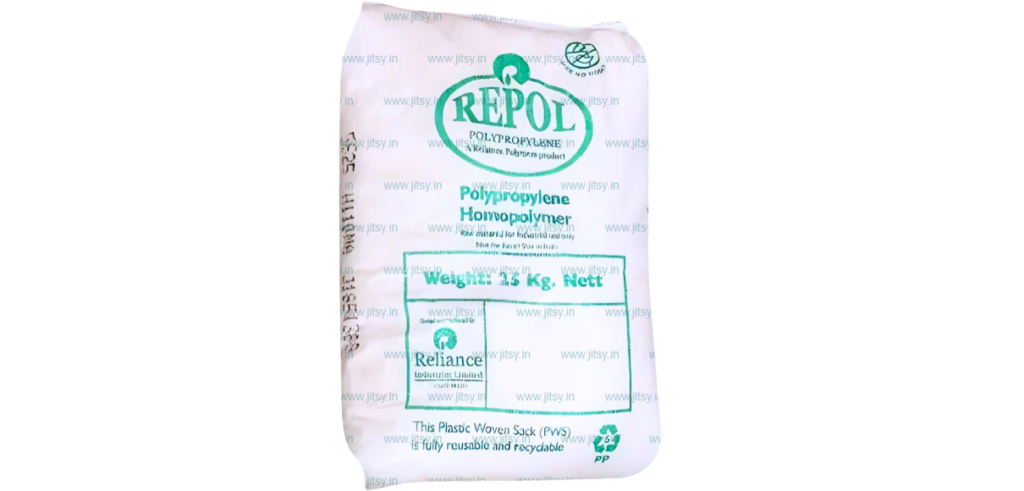
Reliance lacks a direct 20 MFI clarified syringe-grade homopolymer. Reliance’s 12 MFI general injection grades (M12MK, M12RK) are lower flow; random copolymers (SR20NC) are copolymers, not homopolymers. Selection: M20CR1 is the superior choice for medical syringes requiring homopolymer clarity + compliance.
Grade Selection Decision Matrix
- Medical Syringes (1–20 ml): M20CR1 – Provides excellent clarity, regulatory compliance, gamma sterilization stability, and balanced mechanical strength, making it suitable for precision medical components.
- ISBM Medicine Bottles: M20CR1 – Offers superior clarity, low extractables, and regulatory compatibility, supporting pharmaceutical packaging requirements.
- Pharmaceutical Trays: M20CR1 or 1200MC – Both grades support thin-wall molding with good clarity and low warpage, ideal for medical tray manufacturing.
- Cosmetic & Premium Packaging: M20CR1 – Preferred for high transparency and premium visual appeal, supporting brand-focused packaging designs.
- High-Speed Yogurt Cups: M50NR1 – Higher melt flow (MFI 50) enables maximum throughput and faster cycle times, typically around 5–8 seconds in high-speed thin-wall molding.
- Structural Thin-Wall Components: M18NH or 1200MC – Selected where higher stiffness and structural stability are required.
- Cost-Sensitive Medical Applications: 1200MC – Provides competitive pricing with reliable performance, making it suitable for cost-optimized medical packaging.
- General Medical Containers: RH20 – A budget-friendly alternative offering acceptable performance, though with slightly lower clarity compared to premium grades.




















Reviews
Clear filtersThere are no reviews yet.