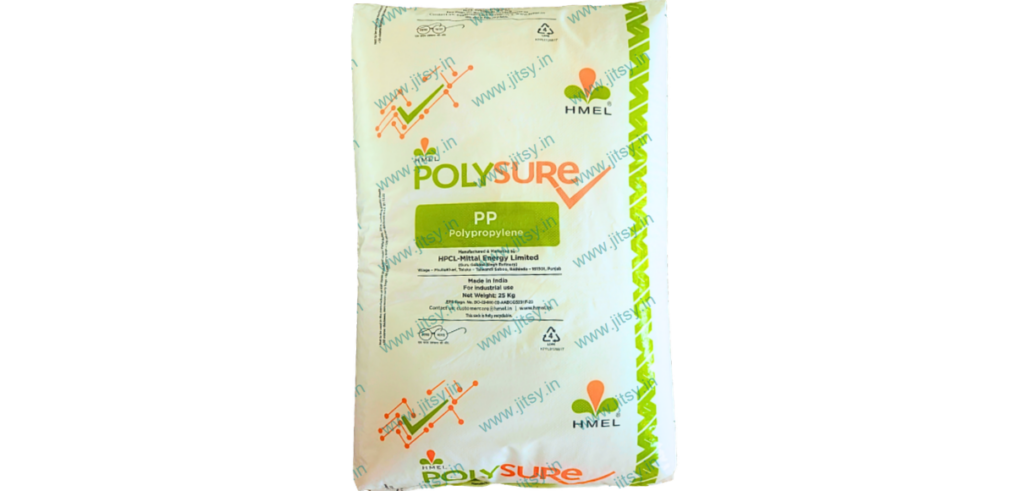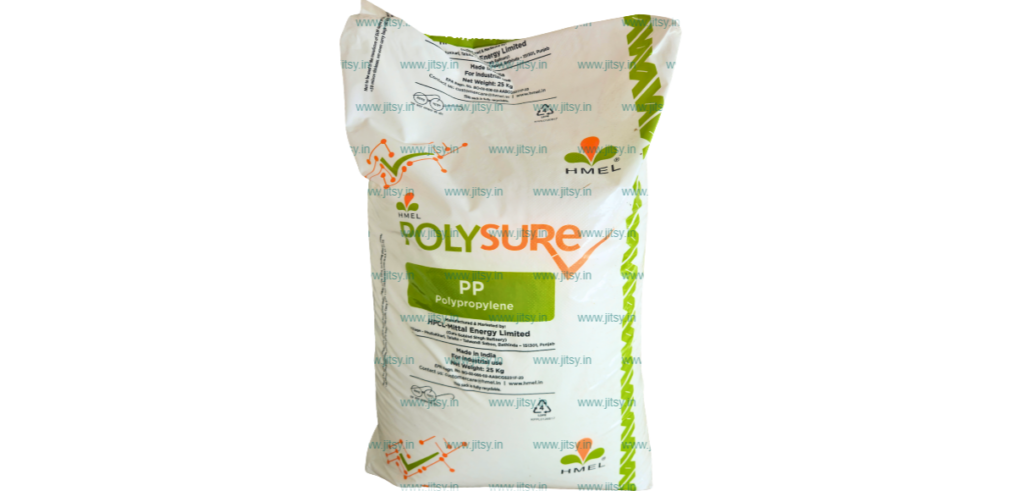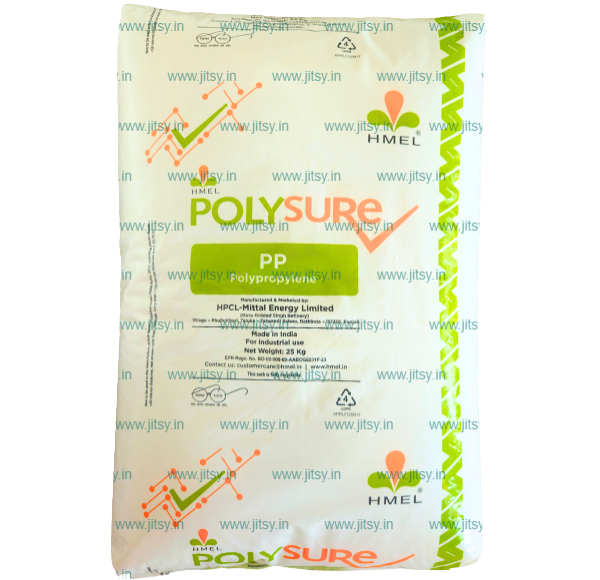
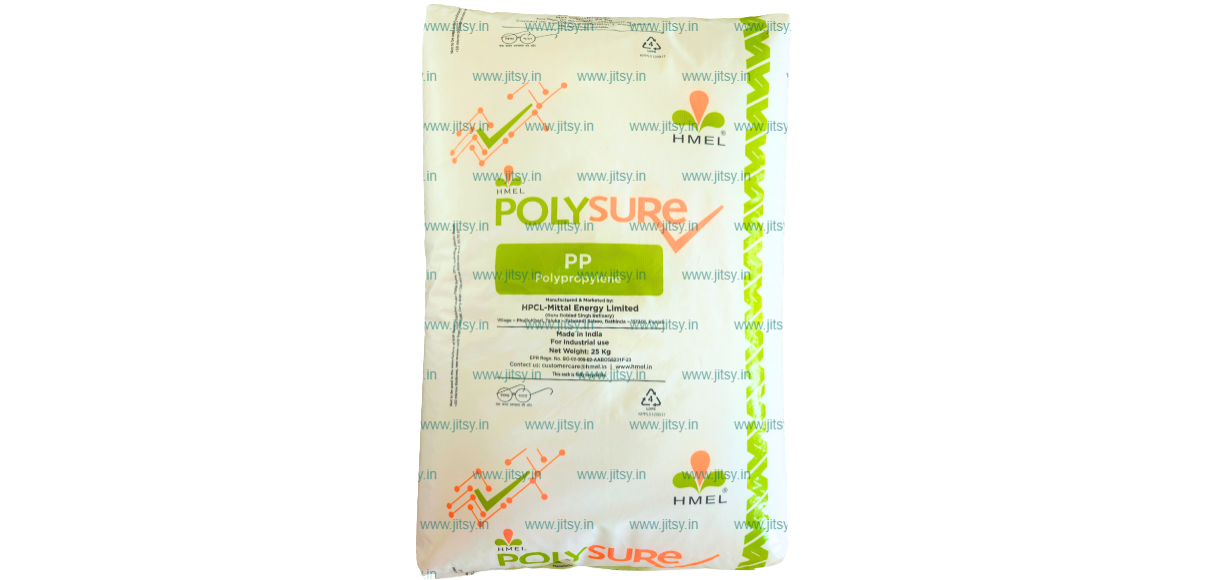
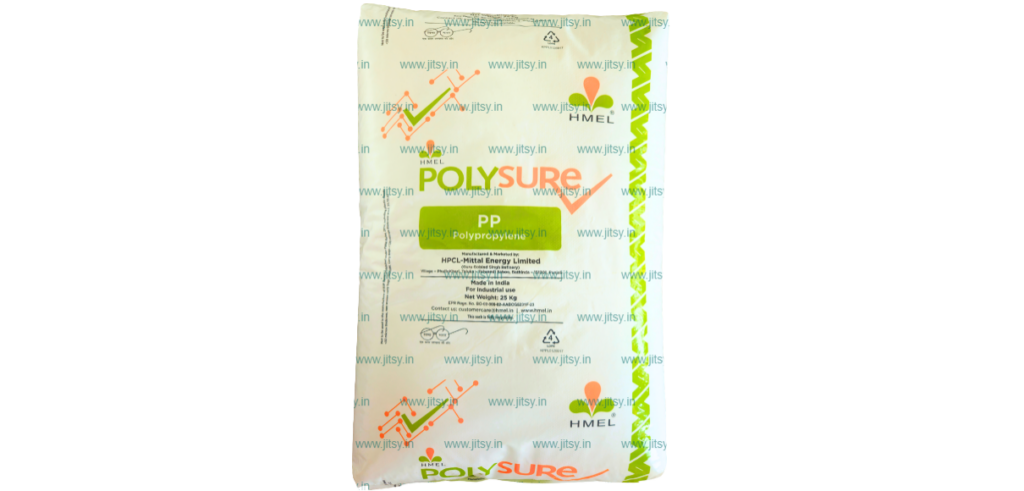
HMEL PP Polysure M06RR1
HMEL PP Polysure M06RR1 is a polypropylene homopolymer injection and extrusion grade developed by HPCL-Mittal Energy Limited under its Polysure brand. Officially positioned for general-purpose moulded products and general plastics applications, this 6 MFI PP homopolymer is designed for processors who need a dependable balance of flow, rigidity, surface finish, and production stability. HMEL highlights smooth processing and good aesthetics as the defining characteristics of M06RR1, making it a practical choice for converters producing rigid plastic parts, utility mouldings, and standard extrusion products.
HMEL is one of India’s leading petrochemical manufacturers, and the Polysure polypropylene range is produced using advanced Novolen and LyondellBasell technologies. Within the broader Polysure PP family, M06RR1 sits in the homopolymer segment, which is generally preferred for applications requiring better stiffness, dimensional consistency, and rigid-part performance than many impact or random copolymer alternatives. For buyers searching for HMEL Polysure M06RR1 supplier in India, 6 MFI PP homopolymer granules, or HMEL PP injection grade for general plastics, this grade is positioned as a reliable and technically aligned material for everyday Manufacturing.
Deep Technical Insights
The most important verified technical parameter for HMEL Polysure M06RR1 is its melt flow index of 6 g/10 min, measured as per ASTM D1238. This places the grade in a balanced processing range for both injection moulding and extrusion. In practical manufacturing terms, a 6 MFI PP homopolymer offers more controlled flow than high-MFI grades while still maintaining good mould filling and machine-friendly processing. This makes M06RR1 especially useful where processors want a stable resin for routine production rather than an ultra-fast thin-wall grade.
As a polypropylene homopolymer, M06RR1 is naturally suited to rigid applications where stiffness, dimensional stability, and clean appearance are important. HMEL’s own positioning around smooth processing and good aesthetics is especially relevant for moulders producing visible finished parts, utility products, and general plastics components that must look consistent from batch to batch. Since public HMEL sources do not openly provide verified tensile strength, flexural modulus, impact strength, hardness, HDT, or exact processing temperatures for M06RR1, the most accurate technical presentation is to focus on the manufacturer-confirmed MFI, polymer family, process suitability, and application intent rather than publishing unverified numerical Values.
Applications and Industry Use Cases
General-Purpose Injection Moulded Products
HMEL Polysure M06RR1 is well suited for general-purpose injection moulded products where a moderate-flow PP homopolymer helps achieve stable mould filling and rigidfinished parts. It is relevant for utility mouldings, small housings, everyday plastic articles, and standard industrial components where processors need reliable output without shifting to very high-flow grades. Its balanced flow profile supports repeatable production and good finished-part appearance.
General Plastics and Utility Components
This grade is also suitable for general plastics applications where manufacturers prefer polypropylene homopolymer for its practical rigidity and dimensional consistency. It can be used in a wide range of non-fragile rigid parts across household, commercial, and light industrial segments. Because HMEL specifically promotes good aesthetics, M06RR1 is especially useful where the final product must maintain a neat, clean look along with dependable structural performance.
Extrusion Applications
HMEL officially positions M06RR1 for extrusion as well as injection moulding, which expands its value for processors working across multiple production methods. In extrusion applications such as simple profiles and general PP sections, a 6 MFI homopolymer can offer a workable melt strength and stable output profile. This dual-use positioning makes M06RR1 commercially attractive for converters who want one versatile PP homopolymer grade for more than one processing route.
Industrial and Technical Plastic Parts
For industrial converters and OEM vendors, M06RR1 can serve as a practical material for technical plastic parts where rigidity and predictable processing are more important than impact modification. While it is not positioned as a specialty engineering polymer, it offers a dependable middle-ground solution for manufacturers who want a standard PP homopolymer with smooth processing behaviour and broad usability across routine industrial applications.
Comparable Alternatives
The closest internal alternative within the HMEL Polysure range is M12RR or M12RR1, another polypropylene homopolymer grade with a higher melt flow index of 12 g/10 min. Compared with M06RR1, M12RR1 is more suitable for thinner-wall parts, faster filling, and applications such as closures, furniture, toys, and housewares where higher flow improves cycle efficiency. M06RR1, on the other hand, is the more balanced option when processors need general-purpose moulding and extrusion performance without moving into a higher-flow processing window.
Among other Indian producers, IOCL P1030MG can be considered a lower-flow homopolymer alternative for applications needing stronger melt resistance and more controlled processing, while IOCL P1110MG is a higher-flow option for furniture and household mouldings. Reliance Repol H110MA and Reliance AM120N are also higher-MFI PP homopolymer grades positioned for rigid packaging, industrial mouldings, and furniture compounds. The rationale behind assigning M06RR1 to general-purpose mouldings is clear: it occupies the practical mid-flow zone in the PP homopolymer ladder, making it suitable for converters who need a versatile balance of flow, rigidity, and appearance rather than a specialised high-flow or low-flow grade.
Need Technical guidance?
Why buy HMEL PP Polysure M06RR1 from JITSY?
- Direct import & verified sourcing
- Authorised channel–led supply
- Pan-India B2B delivery
- Transparent pricing & documentation
- Mobile app–enabled procurement
- Full compliance (RoHS, BIS/ISI, EPR, GST)
- Batch traceability
FAQs
Frequently Asked Questions
What kind of products is HMEL Polysure M06RR1 best used for?
How is M06RR1 different from higher-flow grades like M12RR1 or Reliance H110MA?
Is HMEL Polysure M06RR1 a homopolymer grade?
Can M06RR1 be processed in both injection moulding and extrusion machines?
What does 6 MFI mean in practical processing terms?
Is M06RR1 suitable for products where appearance matters?
When should a buyer choose M06RR1 instead of another PP homopolymer grade?
What Customers Say
You must be logged in to post a review.
Other Relevant Products Available in India
Related Articles
Raw Materials Used in Toy Manufacturing: Safety, Compliance & Cost Factors
The materials used in toy manufacturing can impact the safety of children and the reputation of the company. There are multiple documented cases where improper material selection has led to recalls, litigation, and severe financial damage to toy manufacturers.
Choosing the Right Polymer Grades for Injection Molding
Purchasing the wrong polymer grade for injection molding can directly result in product failure, high rejection rates, or field performance issues. Different applications require vastly different material characteristics.

How Digital Procurement Platforms Reduce Raw Material Fraud
Raw material fraud is a frequent issue in conventional procurement. It usually happens due to the lack of supplier verification, the absence of records, and low levels of transparency. In manual systems, it is hard and time-consuming to keep track of materials.
How Crude Oil Prices Impact Plastic Raw Material Costs in India
Crude oil plays a powerful role in the worldwide plastic industry & India is no exception. Most of the plastic raw materials, like PE, PP, and PVC, are extracted from petrochemicals sourced from crude oil.

The Great Procurement Divide: Why Your Best Engineers Make Your Worst Buyers
Walk into any manufacturing facility across India—from PVC pipe makers in Gujarat to automotive component manufacturers in Chennai—and you’ll hear this logic echoed in boardrooms and production floors alike.
Copy-Paste vs. Innovation
Is playing it safe actually the riskiest strategy? The uncomfortable truth about innovation avoidance in Indian manufacturing
The Credit Cycle Shift: Why 30-Day Payments Are Winning Hearts (and Wallets)
If you’ve ever done business in India, you know this vibe. Long credit terms weren’t just about money—they were about trust, connection, and that warm cup of chai shared over a handshake deal. You’d walk into your supplier’s office, chat about life, and walk out with goods worth lakhs, no questions asked.

The Great Inventory Debate
When COVID hit, I think all of us felt something shift in how we think about supply chains. It wasn’t just disruption. It was exposure. What we thought was working… suddenly wasn’t. Containers stuck. Prices all over the place. Buyers unsure. And for many manufacturers—raw material just wasn’t there when it was needed.

The 0.1% That Destroys the 99.9%: Why Documentation in B2B Trade Isn’t Optional Anymore
this is how businesses have functioned. Fast, informal, and based on mutual trust. And in 99.9% of the cases, it works. Goods are delivered, payments are made, and relationships grow stronger.
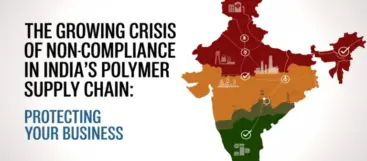
The Growing Crisis of Non-Compliance in India’s Polymer Supply Chain: Protecting Your Business
Complete Documentation Isn’t Optional – It’s Critical
Their prices are surprisingly competitive – sometimes 3-5% below market rates. Your production costs look great on paper. But six months later, you receive a notice from the GST department that sends a chill down your spine: your input tax credits are being reversed, with interest and penalties.

5 Ways to Optimise Your Polymer Supply Chain
With raw material costs fluctuating, logistics challenges mounting, and quality expectations rising, manufacturers need concrete strategies to optimise their polymer procurement process.
The Identity Crisis in Indian Manufacturing: Are We Building Products or Programming Them?
When a textile manufacturer in Surat recently won a major international contract, they didn’t credit their superior fabric quality. Their winning edge? “We’re not a textile company,” the CEO declared. “We’re a technology company that happens to make textiles.”
The Great Manufacturing Paradox: Why ‘Made in India’ Could Mean ‘Made By No One’
The Hidden Cost of Perfect Efficiency
From Crisis to Opportunity: How Indian Manufacturers Are Building Unshakeable Supply Chains
It’s not about massive machinery or sprawling factory floors – it’s about something far more fundamental: the way manufacturers are reimagining their supply chains.
Decoding Polymer Raw Material Pricing: Understanding the Complex World of Polymer Economics in 2025
Welcome to the intricate, often bewildering world of polymer raw material pricing – a landscape so complex that even seasoned professionals find it challenging to navigate.

Reviews
Clear filtersThere are no reviews yet.