


Bestsellers
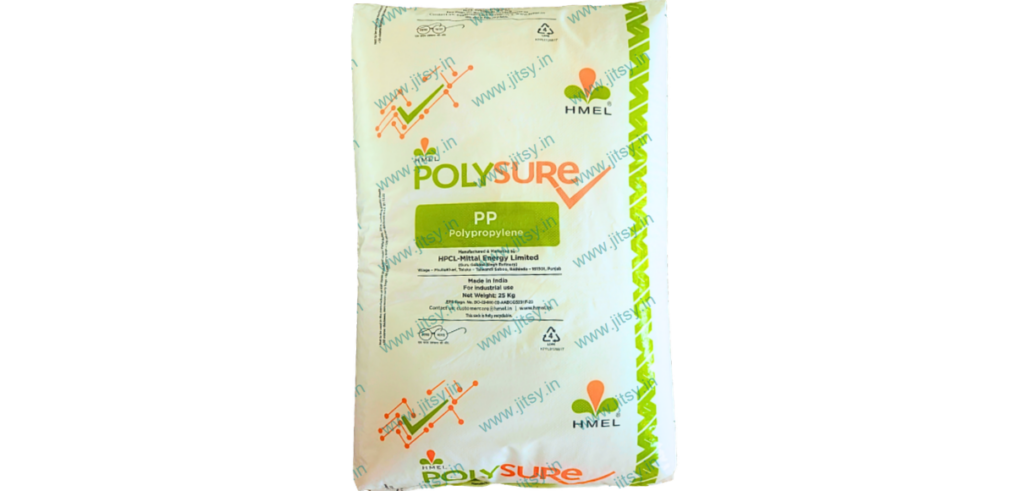
HMEL PP Polysure Y35GR1
Polysure Y35GR1 is a premium Controlled Rheology Polypropylene Homopolymer, engineered by HPCL-Mittal Energy Ltd (HMEL) using advanced Spheripol-II technology. Y35GR1 is purpose-built for high-speed spunbond nonwoven, fine denier multifilament yarn, and extrusion coating. It combines outstanding processability, superior spinnability, and proven resistance to gas fading—making it the first choice for medical, hygiene, and technical textile applications. Manufactured in HMEL’s Bathinda refinery, the brand Polysure stands for consistent quality, regulatory compliance, and technical support.
Technical Properties & Performance Specifications
- Melt Flow Index (ASTM D1238, 230°C/2.16 kg): 35 g/10 min, indicating excellent flow characteristics suitable for high-speed processing and precision moulding applications.
- Tensile Strength at Yield (ASTM D638): 32 MPa, providing strong mechanical performance and reliable structural integrity in finished components.
- Tensile Elongation at Yield (ASTM D638): 10%, offering balanced stiffness with moderate flexibility during processing and end-use.
- Flexural Modulus – 1% Secant (ASTM D790A): 1250 MPa, ensuring good rigidity and dimensional stability for molded products.
- Notched Izod Impact Strength at 23°C (ASTM D256A): 30 J/m, supporting adequate resistance to sudden impact under standard conditions.
- Vicat Softening Temperature (ASTM D1525, 10N): 151°C, demonstrating strong heat resistance for applications exposed to elevated temperatures.
- Heat Deflection Temperature (ASTM D648, 0.455 MPa): 90°C, allowing the material to maintain shape and performance under moderate thermal loads.
Applications & Industry Use Cases
Medical & Hygiene Nonwovens: Y35GR1 delivers high-speed, stable extrusion for spunbond fabrics used in face masks, surgical gowns, medical coveralls, and hygiene products like diaper topsheets and sanitary napkin backsheets. Its anti-gas fading formulation ensures color stability in sensitive medical and hygiene environments. Technical Yarns & Industrial Nonwovens: Ideal for fine denier multifilament yarns (<2 dpf), Y35GR1 provides excellent spinnability, making it suitable for applications such as sewing threads, carpet backing, and industrial textiles. In industrial nonwovens, it’s used for filtration media, geotextiles, and crop covers—delivering high throughput and reliable mechanical properties. Extrusion Coating: Y35GR1’s controlled rheology supports uniform coating in packaging, technical laminates, and nonwoven composites, ensuring process efficiency and product consistency.Alternatives & Comparative Overview
Several polypropylene grades offer similar processing performance to Y35GR1, with variations in stiffness, processing technology, and application focus. Key alternatives include:- Y35GR – Melt Flow Index (MFI) 35 using Novolen CR technology with a flexural modulus of around 1150 MPa. Commonly used in nonwoven and multifilament applications. Compared to Y35GR1, it offers slightly lower stiffness.
- 1350YG – MFI 35, produced with IOCL Spheripol-II technology, delivering a flexural modulus of approximately 1200 MPa. Suitable for spunbond nonwovens and diaper applications. Being reactor-based, it typically has less CR (controlled rheology) control compared to Y35GR1.
- RH38 – MFI 38 with OPaL Ineos Gas Phase technology and a flexural modulus of about 1200 MPa. Used in spunbond and fine denier fibers. Its higher MFI improves flow, and the grade is known for anti-gas fading performance.
- Y25GR1 – MFI 25 produced via Spheripol-II technology, with a flexural modulus near 1200 MPa. Best suited for BCF (Bulk Continuous Filament) and heavier denier yarn applications. The lower MFI supports stronger yarn formation.
- E35RR1 – MFI 35 using Spheripol-II technology, flexural modulus around 1200 MPa. Primarily designed for extrusion coating applications, offering coating-optimized processing characteristics.
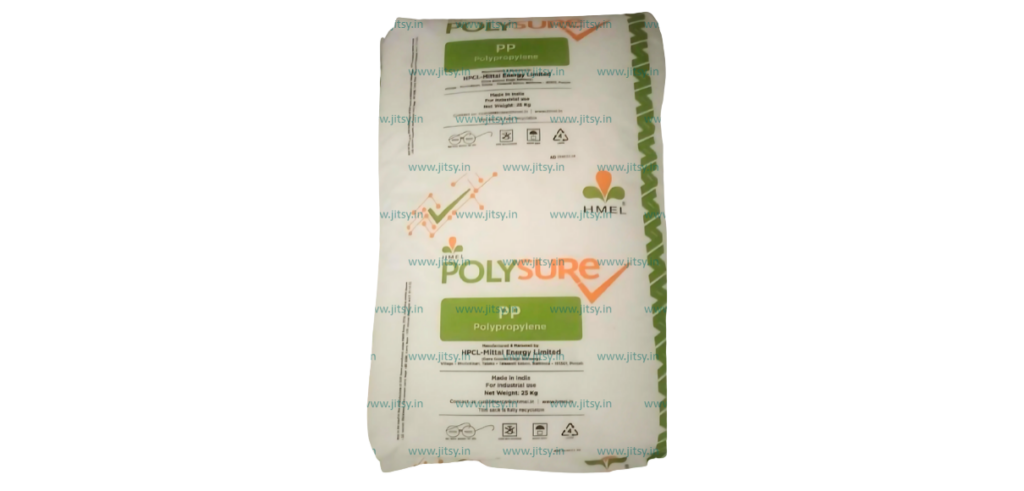
HMEL PPCP Polysure CE02RR
Polysure CE02RR is a polypropylene impact copolymer (PPCP) extrusion grade from HPCL-Mittal Energy Ltd (HMEL), purpose-built for sheet extrusion, corrugated/flute board, and blow moulding. Manufactured with advanced Spheripol-II technology, CE02RR delivers a unique blend of high rigidity, impact toughness, and stable processing, making it a workhorse grade for rigid sheets and containers demanding stackability and durability.
Deep Technical Insights
Polysure CE02RR is engineered for converters needing a balance of stiffness and impact. The 1.8 MFI enables efficient sheet extrusion with good melt strength for thickness control, while the 1100 MPa flexural modulus provides structural rigidity in boards and containers. Notched Izod impact of 250 J/m ensures resistance to drops and handling, and a Vicat softening point of 150°C supports hot filling and elevated service temperatures. Spheripol-II process technology ensures consistent pellet morphology and process stability, reducing line downtime and scrap.Applications & Industry Use Cases
Sheet Extrusion & Thermoforming: CE02RR is ideal for solid and corrugated PP sheets, panels, trays, and lids used in industrial packaging, logistics, and agriculture. Its rigidity and impact profile allow for lightweight, stackable designs that withstand handling and transport. Corrugated/Flute Board & Packaging: For PP hollow sheets and boxes, CE02RR delivers the strength needed for agricultural crates, logistics totes, and protective packaging, supporting both manual and automated handling. Blow-Moulded Containers: CE02RR performs in blow-moulded bottles, drums, and containers for industrial and consumer goods, offering dimensional stability and resistance to deformation under load.Performance Advantages of CE02RR PPCP
Polysure CE02RR stands out for its stiffness–impact balance, making it suitable for converters seeking tough, stackable, and thermally stable products. Its processability supports high-speed extrusion and blow moulding lines with minimal variation. The grade’s chemical resistance and recyclability further add to its value in sustainable packaging and logistics chains.
HMEL PPCP Polysure CE06NR
HMEL PPCP Polysure CE06NR is a premium nucleated polypropylene impact copolymer engineered for high-speed continuous compression and injection molding applications. Developed using advanced Spheripol-II technology, this grade delivers exceptional mechanical properties, regulatory compliance, and batch-to-batch consistency. With a 6 MFI and robust performance characteristics, CE06NR is the preferred choice for demanding caps, closures, and food-contact applications requiring superior processability, impact strength, and organoleptic purity across packaging and pharmaceutical markets.
Technical Specifications & Performance
HMEL PPCP Polysure CE06NR is engineered with nucleation technology that accelerates crystallization and enhances material stiffness, delivering a high flexural modulus ideal for rigid packaging applications. The 6 MFI (Melt Flow Index) ensures rapid cycle times and efficient mold filling, enabling manufacturers to maximize throughput in continuous compression and injection molding processes. The nucleated structure provides superior clarity and transparency, critical for premium food and beverage packaging where visual appeal directly impacts consumer perception. With dual compliance to IS 10910 (Indian Standard for Polypropylene) and FDA 21 CFR 177.1520 (US Food and Drug Administration regulations for food-contact polymers), CE06NR guarantees safety for direct food contact and pharmaceutical applications. The grade's organoleptic purity ensures zero off-odors or taste transfer, maintaining product integrity in sensitive applications. HMEL's Spheripol-II process technology ensures consistent batch-to-batch quality, high impact resistance, and reliable performance across varying processing conditions. The material's robust mechanical properties—including high stiffness, excellent impact strength, and dimensional stability—make it suitable for complex geometries and demanding industrial applications where failure is not an option.Applications
Beverage Closures: CE06NR is engineered for carbonated drink caps and bottled water closures where high pressure resistance, impact durability, and clarity are essential. The nucleated structure ensures rapid cycle times in high-speed cap production, while the robust mechanical properties withstand carbonation pressure and repeated opening/closing cycles without degradation or stress cracking. Pharmaceutical Closures: For child-resistant and tamper-evident pharmaceutical caps, CE06NR delivers the precision, consistency, and regulatory compliance required by global pharma standards. Its organoleptic purity prevents any chemical interaction with medications, while superior impact strength ensures closures remain secure during transport, storage, and handling. The material's dimensional stability supports tight tolerances critical for pharmaceutical packaging integrity. Food Container Lids: Ideal for dairy products, condiments, and prepared food containers, CE06NR provides the stiffness and clarity needed for premium food packaging. The nucleated structure enhances rigidity, preventing lid warping under thermal stress or stacking loads, while organoleptic purity ensures no flavor or odor transfer to food contents. Personal Care Product Caps: From shampoo bottles to cosmetic jars, CE06NR offers the aesthetic clarity and mechanical reliability required for consumer-facing personal care packaging. The high flexural modulus ensures caps maintain their shape and snap-fit functionality throughout the product's shelf life. Household Chemical Closures: For detergents, cleaners, and chemical products, CE06NR's robust impact strength and chemical resistance provide dependable closure performance. The material withstands aggressive chemical exposure without degradation, ensuring product safety and preventing leakage or contamination.
HMEL PPCP Polysure CM03RR
Polysure CM03RR is HMEL’s Spheripol-II based polypropylene impact copolymer (PPCP) designed for general-purpose injection moulding. With a medium MFI of 3.5, CM03RR delivers an outstanding stiffness–impact balance, making it the go-to grade for automotive components, furniture, crates, industrial mouldings, and rigid packaging. Spheripol-II technology ensures uniform impact-phase dispersion and consistent mechanicals batch after batch, supporting dimensional stability and robust part performance for demanding structural applications.
Technical specifications of HMEL Polysure CM03RR
Flow & physical properties
- Melt Flow Index:5 g/10 min (230°C/2.16 kg) – tuned for general-purpose injection moulding
- Density: ~0.90 g/cm³ – standard for PP IC grades
- Implication: Medium MFI supports moderate wall thicknesses and high impact retention over ultra-high flow grades
Mechanical properties – stiffness & impact
- Tensile strength at yield: 27 MPa – strong for load-bearing and structural parts
- Elongation at yield: 9% – supports flexibility and shock absorption
- Flexural modulus: 1100 MPa – high stiffness for automotive, crates, and furniture
- Notched Izod impact (23°C): 160 J/m – high toughness for drop, stacking, and handling resistance
Thermal properties & service envelope
- Vicat softening point (10 N): 150°C – resists deformation under moderate heat
- Heat deflection temperature (0.455 MPa): 90°C – suitable for automotive interiors, furniture, and crates exposed to sunlight or warm conditions
Deep technical insights
- Spheripol-II technology: Ensures uniform heterophasic morphology for consistent impact and stiffness across batches—crucial for OEMs and high-reuse applications.
- Stiffness–impact synergy: 1100 MPa modulus and 160 J/m impact make CM03RR ideal for load-bearing, drop-resistant parts in automotive, logistics, and furniture.
- Medium MFI: Balances flow for moderate wall sections, avoiding brittleness or warpage common in ultra-high flow grades.
- Regulatory breadth: IS 10910 and IS 16738/10909 compliance covers food, pharma, and drinking water contact for packaging and consumer goods.
Applications & industry use cases
Automotive components
CM03RR is perfect for interior trims, semi-structural parts, and components where both rigidity and toughness are required—delivering reliable performance in the cabin and non-critical under-hood areas.Furniture & consumer durables
Moulders use CM03RR for chair shells, backs, arms, table tops, and storage systems. Its stiffness supports weight-bearing designs, while impact resistance ensures products survive daily use and handling.Crates, bins, and logistics items
For stackable crates, bins, and pallets, CM03RR’s high impact and stiffness enable repeated drops and high stacking loads without cracking, supporting efficient warehousing and transport.Rigid packaging & industrial mouldings
CM03RR is also used for buckets, pails, rigid containers, and technical housings—delivering drop resistance and stacking strength for robust packaging and industrial parts.Processing guidelines for CM03RR PPCP
Recommended injection-moulding window
- Barrel temperature: 190–230°C (mid-range 200–220°C for most parts)
- Mould temperature: 30–40°C (cooler for faster cycles, warmer for improved finish and reduced warpage)
- Packing pressure/time: Essential for ribs and thick sections to avoid sinks due to high stiffness
Design considerations for crates and furniture
- Use moderate wall thicknesses; avoid ultra-thin designs to maintain impact toughness
- Optimize rib and gate design for uniform fill and minimal warpage
Common PPCP moulding issues & troubleshooting
- Short shots: Raise melt temperature or injection speed
- Warpage: Use balanced cooling and uniform wall thickness
- Flow marks: Optimize gate location and injection speed
Performance advantages vs other Polysure PPCP grades
CM03RR vs CM08NR & CM10TE
- CM03RR (3.5 MFI): Best for automotive, furniture, crates—emphasizes stiffness and impact for moderate walls
- CM08NR (8 MFI): Suited for paint pails, higher throughput, slightly less toughness
- CM10TE (9.5 MFI): For battery casings, under-hood auto—optimized for thermal stability and impact
CM03RR vs competitor PPCP grades
Compared to typical 3–4 MFI grades from Reliance, IOCL, or OPaL, CM03RR offers a superior stiffness–impact balance and greater batch-to-batch consistency, thanks to HMEL’s Spheripol-II process and QC.
HMEL PPCP Polysure CM08NR
HMEL Polysure CM08NR is a polypropylene impact copolymer (PPCP) produced with advanced Spheripol-II technology, optimized for injection moulding of paint pails, furniture, industrial components, and crates. CM08NR delivers a unique combination of good stackability, impact–stiffness balance, and low cycle times for high productivity and reduced energy costs. The grade is enhanced with nucleating and antistatic agents, supporting clean processing, faster crystallization, and dust-free finished products. This makes CM08NR a preferred choice for furniture moulders, packaging producers, and industrial manufacturers in Delhi/NCR and across India.
Specifications
Physical Properties
- Melt Flow Index: 8 g/10 min (230°C/2.16 kg) – balances flow for industrial parts with impact retention
- Density:90 g/cm³ – standard for PP impact copolymers
Mechanical Properties
- Tensile Strength at Yield: 25 MPa – robust for structural and packaging applications
- Tensile Elongation at Yield: 6% – supports flexibility and drop resistance
- Flexural Modulus: 1100 MPa – high modulus for stackability and load-bearing
- Notched Izod Impact (23°C): 170 J/m – excellent impact for crate and pail durability
Thermal Properties
- Vicat Softening Point (10 N): 150°C – maintains shape under heat
- Heat Deflection Temperature (0.455 MPa): 95°C – suitable for industrial and packaging service
- Regulatory: IS 10910 compliant for food/pharma/water contact
Applications
Paint Pails
CM08NR is engineered for paint pails that require reliable stackability, high impact resistance, and dimensional stability. Its modulus and impact profile ensure pails withstand drops and stacking during transport or storage, while the antistatic agent keeps surfaces cleaner.Furniture
For chairs, tables, and modular furniture, CM08NR delivers the stiffness for structural integrity and the impact strength for long-term durability. The nucleated formulation supports quick cycles and a high-quality surface finish, making it ideal for high-volume furniture moulding.Industrial Components & Crates
In crates, bins, and technical mouldings, CM08NR’s balance of stiffness and impact ensures products resist deformation and breakage under heavy loads. Its antistatic and nucleated properties enable cleaner production and faster demoulding.Processing
- Barrel temperature: 190–230°C
- Mould temperature: 30–40°C
- Processing tips: Nucleated agent supports rapid crystallization and short cycles; antistatic agent minimizes dust pickup and surface defects
- Cycle time: Optimized for high productivity in packaging, furniture, and industrial moulding
Deep Technical Insights
- Nucleating agent: Accelerates crystallization, enabling faster cycles and improved dimensional stability
- Antistatic agent: Reduces dust attraction, ensuring cleaner, more appealing finished goods
- Stackability & modulus: 1100 MPa flexural modulus delivers reliable stacking and load-bearing for pails and crates
- Impact–stiffness synergy: 170 J/m impact strength balances toughness with rigidity for a wide range of applications
HMEL PPCP Polysure CM10TE
HMEL Polysure CM10TE is a polypropylene impact copolymer (PPCP) developed using advanced Spheripol-II technology for injection moulding applications that demand both high stiffness and superior impact resistance. CM10TE is purpose-built for battery casings, under-hood automotive components, and structural mouldings where mechanical integrity under heat and impact is a must. Its optimized morphology ensures consistent, OEM-ready performance, making it a preferred choice for automotive and industrial moulders in Delhi/NCR and across India.
Specifications
Physical Properties
- Melt Flow Index:5 g/10 min (230°C/2.16 kg) – ideal for medium-to-thick wall, structural parts
- Density:90 g/cm³ – lightweight, standard for PP ICPs
Mechanical Properties
- Flexural Modulus: ~1200 MPa – high stiffness for load-bearing, structural parts
- Notched Izod Impact: High (ICP standard) – engineered for impact and drop resistance
Technical Insights
- Stiffness–impact balance: Spheripol-II morphology delivers reliable strength and toughness for demanding environments
- Thermal stability: Suitable for under-hood and battery casing applications where heat and impact resistance are critical
Applications
Polysure CM10TE is engineered for structural and safety-critical automotive and industrial mouldings.Battery casings
CM10TE’s stiffness and impact profile make it ideal for battery casings, delivering dimensional stability, drop resistance, and long-term reliability under heat and stress.Under-hood automotive components
From fuse boxes to engine covers, CM10TE excels in under-hood parts exposed to heat and vibration. Its mechanical balance ensures components stay intact even in harsh conditions.Structural & industrial mouldings
Suitable for crates, bins, and heavy-duty covers, CM10TE supports applications where both load-bearing strength and impact protection are required.Processing
- Barrel temperature: 180–240°C
- Mould temperature: 30–50°C
- Processing tips: Medium-high MFI supports efficient mould filling; optimize packing and cooling for best dimensional accuracy and surface finish
- Cycle time: Spheripol-II morphology allows for consistent, repeatable cycles and high productivity
Deep Technical Insights
- Spheripol-II technology: Ensures uniform polymer morphology, batch consistency, and predictable mechanicals for OEM and compounding use
- Stiffness–impact synergy: CM10TE’s balanced profile helps meet automotive and industrial design requirements for safety and durability
- Thermal reliability: Withstands thermal cycling and environmental exposure common in automotive and battery applications
HMEL PPCP Polysure CM12RE
Polysure CM12RE from HMEL is a true "no-break" polypropylene impact copolymer (PPCP) granule, engineered for injection moulding and compounding of luggage, automotive, and industrial components demanding extreme toughness. Produced on advanced Spheripol-II technology, CM12RE delivers exceptional low-temperature impact resistance and consistent performance across batches. Its MFI of 12 g/10 min offers the ideal balance between flow and mechanical strength, making it the preferred choice for manufacturers seeking high-toughness PPCP alternatives to Reliance, Haldia, or OPaL grades. CM12RE is designed for applications where drop resistance, durability, and reliability are non-negotiable.
Technical specifications of HMEL Polysure CM12RE
Material identification, HSN & CAS
- Polymer type: Polypropylene impact copolymer (heterophasic PPCP)
- Form: Natural granules, Spheripol-II process
Flow & physical properties
- Melt Flow Index: 12 g/10 min (230°C/2.16 kg) – supports medium-wall, complex parts with high toughness
- Consistent morphology: Spheripol-II ensures reliable performance and OEM approvals
Mechanical toughness & impact performance
- No-break grade: Passes instrumented impact/Izod tests at room and low temperatures without fracturing
- Superior toughness: Engineered for hard-shell luggage, automotive compounds, and heavy-duty parts where drop and cold-weather performance matter
Thermal & regulatory profile
- Service temperature: Suitable for typical PP IC ranges in luggage, automotive, and industrial mouldings
- Compliance: IS 10910 & IS 16738:2018 for food, pharma, and drinking water contact (processed as recommended)
Applications & industry use cases
Luggage and travel goods
CM12RE is the benchmark PPCP for hard-shell suitcases, trolley bags, and protective frames. Its no-break toughness ensures superior drop and impact resistance—reducing cracking at corners and handles during baggage handling and travel, even in cold conditions.Automotive components & compounds
Ideal for compounding automotive bumpers, interior trims, battery boxes, and underbody shields, CM12RE serves as a robust base resin for filled and coloured compounds. Its consistent performance and impact strength meet demanding OEM specifications.Industrial & heavy-duty moulded parts
For industrial crates, pails, housings, and machinery covers, CM12RE’s impact resistance and load-bearing capability outclass standard PPCP, ensuring reliability in harsh environments.Compounding & custom PP impact formulations
As a masterbatch carrier or base for talc/fibre-reinforced or weatherable compounds, CM12RE delivers excellent dispersion, processability, and toughness—enabling custom solutions for technical and industrial applications.Processing guidelines for CM12RE PPCP
Recommended injection-moulding window
- Melt temperature: 200–240°C
- Mould temperature: 30–45°C
- Packing: Ensure sufficient packing to avoid sink marks in thick ribs and bosses
Compounding considerations
- Compatible with mineral, fibre, and pigment fillers
- Standard PP IC screw design; throughput optimised for medium-high flow
Common issues & troubleshooting with PP impact copolymers
- Warpage: Use balanced cooling, especially in large or thick parts
- Flow marks: Increase injection speed or optimise gate design
- Short shots: Raise melt temperature or injection pressure, check venting
Performance advantages vs other PP impact copolymers
CM12RE vs CM12RR and other Polysure grades
- CM12RE: Focus on no-break toughness and low-temperature impact for luggage/auto
- CM12RR: Designed for stackability and stiffness, more suited for housewares/pails
CM12RE vs competitor PPCP grades (Reliance, Haldia, OPaL)
- CM12RE: No-break performance, Spheripol-II consistency, Indian origin
- Competitors: General-purpose tough grades, but may not match CM12RE’s impact in demanding luggage/auto/industrial roles
HMEL PPCP Polysure CM12RR
HMEL’s PPCP Polysure CM12RR is a premium polypropylene impact copolymer (PPCP) granule engineered using Spheripol II technology, tailored for injection molding and compounding. This grade delivers a robust stiffness–impact balance, excellent stackability, and smooth processability. It’s trusted by injection molders, OEMs, compounders, and traders in furniture, luggage, industrial packaging, housewares, and automotive segments. Polysure CM12RR stands out for its consistency, traceability, and compliance with the latest IS standards.
Key Features & Benefits of Polysure CM12RR PPCP
- High impact strength with reliable toughness for demanding applications
- Medium melt flow (approx. 12 MFI) for versatile injection molding
- Excellent stackability, reducing handling and transport damage
- Food-contact compliant as per relevant IS standards
- Consistent quality and batch traceability from HMEL’s Polysure range
Technical Properties & Processing Guidelines
Material Properties of HMEL Polysure CM12RR
- Mechanical: Balanced stiffness and impact at room temperature
- Thermal: Suitable heat deflection for household and industrial use
- Rheological: Medium flow for efficient molding cycles
- Compliance: Meets IS standards for food/pharma/water contact
Recommended Processing Conditions (Injection Molding & Compounding)
- Barrel temp: 180–230°C (typical)
- Mold temp: 30–60°C (typical)
- Store bags below 50°C, dry, dust-free, away from sunlight
- Always refer to datasheet for precise part/machine tuning
Typical Applications of HMEL PPCP Polysure CM12RR
HMEL's Polysure CM12RR is the go-to PPCP grade for manufacturers seeking reliability and versatility. In automotive and engineering, it’s used for trim, housings, and non-critical covers. Furniture makers trust it for chair/table parts and storage boxes. Housewares and household product brands use it for containers, buckets, and utility items. It also powers luggage shells, paint pails, and industrial packaging. Its adaptable profile makes it ideal for compounding into appliance and specialty parts.
HMEL PPCP Polysure CM25NR
HMEL Polysure CM25NR is a nucleated heterophasic polypropylene impact copolymer (PPCP) reactor grade, engineered via Spheripol-II technology by HPCL-Mittal Energy Ltd. With a melt flow index of 25 g/10 min, CM25NR is optimized for injection moulding and compounding applications that demand dimensional stability, process efficiency, and excellent stiffness-impact balance. Nucleation accelerates crystallisation, reduces cooling time and energy consumption, and minimizes warpage—making CM25NR the material of choice for rigid packaging, automotive parts, and masterbatch compounding. Supplied as natural granules in 25 kg PP bags, CM25NR is compliant with IS 10910 for food, pharma, and drinking water contact, and is PWM Rules 2016 compliant (non-SUP).
Functional Features
Polysure CM25NR stands out for its reactor-grade consistency, nucleated crystallisation, and balanced mechanical properties. Its moderate-high flow supports efficient mould filling, while high stiffness and good impact resistance enable the production of rigid, durable parts. The grade’s food-contact compliance and process reliability make it a trusted solution for converters, compounders, and OEMs.Detailed Technical Specifications (Typical Values)
- Melt Flow Index: 25 g/10 min (ASTM D1238)
- Tensile Strength at Yield: 30 MPa (ASTM D638)
- Tensile Elongation at Yield: 6% (ASTM D638)
- Flexural Modulus (1% secant): 1500 MPa (ASTM D790A)
- Notched Izod Impact (23°C): 80 J/m (ASTM D256A)
- Vicat Softening Point (10N): 152°C (ASTM D1525)
- Heat Deflection Temp (0.455 MPa): 98°C (ASTM D648)
- Packaging: Natural granules, 25 kg PP bags
Applications & Industry Use Cases
Rigid Packaging
CM25NR is ideal for crates, pails, and rigid containers where high stiffness, dimensional stability, and warpage resistance are critical. Its nucleated structure supports precise, stackable, and durable packaging solutions.Automotive Components
Automotive OEMs and compounders use CM25NR for interior and exterior parts requiring a balance of impact strength and stiffness. The grade’s reactor-grade uniformity and moderate flow enable efficient production of complex, robust components.Compounding & Masterbatch
CM25NR serves as a reliable base resin for mineral-filled and colour masterbatch compounding. Its processability and nucleated morphology ensure efficient dispersion and consistent mechanical properties in custom PPCP blends.Performance Advantages
Compared to non-nucleated or higher-MFI PPCP, CM25NR delivers lower warpage, faster cycles, and superior dimensional accuracy for mid-wall and rigid parts. Its Spheripol-II reactor technology ensures batch consistency, while nucleation provides energy and productivity gains. CM25NR is especially competitive for rigid packaging, automotive, and compounding uses, and is an alternative to higher-MFI grades like Reliance Repol B400MN, IOCL Propel 3400MN, and Haldia M340.Compliance, Packaging & Storage
Food Contact Compliance: Certified to IS 10910 for food, pharma, and drinking water contact; converter must validate final article compliance. Packaging: Natural granules in 25 kg PP bags. Storage Guidelines: Store dry, below 50°C, and away from direct sunlight.
HMEL PPCP Polysure CM40NR
Polysure CM40NR is a reactor-grade nucleated polypropylene impact copolymer (PPCP) developed by HPCL-Mittal Energy Limited (HMEL) using Spheripol-II technology. With a melt flow index of 40 g/10 min, CM40NR is engineered for thin-wall injection moulding (TWIM), appliances, houseware, and compounding. Its nucleation ensures low warpage, enhanced dimensional stability, and shorter cycle times, directly supporting energy efficiency and sustainability. CM40NR is supplied as natural/white granules in 25 kg woven sacks and is fully compliant with IS 10910 for food, pharma, and drinking water contact, making it a versatile solution for B2B converters across India.
Functional Features
Polysure CM40NR stands out for its reactor-grade consistency, high-flow processability, and nucleated structure. The grade delivers a well-balanced stiffness-impact profile, supporting the production of rigid, durable parts with minimal warpage. Its fast crystallisation reduces cooling times and energy consumption, while the Spheripol-II process ensures batch-to-batch uniformity. CM40NR’s compliance with Indian and international food-contact standards makes it suitable for regulated applications.Detailed Technical Specifications (Typical Values)
- Melt Flow Index: 40 g/10 min (ASTM D1238)
- Tensile Strength at Yield: 28 MPa (ASTM D638)
- Tensile Elongation at Yield: 5% (ASTM D638)
- Flexural Modulus (1% secant): 1500 MPa (ASTM D790A)
- Notched Izod Impact (23°C): 65 J/m (ASTM D256A)
- Vicat Softening Point (10N): 150°C (ASTM D1525)
- HDT (0.455 MPa): 96°C (ASTM D648)
- Density: ~0.90 g/cm³
Applications and Industry Use Cases
Thin Wall Injection Moulding (TWIM) Containers and Housewares
CM40NR’s high flow and nucleated structure make it ideal for TWIM containers, buckets, storage bins, and household organizers. Its low warpage ensures that lids fit perfectly and stacked products remain stable, while its rigidity supports handle and hinge design for utility products.Appliance and White-Goods Components
Widely used for air cooler/AC louvers, grills, fan covers, and washing machine internals, CM40NR’s stiffness and dimensional stability support complex geometries and snap-fit assemblies. Its heat resistance and defect-free surface finish are valuable for appliance housings and panels.Compounding and Masterbatch Base Resin
CM40NR serves as a robust base for mineral-filled PP compounds and colour masterbatches. Its reactor-grade consistency and moderate MFI support efficient dispersion and processing, enabling custom PPCP blends for furniture, appliances, and automotive interiors.Performance Advantages of Polysure CM40NR
Compared to generic, non-nucleated PPCP grades of similar MFI, CM40NR offers lower warpage, faster cycle times, and superior dimensional stability. The grade’s Spheripol-II reactor technology ensures uniform mechanical properties, while nucleation reduces cooling time and energy per part. CM40NR is positioned between Polysure CM25NR and CM65NR, offering a unique balance of flow and mechanical performance for mid-thickness thin-wall parts and compounding.Compliance, Packaging and Storage
Food Contact Compliance: Certified to IS 10910 for food/pharma/water contact. Converter must validate final article for migration and use-case-specific compliance. Packaging: Supplied as natural/white PP granules in 25 kg woven sacks. Storage Guidelines: Store in a dry, dust-free area below 50°C, avoid direct sunlight and heat to prevent quality deterioration.
HMEL PPCP Polysure CM65NR
HMEL Polysure CM65NR is a high-flow, nucleated polypropylene impact copolymer (PPCP) engineered by HPCL-Mittal Energy Ltd using advanced Spheripol-II technology. This reactor-grade PPCP combines a melt flow index of 65 g/10 min with low warpage and a robust stiffness-impact balance, making it the ideal choice for thin-wall injection moulding (TWIM), compounding, appliances, and houseware applications. The nucleated formulation accelerates crystallisation, delivering faster cycle times and enhanced dimensional stability. CM65NR is supplied as natural, virgin granules in 25 kg bags, and is trusted by Indian and global converters for its process reliability and regulatory compliance.
Functional Features
Polysure CM65NR stands out for its high-flow processability, allowing rapid mould filling and energy-efficient cycles in high-cavitation tools. The nucleation technology minimizes warpage and shrinkage, ensuring dimensional accuracy for snap-fits and precision components. Its stiffness-impact balance supports structural integrity in moderately loaded parts, while the reactor-grade consistency guarantees predictable performance batch after batch. The grade is fully compliant with IS 10910 for food, pharma, and drinking water contact, making it suitable for sensitive and regulated end-uses.Applications:
Thin-Wall Injection Moulding & Appliances
Polysure CM65NR is engineered for thin-wall injection moulding, enabling the production of lightweight yet robust containers, lids, appliance internals, and storage bins. Its low warpage and high flow allow for complex geometries, long flow paths, and snap-fit features, all while maintaining dimensional stability. Appliance manufacturers rely on CM65NR for parts that demand a smooth finish, chemical resistance, and consistent performance under repeated thermal cycling.Compounding & Masterbatch
As a compounding base, CM65NR’s high flow and nucleation make it ideal for masterbatch production and filled PPCP grades. Its processability ensures efficient dispersion of pigments and additives, supporting the manufacture of colour masterbatches, mineral-filled compounds, and custom PPCP blends tailored for specific industrial needs.Housewares & Industrial Goods
Houseware producers use CM65NR for durable, thin-walled crates, organizers, and utility products where reduced cycle times and energy efficiency are critical. In industrial applications, it is valued for its ability to deliver both rigidity and moderate impact resistance, supporting the production of reliable, cost-effective components at scale.Compliance (IS 10910)
Polysure CM65NR meets the stringent requirements of IS 10910, ensuring safe use in contact with foodstuffs, pharmaceuticals, and drinking water. Its additive package aligns with Indian and international positive lists for food and pharma contact, and the grade references similar FDA compliance as HMEL’s other polyolefins. Each lot is supplied with a Technical Data Sheet (TDS), Safety Data Sheet (SDS), and Certificate of Analysis (COA) to support regulatory and quality assurance needs.Packaging and Storage
Polysure CM65NR is delivered in robust 25 kg bags designed for safe handling and storage. To preserve material quality, store bags in dry, covered spaces below 50°C, away from direct sunlight and heat sources. Avoid prolonged UV exposure to prevent bag deterioration and material caking. JITSY provides pan-India logistics support, rapid dispatch from regional warehouses, and export-ready documentation for international buyers.
HMEL PPCP Polysure RB02CR
Polysure RB02CR, manufactured by HPCL-Mittal Energy Limited (HMEL), is a clarified polypropylene random copolymer designed for extrusion blow molding and sheet extrusion. Produced using advanced Spheripol-II technology at HMEL’s Bathinda facility, this grade offers glass-like transparency, superior processability, and regulatory compliance for food and pharmaceutical packaging. HMEL is a leading integrated refinery and petrochemical company, backed by HPCL and the Mittal Group, with ISO-certified manufacturing and a strong distribution network across India.
Technical Specifications and Properties
- Melt Flow Index: 2 g/10 min (ASTM D1238)
- Tensile Strength: 30 MPa (ASTM D638)
- Tensile Elongation: 12%
- Flexural Modulus: 950 MPa (ASTM D790A)
- Notched Izod Impact: 90 J/m (ASTM D256A)
- Vicat Softening Point: 135°C (ASTM D1525)
- Heat Deflection Temp: 78°C (ASTM D648)
Deep Technical Insights
Polysure RB02CR is produced using Spheripol-II’s fifth-generation catalyst system, ensuring low xylene solubles, minimal extractables, and narrow molecular weight distribution. The grade’s clarified formulation, achieved with advanced nucleating agents, delivers exceptional optical properties—low haze, high gloss, and glass-like clarity. Its melt flow index of 2 provides the perfect balance of melt strength and flow for blow molding, ensuring uniform wall thickness and fast cycle times. All additives are FDA and IS listed, and the material is suitable for both hot-fill and cold-fill applications.Applications and Industry Uses
Extrusion Blow Molding Applications
RB02CR is the preferred choice for manufacturing transparent bottles and containers for food, beverage, pharmaceutical, and personal care packaging. Its clarity and impact resistance make it ideal for premium packaging and laboratory storage vessels.Sheet Extrusion & Thermoformed Packaging
The grade’s process stability supports the production of high-clarity thermoformed sheets for trays, medical device packaging, and display panels. Its heat resistance and food safety compliance enable use in hot-fill and cold-fill containers.Stationery, Ball Pen Refills & Industrial Applications
RB02CR’s balanced mechanical properties make it suitable for transparent pen refills, office organizers, and chemical storage bottles. Its chemical resistance and dimensional stability ensure reliable performance in industrial and consumer goods.Alternatives & Comparative Analysis
Comparable Grades:- Reliance REPOL (clarified PP, similar MFI)
- LyondellBasell (clarified random copolymer, Spheripol technology)
- IOCL PP copolymer (general blow molding)
HMEL PPRCP Polysure RM12CR
HMEL PPRCP Polysure RM12CR is a high-clarity polypropylene random copolymer (PPRCP) grade manufactured by HPCL-Mittal Energy Ltd (HMEL) under the Polysure brand. Produced using Spheripol II technology, this grade is engineered for injection moulding and ISBM, offering superior clarity, balanced stiffness–impact properties, and low cycle time. HMEL’s Polysure portfolio is trusted pan-India for quality, batch traceability, and technical support.
Polysure RM12CR is classified as a PPRCP (polypropylene random copolymer). It is food-contact compliant and aligns with IS 10910, IS 16738:2018, and FDA 21 CFR 177.1520 standards.
Technical Specifications and Material Properties
- Melt Flow Index: 12 g/10 min (ASTM D1238)
- Tensile Strength at Yield: ~34 MPa (ASTM D638)
- Elongation at Yield: ~12% (ASTM D638)
- Vicat Softening Point: ~130°C (ASTM D1525)
- Heat Deflection Temp: ~80°C (ASTM D648)
- Recommended Barrel Temp: 190–250°C
- Recommended Mould Temp: 30–40°C
Applications and Industry Use Cases
High-Clarity Rigid Containers and Food Packaging
RM12CR is ideal for injection-moulded and ISBM rigid food containers, transparent jars, and display packaging. Its clarity and food-contact compliance make it suitable for regulated packaging in FMCG, food service, and pharma.Laboratory Products and Healthcare Containers
The grade’s clarity, stiffness, and chemical resistance make it a preferred choice for labware, beakers, specimen jars, and transparent medical containers that require both aesthetics and safety.Kitchenware, Houseware and ISBM Bottles
Polysure RM12CR is widely used in kitchenware, measuring cups, canisters, and ISBM bottles for water, edible oils, and personal care. The material’s flow properties enable complex, thin-wall designs with excellent finish.Performance Advantages of HMEL PPRCP Polysure RM12CR
RM12CR delivers ultra-high clarity, superior stiffness–impact balance, and energy-efficient processing. Its Spheripol II morphology and clarifiers enable fast cycles, reduced energy consumption, and reliable food-contact safety for converters targeting premium packaging and labware applications.Alternative and Comparable PPRCP Grades in India
- Reliance Repol SRM100NC: 12 MFI, high-clarity PPRCP for rigid containers, ISBM, and houseware. Direct domestic competitor.
- IOCL Propel 2120MC: 12 MFI, Spheripol II-based, for rigid containers and ISBM. Comparable clarity and modulus.
- Polysure RM30CR (HMEL): Higher-flow PPRCP for thin/intricate parts and ISBM.
- Borouge 420MO: Imported reference for high-clarity household containers.
HMEL PPRCP Polysure RM30CR
Polysure RM30CR is a high-performance polypropylene random copolymer manufactured using Spheripol-II technology for injection molding and ISBM. It features a melt flow index of 30 g/10 min, density of 0.90 g/cm³, and combines outstanding clarity, antistatic performance, and superior stiffness. The grade is IS 10910 certified for food and medical contact, making it the top choice for transparent containers, medical devices, and laboratory products.
Deep Technical Insights
Spheripol-II technology ensures spherical granule morphology, minimal extractables, and ultra-low catalyst residues. Advanced sorbitol-based nucleating agents create submicron spherulites, driving optical clarity and fast cycle times. Integrated polymer-based antistatic agents deliver permanent dust resistance and cleanliness, essential for medical and lab use. High flexural modulus (1000 MPa) ensures structural integrity, while optimized MFI supports thin-wall and ISBM processing for complex, lightweight parts.Applications & Industry Solutions
High-Clarity Containers & Packaging
RM30CR delivers exceptional transparency for laboratory specimen containers, food-grade storage, and clear packaging. Antistatic properties prevent dust attraction, ensuring long-term clarity and hygiene. Its chemical resistance allows safe storage of diverse substances, and autoclavability supports sterilization needs.Medical & Healthcare Applications
This grade is engineered for syringes, medical containers, diagnostic device parts, and laboratory consumables. It offers sterilization compatibility (autoclave, EtO, gamma), biocompatibility, and low extractables, supporting safe, reliable healthcare solutions.ISBM Bottles & Thin-Wall Molding
RM30CR is ideal for ISBM bottles and thin-wall injection molded parts. Its high MFI ensures rapid filling and uniform wall thickness, while biaxial orientation in ISBM boosts impact strength and clarity for pharmaceutical and personal care packaging.Laboratory Products
Used for petri dishes, pipette tips, and centrifuge tubes, RM30CR combines chemical resistance, clarity, and antistatic performance, enabling contamination-free, accurate laboratory work.Sustainable Packaging & Industrial Parts
The grade’s recyclability, fast cycle times, and energy-efficient processing make it a top choice for eco-friendly, high-output packaging and industrial applications seeking both performance and sustainability.
HMEL PPRCP Polysure RP01TR
Polysure RP01TR is HMEL’s flagship polypropylene random copolymer, engineered for hot and cold water PPR pipe extrusion. Manufactured with advanced Spheripol-II technology, this grade ensures ultra-low MFI (0.3 g/10 min), exceptional thermal stability, and a smooth surface finish for long-lasting, corrosion-free plumbing systems. IS 10910 and IS 16738:2018 certified, it is trusted for safe potable water distribution and delivers over 50 years of service life under real-world conditions.
RP01TR leverages fifth-generation Spheripol-II process, producing uniform spherical particles and ultra-consistent molecular weight distribution. Integrated thermal stabilizers enable continuous operation at 95°C and short-term spikes up to 120°C. The grade’s “No Break” impact rating, high Vicat softening point (135°C), and tight MFI control ensure pipe performance under pressure, thermal cycling, and installation stress. Ultra-low catalyst residuals and low xylene solubles guarantee water safety and long-term reliability, meeting the strictest Indian and global standards.
Applications & Industry Use Cases
Residential Plumbing
Ideal for hot water supply in homes, apartments, and radiant floor heating, RP01TR’s low thermal conductivity, smooth bore, and fusion welding compatibility ensure energy efficiency, quiet operation, and leak-proof joints in modern plumbing networks.Commercial & Institutional
Widely adopted in hotels, hospitals, and schools for 24/7 hot water systems, it supports reliable distribution, corrosion resistance, and compliance with healthcare and hospitality standards. Its non-porous surface prevents biofilm and mineral buildup, ensuring hygiene and durability.Industrial Process Water
RP01TR is used in chemical, food, and pharma plants for process water lines. Its chemical inertness, high pressure ratings, and resistance to scaling make it ideal for demanding industrial environments.Renewable Energy & Solar
With high temperature tolerance and long-term stability, this grade is preferred for solar water heating, geothermal piping, and district heating circuits, performing reliably even in fluctuating and high-temperature conditions.Pipe Manufacturing
Optimized for thick-walled, high-pressure pipe extrusion (SDR 6/7.4), it delivers dimensional stability, minimal sag, and excellent surface finish, supporting efficient production and long service life for pipe manufacturers.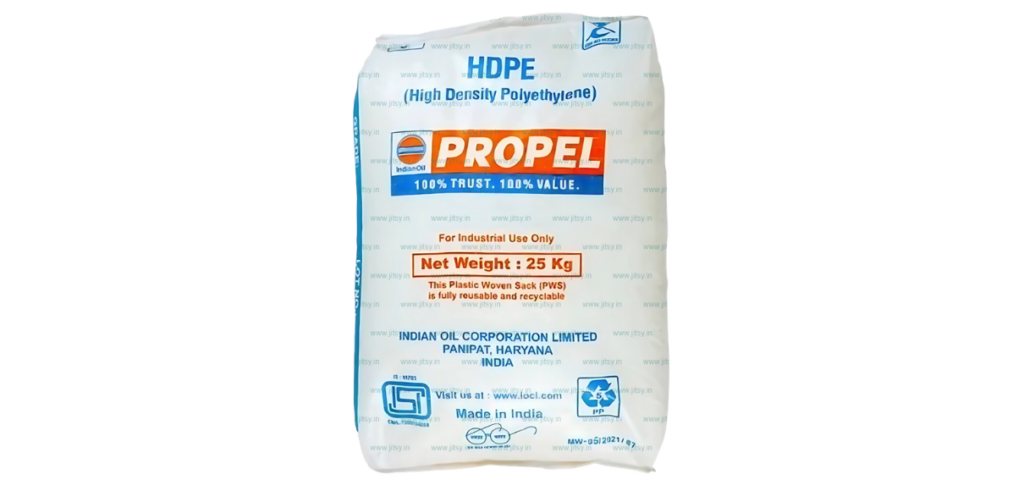
IOCL HDPE Propel 001DB52
IOCL HDPE Propel 001DB52 is a high molecular weight bimodal high density polyethylene grade developed by Indian Oil Corporation Limited under the Propel brand for large blow moulding applications. Manufactured using LyondellBasell Hostalen slurry process technology, this grade is designed for processors producing large containers and L-ring drums up to 240 litres for chemical and industrial packaging.
Indian Oil Corporation Limited is one of India’s leading integrated petrochemical manufacturers, supplying polymer grades for blow moulding, injection moulding, raffia, and pipe applications across industrial and packaging sectors. Within the IOCL Propel HDPE portfolio, 001DB52 is positioned as a large blow moulding grade for high-capacity rigid packaging where processors need dependable melt strength, structural integrity, and stable performance in demanding industrial applications. Its positioning makes it especially relevant for manufacturers of large chemical drums, industrial containers, and other heavy-duty blow moulded packs.
Technical Specifications and Deep Technical Insights
IOCL HDPE Propel 001DB52 has a melt flow index of 0.40 g/10 min at 190°C/10 kg and 2.8 g/10 min at 190°C/21.6 kg, along with a density of 0.952 g/cm³. This profile reflects a high molecular weight HDPE resin engineered for large blow moulding, where processors require strong parison control, good melt strength, and the ability to maintain wall stability in larger container formats. The grade’s bimodal structure is important because large blow moulding applications demand more than simple flow performance. In practical terms, processors need a resin that can support large part formation without sacrificing rigidity or handling strength. That is why 001DB52 is assigned to large containers and L-ring drums rather than smaller bottle applications. Its density level supports the stiffness expected from HDPE industrial packaging, while the flow profile is aligned with larger-capacity moulding requirements. Another major strength of 001DB52 is its suitability for regulated packaging environments. IOCL states that the grade meets IS:10146-1982 for safe use in contact with foodstuff, pharmaceutical products, and drinking water, and also conforms to positive list additive requirements. This adds documentation value for buyers who need both performance and compliance-backed confidence in industrial or regulated packaging supply chains.Applications
Large Chemical Drums
IOCL HDPE Propel 001DB52 is highly suitable for large chemical drums where processors need a blow moulding resin capable of supporting high-capacity rigid packaging. In these applications, the resin must help maintain drum shape, wall stability, and handling performance during filling, storage, transport, and industrial use.L-Ring Drums
For L-ring drum manufacturing, 001DB52 offers the type of high molecular weight HDPE profile required for larger blow moulded parts. These drums are commonly used in industrial and chemical packaging, where structural integrity and dependable processing behavior are critical for converter productivity and final pack reliability.Industrial Containers up to 240 Litres
The grade is recommended for industrial containers up to 240 litres, making it relevant for bulk packaging formats used across chemicals, process industries, utility storage, and industrial distribution. Its positioning in the large blow moulding segment makes it a strong fit where smaller bottle grades are not technically suitable.Chemical Packaging
Chemical packaging applications require a resin that can support rigid container formation in larger sizes while also offering the documentation confidence buyers often expect in industrial supply chains. IOCL 001DB52 fits this requirement well because it is specifically assigned to large-capacity blow moulded packaging rather than general-purpose small bottle use.Regulated Contact Packaging
Because the grade carries foodstuff, pharmaceutical, and drinking water contact references under IOCL documentation, it may also be considered in regulated contact packaging applications where the final use and compliance scope are properly validated. This gives procurement teams an additional trust factor when evaluating the grade.Comparable Alternatives
Within the IOCL portfolio, 001DB52, 003DB52, and 012DB54 serve clearly different blow moulding segments. 012DB54 is positioned for small containers up to 5 litres, 003DB52 is assigned to medium blow moulding applications up to 100 litres, and 001DB52 is the large blow moulding option for containers and L-ring drums up to 240 litres. This makes 001DB52 the logical choice when processors move beyond medium-capacity packaging and require a resin specifically aligned with large industrial drum production. Compared with HMEL B0053D, which is also positioned for large blow moulding and 240 litre drums, IOCL 001DB52 competes in the same broad industrial packaging space. Compared with HMEL B0148D, which is more suited to medium-to-large containers around the 120 litre range, 001DB52 is more clearly dedicated to higher-capacity drum and container applications. The rationale behind the assigned grade is therefore straightforward: 001DB52 is selected when the application demands large-part blow moulding capability, industrial packaging strength, and a manufacturer-backed HDPE grade for 240 litre class containers.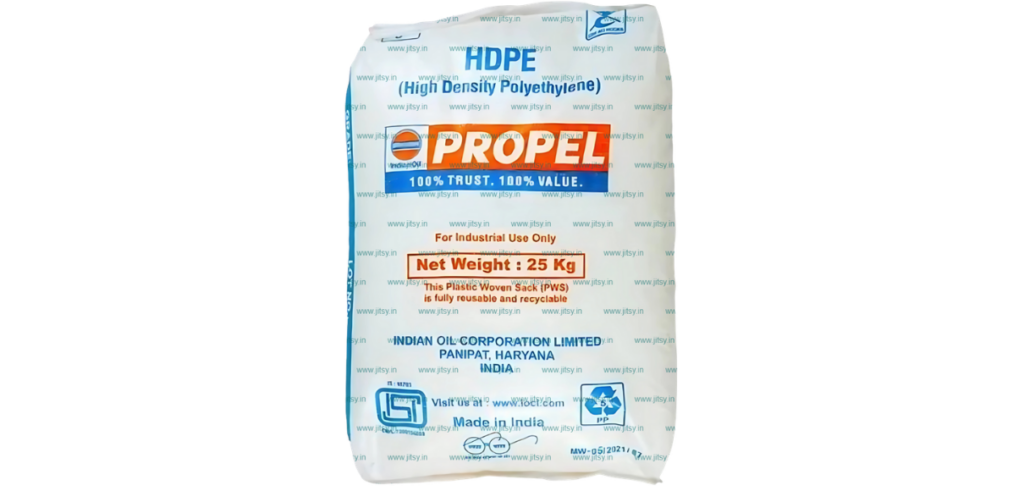
IOCL HDPE Propel 002DB52
IOCL HDPE Propel 002DB52 is a high-density bimodal polyethylene blow-moulding grade manufactured by Indian Oil Corporation Ltd. (IOCL) under the Propel brand. Unlike IOCL’s injection-moulding HDPE grades — which are produced using Nova Chemical’s Sclairtech solution polymerisation technology — HDPE 002DB52 is produced at IOCL’s dedicated HDPE plant using LyondellBasell’s Hostalen slurry process. This is a critical distinction: the Hostalen slurry process is specifically designed to produce bimodal molecular weight distribution HDPE, a polymer architecture that delivers an exceptional balance of stiffness and impact toughness that unimodal grades typically cannot achieve simultaneously at the same density.
The grade is supplied as natural-coloured granules in 25 kg BIS-compliant raffia bags and is positioned by IOCL for extrusion blow moulding applications — specifically for blow-moulded containers for lubricating oil packaging up to 5 L capacity, as stated in IOCL’s grade sheet, and for large blow-moulded containers up to 100 L for the transport and storage of chemicals. The grade is also associated with the water tank industry in distributor-channel documentation, though IOCL’s primary grade for large blow-moulded water tanks up to 1,000 L is the sister grade 003DB52; 002DB52 is better positioned for chemical containers and smaller-volume lube oil packaging.
The term “bimodal” in the grade designation refers to the molecular weight distribution of the resin. Bimodal HDPE contains two distinct polymer populations — a high-molecular-weight fraction that contributes toughness, ESCR (environmental stress crack resistance), and long-term strength, and a lower-molecular-weight fraction that provides the melt processability needed for blow-moulding equipment to run efficiently. The Hostalen slurry process, developed by LyondellBasell, achieves this distribution through a dedicated reactor cascade, producing a polymer that outperforms single-reactor unimodal HDPE on the stiffness-impact balance at equivalent density. This is why IOCL’s own positioning for 002DB52 describes it as a grade with “excellent processability and mechanical properties” and “a good balance of stiffness and impact properties.”
Technical Insights
The property profile of IOCL HDPE Propel 002DB52 is built around the requirements of industrial blow-moulding applications — particularly chemical containers and lube oil packaging — where wall-thickness consistency, top-load strength, drop resistance, and chemical resistance all play a role in determining product performance and service life.- Melt Flow Index — 0.2 g/10 min (ASTM D1238, 190 °C / 5 kg) and 5.5 g/10 min (ASTM D1238, 190 °C / 21.6 kg): Blow-moulding HDPE grades are characterised using two MFI values measured at different loads — unlike injection-moulding HDPE grades, which are measured at 2.16 kg. The low-load MFI (0.2 g/10 min at 5 kg) reflects the melt viscosity under conditions closest to parison formation, where the molten tube of resin must hold its shape and resist gravitational sag between the die exit and mould closure. An MFI as low as 0.2 g/10 min indicates a highly viscous melt with strong parison integrity — the property that enables wall-thickness uniformity in tall or large-diameter blow-moulded containers. The high-load MFI (5.5 g/10 min at 21.6 kg) characterises the shear-thinning behaviour of the melt under the higher stress conditions of the die, indicating that the resin flows adequately through the blow-moulding head and produces acceptable throughput rates despite its high molecular weight.
- Density — 0.953 g/cm³ (ASTM D1505, 23 °C): At 0.953 g/cm³, HDPE 002DB52 sits at the higher-density end of standard blow-moulding HDPE. High density in HDPE correlates with crystallinity, which directly governs stiffness, moisture barrier performance, and chemical resistance. For chemical containers and lube oil packaging, the density level ensures that the container wall provides adequate barrier against moisture ingress, resists permeation by hydrocarbon-based contents, and maintains dimensional integrity when exposed to the chemicals it is designed to hold.
- Tensile Strength at Yield — 28 MPa (ASTM D638): A tensile yield strength of 28 MPa is slightly higher than the 25 MPa typical of IOCL’s injection-moulding HDPE grades, reflecting the density advantage of this bimodal resin. For blow-moulded containers, this governs how much internal pressure or external mechanical load the container wall can absorb before beginning to deform permanently — relevant for filled chemical drums and oil containers that experience hydrostatic pressure, handling stress, and stacking loads.
- Elongation at Yield — 10% / Elongation at Break — >600% (ASTM D638): The combination of a defined yield point at 10% strain and very high elongation at break exceeding 600% describes a tough, ductile material that resists sudden brittle fracture under impact. This high ductility is critical for blow-moulded containers subject to drop testing during certification, rough handling in chemical plants, and the cyclic stresses of repeated filling and emptying cycles over a long service life.
- Flexural Modulus — 1,100 MPa (ASTM D790): At 1,100 MPa, HDPE 002DB52 delivers significantly higher stiffness than IOCL’s injection-moulding grades, which typically range from 800 to 900 MPa. This elevated modulus is a direct outcome of the grade’s higher density and bimodal molecular weight distribution, both of which increase crystallinity and contribute to stiffer polymer chains. For blow-moulded containers, high flexural modulus translates into better top-load performance — the ability to stack filled containers without the bottom containers deforming — and better dimensional stability of container walls under hydrostatic pressure from the contents.
- Notched Izod Impact Strength — 500 J/m (ASTM D256, 23 °C): This is the standout figure in the 002DB52 property set and the most direct expression of the bimodal architecture’s performance advantage. At 500 J/m, the grade delivers notched impact strength more than five times higher than IOCL’s standard injection-moulding HDPE grades (80–90 J/m range). The high-molecular-weight fraction of the bimodal distribution creates polymer chain entanglements that bridge crack fronts and resist crack propagation — the mechanism that produces this exceptional toughness. For chemical drums and large containers, 500 J/m impact strength means container walls and base sections resist cracking at notch-like weld lines, parting lines, and handle attachment points even under severe drop and impact conditions.
- Hardness — 63 Shore D (ASTM D2240): At 63 Shore D, the moulded container surface is firmer than most injection-moulding HDPE grades in the Propel family and resistant to surface indentation and scuffing in industrial handling environments. This hardness level reflects the high density and crystallinity of the resin.
- Vicat Softening Point — 126 °C (ASTM D1525) / HDT — 75 °C at 0.455 MPa (ASTM D648): The Vicat softening point of 126 °C indicates that the polymer begins to soften under a defined load at this temperature. The heat deflection temperature of 75 °C at 0.455 MPa is the more operationally relevant figure for container design: it indicates the temperature at which the moulded container will begin to deflect under a defined bending load. For blow-moulded chemical containers stored in industrial environments or exposed to hot-fill contents, the 75 °C HDT confirms that containers maintain their functional shape under moderate thermal loads but should not be used for contents significantly exceeding this temperature on a continuous basis.
- Processing Temperature — 180–220 °C (Extrusion Blow Moulding): The 180–220 °C processing window for 002DB52 is standard for industrial blow-moulding HDPE and is compatible with conventional continuous and accumulator-head blow-moulding machines used for containers ranging from 1 L to 100 L capacity.
Applications
Lubricating Oil and Automotive Fluid Packaging
IOCL’s grade sheet explicitly positions Propel 002DB52 for blow-moulded containers for lubricating oil packaging up to 5 L capacity. This is the most directly manufacturer-confirmed application for the grade. Lube oil containers — used for engine oils, transmission fluids, hydraulic oils, and industrial lubricants — require a blow-moulding HDPE that combines good parison control for consistent wall thickness, adequate stiffness for stable stacking on filling lines and in retail display, and chemical resistance to the hydrocarbon-based contents. The 0.953 g/cm³ density and 1,100 MPa flexural modulus of 002DB52 provide the stiffness and barrier properties for this application, while the 500 J/m notched Izod impact strength ensures containers survive the drop impacts and rough handling of automotive aftermarket distribution channels.Large Chemical Containers and Industrial Drums
For large blow-moulded chemical containers up to 100 L for the transport and storage of chemicals, HDPE 002DB52 is positioned as a technically capable blow-moulding resin. Large chemical containers face the most demanding combination of requirements in industrial packaging: high hydrostatic pressure from the fill weight, chemical contact with a wide range of aggressive substances, regulatory requirements for materials that are not adulterated by the contents, and the mechanical demands of industrial logistics environments that include forklift handling, pallet stacking, and long-distance transport. The bimodal molecular weight distribution of 002DB52 directly addresses the ESCR challenge — the tendency of HDPE to develop stress cracks when under mechanical stress in contact with surfactants, solvents, or aggressive chemicals. Bimodal HDPE grades produced via the Hostalen slurry process are well established in the chemical packaging industry for precisely this combination of high ESCR, high stiffness, and good blow-moulding processability.Water Storage and Utility Containers
IOCL’s grade family documentation and distributor-channel data associate 002DB52 with the water tank industry and large blow-moulded containers. For smaller blow-moulded water tanks, water storage containers, and utility vessels in this size range, 002DB52’s mechanical property profile is relevant. It is important to note, however, that IOCL’s dedicated blow-moulding grade for large water tanks up to 1,000 L is the sister grade 003DB52, which is explicitly positioned by IOCL for that application. Buyers specifying blow-moulded water storage products at the larger end of the range should evaluate 003DB52 as the primary IOCL option, while 002DB52 remains suitable for smaller water containers and utility storage applications where the chemical container and lube oil packaging property profile is appropriate.Industrial Packaging for Detergents, Agrochemicals, and Process Chemicals
Beyond lubricant and bulk chemical applications, HDPE blow-moulded containers produced from 002DB52 are applicable across the industrial packaging landscape for detergents, cleaning chemicals, agrochemical formulations, and process industry fluids. The IS 10146:1982 and IS 10141:1982 compliance certifications provide the regulatory basis for containers used in segments where material compliance to Indian standards is a procurement requirement. The grade’s HDPE chemistry provides inherent resistance to the surfactants, alkalis, and aqueous formulations common across these sectors, and the high notched Izod impact strength ensures containers remain structurally sound through the handling conditions of industrial supply chains.Comparable Alternatives
IOCL HDPE Propel 003DB52 is the most directly related sister grade and the most important comparison for buyers evaluating blow-moulding HDPE options within the IOCL HDPE Propel family. Both grades are bimodal HDPE produced via LyondellBasell’s Hostalen slurry process at the same IOCL plant. The key published differences from 003DB52’s TDS are a slightly higher MFI (0.32 g/10 min at 5 kg versus 0.2 g/10 min for 002DB52), a marginally lower density of 0.952 g/cm³, a higher flexural modulus of 1,300 MPa, and a higher tensile yield of 32 MPa, but lower notched Izod impact strength of 300 J/m compared with 500 J/m for 002DB52. The 003DB52 grade is explicitly positioned by IOCL for blow-moulded water tanks up to 1,000 L, solar panel floaters, and containers for detergents and chemicals up to 100 L, with a specific ESCR rating (F50 500 h) published in its TDS. For buyers requiring confirmed ESCR performance data for chemical containers or selecting a grade for large water tanks, 003DB52’s documented ESCR value and water-tank positioning make it the preferred specification. HDPE 002DB52, with its higher published impact strength at 500 J/m, is better positioned for applications where notch-toughness is the dominant selection criterion. The two grades are not confirmed equivalents and must be evaluated separately through blow-moulding trials. IOCL HDPE Propel 012DB54 is another bimodal blow-moulding grade within the Propel family, positioned for general-purpose containers and bottles up to 5 L for lube oil, edible oil, and FMCG products. With a higher MFI than 002DB52, 012DB54 is better suited to smaller, thin-wall containers and general-purpose packaging where processability and output rate are prioritised over the parison strength and heavy-duty mechanical performance that 002DB52 is designed to deliver. For buyers whose application requires containers up to 5 L in a general-purpose FMCG or edible oil context, 012DB54 is the more appropriate IOCL option; for lubricating oil packaging and chemical containers where structural performance matters, 002DB52 is the correct specification. IOCL’s injection-moulding HDPE grades — including Propel 080M60, 080M55, 020M52, and 180M50 — are produced by a completely different polymerisation technology (Sclairtech solution process), have a different molecular architecture, and are formulated for injection moulding, not blow moulding. These grades are not alternatives for blow-moulded containers and should not be evaluated as substitutes. The processing equipment, mould design, and wall-thickness expectations are entirely different between injection and blow moulding applications. Reliance Relene 52GB002 is a broadly comparable Indian blow-moulding HDPE grade with published MFI of 0.25 g/10 min and density 0.952 g/cm³, described for blow-moulded containers up to approximately 100 L with good ESCR. On headline MFI and density, this grade occupies a similar space to 002DB52. However, direct property-by-property equivalence between Relene 52GB002 and Propel 002DB52 is not confirmed by either manufacturer, and the differences in polymerisation technology, additive systems, and property measurement protocols can produce meaningful variation in ESCR performance, impact behaviour, and processing characteristics. Any substitution must be validated through independent blow-moulding trials and relevant container testing before qualification. Haldia Petrochemicals B5500 is another Indian bimodal HDPE blow-moulding grade with a slightly higher density (0.956 g/cm³) and a focus on high-ESCR bulk containers and water tanks. It is a higher-density variant that sits in the same general application segment but differs on density and performance profile. Equivalence to 002DB52 is not confirmed; it should be evaluated independently for any specific container application.Common Search Variants
Buyers and engineers commonly search for this grade using terms such as bimodal HDPE for chemical drums, IOCL blow moulding HDPE granules, Propel large container grade, 002DB52 IOCL granules, and HDPE blow moulding grade for lube oil containers India. Frequent spacing variants and alternate notations include IOCL HDPE 002 DB 52, 002DB52 HDPE granules, IOCL 002DB52 blow moulding, and Propel bimodal HDPE 002DB52 — all refer to the same product.
IOCL HDPE Propel 002DF50
IOCL HDPE Propel 002DF50 is a high molecular weight high density bimodal HDPE grade developed by Indian Oil Corporation Limited for blown film extrusion. Produced using LyondellBasell Hostalen Slurry Process technology, this grade is designed for packaging converters who need a reliable HM film resin with strong puncture resistance, good sealing behavior, and attractive film appearance.
Indian Oil Corporation Limited is one of India’s major petrochemical producers supplying HDPE and polypropylene grades across film, pipe, blow moulding, injection moulding, and industrial packaging applications. Within the IOCL Propel HDPE portfolio, 002DF50 is positioned as an HM film grade for counter bags, carrier bags, wrapping film, and liners. Its bimodal molecular structure supports a practical balance of processability and film performance, making it suitable for converters targeting durable packaging films with dependable sealing and handling properties.
