





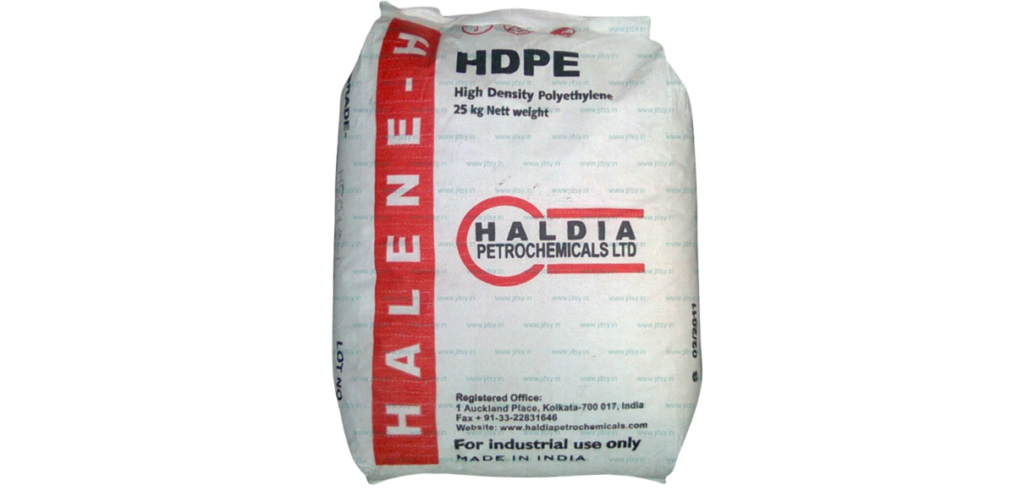
Haldia HDPE Halene-H B5500
Haldia Halene-H B5500 is a high molecular weight high-density polyethylene (HMHDPE) blow moulding grade manufactured by Haldia Petrochemicals Ltd. under the Halene-H trademark. Produced using the Mitsui CX Process, this grade is designed for demanding blow moulding applications where high environmental stress crack resistance, strong rigidity, excellent mechanical properties, and dependable impact resistance are essential. In the Haldia HDPE portfolio, B5500 is positioned for high ESCR bulk containers for chemicals, detergent containers, lube oil packs, and water tanks, making it one of the more application-specific industrial blow moulding grades in the range.
Industrial buyers searching for Haldia B5500 HDPE, high ESCR bulk container grade, HDPE for detergent containers, HMHDPE water tank grade, or Haldia blow moulding grade are typically looking for a resin that can handle tougher service conditions, larger part sizes, and more demanding packaging environments. B5500 matches that requirement very well.
About the Manufacturer
Haldia Petrochemicals Limited is an established Indian polymer manufacturer and markets its HDPE grades under the Halene-H brand. The official Haldia product ecosystem identifies Mitsui, Japan as the technology partner for the HDPE line, which strengthens the technical credibility of the grade for industrial buyers and procurement teams.Technical Specifications and Material Strength
Haldia Halene-H B5500 has a melt flow index of 0.06 g/10 min at 190°C/2.16 kg, 0.35 g/10 min at 190°C/5 kg, and 8 g/10 min at 190°C/21.6 kg. This flow profile reflects the grade’s HMHDPE character and supports its use in blow moulding applications where melt strength, wall integrity, and structural performance are important. The manufacturer reports density of 0.952 g/cm³ by ASTM method and 0.956 g/cm³ by JIS method, which supports its rigid and durable material profile for industrial packaging and tank applications. The grade offers tensile strength at yield of 27 MPa and tensile strength at break of 40 MPa, along with elongation at break of 850%. This indicates a material that is not only rigid but also capable of handling deformation and service stress without early failure. Flexural modulus of 1000 MPa contributes to structural stability, while hardness of 64 Shore D supports a solid and durable end-product feel. Its notched Izod impact strength of 500 J/m is especially valuable for larger blow moulded parts that must survive handling, transport, and industrial use. A major technical advantage of B5500 is its ESCR F50 above 1000 hours in 10% Igepal solution, which is a strong indicator of crack resistance in demanding chemical and detergent packaging environments. The grade also shows Vicat softening point of 127°C, heat deflection temperature of 63°C, and DSC melting temperature of 133°C, giving processors and technical buyers a fuller picture of its thermal behavior and application suitability.Applications and Industry Use Cases
Chemical Bulk Containers
Haldia Halene-H B5500 is highly suitable for high ESCR bulk chemical containers, especially where the packaging must withstand chemical contact, long storage cycles, and physical handling. In these applications, environmental stress crack resistance becomes one of the most important material selection factors. B5500’s technical profile makes it a strong fit for industrial chemical packaging where reliability and structural durability are critical.Detergent Containers
Detergent packaging places stress on plastic materials because detergent formulations can accelerate cracking in lower-performance grades. B5500 is well positioned for detergent containers because its high ESCR and impact resistance help the finished pack remain durable through filling, transport, stacking, and end use. This makes it highly relevant for buyers searching HDPE for detergent containers and high ESCR blow moulding grade.Lube Oil Packs
For lube oil containers and packs, B5500 offers a strong balance of rigidity, toughness, and blow moulding processability. This helps converters produce packs that maintain shape well while also resisting handling damage. In industrial and automotive packaging, that balance is important because the container must perform well in both logistics and end-user handling.Water Tanks
B5500 is also recommended for blow moulded water tanks up to 1000 litres, with external UV stabilizer suggested for outdoor use. This makes the grade especially relevant for larger storage products where long-term toughness, crack resistance, and structural integrity are essential. For buyers looking for HDPE water tank grade in India, B5500 has a clear and manufacturer-backed application advantage.Comparable Alternatives
Within the Haldia HDPE portfolio, B6401 is a more specific alternative for lubricant and edible oil containers up to 20 litres. Compared with B5500, B6401 is better suited to smaller rigid packaging applications, while B5500 is the stronger choice for larger, more demanding, and more chemically exposed blow moulded products. E5201 is another relevant comparison grade. It is positioned for high ESCR containers, cable sheathing and jacketing, and DWC pipes, which gives it a broader technical extrusion and cable-related role. B5500, by contrast, is more directly aligned with bulk blow moulding applications such as chemical containers, detergent packs, and water tanks. Buyers choosing between the two should think in terms of end use: E5201 is broader across extrusion and technical applications, while B5500 is more specialized toward larger blow moulded industrial packaging. E5201S is a more general-purpose blow molding and DWC pipe grade. It works well where the need is broader and less severe. B5500 is the better fit when the application demands higher ESCR, stronger impact resistance, and more confidence in larger blow moulded parts. That is the core rationale behind the assigned grade positioning of B5500 in the Haldia lineup.
Haldia HDPE Halene-H B6401
Haldia HDPE Halene-H B6401 – High Rigidity Blow Moulding Grade for 20 Liter Containers
Haldia HDPE Halene-H B6401 is a high density polyethylene blow moulding grade developed by Haldia Petrochemicals Ltd. under the Halene-H brand. Produced using the Mitsui CX Process, this grade is designed for converters looking for stable processing, strong bottle performance, and reliable rigidity in up to 20 litre container applications. It is widely relevant for lubricant packaging, edible oil containers, and industrial blow moulded bottles where dimensional stability, toughness, and conversion efficiency matter. For SEO and product classification, Haldia Halene-H B6401 falls under HSN 39012000 and CAS 9002-88-4. In the Indian market, it is positioned as a dependable HDPE blow moulding material for packaging manufacturers who need a balance of processability, stiffness, strength, and impact resistance in medium-capacity containers.About the Manufacturer
Haldia Petrochemicals Ltd. is one of India’s established polymer producers, supplying polyethylene and polypropylene grades for packaging, industrial, and conversion applications. The Halene-H portfolio is known in the market for HDPE grades tailored to processing routes such as blow moulding, making B6401 a commercially relevant choice for rigid packaging manufacturers seeking Indian supply support and consistent material performance.Technical Overview and Material Strengths
Haldia HDPE Halene-H B6401 combines a melt flow index of 0.4 g/10 min with a density of 0.960 g/cm³, giving it the rheology and stiffness profile required for blow moulding larger rigid containers. This combination supports parison control, shape retention, and dependable wall formation during processing. From a mechanical standpoint, the grade offers tensile strength at yield of 32 MPa, tensile strength at break of 40 MPa, and elongation at break of 1000%, showing that it is not only rigid but also capable of absorbing handling stress before failure. A flexural modulus of 1350 MPa supports container stiffness and stackability, while Shore D hardness of 68 contributes to surface toughness and structural feel. Its notched Izod impact strength of 300 J/m helps improve resistance to impact during filling, transport, storage, and end-use handling. These properties make B6401 especially suitable for packaging manufacturers that need a blow moulding HDPE grade with a strong balance of rigidity and toughness rather than a purely high-flow or purely soft-impact profile.Applications and Industry Use Cases
Lubricant Containers
Haldia HDPE Halene-H B6401 is well suited for lubricant bottles and containers up to 20 litres where packaging must maintain shape under filling, stacking, transport, and warehouse handling. In lubricant applications, converters typically look for HDPE blow moulding grades that offer rigidity, toughness, and stable processing, and B6401 aligns well with these needs. Its mechanical profile supports durable bottle formation for automotive oils, industrial lubricants, and related fluid packaging.Edible Oil Containers
For edible oil packaging, B6401 is relevant in rigid blow moulded container production where dimensional consistency and handling strength are important. The grade’s processability helps converters maintain production efficiency, while its stiffness and impact resistance support reliable packaging performance during transport and retail movement. This makes it a practical HDPE grade for edible oil bottles and medium-volume oil containers in the Indian packaging market.Industrial Blow Moulded Containers up to 20 Litres
Beyond lubricant and edible oil packaging, B6401 can also serve other blow moulded container applications up to 20 litres where a combination of rigidity, mechanical strength, and impact durability is required. It fits industrial packaging needs where container integrity, wall strength, and resistance to deformation are important for storage and logistics. For processors targeting medium-capacity rigid packaging, this grade offers a balanced material platform.Comparable Alternatives and Grade Positioning
In the Indian HDPE blow moulding market, Haldia B6401 competes with grades such as Reliance 54GB012, IOCL 012DB54, and HMEL B0206D. Compared with these alternatives, B6401 stands out through its lower melt flow index and higher density profile, which generally support a stronger rigidity-oriented positioning for blow moulded containers. This makes it particularly relevant where bottle stiffness, shape retention, and handling performance are prioritized. Reliance 54GB012 and IOCL 012DB54 are also used in blow moulding segments, but their higher flow profiles may place them differently depending on converter preferences, machine conditions, and final container design. HMEL B0206D is another recognized alternative for up to 20 litre blow moulding, though B6401’s combination of 0.4 MFI and 0.960 density gives it a distinct place for processors seeking a more stiffness-driven grade. The rationale behind B6401’s assigned grade positioning is clear: it is built for medium-capacity rigid containers where processability must work together with mechanical strength, hardness, and impact resistance. That makes it a commercially logical choice for packaging manufacturers serving lubricant, edible oil, and industrial container markets.
Haldia HDPE Halene-H E5201
Haldia Halene-H E5201 is a high density polyethylene grade developed by Haldia Petrochemicals Ltd. under its Halene-H trademark for demanding blow moulding and extrusion applications. Produced using the Mitsui CX Process, this grade is characterized by broad molecular weight distribution, strong environmental stress crack resistance, dependable processability, and a balanced mechanical profile that makes it highly suitable for industrial packaging and technical extrusion uses.
This is not a generic HDPE grade positioned for broad commodity use. E5201 is better understood as a high ESCR HDPE grade built for converters and industrial buyers who need better crack resistance, stable processing, and reliable performance in applications such as high ESCR containers, cable sheathing and jacketing, lamination film, general purpose film, extrusion applications, and DWC pipes. For Indian technical buyers, the presence of BIS designation code IS 7328-3B-BB-EXDA also strengthens its relevance in specification-driven procurement.
About the Manufacturer
Haldia Petrochemicals Ltd. is one of India’s established polymer manufacturers and markets its HDPE portfolio under the Halene-H brand. The company identifies Mitsui, Japan as the technology partner for its HDPE range, and the manufacturer’s own technical literature states that Halene-H is the registered trademark of Haldia Petrochemicals Limited for high density polyethylene.Technical Specifications
Haldia Halene-H E5201 has a melt flow index of 0.35 g/10 min at 190°C/2.16 kg, which places it in a low-flow range suitable for blow moulding and extrusion applications where strength, melt stability, and performance consistency are important. The manufacturer technical sheet lists the annealed density at 0.950 g/cm³, while the HDPE product listing also shows 0.952 g/cm³ for the grade. For technical content, the TDS value should be treated as the primary reference, while the portfolio listing supports broader commercial positioning. Its mechanical profile supports industrial use cases well. The grade offers tensile strength at yield of 25 MPa and tensile strength at break of 34 MPa, showing a useful balance between stiffness and durability. Elongation at break of 850% indicates strong toughness under stress, while flexural modulus of 1000 MPa supports shape retention in formed products. Hardness of 65 Shore D gives the material a solid rigidity profile, and notched Izod impact of 120 J/m supports resistance to impact during handling and service. One of the most important technical advantages of E5201 is its ESCR F50 above 600 hours in 10% Igepal solution, which is highly relevant for buyers selecting HDPE grades for chemical exposure, stress-loaded packaging, and technical service environments. The grade also shows a Vicat softening point of 122°C, heat deflection temperature of 60°C, and DSC melting temperature of 130°C, all of which help technical teams evaluate suitability for processing and end-use conditions.Applications and Industry Use Cases
High ESCR Containers
Haldia Halene-H E5201 is strongly positioned for high ESCR blow moulded containers where resistance to environmental stress cracking is critical. This makes it relevant for industrial packaging used for chemicals, detergents, pesticides, and other demanding contents where ordinary HDPE grades may face cracking risk over time. For buyers searching for high ESCR HDPE grade or HDPE for chemical containers, E5201 offers a technically grounded option supported by manufacturer guidance.Cable Sheathing and Jacketing
E5201 is also recommended for cable sheathing and jacketing compounds, making it relevant for wire and cable manufacturers looking for HDPE with dependable extrusion behavior and balanced mechanical performance. In these applications, processors need a grade that can maintain consistency during extrusion while also contributing to durability and protective performance in the finished cable layer. This makes E5201 a commercially meaningful option for HDPE for cable sheathing and HDPE for cable jacketing searches.DWC Pipes
The grade is associated with DWC pipe applications in the Haldia HDPE portfolio, which expands its relevance beyond packaging into infrastructure-linked extrusion uses. For this type of application, buyers typically look for a material that combines processability with structural integrity and service durability. E5201’s ESCR profile and mechanical balance support its use in such technical extrusion environments where long-term reliability matters.Lamination Film and General Purpose Film
Haldia also recommends E5201 for lamination film and general purpose film applications. While it is not positioned as a specialty film grade in the same way as packaging film-specific materials, its processability and broad molecular weight distribution allow it to serve extrusion-based film requirements where toughness and functional performance are more important than premium optical properties.General Extrusion Applications
For buyers seeking HDPE for extrusion applications, E5201 offers a practical balance of melt behavior, toughness, and crack resistance. It is especially suitable where the end use demands durability under load or exposure rather than only easy flow. This gives the grade broader industrial relevance across technical extrusion segments in India.Comparable Alternatives
Within Haldia’s own portfolio, the closest comparable grade is E5201S, which shares the same 0.35 MFI but is listed at 0.958 density and is positioned more toward general purpose blow moulding and DWC pipes. In comparison, E5201 has stronger positioning for high ESCR containers, cable sheathing, and jacketing, making it the better fit where crack resistance and technical application matching are more important than a more general blow moulding profile. B5500 is another relevant alternative, also at 0.35 MFI, but it is positioned for high ESCR bulk containers for chemicals and water tanks. Buyers choosing between E5201 and B5500 should think in terms of application focus: E5201 is more versatile across packaging, cable, and extrusion uses, while B5500 is more directly associated with bulk chemical and water storage applications. B6401 differs more clearly in market positioning. With 0.40 MFI and a higher density profile, it is aimed at lubricant and edible oil containers rather than high ESCR technical packaging or cable-related use. That makes B6401 a better fit for rigid container applications focused on shape retention and packaging performance, while E5201 is the stronger choice for stress crack resistance, technical extrusion, and industrial service conditions. The rationale behind E5201’s assigned grade positioning is therefore very clear: it fills the need for a high ESCR HDPE blow moulding and extrusion grade that bridges industrial packaging and technical extrusion applications, rather than serving only one narrow packaging segment.
Haldia HDPE Halene-H E5201S
Haldia Halene-H E5201S is a high density polyethylene (HDPE) grade from Haldia Petrochemicals Ltd., marketed under the Halene-H trademark and produced using the Mitsui CX Process. It is a broad molecular weight distribution resin developed for general purpose blow molding, double-walled corrugated pipes, and general-purpose pipe applications where processors need a dependable balance of flow, strength, and conversion stability.
Its value lies in combining stable processing with solid mechanical balance, making it suitable for industrial packaging, utility containers, and pipe-related applications where performance consistency matters. For buyers searching terms like Haldia E5201S, HDPE blow molding grade, HDPE for DWC pipes, and Haldia Petrochemicals HDPE, this grade fits a clear technical and application-led buying intent.
About the Manufacturer
Haldia Petrochemicals Ltd. is one of India’s recognized polymer manufacturers, and the company markets its HDPE range under the Halene-H brand. The official Haldia product ecosystem identifies Mitsui, Japan as the technology partner for the HDPE line, which adds technical credibility for buyers comparing Indian HDPE grades for blow molding and pipe applications.Technical Specifications
Haldia Halene-H E5201S has a melt flow index of 0.35 g/10 min at 190°C/2.16 kg, which supports its positioning in blow molding and pipe-related processing. This MFI level indicates a resin designed more for balanced processability and structural performance than for very high-flow molding applications. The grade is described as a broad molecular weight distribution HDPE, which is important because that structure typically supports a useful combination of melt strength, process stability, and end-product toughness. Density is presented across sources in the 0.952 to 0.958 g/cm³ range depending on source formatting and listing style, so the manufacturer TDS should remain the primary reference point while mirrored listings can be treated as secondary support. In practical terms, this density range aligns with a rigid HDPE profile suitable for molded containers and utility-oriented pipe applications. Secondary technical listings indicate tensile strength at yield around 25 MPa, tensile strength at break around 36 MPa, and elongation at break around 850%, suggesting a grade that balances rigidity with toughness. Flexural modulus in the 1000 to 1100 MPa range supports shape retention and structural stability, while Vicat softening point around 125°C and HDT around 70°C provide useful thermal reference points for processors evaluating service and conversion behavior. Together, these values support the grade’s positioning as a practical HDPE for general-purpose industrial conversion rather than a narrow specialty resin.Applications and Industry Use Cases
General Purpose Blow Molding
Haldia Halene-H E5201S is primarily recommended for general purpose blow molding, making it suitable for a wide range of industrial and utility packaging applications. For converters, this means a grade that can support stable processing and dependable part formation without being restricted to one narrow packaging segment. It is a practical fit for molded containers and utility products where consistent output and balanced mechanical performance are more important than premium cosmetic requirements.Double-Walled Corrugated Pipes
The grade is also associated with double-walled corrugated pipe applications, which expands its relevance beyond packaging into infrastructure and utility use. In DWC pipe production, processors typically need a material that offers reliable extrusion behavior along with good structural performance. E5201S fits this requirement by combining processability with the mechanical balance needed in pipe-related applications.General-Purpose Pipe Applications
For general-purpose pipe applications, E5201S serves as a useful HDPE option where the requirement is practical performance rather than highly specialized pressure-pipe characteristics. Its positioning makes it suitable for buyers looking for a resin that can support utility-oriented pipe production with a dependable balance of stiffness, toughness, and processing consistency.Industrial Packaging and Utility Containers
Because of its blow molding suitability and mechanical profile, E5201S can also be used in industrial packaging and utility container applications where processors need a strong all-round HDPE grade. It is especially relevant in scenarios where the buyer wants a resin that can bridge packaging and pipe-adjacent use cases without moving into more specialized high-ESCR or application-specific grades.Comparable Alternatives
The closest internal comparison is Haldia Halene-H E5201, which sits near E5201S in family and melt flow but is positioned more specifically for high ESCR blow molding, cable sheathing and jacketing, lamination film, and extrusion applications. In simple terms, if the requirement is more specialized toward stress crack resistance or cable-related use, E5201 is usually the stronger fit. If the requirement is broader and more general-purpose across blow molding and pipe-related applications, E5201S is the better match. B5500 is a more targeted alternative for high ESCR containers, especially in chemical container and water tank positioning. Buyers choosing between E5201S and B5500 should think in terms of end use: B5500 is more application-focused toward demanding container service, while E5201S is more general-purpose and versatile across blow molding and pipe-adjacent uses. B6401 is positioned differently again, with stronger relevance for lubricant and edible oil containers. Compared with B6401, E5201S is less about rigid packaging for those specific markets and more about broad usability in general blow molding and utility pipe applications. That gives E5201S a distinct place in the Haldia HDPE portfolio as a balanced, processable, multi-use industrial grade. The rationale behind E5201S is clear: it fills the space between highly specialized grades and narrow packaging grades by offering a practical HDPE solution for converters who want general-purpose blow molding performance with pipe-related application flexibility.
Haldia HDPE Halene-H F5400
Haldia Halene-H F5400 is a HMHDPE (high molecular weight high-density polyethylene) film grade manufactured by Haldia Petrochemicals Limited under the Halene-H trademark using the Mitsui CX Process. As stated in the manufacturer’s technical data sheet, F5400 is engineered to combine excellent processability with high mechanical strength, and is specifically recommended for general purpose film production as well as very thin reinforced bag applications.
In the official Haldia HDPE portfolio, F5400 is categorized under Film grades, making it a strong choice for converters and packaging manufacturers searching for Haldia F5400 film resin, HMHDPE film grade India, MFI 0.09 HDPE, and reinforced bag HDPE raw material. If your requirement is to down-gauge film while maintaining strength and toughness, F5400 is positioned as a purpose-fit grade rather than a generic HDPE film resin.
Manufacturer Snapshot
Haldia Petrochemicals Ltd. is a major Indian polymer producer and markets HDPE under the Halene-H brand. F5400 is produced using Mitsui CX Process technology, and the manufacturer indicates compliance documentation and MSDS availability on request. For procurement teams, this matters because film performance consistency, lot-to-lot reliability, and documentation readiness are critical in packaging supply chains.Technical Specifications
Haldia Halene-H F5400 is characterized by a very low melt flow profile that supports HMHDPE film strength and toughness. The grade has a melt flow index of 0.09 g/10 min at 190°C/2.16 kg, with additional flow references of 0.50 g/10 min at 190°C/5 kg and 14 g/10 min at 190°C/21.6 kg, which helps processors understand behavior across shear ranges during extrusion. Density is reported around 0.954 g/cm³ in the Haldia portfolio listing, with the TDS indicating density values around 0.952 g/cm³ (annealed) and 0.954 g/cm³ by alternate designation. This density range supports stiffness and film integrity while still enabling good processing balance for blown film lines. For performance indicators relevant to film converters, the manufacturer data includes dart impact strength of about 80 g (20 micron blown film, BUR 4.0), and thermal indicators like Vicat softening point around 124°C and DSC melting temperature around 131°C. These signals support the grade’s suitability for packaging films that need toughness and stability during conversion and end-use handling.Compliance and Standard Designation
Haldia Halene-H F5400 carries a BIS designation code: IS 7328-3B-FB-FXTA. This is a strong compliance keyword for Indian procurement and institutional buyers who need traceable grade identification for packaging and industrial film applications. The manufacturer also references alignment with key Indian standards used in polymer evaluation and application suitability.Applications
General Purpose Packaging Films
Haldia Halene-H F5400 is well-suited for general purpose blown film packaging where converters need a strong balance of processability and mechanical strength. It is a practical choice for industrial packaging films used in manufacturing supply chains, secondary packaging, and protective wrapping where toughness and handling strength matter more than high clarity.Very Thin Reinforced Bag Applications
A core use case for F5400 is very thin reinforced bags, where the film must deliver strength even at reduced thickness. This makes it relevant for packaging manufacturers targeting material savings through down-gauging while still maintaining bag integrity during filling, sealing, stacking, and transportation.Liners and Heavy-Duty Protective Films
F5400 is also relevant for liners and protective films used in industrial environments. In these applications, film strength and resistance to tearing or puncture are key, and HMHDPE film grades are commonly preferred when durability is more important than softness.Geomembrane-Type and Industrial Barrier Film Uses
The official portfolio positioning also associates F5400 with liners and geomembrane-type applications, where long-term mechanical stability and toughness are important. For industrial barrier film uses, converters typically look for grades that can handle stress and maintain performance under load, making F5400 a relevant option when the film is expected to perform beyond basic packaging.Comparable Alternatives
Within Haldia’s film-grade lineup, a key comparable is HD T6, which is listed with a much higher MFI around 0.50 and higher density around 0.961, and is positioned for applications like lamination films, woven sacks, and tarpaulin. In practical selection terms, HD T6 is more aligned with lamination/raffia-adjacent and heavier industrial formats, whereas F5400 is the better fit when the requirement is HMHDPE film strength for general-purpose films and thin reinforced bags, supported by its very low MFI and film-focused processing guidance. So the rationale is straightforward: choose F5400 when you want thin yet strong film output and reinforced bag suitability; consider HD T6 when the target is lamination film and tarpaulin/woven sack ecosystem needs with different stiffness-flow priorities.
Haldia HDPE Halene-H P5100
Haldia Halene-H P5100 is a bimodal high-density polyethylene (HDPE) pipe grade manufactured by Haldia Petrochemicals Limited under the Halene-H trademark using Mitsui CX Technology. This grade is developed for PE 80 pressure pipe applications and is designed to offer excellent processability, good creep resistance, high environmental stress crack resistance, and balanced mechanical performance for pipe extrusion. In the official Haldia HDPE portfolio, P5100 is positioned for PE 80 compliant pressure pipes used in water supply, irrigation, process industries, and telecom ducting.
Buyers searching for Haldia P5100, P5100 HDPE pipe grade, PE80 HDPE pipe resin India, or Haldia pipe grade MFI 0.5 are usually comparing compliant pipe materials for medium-pressure applications. P5100 fits that role as a reliable mid-tier pipe resin with strong processing behavior and practical infrastructure relevance.
About the Manufacturer
Haldia Petrochemicals Limited is a recognized Indian polymer producer and markets its HDPE grades under the Halene-H brand. The official Haldia product ecosystem identifies Mitsui CX as the underlying technology platform for this grade, which adds technical credibility for pipe manufacturers and project buyers. The manufacturer also positions P5100 clearly within the PE 80 pipe segment, helping procurement teams distinguish it from higher-pressure and lower-pressure alternatives within the same Haldia portfolio.Technical Specifications and Material Strength
Haldia Halene-H P5100 has a melt flow index of 0.50 g/10 min at 190°C/5 kg, which is the primary selector commonly used for pipe-grade commercial comparison. It also shows 0.10 g/10 min at 190°C/2.16 kg, supporting its low-flow extrusion-oriented profile. The official Haldia HDPE page lists density at 0.948 g/cm³, which aligns with its PE 80 pressure pipe positioning and supports a good balance of structural performance and extrusion behavior. Its mechanical profile is suitable for medium-pressure pipe applications. The grade offers tensile strength at yield of 25 MPa and tensile strength at break of 35 MPa, with elongation at break above 850%, indicating a useful combination of stiffness and toughness. Flexural modulus of 1000 MPa supports dimensional stability in pipe form, while notched Izod impact strength of 200 J/m at 23°C contributes to handling durability. The grade also provides ESCR above 500 hours, which is important for long-term environmental resistance in buried and exposed service conditions. Thermal and stability indicators further support its technical suitability. P5100 shows Vicat softening point of 122°C, heat deflection temperature of 68°C, and oxidative induction time above 30 minutes, which help processors and technical buyers assess extrusion stability and service performance. Together, these values position P5100 as a practical and technically balanced PE 80 resin for infrastructure and utility pipe manufacturing.Applications and Industry Use Cases
Water Supply Pipes
Haldia Halene-H P5100 is well suited for PE 80 water supply pipes where manufacturers need a balance of extrusion ease, pressure performance, and long-term durability. In municipal and utility water systems, pipe resin selection is critical because the material must maintain structural integrity over time. P5100 offers a practical solution for such medium-pressure applications.Irrigation Pipe Systems
For irrigation systems, P5100 provides a useful combination of processability and field durability. Agricultural pipe networks often require dependable pressure handling and resistance to environmental stress, and this grade fits that requirement well. It is especially relevant for buyers searching HDPE for irrigation pipes India and PE80 pipe grade for agriculture.Process Industry Piping
P5100 is also suitable for process industry piping where a technically balanced PE 80 resin is needed for fluid handling and utility lines. In these applications, manufacturers often prioritize stable extrusion, mechanical reliability, and long-term service performance rather than over-specifying a higher pressure class than necessary.Telecom Ducting
The official Haldia HDPE portfolio also associates P5100 with telecom ducting, making it relevant for infrastructure-related extrusion applications beyond water and irrigation. In telecom duct production, processors need a resin that offers good extrusion behavior and dependable physical properties, and P5100 supports that use case effectively.Comparable Alternatives
Within the Haldia pipe-grade range, P5300 is the premium alternative. It has MFI 0.25 (I5), density 0.948, and is positioned for PE 100 / PE 112 high-pressure pipe applications. Compared with P5100, P5300 is the stronger choice for more demanding pressure systems, while P5100 is the more practical fit for PE 80 medium-pressure water, irrigation, and utility pipe applications. P5200 is the lower-tier alternative, with MFI 0.80 (I5) and PE 63 positioning. This makes it more suitable for lower-pressure or less demanding applications. Buyers choosing between P5100 and P5200 should think in terms of pressure class and performance requirement. P5100 offers a stronger middle-ground solution with better suitability for medium-pressure infrastructure use. P5200UV is a UV-stabilized PE 63 option more closely aligned with outdoor telecom duct applications. It serves a different niche and does not occupy the same PE 80 pressure-pipe role as P5100. The rationale behind P5100 is therefore clear: it is the Haldia grade for buyers who need a dependable PE 80 HDPE pipe resin that balances extrusion efficiency, pressure performance, and commercial practicality.Common Search Variations and Misspellings
Buyers may also search this grade as Halene H P5100, Haldia Halen P5100, P-5100 HDPE, P5100 MFI, HaleneH P5100, or even Haldia P5010 as a typo variant. Including these naturally in support copy, alt text, and FAQ phrasing can help capture real industrial search behavior without making the page look forced.
Haldia HDPE Halene-H P5200
Haldia Halene-H P5200 is a high-density polyethylene (HDPE) pipe grade manufactured by Haldia Petrochemicals Ltd. under the Halene-H brand using Mitsui CX bimodal technology. The grade is positioned for PE 63 pressure pipe applications and is designed to offer excellent processability, good environmental stress crack resistance, and balanced mechanical performance for cost-effective infrastructure and utility use. In the official Haldia HDPE portfolio, P5200 is listed for low-pressure pipes and telecom ducts, making it a practical option for non-critical and utility-oriented extrusion applications.
Buyers searching for Haldia P5200, PE63 HDPE pipe grade, P5200 TDS, HDPE for telecom ducts, or low pressure HDPE pipe resin India are generally looking for a cost-effective pipe material that offers easy extrusion and dependable field performance without moving to higher PE 80 or PE 100 specifications.
About the Manufacturer
Haldia Petrochemicals Ltd. is one of India’s established polymer manufacturers and markets its HDPE grades under the Halene-H trademark. The company identifies Mitsui CX as the technology platform behind this pipe-grade range, which adds technical credibility for processors and project buyers.Technical Specifications
Haldia Halene-H P5200 has a melt flow index of 0.80 g/10 min at 190°C/5 kg, which supports its positioning as an easy-processing pipe resin for lower-pressure applications. The grade also shows an approximate melt flow index of around 0.2 g/10 min at 190°C/2.16 kg, consistent with a bimodal HDPE pipe-grade profile. The official Haldia HDPE page lists density at 0.948 g/cm³, which aligns with its PE 63 classification and utility-oriented pipe performance. Its mechanical profile is designed for practical low-pressure use rather than high-pressure service. The grade shows tensile strength at yield around 24 MPa, elongation at break above 800%, and flexural modulus around 950 MPa, indicating a useful balance of stiffness and toughness for ducting, drainage, and low-pressure piping. The material is also described as having good ESCR, which is important for maintaining performance in utility and infrastructure environments where environmental stress and service exposure can affect long-term durability. From a processing standpoint, P5200 is designed for easy extrusion, with recommended barrel temperatures of 160–190°C. Its bimodal structure helps support smooth line behavior, making it a commercially practical option for processors who need a cost-effective HDPE grade for routine pipe and duct production.Applications and Industry Use Cases
Low-Pressure Water Pipes
Haldia Halene-H P5200 is suitable for low-pressure water pipe applications where cost efficiency and easy processing are important. In these systems, the requirement is often dependable utility performance rather than high-pressure capability. This makes P5200 a practical choice for rural water lines and basic distribution networks.Sewerage and Drainage Pipes
The grade is also relevant for sewerage and drainage applications, where pipe materials must offer balanced mechanical properties and reliable extrusion behavior. In these use cases, processors often prioritize ease of manufacturing and service durability over premium pressure ratings, which aligns well with the positioning of P5200.Telecom Ducts
P5200 is strongly suited for telecom duct applications, where smooth extrusion and dependable structural performance are important. Telecom infrastructure manufacturers often need a resin that is easy to process and commercially efficient for protective ducting, and this grade fits that requirement well.Utility and Infrastructure Ducting
Beyond telecom, P5200 can be used in broader utility ducting and infrastructure protection applications where a PE 63 grade is sufficient. Its processability and balanced physical profile make it useful for above-ground and below-ground duct systems where the main need is practical performance and cost-effective production.Comparable Alternatives and Grade Positioning
Within the Haldia pipe-grade portfolio, P5100 is the next step up. It has MFI 0.50, density 0.948, and is positioned for PE 80 pressure pipes. Compared with P5200, P5100 is better suited for medium-pressure water, irrigation, and industrial applications where stronger pressure performance is required. P5300 is the premium alternative, with MFI 0.25, density 0.948, and positioning for PE 100 / PE 112 high-pressure pipe applications. Buyers comparing P5200 with P5300 should think in terms of duty level. P5200 is for basic low-pressure and duct applications, while P5300 is for more demanding pressure-pipe systems. P5200UV is the closest adjacent option for outdoor duct use, as it is a UV-stabilized variant intended for applications where sunlight exposure matters. The rationale behind P5200 is therefore very clear: it is the Haldia grade for buyers who need a cost-effective PE 63 HDPE resin for low-pressure pipes, sewerage, drainage, and telecom duct applications without moving into higher-performance pressure-pipe categories
Haldia HDPE Halene-H P5200UV
Haldia Halene-H P5200UV is a UV-stabilized high-density polyethylene (HDPE) pipe grade manufactured by Haldia Petrochemicals Ltd. under the Halene-H brand using the Mitsui CX Process. This grade is designed for telecom ducts and PE 63 compliant pressure pipe applications where outdoor exposure and long service life are important. The manufacturer describes it as combining excellent processability with good creep resistance, good ESCR, and balanced mechanical performance, while being adequately stabilized using HALS+ (around 2000 ppm total) to support long-term outdoor durability.
Buyers searching for Haldia P5200UV, UV HDPE telecom duct grade, PE63 UV stabilized pipe resin, or P5200 UV HDPE are typically looking for a resin that can handle sunlight exposure without premature degradation while still being easy to extrude and cost-effective for utility infrastructure.
About the Manufacturer
Haldia Petrochemicals Ltd. is an established Indian polymer producer and markets its HDPE grades under the Halene-H trademark. The company’s HDPE portfolio identifies the Mitsui CX technology platform behind these pipe grades, and the manufacturer’s technical documentation confirms the UV stabilization approach used in P5200UV for outdoor telecom and pipe applications. For buyers comparing multiple duct and pipe materials, this manufacturer-backed identity improves trust and reduces risk versus generic or unclear UV claims on distributor listings.Technical Specifications
Haldia Halene-H P5200UV has a melt flow index of 0.20 g/10 min at 190°C/2.16 kg, 0.90 g/10 min at 190°C/5 kg, and 20 g/10 min at 190°C/21.6 kg. This flow profile supports its positioning as an easy-processing pipe and duct grade for PE 63 applications. The official Haldia HDPE page lists density at 0.948 g/cm³, which aligns with its PE 63 classification and utility-oriented extrusion performance. One of the strongest technical differentiators of P5200UV is its durability profile. The grade delivers ESCR above 1000 hours (F50), which supports long-term resistance to cracking under environmental stress. It also shows Vicat softening point of 125°C, heat deflection temperature of 64°C, DSC melting temperature of 131°C, and oxidative induction time above 30 minutes, which together support thermal stability and service performance in outdoor and infrastructure environments. The grade’s UV stabilization is achieved through HALS+ additive stabilization, designed specifically to improve outdoor service life. This is the core reason to choose P5200UV over a non-UV PE 63 grade when ducts or pipes will see sunlight exposure during storage, installation, or service.Applications and Industry Use Cases
Telecom Ducts (Outdoor and Buried)
Haldia Halene-H P5200UV is strongly suited for telecom ducts, especially where outdoor exposure can occur during storage, installation, or service. UV stabilization helps protect the duct material from sunlight-related degradation, while the grade’s processability supports efficient extrusion and consistent duct production. This makes it a practical choice for telecom infrastructure projects that require reliable utility duct performance.Outdoor Low-Pressure Water Pipes
For outdoor low-pressure water pipe applications, P5200UV offers a cost-effective PE 63 solution with added UV durability. This is useful in projects where pipes may be exposed to sunlight for extended periods before burial or where partial exposure is expected. The grade’s ESCR and stability profile help support dependable service performance in utility environments.Sewerage and Drainage Utility Pipes
P5200UV can also be used for sewerage and drainage applications where PE 63 performance is sufficient and outdoor exposure may be a factor. In such use cases, UV stabilization helps preserve material integrity during storage and installation, while the grade’s processing behavior supports efficient production for utility pipe formats.Infrastructure Ducting and Protective Conduits
Beyond telecom, P5200UV is relevant for broader infrastructure ducting and protective conduit applications where sunlight exposure and long service life are important. It is especially useful when the project requires a PE 63 grade but still needs improved outdoor durability compared to a standard non-UV resin.Comparable Alternatives
Within the Haldia pipe-grade lineup, P5200 is the closest comparable grade. It is the base PE 63 pipe resin without UV stabilization. If the application is indoor, buried quickly, or has minimal UV exposure, P5200 may be sufficient. If the ducts or pipes will see meaningful sunlight exposure, P5200UV is the better fit because of its HALS+ stabilization and outdoor durability positioning. P5100 is the next upgrade level, positioned for PE 80 pressure pipe applications with a different performance target. Buyers should choose P5100 when medium-pressure performance is required rather than PE 63 duty level. P5300 is the premium alternative, positioned for PE 100 / PE 112 high-pressure pipe applications. It is the right choice when the project requires higher pressure capability and long-term high-duty performance, not just UV resistance. The rationale behind P5200UV is therefore clear: it is the Haldia grade for buyers who need a UV-stabilized PE 63 HDPE resin for telecom ducts and outdoor utility pipes, combining practical extrusion behavior with improved outdoor service life.
Haldia HDPE Halene-H R5801
Haldia Halene-H R5801 is a high-density polyethylene (HDPE) raffia grade manufactured by Haldia Petrochemicals Limited under the Halene-H trademark using the Mitsui CX Process. As stated in the manufacturer’s technical data sheet, R5801 combines excellent processability with high mechanical strength and is recommended for stretched tape / raffia used in woven sacks and tarpaulin.
This grade is best positioned for buyers searching high-intent terms like Haldia R5801, R5801 HDPE raffia, HDPE stretched tape grade, woven sack raw material, and tarpaulin raffia resin India. If your plant is focused on consistent tape extrusion, stable drawing, and durable woven fabric output, R5801 is a purpose-built grade rather than a generic HDPE.
Manufacturer Snapshot
Haldia Petrochemicals Ltd. is a leading Indian polymer producer and markets its HDPE grades under the Halene-H brand. R5801 is produced using Mitsui CX Process technology, and the manufacturer indicates that compliance certificates and MSDS documentation are available on request—important for institutional procurement, export-oriented packaging, and customers who require traceable polymer documentation.Technical Specifications
Haldia Halene-H R5801 is listed with a melt flow index of 0.50 g/10 min at 190°C/2.16 kg, supporting stable extrusion and draw behavior for stretched tape/raffia lines. Additional flow references include 1.8 g/10 min at 190°C/5 kg and 30 g/10 min at 190°C/21.6 kg, which helps processors understand shear response and throughput behavior across operating conditions. Density is reported around 0.960–0.961 g/cm³, which supports stiffness and woven fabric strength—key for sacks and tarpaulin where dimensional stability and load handling matter. The grade is also associated with a strong mechanical profile for raffia applications, including high tensile strength at yield (around 32 MPa) and flexural modulus around 1150 MPa, supporting tape strength and woven structure performance. Hardness is indicated around 65 Shore D, aligning with the stiffness expected from a woven sack/tarpaulin raffia resin. Thermal indicators such as Vicat softening point around 124°C and DSC melting temperature around 131°C support stable performance under typical processing and end-use conditions for woven packaging and tarpaulin products.Deep Technical Insights
R5801 is designed for processors who need a raffia grade that can deliver stable stretched tape extrusion and consistent draw performance while maintaining mechanical strength in the final woven product. In raffia manufacturing, the resin must balance flow for extrusion with stiffness and strength for drawing; if the balance is off, converters face tape breaks, unstable draw ratios, and inconsistent denier or fabric strength. With its 0.50 MFI and high density (~0.961) positioning, R5801 is engineered to support efficient tape production and strong woven output, which is why it is recommended for woven sacks and tarpaulin. The processing guidance also supports real plant requirements, with recommended barrel temperatures around 200–240°C, die temperatures around 220–240°C, and quench temperatures around 25–30°C—critical parameters for tape formation, cooling stability, and downstream drawing consistency.Compliance and BIS Designation
Haldia Halene-H R5801 carries BIS designation code IS 7328-3P-TB-GXDA, a compliance for Indian procurement and for customers who require standard-aligned grade identification. The manufacturer also references alignment with relevant Indian standards used for polymer evaluation and application suitability.Applications
Woven Sacks (Stretched Tape / Raffia)
Haldia Halene-H R5801 is recommended for stretched tape/raffia used in woven sacks, where converters need consistent tape drawing and strong woven fabric performance. The grade’s balance of processability and mechanical strength supports stable production and helps achieve reliable sack strength for industrial packaging, bulk handling, and transport-oriented applications.Tarpaulin Raffia Fabric
R5801 is also designed for tarpaulin applications, where the woven structure must maintain stiffness, strength, and durability. Tarpaulin producers typically need a raffia resin that supports stable tape extrusion and consistent drawing so the final fabric performs well under tension, folding, and outdoor handling conditions.Industrial Packaging and Bulk Handling Woven Products
Beyond standard sacks, R5801 is relevant for broader industrial woven packaging formats where raffia tape strength and fabric consistency are critical. It is especially useful for manufacturers who want dependable output in high-volume production without frequent tape breaks or unstable draw behavior.Comparable Alternatives
Within Haldia’s raffia/monofilament segment, HD T9 is listed for stretched tape/raffia for woven sacks and tarpaulin with MFI around 1.1 and density around 0.950. Compared to that, R5801’s higher density positioning supports stronger stiffness and woven structure strength, while maintaining processability for tape extrusion. If your priority is stronger stiffness and durable woven performance for sacks and tarpaulin, R5801 is a strong fit. For applications that shift away from raffia and into monofilament, HD T10 / HD T10S are positioned for monofilament used in nets, twines, and ropes. The selection logic is simple: choose R5801 for raffia/tape and woven fabric, and consider T10/T10S when the end product is monofilament-based rather than woven sack/tarpaulin tape.
Haldia HDPE Halene-H Y5401
Haldia Halene-H Y5401 is a high-density polyethylene (HDPE) monofilament-grade resin produced under the Halene-H trademark and positioned for stretch tapes, raffia, and yarns used in woven sacks and tarpaulin. The grade is characterized by excellent processability and high mechanical strength, making it suitable for manufacturers who need stable output in tape/raffia lines and consistent performance in woven fabric end products.
Y5401 is best positioned as “Haldia Y5401 HDPE monofilament grade for raffia, stretch tapes, and woven sacks/tarpaulin.” This directly matches the documented application scope and users for Y5401 HDPE, Haldia Y5401 monofilament, HDPE yarn grade, raffia resin for woven sacks, and tarpaulin tape grade.
Manufacturer Snapshot
Y5401 is associated with Haldia Petrochemicals Ltd. (HPL) and the Halene-H HDPE trademark, and is described as being produced using Mitsui CX Technology. For procurement teams, this matters because monofilament and raffia applications are sensitive to resin consistency—especially when the goal is stable stretching, fewer breaks, and predictable fabric strength in woven sacks and tarpaulin production.Technical Specifications
Haldia Halene-H Y5401 is specified with a melt flow index of 0.80 g/10 min at 190°C/2.16 kg, supporting practical throughput and stable processing for tape, raffia, and mono-yarn production. Density is listed at 0.954 g/cm³, which supports stiffness and strength in stretched products and woven structures. For mechanical performance, Y5401 is indicated with tensile strength at yield around 25 MPa and tensile strength at break around 33 MPa, with elongation at break above 500%, supporting toughness during stretching and end-use handling. A key differentiator for many converters is impact resistance, and Y5401 is specified with notched Izod impact around 400 J/m, which supports durability in woven applications where products face drops, abrasion, and repeated handling. Thermal and durability indicators include Vicat softening point around 122°C, hardness around 63 Shore D, DSC melting temperature around 131°C, and a brittleness temperature below -60°C, which supports performance in colder handling/storage conditions and helps reduce cracking risk in demanding logistics environments.Deep Technical Insights
Y5401 is best selected when your production requires a resin that can handle stretching and drawing while still delivering strength and toughness in the final tape/raffia/yarn. In monofilament and tape applications, processors typically face two practical issues: unstable stretching behavior (leading to breaks and downtime) and inconsistent end-product strength (leading to customer complaints). Y5401’s combination of moderate MFI (0.80) and density (0.954) supports a workable balance between flow and mechanical performance, helping converters maintain stable output without overcomplicating processing. The grade’s high impact resistance is also valuable for woven sacks and tarpaulin applications, where the final product must survive rough handling, stacking, and transport. For manufacturers targeting consistent fabric performance, Y5401 is positioned as a reliable choice for tape/raffia/yarn structures where toughness is a real commercial requirement, not just a datasheet claim.Processing Guidance
Y5401 is indicated with processing conditions suitable for tape/mono-yarn production, including barrel temperatures around 200–240°C, die temperatures around 250–260°C, and quench around 30°C. Stretching is referenced around ~98°C (water), which is relevant for processors optimizing draw stability and final yarn/tape strength.Applications
Stretch Tapes for Woven Sack and Tarpaulin Fabric
Haldia Halene-H Y5401 is suitable for stretch tape production, where stable processing and consistent stretching behavior are critical for productivity. Tape producers use grades like Y5401 when they want reliable draw performance and strong tape output that translates into durable woven fabric for industrial packaging and tarpaulin applications.Raffia for Woven Sacks
Y5401 is also positioned for raffia applications used in woven sacks, where the end product must hold strength during filling, stitching, stacking, and transport. Its mechanical balance and impact resistance help support sack durability, especially in industrial supply chains where woven sacks face repeated handling.HDPE Yarns for Tarpaulin and Industrial Woven Products
For HDPE yarns used in tarpaulin and woven products, Y5401 provides a practical combination of processability and strength. This makes it relevant for manufacturers producing woven structures that must resist tearing and abrasion, while still maintaining stable production on tape/yarn lines.Comparable Alternatives
In the broader Indian grade ecosystem, Y5401 is often compared against other monofilament and raffia-oriented HDPE grades such as Reliance monofilament equivalents (example references include W52ASR009 in grade comparison charts) and Haldia’s own raffia/mono families like HD T9 / HD T10 depending on the exact end product. The selection logic is simple: choose Y5401 when the target is stretch tapes, raffia, and yarns for woven sacks and tarpaulin with a balance of processability and toughness. If the end product is strictly monofilament-based (nets/twines/ropes) or strictly raffia-tape-based with different throughput targets, other portfolio grades may be evaluated—but Y5401 remains a strong “multi-use” option across tape/raffia/yarn woven applications.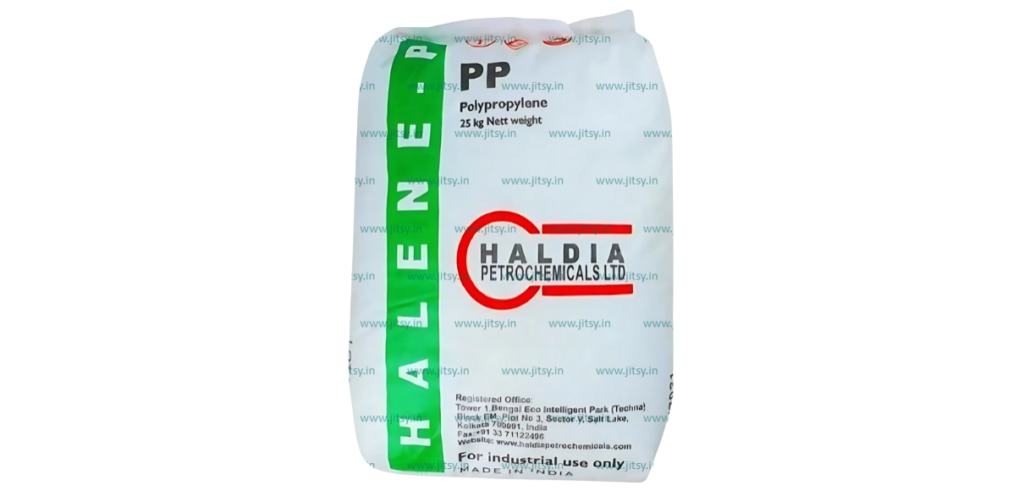
Haldia PP Halene-P F135
Haldia PP Halene-P F135 is a controlled rheology polypropylene homopolymer developed by Haldia Petrochemicals Limited for spunbond nonwoven production, extrusion coating, hygiene applications, and multifilament yarn processing. Manufactured using Spheripol II Technology, this grade is designed to deliver exceptional processability, high melt flow, narrow molecular weight distribution, and gas-fading resistance for demanding fiber and coating applications. For buyers searching for Haldia PP Halene-P F135, F135 spunbond nonwoven grade, controlled rheology PP homopolymer, or polypropylene for extrusion coating in India, this grade is positioned as a technically specialized and commercially relevant option.
Haldia Petrochemicals Limited is a recognized Indian polymer manufacturer with a broad Halene-P polypropylene portfolio covering film, raffia, thermoforming, and specialty extrusion applications. Within this portfolio, F135 is clearly positioned as a high-flow controlled rheology grade rather than a conventional film or raffia resin. That distinction is important because spunbond nonwoven and extrusion coating processors require a very different balance of flow, molecular uniformity, fiber formation, and line stability than converters working in BOPP film, woven sacks, or rigid packaging. Halene-P F135 is designed specifically for these high-throughput, quality-sensitive conversion routes.
Deep Technical Insights
The technical identity of Halene-P F135 is built around controlled rheology and high melt flow. The grade has a melt flow index of 35 g/10 min, which places it in a high-flow range suited to spunbond nonwoven production, extrusion coating, and selected filament applications. This level of flow is especially important in processes where fine fiber formation, smooth coating behavior, and high throughput are key commercial requirements. Its density of 0.90 g/cm³ is typical of polypropylene homopolymer and supports lightweight, efficient material use across nonwoven and coating applications. The grade also offers tensile strength at yield of 35 MPa and elongation at yield of 8 percent, indicating a balanced mechanical profile for a high-flow controlled rheology resin. A flexural modulus of 1350 MPa supports structural integrity where needed, while notched Izod impact strength of 45 J/m contributes to toughness in downstream handling and end-use performance. Thermally, the material shows a Vicat softening point of 150°C and a heat deflection temperature of 105°C. These values reinforce its suitability for demanding processing environments where thermal stability and predictable behavior matter. For processors, these numbers help confirm that F135 is not just a high-flow resin, but one designed for stable and commercially practical conversion. One of the most important technical differentiators of F135 is its narrow molecular weight distribution. In spunbond nonwoven production, this can support more uniform fiber morphology and more consistent web formation. In extrusion coating, it can contribute to smoother coating behavior and better process control. This molecular consistency is a major reason why controlled rheology grades are preferred in specialized high-speed applications. Another important advantage is gas-fading resistance. In practical use, this helps support better color stability, which can matter in hygiene products, technical textiles, and coated structures where appearance consistency is important. Combined with exceptional processability, this makes F135 a strong choice for converters who need both throughput and product consistency.Processing and Conversion Performance
Haldia PP Halene-P F135 is designed for high-speed processing environments such as spunbond nonwoven lines and extrusion coating systems. Typical processing guidance includes barrel temperatures in the range of 180–220°C and die temperatures around 215–220°C, reflecting its intended use in controlled, high-output extrusion operations. For processors, the value of F135 lies in how its high flow and controlled rheology translate into real production benefits. In spunbond nonwoven manufacturing, a resin must support stable fiber formation and efficient throughput. In extrusion coating, it must flow smoothly and coat uniformly. F135 is positioned to support both these requirements, which is why it is assigned to nonwoven, coating, and multifilament applications rather than to standard packaging film or raffia uses.Applications and Industry Use Cases
Spunbond Nonwoven Fabrics
Halene-P F135 is highly suitable for spunbond nonwoven production where high melt flow, fiber uniformity, and line stability are critical. In these applications, processors need a polypropylene homopolymer that can support efficient web formation and consistent fabric properties. This makes the grade especially relevant for hygiene nonwovens and technical textile production.Hygiene Products
The grade is also strongly aligned with hygiene applications such as diaper components, sanitary napkin layers, and other disposable nonwoven structures. In this segment, converters value process consistency, clean fiber formation, and reliable material behavior, all of which support the use of F135.Extrusion Coating on Woven Fabrics and Substrates
F135 is well suited for extrusion coating applications where smooth melt flow and uniform coating behavior are important. It can be used on woven fabrics and other substrates where coating consistency, adhesion-related process control, and productivity matter in commercial operations.Multifilament Yarns
The grade can also be considered for multifilament yarn applications where a high-flow controlled rheology polypropylene is preferred for stable extrusion performance. In these applications, consistent polymer behavior is important for maintaining processing efficiency and product quality.Technical Textiles and Packaging Laminates
Beyond hygiene and coating, Halene-P F135 is relevant for technical textiles and packaging laminate structures where specialized polypropylene performance is required. For converters in these sectors, the grade offers a practical combination of flow, consistency, and end-use versatility.Comparable Alternatives
Within the Haldia Petrochemicals portfolio, F135 should be selected when the target application is spunbond nonwoven production, extrusion coating, or other high-flow specialty extrusion uses. It should not be confused with F110, which is a TQ film grade, or R103, which is a raffia-grade resin for stretched tapes and woven packaging. Although all are polypropylene homopolymers, their processing routes and performance priorities are very different. F135 is the correct choice when high flow and controlled rheology are central to the application. Compared with Indian alternatives such as Reliance Repol H200FG and high-MFI IOCL or HMEL nonwoven grades, Halene-P F135 competes in the specialty nonwoven and coating segment with a clear focus on high throughput and process consistency. Its key differentiators include 35 MFI flow, narrow molecular weight distribution, gas-fading resistance, and strong suitability for spunbond and coating lines. These characteristics make it especially attractive for converters prioritizing stable production and uniform output. The rationale behind assigning F135 to spunbond nonwovens, extrusion coating, hygiene products, and multifilament yarns is technically clear. Its high-flow controlled rheology profile is aligned with fiber and coating processes rather than with rigid packaging, BOPP film, or raffia conversion. For processors selecting among Indian polypropylene homopolymer grades, F135 stands out as a purpose-built specialty grade rather than a general commodity resin.
Haldia PP Halene-P M110
Haldia PP Halene-P M110 is a polypropylene homopolymer injection moulding grade developed by Haldia Petrochemicals Limited for furniture components, household articles, and thin-wall packaging applications. Manufactured using Spheripol Technology, this grade is designed to deliver exceptional processability, low cycle times, high gloss, and excellent color retention in commercial injection moulding environments. For buyers searching for Haldia PP Halene-P M110, M110 injection moulding PP, polypropylene homopolymer for furniture, or high-flow PP grade for household products in India, this grade is positioned as a strong technical and commercial option.
Haldia Petrochemicals Limited is a recognized Indian polymer manufacturer with a broad Halene-P polypropylene portfolio covering film, raffia, thermoforming, and moulding applications. Within this product range, M110 is clearly positioned as an injection moulding grade rather than a film resin or raffia material. That distinction matters because injection moulders need a different balance of melt flow, stiffness, surface finish, and cycle efficiency than processors working in film extrusion or woven packaging. Halene-P M110 is designed specifically for these moulding requirements.
Deep Technical Insights
The technical profile of Halene-P M110 supports its use in commercial injection moulding applications where processing speed and part appearance are important. The grade has a melt flow index of 11 g/10 min, which places it in a practical range for injection moulding of furniture parts, household products, and selected thin-wall applications. This flow level supports efficient mould filling while maintaining a balanced mechanical profile for rigid moulded articles. Its density of 0.90 g/cm³ is typical of polypropylene homopolymer and supports lightweight part design without sacrificing process efficiency. The grade also offers tensile strength at yield of 35 MPa and elongation at yield of 10 percent, indicating a balanced combination of strength and controlled deformation for moulded parts. A flexural modulus of 1500 MPa contributes to stiffness and structural feel, which is especially important in furniture components and household products that must retain shape during use. The notched Izod impact strength of 30 J/m supports practical toughness in everyday handling conditions, while the heat deflection temperature of 99°C and Vicat softening point of 154°C reinforce the grade’s thermal stability profile. These values help buyers understand that M110 is not simply a fast-flowing moulding resin, but a balanced homopolymer grade designed for both productivity and finished-part performance. One of the most commercially important strengths of M110 is its low cycle time capability. In injection moulding operations, shorter cycle times directly improve machine productivity and output economics. This makes the grade especially attractive for high-volume moulders producing furniture parts, household articles, and packaging items. High gloss is another major advantage, particularly in visible consumer-facing products where surface appearance influences perceived quality. Excellent color retention further strengthens the grade’s commercial appeal. For moulders producing colored household goods, furniture components, or branded packaging items, consistent color performance can be just as important as mechanical properties. Combined with exceptional processability, this gives M110 a well-rounded value proposition for industrial moulding applications.Processing and Injection Moulding Performance
Haldia PP Halene-P M110 is designed for injection moulding lines where fast filling, stable processing, and attractive part finish are critical. Typical processing guidance includes barrel temperatures in the range of 200–260°C and mould temperatures of 30–50°C, reflecting its intended use in standard commercial moulding operations. For processors, the value of M110 lies in how its flow profile and moulding behavior translate into real production benefits. A moulding-grade polypropylene must fill consistently, release efficiently, and maintain part quality across repeated cycles. M110 is positioned to support that full production workflow, making it especially suitable for fast-cycle moulding environments.Applications and Industry Use Cases
Furniture Components
Halene-P M110 is highly suitable for furniture components such as chair backs, table parts, and other moulded structural pieces where stiffness, gloss, and efficient moulding are important. In this segment, manufacturers need a polypropylene homopolymer that can deliver good part finish and reliable production performance at commercial volumes.Household Articles
The grade is also well aligned with household products such as buckets, kitchenware, storage items, and other rigid moulded goods. These applications require a balance of processability, surface appearance, and structural feel, making M110 a strong option for household plastics manufacturers.Thin-Wall Packaging
M110 is relevant for thin-wall packaging applications where faster cycle times and smooth mould filling are important. In these applications, processors need a grade that can support productivity without compromising part appearance or dimensional consistency.Consumer Moulded Products
The combination of high gloss and excellent color retention also makes this grade suitable for visible consumer moulded products. For manufacturers serving retail and branded product segments, M110 offers a useful balance of aesthetics and moulding efficiency.Food-Contact and Utility Mouldings
Because of its compliance positioning, M110 can also be considered for moulded products used in food-contact and utility applications. This broadens its relevance for converters looking for a moulding-grade PP homopolymer with both performance and regulatory credibility.Comparable Alternatives
Within the Haldia Petrochemicals portfolio, M110 should be selected when the target application is standard to moderately fast-cycle injection moulding for furniture, household articles, and thin-wall packaging. It should not be confused with M135, which is a higher-flow thin-wall injection grade, or F110, which is a film grade for TQ packaging. Although these grades may share similar brand lineage, their processing routes and end-use priorities are different. M110 is the correct choice when a balanced 11 MFI injection homopolymer is needed. Compared with Indian alternatives such as IOCL Propel 1110MG and Reliance Repol H110MA, Halene-P M110 competes in the same broad injection moulding category with a similar flow range. Its key differentiators include low cycle time capability, high gloss, excellent color retention, and reliable processability. These strengths make it especially attractive for moulders prioritizing productivity and visual quality in rigid moulded parts. Compared with higher-flow injection grades, M110 offers a more balanced profile for applications that need good mouldability without moving into ultra-thin-wall or highly specialized moulding territory. The rationale behind assigning M110 to furniture, household products, and thin-wall packaging is therefore technically clear: its flow, stiffness, appearance, and processing efficiency are aligned with mainstream commercial injection moulding.
Haldia PP Halene-P R103
Haldia PP Halene-P R103 is a polypropylene homopolymer raffia grade developed by Haldia Petrochemicals Limited for stretched tape extrusion, woven sack production, flexible intermediate bulk containers, ropes, and industrial packaging applications. Manufactured using Spheripol Technology, this grade is designed to deliver exceptional processability, low water carry-over, excellent strength, reliable color stability, and consistent tape performance on raffia conversion lines. For buyers searching for Haldia PP Halene-P R103, R103 raffia grade, polypropylene homopolymer for woven sacks, or PP raffia raw material for FIBC in India, this grade is a highly relevant technical and commercial option.
Haldia Petrochemicals Limited is a recognized Indian polymer manufacturer with a broad polypropylene portfolio under the Halene-P brand. That portfolio includes film, raffia, and thermoforming grades, each assigned to a specific conversion route. Within this range, R103 is clearly positioned as a raffia-grade polypropylene homopolymer rather than a BOPP film resin or thermoforming material. That distinction is important because raffia processors need a different balance of melt flow, tape drawability, line stability, and finished-fabric strength than film or sheet converters. Halene-P R103 is designed specifically for those raffia and woven packaging requirements.
Deep Technical Insights
The technical profile of Halene-P R103 supports its use in raffia tape extrusion and woven packaging applications. The grade has a melt flow index of 3.0 g/10 min, which places it in the established range for polypropylene homopolymer raffia grades used in stretched tape production. This flow level supports stable extrusion and good tape formation while maintaining the melt strength needed for downstream stretching. Its density of 0.90 g/cm³ is typical for polypropylene homopolymer and supports lightweight packaging structures without compromising processing efficiency. The grade also offers tensile strength at yield of 34 MPa and elongation at yield of 9 percent, indicating a balanced mechanical profile for tape and fabric applications where strength and controlled deformation are both important. A flexural modulus of 1450 MPa supports stiffness and structural integrity in the finished tape and woven fabric, while notched Izod impact strength of 40 J/m contributes to toughness in handling and end-use conditions. The Vicat softening point of 153°C and heat deflection temperature of 93°C further reinforce its thermal stability profile, which is relevant in extrusion and downstream packaging performance. One of the most important technical strengths of R103 is its exceptional processability. In raffia conversion, processors need a grade that runs smoothly at commercial line speeds and maintains consistent tape quality. The grade’s low water carry-over is especially valuable because it supports more uniform tape thickness and better process control. This can directly affect fabric consistency, weaving performance, and finished-package quality. The grade is also described as offering excellent strength and color stability. For woven sacks, FIBC fabrics, ropes, and yarns, this matters because the finished product must combine durability with acceptable appearance and consistency. In practical terms, R103 is designed to help converters achieve stable processing and dependable packaging performance rather than simply meeting a generic polypropylene specification.Processing and Raffia Line Performance
Haldia PP Halene-P R103 is designed for raffia and stretched tape extrusion lines where process consistency and tape quality are critical. Typical processing guidance includes barrel temperatures in the range of 220–280°C, die temperatures of 260–280°C, quench temperatures of 30–40°C, and stretching temperatures around 160°C in the oven stage. These conditions reflect its intended use in commercial raffia conversion rather than in injection moulding or film orientation lines. For processors, the value of this grade lies in how it behaves across the entire tape-making sequence. A raffia-grade PP homopolymer must extrude smoothly, quench consistently, stretch efficiently, and maintain tape strength during weaving or downstream conversion. R103 is positioned to support exactly that workflow, which is why it is assigned to woven sacks, FIBC, ropes, and yarn applications.Applications and Industry Use Cases
Woven Sacks
Halene-P R103 is highly suitable for woven sack production where tape strength, process consistency, and fabric quality are essential. It supports stretched tape extrusion for sacks used in cement, fertilizer, food grains, polymers, and other bulk-packed materials. In these applications, consistent tape thickness and reliable weaving performance are major selection criteria.Flexible Intermediate Bulk Containers
The grade is also relevant for FIBC production, where polypropylene tapes are converted into heavy-duty woven fabrics for large-volume industrial packaging. In this segment, processors need a raffia-grade PP homopolymer that can support strong tapes, stable fabric formation, and dependable handling performance under demanding load conditions.Ropes and Yarns
R103 can be used for ropes and yarns where strength, processability, and consistent extrusion behavior matter. These applications require a grade that can maintain stable tape or filament quality during conversion, making R103 a practical option for manufacturers serving industrial and agricultural end uses.Food Grain and Agricultural Packaging
Because of its food-contact suitability and woven packaging relevance, Halene-P R103 is a strong candidate for food grain bags, agricultural packaging, and related bulk-use sacks. In these segments, converters often need a balance of mechanical strength, process efficiency, and compliance confidence.Industrial Bulk Packaging
The grade is also well suited for industrial bulk packaging applications where woven polypropylene structures are used for storage, transport, and handling. For industrial packaging manufacturers, R103 offers a commercially relevant mix of processability, strength, and tape-line stability.Comparable Alternatives
Within the Haldia Petrochemicals portfolio, R103 should be selected when the application is raffia tape extrusion and woven packaging. It should not be confused with F103, which is a BOPP film grade, or T103, which is designed for thermoforming. Even though all three are polypropylene homopolymer grades, their processing routes and end-use performance requirements are different. R103 is the correct choice when the target product is woven sack fabric, FIBC tape, rope, or yarn rather than film or sheet. Compared with Indian alternatives such as IOCL Propel P1030RG and Reliance Repol H100FG, Halene-P R103 competes in the same broad raffia-grade category with a similar low-MFI processing profile suited for tape extrusion. Its differentiators include exceptional processability, low water carry-over, excellent strength, and color stability. These advantages make it especially attractive for converters focused on line consistency and woven fabric quality. Compared with higher-flow grades such as HMEL Polysure Y12GR, R103 is better aligned with conventional raffia and stretched tape applications where a lower melt flow profile is preferred for tape formation and downstream stretching. The rationale behind assigning R103 to woven sacks, FIBC, ropes, and yarns is therefore technically clear: its flow behavior, processability, and mechanical balance are optimized for raffia conversion rather than for film orientation or injection moulding.
Haldia PP Halene-P T103
Haldia PP Halene-P T103 is a polypropylene homopolymer thermoforming grade developed by Haldia Petrochemicals Limited for disposable cups, food containers, packaging trays, and miscellaneous thermoformed products. Manufactured using Spheripol Technology, this grade is designed to deliver exceptional processability, high stiffness, excellent clarity, and strong gloss, making it a commercially relevant choice for converters producing rigid thermoformed packaging and disposable tableware. For buyers searching for Haldia PP Halene-P T103, T103 thermoforming grade, polypropylene homopolymer for disposable cups, or PP resin for food packaging trays in India, this grade is positioned as a strong technical and processing-focused option.
Haldia Petrochemicals Limited is a recognized Indian polymer producer with a broad polypropylene portfolio under the Halene-P brand. That portfolio includes film grades, raffia grades, and thermoforming grades, each assigned to a specific downstream conversion route. Within this range, T103 is clearly positioned as a thermoforming-grade polypropylene homopolymer rather than a BOPP film resin or raffia tape material. This matters because thermoforming processors need a different balance of melt flow, sheet behavior, stiffness, optical quality, and finished-part performance than converters working in film orientation or woven packaging. Halene-P T103 is designed specifically for those thermoforming requirements.
Deep Technical Insights
The technical profile of Halene-P T103 supports its use in thermoformed packaging and disposable product applications. The grade has a melt flow index of 4 g/10 min, which places it in a practical range for polypropylene homopolymer grades used in thermoforming. This flow level helps support processability while maintaining the structural characteristics needed for rigid formed articles. A tensile strength at yield of 37 MPa gives the grade a strong mechanical base for thermoformed products that need shape retention and handling strength. This is especially relevant in cups, containers, and trays where the finished article must maintain structural integrity during filling, stacking, transport, and end use. Its flexural modulus of 1700 MPa is another major strength, indicating high stiffness and making the grade particularly suitable for rigid disposable packaging where wall rigidity and dimensional stability are important. The grade also offers a Vicat softening point of 154°C, which supports thermal resistance in applications where the finished product may encounter elevated temperatures during filling, handling, or use. For thermoforming processors, this contributes to confidence in both conversion and end-use performance. The material is also described as water insoluble and odorless, which adds relevance in food packaging and disposable tableware applications where product neutrality and cleanliness matter. One of the most commercially important strengths of T103 is its combination of stiffness, clarity, and gloss. Many polypropylene homopolymer grades can offer rigidity, but fewer are positioned specifically for thermoformed products that also need attractive visual appearance. In packaging applications, gloss and clarity can improve shelf appeal, while stiffness supports stackability and functional performance. This makes T103 a strong fit for converters who need both aesthetics and structure. Its exceptional processability is another key advantage. Thermoforming operations depend heavily on stable sheet behavior and predictable forming performance. A grade that combines processability with stiffness and optical quality can help improve productivity and reduce variability in finished articles. That is one of the main reasons T103 is assigned to disposable cups, containers, trays, and similar thermoformed products.Processing and Thermoforming Performance
Haldia PP Halene-P T103 is designed for thermoforming lines where sheet conversion, formability, and finished-part consistency are critical. For processors, the value of this grade lies not only in its datasheet numbers but in how those properties translate into stable production of rigid disposable products. Its balanced melt flow supports sheet processing and downstream forming, while its stiffness helps maintain the geometry of cups, trays, and containers after forming. Combined with gloss and clarity, this makes T103 commercially attractive for converters producing visible consumer-facing packaging where both performance and appearance influence material selection.Food Packaging and Disposable Product Relevance
Halene-P T103 is highly relevant for food packaging and disposable tableware applications because its property profile aligns well with rigid thermoformed articles used in food service and consumer packaging. The combination of stiffness, clarity, gloss, and odor-neutral behavior supports its use in products where presentation and usability matter. For buyers in food packaging, disposable cups, takeaway containers, and packaging trays, this makes T103 a practical polypropylene homopolymer option for thermoforming applications that need reliable conversion performance and commercially acceptable finished-article quality.Applications and Industry Use Cases
Disposable Cups
Halene-P T103 is highly suitable for disposable cup manufacturing where stiffness, clarity, and gloss are important. In this segment, converters need a polypropylene homopolymer that can form cleanly and produce cups with good structural feel, attractive appearance, and reliable performance during filling and use.Food Containers
The grade is also well aligned with thermoformed food containers used in takeaway, dairy, ready-meal, and general food packaging applications. These products require a balance of rigidity, processability, and visual quality, making T103 a strong option for converters serving food packaging markets.Packaging Trays
T103 is relevant for rigid packaging trays where dimensional stability and stiffness are critical. In these applications, the material must support consistent forming and maintain tray shape during handling, stacking, and transport. Its stiffness profile makes it particularly suitable for this use case.Disposable Tableware
The grade can also be used in miscellaneous disposable items and tableware where a clean finish, good gloss, and structural integrity are required. For manufacturers of single-use service products, T103 offers a practical combination of processing ease and finished-product performance.Consumer and Industrial Thermoformed Articles
Beyond food packaging, Halene-P T103 can be considered for a broader range of thermoformed polypropylene articles where rigidity and appearance matter. This includes general packaging inserts, utility trays, and other formed products where a homopolymer PP grade with good stiffness and processability is preferred.Comparable Alternatives
Within the Haldia Petrochemicals portfolio, T103 should be selected when the processing route is thermoforming and the end product requires rigid, glossy, and reasonably clear formed articles. It should not be confused with F103, which is a BOPP film grade, or R103, which is a raffia grade for stretched tapes and woven packaging. Although all three are polypropylene homopolymer grades, their assigned applications are different because their processing behavior and end-use priorities are not the same. Compared with film-grade alternatives such as F103, T103 is better suited for sheet-based thermoforming rather than biaxial orientation. Film grades are optimized for drawability and stenter-line performance, whereas T103 is positioned around stiffness, formability, and finished-part appearance in thermoformed products. Compared with raffia grades such as R103, T103 is clearly more appropriate for cups, trays, and containers because raffia grades are designed for tape extrusion and woven structures rather than rigid formed articles. Against comparable Indian thermoforming and rigid packaging PP homopolymer grades, Halene-P T103 competes on its combination of 4 MFI flow, 37 MPa tensile strength, 1700 MPa flexural modulus, and 154°C Vicat softening point. These values support the rationale behind its assigned grade positioning. It is a purpose-built thermoforming resin for converters who need stiffness, gloss, clarity, and dependable processing rather than a broad commodity PP grade.
Haldia PPCP Halene M304
Halene M304 is a high-impact, heterophasic polypropylene copolymer manufactured by Haldia Petrochemicals using advanced Spheripol II technology. Designed for injection molding, M304 delivers a unique balance of toughness, rigidity, and processability, making it ideal for automotive, furniture, and industrial container applications. Its 3.5 MFI and 150 J/m impact strength set the benchmark for performance in demanding environments.
Deep Technical Insights
M304 is engineered with a semi-crystalline polypropylene matrix and finely dispersed ethylene-propylene rubber phase, providing a 5–10x impact strength advantage over homopolymer PP. The Spheripol II process ensures uniform spherical granules, tight property tolerances, and efficient cycle times. ISO 9001 and 14001 certified production guarantees product reliability, while the optimized 3.5 MFI enables faster molding and reduced energy use. This grade is especially suited for parts requiring both dimensional stability and resistance to cracking or breakage.Applications & Industry Use Cases
Automotive: Used in dashboard substrates, door trims, pillar covers, bumper reinforcements, battery trays, and under-hood components, M304 excels in safety, durability, and lightweighting targets. Furniture: Perfect for monobloc chairs, modular seating, table tops, and stackable storage, M304 offers impact resistance, weather durability, and fast production cycles for commercial and outdoor furniture. Industrial Containers & Crates: Ideal for paint pails, chemical storage, beverage crates, and warehouse bins, M304 provides chemical resistance, dimensional stability, and long service life under rough handling and stacking.Technical Authority & Industry Leadership
Halene M304 leverages cutting-edge Spheripol II technology and advanced Ziegler-Natta catalysts for superior polymer consistency and efficiency. The grade’s optimized molecular architecture supports high-volume manufacturing, while its performance metrics surpass many competitor grades like Reliance MI3530 and IOCL 3030MG. Haldia’s strategic plant location in West Bengal provides supply chain advantages for Eastern India and export markets, further cementing M304’s position as a go-to solution for impact copolymer applications.
Haldia PPCP Halene M307
Haldia Halene-P M307 is a heterophasic polypropylene impact copolymer (PPiCP) produced using Spheripol technology, engineered for general purpose injection moulding where reliable processability, low cycle times, and balanced mechanical properties are essential. M307 delivers high flow for fast mould filling, robust impact–stiffness balance for structural durability, and low MFI for the production of thicker, more resilient parts. This grade is ideal for household items, furniture, crates, and industrial components—trusted by Delhi/NCR and pan-India moulders seeking consistent, high-quality PPCP for a wide range of injection applications.
Specifications
Physical Properties
- Melt Flow Index: 7 g/10 min (230°C/2.16 kg)
- Density:90 g/cm³
Mechanical Properties
- Tensile Strength at Yield: 23 MPa
- Flexural Modulus: 950 MPa
- Notched Izod Impact (23°C): 80 J/m
Thermal Properties
- Heat Deflection Temperature: 88°C
- Spheripol morphology: Ensures uniformity and consistent mechanicals
Deep Technical Insights
- Spheripol technology: Delivers uniform heterophasic morphology, supporting consistent mechanicals and high process reliability across batches.
- Low MFI: Ideal for thick-section, robust parts in household and industrial use.
- Impact–stiffness synergy: Ensures products resist breakage and deformation under load, making M307 a versatile choice for general injection moulding.
Applications
Household Items
M307 is perfect for injection-moulded household goods such as storage bins, kitchenware, and organizers. Its impact strength and stiffness ensure long-lasting, durable products that withstand daily use and handling.Furniture
For chairs, tables, and modular furniture, M307’s robust flexural modulus and impact resistance provide both structural support and comfort, while its processability supports high-volume, efficient production.Crates & Industrial Components
In crates, bins, and technical housings, M307’s mechanical profile ensures products can handle stacking, drops, and heavy loads, maintaining shape and strength in demanding environments.Processing
- Barrel temperature: 180–240°C
- Mould temperature: 30–50°C
- Processing tips: 7 MFI supports reliable mould filling and short cycle times; Spheripol morphology minimizes warpage and supports dimensional stability
- Cycle time: Optimized for productivity in high-volume general moulding
Haldia PPCP Halene M310
Haldia Halene-P M310 is a heterophasic polypropylene impact copolymer (PPiCP) manufactured with Spheripol II technology, delivering high flow, low cycle times, and excellent thermal stability for injection moulded battery boxes and industrial items. M310 offers a superior balance of impact resistance and stiffness, ensuring structural integrity under impact and thermal stress. Its high gloss and low static charge buildup make it ideal for clean, productive processing and visually appealing finished parts. M310 is trusted by battery manufacturers and industrial moulders in Delhi/NCR and pan-India seeking a productive, thermally stable PPCP for demanding applications.
Specifications
Physical Properties
- Melt Flow Index: 10 g/10 min (230°C/2.16 kg) – high flow for fast fill and multi-cavity tooling
- Density:90 g/cm³ – lightweight, standard for PP impact copolymers
Mechanical Properties
- Tensile Strength at Yield: 24 MPa – robust for battery and industrial parts
- Elongation at Yield: 6% – supports flexibility and drop resistance
- Flexural Modulus: 1200 MPa – high stiffness for stacking and load-bearing
- Notched Izod Impact (23°C): 90 J/m – tough for impact and drop tests
Thermal Properties
- Vicat Softening Point (10 N): 145°C – maintains shape under heat
- HDT (0.46 N/mm²): 95°C – suitable for battery and industrial service
- Compliance: IS 10910, IS 16738:2018 for food/pharma/water contact
Applications
Battery boxes
M310 is engineered for battery boxes requiring fast fill, dimensional stability, and resilience to impact and thermal cycling. Its high modulus and impact resistance ensure boxes withstand stacking, drops, and vibration, while the high flow supports efficient multi-cavity production.Industrial mouldings
For structural crates, housings, and technical mouldings, M310 offers the stiffness and toughness needed for heavy-duty service. Its gloss and low static charge help maintain clean production and attractive finished surfaces, supporting industrial and technical applications.Processing
- Barrel temperature: 160–250°C
- Mould temperature: 30–40°C
- Processing tips: High flow enables fast cycles and complex tooling; Spheripol II morphology minimises warpage and supports consistent quality
- Cycle time: Optimised for productivity in battery and industrial moulding
Deep Technical Insights
- Spheripol II technology: Delivers uniform, heterophasic morphology for consistent mechanicals and reliable performance
- High flow: MFI 10 supports fast fill in multi-cavity tools, reducing energy and boosting output
- Thermal reliability: Maintains shape and mechanicals during heat exposure and cycling, crucial for battery and industrial service
- Gloss and low static: Ensures clean, aesthetic parts ready for high-visibility or technical use
Haldia PPCP Halene M311T
Halene-P M311T from Haldia Petrochemicals is a heterophasic polypropylene impact copolymer (PPiCP) produced on Spheripol technology, engineered for high-flow injection moulding of automotive, luggage, and industrial components. M311T delivers fast fill for thin-wall and multi-cavity tools, low cycle times for productivity, and a balanced impact-stiffness profile for durability. Its superior gloss and toughness make it ideal for applications demanding both aesthetics and mechanical performance. M311T is trusted by moulders seeking high-productivity, tough PPCP for demanding OEM and compounding applications in Delhi/NCR and pan-India.
Specifications
Physical Properties
- Melt Flow Index: 10 g/10 min (230°C/2.16 kg) – high-flow for complex and thin-wall parts
- Density:90 g/cm³ – lightweight, standard for PP impact copolymers
Mechanical Properties
- Tensile Strength at Yield: 24 MPa – robust for automotive and luggage components
- Elongation at Yield: 6% – supports flexibility and shock absorption
- Flexural Modulus: 1200 MPa – high stiffness for structural integrity
- Notched Izod Impact (23°C): 90 J/m – high toughness for drop and impact resistance
Thermal Properties
- Vicat Softening Point (10 N): 145°C – maintains dimensional stability under heat
- Heat Deflection Temperature (0.455 MPa): 95–100°C – suitable for automotive interiors and industrial parts
- Compliance: IS 10951:2020 (PP for moulding/extrusion)
Applications
Automotive components
Halene M311T is engineered for automotive interior trims, covers, and structural parts that require high flow, impact, and stiffness. Its fast fill and low cycle times boost productivity, while its impact resistance ensures safety and durability in demanding environments.Luggage shells
For moulded luggage, M311T’s high gloss and toughness deliver premium aesthetics and long-lasting performance. Its balanced mechanics support thin-wall designs, helping luggage resist drops, impacts, and daily handling during travel.Industrial & compounding
M311T serves as a base resin for filled compounds and industrial mouldings—crates, bins, housings—where high stiffness, toughness, and processability are essential. Its Spheripol morphology ensures consistent quality and reliable mechanicals batch after batch.Processing
- Barrel temperature: 180–260°C
- Mould temperature: 30–40°C
- Processing tips: High flow supports thin-wall and multi-cavity tools; optimize packing and cooling for best surface finish and dimensional accuracy
- Cycle time: Low cycle times possible with proper mould and machine setup
Deep Technical Insights
- Spheripol technology: Delivers uniform heterophasic morphology for consistent batch-to-batch performance
- High flow: MFI 10 enables fast injection and short cycles, reducing energy and increasing plant throughput
- Gloss and toughness: Suits premium luggage and automotive interiors where aesthetics and durability are both required
- Balanced mechanics: Supports both structural and cosmetic parts, making M311T a versatile PPCP for OEMs and compounders
Haldia PPCP Halene M312
HALDIA PPCP HALENE M312 is a heterophasic polypropylene impact copolymer (PPCP) designed for injection molding, offering a strong balance of stiffness and impact strength—even at low temperatures. Leveraging advanced polymerization, Halene M312 delivers reliable durability and processability for B2B buyers. Typical users include injection molders, OEMs, compounders, and procurement teams in the furniture, container, packaging, and housewares sectors.
Key Features & Benefits of Halene M312
- High impact strength at low temperatures
- Balanced stiffness and flexibility
- Smooth processability for injection molding
- Consistent quality and batch traceability
- Suitable for food-contact and industrial applications
Technical Properties & Processing Guidelines
Material Properties of HALDIA Halene-P M312
- Mechanical: Good impact and stiffness balance; maintains properties at low temperatures
- Thermal: Suitable for containers, furniture, industrial parts
- Rheological: Balanced flow for efficient molding and cycle times
- Compliance: Meets relevant standards for food-contact and industrial use (verify per application)
Recommended Processing Conditions
- Barrel temp: 180–230°C (typical)
- Mold temp: 30–60°C (typical)
- Store in a dry, dust-free area below 50°C
- Refer to datasheet for machine/part-specific settings
Typical Applications of HALDIA PPCP HALENE M312
Halene M312 is engineered for versatility across a range of injection-molded products. It is widely used in containers, crates, and bins for industrial and logistics applications, as well as in furniture components, household goods, and general-purpose industrial parts. Its combination of low-temperature impact strength and balanced flow makes it a trusted choice for manufacturers seeking both durability and efficient processing.
Haldia PPCP Halene M325
Haldia Petrochemicals’ Halene-P M325 is a heterophasic polypropylene impact copolymer (PPCP) granule engineered for high-flow injection moulding. Manufactured using Spheripol technology, M325 delivers an MFI of 25 g/10 min, density of 0.90 g/cm³, and a well-balanced stiffness-impact profile. This makes it ideal for moulders and OEMs producing furniture, appliance housings, automotive trims, and as a base for compounding. M325 stands out for its processability, short cycle times, and glossy surface finish, giving you both productivity and premium aesthetics.
Technical specifications
Physical properties (MFI/density)
- Melt Flow Index: 25 g/10 min (230°C/2.16 kg) – enables fast fill and cycle reduction in thin-wall, multi-cavity moulds
- Density:90 g/cm³ – standard for PP IC, supporting lightweight, robust parts
Mechanical properties (stiffness/impact)
- Tensile Strength at Yield: 25 MPa – balanced strength for structural and load-bearing applications
- Tensile Elongation at Yield: 7% – offers flexibility and resistance to sudden shocks
- Flexural Modulus: 1150 MPa – provides structural stiffness for furniture and appliance parts
- Notched Izod Impact (23°C): 60 J/m – ensures toughness versus PP homopolymers, reducing breakage during handling
Thermal properties (Vicat/HDT)
- Vicat Softening Point (10 N): 140°C – suitable for moderately heated environments in appliances and interiors
- Heat Deflection Temperature (0.455 MPa): 84°C – handles typical automotive and white goods service temps
- DSC Melting Temp: 165°C – stable during high-speed injection cycles
Functional Features
Halene M325’s unique combination of flow, stiffness, and impact performance makes it a versatile and reliable choice for demanding injection moulding and compounding applications. Spheripol process ensures batch-to-batch consistency and high gloss.Applications
Furniture and housewares
Halene M325 is widely used for chairs, tables, storage bins, and kitchenware. Its stiffness supports load-bearing, while impact resistance prevents breakage from drops. The glossy finish enhances product appearance for premium housewares.Appliances and white goods
For fans, mixers, washing machines, and refrigerator parts, M325 offers the strength and thermal stability needed for housings, panels, and internal structures. Its processability reduces cycle times and improves surface quality.Automotive components
M325 is suitable for non-critical interior trims, battery boxes, and under-hood covers. The grade’s impact-stiffness balance ensures durability against vibration and handling, while gloss adds aesthetic value to visible parts.Compounding base
M325 serves as an excellent base resin for compounding and masterbatch production. Its high flow aids filler dispersion and smooth twin-screw extrusion, making it a preferred carrier for mineral, glass, or colour concentrates.Processing guidelines
- Barrel temperature: 180–210°C
- Mould temperature: 30–40°C
- High-flow optimisation: Leverage 25 MFI for fast fill, short cycles, and thin-wall designs (1.5–2 mm possible in multi-cavity tools)
- Screw/mould design: Use standard PP IC compression ratio; ensure adequate packing to reduce sink marks in ribs and bosses
- Defect mitigation:
- Warpage: Use balanced cooling
- Flow marks: Increase injection speed
- Short shots: Optimise gate design and location
Advantages vs competitors
Halene M325 matches or exceeds Reliance Repol B220MN/B250EG in flow and mechanicals, offering Indian moulders an edge in price, availability, and technical support. Spheripol process ensures superior gloss and batch consistency, while high MFI reduces cycle times and energy costs. Comparison Table:| Property | Halene M325 | Repol B220MN | Advantage |
| MFI | 25 g/10 min | ~22 g/10 min | Faster cycles, thin walls |
| Flexural modulus | 1150 MPa | ~1100 MPa | Comparable stiffness |
| Impact (RT) | 60 J/m | Similar | Robustness, drop safety |
| Applications | Furniture, auto, appliances, compounding | Similar | Broader compounding use |
