





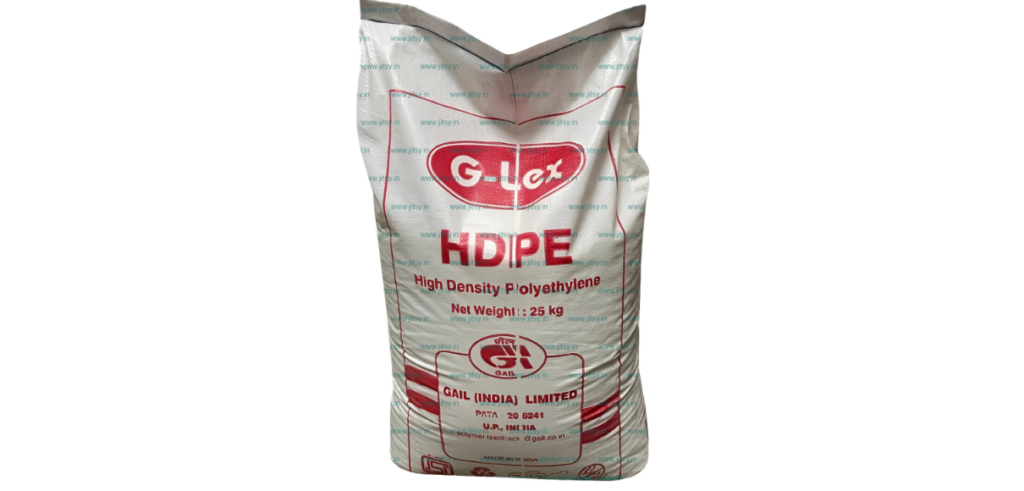
Gail HDPE G Lex W52A009N
Gail HDPE G‑Lex W52A009N is a UV‑stabilized high‑density polyethylene (HDPE) grade from GAIL (India) Limited engineered for tape/raffia (stretched tape) extrusion and related woven applications. In GAIL’s datasheet, W52A009/W52A009N is described as “High Density Polyethylene for Tape/Monofilament Extrusion,” widely used for medium‑tenacity stretched tape in woven sacks (including flour packaging and industrial packaging) and tarpaulin, combining excellent processability with good elongation and strength.
For tape producers and woven‑sack converters, the value of W52A009N is in how it supports stable tape extrusion and orientation while maintaining a practical balance between tape strength (for load‑bearing and handling) and elongation (for stretching, weaving, and stitching without excessive breakage). The “N” variant adds UV stabilization, typically preferred when the finished woven fabric is expected to see outdoor exposure (tarpaulin, open storage, transport) or when added robustness during storage/handling is desired.
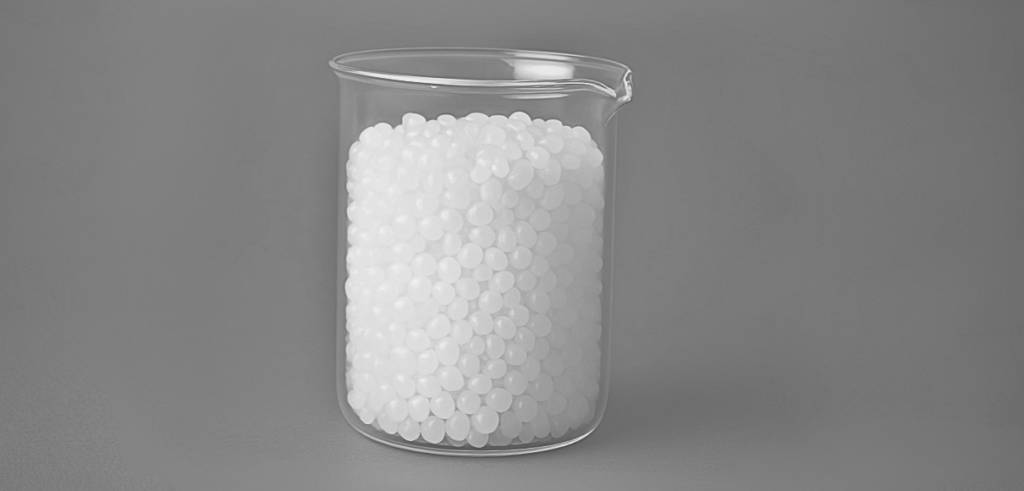
GAIL states the grade conforms to IS 7328‑3B‑TB‑FXDA of IS 7328:2020 (natural resin designation) for tape and related products. It is supplied as natural‑colour pellets, typically packed in 25 kg woven sacks.
Technical insights
- Melt Flow Index (I2, 190°C/2.16 kg): 0.9 g/10 min (typical). A medium‑flow MFI helps tape lines run smoothly and supports consistent tape thickness and draw during stretching.
- Density (23°C): 0.952 g/cm³ (typical). This density level supports stiffness and strength needed for woven sacks and tarpaulin tapes, while still enabling workable elongation during orientation.
- Tensile strength at yield: 240 kg/cm² (typical). Indicates resistance to permanent deformation under load—important for sack performance during filling, stacking, and transport.
- Elongation at yield: 11% (typical) and elongation at break: >600% (typical). This is a key “conversion‑friendly” signal for stretched tape: it supports orientation and downstream weaving/sewing while reducing brittle tape breaks.
- Flexural modulus: 9500 kg/cm² (typical). Reflects stiffness; contributes to better “body” and handling in woven fabrics and helps maintain structure in sacks and tarpaulin.
- Vicat softening point: 123°C (typical). Suggests good heat resistance for many packaging and outdoor cover use cases.
- Processing guidance (barrel temperature): 210–270°C. Typical temperature window provided for tape/monofilament extrusion; final settings depend on extruder, die, draw ratio, quench conditions, and target tape denier.
Applications
Woven sacks for flour and food‑adjacent packaging: W52A009N is used for stretched tape that is woven into sacks where consistent tape quality, stable weaving, and reliable seam performance are critical. The grade’s strength‑plus‑elongation balance supports orientation and downstream conversion with fewer tape breaks. Industrial packaging woven bags (bulk handling): For industrial sacks used in chemicals, minerals, and general bulk transport, tape must handle corner and seam stress during filling and stacking. W52A009N is positioned as a medium‑tenacity raffia grade that delivers robust everyday performance while maintaining processability on tape lines. Tarpaulin and laminated woven fabrics (outdoor use): Tarpaulin fabrics often see sunlight exposure and rough handling. W52A009N’s UV stabilization is a key reason it is evaluated for tarpaulin‑oriented woven structures where outdoor durability and stable tape processing are both required. Selective monofilament uses (e.g., medium‑tenacity fishing nets): GAIL notes the grade can also be used in medium‑tenacity monofilament products like fishing nets. Where monofilament is the primary requirement, processors should still compare against dedicated monofilament grades and validate performance on the target line.Comparable alternatives
Within GAIL’s range, W52A009 (non‑UV) is the closest comparable grade; W52A009N is typically preferred when UV/outdoor robustness is required for tarpaulin or exposed storage/transport conditions. For higher tenacity tape targets, GAIL positions W50A009 as a high‑tenacity stretched tape grade. Buyers often evaluate W50A009 when the end product requires higher strength targets, but orientation behavior, weaving performance, and final fabric properties should be validated before switching. For rope/twine and monofilament‑yarn‑first applications, W52ASR009/W52ASR009N are positioned more directly for monofilament extrusion (ropes, twines, fishing/sporting nets). They are comparable as “nearby” grades in the portfolio, but they are not the same application class as a tape/raffia‑first resin. Treat alternatives as comparable options rather than drop‑in equivalents unless MFI, density, tensile/elongation, and (most importantly) tape orientation and conversion performance are matched and proven on your line.Common search variants
Also searched as: UV stabilized HDPE raffia grade, HDPE tape grade for woven sacks, tarpaulin tape HDPE, GAIL W52A009N, G‑Lex W52A009N, W52A009N 0.9 MFI, HDPE dana for woven bags.
Gail HDPE G Lex W52ASR009
Gail HDPE G‑Lex W52ASR009 is a high‑density polyethylene (HDPE) grade for monofilament extrusion manufactured by GAIL (India) Limited. It is positioned as especially suitable for medium‑tenacity yarn used in monofilament‑based ropes, twines, fishing nets, and sporting nets, offering good processability with an optimum balance of strength and elongation.
In practical terms, W52ASR009 is selected by converters who need a monofilament resin that runs reliably on extrusion and drawing lines, while producing yarn that performs well under real‑world loads (tension, knotting, handling, and outdoor use). Compared with higher‑tenacity monofilament grades, it is positioned for medium‑duty cordage and netting where stable processing and balanced mechanical behavior are priorities.
W52ASR009 belongs to the G‑Lex HDPE family produced via GAIL’s CX‑slurry process. It is supplied as natural‑colour pellets in 25 kg woven sacks and should be stored dry at temperatures below 50°C.
Technical insights
- Melt Flow Index (I2, 190°C/2.16 kg): 0.45 g/10 min (typical). A medium MFI supports good processability and throughput in monofilament extrusion, while still allowing strength development after drawing.
- Density (23°C): 0.964 g/cm³ (typical). Higher density HDPE generally supports stiffness and strength in drawn structures, useful for ropes and netting.
- Tensile strength at yield: 260 kg/cm² (typical). Indicates resistance to yielding under load; relevant for cordage that sees sustained tension.
- Elongation at yield: 9% (typical). Helps indicate early deformation behavior and stiffness/stretch balance.
- Elongation at break: >600% (typical). High elongation at break supports toughness and helps reduce brittle failure during use and knotting.
- Flexural modulus: 11,000 kg/cm² (typical). A stiffness indicator that can support dimensional stability and “body” in monofilament products.
- Vicat softening point: 124°C (typical). Helps indicate thermal softening behavior relevant to service and downstream handling.
- Processing guidance (typical): Barrel temperature 210–270°C as a starting range for monofilament extrusion; optimize based on die design, output rate, quench conditions, and draw ratio.
Applications
Medium‑duty ropes and twines (monofilament‑based). W52ASR009 is designed for medium‑tenacity yarn used in ropes and twines where converters want a balance of linear strength and controlled elongation, along with good processing stability on extrusion and drawing lines. Fishing nets and sporting nets. The grade is positioned for fishing/sporting net monofilament where toughness and elongation help reduce breakage during installation and use. It is commonly searched as HDPE monofilament granules/dana for net yarn. General cordage and netting for outdoor service. For applications exposed to outdoor handling and repeated mechanical stress, W52ASR009 is selected when a medium‑tenacity performance level is sufficient and consistent processing is a priority.Comparable alternatives
The closest comparisons are within GAIL’s own monofilament/raffia portfolio:- G‑Lex W52ASR009N (UV‑stabilized pair grade). This is the nearest related grade name; treat interchangeability as end‑use dependent (UV exposure requirements, additive package, and performance targets should be confirmed against manufacturer documentation).
- G‑Lex W55A004 / W55A004N (high‑tenacity monofilament grades). These are positioned for higher‑tenacity yarn for fishing nets and ropes. They may not be direct substitutes if the buyer’s target is medium tenacity and easier processing.
- G‑Lex W52A009 / W52A009N (tape/raffia‑oriented grades). These are often used for stretched tape/raffia applications and can appear in similar search journeys, but they are not the same positioning as a rope/twine monofilament grade.
Common search variants
Also searched as: Gail W52ASR009 HDPE, G‑Lex W52ASR009 monofilament grade, W52ASR009 rope grade HDPE, HDPE monofilament dana, W52ASR009 0.45 MFI.
Gail HDPE G Lex W52ASR009N
Gail HDPE G‑Lex W52ASR009N is a UV‑stabilized high‑density polyethylene (HDPE) grade from GAIL (India) Limited designed specifically for monofilament extrusion. It is positioned for medium‑tenacity yarn used in ropes, twines, and fishing/sporting nets, where buyers need a dependable balance of linear tensile strength and knot strength, plus stable processing on monofilament extrusion and drawing lines.
GAIL describes W52ASR009/W52ASR009N as “High Density Polyethylene for Monofilament Extrusion,” emphasizing good processability and an optimum balance of strength and elongation—a practical combination for monofilaments that must draw consistently without becoming brittle, while still holding up under repeated tension and knotting.
W52ASR009N is the UV‑stabilized variant (vs. W52ASR009), intended to improve performance in outdoor exposure and storage/handling conditions common in netting, marine, agriculture, and general cordage applications.
The grade is stated to conform to IS 7328‑3‑LB‑HXDA of IS 7328:2020 (natural resin designation) for monofilament and related products. It is supplied as natural‑colour pellets in 25 kg woven sacks.
Technical insights
- Melt Flow Index (I2, 190°C/2.16 kg): 0.45 g/10 min (typical). A medium MFI supports stable extrusion and draw‑down for monofilament, helping balance throughput with filament integrity.
- Density (23°C): 0.964 g/cm³ (typical). Higher density typically correlates with higher stiffness and strength—useful for ropes/twines that must retain shape and resist deformation.
- Tensile strength at yield: 260 kg/cm² (typical). Indicates the material’s ability to carry load before permanent deformation—important for cordage under continuous tension.
- Elongation at yield: 9% (typical) and elongation at break: >600% (typical). This combination signals a practical balance: controlled stretch under working load, with high ultimate ductility to reduce sudden brittle failure.
- Flexural modulus: 11000 kg/cm² (typical). Reflects stiffness; supports monofilaments that need firmness and dimensional stability in ropes and net structures.
- Vicat softening point: 124°C (typical). Suggests good heat resistance for many end‑use environments and helps maintain performance in warmer outdoor conditions.
- Processing guidance (barrel temperature): 210–270°C. Typical monofilament extrusion temperature window provided for this grade family; actual settings depend on line design, die, draw ratio, and cooling.
Applications
Medium‑tenacity ropes and cordage: W52ASR009N is commonly selected for rope and cordage producers who want a UV‑stabilized HDPE monofilament that draws reliably and delivers a strong balance of tensile performance and knot integrity. It fits general‑purpose industrial and agricultural ropes where consistent filament quality matters. Twines (agri, packaging, general utility): For twine manufacturers, the grade’s medium‑flow profile and strength/elongation balance supports monofilaments that can be knotted repeatedly without becoming overly brittle, while still providing the stiffness needed for clean winding and handling. Fishing nets and sporting nets: In fishing and sporting net applications, UV exposure and moisture are constant stressors. W52ASR009N’s UV stabilization is positioned to improve outdoor durability, making it a practical choice for netting producers seeking stable performance across storage and field use.Comparable alternatives
Within GAIL’s own portfolio, W52ASR009 is the closest comparable grade as the non‑UV version; W52ASR009N is typically preferred when outdoor exposure, longer storage, or weathering resistance is a priority. For applications that demand higher tenacity, GAIL positions W55A004/W55A004N as grades aimed at high‑strength yarn, ropes, and fishing nets. These may be considered when the end product requires higher strength targets, but processors should validate draw behavior, knot performance, and full property match against the relevant manufacturer datasheets. For producers evaluating tape vs. monofilament routes, W52A009/W52A009N are positioned more toward tape and tarpaulin (with some monofilament use in certain fishing‑net constructions). In practice, W52ASR009N is the more direct fit when the requirement is monofilament‑based ropes/twines/nets rather than stretched tape applications. In all cases, treat alternatives as comparable options rather than drop‑in equivalents unless MFI, density, tensile/elongation, and end‑use performance requirements are matched and validated on your line.Common search variants
Also searched as: HDPE monofilament grade, rope grade HDPE granules, HDPE dana for fishing nets, GAIL W52ASR009N, G‑Lex W52ASR009N, W52ASR009N 0.45 MFI.
Gail HDPE G Lex W55A004
Gail HDPE G‑Lex W55A004 is a high‑density polyethylene (HDPE) grade for monofilament extrusion manufactured by GAIL (India) Limited. It is engineered with a very narrow molecular‑weight distribution (MWD) to support consistent extrusion, draw‑down, and tensile development in monofilament spinning and drawing operations.
GAIL positions W55A004/W55A004N for an optimum balance of strength and elongation, specifically designed to manufacture high‑tenacity monofilament yarn used in fishing nets, ropes, twines, and similar high‑strength cordage applications. In real production terms, this grade is chosen when converters want stable processing at speed, predictable filament behavior during drawing, and a finished yarn that can withstand repeated tension and outdoor service.
W55A004 is produced in the G‑Lex HDPE family (CX‑slurry process). It is supplied as natural‑colour pellets in 25 kg woven sacks and should be stored dry at temperatures below 50°C.
Technical insights
- Melt Flow Index (I2, 190°C/2.16 kg): 0.45 g/10 min (typical). A medium MFI helps support steady extrusion and throughput for monofilament/raffia lines while still enabling strong drawn filament properties.
- Density (23°C): 0.955 g/cm³ (typical). Higher density HDPE typically contributes to stiffness and strength development in drawn structures, supporting netting and rope performance.
- Very narrow MWD (design intent). Narrow MWD is commonly associated with more uniform melt behavior, helping deliver consistent filament diameter control and more predictable draw response.
- Tensile strength at yield: 250 kg/cm² (typical). Indicates the resin’s ability to resist yielding under load—relevant for yarns exposed to sustained tension.
- Elongation at yield: 10% (typical). Helps indicate early‑stage deformation behavior; useful when balancing stiffness with controlled stretch.
- Elongation at break: >600% (typical). High elongation at break supports toughness and helps reduce brittle failure risk in demanding cordage applications.
- Flexural modulus: 10,000 kg/cm² (typical). A stiffness indicator that can support dimensional stability and “body” in monofilament/raffia products.
- Shore D hardness: 63 (typical). A quick indicator of surface hardness/rigidity.
- Vicat softening point: 123°C (typical). Helps indicate thermal softening behavior, relevant for service temperature expectations and downstream handling.
- Processing guidance (typical): Barrel temperature 200–270°C as a starting window for monofilament and raffia extrusion; optimize based on die design, output rate, quench conditions, and draw ratio.
Applications
Fishing‑net monofilament yarn. W55A004 is designed for producing high‑tenacity HDPE monofilament used in fishing nets, where filaments face repeated cyclic loading, wet‑marine exposure, and abrasion. The grade’s narrow‑MWD positioning supports consistent spinning and drawing for stable net performance. Ropes, twines, and cordage. For rope and twine manufacturers, this HDPE monofilament grade is used when higher strength and reliable elongation are needed for outdoor and industrial handling. It’s commonly searched as HDPE dana/granules for rope monofilament and netting yarn. Raffia‑type yarn and related woven/cording products. W55A004 is also used in raffia‑type applications where converters want a balance of processability and mechanical performance for high‑strength woven or corded structures.Comparable alternatives
Within GAIL’s monofilament/raffia family, buyers often compare W55A004/W55A004N with grades such as W52ASR009/W52ASR009N and W50A009. However, treat interchangeability as trial‑dependent: even when MFI values appear similar, differences in density, MWD design intent, and the resulting draw behavior can change filament tenacity, stretch profile, and line stability. As a positioning guide based on the provided sources: W55A004 is described for high‑tenacity monofilament yarn (fishing nets and ropes), while other raffia/rope grades may be positioned for medium‑strength twines/ropes or different processing targets. For best results, match the intended end‑use (netting vs general twine), verify key typical properties (MFI, density, tensile/elongation), and validate on your extrusion + drawing conditions (quench, draw ratio, annealing, and winding). Across India, multiple suppliers offer HDPE raffia/monofilament grades, but direct equivalence should not be assumed unless confirmed against manufacturer technical data sheets and proven in production trials.Common search variants
Also searched as: Gail W55A004 HDPE, G‑Lex W55A004 monofilament grade, W55A004 raffia HDPE, HDPE monofilament granules/dana, W55A004 0.45 MFI.
Gail HDPE G Lex W55A004N
Gail HDPE G‑Lex W55A004N is a UV‑stabilized, high‑density polyethylene (HDPE) grade designed for monofilament extrusion and manufactured by GAIL (India) Limited. It is engineered with a very narrow molecular‑weight distribution (MWD) to deliver consistent melt behavior, stable extrusion, and predictable draw response—key requirements for producing high‑tenacity monofilament yarn.
This grade is especially designed for monofilament and raffia‑type yarns used in fishing nets, ropes, twines, and other high‑strength cording applications. In these end uses, the filament must tolerate repeated tension, abrasion, and long service life in wet‑marine or outdoor environments. The UV stabilization in W55A004N is a practical advantage where weathering resistance and outdoor exposure are part of the product’s duty cycle.
W55A004N belongs to the G‑Lex HDPE family produced via GAIL’s CX‑slurry process. It is supplied as natural‑colour pellets in 25 kg woven sacks and should be stored dry at temperatures below 50°C, away from direct sunlight.
Technical insights
- Melt Flow Index (I2, 190°C/2.16 kg): 0.45 g/10 min (typical). A medium MFI supports good processability and throughput on monofilament/raffia extrusion lines while still enabling strong drawn properties.
- Density (23°C): 0.955 g/cm³ (typical). High density generally supports stiffness and strength development in drawn structures—useful for netting and rope performance.
- Very narrow MWD (design intent). Narrow MWD helps produce more uniform filament behavior during spinning and drawing, supporting consistent diameter control and tensile build‑up.
- Tensile strength at yield: 250 kg/cm² (typical). Indicates resistance to yielding under load—relevant for yarns that see sustained tension.
- Elongation at yield: 10% (typical). Helps indicate early deformation behavior and the stiffness/stretch balance.
- Elongation at break: >600% (typical). High elongation at break supports toughness and reduces brittle‑failure risk in demanding cordage applications.
- Flexural modulus: 10,000 kg/cm² (typical). A stiffness indicator that can support dimensional stability and “body” in monofilament/raffia products.
- Shore D hardness: 63 (typical). A quick indicator of surface hardness/rigidity.
- Vicat softening point: 123°C (typical). Helps indicate thermal softening behavior relevant to service conditions and downstream handling.
- Processing guidance (typical): Barrel temperature 200–270°C as a starting range for monofilament and raffia extrusion; optimize based on die design, output, quench, and draw ratio.
Applications
Fishing‑net monofilament yarn (UV‑exposed marine/outdoor use). W55A004N is designed for high‑tenacity HDPE monofilament used in fishing nets, where consistent filament quality and weathering resistance matter. The UV‑stabilized positioning supports netting products that spend extended time outdoors and in wet environments. Ropes, twines, and high‑strength cordage. Rope and twine manufacturers use UV‑stabilized HDPE monofilament grades when products must withstand repeated tension, handling abrasion, and outdoor storage. W55A004N is commonly searched as HDPE monofilament granules/dana for rope yarn and netting yarn. Raffia‑type yarn and related woven/cording products. The grade is also used for raffia‑type outputs where converters want a balance of processability and mechanical performance for high‑strength woven or corded structures used outdoors.Comparable alternatives
The closest internal comparison is G‑Lex W55A004 (non‑UV). W55A004N is the preferred option when the application needs UV stabilization for outdoor exposure or improved weathering robustness. Interchangeability should still be validated via trials because UV packages and processing behavior can affect drawability and final tenacity. Buyers also compare W55A004N with other HDPE monofilament/raffia grades such as W52ASR009/W52ASR009N and W50A009. However, treat these as positioning comparisons, not drop‑in equivalents: even if MFI values look similar, differences in density and MWD design intent can change filament stability, draw ratio limits, and the final strength/elongation profile. Across India, comparable HDPE monofilament/raffia grades exist, but direct equivalence to G‑Lex W55A004N is not confirmed unless matched against manufacturer TDS data and proven on your extrusion + drawing line.Common search variants
Also searched as: Gail W55A004N HDPE, G‑Lex W55A004N monofilament grade, W55A004N raffia HDPE, UV stabilized HDPE monofilament, W55A004N 0.45 MFI.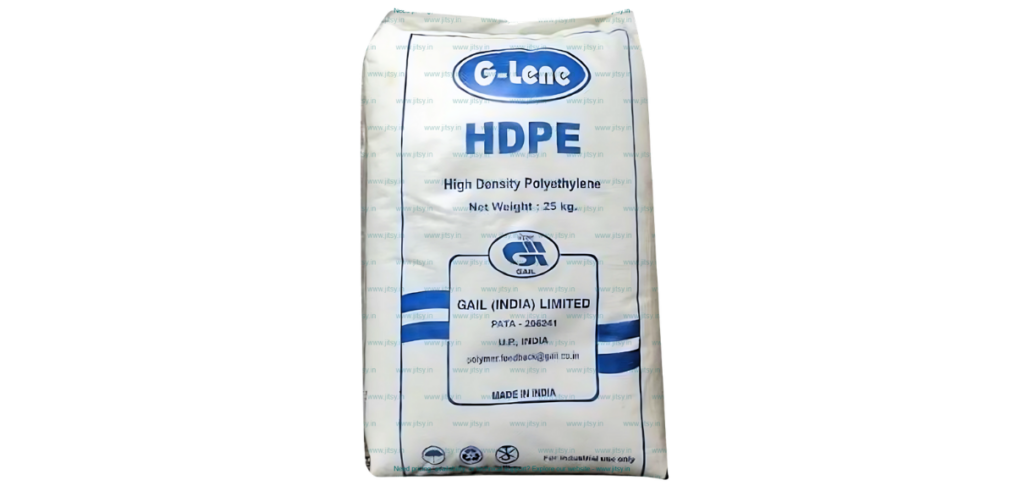
Gail HDPE G-Lene B53A003U
Gail HDPE G-Lene B53A003U is a natural-colour, UV-stabilized high density polyethylene (HDPE) resin from GAIL (India) Limited, developed for blow moulding of small-size cylindrical or near-cylindrical containers up to 5 litres. It is positioned for packaging where converters need a dependable balance of toughness and processability—especially for coloured packs and products that may see light or outdoor exposure.
GAIL describes B53A003U as being produced via G-Lene swing-plant technology (solution and gas-phase routes) and is engineered to deliver an optimum combination of toughness and ease of processing for small bottle production. The grade is also described as an ethylene–hexene copolymer, which is commonly associated with improved toughness and environmental stress crack resistance (ESCR) compared with many homopolymer HDPEs—useful for bottles that face handling abuse, cap stress, and contact with surfactants or oils.
For standards-driven procurement, the GAIL TDS states that B53A003U conforms to the natural-resin designation IS 7328-3B-PB-FXTA under IS 7328:2020 (polyethylene raw material used in moulding and extrusion). This conformity statement should be treated as the primary compliance anchor for the page.
Technical insights
B53A003U is typically shortlisted by blow moulders using a set of properties that correlate with parison stability, cycle consistency, bottle stiffness, and resistance to cracking in real packaging environments. Melt Flow Index (MFI): Typical MFI (I2, 190°C/2.16 kg) is 0.38 g/10 min. In blow moulding, lower MFI generally indicates higher melt strength, which can support parison control and help maintain wall distribution—important for small containers where appearance and top-load matter. Density: Market references commonly cite density around 0.953 g/cm³ for this grade. In HDPE blow moulding, higher density typically contributes to better stiffness and top-load performance, supporting bottles that must stack, ship, and resist paneling. Tensile strength and elongation: Your provided inputs cite tensile strength at yield 270 kg/cm² and elongation at break 700% (treat non-GAIL sources as secondary; keep the page anchored to the GAIL TDS for authoritative claims). This type of profile supports bottles that need to survive drops and squeezes without cracking. Flexural modulus: Flexural modulus is often used as a quick predictor of bottle rigidity and “feel.” Your inputs cite 10000 kg/cm², which aligns with a stiff packaging grade suitable for small bottles. Impact strength: Notched Izod impact strength is frequently used to compare toughness across blow grades. Your inputs cite 92 J/m, supporting the positioning for tough, small containers. ESCR: ESCR (ASTM D1693B, 100% Igepal, F50) is a key packaging metric for detergents, toiletries, and chemical bottles. Your inputs cite 80 hours, indicating a grade positioned for better stress-crack resistance than many general-purpose HDPEs. UV stabilization: B53A003U is positioned as UV-stabilized, which helps slow degradation (embrittlement and loss of strength) when bottles are exposed to sunlight during storage, transport, or outdoor use.Applications
Edible oil and ghee bottles (up to 5 L)
B53A003U is recommended for small blow-moulded containers used for edible oils and ghee where converters need stiffness, good appearance, and toughness for distribution handling. UV stabilization can be useful when packs are stored or displayed in light-exposed environments.Toiletries and cosmetics packaging
For shampoos, lotions, personal-care liquids, and cosmetic containers, this grade’s positioning emphasizes toughness and ESCR—important where surfactants, fragrances, and repeated cap/handling stresses can trigger cracking in weaker materials.Lubricant and automotive-fluid bottles
B53A003U is suitable for lube-oil bottles and related small containers where stiffness, impact resistance, and resistance to stress cracking help maintain pack integrity through transport and workshop handling.Industrial chemical bottles (small-size)
For industrial-chemical packaging under 5 L, processors commonly prioritize ESCR and impact performance. The grade’s copolymer positioning and UV stabilization support durability in tougher storage and handling conditions.Comparable alternatives
Comparable GAIL blow-moulding grades include B52A003/B52A003N and B53A003 (non-UV variants are often positioned for similar small-container applications). Based on your inputs, B53A003U’s key differentiator is UV stabilization, making it better suited for coloured packs and products that may be exposed to sunlight. Direct equivalence should not be assumed unless you match manufacturer technical sheets and validate on your blow moulding line. For substitution screening, compare MFI (0.38 class), density (~0.953 class), ESCR, impact, and stiffness, then confirm parison behavior, cycle time, and bottle drop performance via trials.Common search variants
Also searched as: GAIL B53A003U, G-Lene B53A003U HDPE, HDPE blow moulding dana, HDPE bottle grade 0.38 MFI, UV stabilized HDPE for bottles. Common misspellings/variants: B53A003, B53A003UA, B 53 A 003 U, Glen B53A003U.
Gail HDPE G-Lene P46A010U
Gail HDPE G-Lene P46A010U is a UV-stabilized, ethylene-hexene copolymer high density polyethylene (HDPE) pipe-extrusion grade from GAIL (India) Limited. It is recommended for PE63-class pressure pipe systems used in potable-water distribution, sprinkler/irrigation networks, effluent and waste-water pipelines, and cable/duct applications.
GAIL positions P46A010U as meeting hydrostatic strength requirements for PE63 material as per IS 4984:2016, and the TDS states that the resin conforms to the natural-resin designation IS 7328-3H-PB-EXTA under IS 7328:2020. In practical terms, this grade is built for pipe converters who need a very-low-MFI resin that supports long-term performance, good stress-crack resistance, and stable extrusion of pressure-pipe and duct profiles.
Because P46A010U is UV-stabilized (HALS-type positioning), it is also a strong fit for pipes and ducts that may see sunlight exposure during storage, transport, or initial installation before burial/cover.
Technical insights
Pipe-grade HDPE is typically evaluated on flow (for extrusion control), density/modulus (for stiffness and dimensional stability), and crack/impact resistance (for installation and long-term reliability). Melt Flow Index (MFI): P46A010U is positioned as a very-low-MFI pipe resin. Typical values provided in your inputs include I2 0.22 g/10 min and I5 0.95 g/10 min. Lower I2 is commonly associated with higher molecular weight, which can support better long-term creep and stress-crack resistance in pressure-pipe applications (with the trade-off of higher extrusion torque). Density: Typical density is cited as 0.948 g/cm³ in your inputs. In HDPE pipe, density is one of the indicators used for stiffness and dimensional stability, supporting consistent pipe geometry and performance under load. Tensile strength and elongation at yield: Your inputs cite tensile strength at yield 230 kg/cm² and elongation at yield 12%. This kind of profile supports ductility during handling/installation and helps reduce brittle-type failures during bending and joining (actual field performance depends on pipe design and processing). Flexural modulus: Flexural modulus is commonly used as a practical stiffness indicator for pipe profiles. Your inputs cite 8700 kg/cm², supporting the positioning for PE63 pipe and duct applications where dimensional stability matters. ESCR: ESCR (ASTM D1693B) is a key screening metric for pipe resins, especially where installation conditions and service environments can introduce stress concentrators. Your inputs cite >48 hours (10% Igepal solution v/v, F50), indicating a grade positioned for improved stress-crack resistance. Impact strength: Notched Izod impact strength is often used to compare toughness across pipe grades. Your inputs cite 120 J/m, supporting resistance to knocks during transport and installation. UV stabilization: UV stabilization is a practical differentiator for pipe/duct materials that may sit outdoors at site or remain partially exposed. It helps slow sunlight-driven degradation that can cause embrittlement and surface cracking over time.Applications
Potable-water pressure pipes (PE63 systems)
P46A010U is recommended for potable-water pressure pipe systems where hydrostatic strength class and long-term reliability are key. The grade’s PE63 positioning (IS 4984:2016) and very-low-MFI profile align with applications that prioritize sustained performance under internal pressure.Sprinkler and irrigation pipelines
For sprinkler and irrigation networks, converters and project buyers typically look for a balance of stiffness, impact resistance, and crack resistance to handle field installation stresses. UV stabilization is beneficial when pipes are stored outdoors before installation.Effluent and waste-water pipelines
In effluent and waste-water systems, resistance to slow crack growth and installation damage is often a priority. P46A010U’s pipe-grade positioning and ESCR-focused property set support these use cases for PE63-class networks.Cable/telecom ducts and protective conduits
P46A010U is also recommended for cable/duct pipelines where consistent extrusion, dimensional stability, and toughness matter. UV stabilization is useful for duct coils stored outdoors at site or exposed during staged installations.Comparable alternatives (positioning without claiming equivalence)
Comparable HDPE pipe grades in India include GAIL’s own P52A003 and other PE63-positioned materials, as well as higher-class pipe grades (e.g., PE80/PE100 families) depending on design requirements. However, direct equivalence to P46A010U should not be assumed unless you match manufacturer technical sheets and validate on your extrusion line. Based on your inputs, P46A010U’s key differentiator is UV stabilization combined with PE63 pipe positioning, making it a practical choice where outdoor handling/storage is expected. For substitution screening, compare MFI (I2/I5), density, ESCR, impact, and the stated IS 4984/IS 7328 conformity first—then confirm output rate, melt pressure, surface finish, and pipe test performance via trials.Common search variants
Also searched as: GAIL P46A010U, G-Lene P46A010U HDPE, PE63 pipe grade HDPE, HDPE pipe dana, UV stabilized HDPE pipe resin, HDPE duct grade. Common misspellings/variants: P 46 A 010 U, Glen P46A010U, P46A010, P46A010U PE 63.
Gail HDPE G-Lene T50A010
Gail HDPE G-Lene T50A010 is a natural-colour, UV-stabilized high-density polyethylene (HDPE) from GAIL (India) Limited, designed for raffia and monofilament processing where converters need fine-denier output with reliable drawability. It is positioned for low-denier stretched tapes and fine-yarn products used in tarpaulins, wrapping fabrics, and woven sacks, and for low-denier monofilament applications such as fishing nets and mosquito nets.
GAIL describes T50A010 as offering an optimum balance of moderate strength and high elongation with excellent processability and low water carry-over. For processors, that translates into stable extrusion through fine dies, smoother stretching/orientation for thin tapes and yarns, and practical toughness/flexibility in netting and lightweight woven structures.
From a standards standpoint, the GAIL TDS states that the material conforms to the natural-resin designation IS 7328-3B-TB-FXDA under IS 7328:2020 for polyethylene used in moulding and extrusion. This conformity language is a key trust signal for technical buyers comparing against reseller pages.
Technical insights
T50A010 is typically shortlisted using a set of datasheet properties that correlate with low-denier tape formation, monofilament stability, and end-use flexibility. Melt Flow Index (MFI): Typical MFI (I2, 190°C/2.16 kg) is 1.0 g/10 min. For low-denier raffia and monofilament, this flow level generally supports stable extrusion through finer die geometries and helps maintain consistent output at practical line speeds. Density: Typical density is 0.950 g/cm³. This HDPE density range supports stiffness and strength versus lower-density polyethylenes, while still aligning with the drawability needed for thin tapes and fine net yarns. Tensile strength and elongation at yield: Typical tensile strength at yield is cited as 230 kg/cm², with elongation at yield 12% (as provided in your inputs). This combination supports the grade’s positioning as moderate-strength with higher elongation, which is often desirable for fine-denier products that must stretch without frequent breaks. Flexural modulus: Typical flexural modulus is 8500 kg/cm². Modulus is a practical indicator of stiffness; for tarpaulin and wrapping fabrics it influences body and shape retention, while for netting it must be balanced with flexibility. Vicat softening point: Typical Vicat softening point (10 N) is 123°C (as provided in your inputs). This helps indicate the grade’s softening behavior under heat exposure during processing and in warm service conditions. UV stabilization: T50A010 is positioned as UV-stabilized, which is especially relevant for tarpaulins and netting exposed to sunlight. UV stabilization helps slow down degradation (embrittlement and loss of strength) during outdoor use.Applications
Tarpaulins and outdoor woven fabrics
T50A010 is suitable for low-denier stretched tapes used in tarpaulin-type woven fabrics where converters need a balance of stiffness and flexibility plus UV resistance. It is a fit for applications where outdoor exposure and repeated folding/unfolding can accelerate aging in non-stabilized materials.Wrapping fabric for industrial and consumer uses
For wrapping fabrics, T50A010 supports thin-tape production and consistent orientation, helping converters achieve uniform fabric quality. The moderate-strength/high-elongation positioning can be beneficial where the fabric must tolerate handling without tearing.Woven sacks (lightweight to general-purpose)
T50A010 can be used for woven sacks where low-denier tapes are required. Compared with higher-tenacity tape grades, it is positioned more toward fine-denier output and elongation balance rather than maximum sack tenacity for the heaviest-duty packaging.Fishing nets and mosquito nets (low-denier monofilament)
T50A010 is positioned for low-denier monofilament applications such as fishing nets and mosquito nets. For these products, processors often prioritize smooth extrusion through fine dies, stable draw, and flexibility, with UV stabilization supporting longer outdoor service life.Comparable alternatives
Comparable HDPE raffia/tape and monofilament grades in India include GAIL’s own W50A009 and W52A009/W52A009N, and other UV-stabilized monofilament-positioned grades (including those marketed specifically for fine-denier netting). However, direct equivalence to T50A010 should not be assumed unless you match manufacturer technical sheets and validate on your line. As positioned in your inputs, T50A010 is optimized for low-denier raffia and monofilament with UV stabilization and a moderate-strength/high-elongation balance. In contrast, grades like W50A009 are typically positioned more toward high-tenacity tape for heavy-duty woven sacks. For substitution decisions, compare MFI (~1.0), density (~0.950), tensile/elongation balance, and UV stabilization first, then confirm die stability, draw ratio window, and break rate through trials.Common search variants
Also searched as: GAIL T50A010, G-Lene T50A010 HDPE, T50A010A HDPE, HDPE T50A010 raffia, HDPE monofilament grade T50A010, UV stabilized HDPE dana. Common misspellings/variants: T 50 A 010, Glen T50A010, G-Lene T50A10, T50A010 UV.
Gail HDPE G-Lene W50A009
Gail HDPE G-Lene W50A009 is a natural-colour, prime high density polyethylene (HDPE) grade from GAIL (India) Limited, designed specifically for tape extrusion and stretching. It is positioned for manufacturing high-strength (high-tenacity) stretched tapes that are woven into sacks for bulk packaging applications such as fertilizer, food grain, sugar, and salt.
GAIL highlights W50A009 for high strength (tenacity), good elongation, excellent processability, and strong orientation characteristics with low water carry-over. In practical conversion terms, this points to a tape-grade HDPE that can run smoothly on raffia/tape lines, tolerate stretching (drawing) to build strength, and help converters achieve consistent woven fabric performance.
From a standards and procurement standpoint, the GAIL technical sheet states that W50A009 conforms to the natural-resin designation IS 7328-3B-TB-FXDA under IS 7328:2020 (polyethylene used in moulding and extrusion). For buyers who require documented compliance positioning, this is a key differentiator versus generic marketplace listings.
Technical insights
W50A009 is typically evaluated by tape and woven-sack converters using a small set of datasheet properties that correlate with tape strength development, stretching stability, and woven fabric durability. Melt Flow Index (MFI): Typical MFI (I2, 190°C/2.16 kg) is 0.9 g/10 min. For tape extrusion, this low-to-mid MFI range is commonly associated with stable extrusion and good orientation potential during stretching, supporting high-tenacity tape output. Density: Typical density is 0.952 g/cm³. In HDPE tape and woven sacks, density is a key signal for stiffness and strength potential, which can translate into better sack structure retention and resistance to deformation under load. Tensile strength at yield: Typical tensile strength at yield is 230 kg/cm² (ASTM D638, Type IV). This provides a useful comparative indicator of the grade’s strength profile and supports its positioning for high-strength tape applications. Elongation at yield: Typical elongation at yield is 13% (ASTM D638, Type IV). For converters, this suggests a balance of strength with usable elongation, which can help reduce tape breakage during stretching and downstream weaving. Flexural modulus: Typical flexural modulus is 8500 kg/cm² (ASTM D790). Higher modulus generally indicates a stiffer material, which is often preferred for woven sacks that need rigidity and stack stability. Vicat softening point: Typical Vicat softening point (10 N) is 122°C (ASTM D1525), supporting thermal stability during processing and in warm handling/storage conditions. Processing guidance: GAIL’s datasheet provides tape-line guidance including barrel temperature 200–260°C, die temperature 245–260°C, and a stretch ratio of 5.3–5.6. These details are highly relevant for raffia/tape processors aiming for consistent orientation and high tenacity.Applications
Woven sacks for fertilizer, food grain, sugar, and salt packaging
W50A009 is recommended for producing high-tenacity stretched tapes that are woven into sacks for bulk packaging. It is a strong fit where sacks must withstand puncture, abrasion, and rough handling through filling, transport, and storage.Industrial bulk packaging tapes for demanding supply chains
Beyond commodity sacks, W50A009 is positioned for industrial and agricultural bulk-packaging tapes where converters need reliable orientation characteristics and consistent tape quality to maintain loom efficiency and fabric uniformity.Tarpaulin and net-type woven/mesh products (brochure-positioned)
In broader GAIL positioning, tape-grade HDPE can extend into tarpaulin-type applications and net-related products (e.g., fishing nets and mosquito nets). For SEO, this supports capturing adjacent high-intent searches, while keeping the primary positioning anchored to tape extrusion and woven sacks.Comparable alternatives
Comparable HDPE raffia/tape grades in India include GAIL’s own W52A009 / W52A009N and T50A010, along with raffia grades from other producers. That said, direct equivalence should not be assumed unless you match manufacturer technical sheets and validate on your line. As positioned in your provided references, W50A009 is a high-tenacity tape grade with defined tape-stretch guidance (including stretch ratio). If an alternative grade differs in MFI (flow), density (stiffness), tensile/elongation balance, or recommended stretching window, it can change tape break rate, achievable draw ratio, and woven fabric performance. A practical comparison approach is to shortlist alternatives with similar MFI ~0.9 and similar density/modulus, then confirm tape strength, draw stability, and weaving performance through trials.Common search variants
Also searched as: GAIL W50A009, G-Lene W50A009 HDPE, W50A009 HDPE raffia, W50A009 tape extrusion grade, HDPE dana W50A009, HDPE raffia granules. Common misspellings/variants: W50A009A, W 50 A 009, G Lene W50A009, Glen W50A009.
Gail HDPE G-Lene Y50A010U
Gail HDPE G-Lene Y50A010U is a natural-colour, UV-stabilized high density polyethylene (HDPE) resin from GAIL (India) Limited. It is designed for converters running low-denier monofilament and low-denier raffia (stretched tape) lines where outdoor durability, stable processing, and a balanced strength–elongation profile matter.
GAIL positions Y50A010U for fishing nets and mosquito nets (low-denier monofilament) and for tarpaulin and similar tape-type products (low-denier stretched tapes). The grade is described as offering an optimum balance of strength and elongation, excellent processability, and low water carry-over—practical attributes that help reduce instability on fine-die extrusion and improve draw consistency on thin-denier output.
For standards-driven procurement, the GAIL TDS explicitly states that Y50A010U conforms to the natural-resin designation IS 7328-2B-NB-BXDA under IS 7328:2020 (polyethylene raw material used in moulding and extrusion). This conformity statement should be treated as the primary compliance anchor for the product page.
Technical insights
Y50A010U is typically evaluated using a small set of datasheet-style properties that correlate strongly with monofilament stability, tape drawability, and outdoor service life. Melt Flow Index (MFI): Typical MFI (I2, 190°C/2.16 kg) is 1.0 g/10 min. In low-denier monofilament and tape extrusion, this flow level is commonly associated with stable extrusion through finer die geometries and consistent output at practical line speeds. Density: Typical density is 0.950 g/cm³. This density range supports higher stiffness and tensile potential than lower-density polyethylene, while still aligning with the drawability needed for fine-denier nets and thin tapes. Tensile strength at yield: Tensile strength at yield is often used as a quick indicator of how the resin may perform after orientation/drawing. Your provided inputs cite 230 kg/cm² (note: treat non-GAIL sources as secondary; keep the page anchored to the GAIL TDS for authoritative claims). Flexural modulus: Flexural modulus is a practical stiffness indicator that influences fabric body, handling, and dimensional stability in woven structures. Your inputs cite 8500 kg/cm² as a typical value cluster used in market references. Vicat softening point: Typical Vicat softening point (10 N) is 123°C. This helps buyers understand softening behavior under heat exposure during processing and in warm service conditions. UV stabilization: Y50A010U is positioned as UV-stabilized, which is critical for sun-exposed end uses like fishing nets, mosquito nets, and tarpaulin-type covers. UV stabilization helps slow degradation (embrittlement and loss of strength) over time in outdoor exposure.Applications
Fishing nets (low-denier monofilament)
Y50A010U is designed for low-denier monofilament used in fishing nets where processors need stable fine-die extrusion, consistent drawing, and toughness that holds up under abrasion and repeated flexing. UV stabilization supports longer outdoor service life in sun-exposed fisheries applications.Mosquito nets (fine-denier monofilament)
For mosquito nets, the grade’s positioning targets fine-denier monofilament output where uniformity and draw stability are key to achieving consistent mesh and feel. UV stabilization is a practical advantage for nets used near windows, outdoors, or in high-sun regions.Tarpaulin and tarpaulin-type woven fabrics (low-denier stretched tapes)
Y50A010U is also suitable for low-denier stretched tape applications such as tarpaulin and similar tape-type products. Converters typically look for a balance of stiffness and elongation so thin tapes can be drawn without frequent breaks while still delivering usable fabric body.Light wrapping fabrics and tape-type products
For wrapping fabric and related tape-type products, Y50A010U’s mid-MFI positioning supports processability on thin-tape lines, while the UV-stabilized formulation helps reduce premature aging when the finished goods see sunlight during storage or use.Comparable alternatives
Comparable HDPE monofilament/raffia grades in India include GAIL’s own T50A010/T50A010A and tape-focused grades such as W50A009 and W52A009/W52A009N. That said, direct equivalence should not be assumed unless you match manufacturer technical sheets and validate on your line. Based on the provided positioning, Y50A010U is specifically UV-stabilized and targeted at low-denier monofilament (nets) plus low-denier tapes, whereas grades like W50A009 are typically positioned more toward higher-tenacity tape for heavy-duty woven sacks. For substitution screening, compare MFI (~1.0), density (~0.950), UV stabilization, and the strength–elongation balance first, then confirm die stability, draw ratio window, and break rate via controlled trials.Common search variants
Also searched as: GAIL Y50A010U, G-Lene Y50A010U HDPE, Y50A010UA HDPE, HDPE monofilament dana, mosquito net HDPE grade, fishing net HDPE granules, UV stabilized HDPE raffia. Common misspellings/variants: Y 50 A 010 U, Glen Y50A010U, Y50A010, Y50A010U 1.0 MFI.
Gail HDPE G-Lex E52U003
Gail HDPE G-Lex E52U003 (also referenced alongside E52U003N) is a UV-stabilized high-density polyethylene (HDPE) resin engineered for telecom-duct extrusion—specifically PLB (permanently lubricated) HDPE ducts and DWC (double-walled corrugated) HDPE ducts used as underground optical fiber cable (OFC) conduits.
Positioned as a duct-grade material (not a pressure-pipe grade), E52U003 is designed for the performance priorities that matter in telecom infrastructure: consistent extrusion behavior, duct stiffness and impact robustness during handling/installation, and long-term resistance to oxidative/thermal aging. GAIL describes the resin family as HDPE with a bimodal molecular weight distribution produced via its G-Lex slurry-process technology, supporting a balance of mechanical strength, stiffness, processability, and ESCR (environmental stress crack resistance).
For buyers and engineers evaluating duct compounds, E52U003 is typically selected when UV stabilization and compliance-aligned duct performance are required for outdoor storage/handling and long-life underground service. Manufacturer documentation also positions the grade as conforming to DoT/TEC generic requirements for the relevant telecom duct applications.
Technical insights
Key datasheet properties (typical values)
- Melt Flow Index (I5): 0.95 g/10 minIndicates a flow level suited to extrusion of duct profiles where stable melt strength and output consistency are critical.
- Density @ 23 °C: 0.954 g/ccA high-density level associated with higher stiffness and dimensional stability—important for duct ring stiffness and installation durability.
- Tensile Strength @ Yield: 240 kg/cm²A practical indicator of resistance to deformation under load during pulling, bending, and installation handling.
- Elongation @ Yield: 10%Reflects controlled duct stiffness at the onset of yielding—useful for maintaining shape under installation stresses.
- Elongation @ Break: >600%Signals toughness and duct survivability under impact or sudden strain events.
- Thermal Stability (OIT): >45 minutesSupports oxidative stability expectations for long-life telecom infrastructure and improved resistance to thermal aging.
- Heat Deflection Temperature (45 g/mm²): 67 °CHelps indicate shape retention under elevated temperatures that may occur during storage, transport, or installation environments.
- Vicat Softening Point: 123 °C Provides a reference for softening behavior at higher temperatures relevant to processing and end-use exposure.
Applications
PLB HDPE telecom ducts for underground OFC conduits: E52U003 is recommended for permanently lubricated (PLB) HDPE telecom ducts where low-friction cable pulling, dimensional stability, and long-term reliability are required for underground optical fiber cable protection. DWC (double-walled corrugated) HDPE ducts: The grade is also positioned for double-walled corrugated duct systems used in telecom and utility conduit networks, where stiffness-to-toughness balance and robust handling performance support installation success. Telecom duct extrusion lines requiring UV-stabilized handling stability: For duct manufacturers and converters, UV stabilization is a key selection driver when pellets, compounds, or finished ducts may see outdoor exposure during storage, yard handling, or staged installation.Comparable alternatives
Comparable telecom-duct HDPE grades exist across Indian petrochemical suppliers and duct-compounding channels, but direct equivalence to G-Lex E52U003 should not be assumed without matching manufacturer TDS data and compliance requirements. Within GAIL’s own positioning, E52U003 and E52U003N are paired in the same manufacturer document; however, a strict “drop-in equivalent” claim between the two variants is not confirmed here beyond the paired listing. When comparing alternatives, buyers typically benchmark:- Flow vs. stiffness balance: MFI (I5) near 0.95 g/10 min and density around 0.954 g/cc for duct extrusion behavior.
- Toughness indicators: elongation at break and impact robustness for installation survivability.
- Stabilization package: OIT and UV stabilization expectations for long-life duct service.
- Standards alignment: DoT/TEC generic requirements referenced by the manufacturer for the intended PLB/DWC duct application.
Common search variants
Also searched as: HDPE telecom duct granules, OFC duct HDPE, PLB duct resin, DWC duct resin, HDPE dana for telecom ducts. Common misspellings/variants: G Lex E52U003, GAIL E52U003, E52U003 HDPE, E52U003 0.95 MFI.
Gail HDPE G-Lex P54A001
Gail HDPE G‑Lex P54A001/P54A001N is a high‑density polyethylene (HDPE) resin for pipe extrusion from GAIL (India) Limited (Government of India undertaking). It is positioned as a PE‑80 class pipe material meeting hydrostatic strength requirements as per IS 4984:2016 and conforming to IS 7328‑3B‑PB‑FXTA (IS 7328:2020).
This grade is produced using G‑Lex slurry‑process technology and described as having a bimodal molecular weight distribution—a structure commonly selected for pressure‑pipe applications because it supports a strong balance of long‑term creep strength, impact resistance, and environmental stress crack resistance (ESCR). In practical terms, that makes P54A001 relevant for infrastructure and agricultural pipe systems where performance must be maintained over decades under pressure, soil load, and chemical exposure.
A key differentiator called out in the provided inputs is UV stabilization, which helps during outdoor handling, storage, and installation exposure compared with non‑UV pipe grades (final pipe performance still depends on pipe design, carbon black/additive package, and compliance testing by the pipe manufacturer).
Technical insights
Typical datasheet‑style properties (from the provided inputs)
- Melt Flow Index (MFI, I2; 190°C/2.16 kg): 09 g/10 min (ASTM D1238)
- Melt Flow Index (MFI, I5; 190°C/5 kg): 46 g/10 min (ASTM D1238)
- Density (23°C): 954 g/cm³ (ASTM D1505)
- Tensile strength at yield: 265 kg/cm² (ASTM D638)
- Elongation at break: 750% (ASTM D638)
- Flexural modulus: 1180 kg/cm² (ASTM D790)
What these properties indicate for pipe performance
Very low MFI (I2 0.09): Low MFI typically indicates higher molecular weight, which is commonly associated with better creep resistance and slow crack growth resistance—key for PE‑80 pressure pipe systems. It can also mean higher extrusion torque and the need for stable temperature control. Bimodal structure (why it’s valued): Bimodal HDPE pipe grades are designed to combine processability with long‑term strength and ESCR, supporting durable performance in potable water and sewerage pipelines. Density 0.954 and flexural modulus 1180: These values align with a stiffer HDPE profile, supporting dimensional stability and hoop stress resistance in pressure pipe designs. Tensile yield and elongation: Tensile yield reflects strength under load, while high elongation indicates ductility—helpful for handling installation stresses and resisting brittle failure modes. Typical‑values note: The provided values are described as typical guidance values. Final pipe qualification should be done against IS 4984 requirements by the pipe manufacturer using the intended compound and processing conditions.Applications
Potable water pressure pipe systems (PE‑80; IS 4984:2016)
P54A001 is recommended for potable water systems where PE‑80 class performance and long‑term hydrostatic strength are required. It is relevant for municipal and industrial water distribution networks that need a balance of durability, chemical resistance, and reliable pressure performance.Sprinkler irrigation and agricultural pressure lines
For sprinkler irrigation pipelines, the grade is selected for its pressure‑pipe positioning and resistance profile, supporting long service life in agricultural environments. UV stabilization is a practical advantage for outdoor storage and installation phases.Sewerage and drainage pipelines
In sewerage pipe extrusion, converters typically prioritize crack resistance, toughness, and chemical resistance. P54A001’s pipe‑grade, bimodal positioning makes it suitable for municipal infrastructure applications where consistent long‑term performance is critical.Comparable alternatives
Comparable HDPE pipe grades exist in India, but direct equivalence should only be claimed after matching manufacturer datasheets and compliance requirements.- GAIL P52A003 / P52A003N (PE‑80, non‑UV): Often positioned as PE‑80 pipe grades without UV stabilization. Compared to those, P54A001 adds UV stabilization and is referenced with a slightly higher MFI in the provided inputs, which can influence processing and performance balance.
- Other PE‑80 HDPE pipe compounds: Many suppliers offer PE‑80 class resins; however, pipe performance depends on more than MFI/density alone. For a true comparison, match MFI (I2/I5), density, ESCR/SCG performance, and IS 4984 compliance test results.
