





Brand
 Bhansali Engineering Polymers LimitedBhansali Engineering Polymers Limited 3
 Borouge Pte LtdBorouge Pte Ltd 1
 Dongsung ChemicalDongsung Chemical 2
 Dow-MitsuiDow-Mitsui 4
 FPC Formosa Plastics CorporationFPC Formosa Plastics Corporation 1
 Gail India LimitedGail India Limited 32
 Haldia Petrochemicals LtdHaldia Petrochemicals Ltd 25
 Hanwha Solutions ChemicalHanwha Solutions Chemical 4
 Hanwha Total Energies PetrochemicalHanwha Total Energies Petrochemical 7
 HMEL - HPCL-Mittal Energy LimitedHMEL - HPCL-Mittal Energy Limited 55
 IOCL - Indian Oil Corporation LimitedIOCL - Indian Oil Corporation Limited 71
 Jiangsu Daoming Chemical Co LtdJiangsu Daoming Chemical Co Ltd 2
 LG ChemLG Chem 8
 Lotte ChemicalLotte Chemical 4
 LyondellBasell Industries NVLyondellBasell Industries NV 1
 Mangalore Refinery & Petrochemicals LimitedMangalore Refinery & Petrochemicals Limited 7
 Marcopolo International LLCMarcopolo International LLC 2
 Nouryon Functional ChemicalsNouryon Functional Chemicals 8
 ONGC Petro Additions LtdONGC Petro Additions Ltd 44
 Reliance Industries LimitedReliance Industries Limited 48
 SabicSabic 1
 Sipchem - Saudi International PetrochemicalSipchem - Saudi International Petrochemical 8
 SK Functional PolymerSK Functional Polymer 6
 The Dow Chemical CompanyThe Dow Chemical Company 3
 TPI Polene Public Company LimitedTPI Polene Public Company Limited 3
 VersalisVersalis 4
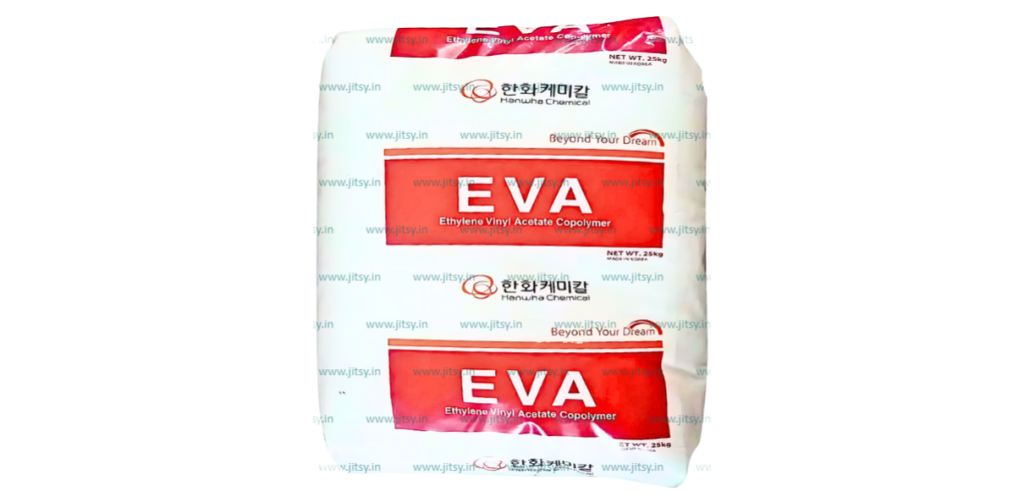
Hanwha TotalEnergies EVA E180L
Hanwha TotalEnergies EVA E180L is a premium, film-grade 18% vinyl-acetate ethylene-vinyl acetate (EVA) copolymer engineered for transparent cast films, general films, and eco-friendly sheets. E180L is designed for converters demanding exceptional optical clarity, ultra-low fisheye, high gloss, and robust processability. With a melt index of 2 g/10 min, 18 wt% VA, density 0.940 g/cm³, tensile strength at break 260 kg/cm² (~25.5 MPa), elongation >600–750%, haze just 2%, and gloss 75%, E180L delivers industry-leading performance for India’s film, packaging, and lamination clusters.
Unlike foam or coating EVAs, E180L is purpose-built for precision film extrusion, cast film lines, and multi-layer lamination, offering superior dimensional stability, low shrinkage, and a crystal-clear finish. It’s the trusted choice for high-end packaging, technical films, and sustainable sheet solutions across Delhi-NCR, Gujarat, Tamil Nadu, Maharashtra, and beyond.
Functional Features & Technical Authority
- Low Fisheye Content: Proprietary resin design and process minimize gel spots and optical defects, ensuring a consistently smooth, clear film surface.
- Exceptional Optical Clarity: Ultra-low haze (2%) and high gloss (75%) deliver brilliant transparency and shelf appeal for premium packaging and protective films.
- High Mechanical Balance: 260 kg/cm² tensile strength and up to 750% TD elongation combine strength with flexibility—resisting tearing and deformation.
- Excellent Processability: 2 MFI enables stable, controlled extrusion for thin films (10–50 µm) and multilayer structures, minimizing downtime and scrap.
- Dimensional Stability: Low shrinkage & creep, high TD elongation, and robust MD/TD balance enable reliable lamination, thermoforming, and downstream converting.
- Lamination & Tie-Layer Compatibility: 18% VA ensures strong adhesion to a wide range of polymers (BOPP, LDPE, nylon), making E180L ideal for complex film structures.
- Eco-Friendly Sheet Performance: Virgin EVA base and processability make E180L compatible with sustainable, compostable, and recyclable film blends.
- Thermal Consistency: Stable extrusion window (180–220°C), Vicat softening at 56°C, and melting point 86°C support high-throughput, low-defect film operations.
Applications
Hanwha E180L is engineered for transparent film and sheet applications where optical quality, process stability, and mechanical balance are critical.Transparent Cast Films:
Perfect for flexible packaging (fresh produce, bakery, deli), high-gloss laminates, and protective films for electronics and appliances. E180L’s low haze and high gloss make it the benchmark for premium, consumer-facing transparent films.Multi-Layer Lamination & Tie-Layers:
Used as a heat-seal or tie-layer in BOPP/LDPE/nylon laminates, E180L’s polarity and clarity enable seamless bonding without optical compromise. Ideal for flexible packaging, pouches, and technical laminates demanding both strength and clarity.Eco-Friendly & Sustainable Sheets:
Supports compostable and recyclable film blends, as well as general-purpose EVA sheets for consumer products. E180L’s processability ensures efficient sheet extrusion for downstream thermoforming or cutting.Industrial & Specialty Films:
Applied in agricultural films (greenhouse, mulch), industrial protective films, and consumer goods packaging—where a balance of transparency, flexibility, and toughness is required.Key Application Highlights:
- Ultra-clear cast films (haze 2%) for high-clarity packaging and lamination
- Multi-layer flexible pouches, tie-layers, and heat-seal films
- Eco-friendly sheets and compostable blends
- Industrial/agricultural films and protective sheeting
Hanwha TotalEnergies EVA E181F
Hanwha TotalEnergies EVA E181F (often marketed as Hanwha 181F / 18% EVA 181F) is a premium ethylene‑vinyl acetate (EVA) copolymer resin engineered for crosslinked foam applications, especially athletic shoe midsoles, insoles, and performance footwear foam. With 18 wt% vinyl acetate, melt flow rate 2.5 g/10 min (190°C/2.16 kg), and density 0.940 g/cm³, E181F is designed for conventional kneading and rolling equipment to mix crosslinking and foaming agents for high-rebound, cushioned, and robust footwear foams.
Widely used in: Sports shoe manufacturing, foam converters, and footwear supply chains across Delhi-NCR, Gujarat, Maharashtra, Tamil Nadu, and all major Indian footwear clusters.
Functional Features & Specs - Why E181F Leads in Foam Footwear
- 18%-VA-Foam: 18 wt% vinyl acetate - industry standard for athletic and performance foam footwear.
- 2.5-MFR-Foaming: Melt flow rate 2.5 g/10 min (190°C/2.16 kg, ASTM D1238) - perfect for crosslinked foam processing, balancing flow and body.
- Athletic-Focused: Engineered and documented for midsoles/insoles of sports and performance footwear.
- High-Elongation: 750% elongation at break - delivers resilient, cushioned, long-lasting foam.
- Kneader-Friendly: Tailored for use in conventional kneading and rolling equipment for mixing crosslinker and foaming agents.
- Mechanical Authority: Tensile strength ≈ 23.5 MPa, density 0.940 g/cm³ - robust, high-rebound, and lightweight.
- Process Consistency: Detailed Hanwha documentation and global recognition ensure batch-to-batch reliability for converters and shoe brands.
- Global Certification: Supported by Hanwha TotalEnergies leaflets, MSDS, and global distributor data, making E181F a reference foam EVA for technical buyers.
Applications - Where E181F Excels
Crosslinked Foam Midsoles & Insoles
- Regions: Delhi-NCR, Gujarat, Tamil Nadu, Maharashtra
- Uses: Athletic shoe midsoles, insoles, footbeds, high-performance foam layers
- Why: 18% VA, 2.5 MFR, 750% elongation - ideal for rebound, cushioning, and durability in sports and performance footwear
General Footwear Foam
- Uses: Cushion pads, sandals, casual footwear, comfort layers, footbeds
- Why: Soft, lightweight, shock-absorbing foam - engineered for footwear comfort and performance
EVA Foam Sheets & Blocks
- Uses: Sports equipment, protective padding, ergonomic mats, industrial cushioning
- Why: High elongation and tensile strength, excellent for soft, resilient foam sheets and blocks
Other Crosslinked Foam Applications
- Uses: Sports mats, yoga mats, helmet padding, vibration-damping components
- Why: Proven crosslinking, mechanical stability, and foamability for diverse cushioning needs
Hanwha TotalEnergies EVA E181L
Hanwha TotalEnergies EVA E181L is an advanced 18% vinyl-acetate EVA copolymer engineered for high-speed T-die extrusion coating of BOPP film, kraft paper, aluminium foil, and flexible packaging. Manufactured by Hanwha TotalEnergies (South Korea) using proprietary high-pressure tubular polymerization, E181L delivers MFI 25 g/10 min, VA 18 wt%, density 0.940 g/cm³, tensile yield 125 kg/cm² (~12.3 MPa), elongation >600%, Vicat 56°C, melting point 83°C—making it the top choice for converters running high-productivity coating lines across India.
Key Functions, Features & Specs - Technical Authority
- 18%-VA-Adhesive: 18% VA content ensures strong adhesion to BOPP, kraft paper, foil, and film substrates.
- 25-MFI-HighSpeed: Melt index 25 g/10 min enables rapid, thin-layer extrusion at high line speeds.
- Optical-Clear: Proprietary tubular process yields excellent optical clarity and low gel level for transparent coatings.
- Coating-Focused: Explicitly designed for T-die extrusion coating—distinct from foam or general film EVAs.
- Balanced-Drawability: Stable film geometry, well-balanced drawability, and neck-in for reliable production.
Detailed Applications - Where E181L Excels
Extrusion Coating for Flexible Packaging (Core)
- BOPP film coating: For snacks, bakery, and dried goods packaging—moisture barrier, breathable, and printable.
- Kraft paper lamination: For food wraps, burger wrappers, pizza boxes—moisture and grease resistance.
- Aluminium foil lamination: For flexible, printable food packaging and technical laminates.
- Multi-layer films: EVA as a heat-seal or adhesion layer in co-extruded food packaging.
Why E181L:
High MFI allows thin, uniform coatings at high speed; 18% VA ensures strong substrate adhesion; low gel level and high clarity guarantee premium film quality.General Flexible Packaging Films
- Stand-up pouches, gusset pouches, and laminates for non-food (cosmetics, detergents, industrial goods).
- Technical films, agricultural films with EVA heat-seal layer.
Specialty & Technical Films
- Tarpaulins, industrial tarps, protective films for glass, plastic, and metal.
- Custom laminates where clarity, adhesion, and thin-film performance are critical.
Miscellaneous Coating Applications
- Cable sheathing (select cases), film-to-substrate adhesive layers, industrial bonding.
Hanwha TotalEnergies EVA E182L
Hanwha TotalEnergies EVA E182L is a next-generation 18% ethylene-vinyl acetate (EVA) copolymer engineered for high-productivity extrusion coating of food packaging film, kraft paper, aluminium foil, and BOPP/PET film. Produced using Hanwha’s proprietary high-pressure tubular polymerization process, E182L is uniquely positioned with a melt index of 15 g/10 min, VA 18 wt%, density 0.940 g/cm³, tensile yield 130 kg/cm² (~12.7 MPa), elongation >600%, Vicat 56°C, melt temp 83°C, and brittleness < -70°C.
E182L is the sweet spot between ultra-fast coating (E181L, MFI 25) and transparent film (E180L, MFI 2) - delivering superior flow control, rapid line speeds, outstanding optical clarity, low gel level, high adhesion strength, and well-balanced drawability. This makes E182L the preferred choice for converters seeking cost-effective, high-volume, and defect-free coating production across India’s food packaging, flexible packaging, and industrial film clusters.
Functional Features & Technical Authority
- Balanced MFI for Coating: MFI 15 enables high-speed extrusion coating with optimal control over coating thickness and uniformity - striking the perfect balance between productivity and precision.
- High Adhesion Strength: 18% VA content ensures robust bonding to BOPP, PET, kraft, and foil substrates, eliminating the need for separate tie-layer adhesives and enhancing laminate durability.
- Outstanding Optical Clarity: Proprietary tubular process delivers gel-free, transparent coatings - critical for consumer-facing food packaging and premium flexible packaging.
- Low Gel Level: Advanced polymerization minimizes gel formation, resulting in smooth, defect-free coating surfaces and reduced scrap rates.
- Well-Balanced Drawability: Stable film geometry, controlled neck-in, and consistent thickness - preventing wrinkles, edge waves, and coating variability, even at high line speeds.
- Cost-Effective Production: Rapid coating speeds and thin, uniform layers reduce material and energy costs per unit area, maximizing throughput for price-sensitive applications.
- Thermal & Mechanical Stability: Vicat 56°C, melt temp 83°C, and brittleness < -70°C ensure coatings perform reliably across temperature extremes and during downstream processing.
Applications
Hanwha E182L is engineered for high-speed, high-quality extrusion coating applications where clarity, adhesion, and productivity are essential.Extrusion Coating for Food Packaging Film:
182L is the top choice for BOPP, PET, kraft paper, and aluminium foil coatings - delivering heat-sealable, food-safe layers for snacks, baked goods, and dried food packaging. Its MFI 15 allows thin, transparent, and defect-free coatings at competitive line speeds.Flexible Packaging & Lamination:
Ideal for stand-up pouches, gusset bags, roll film laminates, and non-food flexible packaging (cosmetics, detergents, industrial goods). E182L’s adhesion and flexibility ensure strong, reliable laminates that withstand handling and processing stress.Specialty & Technical Coating Films:
Used in agricultural films (greenhouse, mulch), technical films, and custom laminates where EVA coating provides moisture/UV protection, sealability, and multi-layer bonding.Miscellaneous Extrusion & Industrial Applications:
Compatible with cable sheathing, adhesive layers, and industrial bonding where a balanced-flow, high-clarity EVA is required.Key Application Highlights:
- BOPP/PET film coating for food and flexible packaging
- Kraft paper and foil lamination for food wraps and takeaway containers
- High-speed, defect-free coating for roll film laminates
- Agricultural/technical films and specialty laminates
Hanwha TotalEnergies EVA E263F
Hanwha TotalEnergies EVA E263F is a dual-purpose, ultra-low-MFI ethylene-vinyl acetate (EVA) copolymer engineered for crosslinked foam in athletic footwear and LSNH (Low Smoke No Halogen) flame-retardant wire & cable compounds. With 26% vinyl acetate, MFI 3 g/10 min, density 0.947 g/cm³, tensile strength 250 kg/cm², elongation >800%, Shore D 28, Vicat 47°C, melting 73°C, and brittleness <−70°C, E263F delivers exceptional split tear resistance, mechanical durability, and outstanding low-temperature flexibility. Manufactured with strict contaminant control and uniform VA/MI, E263F is trusted by India’s top footwear, foam, cable, and specialty compound manufacturers for high-performance, batch-consistent results.
Functional Features & Technical Authority
- 26%-VA-Flexible: Delivers optimal flexibility and mechanical durability for both foam and cable applications.
- 3-MFI-Precise: Ultra-low melt index enables precise foam density control and compound consistency.
- 250kg-Tensile: Exceptional tensile strength ensures robust mechanical structure and long-lasting durability.
- Split-Tear: Outstanding split tear resistance for durable foam soles and resilient cable jackets.
- Cold-Resilient: Brittleness temperature <−70°C provides extreme low-temperature flexibility for harsh environments.
- Uniform Additive Dispersibility: Ensures even distribution of crosslinkers, foaming agents, and flame retardants.
- Excellent Compression Set: Maintains comfort and resilience in footwear and cable insulation.
- Regulatory Compliance: Meets FDA 21 CFR 177.1350, ASTM, IEC cable/fire safety standards; non-hazardous, quality assured.
Applications
Crosslinked Foam Shoe Soles & Footwear (Primary):
E263F is engineered for athletic shoe outsoles, midsoles, insoles, sandals, and crosslinked foam sheets. Its 26% VA and ultra-low MFI enable precise control of foam softness, density, and rebound—delivering superior comfort, split tear resistance, and long-term durability for sports and performance footwear.LSNH/FR Wire & Cable Compounds:
Ideal for LSNH (Low Smoke None Halogen) and flame-retardant cable jackets, insulation, and semi-conductive layers. E263F’s robust mechanical strength and uniform additive dispersibility ensure safe, flexible, and fire-resistant cables for public transport, marine, and building wiring.Specialty Foam & Industrial:
Supports cushioning pads, foam laminates, custom foam formulations, and specialty compounds where mechanical strength and flexibility are critical.Key Application Bullets:
- Athletic shoe soles, midsoles, insoles, sandals
- Crosslinked foam sheets, structural foam
- LSNH/FR cable jackets, insulation, and semi-conductive layers
- Flame-retardant electrical compounds
- Cushioning padding, foam laminates, custom compounds
Hanwha TotalEnergies EVA E282PV
Hanwha TotalEnergies EVA E282PV is a high-performance, tubular-process ethylene-vinyl acetate (EVA) copolymer engineered for photovoltaic (PV) encapsulation, solar cell lamination, and extrusion sheet production. With 28% vinyl acetate, MFI 25 g/10 min, density 0.948 g/cm³, elongation 890%, Shore D 22, and Vicat 38°C, E282PV delivers exceptional transparency, ultra-low gel content, outstanding adhesion, and high dimensional stability for PV module manufacturing. Designed for maximum light transmittance and strict contaminant control, E282PV ensures superior solar cell efficiency, reliable module durability, and process consistency for India’s leading solar and renewable energy manufacturers.
Functional Features & Technical Authority
- Optical-Clarity: Excellent transparency and high light transmittance optimize solar cell efficiency and module output.
- Low-Gel: Ultra-low gel content and contaminant-free formulation ensure electrical safety, optical purity, and defect-free lamination.
- Excellent-Adhesion: Superior bonding to glass, silicon cells, and polymer backsheets without primers—critical for long-term PV module durability.
- Dimensional-Stable: High dimensional-stability during lamination prevents warping, shrinkage, or size variation—ensuring reliable module assembly.
- Crosslink-Efficient: Optimized for rapid UV or thermal crosslinking, supporting fast, stable PV production lines.
- Uniform VA/MI: Guarantees consistent optical and mechanical properties across all batches, eliminating process variability.
- Regulatory Compliance: Meets IEC 61215/61730, FDA 21 CFR 177.1350, ASTM standards; non-hazardous, global solar industry accepted.
Applications
Photovoltaic Module Encapsulation (Primary):
E282PV is engineered for solar cell encapsulation sheets, PV module lamination, and photovoltaic assembly. Its high transparency and low gel content maximize solar light transmission, while outstanding adhesion and dimensional stability ensure module durability and long-term field reliability. E282PV is compatible with standard vacuum and compression lamination, offering predictable crosslinking and minimal shrinkage for crystalline silicon, monocrystalline, and polycrystalline solar panels.Extrusion Coating & Lamination Film:
Ideal for extrusion-coated films and multi-layer lamination where optical clarity and adhesion are critical—such as protective films and specialty coatings for solar and industrial use.Specialty PV & Industrial Applications:
Supports flexible solar modules, building-integrated photovoltaics (BIPV), and custom PV formulations requiring high optical purity and robust adhesion.Key Application Bullets:
- Solar cell encapsulation sheets, PV module lamination
- Photovoltaic assembly, crystalline silicon modules
- Extrusion-coated films, lamination films
- Flexible solar modules, BIPV
- Protective coatings for solar/industrial
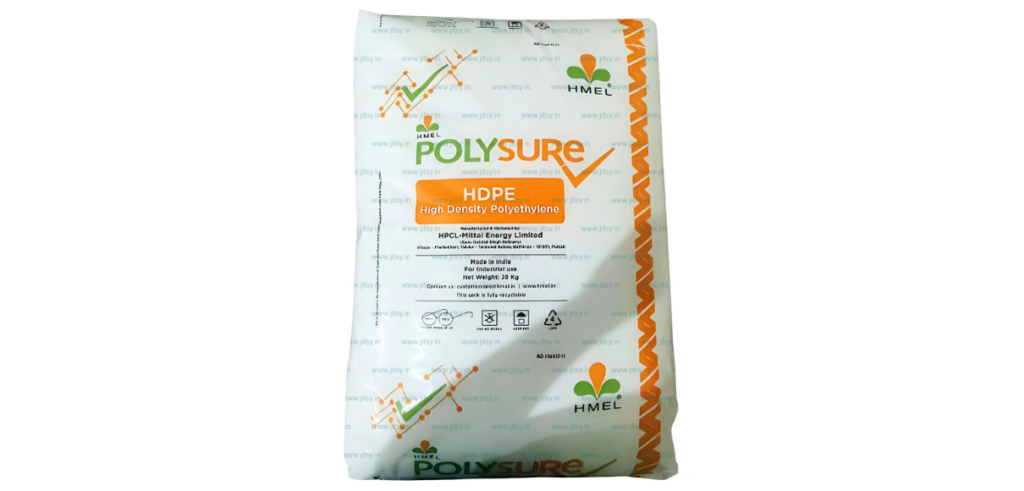
HMEL HDPE Polysure B0053D
HMEL HDPE Polysure B0053D is a 1-hexene co-monomer based high molecular weight high density polyethylene produced by HPCL-Mittal Energy Limited using Advanced Dual Loop Slurry MarTECH technology. This large blow moulding grade is developed for heavy-duty hollow articles where processors need excellent processability, high melt strength, good die swell, low parison sagging, high ESCR, and dependable stackability.
HPCL-Mittal Energy Limited is one of India’s major integrated petrochemical manufacturers, and its Polysure HDPE portfolio serves blow moulding, injection moulding, and pipe-related applications across industrial sectors. Within this range, B0053D is positioned as a large blow moulding specialist for 240 litre L-ring drums, open top drums, and industrial tanks. Its 1-hexene co-monomer chemistry and slurry technology platform support the melt strength and structural balance required for large hollow articles where parison control, wall distribution, and long-term durability are critical.
Technical Specifications and Deep Technical Insights
B0053D has a melt flow index of 0.08 g/10 min at 190°C/5 kg and 2.5 g/10 min at 190°C/21.6 kg, along with a density of 0.953 g/cc. This very low-flow, high molecular weight profile is especially important in large blow moulding because it supports strong melt strength and reduces parison sagging during production of large drums and tanks. The grade delivers tensile strength at yield of 27 MPa, elongation at break of 900%, and flexural modulus of 1100 MPa. For manufacturers, this means the resin combines rigidity with very good toughness, helping large containers maintain shape while also resisting cracking, impact damage, and handling stress during filling, transport, storage, and repeated industrial use. B0053D also offers ESCR of 300 hours and notched Izod impact with no break at 23°C, both of which are highly relevant for industrial chemical packaging. ESCR is a major selection factor in large blow moulded drums because it indicates how well the material can resist crack formation under load when exposed to detergents, chemicals, or other aggressive contents. From a thermal standpoint, the grade has a Vicat softening point of 127°C and heat deflection temperature of 80°C. These values support dimensional stability in industrial storage and transport applications where large containers may face moderate thermal exposure in warehousing or field conditions. Typical processing guidance includes barrel temperatures of 180–210°C and die temperatures of 160–200°C. In practical terms, this gives processors a stable operating window for maintaining melt strength, die swell behavior, and better wall-thickness consistency in large hollow parts. Buyers comparing HDPE large blow moulding grades typically assess MFI, density, ESCR, impact, and sag resistance together, and B0053D stands out as a purpose-built option for large industrial drums and tanks.Applications
240 Litre L-Ring Drums
B0053D is highly suitable for 240 litre L-ring drums where large-part stability and wall-thickness control are essential. Its high melt strength and low parison sagging help processors produce drums with better dimensional consistency, which is important for industrial liquid storage and transport.Open Top Drums
For open top drums, B0053D offers the structural balance needed for heavy-duty industrial packaging. Its toughness, rigidity, and chemical resistance make it a practical choice for containers that must withstand repeated handling, stacking, and demanding logistics conditions.Industrial Tanks and Chemical Storage
Industrial tanks and chemical storage containers require a resin with strong ESCR, impact resistance, and dependable processability. B0053D fits these applications well because it supports large blow moulded parts that need long-term durability in contact with aggressive contents and rough operating environments.Bulk Liquid Transport Containers
The grade is also relevant for bulk liquid transport containers used in industrial supply chains. Its stackability and resistance profile help improve performance in applications where container integrity during transport and warehousing is a key buying factor.Performance Benefits
B0053D is valued for high melt strength, good die swell, low parison sagging, and useful ESCR in large blow moulding operations. These characteristics help processors improve parison control, reduce instability in large parts, and produce drums and tanks with more reliable wall distribution. Its impact resistance, chemical resistance, and stackability further strengthen its position in industrial packaging applications.Comparable Alternatives
Within the HMEL portfolio, B0148D is better suited for medium blow moulding applications up to 120 litres, while B0155D is more aligned with smaller containers up to 20 litres. B0053D is the stronger HMEL choice when the application involves 240 litre drums, industrial tanks, or large hollow articles where very high melt strength and low sagging are more important than faster processing for smaller packs. Compared with GAIL B53B005, OPaL B55L03, IOCL 55GB003, and similar Indian large blow moulding grades, B0053D stands out as a practical option for industrial drums and tanks where processors need a low-flow HDPE with strong parison stability and chemical durability. The rationale behind this grade is clear: it is assigned to large blow moulding applications that demand melt strength, stackability, ESCR, and industrial toughness rather than medium-container flexibility or injection moulding efficiency.
HMEL HDPE Polysure B0151D
HMEL HDPE Polysure B0151D is a 1-hexene comonomer based high-density polyethylene (HDPE) blow-molding grade produced by HMEL under the Polysure HDPE brand. HMEL states it is manufactured using Advanced Dual Loop Slurry MarTECH technology and features a bimodal molecular weight distribution, making it suitable for the blow molding process.
B0151D is positioned as a general-purpose blow-molding resin for containers up to 20 liters, with a strong emphasis on exceptional processability, very good melt strength, and high ESCR (environmental stress crack resistance). In practical converter terms, that combination supports stable parison formation and good shape retention during blowing, while helping finished containers resist cracking in real-world service (handling, stacking, transport, and exposure to common oils and household chemicals).
HMEL recommends this grade for blow-molded packaging such as lube oil containers, edible oil containers, cosmetic packaging, jerry cans, and detergent containers. HMEL also notes it can be used for double-walled corrugated pipes, indicating additional versatility beyond container packaging.
Technical insights
- Melt Flow Index (190C/2.16 kg): 0.30 g/10 min (typical). A lower-to-medium MFI in blow molding generally supports higher melt strength, helping parison stability for larger containers and reducing sag.
- Density (23C): 0.951 g/cc (typical). This density level supports a balance of stiffness and toughness for general-purpose containers.
- Tensile strength at yield: 27 MPa (typical). Indicates resistance to permanent deformation under load, supporting container rigidity and stacking performance.
- Tensile elongation at break: 1000% (typical). Very high elongation suggests strong ductility, helping reduce brittle failure during drop/impact events.
- Flexural modulus (2% secant): 1000 MPa (typical). Reflects stiffness; supports shape retention in bottles and jerry cans.
- Notched Izod impact strength (23C): 150 J/m (typical). Indicates good impact resistance for handling and transportation.
- Vicat softening point (10 N): 125C (typical). Suggests good heat resistance for many packaging environments.
- Heat deflection temperature (0.455 MPa): 75C (typical). Useful indicator for dimensional stability under moderate heat and load.
- Hardness: 63 Shore D (typical). A quick proxy for surface rigidity and scratch resistance.
- ESCR (F50), 100% Igepal, ASTM D1693B: 35 h (typical). A key blow-molding metric for resistance to slow crack growth, especially relevant for detergent and oil service.
- Processing guidance (blow molding): barrel temperature 170C200C and die temperature 150C190C (typical guidance). Final settings depend on machine, die head, parison programming, and container geometry.
Applications
Lube oil and automotive fluid containers (up to 20 L): B0151D is designed for general-purpose blow-molded containers where processors need stable parison control and good melt strength. The balance of stiffness and impact performance supports containers that must survive handling and transport without deformation. Edible oil bottles and jerry cans: HMEL lists edible oil packaging as a target use case. The grades processability and mechanical balance support consistent bottle production, while ESCR performance helps reduce cracking risk in service. Detergent and household chemical containers: Detergent packaging often demands stress-crack resistance due to surfactants and handling conditions. B0151Ds ESCR positioning makes it a practical choice for converters producing detergent bottles and jerry cans. Cosmetic and personal-care packaging: For cosmetic packaging, processors typically prioritize surface finish, dimensional stability, and reliable processing. B0151Ds general-purpose blow-molding profile supports consistent output across a range of container designs. Double-walled corrugated pipes (select use): HMEL notes the grade can also be used for double-walled corrugated pipes, making it relevant for buyers seeking a resin with some extrusion versatility beyond packaging.Comparable alternatives
Within HMELs Polysure portfolio, B0155D and B0158D are commonly referenced as comparable general-purpose blow-molding grades for containers up to 20 L. However, treat them as alternatives, not direct equivalents, unless you match the full datasheet profile (MFI, density, ESCR, stiffness/impact balance) and validate processing behavior on your line. As a positioning lens:- If you need a general-purpose container resin with strong emphasis on processability + melt strength + ESCR, B0151D is framed as a solid baseline.
- If your application needs a different balance of rigidity and impact (or a different flow profile), B0158D may be evaluated based on HMELs positioning.
- If you are comparing against B0155D, confirm whether the MFI/density window and ESCR targets align with your container size and cycle-time requirements.
Common search variants
Also searched as: HMEL B0151D HDPE, Polysure B0151D blow grade, B0151D HDPE granules, HDPE blow molding resin for 20 litre jerry can, Polysure 0151D, B151D HDPE.
HMEL HDPE Polysure B0155D
HMEL HDPE Polysure B0155D is a 1-hexene co-monomer based high density polyethylene blow moulding grade produced by HPCL-Mittal Energy Limited using Advanced Dual Loop Slurry MarTECH technology. Developed for general-purpose blow moulding, this grade is widely used for containers up to 20 litres, jerry cans, and double-walled corrugated pipes where processors need strong melt strength, reliable die swell, and stable parison control.
HPCL-Mittal Energy Limited operates an integrated petrochemical complex and markets its polyethylene portfolio under the Polysure brand. Within this range, B0155D is positioned as a general-purpose HDPE blow moulding grade for industrial and packaging applications that demand balanced stiffness, toughness, and processability. Its 1-hexene co-monomer structure and slurry technology platform support the combination of melt strength and end-use durability required in larger blow-moulded packs and technical extrusion applications.
Technical Specifications and Deep Technical Insights
B0155D has a melt flow index of 0.35 g/10 min and a density of 0.955 g/cc, making it suitable for blow moulding applications where parison stability and wall-thickness control are critical. The low MFI supports stronger melt behavior during extrusion, which helps processors maintain better shape retention in larger containers and jerry cans. The grade offers hardness of 62–63 Shore D, tensile strength at yield of 27–29 MPa, elongation at break of 600–900%, and flexural modulus of 1000–1050 MPa. For manufacturers, this means the resin combines rigidity with useful toughness, allowing finished containers to resist deformation while still handling impact and stress during filling, stacking, transport, and use. B0155D also shows notched Izod impact of 150–160 J/m and ESCR of 25–35 hours, which are important for applications involving detergents, lubricants, and chemical exposure. ESCR is especially relevant in blow moulded packaging because it indicates how well the material can resist cracking under stress in aggressive environments. From a thermal standpoint, the grade has a Vicat softening point of 125–127°C and heat deflection temperature of 73–75°C. These values support its use in rigid packaging and industrial applications where dimensional stability under moderate heat exposure matters. Typical processing guidance includes barrel temperatures of 170–200°C and die temperatures of 150–190°C. In production terms, this gives processors a practical operating window for maintaining melt strength, die swell behavior, and efficient blow moulding performance. Buyers comparing HDPE blow moulding grades often look at MFI, density, ESCR, impact, and stiffness together, and B0155D stands out as a well-balanced option for medium-to-large container production.Applications
Lube Oil and Edible Oil Containers
B0155D is well suited for blow-moulded containers up to 20 litres used in lube oil and edible oil packaging. Its melt strength helps maintain parison stability during moulding, while its stiffness supports container shape, stacking performance, and resistance to panel bulging during storage and transport.Jerry Cans and Chemical Packaging
For jerry cans and household or industrial chemical containers, B0155D offers a useful combination of rigidity, impact resistance, and environmental stress crack resistance. This makes it a practical choice for detergent packs, lubricant containers, and similar packaging formats where durability under handling and chemical contact is important.Pharmaceutical, Cosmetic, and Personal Care Packaging
The grade is also relevant for blow-moulded pharmaceutical and cosmetic packaging where processors need consistent conversion behavior and dependable finished-part quality. Its balanced mechanical profile supports rigid containers that require clean moulding performance and stable wall formation.Double-Walled Corrugated Pipes
Beyond packaging, B0155D is used in double-walled corrugated pipe applications where melt strength and structural integrity are important. The grade supports extrusion performance needed for pipe profiles used in underground cable protection and light drainage systems.Performance Benefits
B0155D is valued for exceptional processability, very good melt strength, and excellent die swell properties in blow moulding operations. These characteristics help processors improve parison control, maintain wall-thickness consistency, and reduce production instability in larger containers. Its balanced stiffness and ESCR profile also make it commercially attractive for converters serving oil, detergent, chemical, and technical pipe markets.Comparable Alternatives
Within the HMEL portfolio, M2050S is positioned for thin-wall injection moulding and M0662D is aligned more with crate and industrial moulded products, so they are not direct substitutes for B0155D in blow moulding. B0155D remains the primary HMEL option when the application requires blow-moulded containers or corrugated pipe structures. Compared with GAIL B53A003U, B0155D competes in the blow moulding space for packaging containers, but B0155D is strongly positioned where processors need a combination of melt strength, die swell, and suitability for larger formats up to 20 litres. Against OPaL B55H03 and similar IOCL blow moulding grades, B0155D stands out as a practical Indian HDPE grade for jerry cans, edible oil packs, detergent containers, and technical pipe applications. The rationale behind this grade is clear: it is assigned to applications that need low-flow blow moulding behavior, good rigidity, useful ESCR, and stable processing rather than injection moulding speed or pipe-grade pressure performance.
HMEL HDPE Polysure F0050D
HMEL HDPE Polysure F0050D is a 1-hexene co-monomer based bimodal high molecular weight high density polyethylene developed by HPCL-Mittal Energy Limited under the Polysure HDPE range for blown film extrusion. Produced using Advanced Dual Loop Slurry MarTECH technology, this HM film grade is designed for converters who need excellent processability, good bubble stability, strong film toughness, and dependable durability in heavy duty packaging applications.
HPCL-Mittal Energy Limited is one of India’s major petrochemical manufacturers supplying polyethylene grades for film, pipe, blow moulding, and industrial packaging applications. Within the HMEL HDPE film portfolio, F0050D is positioned as a heavy duty HM film grade for processors looking for stronger film performance than standard general purpose HDPE film grades. Its bimodal structure and high molecular weight profile make it especially relevant for industrial liners, merchandise bags, trash bags, general purpose shopping bags, grocery carry bags, and selected food packaging film applications.
Technical Specifications and Deep Technical Insights
HMEL HDPE Polysure F0050D has a melt flow index of 0.05 g/10 min at 190°C/2.16 kg, a melt flow index of 8 g/10 min at 190°C/21.6 kg, and a density of 0.950 g/cc. This property profile reflects a bimodal HM-HDPE film resin built for blown film extrusion where melt strength, toughness, and heavy duty film performance are important. Under film testing conditions based on 20 micron film, BUR 4, and 1 mm die gap, the grade shows tensile strength at yield of 30 MPa in MD and 32 MPa in TD, tensile strength at break of 60 MPa in MD and 55 MPa in TD, and elongation at break of 370% in MD and 650% in TD. It also delivers Elmendorf tear strength of 0.8 g per micron in MD and 20 g per micron in TD, along with dart impact strength of 8.7 g per micron. These values indicate a film grade with strong toughness, high impact resistance, and robust end-use performance for demanding bag and liner applications. A major technical advantage of F0050D is its bimodal molecular weight distribution, which helps create a useful balance between processability and mechanical strength. For film converters, this means the resin can support stable extrusion and bubble control while also delivering the toughness and durability expected in heavy duty HM film structures. The grade is also valued for good bubble stability, which is critical in blown film processing because it affects gauge consistency, line control, and production efficiency. Combined with excellent processability, F0050D helps processors run heavy duty film applications with better operational stability and reduced chances of disruption during production. Typical barrel temperature for HDPE blown film processing is 180 to 220°C. For storage and handling, the material should be kept in a dry, dust-free environment below 50°C and protected from direct sunlight and heat exposure before use.Applications
Heavy Duty Films
HMEL HDPE Polysure F0050D is highly suitable for heavy duty film production where converters need stronger mechanical performance, better toughness, and improved durability than standard commodity film grades. Its bimodal HM-HDPE profile makes it a strong option for demanding packaging applications that require dependable film integrity during handling and use.Industrial Liners
For industrial liner applications, F0050D offers the toughness, impact resistance, and blown film stability required for bulk packaging and industrial protection. These properties make it relevant for liner structures used in sacks, industrial packaging systems, and protective film applications where durability is a key requirement.Merchandise Bags and Trash Bags
The grade performs well in merchandise bags and trash bags where film toughness and puncture resistance are important. Its strong mechanical profile helps converters produce bags that can tolerate heavier loading and more demanding handling conditions while maintaining efficient processing on blown film lines.Shopping Bags and Grocery Carry Bags
F0050D is also suitable for general purpose shopping bags and grocery carry bags where manufacturers want a tougher HDPE film resin with stable bubble behavior. This makes it useful for bag producers serving retail and commercial packaging segments that need stronger film performance.Food Packaging Films
In selected food packaging film applications, the grade offers a combination of processability and mechanical reliability that can support practical packaging performance. It is particularly relevant where converters need an HM film grade with durability and stable extrusion behavior for packaging structures.Comparable Alternatives
Within the HMEL film portfolio, F0146D is positioned as a more general purpose blown film grade for T-shirt bags, shopping bags, and liners, while F0153S is more aligned with carry bags and co-extruded film applications. In comparison, F0050D is the stronger heavy duty HM film option for processors who need higher toughness, better durability, and a more robust mechanical profile. Against comparable Indian HM film grades such as GAIL H20H55, OPaL F52H04, IOCL H20H55, and similar Reliance HM-HDPE film grades, F0050D competes as a heavy duty blown film resin with a clear focus on toughness, bubble stability, and demanding liner or bag applications. The rationale behind this grade is straightforward: it is assigned where converters need a bimodal HM film resin that goes beyond standard general purpose film performance and supports more demanding end-use conditions.
HMEL HDPE Polysure F0146D
HMEL HDPE Polysure F0146D is a 1-hexene co-monomer based high density polyethylene developed by HPCL-Mittal Energy Limited under its Polysure HDPE portfolio for blown film extrusion. Produced using Advanced Dual Loop Slurry MarTECH technology, this grade is designed for film converters looking for excellent processability, good bubble stability, strong mechanical performance, and high filler loading capability in cost-sensitive packaging applications.
HPCL-Mittal Energy Limited is one of India’s leading petrochemical producers supplying polyethylene grades for film, pipe, blow moulding, and packaging applications. Within the HMEL HDPE film portfolio, F0146D is positioned as a general purpose blown film grade suited for everyday packaging film production where processors need a practical balance of film strength, stable bubble behavior, and formulation flexibility. It is especially relevant for manufacturers producing T-shirt bags, shopping bags, multi-wall liners, trash bags, industrial liners, and multilayer films for high-volume commercial use.
Technical Specifications and Deep Technical Insights
HMEL HDPE Polysure F0146D has a melt flow index of 0.18 g/10 min and a density of 0.946 g/cc, making it suitable for blown film extrusion where melt strength, film toughness, and process consistency are important. This property balance supports stable film formation and helps converters maintain reliable output across a wide range of packaging film applications. In film testing conditions based on 25 micron film, BUR 4, and 1 mm die gap, the grade shows tensile strength at yield of 24 MPa in MD and 26 MPa in TD, tensile strength at break of 50 MPa in MD and 30 MPa in TD, and elongation at break of 480% in MD and 640% in TD. It also delivers Elmendorf tear strength of 0.8 g per micron in MD and 10.8 g per micron in TD, along with dart impact strength of 3.6 g per micron. These values indicate a film grade that offers a useful combination of strength, flexibility, and impact resistance for bag and liner production. One of the most important commercial advantages of F0146D is its good bubble stability. For blown film processors, bubble stability directly affects line control, gauge consistency, and production efficiency. A stable bubble reduces processing interruptions and helps maintain smoother operations, especially in high-volume bag and liner manufacturing. Another major strength is its high filler loading characteristic, which is highly relevant for converters aiming to optimize formulation cost without sacrificing practical processing behavior. Combined with excellent processability, this makes F0146D a strong option for manufacturers focused on economical film production for commodity and industrial packaging segments. Recommended barrel temperature is 180 to 220°C. For storage and handling, the material should be kept in a dry and dust-free environment below 50°C and protected from direct sunlight and heat exposure to preserve resin quality before processing.Applications
T-Shirt Bags and Shopping Bags
HMEL HDPE Polysure F0146D is highly suitable for T-shirt bags, shopping bags, and kirana bags where processors need a blown film grade that can run efficiently and deliver dependable film strength. Its bubble stability and mechanical performance make it a practical choice for high-volume retail bag production where consistency and cost control both matter.General Purpose Packaging Films
For general purpose packaging film applications, F0146D offers a balanced combination of processability, toughness, and formulation flexibility. This makes it useful for converters producing everyday HDPE packaging films for commercial, industrial, and distribution use where stable output and reliable film properties are essential.Multi-Wall Liners and Industrial Liners
The grade is well suited for multi-wall liners and industrial liners because these applications require film strength, durability, and dependable extrusion behavior. F0146D supports the production of liners used in bulk packaging, industrial sacks, and protective packaging systems where mechanical integrity is important.Trash Bags
Trash bag manufacturing benefits from the grade’s good processability, impact resistance, and elongation performance. These properties help converters produce films that can handle routine loading and handling conditions while maintaining manufacturing efficiency on blown film lines.Multilayer Films
F0146D can also be used in multilayer film structures where processors need a general purpose HDPE component with stable processing and good mechanical contribution. Its filler loading capability and blown film performance make it relevant for cost-sensitive multilayer packaging applications.Comparable Alternatives
Within the HMEL film portfolio, F0153S is positioned more toward carry bags and co-extruded film applications with a slightly higher density profile, while F0050D is aligned with HM film and heavy duty film applications using a different flow reference. In comparison, F0146D sits as a versatile general purpose blown film grade for T-shirt bags, shopping bags, liners, and trash bags where balanced processability and mechanical performance are the main requirements. Against comparable Indian grades such as GAIL 18H55, OPaL F18, IOCL 18H55, and similar Reliance HDPE film grades, F0146D competes in the general purpose blown film category with a strong value proposition around bubble stability, filler loading, and practical bag-making performance. The rationale behind this grade is clear: it is assigned to applications where converters need a dependable HDPE blown film resin that supports economical production without moving into highly specialized heavy-duty film territory.
HMEL HDPE Polysure P0049D
HMEL HDPE Polysure P0049D is a 1-hexene co-monomer based bimodal high molecular weight high density polyethylene developed by HPCL-Mittal Energy Limited using Advanced Dual Loop Slurry MarTECH technology. This grade is specifically designed for PE 100 pressure pipe extrusion where processors and infrastructure buyers need excellent processability, strong long-term hoop strength, high resistance to slow crack growth, dependable creep resistance, and a smooth finished pipe surface.
HPCL-Mittal Energy Limited is one of India’s major integrated petrochemical producers, and its Polysure HDPE range supports demanding extrusion and moulding applications across infrastructure and industrial sectors. Within this portfolio, P0049D is HMEL’s PE 100 pipe extrusion grade for pressure pipe systems used in potable water distribution, gas networks, industrial piping, and large diameter pipe applications. Its bimodal molecular weight distribution is especially important because it helps balance processability with long-term mechanical performance, which is a key requirement in pressure pipe resin selection.
Technical Specifications and Deep Technical Insights
P0049D has a melt flow index of 0.26 g/10 min at 190°C/5 kg and 8 g/10 min at 190°C/21.6 kg, with a density of 0.949 g/cc. This profile supports stable pipe extrusion while maintaining the molecular architecture needed for PE 100 pressure performance. For pipe manufacturers, this means the grade is engineered not just for extrusion output, but also for long-term durability under internal pressure. The resin delivers tensile strength at yield of 26 MPa, elongation at break of at least 850%, and flexural modulus of 900 MPa. These values indicate a useful balance of stiffness and toughness, helping finished pipes resist deformation while still handling installation stress, ground movement, and service loads over time. A major technical advantage of P0049D is its ESCR above 1000 hours, notched Izod impact of 700 J/m, and oxidative induction time above 30 minutes. These properties matter because pressure pipe buyers often assess not only immediate strength, but also long-term resistance to environmental stress cracking, impact events, and thermal oxidative degradation during processing and service life. For pipe performance, P0049D achieves slow crack growth above 500 hours under ISO 13479 and carries PE 100 classification with minimum required strength of 10 MPa under ISO 9080. It also meets hydrostatic pressure test requirements when compounded with optimum carbon black dosage as required under IS 4984. This is a strong technical signal for water and gas pipe manufacturers who need confidence in long-term pressure rating, crack resistance, and regulatory alignment. From a thermal and processing perspective, the grade has a Vicat softening point of 125°C and recommended barrel temperatures of 180–220°C with die temperatures of 190–210°C. In practical extrusion conditions, this supports smooth melt flow, good surface finish, and stable pipe formation across pressure pipe production lines.Applications
Potable Water Distribution Pipes
P0049D is highly suitable for PE 100 potable water distribution pipes where long service life, hydrostatic strength, and consistent extrusion quality are essential. Its creep resistance and slow crack growth performance help manufacturers produce pipes that can perform reliably in municipal and infrastructure networks.Gas Distribution Networks
For gas distribution pipes, P0049D offers the combination of toughness, crack resistance, and long-term pressure capability required in safety-critical applications. Its resistance to slow crack growth and rapid crack propagation makes it a strong candidate for demanding gas utility systems.High Performance Industrial Pipes
Industrial pipe systems often require a resin that can withstand pressure, mechanical stress, and challenging operating environments. P0049D fits these applications well because it combines PE 100 classification, strong environmental stress crack resistance, and dependable extrusion behavior for high-performance piping.Large Diameter Pipes
Large diameter pipe extrusion demands a grade with stable processing, good melt strength balance, and reliable long-term mechanical properties. P0049D supports these needs by offering a bimodal structure that helps pipe manufacturers maintain surface quality, dimensional consistency, and performance in larger sections.Infrastructure and Utility Projects
The grade is also relevant for infrastructure-driven pipe projects where consistency, certification alignment, and long-term reliability matter to contractors, OEMs, and project buyers. Its positioning as a PE 100 pressure pipe grade makes it suitable for applications where durability and compliance are central to procurement decisions.Comparable Alternatives
Within the HMEL pipe portfolio, P0148D is positioned as a PE 80 grade for gas, water distribution, and sprinkler irrigation, while P0147D is aligned more with PE 63 applications such as non-pressure drainage and ducting. P0049D is the stronger choice when the application requires PE 100 performance, higher long-term pressure capability, stronger SCG resistance, and better suitability for critical utility infrastructure. Compared with GAIL P100, OPaL P100, IOCL P100, and Relene P100, P0049D competes in the same high-performance PE 100 category for water and gas pipe extrusion. Its key differentiator is its HMEL bimodal design built for creep resistance, hoop strength, and crack resistance in pressure pipe systems. The rationale behind this grade is clear: it is assigned to pressure pipe applications where long-term mechanical reliability matters more than lower-class pipe economics or non-pressure utility use.
HMEL HDPE Polysure P0147D
HMEL HDPE Polysure P0147D is a 1-hexene co-monomer based high density polyethylene developed by HPCL-Mittal Energy Limited using Advanced Dual Loop Slurry MarTECH technology for PE 63 pipe extrusion. This grade is designed for non-pressure pipe applications where processors need excellent processability, smooth surface finish, good creep resistance, and high environmental stress crack resistance.
HPCL-Mittal Energy Limited is one of India’s major integrated petrochemical producers, and its Polysure HDPE portfolio serves pipe extrusion requirements across infrastructure, irrigation, utility, and industrial sectors. Within this range, P0147D is positioned as HMEL’s PE 63 non-pressure pipe grade for ducting, drainage pipes, drip irrigation laterals, telecom and cable ducts, sewerage systems, sprinkler irrigation, and related conveying applications. Its processing profile makes it especially relevant for manufacturers looking for stable extrusion, good surface quality, and practical field durability.
Technical Specifications and Deep Technical Insights
P0147D has a melt flow index of 0.9 g/10 min at 190°C/5 kg and a density of 0.947 g/cc. This higher flow profile, compared with pressure pipe grades, supports easier extrusion and efficient throughput in PE 63 pipe manufacturing. For processors, that means smoother production in non-pressure pipe applications where output consistency and surface finish are important. The resin delivers tensile strength at yield of 28 MPa, elongation at break of 600%, and flexural modulus of 850 MPa. These values show that the grade offers a practical balance of strength, flexibility, and stiffness for pipes that need to perform well in installation, handling, and regular field use without being positioned as a high-pressure PE 80 or PE 100 material. P0147D is also valued for good creep resistance, high ESCR, and smooth surface finish. These characteristics matter in applications such as ducting, drainage, and irrigation because they help improve dimensional stability, reduce installation friction, and support longer service life under outdoor and field conditions. When compounded with optimum carbon black dosage as required under IS 4984 clause 5.2.3, pipes produced with P0147D meet PE 63 hydrostatic strength requirements. Typical processing guidance includes barrel temperatures of 180–220°C and die temperatures of 190–210°C, giving manufacturers a workable extrusion window for stable output and consistent pipe quality.Applications
Telecom and Cable Ducting Pipes
P0147D is highly suitable for telecom and cable ducting pipes where smooth inner and outer surface finish is important for cable pulling, installation ease, and dimensional consistency. Its processability supports efficient extrusion of ducting products used in infrastructure and utility projects.Drainage and Sewerage Pipes
For drainage and sewerage pipe applications, P0147D offers a useful combination of processability, field durability, and structural balance. It is a practical choice for non-pressure pipe systems where smooth extrusion and dependable service behavior are more important than high-pressure classification.Drip Irrigation Laterals
Drip irrigation lateral production requires a resin that can run efficiently on extrusion lines while maintaining pipe quality and flexibility in agricultural use. P0147D fits this requirement well, making it relevant for irrigation manufacturers serving farming and water management applications.Sprinkler Irrigation Pipes
In sprinkler irrigation systems, the grade supports consistent pipe production with good surface finish and practical durability. Its PE 63 positioning makes it suitable for irrigation networks where reliable non-pressure performance is needed at scale.Non-Pressure Water Conveying and Utility Pipes
The grade is also used in non-pressure water conveying and general utility pipe applications where manufacturers need a dependable HDPE resin for ducting, routing, and distribution tasks. Its balance of extrusion ease and mechanical performance makes it a useful option across multiple utility segments.Performance Benefits
P0147D is valued for excellent processability, good mechanical properties, smooth surface finish, good creep resistance, and high ESCR. These characteristics help pipe extruders improve throughput, maintain product consistency, and deliver reliable PE 63 pipes for irrigation, drainage, sewerage, and ducting applications. Its non-pressure positioning makes it especially relevant where installation ease and practical field performance are key buying factors.Comparable Alternatives
Within the HMEL pipe portfolio, P0148D is the PE 80 option for pressure pipe applications such as gas and water distribution, while P0049D is the higher-performance PE 100 grade for more demanding pressure systems. P0147D is the right choice when the application is non-pressure oriented and the buyer needs PE 63 classification, easier extrusion, and suitability for ducting, drainage, and irrigation rather than higher pressure duty. Compared with GAIL P63, OPaL P63, IOCL P63, and Relene P63, P0147D competes in the same PE 63 category for non-pressure pipe extrusion. Its key differentiators are its HMEL process technology, stable extrusion behavior, smooth surface finish, and suitability for field-use applications like drip irrigation and cable ducting. The rationale behind this grade is clear: it is assigned to PE 63 applications where processability and practical utility performance matter more than PE 80 or PE 100 pressure ratings.
HMEL HDPE Polysure P0147DU
HMEL HDPE Polysure P0147DU is a 1-hexene co-monomer based high density polyethylene developed by HPCL-Mittal Energy Limited under the Polysure HDPE portfolio for pipe extrusion applications. Produced using Advanced Dual Loop Slurry MarTECH technology, this PE 63 grade is engineered for outdoor telecom ducts, cable ducts, PLB ducts, optical fibre cable laying ducts, and other non-pressure pipe applications where UV resistance, smooth surface finish, and reliable extrusion performance are essential.
HPCL-Mittal Energy Limited is a major Indian petrochemical manufacturer known for supplying polyethylene and polypropylene grades for infrastructure, packaging, industrial, and utility applications. Within its pipe extrusion range, Polysure P0147DU is positioned as a specialized UV stabilized outdoor ducting grade for processors and buyers who need a PE 63 HDPE resin that balances processability with field durability. The grade is especially relevant for manufacturers producing outdoor duct systems that must maintain performance during storage, transport, installation, and long-term exposure to sunlight.
Technical Description and Industry
Polysure P0147DU has a density of 0.947 g/cc and a melt flow index of 0.90 g/10 min, making it suitable for PE 63 duct and pipe extrusion applications where controlled flow, dimensional consistency, and surface quality are important. This balance of density and flow supports stable extrusion behavior for long duct lengths and helps processors maintain production efficiency across telecom and cable duct lines. A key technical strength of P0147DU is its combination of good processability, smooth surface, high ESCR, and UV resistance. For manufacturers, this means the resin is not only easier to run on extrusion equipment but also better aligned with the service conditions of outdoor ducting systems. Smooth surface finish is important in telecom and optical fibre duct applications because it supports easier cable insertion and reduced friction during laying. High ESCR improves resistance to environmental stress cracking, which is valuable in real-world handling and field conditions. The UV stabilized nature of P0147DU is one of its most important differentiators. In outdoor telecom and cable duct applications, prolonged exposure to sunlight can reduce service life if the material is not designed for such conditions. This grade is therefore more suitable than a standard non-UV duct resin when the end product will be installed or stored in exposed environments. As a PE 63 grade, P0147DU is intended for non-pressure pipe and ducting applications rather than high-pressure water or gas distribution. Its assigned grade logic is clear: it is built for outdoor utility ducting where extrusion quality, installation ease, and weather resistance matter more than pressure-pipe classification.Applications
Telecom Ducts
HMEL HDPE Polysure P0147DU is widely suited for telecom duct manufacturing where outdoor durability and installation efficiency are both important. Its UV stabilized profile helps telecom duct producers supply products that can better withstand sunlight exposure during storage and field use, while the smooth surface supports easier cable passage and cleaner installation performance.Cable Ducts
For cable duct applications, P0147DU offers the right combination of extrusion stability, surface quality, and environmental durability. Manufacturers looking for an HDPE cable duct grade for outdoor infrastructure projects can use this resin where consistent processing and long-term service reliability are critical.PLB Ducts
P0147DU is also relevant for PLB duct production, especially where outdoor exposure and handling conditions demand a more durable resin system. The grade supports efficient extrusion and helps manufacturers produce PLB ducts with dependable surface finish and utility-grade field performance.Optical Fibre Cable Laying Ducts
Optical fibre cable laying ducts require smooth internal surfaces and dependable dimensional consistency to support cable protection and easier laying. P0147DU is well matched to this application because it combines PE 63 ducting performance with UV resistance, making it suitable for outdoor optical fibre infrastructure projects.Outdoor Non-Pressure Pipes
Beyond telecom and cable infrastructure, the grade can also be used in outdoor non-pressure pipe applications where UV stability and crack resistance are important. This makes it useful for utility and infrastructure manufacturers who need a dependable HDPE extrusion grade for exposed service environments.Comparable Alternatives
Within the HMEL pipe portfolio, P0147D is the standard PE 63 grade for non-pressure ducting, drainage, and drip lateral applications, while P0147DU is the more application-specific choice for outdoor telecom and cable duct systems because of its UV stabilized positioning. If the end use involves sunlight exposure, P0147DU offers a clearer fit than P0147D. P0148D is a PE 80 pressure pipe grade with lower flow and a different application profile, making it more suitable for pressure pipe systems than telecom ducting. P0049D moves further into PE 100 territory for demanding water and gas distribution applications. For buyers choosing among these grades, the decision comes down to service conditions: P0147DU is selected when outdoor ducting, cable protection, UV resistance, and non-pressure performance are the primary requirements. Against comparable PE 63 duct grades from Indian producers such as GAIL, OPaL, IOCL, and Reliance, P0147DU stands out as a specialized outdoor duct grade rather than a generic HDPE pipe resin. Its market relevance comes from the combination of UV resistance, smooth surface, and high ESCR, which directly supports telecom duct, cable duct, and PLB duct manufacturing requirements.
HMEL HDPE Polysure P0148D
HMEL HDPE Polysure P0148D is a 1-hexene co-monomer based high density polyethylene developed by HPCL-Mittal Energy Limited using Advanced Dual Loop Slurry MarTECH technology for pressure pipe extrusion. This grade is designed for PE 80 pipe applications where processors need excellent processability, smooth surface finish, dependable long-term hoop strength, good creep resistance, and strong environmental stress crack resistance.
HPCL-Mittal Energy Limited is one of India’s major integrated petrochemical producers, and its Polysure HDPE portfolio supports demanding extrusion applications across utility, infrastructure, and industrial sectors. Within this range, P0148D is positioned as HMEL’s PE 80 pipe grade for potable water transportation, municipal pipelines, gas distribution, industrial piping, mining pipes, sewerage systems, and water supply networks. Its molecular design and process stability make it suitable for pipe manufacturers looking for a practical balance of extrusion performance and long-term service reliability.
Technical Specifications and Deep Technical Insights
P0148D has a melt flow index of 0.25 g/10 min at 190°C/5 kg and 4 g/10 min at 190°C/21.6 kg, with a density of 0.948 g/cc. This combination supports stable extrusion behavior in pipe processing while maintaining the structural profile needed for PE 80 pressure applications. For manufacturers, this means the grade is built to support both line efficiency and dependable finished-pipe performance. The resin delivers tensile strength at yield of 24 MPa, elongation at break above 700%, and flexural modulus of 900 MPa. These values indicate a balanced combination of stiffness and toughness, helping finished pipes resist deformation while still handling installation loads, field stress, and regular service conditions. A key technical strength of P0148D is its slow crack growth performance above 500 hours under ISO 13479 and minimum required strength of 8 MPa under ISO 9080, which supports its PE 80 classification when compounded with optimum carbon black dosage as required under IS 4984 clause 5.2.3. These are important selection criteria for pipe manufacturers and project buyers evaluating long-term pressure performance and service reliability. The grade is also valued for high ESCR, smooth surface finish, and good creep resistance. In practical pipe extrusion, these benefits translate into better pipe appearance, lower friction characteristics, and stronger resistance to crack formation over time. Typical processing guidance includes barrel temperatures of 180–220°C and die temperatures of 190–210°C, giving processors a workable operating window for consistent extrusion output.Applications
Potable Water Transportation Pipes
P0148D is highly suitable for potable water transportation pipes where consistent extrusion quality, pressure performance, and long-term reliability are important. Its PE 80 positioning makes it a practical choice for water supply systems that require dependable service performance and smooth pipe finish.Municipal Water Supply Pipes
Municipal pipe networks need materials that can support regular pressure conditions, installation stress, and long service life. P0148D fits this requirement well by offering good creep resistance, stable extrusion behavior, and reliable mechanical performance for public utility pipe systems.Gas Distribution Pipes
For gas distribution applications, P0148D offers the toughness and crack resistance needed for safe and durable pipe production. Its slow crack growth performance and pressure pipe classification make it relevant for gas utility networks where consistency and reliability matter.Industrial and Mining Pipes
Industrial and mining pipe systems often demand a resin that can handle mechanical stress, rough handling, and continuous service conditions. P0148D supports these applications by combining processability, strength, and durability in a way that suits practical field use.Sewerage and Water Supply Systems
The grade is also used in sewerage and water supply pipe applications where smooth extrusion, good structural balance, and long-term service behavior are important. It is a useful option for manufacturers serving infrastructure and utility projects that need a proven PE 80 pipe resin.Performance Benefits
P0148D is valued for excellent processability, smooth surface finish, good long-term hoop strength, high ESCR, and dependable slow crack growth resistance. These properties help pipe extruders maintain production consistency while also meeting the performance expectations of water, gas, municipal, and industrial pipe applications. Its PE 80 classification further supports its use in established pressure pipe systems.Comparable Alternatives
Within the HMEL pipe portfolio, P0049D is the higher-performance PE 100 option for more demanding pressure pipe systems, while P0147D is better aligned with PE 63 applications such as drainage and ducting. P0148D sits in the middle as a PE 80 grade, making it the practical choice when the application requires stronger pressure performance than PE 63 but does not necessarily require the higher-class PE 100 specification. Compared with GAIL P80, OPaL P80, IOCL P80, and Relene P80, P0148D competes in the same PE 80 category for gas and water distribution pipe extrusion. Its key differentiators are its HMEL process technology, stable extrusion profile, good creep resistance, and strong SCG performance. The rationale behind this grade is clear: it is assigned to PE 80 pressure pipe applications where manufacturers need a reliable, technically balanced resin for utility and industrial use without moving into PE 100 cost-performance territory.
HMEL HDPE Polysure R0151D
HMEL HDPE Polysure R0151D is a 1-hexene co-monomer based high density polyethylene developed by HPCL-Mittal Energy Limited under the Polysure HDPE portfolio for raffia tape extrusion. Produced using Advanced Dual Loop Slurry MarTECH technology, this grade is designed for converters who need excellent processability, low water carry over, good stretchability, resistance to fibrillation, and high tenacity tapes for woven fabric applications.
HPCL-Mittal Energy Limited is one of India’s major petrochemical manufacturers supplying polyethylene grades for film, pipe, blow moulding, and extrusion applications. Within the HMEL raffia portfolio, R0151D is positioned as a specialized HDPE raffia grade for stretched tape extrusion where tape quality, drawing behavior, and woven fabric performance are critical. It is especially relevant for manufacturers producing fertilizer bags, food grain bags, tarpaulin, wrapping fabric, and other woven sack or woven fabric products that require strong and consistent raffia tapes.
Technical Specifications and Deep Technical Insights
HMEL HDPE Polysure R0151D has a melt flow index of 0.85 g/10 min and a density of 0.952 g/cc, making it suitable for raffia tape extrusion where controlled flow, tape orientation, and woven fabric strength are important. This balance supports stable processing and helps converters produce stretched tapes with dependable performance during drawing and weaving. The grade shows tensile strength at yield of 27 MPa, tensile strength at break of 35 MPa, and elongation at break above 800%, indicating a resin with strong ductility and useful tape-forming behavior. It also offers flexural modulus of 1200 MPa, notched Izod impact strength of 250 J/m, ESCR of 80 hours, Vicat softening point of 127°C, and heat deflection temperature of 70°C. These values support its use in woven applications where strength, stiffness balance, and durability matter. A major technical advantage of R0151D is its low water carry over, which is important in raffia processing because it helps support more stable tape quality and smoother downstream conversion. The grade also offers good stretchability, which is essential for efficient tape drawing and orientation during raffia tape production. Another important benefit is its resistance to fibrillation. In practical terms, this helps converters produce tapes with more uniform structure and better weaving performance. Combined with its ability to deliver high tenacity tapes, R0151D is well suited for woven sack and tarpaulin applications where tape strength and consistency directly affect final product quality. Recommended barrel temperature is 190 to 240°C. For storage and handling, the material should be kept in a dry, dust-free environment below 50°C and protected from direct sunlight and heat exposure before processing.Applications
Fertilizer Bags
HMEL HDPE Polysure R0151D is highly suitable for fertilizer bag production where woven sack manufacturers need strong raffia tapes, good drawing behavior, and dependable woven fabric quality. Its high tenacity and resistance to fibrillation make it a practical choice for bags that must handle filling, transport, and stacking conditions.Food Grain Bags
For food grain bag applications, R0151D supports the production of stretched tapes that can be woven into durable sack structures. Its processability and tape performance help manufacturers maintain consistent bag quality for agricultural and bulk packaging use.Tarpaulin
Tarpaulin applications require raffia tapes with good strength, stretchability, and weaving consistency. R0151D fits this requirement well, making it relevant for producers who need an HDPE raffia grade capable of supporting durable woven fabric for covering and protective sheet applications.Wrapping Fabric
The grade is also suitable for wrapping fabric and other woven fabric applications where tape uniformity and tenacity are important. Its combination of processability, low water carry over, and fibrillation resistance helps converters achieve more consistent weaving performance.Stretched Tapes for Woven Applications
R0151D is fundamentally designed for stretched tapes used in woven applications, making it a strong choice for raffia extrusion lines focused on tape quality and downstream weaving efficiency. This makes it relevant across industrial packaging, agricultural sacks, and woven fabric manufacturing segments.Comparable Alternatives
Within the HMEL raffia portfolio, R0150S is another raffia and stretch tape grade used for woven sacks and tarpaulin applications, but R0151D is positioned more strongly where converters want low water carry over, good stretchability, fibrillation resistance, and high tenacity tape performance. For buyers comparing the two, R0151D offers a clearer fit for woven fabric applications where tape consistency and strength are key priorities. Against comparable Indian raffia grades such as GAIL R53H002, IOCL R53H002, Reliance R53H002, and OPaL RH03, R0151D competes as a specialized HDPE raffia resin for fertilizer bags, food grain bags, tarpaulin, and wrapping fabric. The rationale behind this grade is straightforward: it is assigned where converters need a raffia tape extrusion grade that supports strong stretched tapes, efficient drawing, and reliable woven fabric performance rather than general extrusion use.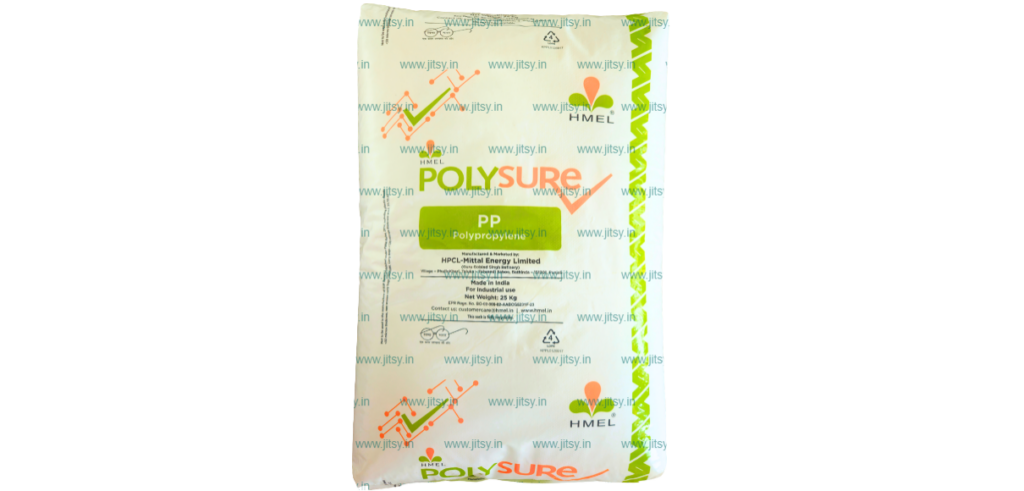
HMEL PP Polysure E35RR
Polysure E35RR is a premium Controlled Rheology Polypropylene Homopolymer engineered by HPCL-Mittal Energy Ltd (HMEL) using advanced Spheripol-II technology. Specifically formulated for extrusion coating and lamination, E35RR delivers exceptional processability with minimal neck-in, outstanding bonding strength to diverse substrates, and superior surface finish. Manufactured at HMEL's Bathinda refinery complex, Polysure E35RR is the trusted choice for liquid packaging cartons, woven sack lamination, flexible packaging, and industrial coating applications across North India. The grade combines regulatory compliance (IS 10910, FDA 21 CFR 177.1520) with proven field performance in high-speed production environments.
Technical Insights & Specifications – E35RR
E35RR Technical Properties (ASTM Tested):
- Melt Flow Index (ASTM D1238, 230°C/2.16 kg): 35 g/10 min, supporting smooth flow and efficient processing in extrusion and coating applications.
- Tensile Strength at Yield (ASTM D638): 35 MPa, delivering strong mechanical performance and reliable structural stability in finished products.
- Tensile Elongation at Yield (ASTM D638): 9%, providing balanced rigidity with controlled deformation under stress.
- Flexural Modulus – 1% Secant (ASTM D790A): 1500 MPa, indicating high stiffness and excellent dimensional stability.
- Notched Izod Impact Strength at 23°C (ASTM D256A): 25 J/m, offering moderate resistance to sudden impact.
- Vicat Softening Temperature (ASTM D1525, 10N): 150°C, reflecting strong thermal resistance suitable for heat-exposed applications.
- Heat Deflection Temperature (ASTM D648, 0.455 MPa): 95°C, enabling the material to maintain shape and mechanical performance under elevated temperatures.
Applications & Industry Use Cases
Liquid Packaging Carton Coating
E35RR is the preferred grade for coating paperboard used in milk, juice, and beverage cartons. The low neck-in characteristic ensures uniform coating thickness across the entire web width, preventing edge defects that compromise package integrity. At 20–30 gsm coating weight, E35RR provides excellent moisture barriers while maintaining FDA compliance for food contact. The superior bonding to paperboard eliminates delamination during filling and transport, critical for aseptic packaging lines operating at high speeds.Woven Sack Lamination
For 50 kg cement, fertilizer, and feed bags, E35RR delivers robust lamination at 15–25 gsm coating weight. The controlled rheology enables high-speed lamination (>800 m/min) without edge buildup, reducing material waste and increasing production efficiency. The 1500 MPa flexural modulus provides excellent sack stiffness and handle, improving consumer perception and reducing damage during storage and transport.Flexible Packaging Foil Lamination
E35RR excels in flexible packaging applications, bonding strongly to aluminum foil for snack packaging, coffee pouches, and pharmaceutical laminates. The low neck-in ensures consistent coating across narrow web widths, while superior adhesion prevents foil delamination during filling and sealing operations. Processing at 250–270°C die temperature enables rapid quenching and high-speed production without compromising coating quality.Industrial & Technical Coating
E35RR is used for tarpaulin coating on woven fabrics, geotextile lamination for civil engineering applications, and breathable waterproof barriers in medical nonwovens. The grade's excellent bonding to diverse substrates and high heat resistance (95°C HDT) make it suitable for demanding industrial environments where coating durability is paramount.Alternatives & Comparative Overview
Several polypropylene grades provide comparable performance to E35RR, particularly for extrusion coating and lamination applications. The following alternatives differ in processing technology, stiffness, and coating behavior:- E35RR1 – MFI 35, produced using Spheripol-II Controlled Rheology (CR) technology with a flexural modulus of ~1500 MPa. Primarily used in coating and lamination applications. It offers nearly identical specifications to E35RR, typically representing a variant production grade.
- P1350EG – MFI 35, manufactured using IOCL Spheripol-II technology with a flexural modulus of ~1200 MPa. Suitable for coating and nonwoven applications. Being reactor-based, it generally provides less controlled rheology and may exhibit slightly higher neck-in during coating compared to E35RR.
- 1350EG – MFI 35, also produced via IOCL Spheripol-II technology with a flexural modulus around ~1200 MPa. Used in extrusion coating applications, with production typically from Gujarat and Panipat facilities, offering performance similar to P1350EG.
- RH35 – MFI 35, manufactured using OPaL Ineos gas-phase technology, with a flexural modulus near ~1200 MPa. Applied in coating and nonwoven sectors. Its gas-phase polymerization results in different flow and processing characteristics compared to Spheripol-based grades.
- E07RR – MFI 7, produced using HMEL Spheripol-II CR technology, with a flexural modulus of ~1600 MPa. Designed for heavy extrusion coating applications, where lower MFI supports thicker coatings and higher melt strength.
E35RR Competitive Advantages
E35RR's Spheripol-II controlled rheology delivers superior low neck-in compared to reactor-based alternatives (P1350EG, 1350EG), enabling consistent coating at line speeds exceeding 600 m/min. The 1500 MPa flexural modulus—highest in the 35 MFI coating category—ensures superior product stiffness and durability. Unlike gas phase grades (RH35), Spheripol-II CR provides optimized adhesion chemistry specifically tuned for paper, foil, and woven substrates. For heavy coating applications requiring lower flow, E07RR (7 MFI) is available; for lighter coating or multi-purpose use, E25RR (25 MFI) offers alternative throughput options. Please note: E35RR has been superseded by E35RR1 - superior alternative with improved performance metrics and cost efficiency. Explore full specifications, applications, and advantages to see how it delivers better value for your manufacturing needs.
HMEL PP Polysure E35RR1
Polysure E35RR1 is a top-tier Controlled Rheology Polypropylene Homopolymer from HPCL-Mittal Energy Ltd (HMEL), manufactured using advanced Spheripol-II technology. E35RR1 is engineered for high-speed extrusion coating and lamination lines, delivering ultra-low neck-in, robust substrate adhesion, and a glossy, uniform surface finish. Produced at HMEL’s Bathinda Spheripol-II unit, E35RR1 is trusted by converters for food packaging, industrial, and medical applications across North India. The grade is fully compliant with IS 10910, FDA 21 CFR 177.1520, and IS 16738:2018, meeting the strictest standards for food and pharma contact.
Technical Insights & Specifications
- Melt Flow Index (ASTM D1238, 230°C/2.16 kg): 35 g/10 min, supporting stable melt flow and efficient processing in extrusion and coating operations.
- Tensile Strength at Yield (ASTM D638): 35 MPa, providing strong mechanical integrity and durability in finished applications.
- Tensile Elongation at Yield (ASTM D638): 9%, offering controlled flexibility while maintaining structural strength.
- Flexural Modulus – 1% Secant (ASTM D790A): 1500 MPa, indicating high stiffness and excellent dimensional stability for coated structures.
- Notched Izod Impact Strength at 23°C (ASTM D256A): 25 J/m, delivering moderate impact resistance under standard conditions.
- Vicat Softening Temperature (ASTM D1525, 10N): 150°C, demonstrating good thermal resistance for applications exposed to elevated processing temperatures.
- Heat Deflection Temperature (ASTM D648, 0.455 MPa): 95°C, ensuring the material maintains shape and performance under moderate thermal loads.
Processing Guidelines
Barrel: 180–250°C | Adapter: 240–260°C | Die: 250–270°C | Air Gap: 150–250 mm | Chill Roll: 20–40°C | Line Speed: >600 m/min | Coating Weight: 15–50 gsmTechnical Strength
E35RR1’s Spheripol-II CR formulation ensures ultra-low neck-in at high speeds, a high flexural modulus (1500 MPa) for stiffness, and exceptional substrate adhesion for defect-free lamination. The grade’s process stability and low gel count enable consistent, glossy coatings even at 600+ m/min, outperforming reactor-based and gas-phase alternatives.Applications & Industry Use Cases
Liquid Packaging Cartons
E35RR1 delivers uniform, defect-free coatings for milk, juice, and aseptic beverage cartons. The ultra-low neck-in ensures full web coverage at 20–30 gsm, preventing edge defects and ensuring high barrier performance. Full IS 10910 and FDA compliance secures its use in direct food contact packaging.Flexible Packaging Laminates
Converters rely on E35RR1 for foil-paper laminates, snack packaging, coffee and tea pouches, and metallized film structures. The grade’s high-speed lamination capability (>800 m/min) and superior adhesion prevent delamination and ensure optimal print quality.Woven Sack Lamination
For 50kg cement and feed bags, E35RR1 provides 18–25 gsm lamination with outstanding stiffness and moisture protection. The CR design prevents web distortion and edge build-up, maximizing yield and sack strength.Medical & Hygiene Lamination
E35RR1 is widely used for nonwoven and surgical pack lamination, offering a breathable, waterproof barrier with medical-grade compliance. Its process stability ensures consistent coating for hygiene and healthcare applications.Industrial Coating
Ideal for tarpaulins, geotextiles, and technical coatings, E35RR1 offers high adhesion and durability in demanding industrial environmentsAlternatives & Comparative Overview
Several polypropylene grades offer performance comparable to E35RR1, particularly for extrusion coating and lamination processes. Key alternatives include:- E35RR – MFI 35, produced using Spheripol-II Controlled Rheology (CR) technology with a flexural modulus of ~1500 MPa. Used in coating and lamination applications and considered an identical twin grade with nearly the same processing and performance profile.
- 1350EG – MFI 35, manufactured with IOCL Spheripol-II technology and a flexural modulus of ~1200 MPa. Primarily applied in extrusion coating. Being reactor-based, it may show higher neck-in during coating compared to CR-modified grades like E35RR1.
- P1350EG – MFI 35, also produced using IOCL Spheripol-II technology with a flexural modulus around ~1200 MPa. Suitable for coating and nonwoven applications. Produced at Paradip, it typically offers less controlled rheology compared to CR-based grades.
- RH35 – MFI 35, produced using OPaL Ineos gas-phase technology, with a flexural modulus near ~1200 MPa. Used in coating and nonwoven applications. Its gas-phase polymerization provides a different flow profile during processing.
- F135 – MFI 35, manufactured using HPL Spheripol technology with a flexural modulus of ~1200 MPa. Applied in spunbond and coating segments, with strong supply availability in the East coast market.
HMEL PP Polysure F03RR
HMEL PP Polysure F03RR is a polypropylene homopolymer BOPP film grade (HSN 39021000, CAS 9003-07-0) produced by HMEL using Novolen gas-phase technology for high-speed, metallisable BOPP films. Designed for stenter-process and OPP core layers, F03RR offers a narrow MFI (3.2), no metal stearates/slip agents, and low water-carry-over for defect-free, high-clarity films.
F03RR vs F03RR1 (Novolen vs Spheripol-II)
F03RR is Novolen-based, ideal for metallisable BOPP and OPP core layers. F03RR1 is a Spheripol-II homopolymer for broader BOPP tenter/film use.Technical Properties and Processing
- MFI (230°C/2.16kg):2 g/10 min (ASTM D1238)
- Tensile Strength @ Yield: 35 MPa (ASTM D638)
- Elongation @ Yield: 9% (ASTM D638)
- Flexural Modulus: 1450 MPa (ASTM D790)
- Notch Izod Impact: 40 J/m (ASTM D256)
- Vicat Softening Point: 154°C (ASTM D1525)
- HDT (0.455 MPa): 95°C (ASTM D648)
- Processing: Extruder 200–260°C, Chill Roll 20–70°C
- No metal stearates/slip agents; water-carry-over <0.5%
Applications and Use Cases
Metallisable BOPP Films (OPP Core Layers)
F03RR is optimized for metallisable BOPP film core layers, offering defect-free vacuum coating, high clarity, and consistent thickness for premium packaging and adhesive tapes.General-Purpose and Lamination BOPP Films
The grade is used in lamination-grade and general-purpose BOPP films, enabling stable, printable films with excellent gloss and mechanical strength.Adhesive Tapes and Flexible Food Packaging Applications
F03RR’s high stiffness, clarity, and food-contact compliance make it a top choice for packaging tapes, flexible food wraps, and textile over-wrap films.Performance Advantages and Benefits
F03RR delivers consistent MFR for high-speed BOPP lines, no slip agents for metallisation, low water-carry-over for minimal defects, and high stiffness for crisp, printable films. Its formulation is food-contact ready and supports demanding packaging and tape applications.Competitor Comparison and Alternatives in India
- Polysure F03RR (HMEL): MFI 3.2, Novolen, BOPP stenter, no slip agents
- Polysure F03RR1 (HMEL): MFI 3.2, Spheripol-II, broader film use
- H110MA/H110MN (Reliance): ≈3 MFI, BOPP film, stenter/tenter
- 1100MG (IOCL): BOPP film homopolymer, general/metallisable
- Opalene BOPP grades (OPaL): Comparable Indian film grades
HMEL PP Polysure F03RR1
HMEL PP Polysure F03RR1 is a polypropylene homopolymer BOPP film grade (HSN 39021000, CAS 9003-07-0) produced by HMEL using Spheripol-II technology for high-speed, metallisable BOPP tenter-process films. F03RR1 is free from metal stearates and slip agents, engineered for excellent stretchability, gel-free clarity, and dimensional stability on wide tenter lines.
F03RR1 vs F03RR (Spheripol-II vs Novolen Technology)
F03RR1 (Spheripol-II) offers higher stiffness (1500 MPa) and better impact (45 J/m) than F03RR (Novolen, 1450 MPa, 40 J/m), with superior film toughness and clarity for high-speed BOPP tenter lines.Technical Properties & Processing
- Melt Flow Index (230°C/2.16kg):2 g/10 min (ASTM D1238)
- Tensile Strength @ Yield: 35 MPa (ASTM D638)
- Elongation @ Yield: 12% (ASTM D638)
- Flexural Modulus: 1500 MPa (ASTM D790A)
- Notched Izod Impact: 45 J/m (ASTM D256)
- Vicat Softening Point: 156°C (ASTM D1525)
- HDT (0.455 MPa): 95°C (ASTM D648)
- Processing Window: Extruder 200–260°C, Chill Roll 20–70°C
- No metal stearates/slip agents; low water-carry-over
Applications & Industry Use Cases
General-Purpose and Metallisable BOPP Films (Tenter-Process)
F03RR1 is ideal for high-speed, wide-width BOPP tenter films, supporting metallisable layers with minimal defects and outstanding clarity.Lamination BOPP, Food Packaging, and Textile Overwraps
The grade excels in lamination films (bonding to PET, BOPP, PE), food packaging, and textile overwraps, offering excellent stretchability and printability.Adhesive Tapes, Labels, and Specialty Laminates
F03RR1’s high stiffness and clarity make it a top performer for adhesive tapes, labels, and specialty laminates requiring dimensional stability and strong adhesion.Performance Advantages of F03RR1
F03RR1 delivers high stiffness, improved impact strength, and superior clarity versus F03RR and standard copolymer grades. Its Spheripol-II microstructure yields gel-free, high-draw films with reduced breakage and bubble formation, supporting demanding BOPP tenter applications.Competitor Comparison & Alternatives in India
- Polysure F03RR1 (HMEL): MFI 3.2, Spheripol-II, premium tenter film grade
- Polysure F03RR (HMEL): MFI 3.2, Novolen, stenter-oriented
- Reliance H110MA/H110MN: ≈3 MFI, BOPP stenter/tenter
- IOCL 1100MG: BOPP film homopolymer
- Opalene BOPP (OPaL): Comparable Indian grades
