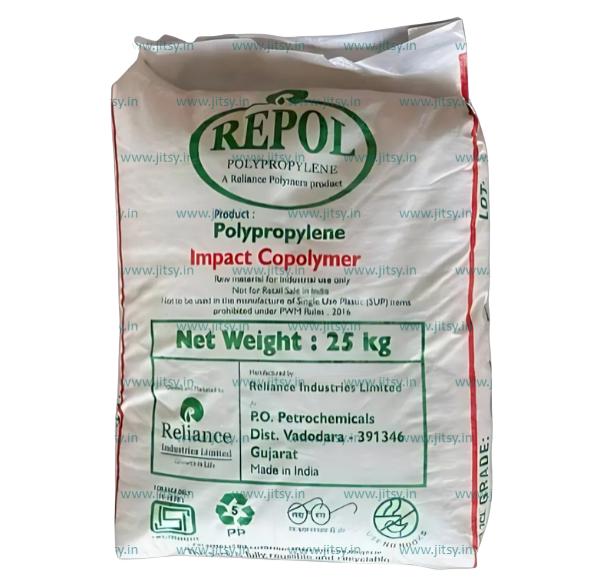
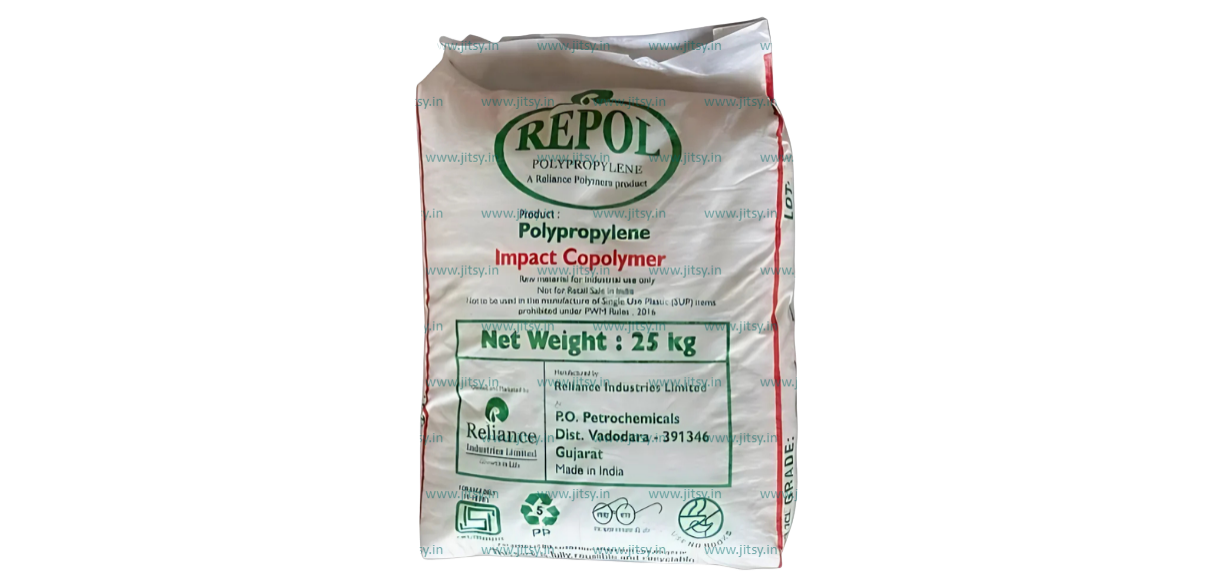
Reliance PP Repol H350FG is a polypropylene homopolymer grade developed by Reliance Industries Limited under the Repol brand for high-speed fiber, filament, spunbond non-woven, and extrusion coating applications. It is manufactured using Unipol PP process technology, a gas-phase fluidized-bed process known for delivering consistent rheology, stable molecular structure, and repeatable processing performance across production batches.
Repol H350FG is positioned as a high-flow fiber-grade polypropylene for processors who need easy flow, excellent spinning behavior, and reliable coating performance. The grade is especially relevant for manufacturers producing fine denier multifilament yarns, low-GSM spunbond non-wovens, and coated woven fabric structures where line speed, uniformity, and appearance consistency matter. For buyers searching for Reliance H350FG TDS, PP homopolymer for spunbond non-woven, or high MFI polypropylene for extrusion coating, this grade fits a strong commercial and technical requirement.
Manufacturer and Brand Background
Reliance Industries Limited is one of India’s largest integrated petrochemical manufacturers and a major producer of polypropylene for domestic and international markets. Its Repol brand includes a wide range of polypropylene homopolymers, copolymers, and specialty grades developed for fiber, film, injection molding, raffia, BOPP, and technical industrial applications.
Within this portfolio, Repol H350FG belongs to the high-flow fiber and coating family. It is designed for processors looking for a polypropylene homopolymer that can run efficiently at high speeds while maintaining stable output, good color retention, and dependable end-use performance.
Process Technology and Grade Design Intent
H350FG is produced using Unipol PP technology and is formulated for fiber and coating applications that demand smooth flow and process consistency. The grade includes an anti-gas-fading package that helps reduce yellowing caused by nitrogen oxides and ozone exposure, which is especially valuable in white, natural, and appearance-sensitive fibers and non-woven products.
Its design intent is clear: deliver high melt flow for faster processing, maintain uniformity for fine denier and low-basis-weight structures, and support better surface quality and adhesion in extrusion coating and lamination applications.
Technical Properties and Material Performance
Reliance PP Repol H350FG has a melt flow rate of around 35 g/10 min, placing it in the high-flow category of polypropylene homopolymer fiber grades. This makes it well suited for high-speed spinning, low-GSM spunbond production, and thin, uniform extrusion coating where faster flow and smoother melt behavior are important.
The density is approximately 0.90 g/cm³, which is standard for polypropylene homopolymer and supports lightweight finished products. In terms of mechanical performance, the grade offers tensile strength at yield of about 34 MPa and elongation at yield in the range of 9 to 10 percent. This gives manufacturers a useful balance of stiffness and workable ductility for fiber and non-woven processing.
Flexural modulus is typically in the range of 1.50 to 1.65 GPa, supporting structural integrity and helping maintain fiber performance during drawing and downstream conversion. Notched Izod impact at room temperature is generally around 22 to 24 J/m, while thermal performance remains aligned with typical PP homopolymer behavior, with Vicat softening in the mid-150°C range and heat deflection temperature around 100 to 105°C.
From a processor’s perspective, the most important technical strength of H350FG is its combination of high MFI, stable rheology, and gas-fading resistance. This allows the grade to support high line speeds, fine denier output, low neck-in during coating, and better appearance retention in finished white or natural products.
Processing Guidance
For fiber, filament, and spunbond non-woven applications, H350FG is generally processed in a melt temperature range of about 210°C to 250°C. Its high-flow profile supports compact spinning and fine denier yarn production with good uniformity and reduced process variation.
In extrusion coating and lamination, the grade is valued for excellent flow, low neck-in, good surface finish, and strong adhesion, particularly on polypropylene woven fabrics and related substrates. This makes it commercially attractive for packaging, woven sack coating, and technical laminated structures where coating quality and line efficiency are both critical.
Applications and Industry Use Cases
Fine Denier Multifilament and Filament Yarn
Reliance PP Repol H350FG is well suited for fine denier multifilament yarn and related filament applications where high-speed spinning and uniform output are essential. Its high melt flow allows easier processing at faster line speeds, while its stable rheology helps maintain yarn consistency and reduce variation across production runs. This makes it relevant for textile yarns, industrial filaments, carpet yarns, and selected bulk continuous filament applications where smooth processing and reliable performance are important.
Spunbond Non-Wovens and Low-GSM Fabrics
H350FG is a strong fit for spunbond non-woven applications, especially low-GSM structures used in hygiene, filtration, agriculture, packaging, and industrial fabric segments. The grade’s high-flow behavior supports efficient web formation and stable throughput, while the anti-gas-fading package helps preserve whiteness and appearance in finished fabrics. For manufacturers producing diaper components, medical disposables, crop covers, or industrial non-wovens, this grade offers a practical balance of speed, consistency, and visual quality.
Extrusion Coating and Lamination
One of the most commercially important uses of Repol H350FG is extrusion coating and lamination. Its high MFI supports thin, even coating layers with low neck-in and good edge control, while its surface finish and adhesion characteristics make it suitable for coating polypropylene woven fabrics and similar substrates. This makes the grade relevant for woven sack coating, flexible packaging structures, industrial wraps, and specialty laminated products where coating quality directly affects final performance and appearance.
Packaging, Industrial and Technical End Uses
Beyond fiber and non-wovens, H350FG supports a range of packaging and industrial applications where high-flow polypropylene homopolymer is preferred. These include non-woven packaging materials, coated technical fabrics, filtration media, and selected food-related packaging structures subject to end-use validation. Its compliance profile and processability make it attractive for converters serving hygiene, industrial, agricultural, and packaging markets across India.
Performance Advantages of Reliance PP Repol H350FG
A major advantage of H350FG is its very high flow profile compared with lower MFI fiber grades. This allows processors to run faster lines, produce thinner coatings, and support low-basis-weight non-woven structures more efficiently. Where production speed and melt uniformity are key priorities, H350FG offers a clear technical benefit.
Another important strength is its excellent uniformity. In fine denier spinning and spunbond conversion, consistency in flow behavior helps reduce process instability, improve output quality, and support better control over fiber structure. This is especially valuable for manufacturers targeting premium non-woven and textile applications.
The anti-gas-fading formulation is also a meaningful differentiator. In white and natural products, yellowing during storage or environmental exposure can affect appearance and market acceptance. H350FG is designed to reduce that risk, making it more suitable for appearance-sensitive end uses than standard unoptimized PP homopolymer grades.
For coating applications, the grade’s low neck-in, good gloss, and strong adhesion profile add another layer of commercial value. It is not only a fiber grade but also a practical coating and lamination material, which broadens its usability across multiple converting industries.
Comparable Alternatives
Within Reliance’s own range, H200FG and H350FH are the most relevant comparison points. H200FG, with lower MFI around 20, is generally better suited where a stronger balance between spinnability and tenacity is needed, especially in yarn-oriented applications. H350FG, by contrast, is the better choice when higher flow, faster processing, and coating efficiency are the main priorities.
Compared with H350FH, H350FG sits in a similar high-flow zone but is often positioned more strongly for fiber, spunbond non-woven, and extrusion coating applications where gas-fading resistance and coating behavior are commercially important. The final selection between these grades depends on whether the processor is optimizing more for non-woven uniformity, coating performance, or a specific line setup.
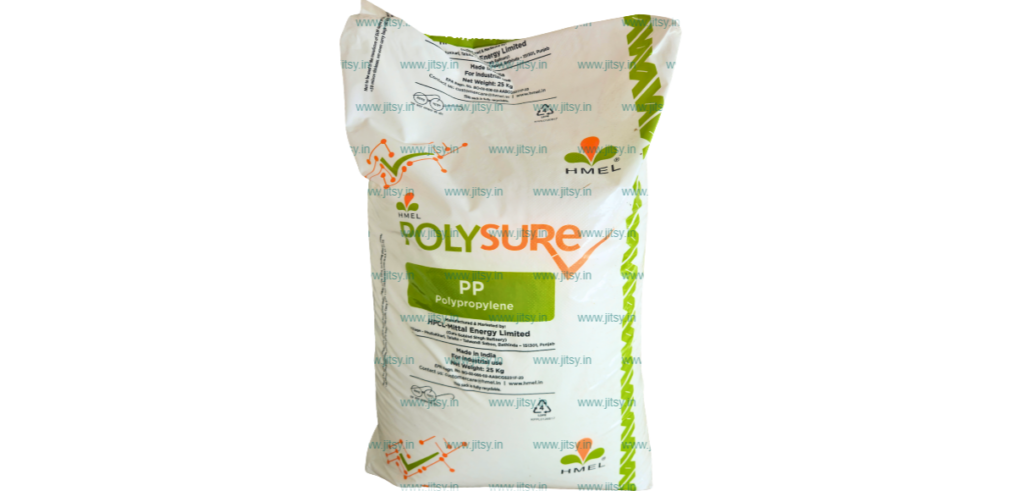
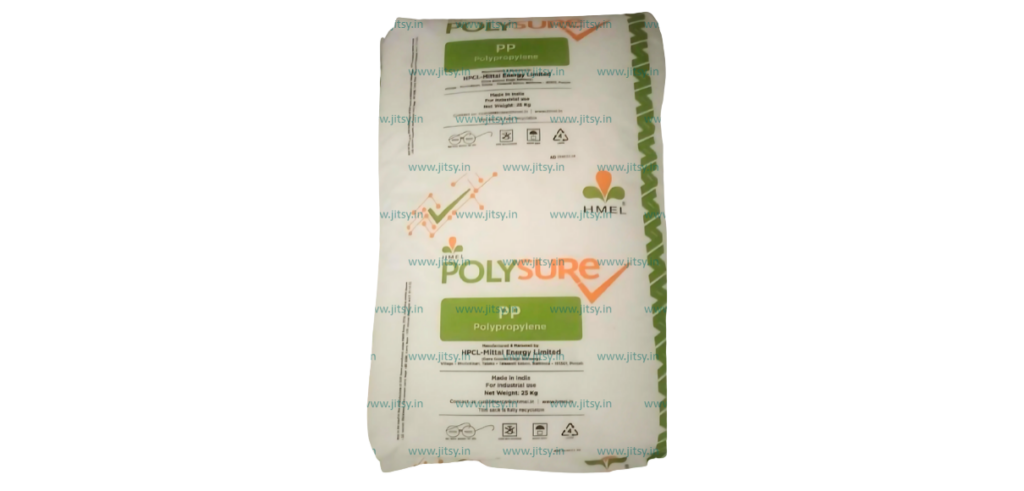
Against Indian alternatives such as HMEL Polysure Y25GR and Y25GR1, IOCL Propel fiber grades, and OPaL PP fiber grades, H350FG stands out as a higher-MFI option for processors who want faster flow and stronger coating performance. Lower-MFI alternatives may offer advantages where tenacity is the top priority, but H350FG is the more suitable grade when high-speed processing, fine denier output, low-GSM non-wovens, and extrusion coating efficiency are more important than maximum fiber strength alone.
The rationale behind H350FG is straightforward: it is a high-flow polypropylene homopolymer assigned to applications where speed, uniformity, appearance retention, and coating quality matter more than the extra tenacity associated with lower-flow fiber grades.




















Reviews
Clear filtersThere are no reviews yet.