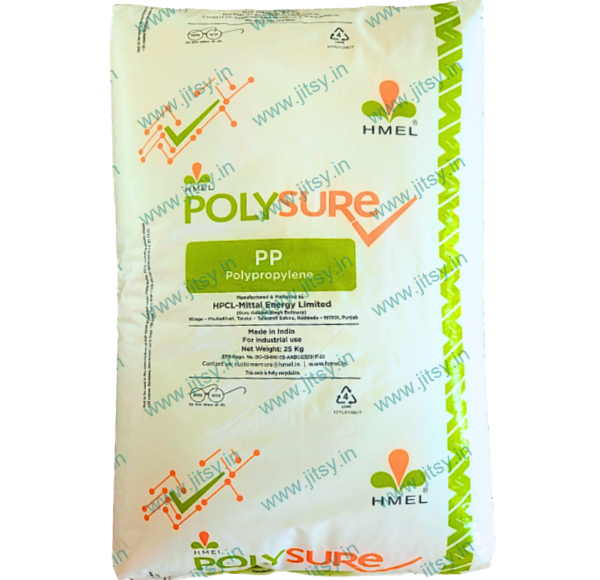
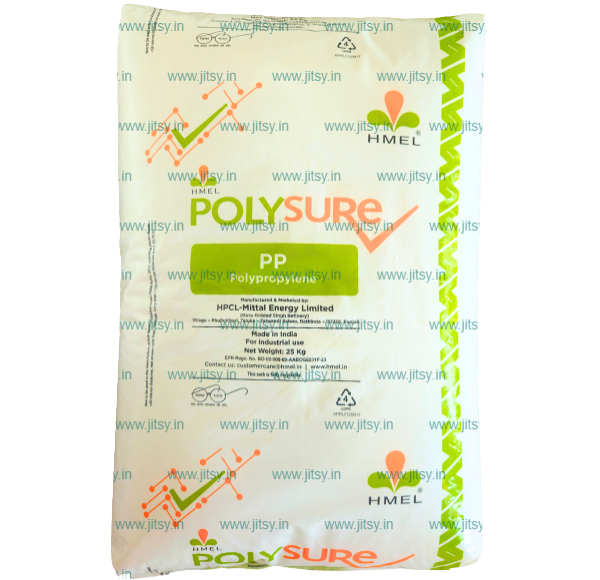
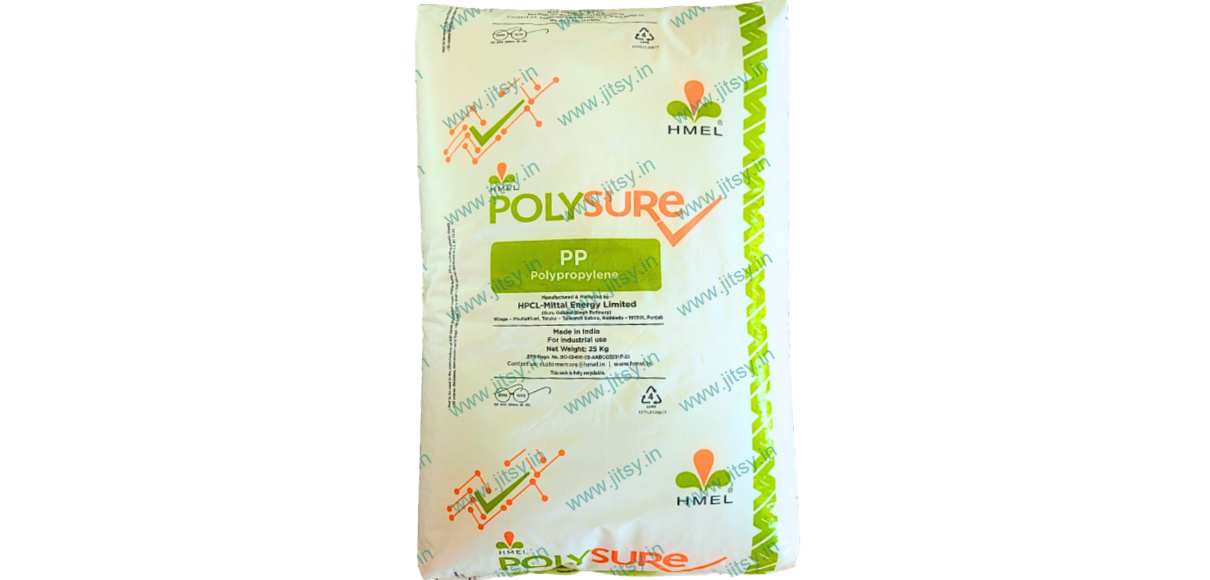
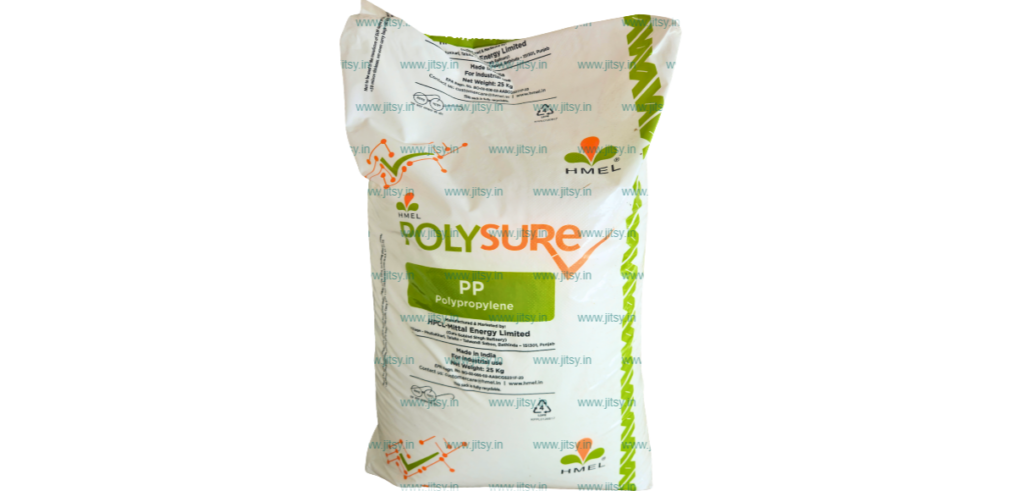
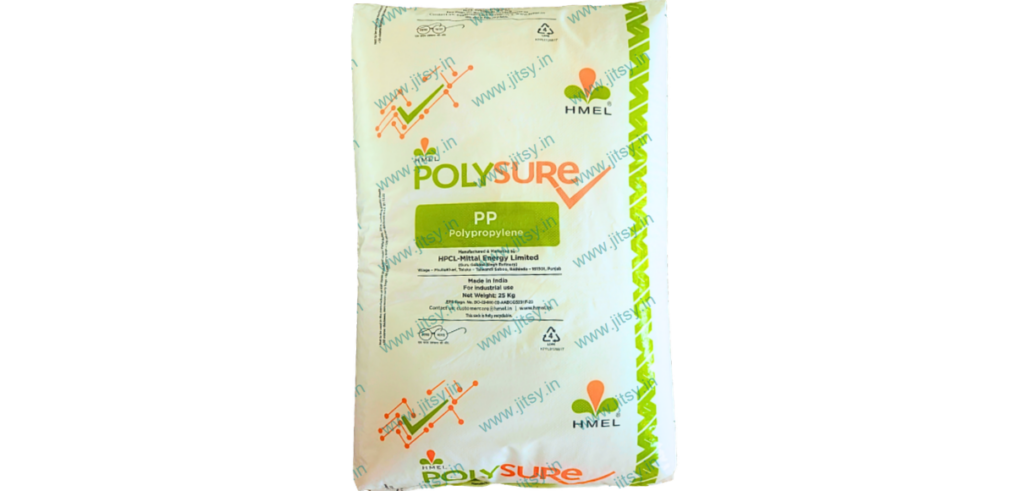
HMEL’s Polysure M50NR1 is a premium-grade, nucleated polypropylene homopolymer engineered specifically for high-speed thin wall injection molding (TWIM) applications. Manufactured using HMEL’s proprietary Spheripol-II technology, M50NR1 delivers superior melt flow (50 MFI) combined with exceptional stiffness (1500 MPa flexural modulus) and rapid cooling characteristics—making it the preferred choice for dairy packaging, yogurt cups, food service containers, and high-cavity mold production across North India.
As a process variant of M50NR, M50NR1 maintains identical technical specifications while being optimized for commercial TWIM operations, particularly in 128+ cavity molds where cycle time reduction and warpage elimination are critical. HMEL, a joint venture between HPCL and Mittal Energy, brings decades of petrochemical expertise and ISO-certified manufacturing to every batch, ensuring consistent quality, regulatory compliance (IS 10910, IS 16738:2018, FDA 21 CFR 177.1520), and reliable supply to manufacturers across Delhi NCR, Noida, Gurgaon, and Manesar.
Technical Data – ASTM Property Specifications & Technical Strengths
M50NR1 achieves a melt flow index (MFI) of 50 g/10 min at 230°C/2.16 kg, establishing it as a high-flow resin ideal for rapid cavity fill in ultra-thin wall applications. This elevated flow rate, combined with nucleated structure, enables cycle times as low as 4–8 seconds in 128-cavity molds—a significant advantage over standard 50 MFI non-nucleated grades.
Flexural modulus reaches 1500 MPa (ASTM D790A), delivering robust stiffness for thin-wall containers without brittleness. Tensile elongation at yield stabilizes at 10% (ASTM D638), ensuring balanced strength-to-flexibility performance during high-speed injection and ejection. Notched Izod impact strength measures 25 J/m (ASTM D256A), providing adequate toughness for handling and transport of finished products.
Vicat softening temperature of 150°C (ASTM D1525) and heat deflection temperature (HDT) of 105°C at 0.45 MPa (ASTM D648) confirm M50NR1’s thermal stability for food contact applications and post-molding processes. The nucleated structure—achieved through Spheripol-II polymerization—creates uniform crystalline domains that accelerate cooling, reduce warpage, and enhance surface gloss and dimensional accuracy compared to non-nucleated 50 MFI alternatives.
Processing Parameters & Nucleated Advantages
Barrel Temperature Range: 180–230°C (optimal 200–220°C for consistent melt viscosity and reduced shear degradation)
Mold Temperature: 30–40°C (nucleated structure supports rapid cooling without surface defects)
Injection Speed: High (optimized for 128+ cavity fills in 3–5 seconds)
Back Pressure: Moderate (40–80 bar to maintain nucleation benefits and prevent shear-induced property loss)
The nucleated crystalline architecture of M50NR1 delivers three distinct technical advantages:
(1) Accelerated Cooling—nucleation sites reduce cooling time by 30–40% versus non-nucleated 50 MFI grades, enabling 4–8 second cycles in high-cavity molds;
(2) Warpage Elimination—uniform crystal growth minimizes shrinkage variation and part distortion, critical for stackable yogurt cups and dairy containers;
(3) Enhanced Aesthetics—nucleation produces superior surface gloss, dimensional consistency, and visual appeal without post-molding treatment.
Applications
Ultra-Thin Wall Yogurt & Dairy Packaging (0.4–0.8 mm)
M50NR1 dominates the high-speed yogurt cup and dairy packaging segment, where 128-cavity molds and ultra-thin walls (0.4–0.8 mm) demand both rapid fill and minimal warpage. The 50 MFI flow rate ensures complete cavity fill within 3–5 seconds, while the nucleated structure cools parts to ejection temperature in 4–8 seconds total cycle time. For 500 ml yogurt pots with 0.6 mm walls in 128-cavity molds, M50NR1 achieves 45–60 parts per minute production rates, delivering 2,700–3,600 parts per hour per machine—translating to significant throughput gains over lower-MFI alternatives.
Dairy manufacturers across India including Noida, Gurgaon IMT, and Manesar rely on M50NR1 for consistent part quality, reduced scrap rates, and predictable cycle times. The 1500 MPa flexural modulus provides adequate stiffness for stackable containers without brittleness during handling, while the nucleated surface finish eliminates post-molding cosmetic defects common with non-nucleated grades. Food contact compliance (FDA 21 CFR 177.1520, IS 10910) ensures regulatory clearance for direct food contact without migration concerns.
High-Speed Food Service & Takeaway Containers (64–96 Cavity)
Food service operators and contract manufacturers producing disposable takeaway containers, meal trays, and hinged-lid systems benefit from M50NR1’s balanced flow-to-stiffness profile. In 64–96 cavity molds for 300–750 ml containers with 0.5–0.7 mm walls, M50NR1 delivers 30–45 parts per minute per machine, with minimal gate vestige and flash. The nucleated structure reduces post-molding deflashing labor and improves first-pass quality rates.
Thermal stability (105°C HDT) supports hot-fill applications where containers receive boiling liquids or steam-sterilization post-molding. The 10% tensile elongation at yield prevents brittle failure during aggressive handling, while the 25 J/m notched Izod impact strength ensures durability through distribution chains. Regional food service clusters in Delhi NCR and North India increasingly specify M50NR1 for cost-effective, high-volume production without sacrificing part quality or regulatory compliance.
Masterbatch & Compounding Base Resin
M50NR1 serves as a premium base resin for masterbatch manufacturers and compounders producing color concentrates, UV-stabilized compounds, and functional additives. The 50 MFI flow rate facilitates rapid dispersion of pigments, additives, and reinforcing fibers during twin-screw compounding, reducing residence time and thermal degradation. The nucleated structure remains stable through compounding, allowing downstream converters to blend M50NR1 compounds with virgin or recycled PP without losing nucleation benefits.
Compounders targeting TWIM applications value M50NR1 for its consistent melt behavior, predictable additive uptake, and minimal viscosity drift across multiple processing cycles. The 1500 MPa flexural modulus provides a stiff baseline for fiber-reinforced compounds, while the 150°C Vicat softening temperature supports thermal processing without resin softening or flow loss.
M50NR1 vs M65NR1 vs M18NH1: Comparative Performance & Selection Guide
M50NR1 (50 MFI) – Ultra-High-Speed TWIM Specialist
M50NR1 is engineered for maximum throughput in 128+ cavity molds where cycle time is the primary constraint. The 50 MFI flow rate enables 3–5 second cavity fill, with nucleated cooling reducing total cycle to 4–8 seconds. Flexural modulus of 1500 MPa provides adequate stiffness for thin-wall containers without brittleness. This grade is ideal for high-volume yogurt cups, dairy pots, and food service containers where production speed and part consistency directly impact profitability.
M65NR1 (65 MFI) – Maximum-Flow Ultra-Thin Wall Specialist
HMEL’s M65NR1 elevates MFI to 65 g/10 min, targeting ultra-thin walls (0.3–0.5 mm) and extreme cavity counts (144+ molds). Cavity fill accelerates to 2–4 seconds, enabling cycle times as low as 3–6 seconds in optimized molds. Flexural modulus drops slightly to ~1450 MPa, but remains adequate for thin-wall stiffness. M65NR1 is chosen when maximum throughput and ultra-thin wall capability outweigh stiffness requirements—typically in premium yogurt cups and specialized dairy packaging where wall thickness reduction cuts material cost per part
M50NR1 vs M65NR1 Decision
Choose M50NR1 if part stiffness, stackability, and moderate wall thickness (0.5–0.8 mm) are priorities. Choose M65NR1 if ultra-thin walls (0.3–0.5 mm), maximum cavity count, and absolute cycle time minimization are critical, accepting slightly lower stiffness.
M18NH1 (18 MFI) – Stiffness-Focused General-Purpose TWIM
HMEL’s M18NH1 is a nucleated 18 MFI grade optimized for general-purpose thin wall injection molding where stiffness and warpage control outweigh cycle time. Flexural modulus reaches ~1700 MPa (6% higher than M50NR1), delivering superior rigidity for thicker walls (0.8–1.2 mm) and larger containers. Cycle times extend to 8–12 seconds due to lower flow, but nucleation still provides rapid cooling and minimal warpage.
M18NH1 is preferred for household items, kitchenware, storage containers, and consumer products where part stiffness, durability, and stackability are non-negotiable. The lower MFI reduces material throughput but improves surface finish and dimensional consistency in lower-cavity molds (32–64 cavity).
M50NR1 vs M18NH1 Decision
Choose M50NR1 for high-speed, high-volume, thin-wall production (yogurt cups, dairy pots, 128+ cavity). Choose M18NH1 for moderate-speed, stiffness-critical applications with thicker walls and lower cavity counts.
Energy Savings & Specific Energy Reduction
The nucleated structure and rapid cooling of M50NR1 reduce specific energy consumption (kWh per kg of molded part) by 15–25% compared to non-nucleated 50 MFI alternatives. Lower mold temperatures (30–40°C vs. 45–55°C) reduce chiller load, while shorter cycle times (5–8 seconds vs. 10–15 seconds) increase machine utilization. For a 128-cavity mold producing 3,000 parts per day, M50NR1 delivers annual energy savings of ₹2–4 lakh per machine.






















Reviews
Clear filtersThere are no reviews yet.