











Haldia PPCP Halene M304
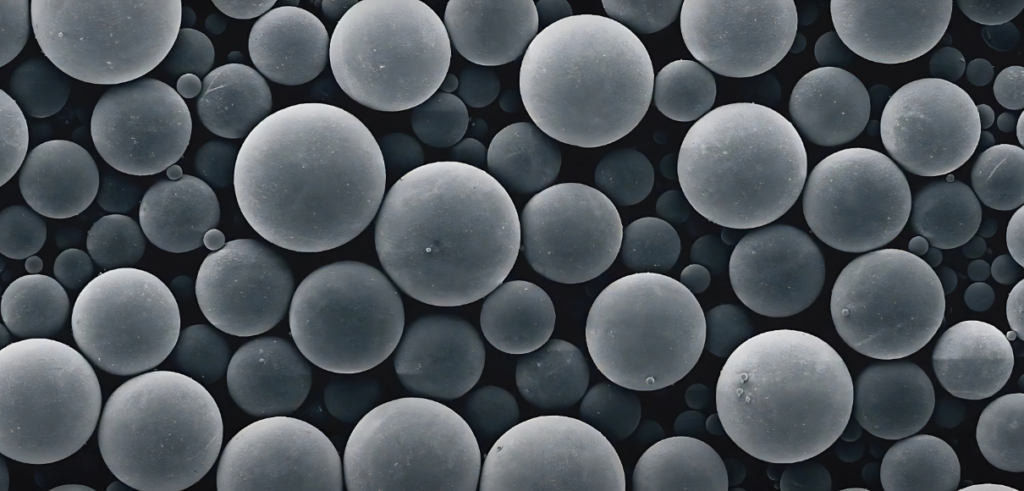
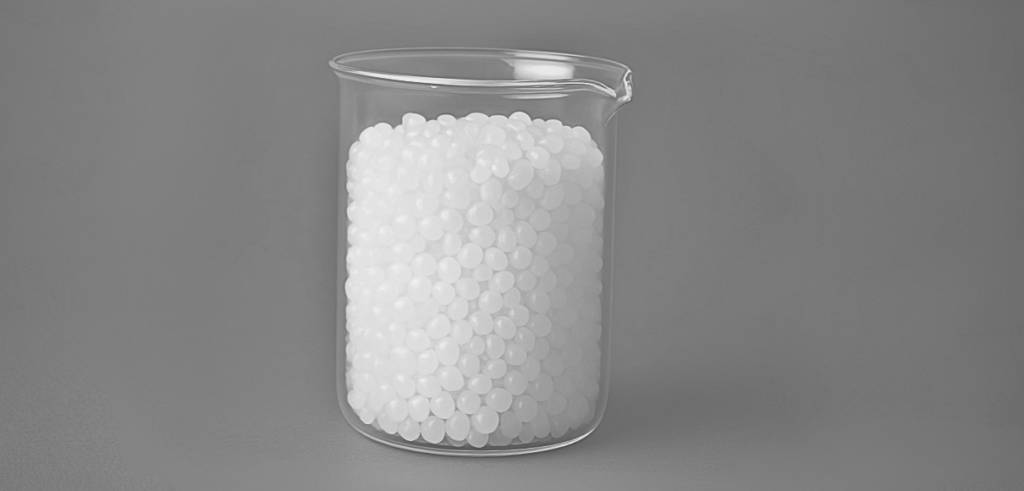
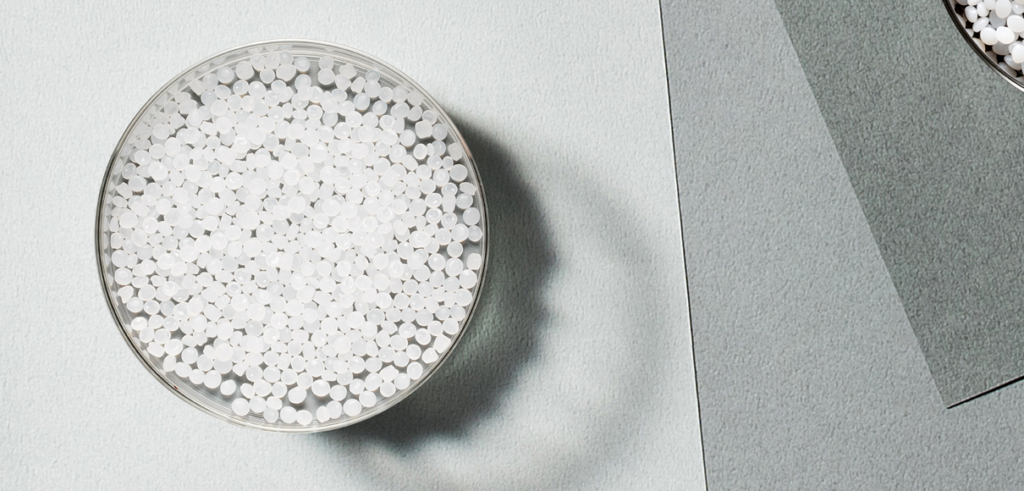
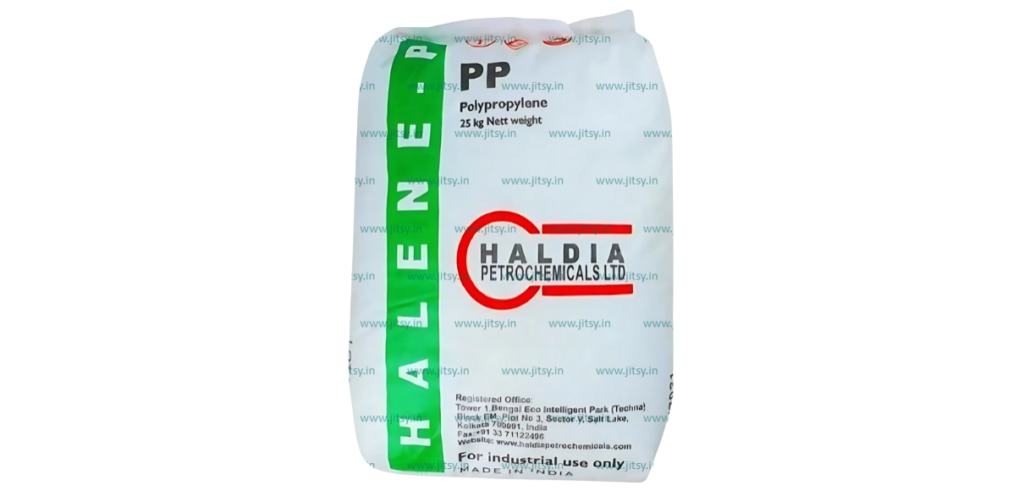
Halene M304 is a high-impact, heterophasic polypropylene copolymer manufactured by Haldia Petrochemicals using advanced Spheripol II technology. Designed for injection molding, M304 delivers a unique balance of toughness, rigidity, and processability, making it ideal for automotive, furniture, and industrial container applications. Its 3.5 MFI and 150 J/m impact strength set the benchmark for performance in demanding environments.
Deep Technical Insights
M304 is engineered with a semi-crystalline polypropylene matrix and finely dispersed ethylene-propylene rubber phase, providing a 5–10x impact strength advantage over homopolymer PP. The Spheripol II process ensures uniform spherical granules, tight property tolerances, and efficient cycle times. ISO 9001 and 14001 certified production guarantees product reliability, while the optimized 3.5 MFI enables faster molding and reduced energy use. This grade is especially suited for parts requiring both dimensional stability and resistance to cracking or breakage.Applications & Industry Use Cases
Automotive: Used in dashboard substrates, door trims, pillar covers, bumper reinforcements, battery trays, and under-hood components, M304 excels in safety, durability, and lightweighting targets. Furniture: Perfect for monobloc chairs, modular seating, table tops, and stackable storage, M304 offers impact resistance, weather durability, and fast production cycles for commercial and outdoor furniture. Industrial Containers & Crates: Ideal for paint pails, chemical storage, beverage crates, and warehouse bins, M304 provides chemical resistance, dimensional stability, and long service life under rough handling and stacking.Technical Authority & Industry Leadership
Halene M304 leverages cutting-edge Spheripol II technology and advanced Ziegler-Natta catalysts for superior polymer consistency and efficiency. The grade’s optimized molecular architecture supports high-volume manufacturing, while its performance metrics surpass many competitor grades like Reliance MI3530 and IOCL 3030MG. Haldia’s strategic plant location in West Bengal provides supply chain advantages for Eastern India and export markets, further cementing M304’s position as a go-to solution for impact copolymer applications.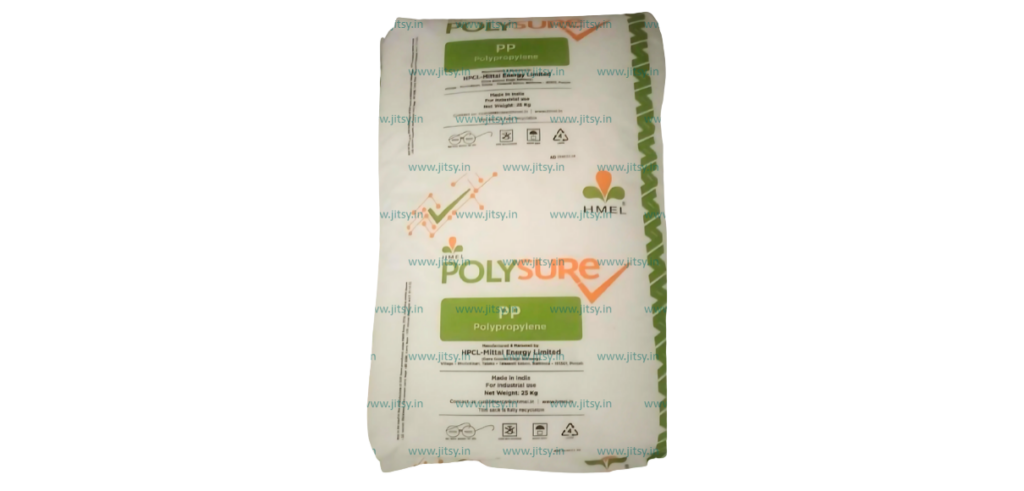
HMEL PPCP Polysure CM03RR
Polysure CM03RR is HMEL’s Spheripol-II based polypropylene impact copolymer (PPCP) designed for general-purpose injection moulding. With a medium MFI of 3.5, CM03RR delivers an outstanding stiffness–impact balance, making it the go-to grade for automotive components, furniture, crates, industrial mouldings, and rigid packaging. Spheripol-II technology ensures uniform impact-phase dispersion and consistent mechanicals batch after batch, supporting dimensional stability and robust part performance for demanding structural applications.
Technical specifications of HMEL Polysure CM03RR
Flow & physical properties
- Melt Flow Index:5 g/10 min (230°C/2.16 kg) – tuned for general-purpose injection moulding
- Density: ~0.90 g/cm³ – standard for PP IC grades
- Implication: Medium MFI supports moderate wall thicknesses and high impact retention over ultra-high flow grades
Mechanical properties – stiffness & impact
- Tensile strength at yield: 27 MPa – strong for load-bearing and structural parts
- Elongation at yield: 9% – supports flexibility and shock absorption
- Flexural modulus: 1100 MPa – high stiffness for automotive, crates, and furniture
- Notched Izod impact (23°C): 160 J/m – high toughness for drop, stacking, and handling resistance
Thermal properties & service envelope
- Vicat softening point (10 N): 150°C – resists deformation under moderate heat
- Heat deflection temperature (0.455 MPa): 90°C – suitable for automotive interiors, furniture, and crates exposed to sunlight or warm conditions
Deep technical insights
- Spheripol-II technology: Ensures uniform heterophasic morphology for consistent impact and stiffness across batches—crucial for OEMs and high-reuse applications.
- Stiffness–impact synergy: 1100 MPa modulus and 160 J/m impact make CM03RR ideal for load-bearing, drop-resistant parts in automotive, logistics, and furniture.
- Medium MFI: Balances flow for moderate wall sections, avoiding brittleness or warpage common in ultra-high flow grades.
- Regulatory breadth: IS 10910 and IS 16738/10909 compliance covers food, pharma, and drinking water contact for packaging and consumer goods.
Applications & industry use cases
Automotive components
CM03RR is perfect for interior trims, semi-structural parts, and components where both rigidity and toughness are required—delivering reliable performance in the cabin and non-critical under-hood areas.Furniture & consumer durables
Moulders use CM03RR for chair shells, backs, arms, table tops, and storage systems. Its stiffness supports weight-bearing designs, while impact resistance ensures products survive daily use and handling.Crates, bins, and logistics items
For stackable crates, bins, and pallets, CM03RR’s high impact and stiffness enable repeated drops and high stacking loads without cracking, supporting efficient warehousing and transport.Rigid packaging & industrial mouldings
CM03RR is also used for buckets, pails, rigid containers, and technical housings—delivering drop resistance and stacking strength for robust packaging and industrial parts.Processing guidelines for CM03RR PPCP
Recommended injection-moulding window
- Barrel temperature: 190–230°C (mid-range 200–220°C for most parts)
- Mould temperature: 30–40°C (cooler for faster cycles, warmer for improved finish and reduced warpage)
- Packing pressure/time: Essential for ribs and thick sections to avoid sinks due to high stiffness
Design considerations for crates and furniture
- Use moderate wall thicknesses; avoid ultra-thin designs to maintain impact toughness
- Optimize rib and gate design for uniform fill and minimal warpage
Common PPCP moulding issues & troubleshooting
- Short shots: Raise melt temperature or injection speed
- Warpage: Use balanced cooling and uniform wall thickness
- Flow marks: Optimize gate location and injection speed
Performance advantages vs other Polysure PPCP grades
CM03RR vs CM08NR & CM10TE
- CM03RR (3.5 MFI): Best for automotive, furniture, crates—emphasizes stiffness and impact for moderate walls
- CM08NR (8 MFI): Suited for paint pails, higher throughput, slightly less toughness
- CM10TE (9.5 MFI): For battery casings, under-hood auto—optimized for thermal stability and impact
CM03RR vs competitor PPCP grades
Compared to typical 3–4 MFI grades from Reliance, IOCL, or OPaL, CM03RR offers a superior stiffness–impact balance and greater batch-to-batch consistency, thanks to HMEL’s Spheripol-II process and QC.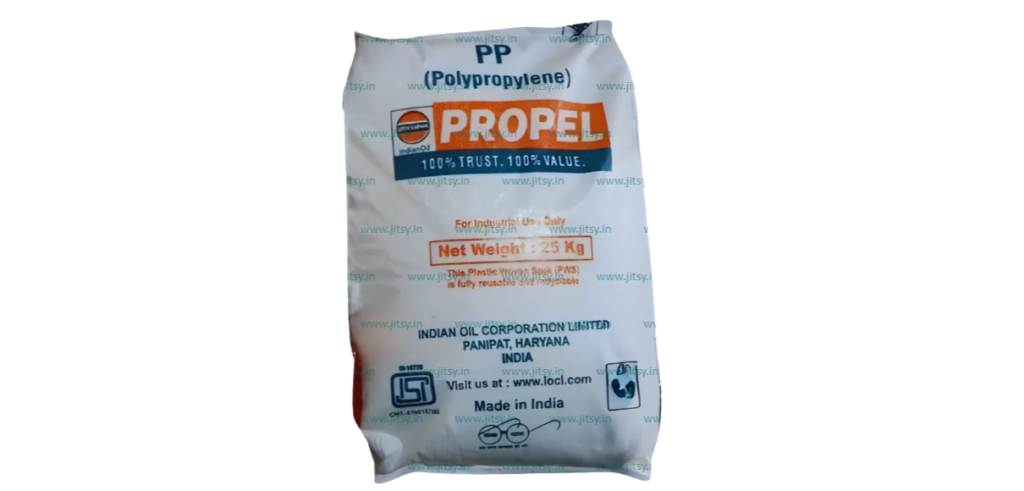
IOCL PPCP Propel 3030MG
Propel 3030MG is a medium-flow, high-impact polypropylene impact block copolymer (PPCP) from Indian Oil Corporation Ltd (IOCL), manufactured using Spheripol II technology. Designed for injection moulding, it delivers a reliable balance of impact strength and stiffness, making it ideal for automotive components, appliances, industrial parts, and caps & closures. As a prime, virgin PPCP 3.5 MFI grade, Propel 3030MG offers high-volume moulders repeatable performance, excellent surface finish, and consistent supply.
Technical Properties and Datasheet for Propel 3030MG
Typical Physical and Mechanical Properties
- Melt Flow Index (230°C/2.16kg):5 g/10 min
- Density:90 g/cm³
- Tensile strength at yield: 27 MPa
- Elongation at yield: 9%
- Flexural modulus: 1100 MPa
- Notched Izod impact (23°C): >150 J/m
- Heat deflection temp (0.46 N/mm²): 88°C
- Vicat softening point (10N): 150°C
Recommended Injection Moulding Conditions
- Melt temperature: 170–230°C
- Mold temperature: standard
- Storage: 25 kg bags, store below 50°C, process within 6 months for best results
Regulatory Information
Food-Contact and Regulatory Compliance
- Complies with IS 10910 (food, pharma, drinking water contact)
- Additives meet IS 10909 positive list
- Meets US FDA 21 CFR 177.1520 for specific food-contact applications
- Always confirm suitability for your process and end-use
Applications and Industry Use Cases of Propel 3030MG
Automotive Components and Under-Bonnet Parts
Propel 3030MG is trusted for interior trim, instrument-panel carriers, brackets, and fuse-box covers. Its >150 J/m impact and 1100 MPa modulus allow for stiff, impact-tolerant parts that withstand vibration and handling, while lightweight density helps reduce vehicle mass.Appliance and Consumer Product Housings
Used for housings and structural parts in washing machines, air-coolers, refrigerators, and vacuum cleaners, 3030MG’s chemical resistance and impact strength ensure durable, crack-resistant components that stand up to daily use and detergents.Industrial Components and Engineering Parts
Ideal for machine guards, technical mouldings, and brackets, Propel 3030MG’s flow and toughness support multi-cavity, complex part production with reliable snap-fit and hinge performance.Caps and Closures
Commonly used in beverage and personal-care caps, flip-tops, and threaded closures, 3030MG’s strength and stiffness support hinge designs and tamper-evident features, while PP’s chemical resistance allows safe use with a wide range of products.Performance Advantages of IOCL 3030MG vs Generic PPCP
- High impact resistance and useful stiffness for demanding parts
- Medium-flow MFI 3.5 for efficient processing and complex moulds
- Strong thermal performance with HDT 88°C and Vicat 150°C
- Excellent chemical resistance for appliance and industrial use
- Lightweight, recyclable, and batch-consistent for OEMs
Opal PPCP Opalene MI03
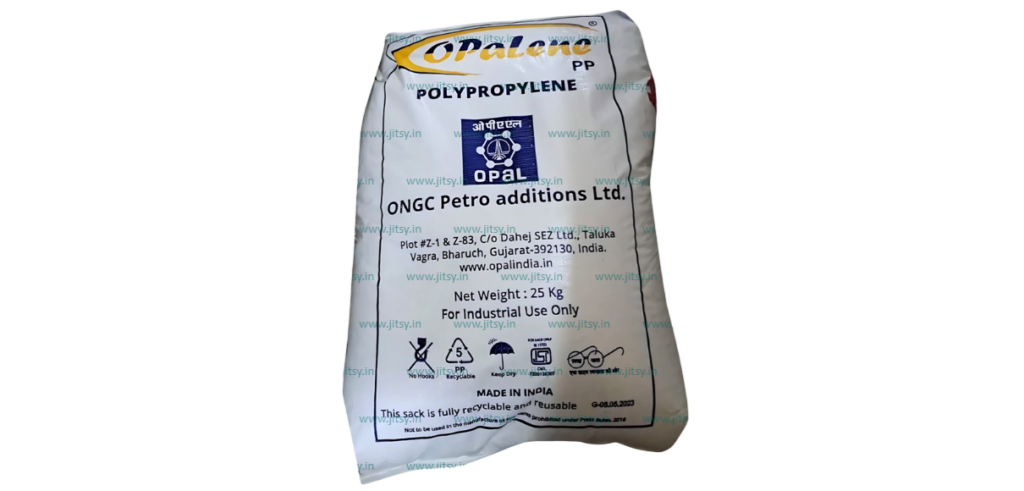
Opal PPCP Opalene MI03 is a heterophasic polypropylene impact copolymer engineered for high-performance injection molding applications. Manufactured by OPaL using advanced Ineos Gas Phase polymerization, MI03 delivers a unique balance of toughness, flow, and processability. This grade is tailored for demanding automotive, furniture, and industrial components where impact strength, dimensional stability, and regulatory compliance are essential.
Deep Technical Insights
Opal MI03 features a two-phase microstructure with isotactic polypropylene matrix and finely dispersed ethylene-propylene rubber domains. The Ineos Gas Phase process ensures uniform particle morphology, batch-to-batch consistency, and minimal fines generation. This architecture enables simultaneous high stiffness and toughness, making MI03 ideal for applications requiring both structural rigidity and impact absorption. Compliance with IS 10910 and FDA standards ensures suitability for food contact and medical-grade uses.Applications & Industry Use Cases
Automotive: MI03 is widely used in interior and exterior components such as dashboard panels, door trims, bumpers, battery trays, and engine covers. Its high impact resistance and lightweight properties contribute to vehicle safety and fuel efficiency. Furniture: The grade is perfect for chair frames, table legs, storage containers, and outdoor furniture, offering durability, stackability, and excellent surface finish. Its natural color base allows for easy masterbatch colorant integration. Industrial Molding: MI03 excels in manufacturing industrial crates, paint pails, toolboxes, and chemical storage containers. Its chemical resistance and low shrinkage ensure precision and long-term performance in harsh environments.Technical Authority & Industry Leadership
Opal MI03 stands out through its advanced manufacturing technology, delivering superior consistency and morphological control versus conventional polymerization. The grade’s optimized injection molding parameters support rapid cycle times and excellent mold reproduction. Detailed compliance with Indian and global standards, including IS 10910 and FDA CFR Title 21, positions MI03 as a benchmark for quality and safety in the polypropylene copolymer market.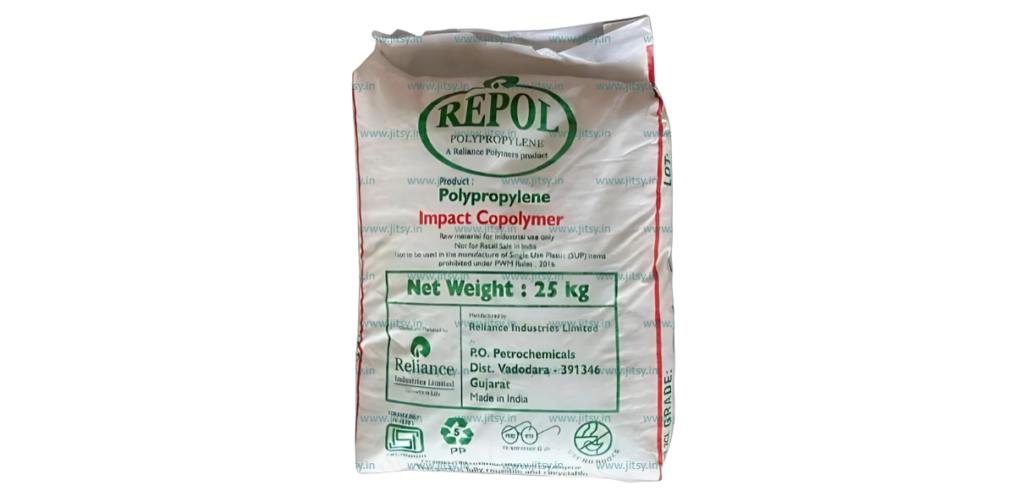
Reliance PPCP Repol AMI035N
Reliance Repol AMI035N is a polypropylene impact copolymer (PPCP) engineered for injection moulding applications demanding exceptional stiffness–impact balance, dimensional stability, and long-term durability. Produced using advanced process technology, AMI035N features a low melt flow index (3 g/10 min), making it the ideal PPCP for automotive components, crates, rigid packaging, furniture, and industrial mouldings where structural integrity and impact resistance are non-negotiable. The grade’s mechanical and thermal profile ensures performance in both moderate and demanding service environments.
Technical specifications
Flow & physical properties
- Melt Flow Index: 3 g/10 min (230°C/2.16 kg) – low-MFI for maximum toughness and rigidity
- Density: ~0.90 g/cm³ – standard for PP IC
Mechanical & thermal properties
- Tensile strength at yield: ~27 MPa – robust for automotive and structural parts
- Elongation at yield: ~8% – supports resilience under load
- Flexural modulus: ~1100 MPa – high stiffness for crates, furniture, and packaging
- Notched Izod impact (23°C): ~160 J/m – excellent impact strength for drop and stacking resistance
- Vicat softening point (10 N): ~150°C – resists deformation under moderate heat
- Heat deflection temperature (HDT, 0.455 MPa): ~90°C – suitable for automotive interiors and logistics
Regulatory compliance
- Conforms to IS 10910 (food/pharma/drinking water contact) and IS 16738:2018 (positive list)
- Additives and formulation meet FDA and global standards for safe packaging and consumer use
Deep technical insights
- Low-MFI advantage: AMI035N’s 3 g/10 min MFI is ideal for moderate-wall, high-strength parts, maximizing impact and stiffness while minimizing warpage and brittleness.
- Mechanical synergy: 1100 MPa flexural modulus and 160 J/m impact provide the stiffness and toughness required in automotive, crate, and furniture applications.
- Thermal reliability: Vicat 150°C and HDT 90°C ensure shape retention and performance in warm or sun-exposed environments.
- Dimensional consistency: Reactor-grade dispersion and process stability support repeatability for OEM and high-volume production.
Applications
Automotive components
AMI035N is engineered for interior trims, semi-structural parts, and components where both rigidity and impact resistance are essential. Its thermal and mechanical profile supports performance in cabin and non-critical under-hood service.Crates & rigid packaging
High modulus and impact strength make AMI035N perfect for stackable crates, bins, and rigid packaging, supporting high stacking loads and repeated drops in logistics and warehousing.Furniture
For chairs, tables, and modular furniture, AMI035N delivers the load-bearing stiffness and drop resistance required in institutional and consumer settings.Industrial mouldings
The grade’s balance of strength and impact suits technical housings, machine guards, and industrial covers, providing ruggedness and dimensional stability for demanding uses.Processing guidelines
- Barrel temperature: 190–230°C (mid-range 200–220°C for most parts)
- Mould temperature: 30–40°C (cooler for cycle time, warmer for finish and warpage control)
- Packing pressure/time: Essential for ribs and thick sections to prevent sink marks
- Injection tips: Use moderate injection speeds, ensure uniform wall thickness, and optimize gate/rib design for best results
Reliance PPCP Repol B030MG
Reliance Repol B030MG is a polypropylene impact copolymer (PPCP) manufactured via the Unipol gas-phase process, designed for injection moulding where a balance of stiffness and medium impact strength is critical. This grade is ideal for industrial crates, furniture, automotive trims, textile components, and general technical mouldings. B030MG’s process stability, surface finish, and mechanical balance make it a trusted choice for OEMs and high-volume moulders.
Technical properties and datasheet
Physical and mechanical properties
- Melt flow rate: ~3.0–3.3 g/10 min (ASTM D1238)
- Density: ~0.90 g/cc (ASTM D792)
- Tensile strength at yield: ~26–27 MPa (ASTM D638)
- Elongation at yield: ~10% (ASTM D638)
- Flexural modulus: ~1,000 MPa (1% secant, ASTM D790)
- Notched Izod impact (23 °C): ~1.1 J/cm (≈150 J/m, ASTM D256)
- Heat deflection temp @ 0.46 MPa: ~95 °C (ASTM D648)
Typical processing conditions
- Melt temperature: 190–240 °C
- Mold temperature: 20–50 °C
- Parameters may vary by part design and machine; always refer to the manufacturer’s datasheet for best results.
Regulatory information
Food-contact and regulatory compliance
- Complies with US FDA 21 CFR 177.1520, IS 10910, IS 16738:2018, and EU 10/2011 food contact standards.
- Material Safety Data Sheet confirms low toxicity and safe handling under normal industrial conditions.
Applications and design guidance
Crates and industrial packaging
Repol B030MG is widely used in stackable crates, beverage bins, and logistics boxes, prized for its stiffness, impact resistance, and finish. For example, high-stack dairy crates benefit from its strength and surface gloss, ensuring durability and branding.Furniture and household components
This grade is chosen for chairs, stools, cabinets, and furniture parts where rigidity, toughness, and colourability are required. Unlike recycled blends, B030MG offers better surface finish and long-term stability.Automotive and engineering parts
B030MG supports interior trims, housings, and brackets that require dimensional stability and a clean finish. It is compatible with talc and modifiers for textured or grained finishes.Textile and general industrial products
Used in bobbins, cones, textile machine housings, and appliance components, B030MG delivers reliable processability and mechanical balance for technical mouldings.Performance advantages of Repol B030MG
- Stiffness–impact balance for demanding industrial and consumer parts
- Consistent processability and stable cycle times
- Thermal performance suitable for moderate heat exposure
- Excellent surface gloss for branding and aesthetics
- Batch-to-batch reliability and original Reliance documentation
Reliance PPCP Repol MI3530
Reliance Repol MI3530 is a polypropylene impact copolymer (PPCP) designed for injection molding where medium impact strength, high stiffness, and dimensional stability are required. With a low melt flow index of 3 g/10 min, MI3530 is ideal for crates, furniture, textile components, automotive trims, and general industrial molding. Its medium-impact, medium-flow profile makes it a workhorse for thick-section, load-bearing parts where toughness and rigidity are both critical.
Technical specifications
Physical & mechanical properties
- Melt Flow Rate (230°C/2.16 kg): 3 g/10 min
- Density:90 g/cc
- Tensile strength at yield: 26 MPa
- Elongation at yield: 10–12%
- Flexural modulus (1% secant): 1100 MPa
- Notched Izod impact (23°C): ≈115 J/m
- Shore D Hardness: 69
Thermal properties
- Heat Deflection Temperature (0.455 MPa): ≈95°C
Regulatory & food contact
- Complies with IS 10910, IS 16738:2018, FDA 177.1520, EU 10/2011 and other global standards for food, pharma, and drinking water contact.
Deep technical insights
- Low-MFI advantage: MI3530’s 3 g/10 min MFI is engineered for moderate wall thickness parts, maximizing impact and rigidity while minimizing warpage and flow marks.
- Mechanical synergy: Flexural modulus of 1100 MPa and ≈115 J/m impact make MI3530 ideal for crates, bins, and furniture that must survive drops, stacking, and heavy loads.
- Thermal reliability: HDT ≈95°C ensures structural integrity in warm environments, such as logistics, automotive interiors, and industrial settings.
- Dimensional consistency: Reactor-grade dispersion and process stability deliver repeatable, batch-to-batch performance for OEM and high-volume production.
Applications
Crates & industrial packaging
MI3530 is the preferred grade for industrial crates, beverage crates, logistics bins, pallets, and boxes. Its stiffness and impact balance provide reliable stacking, drop resistance, and long-term durability in logistics and warehousing.Furniture
For chair shells, backs, arms, legs, bases, drawers, and fittings, MI3530 delivers the load-bearing stiffness and toughness needed for institutional and consumer furniture.Textile & textile support components
MI3530 is used for bobbins, cones, spools, and textile machine components, where dimensional stability and moderate impact are essential.Automotive components
Well-suited for interior and non-critical exterior trims, panels, and under-seat structures, MI3530 offers medium impact and high rigidity for automotive applications.General industrial molded parts
MI3530’s mechanical profile supports housings, covers, machine guards, and appliance sub-components, delivering ruggedness and dimensional stability.Processing guidelines
- Melt temperature: 190–240°C
- Mold temperature: 20–50°C
- Injection speed: Medium (prevents flow marks in thicker sections)
- Packing pressure: Standard for PP; ensure adequate holding time for ribs and bosses in crates and furniture
- Cooling time: Adjust vs wall thickness for best dimensional stability
- Design tip: MI3530’s low-MFI is best for thicker, high-strength parts. For thin-wall or ultra-short cycles, consider B220MN or high-MFI alternatives.
Performance advantages vs alternatives
- MI3530 vs higher-MFI grades: Superior for thick-walled crates, furniture, and textile components; better dimensional stability and lower risk of flow marks.
- MI3530 vs B030MG/B120MA/B220MN: MI3530 is the robust, medium-impact workhorse for crates/furniture; B220MN is optimized for thin-wall, high-cavity, and very short cycles.
- MI3530 vs competitors: Consistent mechanicals, regulatory compliance, and global RIL supply chain set MI3530 apart from generic trader-supplied PPCP.
Reliance PPCP Repol MI7035
Reliance Repol MI7035 is a polypropylene impact copolymer (PPCP) engineered for the high-speed extrusion compression moulding (ECM) process, making it the preferred material for moulded caps & closures where fast cycles, process reliability, and regulatory compliance are critical. MI7035 delivers the ideal combination of MFI (7 g/10 min), high flexural modulus (1300 MPa), robust impact strength (Izod 115 J/m), and thermal stability (HDT 115°C). Its natural colour and Shore D 68 hardness ensure both visual appeal and durability. MI7035 conforms to IS 10910, making it suitable for food and pharma contact applications.
Specifications
Physical & Mechanical Properties
- Melt Flow Index: 7 g/10 min (230°C/2.16 kg)
- Density:90 g/cm³
- Flexural Modulus: 1300 MPa
- Notched Izod Impact (23°C): 115 J/m
- Heat Deflection Temperature: 115°C
- Shore D Hardness: 68
Deep Technical Insights
- Optimized for ECM: MI7035’s MFI and modulus enable rapid filling, fast demoulding, and high output rates in extrusion compression moulding, minimizing cycle times and maximizing plant productivity.
- Impact–stiffness synergy: 115 J/m impact and 1300 MPa modulus ensure caps & closures withstand drop tests, capping torque, and transport without cracking.
- Thermal stability: HDT 115°C allows for reliable use in hot-fill, steam, or sterilization environments.
- Regulatory assurance: IS 10910 compliance means MI7035 is safe for food, beverage, and pharmaceutical packaging.
Applications
Caps & Closures
MI7035 is purpose-built for high-speed ECM production of caps and closures for bottles, jars, and containers. Its processability supports multi-cavity, high-throughput operations, while mechanical strength ensures closures maintain integrity during capping, shipping, and end-use.Food & Pharma Packaging
The grade’s regulatory compliance and clean natural colour make it suitable for closures used in food, beverage, and pharmaceutical bottles, providing peace of mind for safety and quality.Processing
- Barrel temperature: 180–240°C
- Mould temperature: Standard for ECM applications
- Processing tips: 7 MFI supports rapid filling and short cycles; ensure balanced cooling for dimensional accuracy and surface finish
- Cycle time: Optimized for high-speed, continuous ECM operations
