










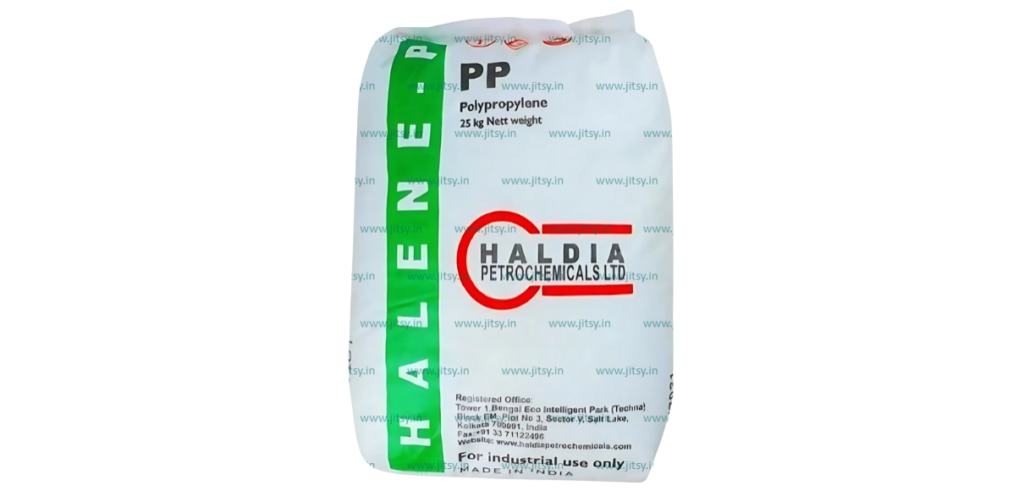
Haldia PPCP Halene M311T
Halene-P M311T from Haldia Petrochemicals is a heterophasic polypropylene impact copolymer (PPiCP) produced on Spheripol technology, engineered for high-flow injection moulding of automotive, luggage, and industrial components. M311T delivers fast fill for thin-wall and multi-cavity tools, low cycle times for productivity, and a balanced impact-stiffness profile for durability. Its superior gloss and toughness make it ideal for applications demanding both aesthetics and mechanical performance. M311T is trusted by moulders seeking high-productivity, tough PPCP for demanding OEM and compounding applications in Delhi/NCR and pan-India.
Specifications
Physical Properties
- Melt Flow Index: 10 g/10 min (230°C/2.16 kg) – high-flow for complex and thin-wall parts
- Density:90 g/cm³ – lightweight, standard for PP impact copolymers
Mechanical Properties
- Tensile Strength at Yield: 24 MPa – robust for automotive and luggage components
- Elongation at Yield: 6% – supports flexibility and shock absorption
- Flexural Modulus: 1200 MPa – high stiffness for structural integrity
- Notched Izod Impact (23°C): 90 J/m – high toughness for drop and impact resistance
Thermal Properties
- Vicat Softening Point (10 N): 145°C – maintains dimensional stability under heat
- Heat Deflection Temperature (0.455 MPa): 95–100°C – suitable for automotive interiors and industrial parts
- Compliance: IS 10951:2020 (PP for moulding/extrusion)
Applications
Automotive components
Halene M311T is engineered for automotive interior trims, covers, and structural parts that require high flow, impact, and stiffness. Its fast fill and low cycle times boost productivity, while its impact resistance ensures safety and durability in demanding environments.Luggage shells
For moulded luggage, M311T’s high gloss and toughness deliver premium aesthetics and long-lasting performance. Its balanced mechanics support thin-wall designs, helping luggage resist drops, impacts, and daily handling during travel.Industrial & compounding
M311T serves as a base resin for filled compounds and industrial mouldings—crates, bins, housings—where high stiffness, toughness, and processability are essential. Its Spheripol morphology ensures consistent quality and reliable mechanicals batch after batch.Processing
- Barrel temperature: 180–260°C
- Mould temperature: 30–40°C
- Processing tips: High flow supports thin-wall and multi-cavity tools; optimize packing and cooling for best surface finish and dimensional accuracy
- Cycle time: Low cycle times possible with proper mould and machine setup
Deep Technical Insights
- Spheripol technology: Delivers uniform heterophasic morphology for consistent batch-to-batch performance
- High flow: MFI 10 enables fast injection and short cycles, reducing energy and increasing plant throughput
- Gloss and toughness: Suits premium luggage and automotive interiors where aesthetics and durability are both required
- Balanced mechanics: Supports both structural and cosmetic parts, making M311T a versatile PPCP for OEMs and compounders
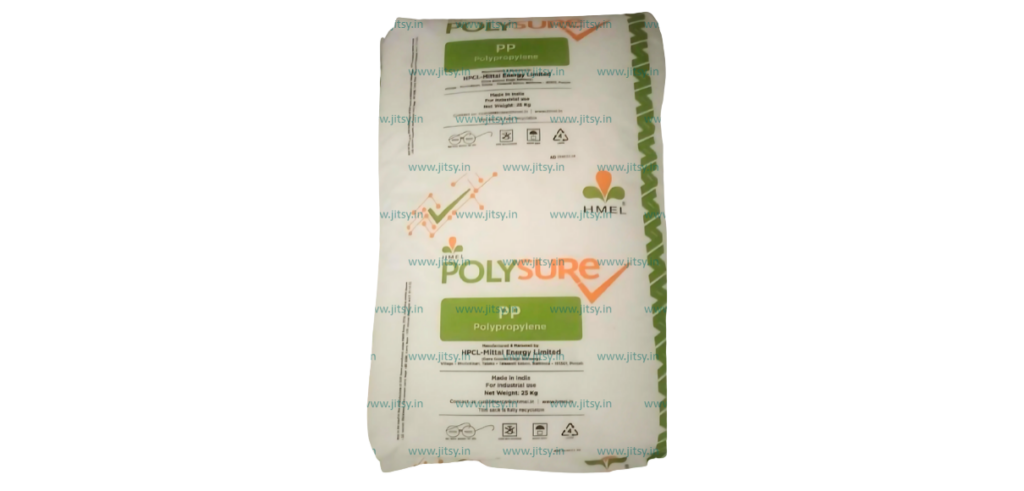
HMEL PPCP Polysure CM12RE
Polysure CM12RE from HMEL is a true "no-break" polypropylene impact copolymer (PPCP) granule, engineered for injection moulding and compounding of luggage, automotive, and industrial components demanding extreme toughness. Produced on advanced Spheripol-II technology, CM12RE delivers exceptional low-temperature impact resistance and consistent performance across batches. Its MFI of 12 g/10 min offers the ideal balance between flow and mechanical strength, making it the preferred choice for manufacturers seeking high-toughness PPCP alternatives to Reliance, Haldia, or OPaL grades. CM12RE is designed for applications where drop resistance, durability, and reliability are non-negotiable.
Technical specifications of HMEL Polysure CM12RE
Material identification, HSN & CAS
- Polymer type: Polypropylene impact copolymer (heterophasic PPCP)
- Form: Natural granules, Spheripol-II process
Flow & physical properties
- Melt Flow Index: 12 g/10 min (230°C/2.16 kg) – supports medium-wall, complex parts with high toughness
- Consistent morphology: Spheripol-II ensures reliable performance and OEM approvals
Mechanical toughness & impact performance
- No-break grade: Passes instrumented impact/Izod tests at room and low temperatures without fracturing
- Superior toughness: Engineered for hard-shell luggage, automotive compounds, and heavy-duty parts where drop and cold-weather performance matter
Thermal & regulatory profile
- Service temperature: Suitable for typical PP IC ranges in luggage, automotive, and industrial mouldings
- Compliance: IS 10910 & IS 16738:2018 for food, pharma, and drinking water contact (processed as recommended)
Applications & industry use cases
Luggage and travel goods
CM12RE is the benchmark PPCP for hard-shell suitcases, trolley bags, and protective frames. Its no-break toughness ensures superior drop and impact resistance—reducing cracking at corners and handles during baggage handling and travel, even in cold conditions.Automotive components & compounds
Ideal for compounding automotive bumpers, interior trims, battery boxes, and underbody shields, CM12RE serves as a robust base resin for filled and coloured compounds. Its consistent performance and impact strength meet demanding OEM specifications.Industrial & heavy-duty moulded parts
For industrial crates, pails, housings, and machinery covers, CM12RE’s impact resistance and load-bearing capability outclass standard PPCP, ensuring reliability in harsh environments.Compounding & custom PP impact formulations
As a masterbatch carrier or base for talc/fibre-reinforced or weatherable compounds, CM12RE delivers excellent dispersion, processability, and toughness—enabling custom solutions for technical and industrial applications.Processing guidelines for CM12RE PPCP
Recommended injection-moulding window
- Melt temperature: 200–240°C
- Mould temperature: 30–45°C
- Packing: Ensure sufficient packing to avoid sink marks in thick ribs and bosses
Compounding considerations
- Compatible with mineral, fibre, and pigment fillers
- Standard PP IC screw design; throughput optimised for medium-high flow
Common issues & troubleshooting with PP impact copolymers
- Warpage: Use balanced cooling, especially in large or thick parts
- Flow marks: Increase injection speed or optimise gate design
- Short shots: Raise melt temperature or injection pressure, check venting
Performance advantages vs other PP impact copolymers
CM12RE vs CM12RR and other Polysure grades
- CM12RE: Focus on no-break toughness and low-temperature impact for luggage/auto
- CM12RR: Designed for stackability and stiffness, more suited for housewares/pails
CM12RE vs competitor PPCP grades (Reliance, Haldia, OPaL)
- CM12RE: No-break performance, Spheripol-II consistency, Indian origin
- Competitors: General-purpose tough grades, but may not match CM12RE’s impact in demanding luggage/auto/industrial roles
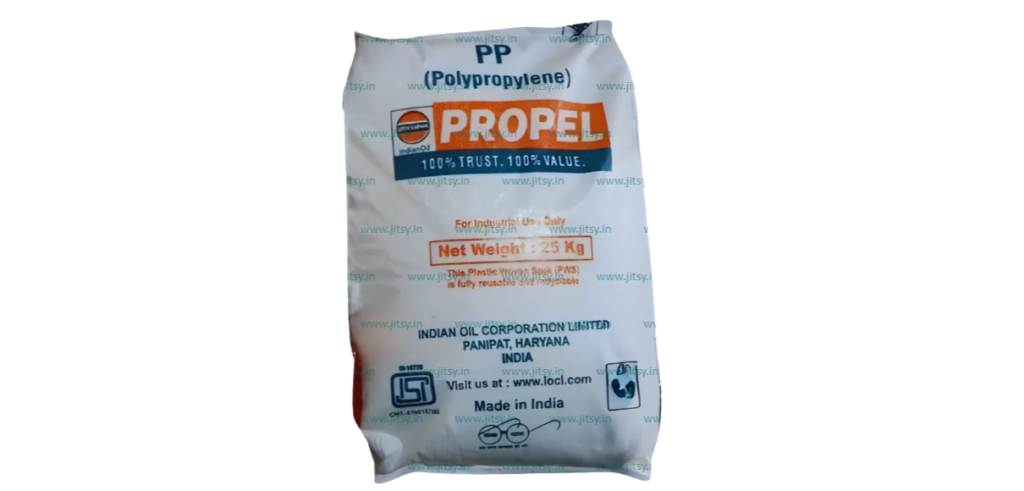
IOCL PPCP Propel 5080MG
IOCL Propel 5080MG is a heterophasic polypropylene impact copolymer (PPCP) produced via advanced Spheripol II technology. Engineered for injection moulding and compounding, 5080MG delivers super impact resistance at low temperatures, very high stiffness, and excellent processability. Its natural-coloured granules are ideal for automotive components, appliance housings, industrial parts, and as a base resin for tough automotive compounds. Indian-made and compliant with IS 10910, IS 10909, and FDA CFR Title 21,177.1520, Propel 5080MG is the go-to PPCP for OEMs and moulders demanding reliable, high-toughness performance.
Specifications
Physical Properties
- Melt Flow Index (MFI):5 g/10 min (230°C/2.16 kg) – perfect for thin-wall injection moulding and compounding
- Density:90 g/cm³ (23°C) – standard for PP impact copolymers
Mechanical Properties
- Tensile Strength at Yield: 20 MPa – robust for automotive and appliance parts
- Elongation at Yield: 10% – supports flexibility and shock absorption
- Flexural Modulus: 900 MPa – high stiffness for structural integrity
- Notched Izod Impact (23°C): >500 J/m – super impact resistance, even at low temperatures
Thermal Properties
- Heat Deflection Temperature: 70°C (0.46 N/mm²) – suitable for automotive interiors and appliance housings
- Vicat Softening Point: 140°C (10 N) – maintains dimensional stability under heat
Regulatory Compliance
- IS 10910 (food/pharma/drinking water contact)
- IS 10909 (positive list for additives)
- FDA CFR Title 21,177.1520 (olefin polymers)
Applications
Automotive components
Propel 5080MG is engineered for automotive bumpers, interior trims, and underbody shields that demand super impact resistance, especially at low temperatures. Its high stiffness and consistent morphology from Spheripol II technology ensure reliable performance and safety in critical automotive parts.Appliances
For appliance housings, covers, and internal structures, 5080MG combines processability and toughness. Its impact strength protects against drops and knocks, while stiffness maintains dimensional accuracy and premium feel.Industrial parts & compounding
5080MG is an excellent base resin for compounding impact modifiers and filled PPCP grades. Its processability and mechanical profile make it ideal for industrial crates, bins, and custom technical compounds for automotive and appliance supply chains.Processing
- Barrel temperature: 170–210°C
- Mould temperature: Standard for PP IC; adjust for cycle time and finish
- Packaging: Supplied in 25 kg natural-coloured raffia bags
- Processing tips: Medium flow enables thin-wall injection and fast cycles; Spheripol II morphology ensures uniformity and reduces warpage or short shots
Performance advantages
- Super impact: Outperforms standard PPCP in drop and low-temperature resistance
- High stiffness: Maintains shape and structural integrity in automotive and appliance applications
- Consistent quality: Spheripol II technology delivers uniform mechanicals batch-to-batch
- Regulatory breadth: Indian and global food/pharma/drinking water compliance
- Versatile base: Supports compounding of technical, filled, or impact-modified grades
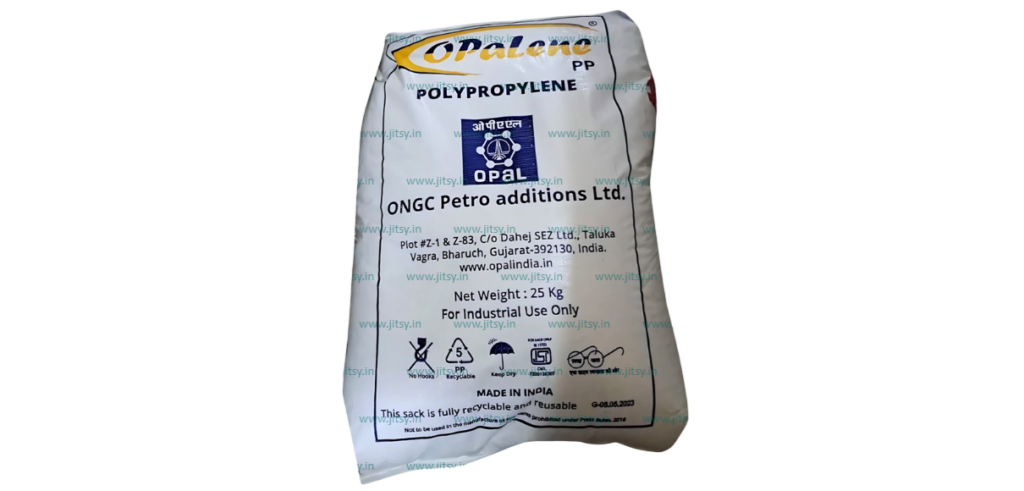
OPaL PPCP Opalene MI15
OPaL Opalene MI15 is a heterophasic polypropylene block copolymer (PPCP) engineered via Ineos gas-phase technology for demanding automotive exterior applications. MI15 delivers very high impact resistance, balanced stiffness, and high flow for easy processing—making it ideal for bumper fascia, air dams, exterior trim, and other high-impact auto parts. Its natural colour, anti-gas fading properties, and IS 10910 compliance add to its appeal for OEMs and Tier-1 suppliers in India. MI15 is optimized for fast cycles, complex moulds, and long-term durability in automotive environments.
Specifications
Physical Properties
- Melt Flow Index: 15 g/10 min (230°C/2.16 kg) – high flow for complex, thin-wall auto parts
- Density:90 g/cm³ – lightweight for automotive and exterior use
Mechanical Properties
- Tensile Strength at Yield: ~27 MPa – robust for structural and exterior applications
- Flexural Modulus: ~1200–1300 MPa – balanced stiffness for dimensional stability
- Notched Izod Impact (23°C): ~150+ J/m – very high impact for crash and drop resistance
Key Technical Insights
- Heterophasic morphology: Ensures toughness and low-temperature impact resistance
- Anti-gas fading: Maintains colour and properties under UV and exhaust exposure
- IS 10910 compliance: Suitable for food/pharma contact if required by the application
Automotive Applications
Opalene MI15 is purpose-built for automotive exterior parts where impact resistance and stiffness are non-negotiable. Its high MFI enables fast, uniform mould filling—crucial for large, complex bumper fascia and air dams. The grade’s toughness protects against low-temperature impacts, while its anti-gas fading ensures long-term colour and property retention in exposed environments. MI15 is also used for exterior trims and technical parts where both mechanical and cosmetic performance are essential. Its compliance with IS 10910 makes it a reliable choice for applications that may require regulatory documentation.Processing
- Barrel temperature: 180–240°C
- Mould temperature: 30–50°C
- Processing tips: High flow supports thin-wall and multi-cavity tools; optimize packing and cooling for best surface finish and dimensional accuracy
- Cycle time: Fast cycles possible with proper mould and machine setup
Deep Technical Insights
- Ineos gas-phase technology: Delivers reproducible heterophasic morphology for superior impact and stiffness
- Anti-gas fading: Prevents property loss and yellowing from exhaust/UV exposure
- OEM suitability: Balanced properties and compliance position MI15 as a strong candidate for automotive approval and use in global supply chains
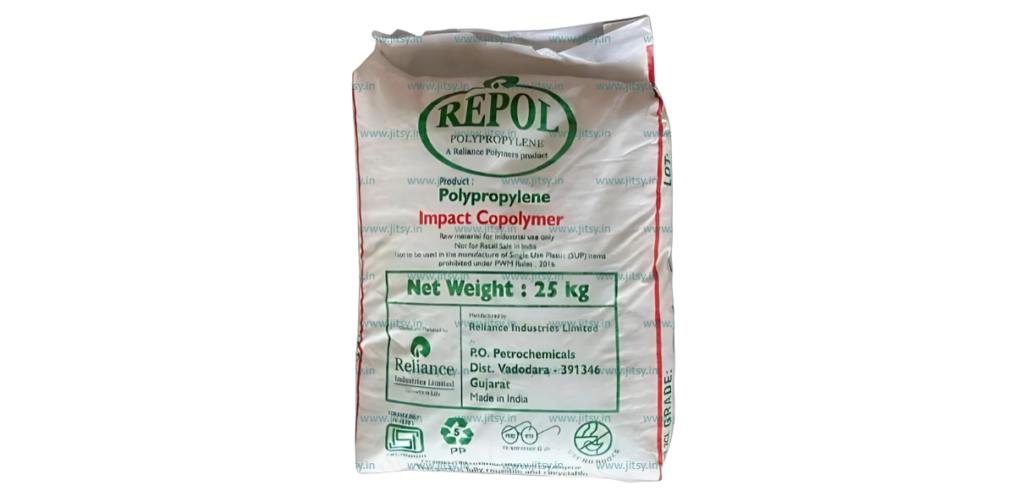
Reliance PPCP Repol D120MA
Reliance Repol D120MA is a polypropylene impact copolymer (PPCP) grade developed for injection moulding applications where high impact strength and antistatic performance are critical. Engineered with a built-in antistatic agent, D120MA reduces static charge buildup, making it ideal for automotive interiors, luggage shells, industrial housings, and compounding bases where dust, lint, or static-related defects must be minimized. Its medium-high flow (MFI 12) enables reliable moulding of complex, medium/thick-wall parts without sacrificing toughness—delivering robust, durable products for demanding environments.
Technical specifications
Physical properties (MFI, density)
- Melt Flow Rate: 12 g/10 min (230°C/2.16 kg) – supports good flow for complex shapes while retaining impact strength
- Density:90 g/cm³ – standard for PP impact copolymers
Mechanical performance (impact, stiffness)
- Tensile Strength at Yield: 19 MPa – delivers strength for structural and load-bearing parts
- Elongation at Yield: 10% – supports flexibility under load
- Flexural Modulus: 900 MPa – medium stiffness for automotive and luggage applications
- Notched Izod Impact (23°C): 550 J/m – outstanding toughness for drop and impact resistance
- Shore D Hardness: 66 – reliable rigidity and surface durability
Thermal & regulatory compliance
- Heat Deflection Temperature: 90°C (455 kPa) – suitable for automotive interiors and consumer goods
- Compliance: IS 10910:1984, IS 16738:2018 (food/pharma/drinking water contact); FDA 21 CFR 177.1520; EU 10/2011; BfR VII; Swiss SR 817.023.21; MERCOSUR GMC 56/92
Applications & use cases
Automotive components
D120MA is engineered for automotive bumpers, interior trims, battery boxes, and underbody shields. Its high notched impact strength (550 J/m) ensures drop resistance and durability, while the antistatic agent minimizes dust attraction and static-related defects—critical for painted or electroplated parts and assembly environments.Luggage shells
For hard-shell suitcases, trolley frames, and travel goods, D120MA’s toughness delivers long-lasting, crack-resistant products that withstand rough handling. The antistatic property keeps luggage surfaces cleaner and reduces lint pickup during storage and transport.Compounding base resin
D120MA is an ideal matrix for talc- or glass-filled automotive compounds, TPE blends, and weatherable formulations. Its antistatic feature reduces dust during handling and processing, and its high impact strength survives compounding shear, supporting demanding technical applications.Processing guidelines
- Melt temperature: 200–260°C
- Mould temperature: 15–50°C
- Injection speed: High speeds leverage antistatic flow; ensure proper packing to avoid sink marks in ribs and bosses
- Antistatic benefit: Reduces mould release issues and static-related defects in cleanroom or dust-sensitive production
- Troubleshooting:
- Flow marks: Increase injection speed
- Warpage: Use balanced cooling
- Short shots: Optimise gate size and melt temperature
Performance advantages
- Antistatic edge: Built-in antistatic agent reduces static charge, dust pickup, and static-related defects—outperforming standard PPCP grades in automotive, luggage, and industrial settings.
- Superior impact: 550 J/m notched Izod impact provides drop and crack resistance in demanding applications.
- Balanced flow: MFI 12 delivers processability for medium/thick-wall parts, unlike ultra-high MFI grades that may lose toughness.
- Regulatory breadth: Complies with major global and Indian food, pharma, and consumer goods standards.
- Versatile compounding: Excellent base for filled and blended technical compounds.
