





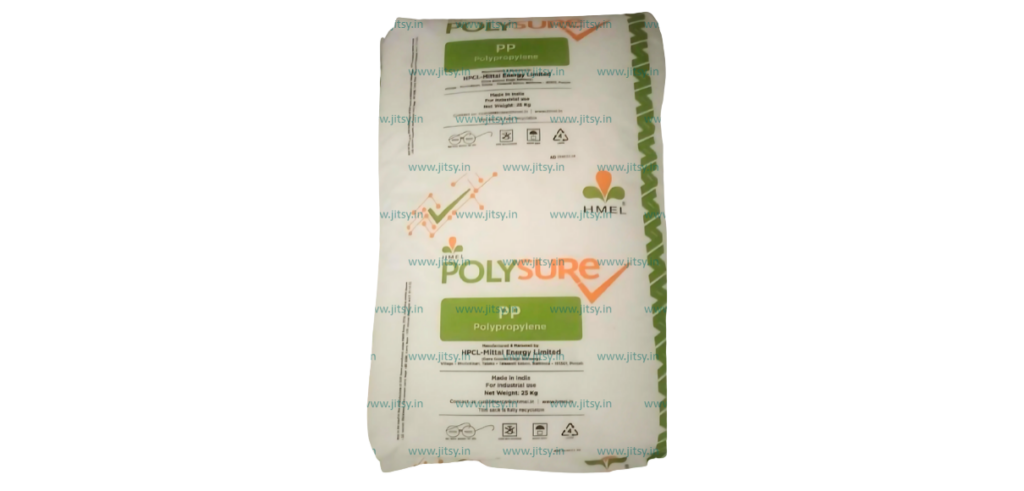
HMEL PPCP Polysure CE02RR
Polysure CE02RR is a polypropylene impact copolymer (PPCP) extrusion grade from HPCL-Mittal Energy Ltd (HMEL), purpose-built for sheet extrusion, corrugated/flute board, and blow moulding. Manufactured with advanced Spheripol-II technology, CE02RR delivers a unique blend of high rigidity, impact toughness, and stable processing, making it a workhorse grade for rigid sheets and containers demanding stackability and durability.
Deep Technical Insights
Polysure CE02RR is engineered for converters needing a balance of stiffness and impact. The 1.8 MFI enables efficient sheet extrusion with good melt strength for thickness control, while the 1100 MPa flexural modulus provides structural rigidity in boards and containers. Notched Izod impact of 250 J/m ensures resistance to drops and handling, and a Vicat softening point of 150°C supports hot filling and elevated service temperatures. Spheripol-II process technology ensures consistent pellet morphology and process stability, reducing line downtime and scrap.Applications & Industry Use Cases
Sheet Extrusion & Thermoforming: CE02RR is ideal for solid and corrugated PP sheets, panels, trays, and lids used in industrial packaging, logistics, and agriculture. Its rigidity and impact profile allow for lightweight, stackable designs that withstand handling and transport. Corrugated/Flute Board & Packaging: For PP hollow sheets and boxes, CE02RR delivers the strength needed for agricultural crates, logistics totes, and protective packaging, supporting both manual and automated handling. Blow-Moulded Containers: CE02RR performs in blow-moulded bottles, drums, and containers for industrial and consumer goods, offering dimensional stability and resistance to deformation under load.Performance Advantages of CE02RR PPCP
Polysure CE02RR stands out for its stiffness–impact balance, making it suitable for converters seeking tough, stackable, and thermally stable products. Its processability supports high-speed extrusion and blow moulding lines with minimal variation. The grade’s chemical resistance and recyclability further add to its value in sustainable packaging and logistics chains.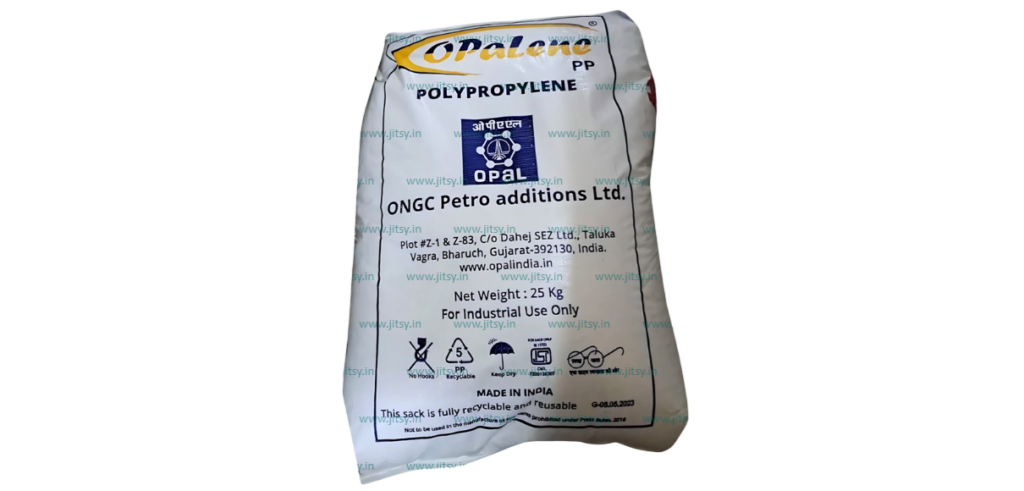
OPaL PPCP Opalene EI01N
Opalene EI01N is a nucleated, high-melt-strength polypropylene impact copolymer (PPCP) produced by ONGC Petro additions Ltd (OPaL) using advanced INEOS gas-phase technology. Engineered for extrusion and blow-moulding, EI01N delivers a unique balance of rigidity, impact strength, and melt strength—making it ideal for corrugated/twin-wall sheets, pipes, thermoformed trays, and blow-moulded containers. The grade is optimized for converters seeking high performance, dimensional stability, and process consistency.
Deep Technical Insights
Opalene EI01N’s heterophasic block copolymer structure, created via INEOS gas-phase polymerization, features a semi-crystalline PP matrix and a finely dispersed rubber phase. This architecture delivers high melt strength for stable extrusion and blow-moulding, while maintaining robust impact resistance and flexural modulus. Nucleation accelerates crystallization, reduces cycle times, and improves dimensional stability—crucial for multi-cavity extrusion lines and complex profiles. The grade’s low moisture absorption, stain resistance, and solvent resistance ensure reliable performance in industrial, agricultural, and packaging environments.Applications & Industry Use Cases
Corrugated / Twin-Wall Sheets: EI01N is ideal for PP hollow boards used in industrial packaging, logistics, signage, and construction. Its high melt strength supports stable sheet extrusion, while impact resistance protects against drops and stacking loads. Corrugated Pipes & Fittings: The grade’s stiffness and toughness enable durable pipes and fittings for drainage, cable ducts, and water management, withstanding burial, installation, and mechanical stress. Thermoformed Products & Blow-Moulded Containers: EI01N excels in rigid trays, industrial bottles, and containers formed by thermoforming or blow-moulding, offering lightweight designs with strong impact and stacking performance.Performance Advantages of Opalene EI01N PPCP
Opalene EI01N delivers superior melt strength for extrusion and blow-moulding, ensuring stable parison and sheet behaviour. Its impact resistance (150 J/m Izod) and flexural modulus (1,100 MPa) support load-bearing, stackable products. The grade’s nucleation reduces cycle times and warpage, while its chemical and stain resistance, low moisture uptake, and recyclability make it a sustainable, high-performance choice for converters and OEMs.
OPaL PPCP Opalene EI02N
Opalene EI02N is a high-stiffness polypropylene impact copolymer (PPCP) from ONGC Petro additions Ltd (OPaL), engineered for load-bearing, structurally demanding applications. Manufactured using advanced INEOS gas-phase technology at OPaL's Dahej complex, EI02N combines exceptional rigidity with impact resistance and light-weighting potential, making it ideal for crates, pallets, furniture frames, automotive housings, and industrial enclosures.
Deep Technical Insights
Opalene EI02N features a heterophasic polypropylene architecture—a semi-crystalline PP matrix with finely dispersed ethylene-propylene rubber phase—delivering high impact strength while maintaining structural rigidity. The INEOS gas-phase polymerization process ensures consistent melt flow index, tight morphological control, and minimal property variation across batches, supporting converters in high-cavity tooling and complex mould designs. EI02N's engineered stiffness-impact balance enables wall-thickness reduction and weight savings compared to homopolymer PP or lower-stiffness PPCP grades, while maintaining durability under stacking, drop impact, and repeated handling.Applications & Industry Use Cases
Crates, Pallets & Industrial Bins: EI02N is engineered for returnable transport packaging (RTP), industrial storage bins, and stackable crates where high stiffness prevents deflection under load and impact resistance resists drops and rough handling. Its chemical resistance supports use in detergent, food and agricultural logistics. Furniture & Load-Bearing Components: Ideal for chair frames, table legs, structural supports, and modular furniture systems requiring both rigidity and impact toughness. EI02N's light density enables thinner-wall designs without sacrificing strength. Automotive & Appliance Parts: Used in interior panels, protective housings, technical enclosures, and non-structural automotive components, EI02N delivers dimensional stability, thermal performance, and the impact resistance needed for long-term durability.Performance Advantages of Opalene EI02N PPCP
Opalene EI02N stands out for its exceptional stiffness-impact balance, enabling converters to design lighter, thinner-walled parts without compromising structural integrity. Its INEOS gas-phase pedigree ensures consistent mechanical properties, predictable cycle times, and excellent surface finish. EI02N's chemical resistance, moisture inertness, and recyclability position it as a sustainable choice for industrial, packaging, furniture, and automotive manufacturers seeking performance and environmental responsibility.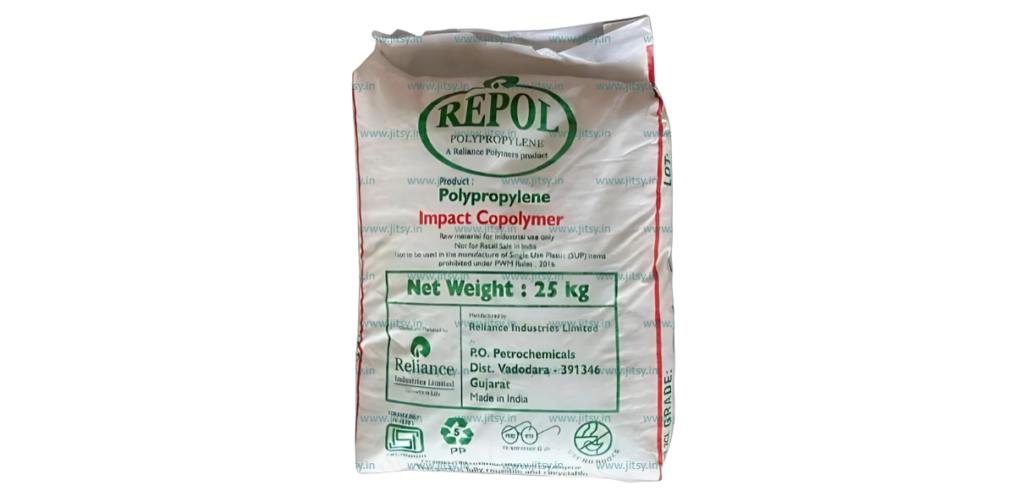
Reliance PPCP Repol C015EG
Reliance Repol C015EG is a polypropylene impact copolymer (PPCP) engineered for extrusion and blow-moulding applications. Manufactured using Reliance's advanced Unipol gas-phase technology, C015EG combines high impact strength with excellent rigidity, making it the ideal workhorse grade for rigid packaging, industrial containers, thermoformed products, and automotive trims. Its 1.8 MFI and balanced stiffness-impact profile deliver consistent performance across demanding converters' production lines.
