





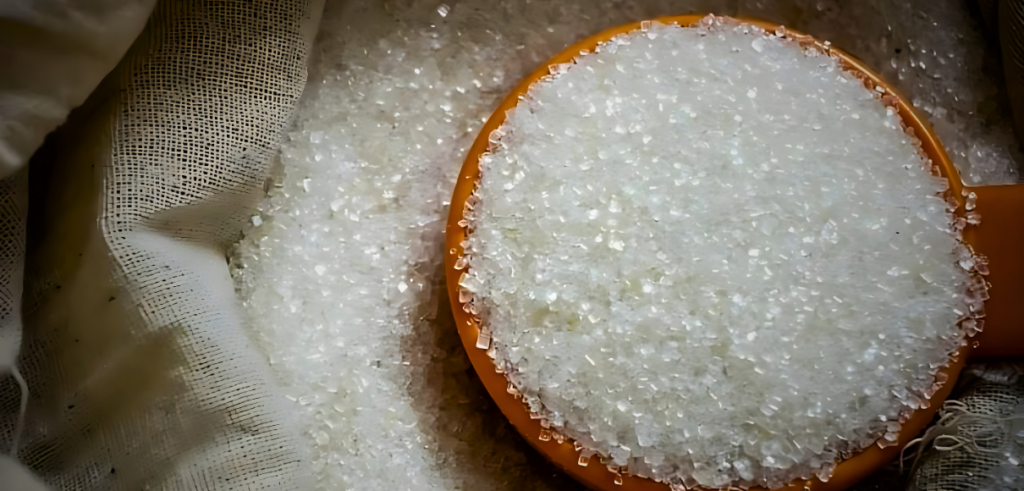
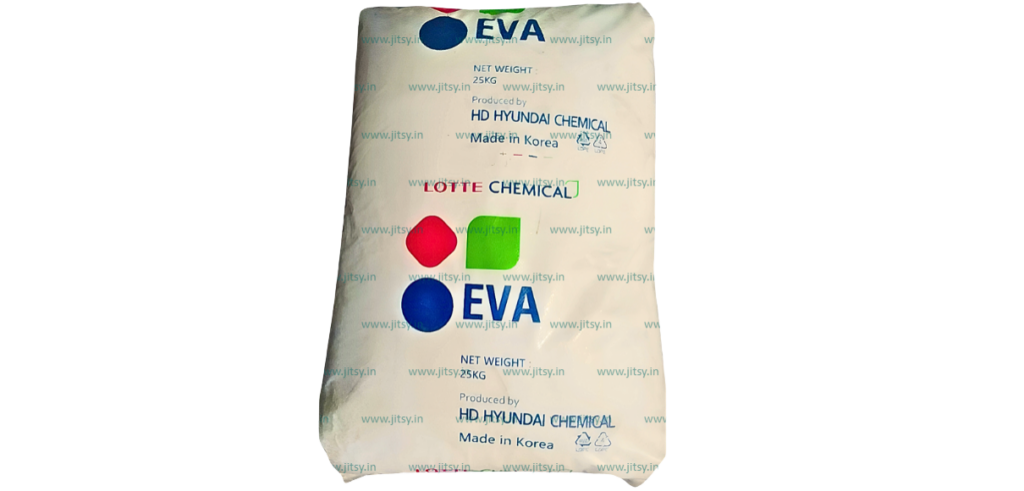
Lotte Chemical EVA VA600
Lotte Chemical EVA VA600 is a premium, autoclave-process ethylene-vinyl acetate (EVA) copolymer engineered for hot melt adhesive (HMA) formulations, packaging, assembly, and specialty bonding. With 28% vinyl acetate, MFI 6.0 g/10 min, density 0.950 g/cm³, melting temperature 71°C, Vicat 42°C, Shore D 26, and a built-in antioxidant additive, VA600 delivers excellent adhesion, reliable processability, and extended shelf life for diverse hot melt bonding applications. Manufactured via ExxonMobil Chemical's autoclave process with strict contaminant control and uniform VA/MI, VA600 is the trusted choice for India’s leading HMA, packaging, and adhesive manufacturers.
Functional Features & Technical Authority
- 28%-VA-Adhesive: High polarity delivers strong adhesion to paper, cardboard, plastic, leather, fabric, and metal—no tie-layer needed.
- 6-MFI-Balanced: Optimal melt index ensures efficient HMA extrusion, stick production, and cartridge filling.
- Antioxidant-Built: Built-in antioxidant additive protects against oxidative degradation, extending shelf life and ensuring stable performance.
- Processable-Excellent: Superior flow and compatibility with tackifying resins, waxes, and additives for robust HMA formulations.
- Autoclave-Made: Manufactured via ExxonMobil’s autoclave process for consistent, premium HMA resin quality.
- Uniform VA/MI: Guarantees batch-to-batch consistency and reliable adhesive properties.
- Strict Contaminant Control: Low gel level for defect-free, clean adhesive compounds.
- Regulatory Compliance: Meets FDA 21 CFR 177.1350, ASTM D1248/D1706, D638, D1505, D2240, D1238, D1525; non-hazardous, quality assured.
Applications
Hot Melt Adhesive Formulations (Primary):
VA600 is optimized for HMA glue sticks, cartridge adhesives, packaging adhesives (carton sealing, edge banding, lamination), and assembly adhesives for footwear, furniture, and product assembly. Its 28% VA and balanced MFI 6.0 provide excellent wetting, strong bonds, and reliable flow in both manual and automated systems. The antioxidant package ensures adhesives remain stable and effective during extended storage and use.Composite & Lamination Adhesives:
Ideal for composite bonding, film lamination, and thermal lamination in multi-layer packaging or industrial assembly. VA600’s processability and adhesion properties enable robust, defect-free laminates.Specialty Adhesive Applications:
Supports custom HMA formulations, flexible packaging adhesives, and industrial assembly where stability, shelf life, and consistent performance are critical.Key Application Bullets:
- HMA glue sticks, cartridges
- Packaging adhesives, carton sealing, edge banding
- Assembly adhesives for footwear, furniture, products
- Composite bonding, film/thermal lamination
- Flexible packaging, specialty bonding
Lotte EVA LVS430
Lotte LVS430 is a premium 18% ethylene vinyl acetate (EVA) copolymer resin engineered by Lotte Chemical Corporation (South Korea), designed for high-performance foam, footwear, injection, and sheet molding applications. Produced via advanced high-pressure tubular polymerization, LVS430 offers unmatched foaming, mechanical strength, and processing consistency.
LVS430 is manufactured with tight control over molecular weight and vinyl acetate distribution, resulting in predictable processing and minimal batch variance (<2%). Physical form: white/natural pellets, 25 kg bags. Contains thermal stabilizers (300 ppm typical), no slip/anti-block, allowing custom additive integration. Fully compliant with ISO 9001:2015, RoHS, REACH, and ASTM standards.
Processing Guidelines
- Foam Molding: 1–3% blowing agent (azodicarbonamide or CO₂); mold at 160–180°C; density 40–150 kg/m³
- Injection/Sheet Molding: Barrel 150–180°C; MFI 2.0 ensures smooth cavity fill, minimal defects
- Extrusion: Tubes, strips, profiles; process at 150–180°C; avoid >190°C
- Best Practices: Keep material dry, avoid excessive residence time, regular purging
Performance Advantages
- Foaming: Uniform expansion, fine cell structure, minimal voids—critical for comfort and durability
- Mechanical: High tensile strength (260 kgf/cm²), elongation (~750%), 92 Shore A hardness
- Temperature: Low melting point (86°C) reduces energy use, shortens cycle times
- Chemical/Environmental: Resistant to oxidation, UV, ozone, common chemicals; flexible to -40°C
Applications
Foam Shoes & Midsoles (60% Market Share)
- Compression/injection molded EVA soles, midsoles, slippers, sandals, orthopedic insoles
- Delivers lightweight, resilient, and comfortable foam with uniform cell structure
- Used by leading Indian footwear brands and contract converters
Foam Sheets & Cushioning (20% Market Share)
- Sports/yoga mats, protective packaging, equipment padding, insulation, anti-fatigue mats
- Enables precise density control, excellent resilience, and long-term durability
Injection & Sheet Molding (15% Market Share)
- Flexible connectors, grips, appliance covers, vibration dampers, soft enclosures, gaskets
- Supports complex, high-precision geometries and clean melt behavior
Hot-Melt Adhesives & Compounds (3% Market Share)
- Base resin for hot-melt adhesives, custom EVA blends, color/formulation masterbatches
- No slip/antiblock additives for maximum compounding flexibility
Wire & Cable Coating (2% Market Share)
- Cable jacketing, insulation layers, flexible control cables for industrial/cold-climate use
- Maintains flexibility down to -40°C and resists oxidation/UV/ozone
Lotte EVA LVS520
Lotte Chemical EVA LVS520 is a next-generation, high-VA ethylene-vinyl acetate (EVA) copolymer engineered for foam applications, injection molding, and comfort-centric footwear. Developed by Lotte Chemical (South Korea) using proprietary tubular process technology, LVS520 stands out for its superior softness, fine-cell foamability, and robust mechanical properties-making it the top choice for Indian footwear manufacturers, foam converters, and cushion product makers.
With a melt flow rate (MFI) of 3.0 g/10 min, vinyl acetate content of 22 wt%, density 0.943 g/cm³, tensile strength at break 200 kg/cm² (~19.6 MPa), elongation at break 750%, Shore hardness 78A, Vicat softening 53 °C, and melt temperature 79 °C, LVS520 delivers unmatched foam softness, flexibility, and energy-efficient processing. Its high VA content and moderate MFI enable precise compounding, uniform cell structure, and soft, durable foam products-ideal for comfort footwear, sports pads, and custom molded foam parts.
Functional Features & Technical Authority
- High VA Content (22% VA): Delivers exceptional softness, elasticity, and comfort-outperforming standard 18–19% foam EVAs for premium feel and flexibility.
- Optimized MFI (3.0): Supports controlled foam mixing, uniform additive dispersal, and easy flow in injection and sheet molding equipment, reducing defects and boosting productivity.
- Fine-Cell Foamability: Proprietary process ensures fine, uniform cell structure for lightweight, soft, and resilient foam products.
- Low-Temperature Processing: Melt temperature of 79 °C and Vicat 53 °C allow for energy-efficient, thermally gentle processing-preserving material integrity and additive performance.
- Soft Yet Durable: Shore A 78 and 750% elongation provide a cushioned feel with robust mechanical support, resisting cracking and fatigue over repeated use.
- Excellent Mechanical Strength: Maintains tensile strength (200 kg/cm²) and flexibility even after crosslinking and foaming, ensuring long-term durability in footwear and cushioning.
- Versatile Processing: Readily processable in kneading, milling, injection, and sheet molding setups-compatible with standard equipment and a wide range of foam formulations.
- Consistent Quality: Lotte Chemical’s global pedigree ensures batch-to-batch reliability, traceability, and regulatory compliance.
Applications
Foam Shoe Soles & Footwear Components:
LVS520 is the benchmark for soft, comfortable EVA foam shoe soles, insoles, and footbeds-delivering superior cushioning, flexibility, and impact absorption for casual, comfort, and recreational footwear. Its high VA content ensures a plush, premium feel while maintaining structural support.Injection Molding & Sheet Molding:
Ideal for injection-molded EVA parts (grips, handles, decorative elements) and sheet-molded foam products (custom foam sheets, thermoformed pads, blocks). LVS520’s MFI 3.0 allows for smooth flow and easy coloring, supporting complex shapes and detailed parts.Cushion Products & Protective Padding:
Perfect for sports equipment padding, industrial cushioning, protective packaging, mats, and playground surfaces. Fine-cell foam structure and high elongation enable effective impact absorption and comfort.General EVA Foam & Industrial Compounds:
Adaptable for custom foam formulations, general foam sheets, blocks, and as a modifier resin to boost softness and flexibility in blends for technical and consumer applications.Key Application Highlights:
- EVA foam shoe soles, insoles, footbeds, sandals, slippers
- Injection-molded EVA parts and foam sheets
- Cushion pads, sports/protective padding, comfort layers
- Custom foam blocks, industrial compounds, modifier resin
Lotte EVA VS430
Lotte EVA VS430 is a high-performance ethylene‑vinyl acetate (EVA) copolymer engineered for foam, footwear, injection molding, adhesives, and flexible hoses. Produced by Lotte Chemical (formerly SEETEC VS430), it’s made using autoclave process technology and features 19 wt% vinyl acetate (VA), MFR 2.5 g/10 min (190°C/2.16 kg), and density 0.939 g/cm³. VS430 is trusted by Indian converters for its excellent processability, mechanical strength, and bead foaming properties-making it a go-to for shoe soles, cross-linked foam wheels, hot-melt adhesives, and more.
Widely used in: Footwear, foam, wire, hose, and adhesive industries across Delhi-NCR, Gujarat, Tamil Nadu, Maharashtra, and other major clusters.
Functional Features & Specs - Why VS430 Sets the Standard
- 19%-VA-Foam: 19 wt% VA delivers extra softness and elasticity vs. standard 18% grades-preferred for high-comfort footwear and resilient foam wheels.
- 2.5-MFR-Versatile: Melt flow rate of 2.5 g/10 min (190°C/2.16 kg, ASTM D1238) enables easy processing across foam molding, injection, and compounding.
- Autoclave-Engineered: Produced by advanced autoclave process for uniform bead foaming and reliable mechanical performance batch-to-batch.
- Soft-Tough-Balance: Tensile ≈ 19.1 MPa, elongation ≈ 740%, Shore D 34-delivers the ideal mix of comfort, flexibility, and durability for Indian market needs.
- Multi-Industry: Proven in shoe soles, cross-linked foam buggy wheels, injection parts, hot-melt adhesives, hoses, and cable base resins.
- Density: 0.939 g/cm³ (ASTM D1505)-lightweight yet robust for demanding applications.
- Thermal Profile: Melting temp 84°C, Vicat softening 61°C-well-suited for all standard EVA foam and injection processes.
Applications - Where VS430 Excels
Shoe Soles & Footwear Foam
- Regions: Delhi-NCR, Gujarat, Tamil Nadu, Maharashtra
- Uses: Soles, midsoles, slippers, sandals, cross-linked EVA footbeds
- Why: 19% VA = softer, more elastic foam vs 18% grades; MFR 2.5 for easy molding; 19 MPa tensile, 740% elongation for comfort + durability
Cross-Linked Foam & Foam Wheels
- Uses: Buggy/stroller wheels, trolley wheels, cross-linked EVA blocks
- Why: High VA and elongation for resilience; bead foaming for closed-cell, firm-yet-flexible wheels
Injection Molded Soft Parts
- Uses: Grips, handles, soft-touch molded components
- Why: MFR 2.5 for smooth injection; Shore D 34 for robust softness; reliable in varied climates
Hot-Melt Adhesives & Coatings
- Uses: EVA hot-melt adhesives, sealable coatings
- Why: 19% VA for tackifier compatibility; mechanical strength for demanding bonds
Flexible Hoses & Cable Base Resin
- Uses: Flexible hoses, inner semiconductive cable compounds
- Why: Toughness and flexibility for bending, impact, and vibration; aids filler dispersion
