







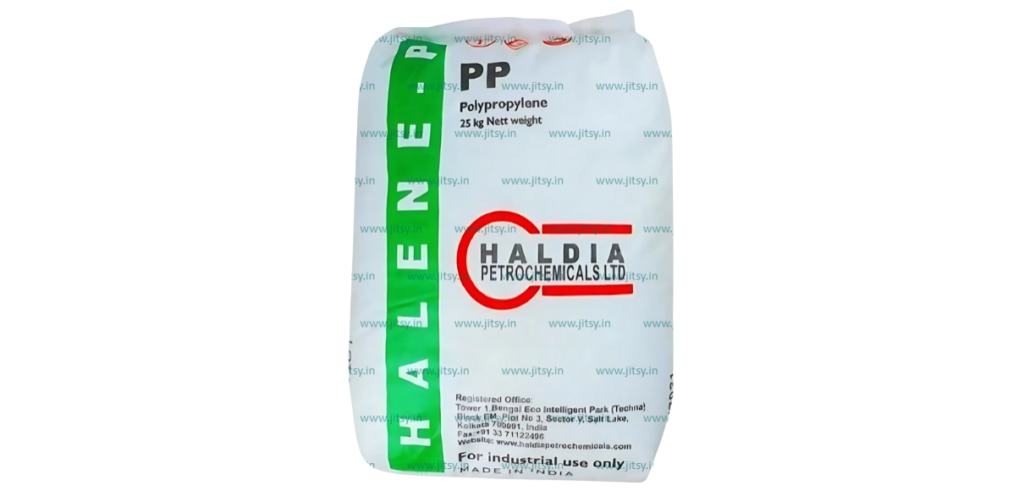
Haldia PPCP Halene M307
Haldia Halene-P M307 is a heterophasic polypropylene impact copolymer (PPiCP) produced using Spheripol technology, engineered for general purpose injection moulding where reliable processability, low cycle times, and balanced mechanical properties are essential. M307 delivers high flow for fast mould filling, robust impact–stiffness balance for structural durability, and low MFI for the production of thicker, more resilient parts. This grade is ideal for household items, furniture, crates, and industrial components—trusted by Delhi/NCR and pan-India moulders seeking consistent, high-quality PPCP for a wide range of injection applications.
Specifications
Physical Properties
- Melt Flow Index: 7 g/10 min (230°C/2.16 kg)
- Density:90 g/cm³
Mechanical Properties
- Tensile Strength at Yield: 23 MPa
- Flexural Modulus: 950 MPa
- Notched Izod Impact (23°C): 80 J/m
Thermal Properties
- Heat Deflection Temperature: 88°C
- Spheripol morphology: Ensures uniformity and consistent mechanicals
Deep Technical Insights
- Spheripol technology: Delivers uniform heterophasic morphology, supporting consistent mechanicals and high process reliability across batches.
- Low MFI: Ideal for thick-section, robust parts in household and industrial use.
- Impact–stiffness synergy: Ensures products resist breakage and deformation under load, making M307 a versatile choice for general injection moulding.
Applications
Household Items
M307 is perfect for injection-moulded household goods such as storage bins, kitchenware, and organizers. Its impact strength and stiffness ensure long-lasting, durable products that withstand daily use and handling.Furniture
For chairs, tables, and modular furniture, M307’s robust flexural modulus and impact resistance provide both structural support and comfort, while its processability supports high-volume, efficient production.Crates & Industrial Components
In crates, bins, and technical housings, M307’s mechanical profile ensures products can handle stacking, drops, and heavy loads, maintaining shape and strength in demanding environments.Processing
- Barrel temperature: 180–240°C
- Mould temperature: 30–50°C
- Processing tips: 7 MFI supports reliable mould filling and short cycle times; Spheripol morphology minimizes warpage and supports dimensional stability
- Cycle time: Optimized for productivity in high-volume general moulding
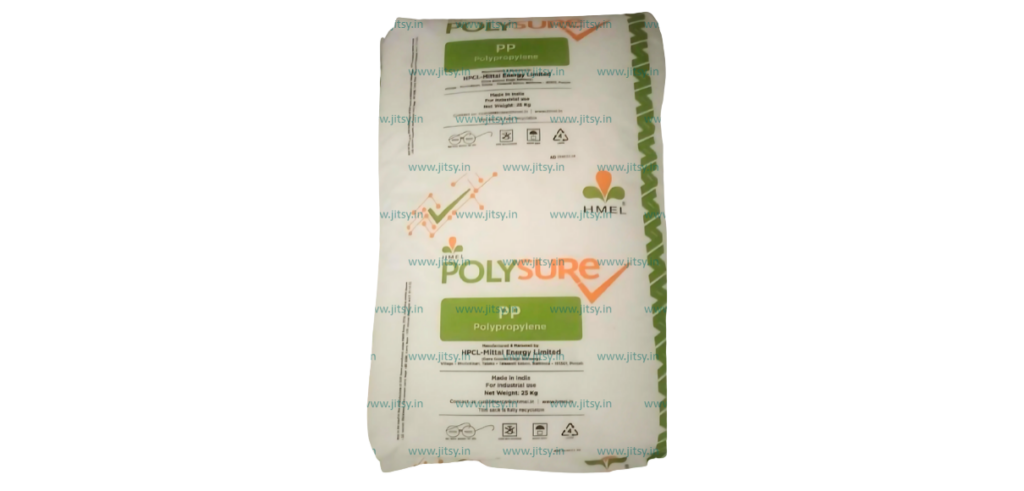
HMEL PPCP Polysure CM08NR
HMEL Polysure CM08NR is a polypropylene impact copolymer (PPCP) produced with advanced Spheripol-II technology, optimized for injection moulding of paint pails, furniture, industrial components, and crates. CM08NR delivers a unique combination of good stackability, impact–stiffness balance, and low cycle times for high productivity and reduced energy costs. The grade is enhanced with nucleating and antistatic agents, supporting clean processing, faster crystallization, and dust-free finished products. This makes CM08NR a preferred choice for furniture moulders, packaging producers, and industrial manufacturers in Delhi/NCR and across India.
Specifications
Physical Properties
- Melt Flow Index: 8 g/10 min (230°C/2.16 kg) – balances flow for industrial parts with impact retention
- Density:90 g/cm³ – standard for PP impact copolymers
Mechanical Properties
- Tensile Strength at Yield: 25 MPa – robust for structural and packaging applications
- Tensile Elongation at Yield: 6% – supports flexibility and drop resistance
- Flexural Modulus: 1100 MPa – high modulus for stackability and load-bearing
- Notched Izod Impact (23°C): 170 J/m – excellent impact for crate and pail durability
Thermal Properties
- Vicat Softening Point (10 N): 150°C – maintains shape under heat
- Heat Deflection Temperature (0.455 MPa): 95°C – suitable for industrial and packaging service
- Regulatory: IS 10910 compliant for food/pharma/water contact
Applications
Paint Pails
CM08NR is engineered for paint pails that require reliable stackability, high impact resistance, and dimensional stability. Its modulus and impact profile ensure pails withstand drops and stacking during transport or storage, while the antistatic agent keeps surfaces cleaner.Furniture
For chairs, tables, and modular furniture, CM08NR delivers the stiffness for structural integrity and the impact strength for long-term durability. The nucleated formulation supports quick cycles and a high-quality surface finish, making it ideal for high-volume furniture moulding.Industrial Components & Crates
In crates, bins, and technical mouldings, CM08NR’s balance of stiffness and impact ensures products resist deformation and breakage under heavy loads. Its antistatic and nucleated properties enable cleaner production and faster demoulding.Processing
- Barrel temperature: 190–230°C
- Mould temperature: 30–40°C
- Processing tips: Nucleated agent supports rapid crystallization and short cycles; antistatic agent minimizes dust pickup and surface defects
- Cycle time: Optimized for high productivity in packaging, furniture, and industrial moulding
Deep Technical Insights
- Nucleating agent: Accelerates crystallization, enabling faster cycles and improved dimensional stability
- Antistatic agent: Reduces dust attraction, ensuring cleaner, more appealing finished goods
- Stackability & modulus: 1100 MPa flexural modulus delivers reliable stacking and load-bearing for pails and crates
- Impact–stiffness synergy: 170 J/m impact strength balances toughness with rigidity for a wide range of applications
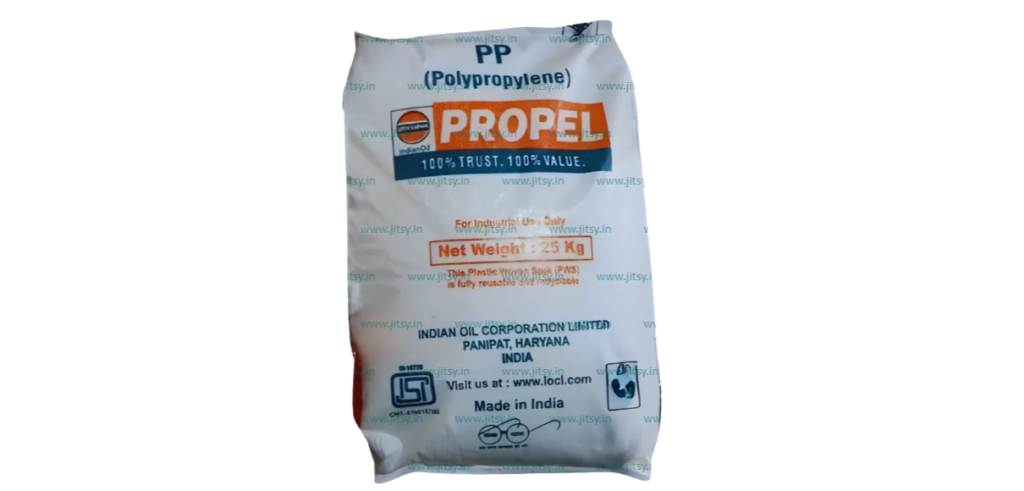
IOCL PPCP Propel 4080MA
IOCL Propel 4080MA is a natural-coloured polypropylene (PP) impact block copolymer produced via advanced Spheripol II technology. This grade delivers medium flow (MFI 8) for easy processing, good impact strength balanced with stiffness, and reliable antistatic properties for clean, dust-resistant production. Propel 4080MA is specifically engineered for injection moulded furniture, industrial components, and paint pails—enabling durable, stackable, and visually appealing products for manufacturers and OEMs in Delhi/NCR and pan-India.
Specifications
Physical Properties
- Melt Flow Index:0 g/10 min (230°C/2.16 kg)
- Density:90 g/cm³
Mechanical Properties
- Tensile Strength at Yield: 25 MPa
- Elongation at Yield: 6%
- Flexural Modulus: 1100 MPa
- Notched Izod Impact (23°C): 150 J/m
Thermal Properties
- Heat Deflection Temperature: 95°C (0.46 N/mm²)
- Regulatory: IS 10910, IS 10909 (positive list)
Deep Technical Insights
Propel 4080MA’s Spheripol II morphology ensures consistent performance and reliable mechanicals batch after batch. The medium MFI supports the efficient moulding of medium-wall furniture, crates, and pails, while the antistatic agent reduces dust attraction and supports cleaner surfaces—crucial for painted or assembled parts. The grade’s balance of impact and stiffness means products withstand drops, stacking, and daily use without deformation or breakage.Applications
Furniture
Propel 4080MA is ideal for injection-moulded chairs, tables, and storage units, delivering the toughness to resist drops and rough handling, while the modulus ensures structural integrity and comfort in use. Its antistatic property keeps surfaces clean during painting, assembly, and end-use.Industrial Components
For crates, housings, and technical mouldings, the grade’s impact–stiffness balance ensures products can handle loading, stacking, and repeated handling in demanding environments.Paint Pails
Propel 4080MA’s stiffness and impact properties make it suitable for stackable paint pails that must endure transport, handling, and chemical exposure. The antistatic agent helps maintain clean surfaces and reduces contamination risk.Processing
- Barrel temperature: 170–230°C
- Mould temperature: Standard for PP copolymers
- Processing tips: Medium flow supports multi-cavity tools and complex shapes; antistatic agent reduces static-related defects and supports demoulding
- Cycle time: Optimized for productivity in furniture, industrial, and packaging moulding
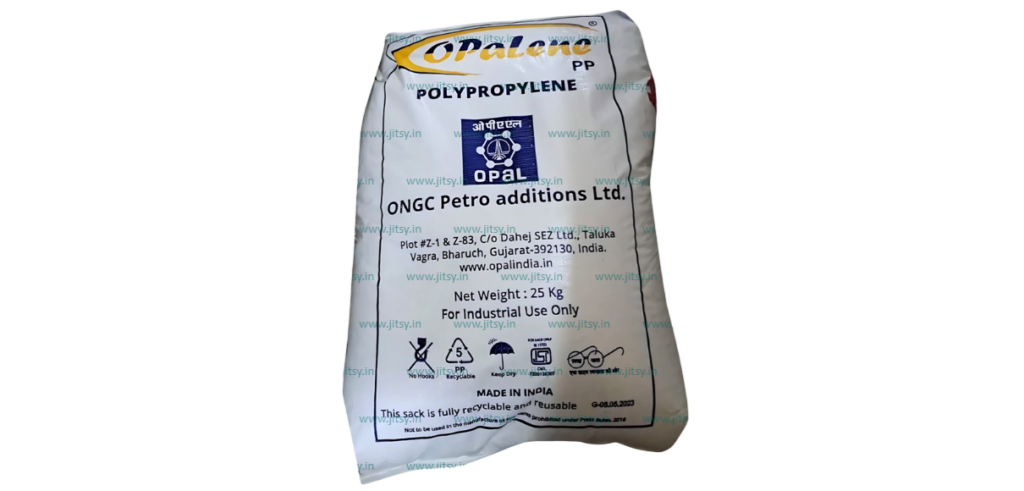
OPaL PPCP Opalene MI08N
OPaL Opalene MI08N is a heterophasic polypropylene (PP) block copolymer (PPCP), natural coloured and nucleated, produced using Ineos Gas Phase technology. MI08N offers faster moulding cycles thanks to nucleation, a robust impact–stiffness balance for long-lasting durability, and antistatic properties for clean processing and dust-resistant surfaces. It is engineered for injection moulding of crates, paint pails, luggage, and furniture, making it a top choice for OEMs and moulders in Delhi/NCR and across India seeking productivity and performance.
Specifications
Physical & Mechanical Properties
- Melt Flow Index: 8 g/10 min (230°C/2.16 kg)
- Density:90 g/cm³
- Flexural Modulus: 1200 MPa
- Notched Izod Impact (23°C): 120 J/m
- Heat Deflection Temperature: 90°C
Deep Technical Insights
- Nucleated morphology: Accelerates crystallization, enabling faster demoulding and higher productivity in multi-cavity tools.
- Antistatic agent: Reduces dust attraction, supporting clean painting and assembly—vital for furniture and packaging.
- Impact–stiffness synergy: 120 J/m impact and 1200 MPa modulus ensure products withstand drops, stacking, and daily handling.
- Ineos Gas Phase process: Delivers batch-to-batch consistency and reliable mechanicals for demanding OEM and industrial applications.
Applications
Crates & Paint Pails
MI08N is ideal for crates and stackable paint pails, providing the impact resistance and modulus needed to survive transport, stacking, and rough industrial use. The antistatic property helps keep surfaces clean and free from dust during storage and filling.Luggage
For injection-moulded luggage shells, MI08N’s impact–stiffness balance ensures robust protection against drops and knocks, while nucleation supports fast cycles and high-volume production.Furniture
Chairs, tables, and modular furniture benefit from MI08N’s structural strength and clean finish, with antistatic properties supporting painting and assembly in dust-prone environments.Processing
- Barrel temperature: 180–230°C
- Mould temperature: Standard for PP copolymers
- Processing tips: Medium flow and nucleation support efficient multi-cavity moulding and rapid demoulding; antistatic aids in dust-free production
- Cycle time: Optimized for productivity in high-volume furniture, crate, and pail moulding
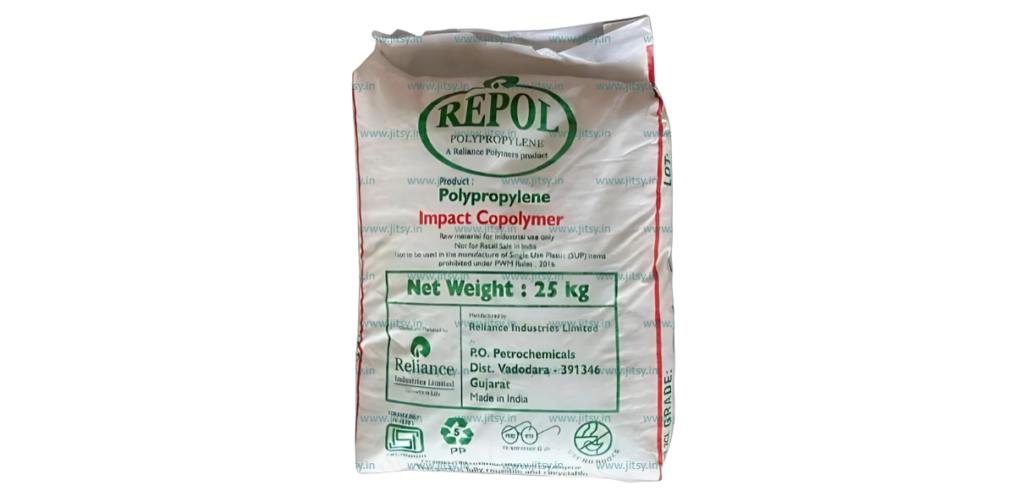
Reliance PPCP Repol C080MA
Reliance Repol C080MA is a polypropylene (PP) impact copolymer grade manufactured using the Unipol gas-phase process, designed for injection moulding applications where high impact strength and antistatic performance are critical. C080MA’s built-in antistatic agent reduces static charge buildup, making it ideal for dust-sensitive furniture production, industrial cleanrooms, and packaging environments. Its medium flow (MFI 9) supports the moulding of thick-walled, load-bearing furniture, multi-cavity industrial crates, and pails—delivering robust, durable, and clean-finished products for demanding OEMs and moulders in Delhi/NCR and pan-India.
Technical specifications
Physical properties (MFI, density)
- Melt Flow Rate: 9 g/10 min (230°C/2.16 kg) – supports medium/thick-wall parts, multi-cavity tools
- Density:90 g/cm³ – lightweight, standard for PP impact copolymers
Mechanical performance (impact, stiffness)
- Tensile Strength at Yield: 23 MPa – strong for structural furniture and crates
- Elongation at Yield: 7% – supports flexibility under load or impact
- Flexural Modulus: 1000 MPa – delivers load-bearing support for chairs/tables
- Notched Izod Impact (23°C): 150 J/m – high impact for drop resistance, stacking, and transport
Thermal properties & regulatory compliance
- Heat Deflection Temperature (66 psi / 455 kPa): 95°C – suitable for furniture and industrial products exposed to moderate heat
- Regulatory: IS 10910, IS 16738:2018, US FDA CFR Title 21, 177.1520
Applications & use cases
Furniture manufacturing
C080MA is the go-to PPCP for injection-moulded chairs, table legs, storage bins, and office furniture components. Its high impact strength ensures products resist drops and rough handling, while the antistatic property keeps surfaces clean during painting and assembly. The flexural modulus supports load-bearing parts, delivering durable and aesthetically pleasing consumer furniture.Industrial products & pails
For crates, toolboxes, protective housings, and pails (5L, 20L), C080MA offers the flexural strength for stacking, the impact toughness for transport, and the antistatic benefit for dust-free storage. IS 10910 compliance makes it suitable for chemical/food pails and regulated packaging.Processing guidelines
Recommended injection parameters
- Melt temperature: 190–250°C
- Mould temperature: 30–50°C
- Packing pressure: Essential for thick ribs/bosses in furniture to prevent sink marks
Antistatic processing benefits
- Reduces static buildup, facilitating demoulding and reducing dust attraction
- Improves surface quality and finish for painted or assembled parts
Troubleshooting common defects
- Flow marks: Increase injection speed
- Warpage: Use balanced cooling channels
- Sink marks: Increase packing pressure, especially in thick sections
Performance advantages
- Antistatic edge: Built-in agent prevents static-related defects and dust pickup—key for furniture and cleanroom applications
- High impact: 150 J/m notched Izod ensures drop/stacking resistance
- Balanced flow: MFI 9 enables processing of thick, structural parts without sacrificing toughness
- Regulatory breadth: IS 10910, IS 16738:2018, FDA compliance for food/chemical packaging and industrial use
