









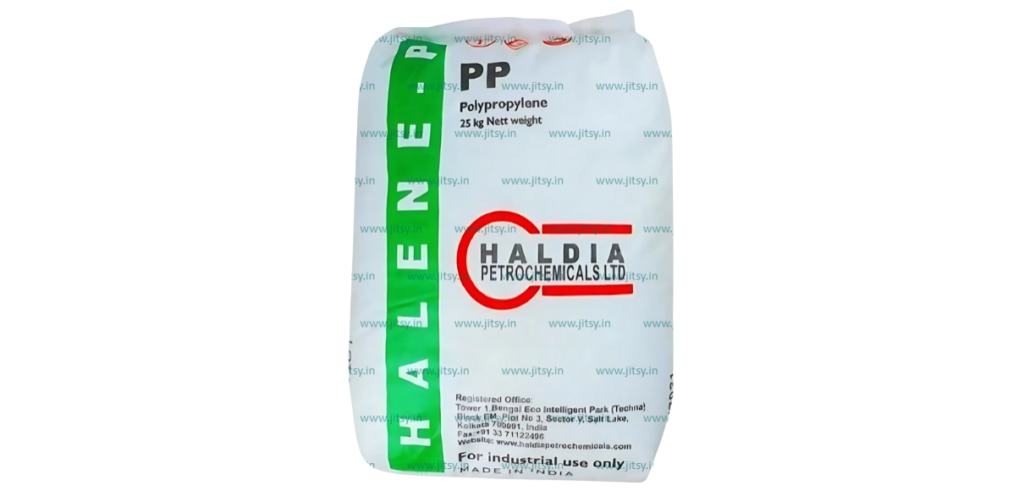
Haldia PPCP Halene M310
Haldia Halene-P M310 is a heterophasic polypropylene impact copolymer (PPiCP) manufactured with Spheripol II technology, delivering high flow, low cycle times, and excellent thermal stability for injection moulded battery boxes and industrial items. M310 offers a superior balance of impact resistance and stiffness, ensuring structural integrity under impact and thermal stress. Its high gloss and low static charge buildup make it ideal for clean, productive processing and visually appealing finished parts. M310 is trusted by battery manufacturers and industrial moulders in Delhi/NCR and pan-India seeking a productive, thermally stable PPCP for demanding applications.
Specifications
Physical Properties
- Melt Flow Index: 10 g/10 min (230°C/2.16 kg) – high flow for fast fill and multi-cavity tooling
- Density:90 g/cm³ – lightweight, standard for PP impact copolymers
Mechanical Properties
- Tensile Strength at Yield: 24 MPa – robust for battery and industrial parts
- Elongation at Yield: 6% – supports flexibility and drop resistance
- Flexural Modulus: 1200 MPa – high stiffness for stacking and load-bearing
- Notched Izod Impact (23°C): 90 J/m – tough for impact and drop tests
Thermal Properties
- Vicat Softening Point (10 N): 145°C – maintains shape under heat
- HDT (0.46 N/mm²): 95°C – suitable for battery and industrial service
- Compliance: IS 10910, IS 16738:2018 for food/pharma/water contact
Applications
Battery boxes
M310 is engineered for battery boxes requiring fast fill, dimensional stability, and resilience to impact and thermal cycling. Its high modulus and impact resistance ensure boxes withstand stacking, drops, and vibration, while the high flow supports efficient multi-cavity production.Industrial mouldings
For structural crates, housings, and technical mouldings, M310 offers the stiffness and toughness needed for heavy-duty service. Its gloss and low static charge help maintain clean production and attractive finished surfaces, supporting industrial and technical applications.Processing
- Barrel temperature: 160–250°C
- Mould temperature: 30–40°C
- Processing tips: High flow enables fast cycles and complex tooling; Spheripol II morphology minimises warpage and supports consistent quality
- Cycle time: Optimised for productivity in battery and industrial moulding
Deep Technical Insights
- Spheripol II technology: Delivers uniform, heterophasic morphology for consistent mechanicals and reliable performance
- High flow: MFI 10 supports fast fill in multi-cavity tools, reducing energy and boosting output
- Thermal reliability: Maintains shape and mechanicals during heat exposure and cycling, crucial for battery and industrial service
- Gloss and low static: Ensures clean, aesthetic parts ready for high-visibility or technical use
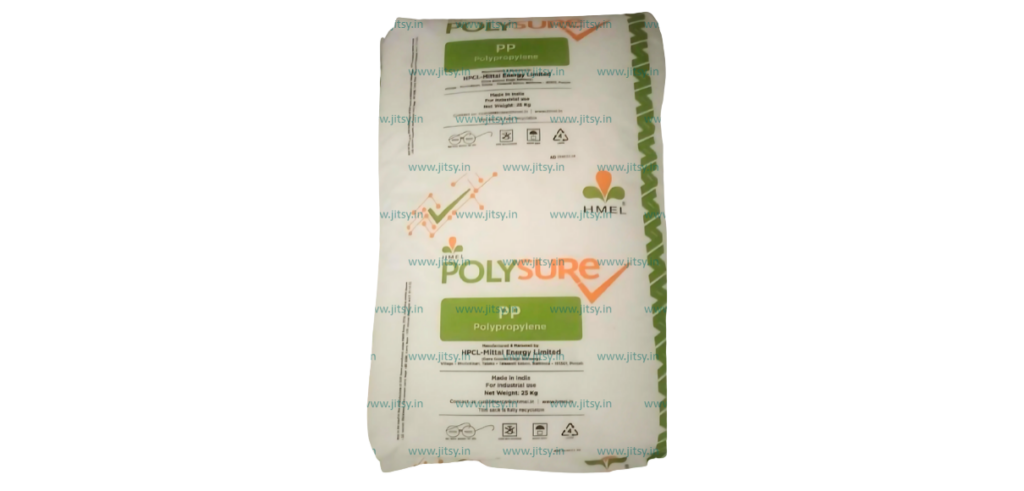
HMEL PPCP Polysure CM10TE
HMEL Polysure CM10TE is a polypropylene impact copolymer (PPCP) developed using advanced Spheripol-II technology for injection moulding applications that demand both high stiffness and superior impact resistance. CM10TE is purpose-built for battery casings, under-hood automotive components, and structural mouldings where mechanical integrity under heat and impact is a must. Its optimized morphology ensures consistent, OEM-ready performance, making it a preferred choice for automotive and industrial moulders in Delhi/NCR and across India.
Specifications
Physical Properties
- Melt Flow Index:5 g/10 min (230°C/2.16 kg) – ideal for medium-to-thick wall, structural parts
- Density:90 g/cm³ – lightweight, standard for PP ICPs
Mechanical Properties
- Flexural Modulus: ~1200 MPa – high stiffness for load-bearing, structural parts
- Notched Izod Impact: High (ICP standard) – engineered for impact and drop resistance
Technical Insights
- Stiffness–impact balance: Spheripol-II morphology delivers reliable strength and toughness for demanding environments
- Thermal stability: Suitable for under-hood and battery casing applications where heat and impact resistance are critical
Applications
Polysure CM10TE is engineered for structural and safety-critical automotive and industrial mouldings.Battery casings
CM10TE’s stiffness and impact profile make it ideal for battery casings, delivering dimensional stability, drop resistance, and long-term reliability under heat and stress.Under-hood automotive components
From fuse boxes to engine covers, CM10TE excels in under-hood parts exposed to heat and vibration. Its mechanical balance ensures components stay intact even in harsh conditions.Structural & industrial mouldings
Suitable for crates, bins, and heavy-duty covers, CM10TE supports applications where both load-bearing strength and impact protection are required.Processing
- Barrel temperature: 180–240°C
- Mould temperature: 30–50°C
- Processing tips: Medium-high MFI supports efficient mould filling; optimize packing and cooling for best dimensional accuracy and surface finish
- Cycle time: Spheripol-II morphology allows for consistent, repeatable cycles and high productivity
Deep Technical Insights
- Spheripol-II technology: Ensures uniform polymer morphology, batch consistency, and predictable mechanicals for OEM and compounding use
- Stiffness–impact synergy: CM10TE’s balanced profile helps meet automotive and industrial design requirements for safety and durability
- Thermal reliability: Withstands thermal cycling and environmental exposure common in automotive and battery applications
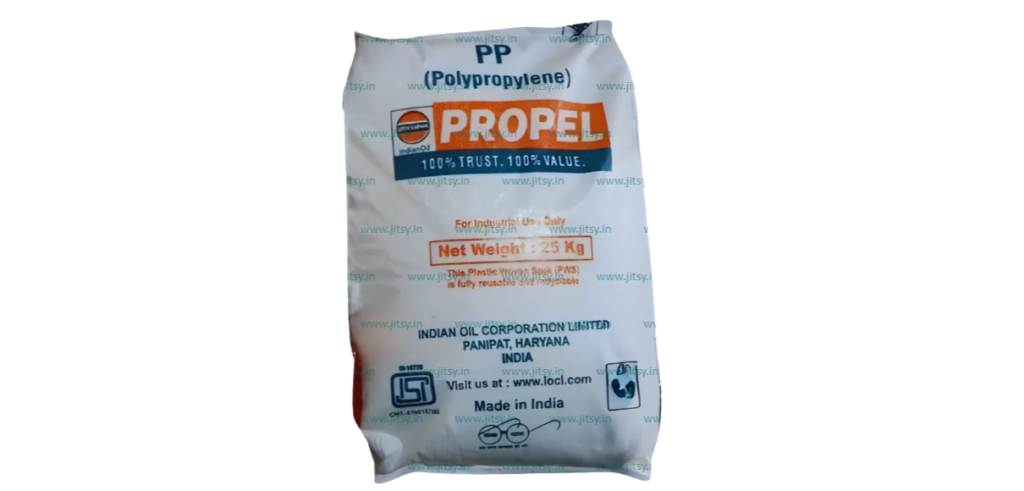
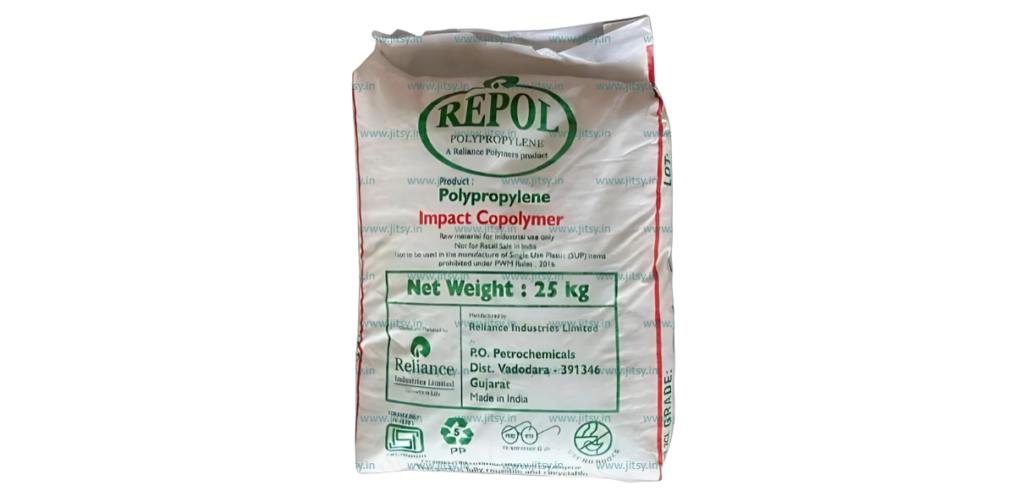
Reliance PPCP Repol C080MT
Reliance Repol C080MT is a polypropylene impact copolymer (PPCP) engineered for injection moulding applications that demand high impact strength, long-term heat stabilisation (LTHS), and a balanced stiffness-impact profile. Specially formulated for battery containers, under-the-hood automotive components, and industrial products, C080MT delivers robust processability and durability in harsh, heat-exposed environments. Its compliance with IS 10910 and IS 16738:2018, combined with FDA and global food/pharma standards, makes it a reliable material for OEMs and component suppliers in Delhi/NCR and across India.
Specifications
Physical Properties
- Melt Flow Rate:5 g/10 min (230°C/2.16 kg) – medium flow for thick-section and structural parts
- Density:90 g/cm³ – standard for PP impact copolymers
Mechanical Properties
- Tensile Strength at Yield: 23 MPa – strong for battery and automotive applications
- Elongation at Yield: 7% – supports flexibility under load
- Flexural Modulus: 1000 MPa – provides structural stiffness
- Notched Izod Impact (23°C): 150 J/m – high impact for drop resistance
- Shore D Hardness: 68 – reliable surface durability
Thermal Properties
- Heat Deflection Temperature (455 kPa): 95°C – enables under-hood and battery use
- Long-term heat stabiliser: Ensures property retention in continuous heat cycles
Regulatory Compliance
- IS 10910 & IS 16738:2018 (food/pharma/drinking water)
- FDA 21 CFR 177.1520 and global standards
Applications
Battery containers
C080MT’s high impact strength and long-term heat stabilisation make it ideal for battery containers, providing drop resistance, dimensional stability, and retention of properties under repeated thermal cycling.Automotive under-hood components
Optimised for engine covers, manifolds, and other under-hood parts, C080MT withstands elevated temperatures and mechanical stress, ensuring long-lasting performance and safety.Industrial products
Suitable for crates, housings, and technical mouldings, C080MT delivers the toughness and processability needed for heavy-duty industrial environments.Processing
- Melt temperature: 190–250°C
- Mould temperature: 30–50°C
- Packing pressure: Essential for thick ribs and battery containers to avoid sink marks
- Optimisation: LTHS stabiliser enables use in continuous heat cycles; proper cooling and packing reduce warpage and surface defects
Deep Technical Insights
- LTHS additive: Provides resistance to property loss during long-term heat exposure, critical for under-hood and battery casing applications
- Balanced mechanics:5 MFI supports moulding of thick, structural parts while maintaining impact performance
- Regulatory versatility: Meets Indian and global standards for food, pharma, and drinking water, expanding application scope
