




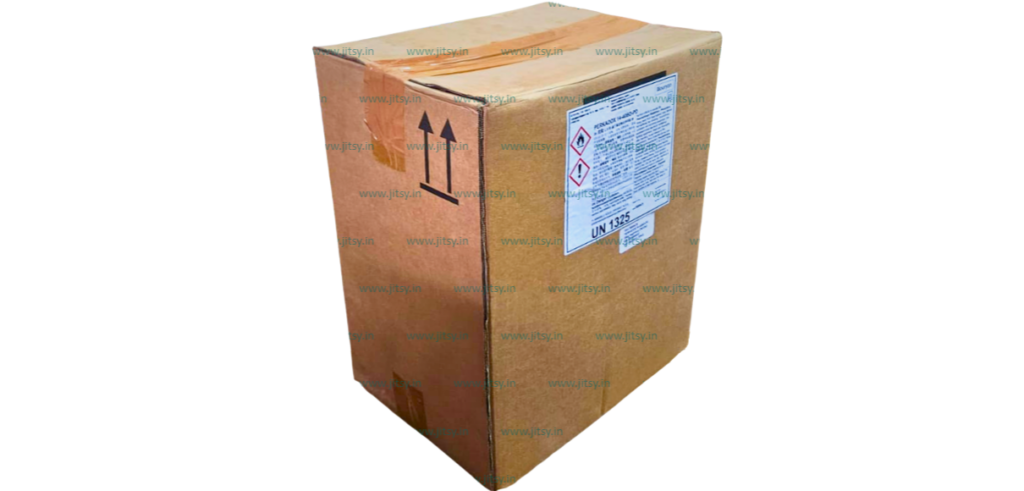
Nouryon DCP Perkadox 14‑40B
Nouryon Perkadox 14‑40B is a bifunctional organic peroxide—di(tert‑butylperoxyisopropyl) benzene (BIPB)—formulated at 40% active content on an inert carrier (powder or granules). Unlike traditional dicumyl peroxide (DCP), this BIPB-based crosslinking agent offers a smell-free processing experience with lower odor emissions, making it ideal for premium rubber, cable, footwear, and specialty plastics manufacturers. This design ensures safe handling, accurate dosing, and excellent dispersion in elastomer and polyolefin compounds across Delhi NCR, Mumbai, Ahmedabad, Pune, Kolkata and other industrial clusters.
Perkadox 14‑40B serves as a superior alternative to standard DCP (dicotyl peroxide) for applications requiring reduced odor, improved scorch safety, and consistent crosslinking performance in EVA foams, XLPE cable insulation, rubber vulcanization, and polyethylene crosslinking.
Functional Features & Technical Detail
- 40% Active BIPB (Smell-Free Peroxide): Ensures efficient crosslinking in rubbers and polyolefins at lower peroxide loadings with minimal odor—a key advantage over traditional DCP.
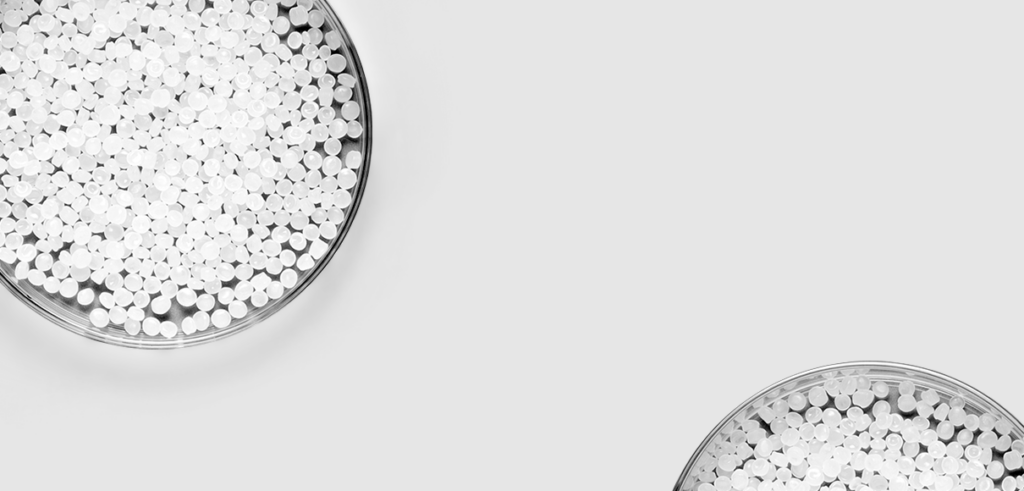
- Carrier-Based Formulation: Off-white powder/granules improve flow, reduce dusting, and make dosing safer and more accurate compared to pure dicumyl peroxide.
- Bifunctional Peroxide Chemistry: Efficiently crosslinks NR, EPDM, HNBR, FKM, CPE, EVA, and other elastomers outperforming generic DCP in scorch safety.
- Excellent Scorch Safety: Allows longer mixing times and one-step processing for many compounds, reducing production complexity versus dicumyl peroxide systems.
- Proven Processing Window: Well-documented curing and safe processing temperatures for robust, reproducible results in Indian manufacturing environments.
- Low Odor, High Performance: Ideal for indoor processing, worker comfort, and compliance with Indian workplace safety standards.
Applications
Nouryon Perkadox 14‑40B (BIPB crosslinking agent) is trusted by Indian and global processors for:- Rubber Crosslinking & Vulcanization: Used in natural rubber, EPDM, HNBR, FKM, and specialty elastomers for automotive hoses, seals, gaskets, and under-the-hood parts. Outperforms traditional DCP in scorch safety and odor control.
- Polyolefin & EVA Crosslinking: Key for XLPE cable insulation, EVA/PE foam, footwear soles, and thermoplastic elastomer (TPE) parts—delivering superior heat, compression set, and mechanical strength with reduced smell compared to dicumyl peroxide.
- Industrial & Automotive: Enables high-performance hoses, rollers, and technical rubber articles across Delhi NCR, Mumbai, and Ahmedabad manufacturing hubs.
- Wire & Cable Insulation: Crosslinks PE and EVA in insulation and jacketing for enhanced thermal and chemical resistance—a smell-free alternative to DCP-based systems.
Related Products & Technical Alternatives to DCP
Other Nouryon Smell free Dicumyl Peroxides
Beyond Perkadox 14‑40B, Nouryon offers several related peroxides for rubber and polyolefin crosslinking:- Perkadox 14‑EP40: Granular 40% BIPB formulation (smell-free alternative to DCP) with similar application range.
- Perkadox BC‑40B/BC‑40BD: 40% dicumyl peroxide (DCP) formulations on inert carrier for traditional crosslinking.
Complementary Additives for Rubber & Polyolefin Compounds
Perkadox 14‑40B is typically used in combination with:- Fillers and reinforcing agents (e.g., carbon black, silica) for mechanical tuning.
- Antioxidants and stabilizers to protect peroxide-cured polymers against thermal and oxidative degradation.
- Plasticizers, co-agents, and processing aids that refine flow, cure density, and surface finish in final parts.
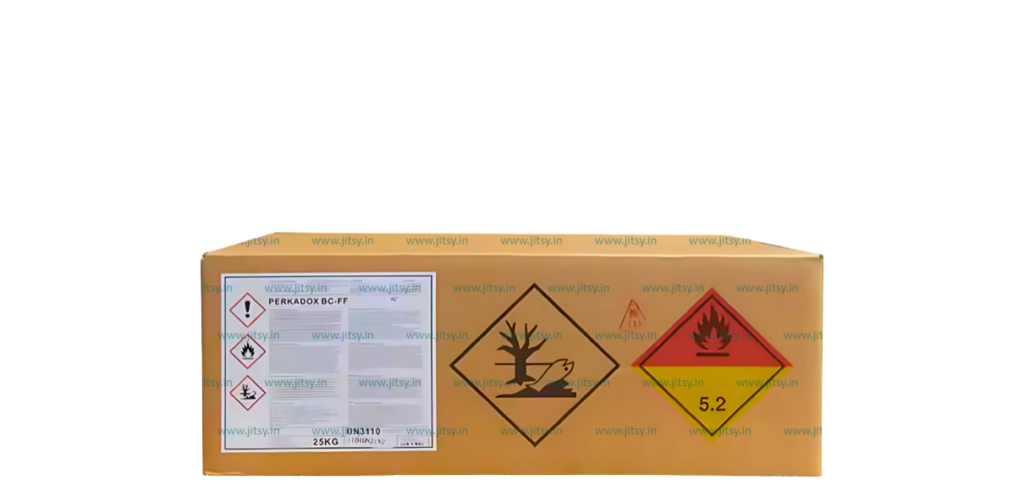
Nouryon DCP Perkadox BC‑FF
Nouryon DCP Perkadox BC‑FF is a high-purity, crystalline dicumyl peroxide (DCP, CAS 80‑43‑3) engineered for reliable crosslinking and polymerization. It is widely used as:
- A crosslinking agent for natural and synthetic rubbers (EPDM, EPR, silicone), polyolefins (PE, EVA), and thermoplastic elastomers.
- A polymerization initiator for styrene and styrenic copolymers.
- A key additive in EVA/PE foam, wire & cable, and molded rubber/plastic parts.
Key Features and Benefits
- High purity (≥99%) for consistent cure and crosslinking.
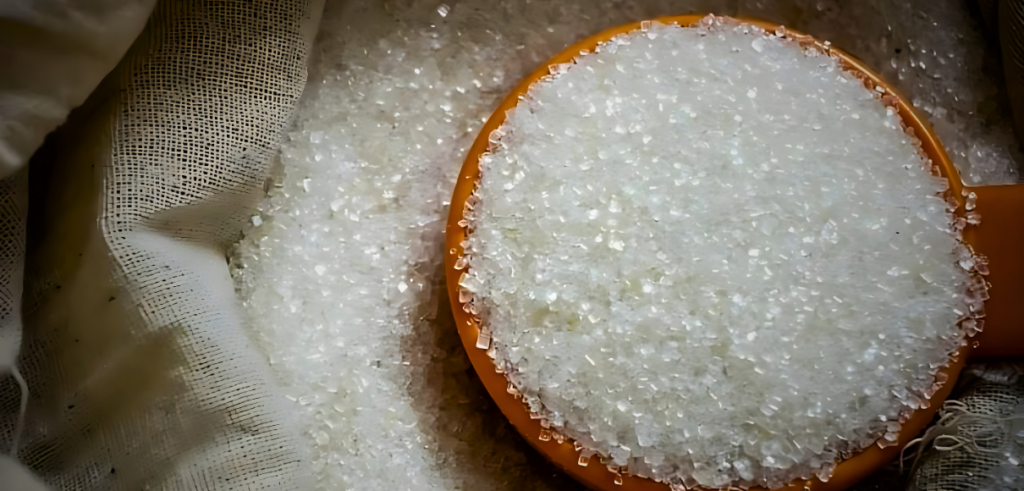
- Crystalline, free-flowing form for easy dosing and dispersion.
- Versatile initiator/crosslinker for rubbers, polyolefins, and styrene (co)polymers.
- Excellent scorch safety and moderate cure rate for safe processing.
- Brand assurance from Nouryon, a global leader in organic peroxides with local production in India.
Functional Features (Technical Highlights)
- Consistent Assay: ≥99% purity and active oxygen content.
- Controlled Bulk Density: 660–705 kg/m³ for predictable mixing.
- Optimized Decomposition: Reliable half-life and activation energy for process safety.
- Multi-Industry Approval: Used in rubber, plastics, cables, footwear, and foam.
- India-Ready Compliance: Supplied with TDS/SDS, regulatory support, and local logistics.
Applications
Nouryon DCP Perkadox BC‑FF is trusted by Indian and global manufacturers for:- Rubber Vulcanization: Crosslinking natural rubber, EPDM, EPR, and silicone for automotive, footwear, and industrial use.
- Polyolefin Crosslinking: Creating crosslinked PE/EVA foams, wire & cable insulation, and heat-resistant parts.
- Styrene (Co)Polymerization: Initiating polymerization in mass styrene and copolymer processes.
- EVA/PE Foam Production: Enhancing resilience, durability, and thermal stability in footwear and sports goods.
- Automotive & Infrastructure: Used in molded seals, gaskets, pipes, and high-performance profiles.
Nouryon Expancel 031 DU 40
Nouryon Expancel 031 DU 40 is a high-performance dry, unexpanded thermoplastic microsphere blowing agent and lightweight filler engineered for thermoplastics, PVC plastisols, underbody coatings, adhesives, porous ceramics, construction materials, printing inks, and technical textiles. As a leading supplier in India, JITSY provides Expancel 031 DU 40 to all major industrial clusters backed by technical expertise, local stock, and compliant logistics.
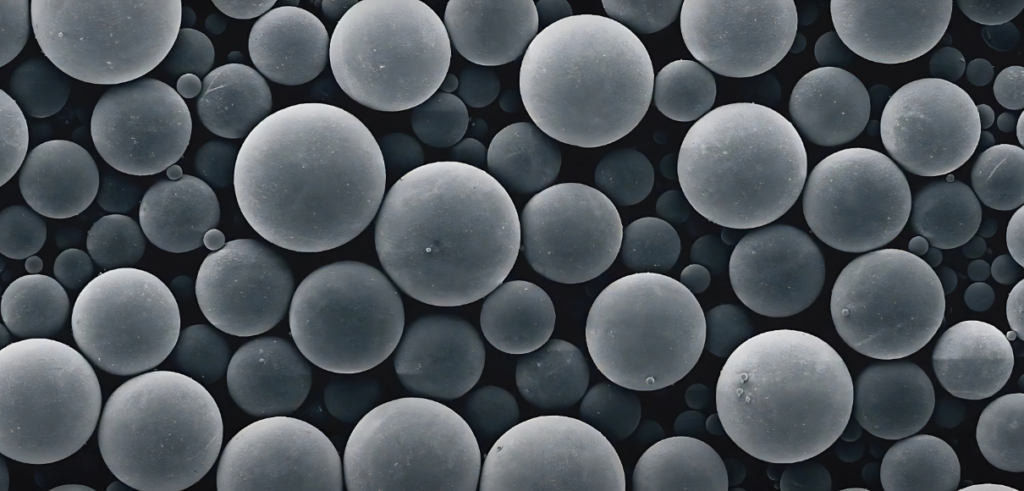
Expancel 031 DU 40 features a robust acrylonitrile-based shell filled with volatile gas, expanding physically in a controlled temperature window (Tstart 80–95 °C, Tmax 120–135 °C). This enables fine, uniform cell structures, significant density reduction, and improved insulation and mechanical properties—without chemical residues or process disruption.
Functional Features & Technical Authority
Expancel 031 DU 40 is engineered for:- Dry, unexpanded microspheres: Free-flowing powder for easy dosing and uniform dispersion.
- Low expansion onset: Expands from as low as 80 °C, ideal for low-to-medium temperature processes including textile screen printing and puff printing inks.
- 40 µm expanded particle size: Delivers smooth surfaces, fine cell structure, and controlled texture in coatings, ceramics, and 3D effect inks.
- Very low expanded density: Achieves substantial weight reduction and material savings per unit volume.
- Closed-cell, compressible structure: Improves insulation, cushioning, impact resistance, and acoustic damping.
Applications & Industry Use
Expancel 031 DU 40 is widely applied in:- Thermoplastics & PVC Plastisols: Enables lightweight, flexible parts with fine, uniform cell structures for automotive, appliance, and industrial plastics. Reduces density and enhances insulation and impact resistance.
- Underbody Coatings, Paints & Inks: Used in automotive underbody coatings, high-build paints, and especially in puff printing inks for textiles and 3D effect screen printing inks. Delivers density reduction, matting, texture control, and the signature raised “puff” or 3D tactile effect for fashion and branding applications.
- Adhesives, Sealants, Putties & Porous Ceramics: Lowers density, improves gap-filling, reduces shrinkage and cracking, and forms controlled porosity for thermal insulation in ceramics.
- Construction Materials & Technical Textiles: Adds bulk, softness, and improved insulation to mortars, boards, and coated fabrics without increasing weight. Enhances crack resistance and acoustic performance in building products.
- Puff Additive for Textile Printing: As a specialty puff additive, Expancel 031 DU 40 is widely used by Indian textile printers for producing high-quality, soft, and durable raised prints on garments, t-shirts, and fashion textiles.
Nouryon Expancel 909 DU 80
Nouryon Expancel 909 DU 80 is a premium dry, unexpanded thermoplastic microsphere blowing agent and lightweight filler designed for advanced silicone rubber, coatings, plastics, construction materials, and technical textiles. As a leading supplier in India, JITSY delivers Expancel 909 DU 80 to all major industrial hubs backed by local technical support, regulatory guidance, and traceable documentation.
Nouryon Expancel 909 DU 80 features a robust acrylonitrile - based shell filled with volatile gas, expanding physically in a controlled temperature window (Tstart 118 - 128 °C, Tmax 172 - 187 °C). This enables precise density reduction, surface control, and matting effects without chemical residues, making it ideal for demanding Indian manufacturing environments.
Functional Features & Technical Authority
Nouryon Expancel 909 DU 80 is engineered for:- Dry, unexpanded microspheres: Free flowing powder for easy dosing and dispersion.
- Controlled physical expansion: Expands sharply in the 118 - 187 °C range, ideal for silicone vulcanization, coatings, and construction.
- 80 µm expanded particle size: Delivers fine to medium texture, matting, and smoothness in coatings and elastomers.
- Very low expanded density: Enables significant weight savings and cost reduction per unit volume.
- Closed cell, compressible structure: Enhances resilience, impact absorption, and crack resistance in coatings and sealants.
Applications & Industry Use
Nouryon Expancel 909 DU 80 is widely applied in:- Silicone Rubber & Elastomers: Reduces weight in automotive, electrical, and industrial silicone parts, improves cushioning and insulation, and supports closed cell structure without loss of flexibility.
- Coatings & Paints: Used in automotive underbody, industrial, and architectural coatings for density reduction, matting, micro texture, and improved stone chip resistance. Enables lower VOC, better film build, and antislip properties.
- Plastics & Construction Materials: Lowers density in molded plastics, profiles, and composite panels. Improves sag control, shrinkage, and spreadability in putties, mortars, and joint compounds.
- Technical Textiles & Specialty Surfaces: Adds bulk, tactile effects, and matting to coated fabrics, nonwovens, and specialty finishes especially where fine texture and low weight are critical.
Nouryon Expancel 920 DU 20
Nouryon Expancel 920 DU 20 is a high-performance, dry, unexpanded thermoplastic microsphere blowing agent and lightweight filler engineered for artificial leather, PVC plastisols, adhesives, weather strips, coatings, and construction materials. As an authorized JITSY distributor, we supply Nouryon Expancel 920 DU 20 to processors and manufacturers in Delhi NCR, Mumbai, Ahmedabad, Chennai, and industrial hubs across India—helping you achieve fine, uniform 20 µm-class cells for lightweight, resilient, and smooth-surface products.
Nouryon Expancel 920 DU 20 is a DU-grade (dry, unexpanded) thermoplastic microsphere supplied as a free-flowing powder of hollow polymer spheres with a gas core. When heated, the shell softens and the gas expands, inflating the particles into stable, closed-cell structures—delivering both blowing agent and lightweight filler benefits for advanced polymer, coating, and construction systems.
Key Features and Benefits
- Fine, uniform cell size: Expanded ~20 µm, ideal for smooth finishes and thin coatings
- Controlled expansion: Mid-range window (start ~118–145 °C, peak ~152–175 °C) for precise process integration
- Low density: Achieves significant weight reduction in artificial leather, PVC plastisols, and adhesives
- Shrinkage and surface control: Minimizes after-sinking, improves insulation, and limits shrinkage in foamed layers
- Solvent and temperature resistance: Suitable for alkaline, PVC, and solvent-based systems—no water content
Functional Features (Technical Authority)
- Physical expansion (not chemical): Clean, residue-free foaming
- Tiny cell structure: For smooth, resilient, and flexible end-products
- Closed-cell network: Enhanced insulation and acoustic damping
- Consistent cell population: Reliable bulk density and surface quality
- Optimized for Indian processing: Matches local curing and foaming lines
Applications & Industry Use
Nouryon Expancel 920 DU 20 is widely applied in:- Artificial leather and flexible coatings: Generates fine, uniform foams beneath the surface, improving hand feel, insulation, and surface smoothness for premium synthetic leather and coated textiles.
- PVC plastisols and underbody sealants: Delivers lightweight, resilient, and shrinkage-controlled foams for automotive, flooring, and technical textile applications.
- Adhesives, weather strips, and construction materials: Supports gap-filling, acoustic/thermal insulation, and weight reduction in automotive, building, and industrial products.
- Technical textiles, paints, and coatings: Used for lightweighting, surface modification, and shrinkage control in high-performance coatings and thin decorative layers.
- Other polymer systems: Ideal where very fine, discrete cells are needed for smoothness, flexibility, or thin foam layers.
Advantages vs Other Microspheres & Blowing Agents
- Sharper process control: Expands physically, not chemically—no decomposition byproducts
- Finer texture: 20 µm cell size for premium surfaces
- Superior insulation: Closed-cell network for thermal/acoustic performance
- Weight savings: Outperforms mineral fillers in density reduction
- Flexible selection: Choose 920 DU 20 for thin, smooth foams; higher-numbered DU grades for coarser effects
Handling, Storage & Safety
- Industrial hygiene: Use dust control, ventilation, PPE
- Storage: Keep sealed, cool, dry; avoid heat, humidity, and heavy compression
- Processing: Add after pigment/filler dispersion; avoid excess shear before expansion; optimize heating profile for full expansion before cooling
Why Source Nouryon Expancel 920 DU 20 from JITSY in India
- Local inventory: Fast supply to Delhi NCR, Mumbai, Ahmedabad, Chennai, and all major clusters
- Technical support: Application guidance for artificial leather, PVC plastisols, adhesives, and construction
- Traceability: Batch documentation, direct access to Nouryon technical data
- Collaboration: Global sourcing and best practices for Indian processors
Nouryon Expancel 920 DU 40
Nouryon Expancel 920 DU 40 is the industry’s preferred thermoplastic expandable microsphere blowing agent and lightweight filler for puff plastisol inks, textile printing inks, and raised garment effects. As an authorized/stocking distributor, JITSY supplies Nouryon Expancel 920 DU 40 to ink manufacturers, screen printers, and industrial formulators across India. We offer local stock, technical support, and batch traceability for both high-volume and specialty applications.
Nouryon Expancel 920 DU 40 is engineered for:
- Puff plastisol inks and textile screen printing (delivering uniform, soft, raised effects with a premium hand feel)
- PVC plastisols, underbody sealants, putties, polyurethane and acrylic caulks, weather strips, printing inks, coatings, and construction materials (enabling weight reduction, improved elasticity, and controlled expansion)
Key Features and Benefits Across Puff Ink, Plastisols and Sealants
- Uniform expansion: Consistent, stable puff height and smooth, 3D raised effect in textile prints
- Soft, elastic hand feel: Lightweight, compressible, and resilient puff prints for fashion and sportswear
- Closed-cell structure: Excellent wash durability, low after-sinking, and high recovery after deformation
- Low density: Significant weight reduction and material savings in inks, sealants, and construction materials
- Versatile compatibility: Works in PVC plastisols, solvent-based sealants, and non-aqueous coatings
Technical Specifications of Nouryon Expancel 920 DU 40
DU Grade and Chemical Nature
- DU = Dry, Unexpanded: Powder form for non-aqueous systems; expands only during user’s process
- Thermoplastic shell: Acrylonitrile-based, encapsulating a hydrocarbon gas
- No water content: Perfect for PVC plastisols, puff inks, and solvent-borne sealants
Expansion Temperature Window and 40 µm Expanded Particle Size
- Expansion onset: ~121 °C; max expansion: up to ~178 °C—matches typical puff ink curing and PVC plastisol gelling
- Expanded particle size: ~40 µm—yields smooth, rounded, uniform puff or foam structure
Density, Cell Structure and Mechanical Behaviour
- Very low expanded density—drives weight savings and high coverage
- Uniform, closed-cell microstructure—gives softness, resilience, and low shrinkage
- Improved vibration and sound absorption in automotive and construction sealants
Forms, Handling Characteristics and Storage Stability
- Supplied as: Dry, free-flowing white powder
- Storage: Cool, dry, sealed; avoid moisture and excessive compression
- Shelf life: Maintains expansion performance when properly stored
Puff Ink and Textile Printing Applications
Puff Plastisol Inks for Garment and Textile Printing
Nouryon Expancel 920 DU 40 is the industry standard for puff plastisol inks in India’s fashion, sportswear, and branding segments. It produces a stable, uniform puff height with soft, cushiony hand feel, and is compatible with typical screen printing, mesh counts (32–43T), and curing profiles (140–160 °C, 1–2 min).Raised Logos, Lettering and Graphic Effects
Delivers crisp, tactile 3D effects for logos, lettering, and graphics on cotton, blends, and technical textiles—favoured by exporters in Tiruppur, Ludhiana, Surat, and Mumbai.Process Guidelines for Puff Ink
- Ink formulation: Disperse DU powder into plastisol base; adjust viscosity for optimal laydown
- Mesh/film build: Medium mesh, generous deposit for best puff
- Curing: Oven/tunnel dryer or flash cure at 140–160 °C for 1–2 min; avoid overcuring
- Troubleshooting: Our technical team can advise on pinhole prevention, puff uniformity, and wash durability
Other End‑Use Applications Suggested by Manufacturer
PVC Plastisols and Underbody Sealants
- Lightweight, elastic underbody coatings and seam sealers for automotive and construction
- Uniform cell structure, low shrinkage, and easy sanding
Putties, Polyurethane and Acrylic Sealants
- Used in high-build putties, PU sealants, and acrylic caulks for shock/vibration absorption, easy application, and low after-sinking
Printing Inks, Weather Strips and Coatings
- Enhances density reduction and resilience in specialty inks, weather strips, and industrial coatings
Construction Materials and Polymer Systems
- Provides insulation, weight reduction, and crack resistance in mortars, boards, and composite systems
Advantages of Nouryon Expancel 920 DU 40 vs Chemical Blowing Agents and Conventional Fillers
Benefits in Puff Ink and Textile Printing
- Physical expansion: No chemical by-products, odor, or color change
- Uniform, soft, lightweight puff: Unmatched by mineral fillers or chemical agents
- Superior durability & wash fastness: Closed-cell structure resists compression and flexing
Benefits in PVC Plastisols, Sealants and Underbody Coatings
- Low after-sinking and shrinkage: Maintains build and smoothness over time
- Easy sanding and rework: Ideal for automotive and construction applications
Selection vs Other Expancel Grades
- 920 DU 40: Best for mid-to-high temp curing, fine puff, and soft hand feel
- 031/051/053 DU 40: For lower temp or different texture
- 930 DU 120/909 DU 80: For coarser, higher-build effects
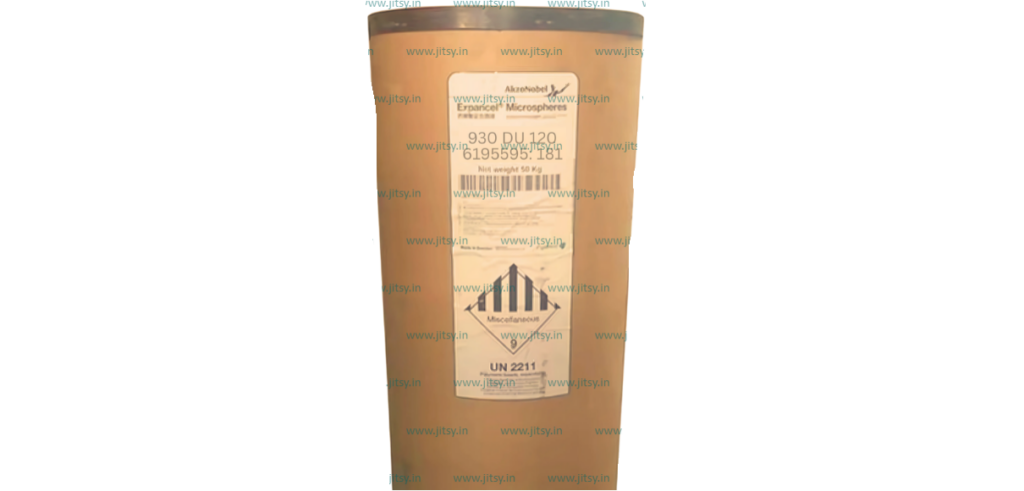
Nouryon Expancel 930 DU 120
Nouryon Expancel 930 DU 120 is a high performance, dry, unexpanded thermoplastic microsphere blowing agent and lightweight filler engineered for PVC plastisols, coatings, sealants, plastics, and construction materials.
Nouryon Expancel 930 DU 120 features a unique polymer shell and encapsulated gas, expanding physically under heat to reduce density, control film build, and enhance surface finish without chemical decomposition by-products. Its expansion window (Tstart 117 - 127 °C, Tmax 189 - 204 °C) is tailored to Indian processing cycles in coatings, plastisols, and sealants, enabling precise process control and reliable weight reduction.
Functional Features & Technical Authority
Nouryon Expancel 930 DU 120 is defined by:- Dry, unexpanded microspheres: Free-flowing white powder for easy dosing and dispersion.
- Physical expansion: Expands with heat, no chemical residues or gas by-products.
- 120 µm class particle size: Balances bulk and surface smoothness in coatings and plastisols.
- Very low expanded density: Enables substantial weight savings and cost reduction.
- Robust shell chemistry: Acrylonitrile based copolymer for resilience and compressibility.
Applications & Industry Use
Nouryon Expancel 930 DU 120 is widely applied in:- PVC Plastisols & Thermoplastics: Reduces density in automotive underbody coatings, molded parts, and flexible profiles. Delivers lighter, more energy-efficient products with excellent impact resistance and controlled surface texture.
- Coatings & Underbody Systems: Used in automotive seam sealers, anti-slip industrial floors, and high-build paints to enhance film build, stone-chip resistance, and sanding properties. Lowers VOC per litre and improves surface finish for OEM and refinish lines.
- Sealants, Putties & Construction: Optimizes yield, sag control, and workability in building putties, caulks, and repair mortars. Minimizes cracking and shrinkage in thick applications and supports easier vertical/overhead use.
- Technical Textiles & Specialty Surfaces: Adds bulk, softness, and texture in textile coatings and specialty finishes (when process temperatures fit DU 120 expansion window).
- Lightweight Composites: Used in specialty foams and composite panels for precise density control and improved compressibility.
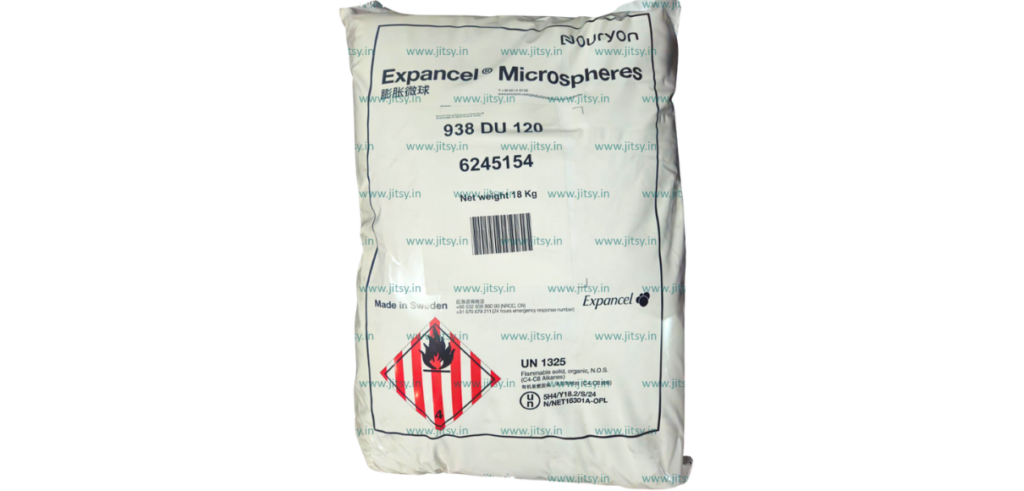
Nouryon Expancel 938 DU 120
Nouryon Expancel 938 DU 120 is a specialty dry, unexpanded thermoplastic microsphere blowing agent and lightweight filler engineered for advanced plastics, coatings, sealants, and construction materials.
Nouryon Expancel 938 DU 120’s unique dual action - physical expansion under heat and ultra lightweight filling; enables consistent density reduction, better surface finish, and improved mechanical properties in demanding applications. Its expansion profile (Tstart 120 - 132 °C, Tmax 192 - 210 °C) is tailored for Indian processing conditions in plastics, foams, coatings, and putties.
Product Description & Technical Details
Nouryon Expancel 938 DU 120 is an expandable microsphere which consists of dry, unexpanded thermoplastic microspheres: each is a copolymer shell encapsulating a volatile gas. When heated, the shell softens and the gas expands, multiplying the microsphere’s volume and creating a foaming effect in the host material. The “DU 120” designation means:- DU: Dry, unexpanded (expands only during processing)
- 938: Specific shell/gas chemistry for defined expansion and resilience
- 120: Expands to ~120 µm class particle size, ideal for bulk and smoothness
- Physical, residue free expansion (no chemical by-products)
- Low expanded density (≤7.5 kg/m³)
- Mid to high process temperature compatibility (Tstart 120 - 132 °C, Tmax 192 - 210 °C)
- Stable, free flowing powder for easy handling and dosing
