





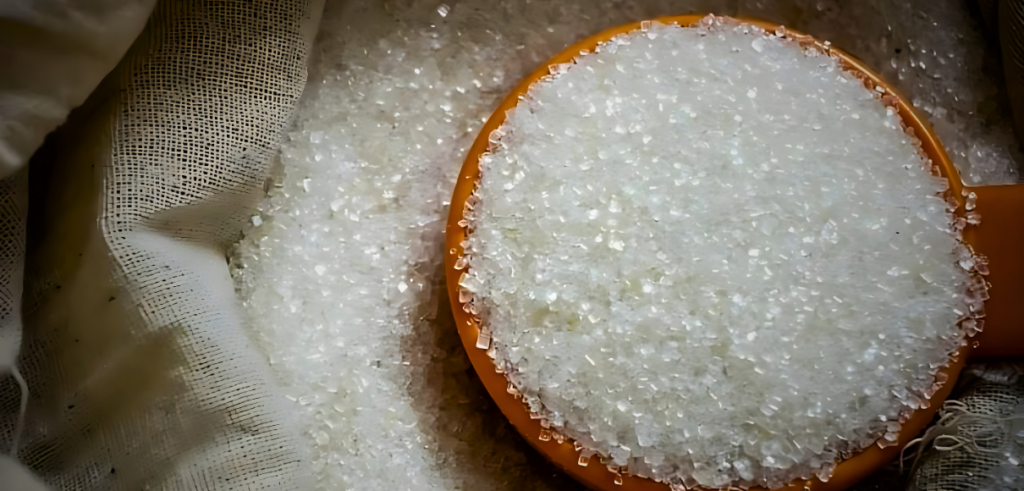
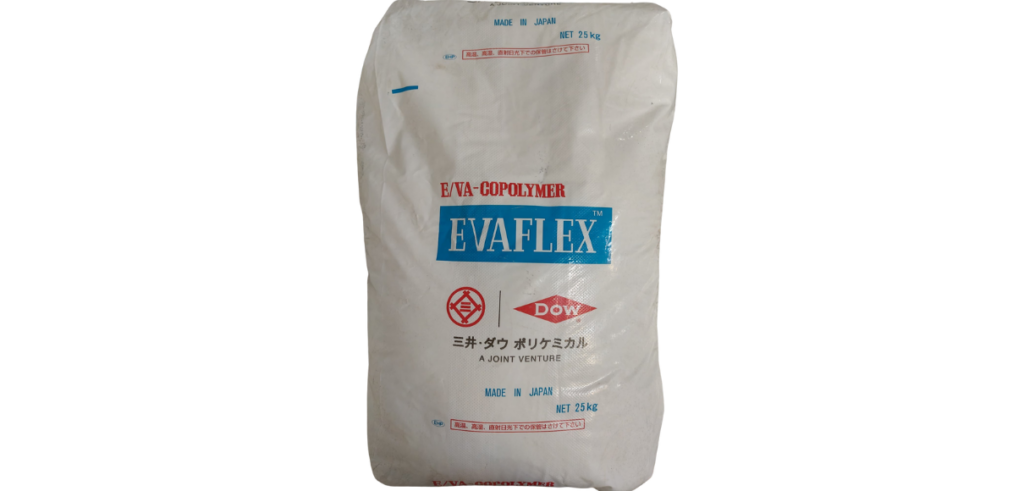
Dow-Mitsui EVA Evaflex 460
Dow-Mitsui EVA Evaflex 460 is an ethylene‑vinyl acetate (EVA) copolymer resin from Dow-Mitsui’s Evaflex family, engineered for demanding industrial applications including flexible packaging films, extrusion, molding, compounding, adhesives, sealants, and wax blends. With 18% vinyl acetate, a melt index of 2.5 g/10 min (190 °C/2.16 kg), and density of 0.941 g/cm³, Dow-Mitsui EVA Evaflex 460 balances flexibility, toughness, and processability for use in multilayer films, hot-melt adhesives, cable compounds, and molded parts. Supplied as natural granules with BHT antioxidant stabilization, it is trusted by Indian converters for reliability and consistent global quality.
Polymer Structure & Key Properties
- Polymer Type: Ethylene‑vinyl acetate copolymer (EVA)
- Vinyl Acetate (VA): 18% by weight
- Melt Index: 2.5 g/10 min (190 °C/2.16 kg)
- Density: 0.941 g/cm³
- Melting Point: ~88 °C
- Vicat Softening Point: ~64 °C
- Hardness: ~90 Shore A / 39 Shore D
- Brittleness Temperature: ≤ -100 °C
- Stabilizer: BHT antioxidant
Functional Performance
- Toughness: High tensile and impact strength
- Flexibility: Maintains softness at subzero temperatures
- Sealability: Low seal initiation temperature, strong hot-tack for films
- Adhesion: Works as a tie-layer in coextruded films
- Compounding: Enables hot-melt adhesives, wax blends, cable compounds
Applications & Hierarchy
Industrial & Packaging Films
- Blown/cast films for flexible packaging
- Coextruded barrier films (tie-layer in PE/PA/EVOH)
- Heat-sealable inner layers, shrink/stretch films
- Major clusters: Gujarat, Maharashtra, West Bengal, Tamil Nadu, Delhi NCR
Molding & Profiles
- Injection molded parts, grips, soft components
- Extruded profiles, strips, footwear blends
- Major clusters: Tamil Nadu, Maharashtra, Haryana
Adhesives, Sealants & Wax Blends
- Hot-melt adhesives (packaging, bookbinding)
- Heat-sealable coatings for paper, foil, films
- Wax blends for improved toughness, flexibility
- Clusters: Gujarat, Maharashtra, UP, West Bengal
Compounding & Modification
- Wire & cable compounds (impact/flex modification)
- EVA/PE blends for plastics
- Automotive, toys, athletic goods
Dow-Mitsui EVA Evaflex EV40LW
Dow-Mitsui EVA Evaflex EV40LW is a premium ethylene-vinyl acetate (EVA) copolymer resin engineered as a high-VA, lower-melt-index adhesive and compounding grade. Developed by Dow-Mitsui Polychemicals Co., Ltd., Evaflex EV40LW combines high vinyl acetate content with controlled melt flow, delivering superior cohesive strength, excellent flexibility, and reliable processing for hot-melt adhesives, flexible foams, pressure-sensitive applications, and specialty compounds. Positioned as a lower-MI alternative to EVAFLEX EV40W, EV40LW offers enhanced body, thicker adhesive films, and improved stress-crack resistance—making it the preferred choice for Indian manufacturers requiring balanced flexibility with processing control and mechanical durability.
Functional & Technical Features
- High-VA Formulation: Delivers exceptional flexibility and outstanding adhesion to diverse substrates including paper, board, plastics, and films.
- Lower-Melt-Index Design: Provides superior cohesive strength and film-building capability compared to higher-MI grades, enabling thicker, more durable adhesive layers.
- Controlled Rheology: Optimized melt flow ensures precise control in hot-melt extrusion, coating, and compounding operations without excessive fluidity.
- Stress-Crack Resistant: Excellent low-temperature flexibility and resistance to mechanical stress, ideal for flexible compounds and cable jacketing.
- Versatile Processability: Suitable for hot-melt adhesives, pressure-sensitive applications, flexible foams, and specialty cable/tubing compounds.
- Global & India-Ready Compliance: Supports food-contact and regulatory frameworks for Indian and export markets.
- Batch-to-Batch Consistency: Dow-Mitsui's strict quality controls ensure uniform VA content, melt index, and predictable performance across all applications.
Core Applications and Industry Use Cases
Hot-Melt Adhesives for Packaging and Bookbinding
Evaflex EV40LW's high VA (40%) and lower melt index (25–35 g/10 min) make it exceptionally suited for hot-melt adhesive formulations requiring strong, flexible bonds. In packaging applications—carton sealing, case bonding, edge banding—its controlled flow enables precise application with minimal stringing, while its superior tensile strength (5.5–7.0 MPa) ensures durable joints that resist peel and stress. For bookbinding and spine gluing, EV40LW delivers the cohesive strength needed for long-term flexibility without brittleness, supporting both rapid production cycles and demanding durability requirements. Processing temperatures of 160–190°C provide optimal balance between fluidity and viscosity control.- Precise film thickness control without excessive flow.
- Superior adhesive strength for demanding packaging applications.
- Excellent flexibility for stress-resistant bonds.
Pressure-Sensitive and Specialty Adhesives
Evaflex EV40LW's balanced rheology and high elongation (900–1100%) make it ideal for pressure-sensitive adhesive (PSA) systems, tapes, and labels. Its lower melt index ensures consistent tack development and excellent substrate wetting, while its flexibility prevents cracking under mechanical stress or temperature cycling. The grade's Shore A hardness (45–50) provides the soft character necessary for rapid adhesion without sacrificing peel strength or aging resistance.- Consistent tack and adhesion properties across production runs.
- Excellent aging resistance and long-term bond durability.
- Superior flexibility for tape and label applications.
Foam, Cushioning, and Soft Compound Applications
With 900–1100% elongation and Shore A hardness of 45–50, Evaflex EV40LW is excellent for flexible foam, cushioning pads, insoles, and protective packaging. Its high VA content ensures strong bonding between foam cells and substrates, while its lower melt index provides precise control during foam expansion and molding. The grade’s stress-crack resistance at low temperatures (glass transition ~-30°C) ensures performance in cold-storage and outdoor applications.- Superior softness and comfort properties for footwear and cushioning.
- Excellent cell bonding and structural integrity in foam compounds.
- Outstanding cold-flex performance for demanding environments.
Wire, Cable, and Flexible Tubing Compounds
Evaflex EV40LW's combination of high flexibility (900–1100% elongation), strong tensile strength (5.5–7.0 MPa), and stress-crack resistance makes it ideal for cable jacketing, insulation, and flexible tubing. Its lower melt index ensures uniform extrusion and consistent wall thickness, critical for electrical safety and performance. The grade's Vicat softening point (100–105°C) provides reliable thermal stability for industrial and automotive cable applications.- Uniform extrusion for consistent cable dimensions and performance.
- Excellent stress-crack resistance at low temperatures and under mechanical stress.
- Superior thermal stability for demanding industrial environments.
Market Context – EVA Hot-Melt and Flexible Compounds in India
EVA hot-melt adhesives and flexible EVA compounds are experiencing rapid growth in India, driven by e-commerce packaging, footwear manufacturing, automotive assembly, and cable production. High-VA, lower-MI grades like Evaflex EV40LW are increasingly chosen for their superior cohesive strength, processing control, and regulatory compliance. Evaflex EV40LW meets the evolving needs of Indian manufacturers seeking reliable, high-performance adhesive ancd flexible resin solutions with proven technical specifications and local supply support.
Dow-Mitsui EVA Evaflex EV40W
Dow-Mitsui EVA Evaflex EV40W is a premium ethylene-vinyl acetate (EVA) copolymer resin engineered for high-performance hot-melt adhesive and flexible applications. Developed by Dow-Mitsui Polychemicals Co., Ltd., Evaflex EV40W features high vinyl acetate content, advanced processability, and excellent adhesion properties. Positioned as an adhesive-grade, high-VA EVA, it is trusted by Indian manufacturers for packaging, bookbinding, footwear, wire/cable, and automotive sectors. Evaflex EV40W sits at the top of the EVAFLEX family for maximum flexibility, superior bonding, and reliable performance in demanding B2B environments.
Functional & Technical Features
- High-VA Formulation: Delivers superior flexibility and outstanding adhesion to a wide range of substrates.
- Adhesive-Grade Versatility: Optimized for hot-melt adhesives, foams, coatings, and compounding.
- Consistent Processability: Stable melt flow for high-speed extrusion, molding, and compounding lines.
- Global & India-Ready Compliance: Supports food-contact and regulatory compliance for Indian and export markets.
- Batch-to-Batch Reliability: Tight production controls ensure uniformity and predictable performance across all applications.
- Technical Support: Backed by Dow-Mitsui’s global expertise and local Indian distributor assistance.
- Application Flexibility: Suitable for hot-melt adhesives, flexible foams, cable jacketing, and specialty films.
Main Applications and Industry Use Cases
- Hot-Melt Adhesives: Evaflex EV40W’s high VA and flow ensure rapid bonding in packaging, bookbinding, carton sealing, and label adhesives.
- Flexible Foam and Cushioning: Used in insoles, mats, and protective packaging, it delivers superior softness and resilience.
- Wire and Cable Compounds: Its flexibility and processability make it ideal for jacketing, insulation, and tubing in automotive and industrial cables.
- Film and Coating Applications: Suitable for extrusion coating, flexible films, and multilayer laminations, providing clarity and strong adhesion.
Processing Guidelines and Best Practices
- Recommended Temperature Zones: Feed: 100–120°C; Melt: 140–160°C; Working: 160–180°C; Die: 150–170°C.
- Moisture Control: Keep resin dry (<0.1% moisture) to prevent defects.
- Residence Time: Avoid excessive residence to prevent yellowing or degradation.
- Formulation Tips: Compatible with standard tackifiers, waxes, and antioxidants for hot-melt adhesive blends.
- Compounding Advice: Suitable for twin-screw extrusion, batch mixing, and hot-melt coating lines.
Formulation and Compounding Considerations
- Adhesive Formulations: Evaflex EV40W works well with tackifiers and waxes to achieve desired open/set times and bond strength.
- Compatibility: Blends with other polymers, plasticizers, and fillers for tailored performance.
- Performance Targets: Delivers high flexibility, strong adhesion, and rapid setting for industrial adhesive and foam applications.
Compliance, Quality, and Certifications
- Food-Contact Compliance: Supports FDA, EU, and Indian food-contact requirements (verify for specific end use).
- Quality Systems: Dow-Mitsui’s global standards ensure traceability, batch testing, and migration analysis.
- Documentation: TDS, SDS, and regulatory support available from authorized Indian distributors.
Market Context - EVA Hot-Melt and Indian Demand
EVA hot-melt adhesives are a fast-growing segment in India, driven by packaging, footwear, automotive, and cable industries. High VA grades like Evaflex EV40W are increasingly chosen for their flexibility, process speed, and regulatory compliance. Evaflex EV40W meets the evolving needs of Indian manufacturers seeking reliable, high-performance adhesive and flexible resin solutions.
Dow-Mitsui EVA EVAFLEX V421
EVAFLEX V421 is a high-performance ethylene-vinyl acetate (EVA) copolymer resin manufactured by Dow-Mitsui Polychemicals Co., Ltd. Synthesized with a relatively high vinyl acetate (VA) content, this grade is molecularly engineered to offer an optimal balance of structural flexibility, low-temperature resilience, and robust substrate adhesion. Unlike rigid polymers, its chain configuration yields a inherently soft material that retains functional ductility without requiring external, volatile plasticizers.
Industrial engineers select this natural-colored resin for its clean extrusion kinetics, thermal processability, and compatibility with diverse compounding formulations. The material behaves as a highly efficient bonding and modification agent, making it a staple raw material across technical molding, multi-layer film production, and hot-melt compound operations. Its structural architecture performs exceptionally well in demanding conditions that require long-term weather resistance, environmental durability, and impact dampening.
Technical Specifications
Physical Properties
- Vinyl Acetate Content: 28 wt% (Tested via JIS K7192). This substantial VA loading is the core structural driver for the polymer's high elasticity, optical clarity, and excellent polar adhesion characteristics, though it reduces overall crystalline stiffness compared to low-VA alternatives.
- Melt Flow Rate (MFR): 4 g/10 min (Tested via JIS K7210). An intermediate flow index ensures a balanced rheology, offering stable melt strength for continuous film extrusion alongside smooth cavity filling on injection molding equipment.
- Density: 950 kg/m³ (Tested via JIS K7112). This specific material density indicates a reduction in peak ethylene crystallinity, resulting in a flexible, low-stress solid matrix.
Mechanical Properties
- Tensile Strength: 25 MPa (Tested via JIS K7161). The polymer maintains robust ultimate tensile limits, protecting thin-walled extrusions or structural coatings from tearing under sudden mechanical loads.
- Ultimate Elongation: 800% (Tested via JIS K7161). Exceptional high-stretch mechanics ensure extreme ductility, allowing industrial parts to deform significantly and recover without experiencing structural cracking.
- Stiffness: 15 MPa (Tested via JIS K7106). A low stiffness value confirms the material's structural softness, facilitating easy bending, winding, and unspooling of technical profiles.
- Hardness: 82 Shore A (Tested via JIS K7215). This surface hardness provides a resilient, rubber-like texture that resists minor surface abrasions while maintaining a high coefficient of friction.
Thermal Properties
- Melting Point: 73°C (Tested via JIS K7121). A low crystalline melting point allows for energy-efficient, low-temperature industrial blending and fast cycles on secondary forming machinery.
- Vicat Softening Point: 42°C (Tested via JIS K7106). The material responds rapidly to radiant thermal profiles, marking it as highly reactive during secondary heat sealing or automated thermoforming procedures.
Applications
High-Adhesion Hot-Melt Formulations and Industrial Blending
The 28 wt% vinyl acetate composition makes this resin an excellent tackifying foundation for technical hot-melt adhesive compounds. Its unique polarity allows it to bond securely with non-porous paper stocks, polymers, and metallic laminates. Processing plants use this base resin to compound reliable adhesive systems that resist brittleness when stored in sub-zero industrial cold chains.Co-Extruded Technical Films and Solar-Panel Encapsulation
Converters use this grade on continuous film lines to produce highly transparent, impact-absorbing flexible layers. Its excellent optical clarity and inherent UV weathering resilience support its use in multi-layer protective packaging and solar-panel encapsulation sheets. The material encapsulates sensitive electronic circuits cleanly, shielding them from ambient humidity and structural impact.Flexible Molding, Footwear Components, and Wire Compounding
Manufacturers use this copolymer to produce flexible consumer footwear soles, soft-touch industrial gaskets, and wire jacket insulation compounds. Its low-temperature ductility prevents molded components from splitting or cracking in extreme winter environments, while its compatibility with mineral flame retardants supports high filler loading on cable compounding lines.Comparable Alternatives in India
Comparable EVA Grades
- EVAFLEX EV260: A related family grade from the Dow-Mitsui catalog. It features different internal flow characteristics and structural limits, making it a non-direct substitute that requires independent die adjustment.
- EVAFLEX EV40W / EV40LW / EV460: Alternative family choices targeting low-viscosity or specialized coating applications. These variants offer distinct mechanical and thermal behaviors and are not drop-in equivalents for applications optimized around V421's 4 MFR balance.
- Domestic Polyolefin Alternatives: Local compounding plants offer various regional EVA resins that aim for similar flexibility metrics. However, substitution paths remain unconfirmed unless both the raw vinyl acetate content and the precise JIS/ASTM test parameters match the V421 datasheet.
